
European
Value of Satsang and practicing
0:35 - 1:28 (53 min)
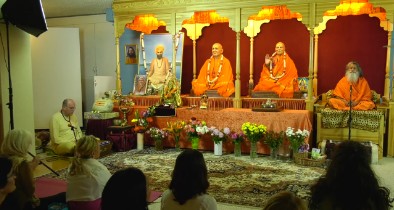
A satsang discourse on the rarity of spiritual community and the foundational science of yoga.
"Sant Samāgam Hari Kathā... these are rare."
"Yoga is that science whose original seed... is Śiva."
The lecturer leads a satsang in Vienna, emphasizing the preciousness of such spiritual gatherings. He explores yoga as a divine science, explaining how the Sanskrit alphabet resonates within the body's chakras and discussing the origins of consciousness as the union of Śiva and Śakti. The talk covers the importance of balanced practice, the nature of mental impurities (vikāras), and the karmic consequences of thought and action.
Filming location: Vienna, Austria
Attachment towards God
1:35 - 2:19 (44 min)
A spiritual discourse on the nature of sacred attachment and family.
"Attachment is something which is great. The one attachment I am talking about is the oneness that lasts till eternity. It is like the attachment of a river to the ocean."
"This is real yoga. Yoga means union, oneness. Separation means no yoga. Husband and wife can become great, like a god."
The lecturer addresses the community, redefining attachment not as a worldly flaw but as a divine, eternal bond, using the metaphor of a river flowing to the ocean. He emphasizes the spiritual importance of lasting family unity, criticizes separation for the sake of children, and expands the discussion to include attachment to God, ancestors, and the universal presence of the divine across cultures. He illustrates this with stories from his travels to Cuba and Fiji.
Filming location: Strilky, Czech Republic
The reflection of the Self
2:25 - 3:37 (72 min)
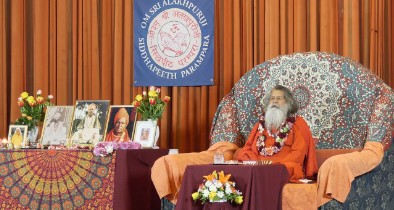
A spiritual discourse on self-realization and daily practice.
"Guru Kripa Hi Kevalam. The matter of knowing the Self can only be with the Guru's grace."
"One in all, and all in one. So I am the ātmā. This is very, very important."
The lecturer leads a satsang, emphasizing the need for personal spiritual effort (sādhanā) and alertness (chetan) to realize the eternal Self (Ātmā) beyond the temporary body and worldly sorrows. He uses analogies like the body as a disposable bag and the importance of mantra repetition, while cautioning against excessive attachment to the material world and the five temporary sheaths (kośas).
Filming location: Vép, Hungary
The Yogic Anatomy and Practice
3:45 - 4:59 (74 min)
An evening satsang on Kundalini, chakras, and the layers of human existence.
"Humans can realize that energy which God is."
"God is not to be seen here as physical in front of us... God is in you, God is in me, but it is hidden within ourselves."
The lecturer leads a discourse exploring the subtle body, the five kośas (sheaths), and the path of yoga. He begins with a participatory exercise on locating the soul, discusses the 72,000 nerve systems and chakras, and outlines various yoga paths including Hatha, Karma, and Jñāna Yoga. The talk weaves in practical advice, analogies, and traditional teachings, emphasizing self-realization and the divine within.
Filming location: Vancouver, Canada
The power of Mantras
5:05 - 6:00 (55 min)
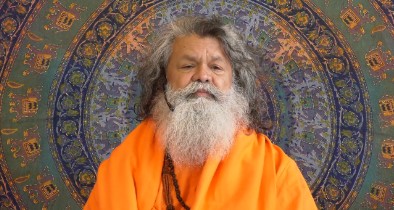
Morning satsang with Vishwaguruji from Weekend Seminar in Vep, Hungary. Mantras have a strong effect on the elements and the whole of Creation. If you speak nicely to a plant, it will be very happy. Sattvic food is especially important; we shouldn't consume dead bodies (meat), eggs, drugs, alcohol. We have destroyed many things already. Mantra is a purification. There is healing power in the mantras, sounds, colors, and natural environment. Chanting mantras such as the Gayatri Mantra can change our negative thinking as well.
The Glory of Alak Purījī
6:05 - 7:22 (77 min)
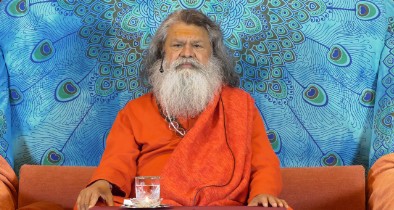
A spiritual discourse on the names and nature of exalted saints, focusing on Alak Purījī.
"Alak means indescribable; we cannot write that glory."
"Alak nirañjan. Niranjan is that it has no rañja, no black spot on the body, neither on the cloth, nor on the body, and nor on your soul."
The lecturer explains the meaning of 'Alak' (indescribable) and 'Purī' (complete or a city), connecting them to the Nath tradition and saints like Śrī Devapurījī. He describes the state of a true Siddha or Avadhūta, who is without desire and served by spiritual powers (siddhis). The talk emphasizes selfless giving, illustrated by stories including Shiva begging for alms and the sage Dadhīci. A disciple, Dr. Shanti, shares her personal vision of Alak Purījī's form appearing in the Himalayas.
Filming location: Vép, Hungary
Understand your body
7:30 - 8:48 (78 min)
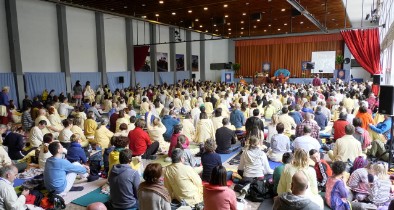
Morning satsang with Vishwaguruji from Vep, Hungary. Bad inspirations are coming from outside, we should solve certain life-problems. We are happier if we have less property. Reach people are just taking care of the money, they are not using it in a good way. Educate our children free, by respecting all of our bodies. Try to study and understand the skin in order to understand life more and reach higher consciousness. We are taking too many artificial things. Touching therapy is good to remove tensions from the body and from the mind.
Relation of the Master and disciple
8:55 - 10:04 (69 min)
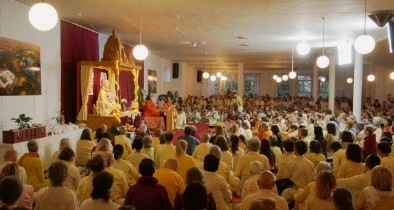
A discourse on the essence of worship and the guru principle.
"Ārādhya means that God or that Master whom we are worshipping."
"Guru Brahma, Guru Viṣṇu, Guru Devo Maheśvara, Guru Sākṣāt Parabrahma, therefore Guru is that Parabrahma."
The lecturer explains the meaning of "Ārādhya" as the personal deity or master one worships, emphasizing the underlying unity of all genuine spiritual paths. He elaborates on the Guru Tattva (guru principle) through the mantra "Guru Brahma, Guru Vishnu, Guru Devo Maheshvara," describing the guru as the source of knowledge (Brahma), protection (Vishnu), and liberation (Shiva). The talk includes parables, such as the story of a monkey destroying a bird's nest out of ego, to illustrate the importance of receiving knowledge with humility and the necessity of a living guru-disciple relationship within a true paramparā (lineage).
Filming location: Strilky, Czech Republic
The Yogic Anatomy and Practice
10:10 - 11:24 (74 min)
An evening satsang on Kundalini, chakras, and the layers of human existence.
"Humans can realize that energy which God is."
"God is not to be seen here as physical in front of us... God is in you, God is in me, but it is hidden within ourselves."
The lecturer leads a discourse exploring the subtle body, the five kośas (sheaths), and the path of yoga. He begins with a participatory exercise on locating the soul, discusses the 72,000 nerve systems and chakras, and outlines various yoga paths including Hatha, Karma, and Jñāna Yoga. The talk weaves in practical advice, analogies, and traditional teachings, emphasizing self-realization and the divine within.
Filming location: Vancouver, Canada
The reflection of the Self
11:30 - 12:42 (72 min)
A spiritual discourse on self-realization and daily practice.
"Guru Kripa Hi Kevalam. The matter of knowing the Self can only be with the Guru's grace."
"One in all, and all in one. So I am the ātmā. This is very, very important."
The lecturer leads a satsang, emphasizing the need for personal spiritual effort (sādhanā) and alertness (chetan) to realize the eternal Self (Ātmā) beyond the temporary body and worldly sorrows. He uses analogies like the body as a disposable bag and the importance of mantra repetition, while cautioning against excessive attachment to the material world and the five temporary sheaths (kośas).
Filming location: Vép, Hungary
The Glory of Alak Purījī
12:50 - 14:07 (77 min)
A spiritual discourse on the names and nature of exalted saints, focusing on Alak Purījī.
"Alak means indescribable; we cannot write that glory."
"Alak nirañjan. Niranjan is that it has no rañja, no black spot on the body, neither on the cloth, nor on the body, and nor on your soul."
The lecturer explains the meaning of 'Alak' (indescribable) and 'Purī' (complete or a city), connecting them to the Nath tradition and saints like Śrī Devapurījī. He describes the state of a true Siddha or Avadhūta, who is without desire and served by spiritual powers (siddhis). The talk emphasizes selfless giving, illustrated by stories including Shiva begging for alms and the sage Dadhīci. A disciple, Dr. Shanti, shares her personal vision of Alak Purījī's form appearing in the Himalayas.
Filming location: Vép, Hungary
The duty of the human
14:15 - 14:56 (41 min)
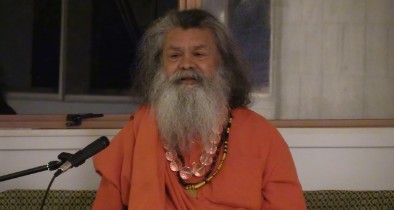
An opening address for a new Yoga and Daily Life Center, blending spiritual teachings with social commentary.
"First worship is to the mother. First adoration is to the mother. It is the mother who gave us protection and knowledge at the same time in her womb."
"O human, if one is doing only eating, creating children, and sleeping, all creatures can do. What is our duty as humans to come?"
The lecturer opens a new community center, emphasizing the foundational Vedic principle "Mātṛ Devo Bhava" (Mother is God). He discusses the roles of mother, father, teacher, and guru in society, critiques modern detachment within families, and calls for universal humanity beyond caste or race. He announces upcoming talks on Kuṇḍalinī, chakras, and the nature of the soul, and leads a birthday celebration for a devotee's mother.
Filming location: Auckland, New Zealand
Practising third level of Yoga in Daily Life System
15:00 - 16:38 (98 min)
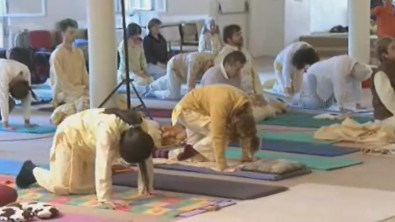
Morning practising. Third part of the System" Yoga in Daily Life" from Mahaprabhudeep Ashram, Strilky, Czech Republic
The power of Mantras
16:45 - 17:40 (55 min)
Morning satsang with Vishwaguruji from Weekend Seminar in Vep, Hungary. Mantras have a strong effect on the elements and the whole of Creation. If you speak nicely to a plant, it will be very happy. Sattvic food is especially important; we shouldn't consume dead bodies (meat), eggs, drugs, alcohol. We have destroyed many things already. Mantra is a purification. There is healing power in the mantras, sounds, colors, and natural environment. Chanting mantras such as the Gayatri Mantra can change our negative thinking as well.
Value of Satsang and practicing
17:45 - 18:38 (53 min)
A satsang discourse on the rarity of spiritual community and the foundational science of yoga.
"Sant Samāgam Hari Kathā... these are rare."
"Yoga is that science whose original seed... is Śiva."
The lecturer leads a satsang in Vienna, emphasizing the preciousness of such spiritual gatherings. He explores yoga as a divine science, explaining how the Sanskrit alphabet resonates within the body's chakras and discussing the origins of consciousness as the union of Śiva and Śakti. The talk covers the importance of balanced practice, the nature of mental impurities (vikāras), and the karmic consequences of thought and action.
Filming location: Vienna, Austria
Atma is in every creature
18:45 - 19:47 (62 min)
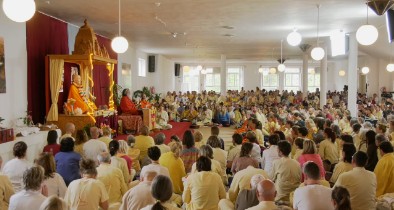
A satsang discourse on spiritual lineage, the nature of the self, and practical wisdom.
"Śrī Guru Ātmā Parāptamā Ho Mātma Puruṣottama, Sakal Jag ke Antaryāmī, Cara Car kī Ātmā Prabhu... in this one line, everything is covered."
"To which doctor will you go? To the doctor in the picture, or to a real, alive doctor?"
Swami Vishwaguruji addresses the gathering, weaving teachings on the essence of the Guru and the universal Ātmā (soul) from the paramparā (lineage) with humorous, practical advice on topics from kingship and knowledge to hair and modern fashion. A disciple then reflects on the profound value of having a living Guru to transmit these teachings.
Filming location: Strilky, Czech Republic
Attachment towards God
19:55 - 20:39 (44 min)
A spiritual discourse on the nature of sacred attachment and family.
"Attachment is something which is great. The one attachment I am talking about is the oneness that lasts till eternity. It is like the attachment of a river to the ocean."
"This is real yoga. Yoga means union, oneness. Separation means no yoga. Husband and wife can become great, like a god."
The lecturer addresses the community, redefining attachment not as a worldly flaw but as a divine, eternal bond, using the metaphor of a river flowing to the ocean. He emphasizes the spiritual importance of lasting family unity, criticizes separation for the sake of children, and expands the discussion to include attachment to God, ancestors, and the universal presence of the divine across cultures. He illustrates this with stories from his travels to Cuba and Fiji.
Filming location: Strilky, Czech Republic
The Living Planet
20:45 - 21:49 (64 min)
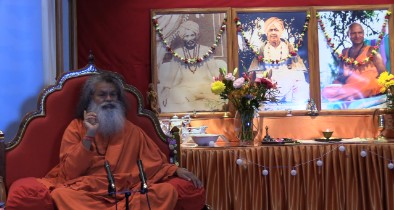
A spiritual discourse on sustainability, life, and spiritual values.
"To live long means to serve this earth. First of all, we call it Mother Earth. Mother Earth means life."
"The God-made world is perfect. It is automatically self-regenerating; it knows how to be sustainable."
The lecturer addresses a global audience, responding to a question about longevity. He contrasts the perfect, self-sustaining systems of the God-made natural world with the destructive, unsustainable practices of the man-made world, critiquing modern concepts like the "green economy." He explores the sacred design of the Earth, the importance of serving parents, and the ultimate spiritual aim of self-realization and service over mere long life, weaving in teachings from scriptures, personal anecdotes, and a call for organic living.
Filming location: Wellington, New Zealand
Temptation and contentment
21:55 - 22:49 (54 min)
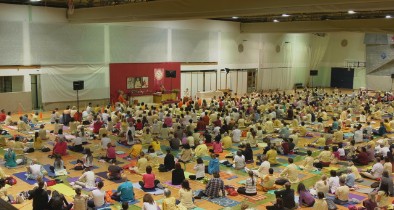
A spiritual discourse on the path of renunciation and the pervasive nature of illusion.
"You have made so many karmas in life, and now you wish to take the orange cloth. It will not solve your purpose."
"Māyā is a temptation; it is very difficult to come out of māyā... And that māyā is very tricky, very tricky."
A teacher addresses a gathering, cautioning against the romanticized pursuit of sannyāsa (monastic life), which requires a severe, multi-year test. He elaborates on the inescapable and tempting power of māyā (illusion), which permeates all aspects of life, including spiritual environments. Using analogies of shadows, cages, and the three guṇas, he explains that true renunciation is an internal purification of heart and desire, not merely an external change. The talk includes a sung bhajan (devotional song) about longing for divine nectar and concludes with reflections on destiny, the Guru principle, and the importance of humility.
Filming location: Maribor, Slovenia
Believe
22:55 - 0:14 (79 min)
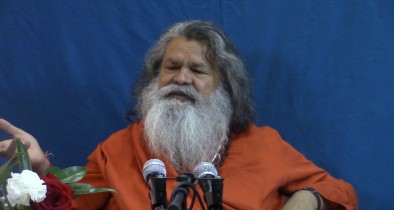
Evening satsang with Vishwaguruji from Vancouver, Canada. Healing power of the mantras. Sooner or later we do believe. God is different for us, but there is only one God. Concentration on the different parts of the body.
American
Australian