
European
You are in me
0:20 - 0:57 (37 min)
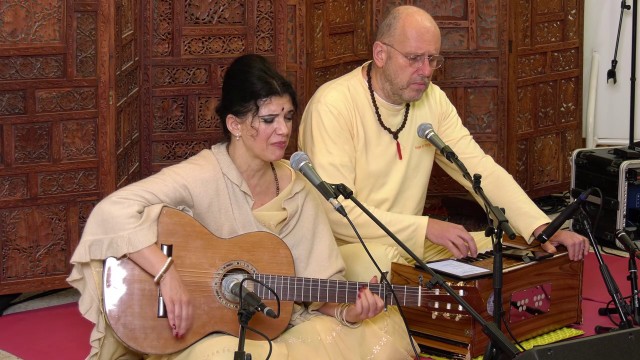
A spiritual discourse on grace, personal transformation, and universal yoga practice.
"Things come and go in life. Do not think it is not good. It is coming and going, coming and going."
"Yoga in Daily Life means it is only for you. It is your yoga every day. It should be. It will come good again and again and again."
The lecturer addresses a gathering, sharing a story about a saint (Swāmījī) who endured an insult from a man who later became his devoted disciple, illustrating how grace operates over time. He emphasizes the universal, non-sectarian path of "Yoga in Daily Life," encouraging daily practice beyond religious labels. A disciple named Muki stands to share his experience as a Muslim drawn to the practice. The talk concludes with reflections on shared humanity and the spiritual energy of the ashram community.
Filming location: Vienna, Austria
We can go altogether to God
1:05 - 1:50 (45 min)
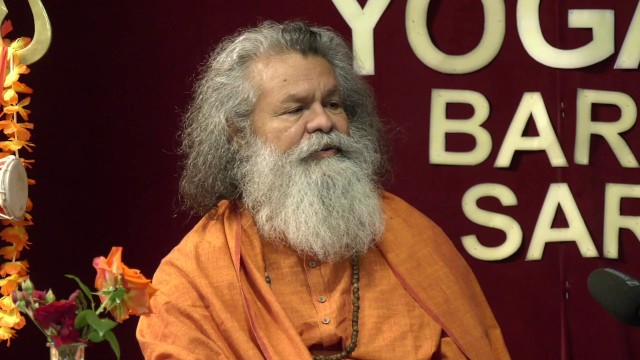
A spiritual discourse on the nature of the guru, learning, and ultimate unity.
"Everyone will arrive at one point. One master, or guru, comes from this side, so there is a different teaching, a different path. From the north, it is different. We are all coming from various directions, but we are descending to the same summit."
"So, what should we do? We should eat well, exercise, and then work, so everything. Then we will live a little more. But with that spirituality, then we come to God."
The speaker explores the universal student-teacher relationship, emphasizing that the terms guru and master point to the same truth. Using a parable of two brothers—one highly educated and one a simple devotee of Shiva—he illustrates that formal learning and spiritual devotion are different paths, with the latter granting profound grace, as shown by the younger brother walking on water. The talk weaves in themes of the five elements, the humility of birth and death, and the ultimate unity of all religions and beings, like drops merging into an ocean.
Filming location: Strilky, Czech Republic
Guru Kripa He Kevalam
1:55 - 2:54 (59 min)
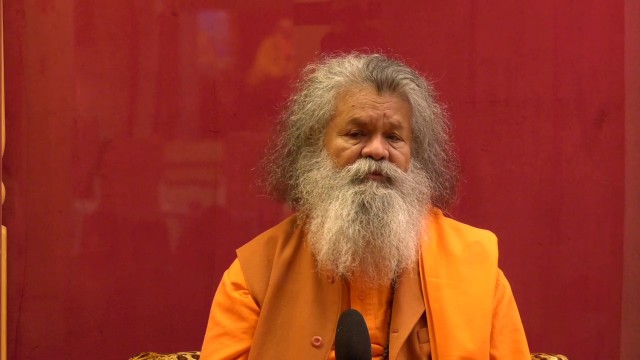
Evening satsang with Vishwaguruji from Vienna, Austria. Guru Kripa means blessing. There are so many negative qualities in us humans. Words remain in our mind, both good and bad things. What Satguru and satsang mean. Sat means truth, sang means to be together.
Sataguru hurt me with the arrow of knowledge
3:00 - 3:54 (54 min)
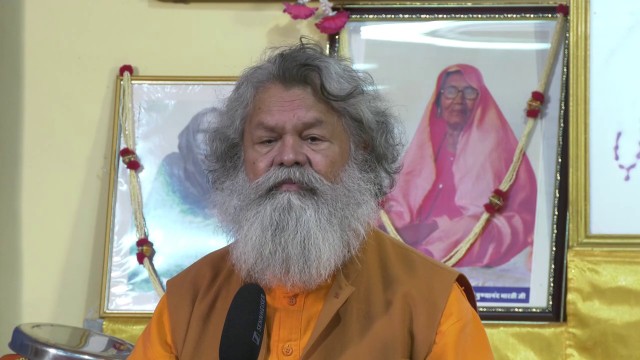
Evening satsang with Vishwaguruji from Jadan Ashram, Rajasthan, India. Vishwguruji's explanation of how to sit properly on the satsang. If we sit in the right arrangement, everyone can see well. Singing and translation of the bhajan Kya Tuma Jano Hal Hamara.
Around the world - Yoga from Presov
4:00 - 5:09 (69 min)
Presentation of Yoga In Daily Life from the city of Presov, Slovak Republic.
Everything is yoga
5:15 - 5:45 (30 min)
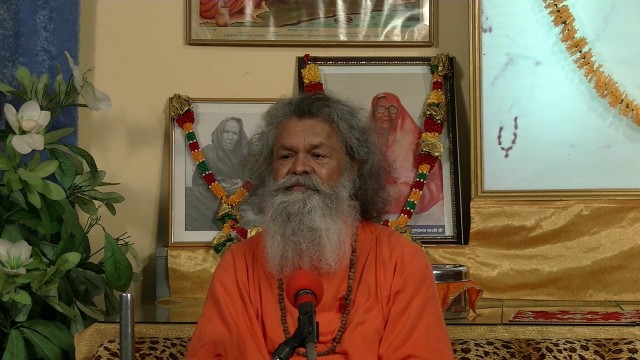
Evening Satsang with Vishwaguruji from Jadan Ashram , Rajasthan, India. All creatures were made by God. At last, there is only one door. Yoga has only 84 positions originally. Living Guru is beyond the God. Finally, there are only space and consciousness and all these come from Siva.
The relation between mother and child
5:50 - 6:07 (17 min)
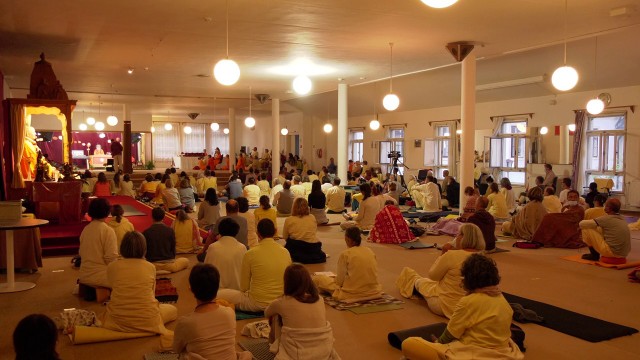
Evening satsang with Vishwaguruji from Strilky Ashram, Czech Republic. Explanation of bhajan: Esa Mera Sataguru Andhara Bole - my Gurudev is speaking within me. This connection is similar to the relation between the mother and child. But it is not only for humans. The mother always takes care of the child. We shouldn't kill animals. While meditating we are asking the Lord: whatever I have done please forgive me.
It is good if we are as we are
6:00 - 6:20 (20 min)
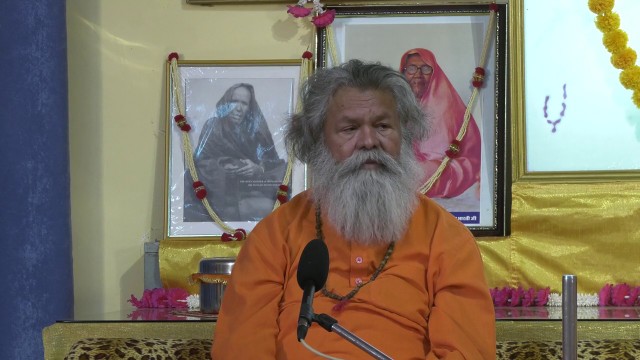
A spiritual discourse on family, heritage, and cultural harmony.
"All humans are good. They are always, no problems."
"But still, you should be in your country, where you have everything."
A spiritual teacher addresses an international gathering, exploring themes of origin, family, and cultural identity. He begins with a prayer and discusses the sacredness of family lineage, from the mother's role to the joy of relatives. While advocating universal friendship and respect for all people, he expresses caution about intercultural marriages and emphasizes preserving one's own heritage and national roots, using analogies from the natural world to illustrate his points.
Filming location: Jadan, Rajasthan, India
God knows your love
6:15 - 7:10 (55 min)
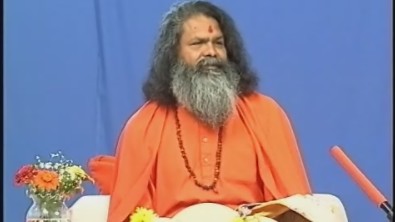
Just go ahead
7:15 - 8:16 (61 min)
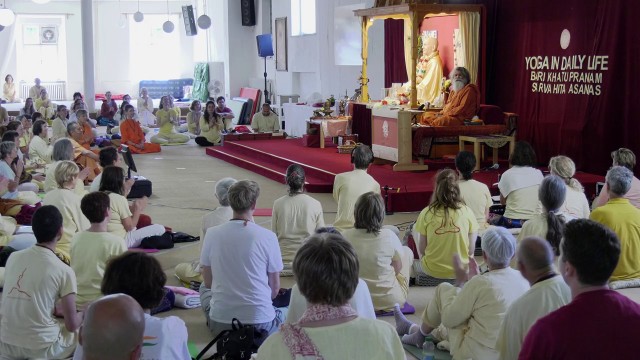
Morning program from Strilky Ashram, Czech Republic. Life eats life. There are many creatures living in the water on the earth and in the air. There are many living beings everywhere. Humans shouldn't kill and eat animals according to their dharma. The story of Buddha and how he received bhiksa. Buddhist people eat only good pure food. Water is life. There is no life without love. There are many very good people but Gurus are very rare. Muslim people are very good they are practising very strictly and faithfully. The story of Hoiigurujis and Vihwagurujis visit at Sankaracharya. Yoga in Daily Life people practised very well during corona time. It can be a female Guru also. A great sadhu keeps every child of God in his heart. Bhajan singing.
The way to God
8:20 - 8:54 (34 min)
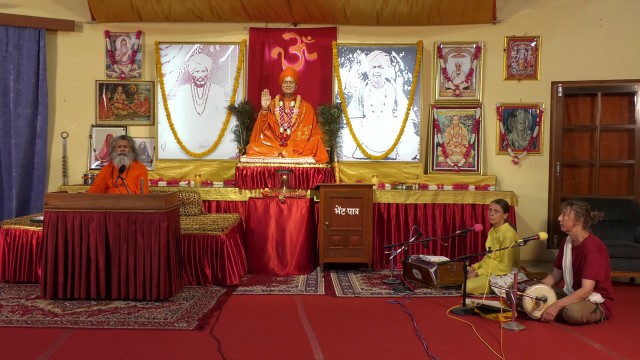
Evening satsang with Vishwaguruji from Jadan Ashram, Rajasthan, India. The Atma of all living beings is one. A small drop of water is like the ocean. The small spark is the same as the great fire. There is one God. Only through the mercy of the Guru can we reach God. Those who go for satsang, are humble and sing bhajans will be taken to heaven. Bhajan on Yoga Nidra.
Practise and think positive
9:00 - 9:32 (32 min)
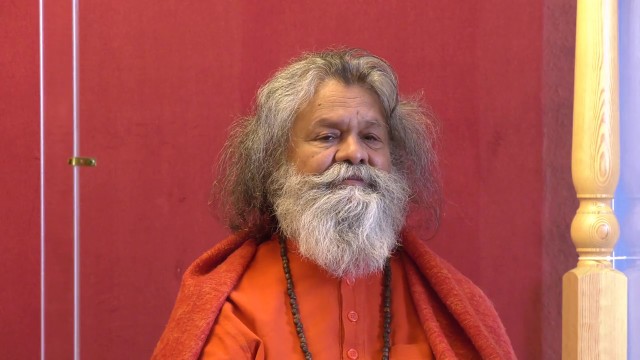
A spiritual discourse on the soul's journey, karma, and daily practice.
"If we tell that this person is not good, it means first, I am not good."
"When you were born, you brought it, and when you will go, your hand is open, nothing is there."
The speaker delivers a wide-ranging talk, moving from the classification of life forms to the soul's ultimate destination beyond heaven and hell. Key themes include the danger of negative speech, the purification of karma through daily life, and the ideal of self-surrender to the guru. The discourse incorporates analogies of cleaning a dress and references to ascetic practices, concluding with a focus on yoga as more than physical exercise.
Filming location: Vienna, Austria
The wish-tree Puja
9:40 - 9:48 (8 min)
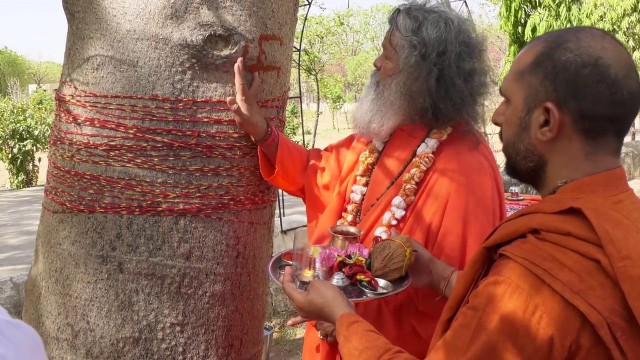
The wish-tree Puja from Jadan Ashram, Rajasthan, India.
Just go ahead
9:55 - 10:56 (61 min)
Morning program from Strilky Ashram, Czech Republic. Life eats life. There are many creatures living in the water on the earth and in the air. There are many living beings everywhere. Humans shouldn't kill and eat animals according to their dharma. The story of Buddha and how he received bhiksa. Buddhist people eat only good pure food. Water is life. There is no life without love. There are many very good people but Gurus are very rare. Muslim people are very good they are practising very strictly and faithfully. The story of Hoiigurujis and Vihwagurujis visit at Sankaracharya. Yoga in Daily Life people practised very well during corona time. It can be a female Guru also. A great sadhu keeps every child of God in his heart. Bhajan singing.
Prasad is given to us by God
11:00 - 12:05 (65 min)
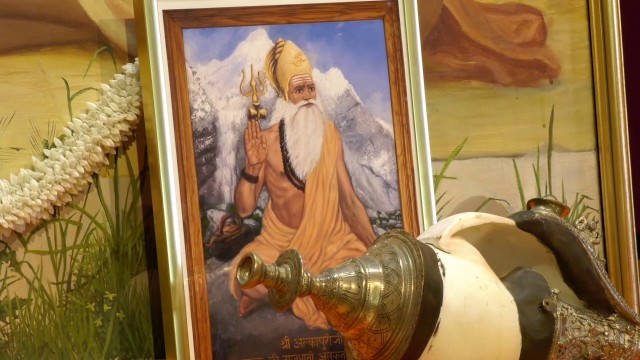
Evening satsang with Vishwaguruji from Vienna. Speech by Swami Premanandaji. This Ashram is a great blessing for all of us. It is rare when a saint comes, establishes an Ashram and blesses it with his personal presence. It is very important to understand how to approach Gurudeva. Holy Guruji was very strict, but the respect was based on a deep understanding of human nature. Vishwaguruji's speech. Why do we take prasad? What is the importance of prasad? Prasad is given to us by God.
The real yoga nidra
12:10 - 13:13 (63 min)
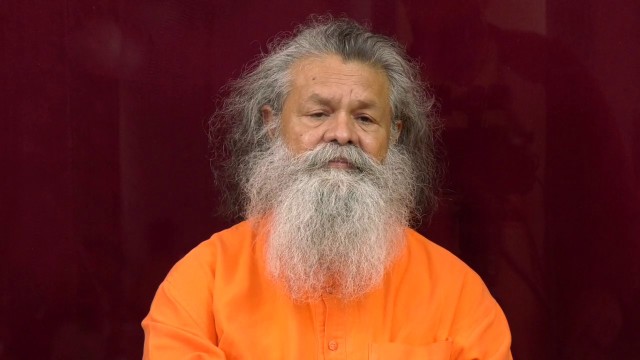
Morning satsang with Vishwaguruji from Strilky Ashram, Czech Republic. We should practise real yoga nidra but in a sitting position according to Mahaprabhuji's instructions. Singing Yoga nidra bhajan. If we only sleep during yoga nidra we don't get anything. The story of a man who beat the snake with a stick in the sand. Animals also have their path and they follow it. They also have their struggles with each other. Our like is like a thorny bush with sweet fruits in it. What do we choose the ice cream or the stick? Bhajan singing.
Shiva tried to give immortality to Parvati
13:20 - 14:06 (46 min)
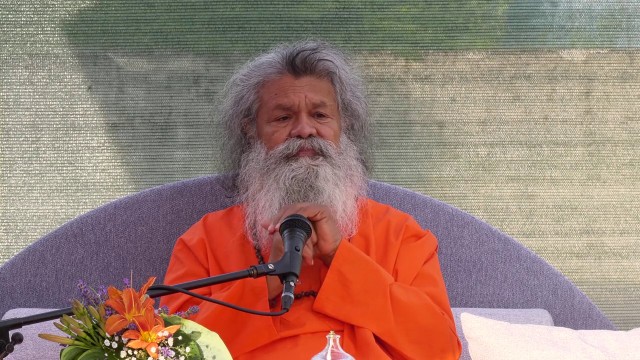
A spiritual discourse on the divine union of Śiva and Śakti, emphasizing gender equality and the unity of all beings.
"In many religions, and many countries, and many things, they were saying that women have no soul."
"It is said from the Satyugas, 'Mātṛ Devo Bhava, Pitṛ Devo Bhava.' First God, 'Mātṛ Devo Bhava.'"
The speaker, addressing a gathering, explores the inseparable nature of the divine masculine and feminine. He recounts the myth of Śiva and Satī, explaining how Viṣṇu used the Sudarśana Cakra to dismember Satī's body, creating the Śakti Pīṭhas. He also shares the story of Pārvatī's attempt to gain immortality through a mantra, which is overheard by a parrot. The talk stresses that the divine union exists within every person and advocates for pure living and respect for all.
Filming location: Slovenia
We are that drops
14:10 - 15:39 (89 min)
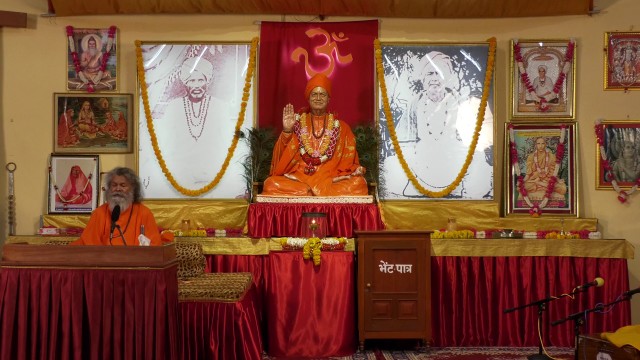
Evening satsang with Vishwaguruji from Jadan Ashram, Rajasthan, India. Bhajan singing. There are many yogis in the Jadan Ashram who are practising faithfully and do karma yoga also. Some animals eat only animals others eat grass. But humans shouldn't kill anyone. When we die our hands are open and nothing is in them. One drop of water and the ocean are the same. O Lord enlighten the mind of humans not to eat meat.
God is everywhere
15:45 - 16:54 (69 min)
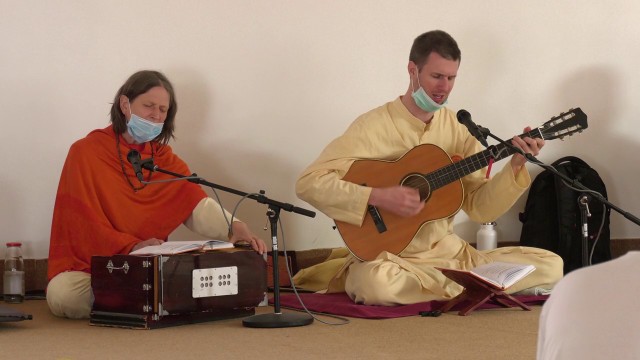
Morning satsang with Vishwaguruji from Strilky Ashram, Czech Republic. When we feel one branch of a tree it is the same as respect God. This means oneness. Love to everyone. We are at the beginning of the new week of the seminar, we need discipline. Children are the next generation of yoga. God is in every place with us also when we are speaking. If one would like to go further one should practice. Only looking at the picture will not remove the hunger. Put the seed inside. It takes time for a seed to sprout.
Morning Yoga practice, Umag, Croatia (5/9)
17:00 - 18:31 (91 min)
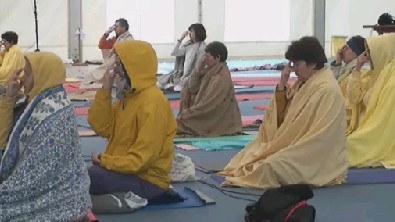
Morning Yoga practice from the international Yoga retreat Umag, Croatia on 29th of September 2010.
The wish-tree Puja
18:35 - 18:43 (8 min)
The wish-tree Puja from Jadan Ashram, Rajasthan, India.
Australia and Fijij
18:50 - 19:29 (39 min)
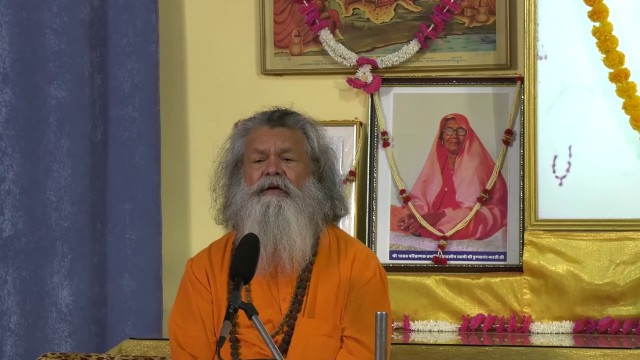
Evening satsang with Vishwaguruji from Jadan Ashram, Rajasthan, India. Introduction to Australia, origins of the population. How was the continent populated? Vishwaguruji talks about his travels to Fiji and Australia.
What does Sanatana Dharma mean?
19:35 - 20:26 (51 min)
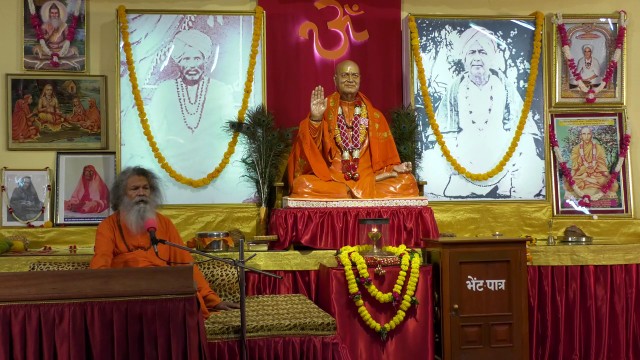
Evening satsang with Vishwaguruji from Jadan Ashram, Rajasthan, India. Lecture about Sanatana Dharma. by Acaryaji. Simple and clear explanation of many expressions and processes connecting to Sanatana Dharma and to the Hindu philosophy. Chanting mantras by one of Vishwagurujis youngest Indian followers. Swami Madhuram speaks about consciousness and how to realize atma in us and how he became sanatani. Swami Premanand speaks about the deep meaning of Divali. Bhajan singing.
You are in me
20:30 - 21:07 (37 min)
A spiritual discourse on grace, personal transformation, and universal yoga practice.
"Things come and go in life. Do not think it is not good. It is coming and going, coming and going."
"Yoga in Daily Life means it is only for you. It is your yoga every day. It should be. It will come good again and again and again."
The lecturer addresses a gathering, sharing a story about a saint (Swāmījī) who endured an insult from a man who later became his devoted disciple, illustrating how grace operates over time. He emphasizes the universal, non-sectarian path of "Yoga in Daily Life," encouraging daily practice beyond religious labels. A disciple named Muki stands to share his experience as a Muslim drawn to the practice. The talk concludes with reflections on shared humanity and the spiritual energy of the ashram community.
Filming location: Vienna, Austria
A Discourse on Dharma, Diet, and the Spirit of India
21:15 - 21:56 (41 min)
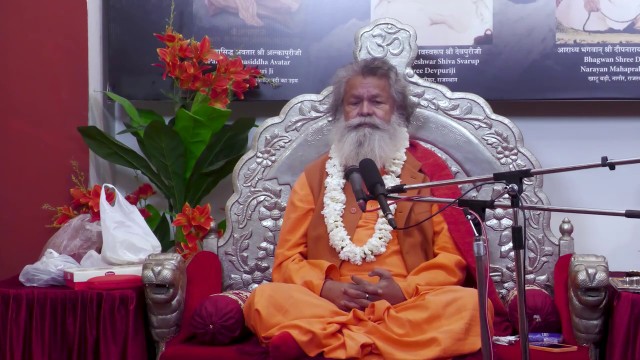
A spiritual discourse on dharma, diet, and cultural identity.
"Food belongs to Bhagavān Śiva. All living beings consume other living beings; they consume other living beings."
"We are all Hindus, Vindu, human beings. But earlier, this was not here; it was revealed later by them."
A speaker, likely a spiritual teacher, addresses a gathering, weaving together observations from travel abroad with concerns for India's spiritual and cultural fabric. The central theme is adherence to traditional Hindu dharma, with a strong focus on vegetarianism as a non-violent principle, criticism of meat-eating and foreign influences, and a call to preserve indigenous language and essence over external practices like the use of English. The talk is discursive, covering caste, illness, and anecdotes about encounters in Europe.
Filming location: Jaipur, Rajasthan, India
Sataguru hurt me with the arrow of knowledge
22:00 - 22:54 (54 min)
Evening satsang with Vishwaguruji from Jadan Ashram, Rajasthan, India. Vishwguruji's explanation of how to sit properly on the satsang. If we sit in the right arrangement, everyone can see well. Singing and translation of the bhajan Kya Tuma Jano Hal Hamara.
Keep nature pure
23:00 - 23:57 (57 min)
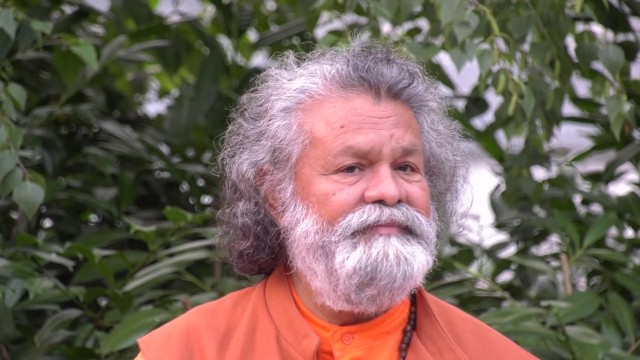
A spiritual discourse on the interconnectedness of all life and conscious living.
"Don't think that only we are in this world as living beings. Others are only for eating. No, it is not."
"Every living being knows somehow how to live... So, my dear, we shall think and pray to God."
Swami Ji leads a satsang exploring the sacred intelligence within all creatures, from monkeys displaying empathy to ants predicting rain. He emphasizes living harmoniously with the Earth, which he describes as a living mother, and advocates for a yogic life of practice, community, and connection to nature, free from harmful chemicals. The talk concludes with a Sanskrit prayer affirming the unity of the individual soul with the Supreme.
Filming location: Strilky, Czech Republic
American
Australian