
European
Human and God
0:25 - 0:58 (33 min)
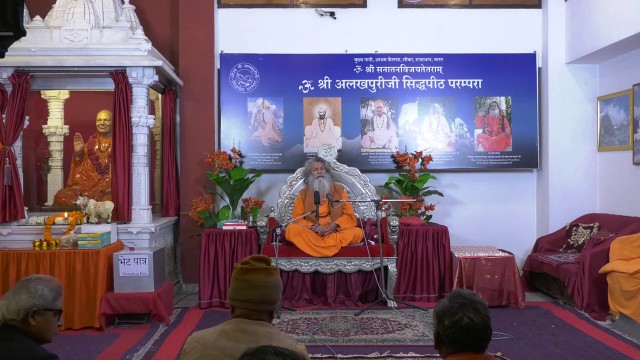
A spiritual discourse expressing concern for the decline of Sanātana Dharma and traditional values.
"Now we don’t know what is happening. We have started eating all kinds of food."
"In our Sanātana Dharma, please show mercy and look after our children."
The speaker, reflecting on years spent abroad and returning to India, delivers an impassioned monologue on perceived spiritual and cultural decay. Key themes include the loss of devotional practices like bhajan, the adoption of non-vegetarian diets, and the neglect of children's traditional education. The talk moves between personal anecdotes, critiques of modern habits, and a call for a return to conscientious living and connection with the divine.
Filming location: Jaipur, Rajasthan, India
Selfless action and bhajans
1:05 - 1:37 (32 min)
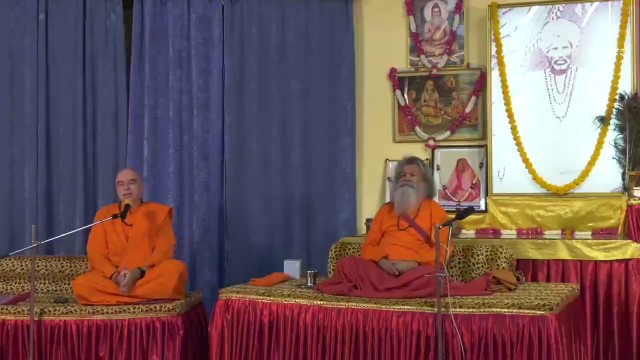
Evening satsang with Vishwaguruji from Jadan Ashram, Rajasthan, India. Swami Gyaneshwar's report from Jadan. You know, I've been living in India for a while now. If you come to Jadan from Jaipur, you will feel the special atmosphere, the peace of the place. In the minds of Indian sages, secular and spiritual knowledge go hand in hand. Karma yoga is selfless help. In Jadan, there is always the possibility to continue the work. In the West, people are used to being alone at any time, so it is difficult to work together with others. Chanting bhajans creates the emotional basis for karma yoga.
The origin of knowledge
1:45 - 2:16 (31 min)
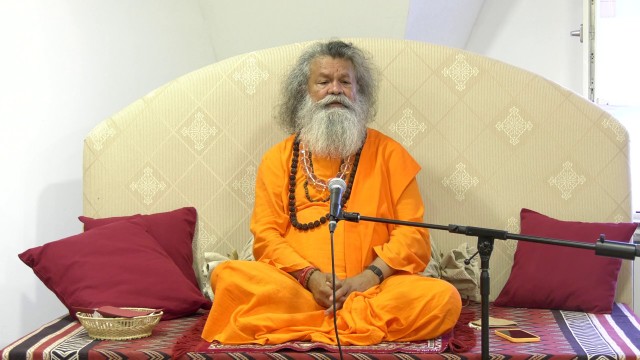
A spiritual discourse on the guru lineage and the vision for a unified ashram.
"In my heart, I tell you that if we have understood and you wish to do this, then you have already received Guru Kṛpā. It has already been given to you—not by me, but by Alak Purījī."
"And you all should be one; we all should become one... This āśram is for each and every one. Yes, all these countries."
The speaker addresses a gathering, tracing a spiritual lineage from Bhagavān Śiva through Alak Purījī to Mahāprabhujī. He emphasizes the received grace of this lineage and expresses a core desire for unity among all attendees and their countries. The discourse shifts to a practical vision for building a large, inclusive ashram through collective contributions, while also advising on spiritual conduct and mutual support.
Filming location: Zagreb, Croatia
Buddha
2:20 - 2:58 (38 min)
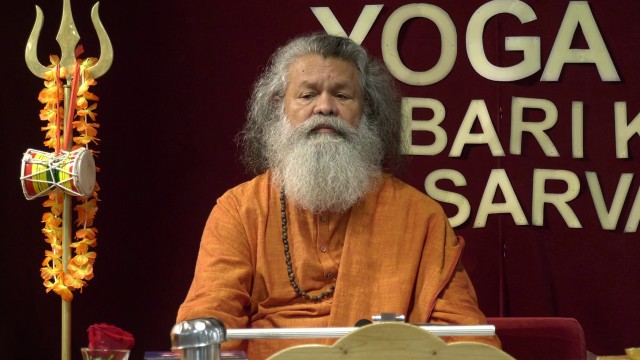
A spiritual discourse on the value of the present moment, weaving in personal anecdotes and stories of Buddha.
"Every second is irretrievably gone. So it is that we should always... be now with ourselves."
"The present is very great. The present is great. And the future we do not know. The past is gone."
The speaker, likely a swami, gives an unstructured talk emphasizing the importance of living fully in the present. He uses the metaphor of chewing food to illustrate savoring the moment, then recounts various stories: a legendary queen who disfigured her face to discourage admirers, details of Buddha's ascetic life, and a personal story about a banyan tree sapling from Bodhgaya being planted in central Australia. The themes revolve around mindfulness, detachment, and spiritual lineage.
Filming location: Strilky, Czech Republic
Do good things and be happy
3:05 - 3:51 (46 min)
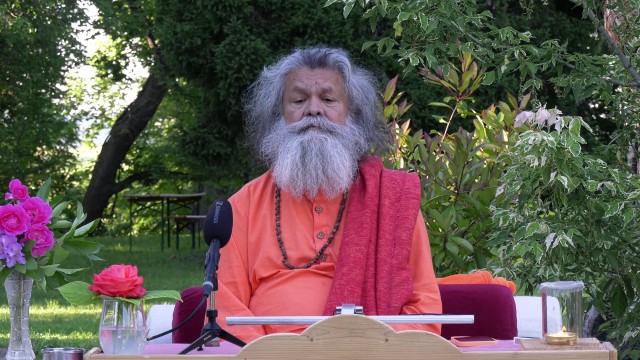
Evening satsang with Vishwaguruji from Strilky Ashram, Czech Republic. Bhajan singing. Bhajans are one of the best things in the world. When we sing good words come from our hearts and make other people happy. Sometimes people are happy also when they do bad things. The story of a sadhu and a tree. We should be peaceful and positive so we can go to God. Om Ashram is for the future generation. Half of iva was a woman and the other half was a man.
Around the world - Pranayama practice from Mexico City
4:00 - 4:31 (31 min)
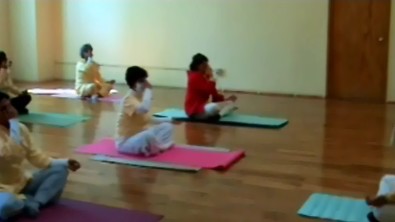
Pranayama practice.
We must now go further
4:35 - 5:04 (29 min)
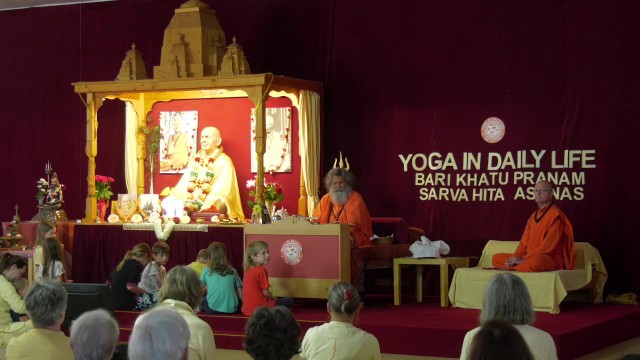
A spiritual talk on integrating practice into daily life and devotion.
"At home and everywhere, when we have the time, we should all be very nice. It is not only sitting and chanting 'om, om, om.' No, be very nice to your family."
"Until the last, until the last time, when you will be in your guru and in your sādhanā, then in the last minutes, then you will go as into Paramatmā."
A spiritual teacher addresses a gathering, emphasizing the importance of continuing yoga practice, prayer, and kindness within the family beyond retreats. The talk weaves personal anecdotes about the global yoga community during the pandemic and shares a story about the devoted passing of a disciple in America, illustrating the ideal of remaining in guru and sādhanā until the end.
Filming location: Strilky, Czech Republic
Bhajan singing from Vep
5:10 - 5:37 (27 min)
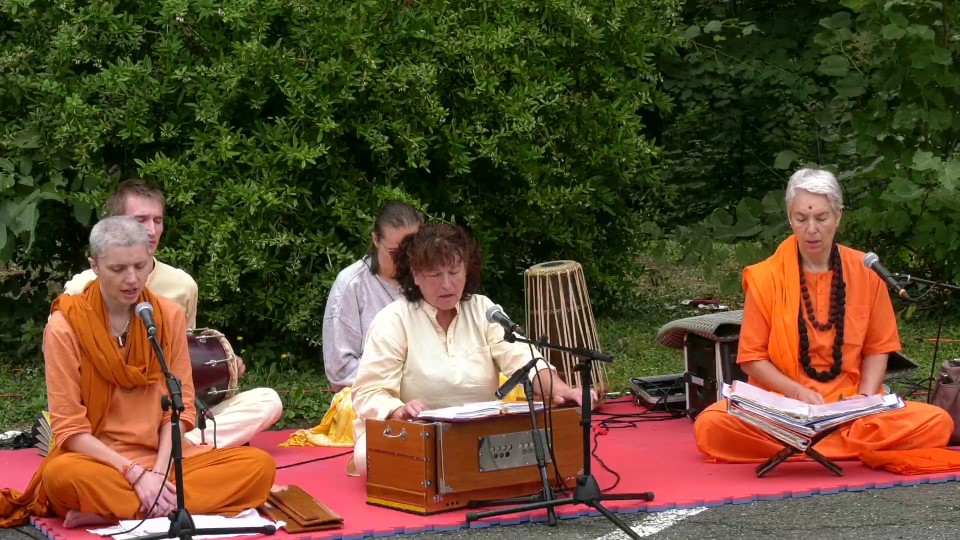
Morning satsang with Vishwaguruji from Vep, Hungary. Bhajan singing. Translation of the bhajan "Itna to karana Guruji"
Live Webcast with H.H. Vishwaguruji
5:30 - 6:30 (60 min)
from Vienna, Austria
Coming here is like coming to a Temple
5:45 - 6:00 (15 min)
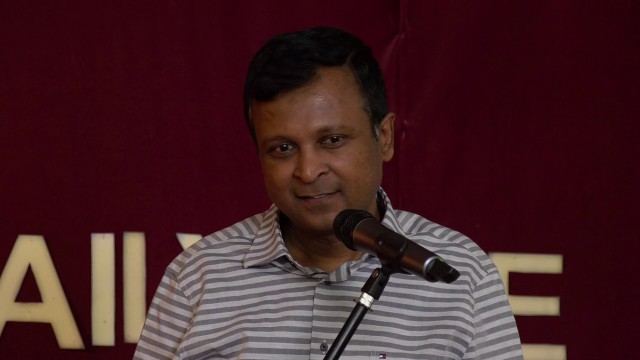
A speech by the Indian Ambassador to the Czech Republic at a satsang in the Yoga in Daily Life community.
"In India, we always like to go to a temple just to get that spiritual energy, to feel good. So we always like to go to the temple and charge our batteries."
"I may be an official ambassador, but Swāmījī is our permanent ambassador of India. He is spreading the message of love and humanity."
The ambassador expresses gratitude for the invitation and shares his personal experience of finding a spiritual "temple" within the Czech ashram. He discusses historical cultural connections, citing Czech Indology studies and the visit of Gurudev Rabindranath Tagore a century ago, drawing parallels to the current support for Swāmījī's Aum University project in India. He concludes by endorsing the planned temple construction at the ashram.
Filming location: Strilky, Czech Republic
We should not have duality
6:03 - 6:14 (11 min)
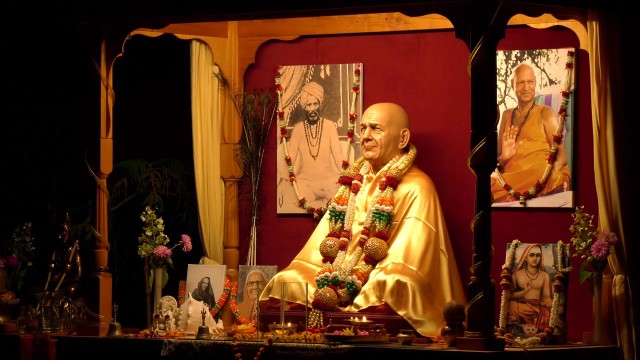
A satsang discourse on the eternal guru lineage and the nature of divinity.
"Other religions are also very good, but they have no God. Not living God."
"So there is one coming once, and there is another one which is forever coming."
The lecturer addresses devotees, reflecting on recent travel and attendance. He explains the concept of a living God through the eternal spiritual lineage (paramparā), contrasting it with his view of other faiths. Using the analogy of universal parents and unique biological mothers, he describes the relationship between the singular divine and the plurality of saints and gurus who manifest it continuously.
Filming location: Strilky, Czech Republic
Everything is in your hands
6:15 - 6:50 (35 min)
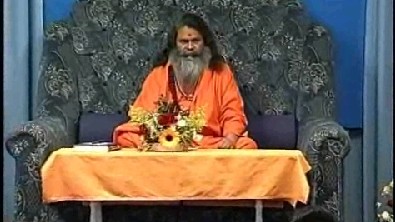
A discourse on the initiation of eight new sannyāsīs and the principle of personal responsibility.
"Whether this bird is alive or dead depends on your hands. That I cannot say to you. That depends on you."
"Everything is in your hands; your enlightenment is in your hands. Your liberation is in your hands."
The speaker recounts the recent initiation of eight disciples into sannyāsa during a journey to the Kumbh Melā, describing the character and journey of several, including Yogīś, Premānandjī, and devotees from Australia and Israel. He emphasizes that the decision for spiritual progress and liberation ultimately rests with the individual, illustrating this with a parable about a bird whose fate lies in a disciple's hands. The talk concludes with practical instructions on attire for disciples and reflections on the serious commitment of sannyāsa.
Filming location: Vép, Hungary
The relation between Guru and disciple
6:55 - 7:59 (64 min)
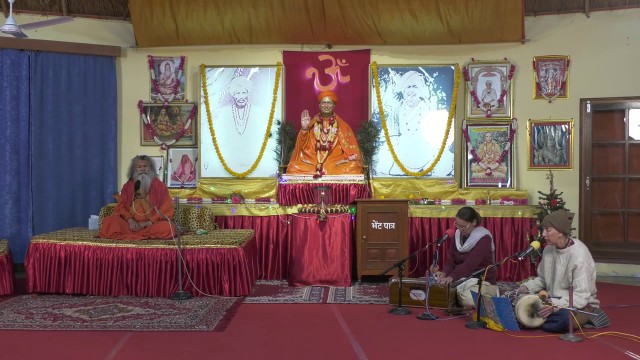
Evening satsang with Vishwaguruji from Jadan Ashram, Rajasthan, India. Holy Guruji and Sri Mahaprabhuji meeting in Jodhpur. How bhajans are performed in India and around the world. Guru and disciple are always in connection with each other. Just as the relationship between mother and child is forever, even if they are not physically in the same place.
Yoga is One
8:05 - 8:36 (31 min)
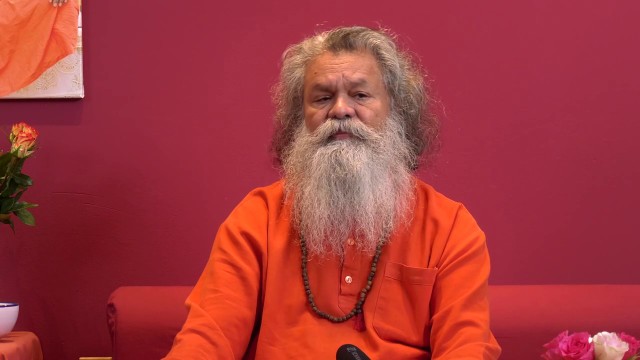
A spiritual talk on the principles and practice of yoga in daily life.
"Yoga is the yoga. It’s the yoga, that’s all then. There’s nothing else."
"Yoga in daily life... means we should practice every day. That’s all. And that is for everyone, whether they are Hindus, Muslims, Christians, or anybody."
The speaker addresses a group, holding up the system's foundational book. He emphasizes that true yoga requires daily practice according to these teachings, not just theoretical knowledge. He discusses the importance of ethical living, notably vegetarianism, criticizes the dilution of yoga by other systems, and urges a return to disciplined, foundational practice. The talk meanders through topics including dietary rules, the global spread of yoga, and personal anecdotes.
Filming location: Austria
Enjoy your life and don't eat meat
8:40 - 9:03 (23 min)
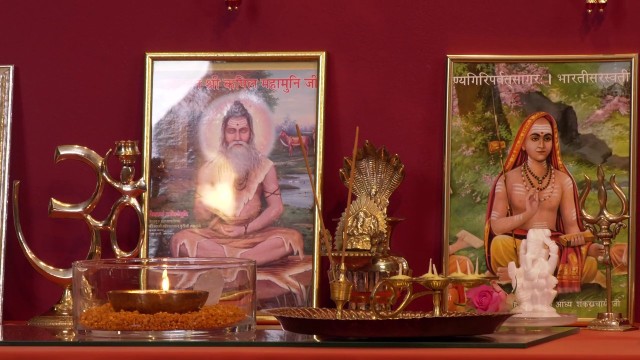
Evening satsang with Vishwaguruji from Villach, Austria. Vishwaguruji is remembering his first coming to Europe. At that time people eat meat here. Life began in the ocean and then on the earth. Every creature consists of five elements. When we are born our fists are closed. After death, we all go to one place. But it is better for us not to kill animals and not to eat meat.
Eternal journey
9:10 - 10:13 (63 min)
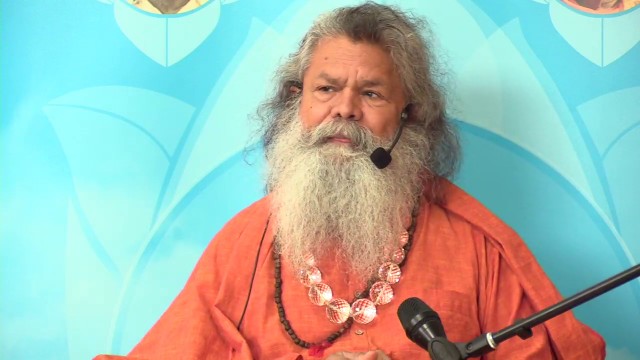
A spiritual discourse exploring the nature of the soul and the inner journey to self-realization.
"The eternal journey is within our Self, and our destination is very far—that which we call oneness with the cosmic Self."
"All in one, my Gurujī said... one in all and all in one. That is the oneness in our body."
A spiritual teacher guides the audience through a profound inquiry into consciousness, emphasizing the equality of all souls—from humans to tiny insects. He uses the analogy of peeling an onion to question the location of the self, leading to a participatory experiment where most attendees point to their heart. The talk weaves through themes of the five elements as divine, the evolutionary centers within the human body, and the importance of ethical living and meditation, concluding with a call for compassion towards all creatures.
Filming location: Brisbane, Australia
We all will come to oneness
10:15 - 10:54 (39 min)
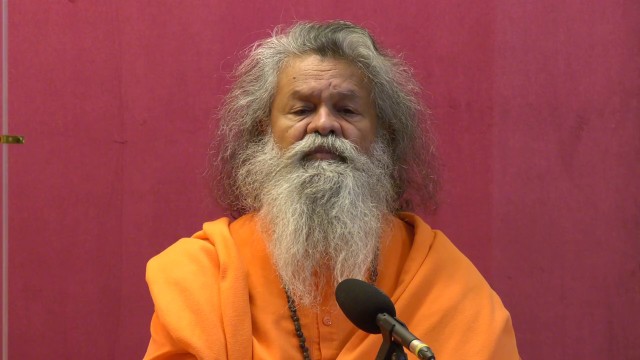
A satsang discourse on spiritual equality, service, and the soul's journey.
"Everyone, without exception, is equal in the eyes of our Gurujī, Mahāprabhujī."
"And when this ātmā, the soul, will go, then it is completely there. There is nothing; there is only one."
The lecturer addresses the community, emphasizing that all disciples—regardless of background or role—should be included in practices like pūjā. He teaches that service and respect form a spiritual family, illustrates oneness with an ocean metaphor for the soul, and shares an anecdote about Holy Gurujī and Mahāprabhujī to illustrate humble service.
Filming location: Vienna, Austria
The relation between Guru and disciple
11:00 - 12:04 (64 min)
Evening satsang with Vishwaguruji from Jadan Ashram, Rajasthan, India. Holy Guruji and Sri Mahaprabhuji meeting in Jodhpur. How bhajans are performed in India and around the world. Guru and disciple are always in connection with each other. Just as the relationship between mother and child is forever, even if they are not physically in the same place.
Vishwaguruji's first visits to Czechoslovakia
12:10 - 13:03 (53 min)
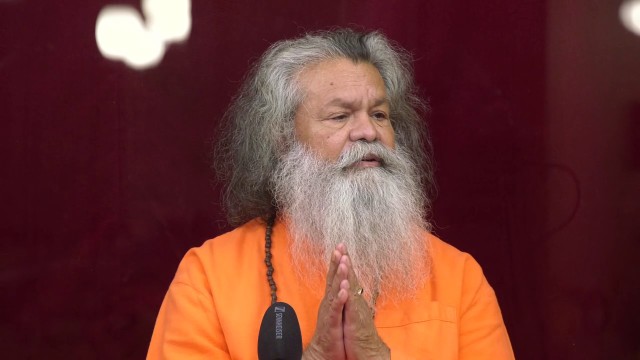
Evening satsang with Vishwaguruji from Strilky Ashram, Czech Republic. The first time I went to Czechoslovakia, it was still a communist country, and the devotees in Vienna were afraid of me and told me not to go. But I wanted to go and some people from Vienna went with me. At that time there was a lot of snow. People came from different countries, different religions and they asked me to teach them yoga. Three people came with me on all my trips, one of them was Lalita. They took the yoga forward, and that was the beginning of the development and expansion of the Yoga in Daily Life all over the world.
Clear your mind
13:10 - 13:46 (36 min)
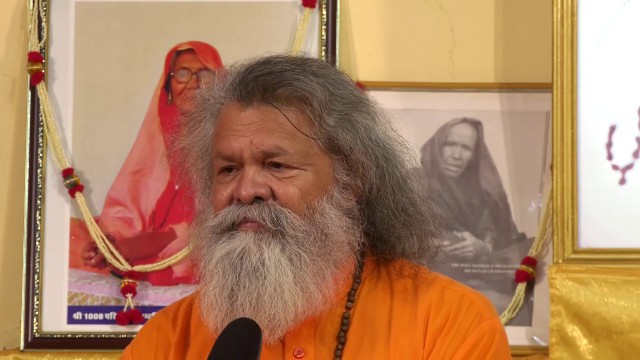
An evening satsang on inner transformation, guru devotion, and clearing past resentments.
"As Gandhijī said, to make a change in the world, first we have to change ourselves."
"You should never doubt a guru or his decisions. If the guru says you should do something, we should do it."
A speaker at Jalan Ashram addresses the global and local gathering, emphasizing that personal change must precede any desire to change the world. He stresses the necessity of trusting the guru's guidance, illustrating this with a parable about a disciple testing his guru with a bird. The speaker also shares experiences from a recent pilgrimage with Gurudev to Varanasi and concludes with an extended allegory about a married couple whose 50-year resentment is resolved by finally communicating a simple misunderstanding over breakfast.
Filming location: Jadan, Rajasthan, India
Follow the words of the Guru continuously
13:50 - 14:44 (54 min)
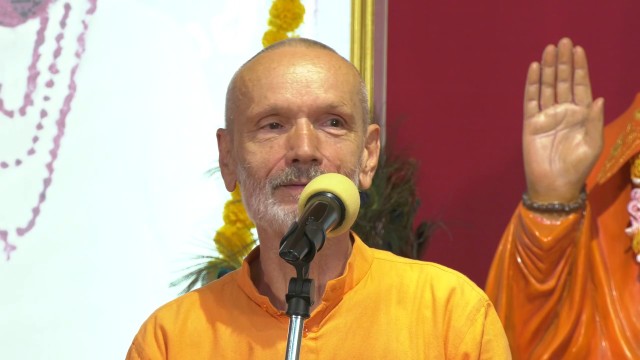
Evening satsang with Vishwaguruji from Jadan Ashram, Rajasthan, India. Swami Sudarsanpuri speaks some words about Guru vakya and Guru seva. We should find the correct way to the seva and the practice. There are many people in Europe and India also who are very disciplined and practise very seriously. Many people from many countries would like to follow Yoga in Daily Life. There are many great saints and Gurus in India. They all are very good. It is very good when families are living together and love children very much. The first Guru was Bhagavan Siva. The story of Siva Parvati and a merchant. Husband and wife should be one. Vishwaguruji organized the next day's work in the Ashram.
Don't eat meat and save spirituality
14:50 - 15:52 (62 min)
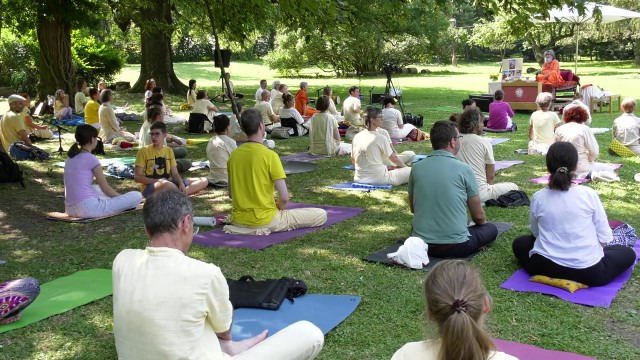
A satsang discourse on spiritual practice, purity, and the guru's grace, followed by personal testimonies from disciples.
"Our mantra, our singing: 'Om Namah Śrī Prabhu Dīpa Nārāyaṇa.' And we died. That means that we are really and really."
"Gurudev, without Guru, is nothing. But we have this Guru, which is that who is giving all for us, good for our body, everything."
Swami Maheshwarananda leads a satsang, beginning with chants and reflections on the guru's grace and the power of mantra at the time of death. He shares parables about communities and their practices, then discusses the importance of a pure, vegetarian lifestyle for health and yoga, linking modern ailments to diet. Two long-time disciples then share personal memories: one recounts Swamiji's first visits to Czechoslovakia and a planned book of memories, while another describes successfully applying yoga techniques with champion athletes.
Filming location: Strilky, Czech Republic
Follow the words of the Guru continuously
16:00 - 16:54 (54 min)
Evening satsang with Vishwaguruji from Jadan Ashram, Rajasthan, India. Swami Sudarsanpuri speaks some words about Guru vakya and Guru seva. We should find the correct way to the seva and the practice. There are many people in Europe and India also who are very disciplined and practise very seriously. Many people from many countries would like to follow Yoga in Daily Life. There are many great saints and Gurus in India. They all are very good. It is very good when families are living together and love children very much. The first Guru was Bhagavan Siva. The story of Siva Parvati and a merchant. Husband and wife should be one. Vishwaguruji organized the next day's work in the Ashram.
Morning Yoga practice, Umag, Croatia (5/9)
17:00 - 18:31 (91 min)
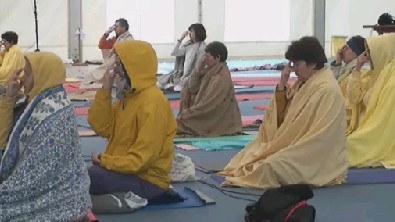
Morning Yoga practice from the international Yoga retreat Umag, Croatia on 29th of September 2010.
Respect the life of other creatures
18:35 - 19:23 (48 min)
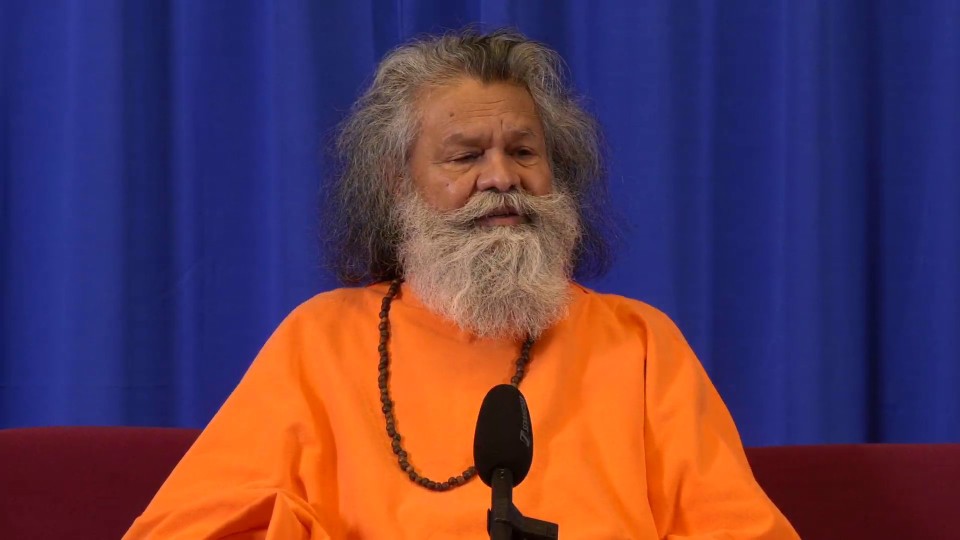
A satsang discourse on compassion, non-violence, and spiritual practice.
"All who are sitting with us are already in satsaṅg. 'Sat' is truth, peace, harmony, goodness—everything."
"Jīva jīva bhakṣate. Every animal eats animals, but we humans should not."
The lecturer addresses the gathering, explaining the essence of satsang as communion in truth. He uses metaphors of a ship and an airplane to illustrate the unity of all life, emphasizing that the soul (ātmā) is in every creature. The core teaching is a call for ahimsa (non-violence), urging humans to not kill other beings for food, contrasting human potential with animal nature. He discusses the challenges of Kali Yuga, advises against alcohol misuse, and clarifies protocols for offering garlands to guru photographs.
Filming location: Salzburg, Austria
There are very much good people everywhere
19:30 - 19:56 (26 min)
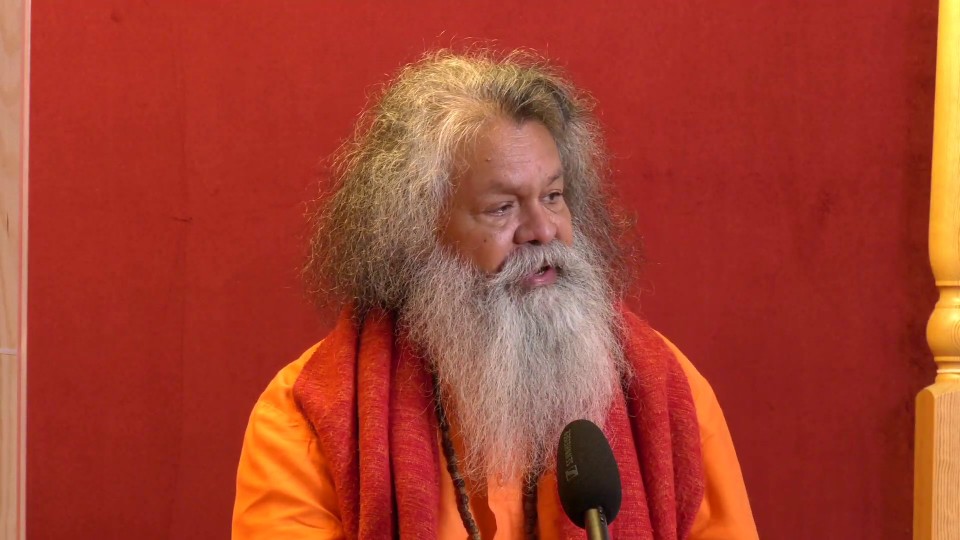
A spiritual teacher shares reflections on community, practice, and universal respect.
"One thing is for us: that we have only two things, that is God and you, yes. We are here for all of you."
"We tell them, 'Give them water. If they are hungry or something, you can give them food,' and respect them like this."
The speaker, likely a Swami, addresses a gathering, weaving personal anecdotes from travels in Europe with core principles of Sanātana Dharma. He emphasizes inclusivity, service, and maintaining the sanctity of the ashram space, while contemplating deep questions of peace, equality, and life's purpose. The talk circles themes of welcoming all visitors without imposing religious views.
Filming location: Vienna, Austria
Part 1: Yoga, Faith, and Integration: A Personal Journey and Panel Discussion
20:00 - 21:04 (64 min)
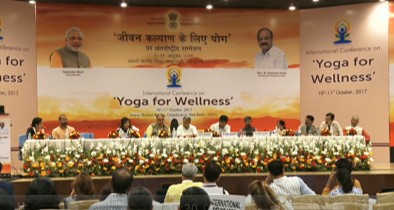
A personal testimony on faith-based yoga healing and a panel discussion on integrating traditional medical systems.
"I refused chemotherapy, radiotherapy, and surgery... I believed those fresh, positive thoughts in my consciousness would bleed down into my nervous system and start to talk to my cells."
"Yoga is not about the āsana. Why not? It is about God. If you allow God's energy to run into your system... God will provide the miracles."
Neil Patel shares his personal journey of using yoga and conscious thought to survive cancer for 18 years after refusing conventional treatment. Following his testimony, a moderated panel featuring practitioners of Homeopathy, Ayurveda, Siddha, and Yoga discusses pathways to integrate these AYUSH systems with modern medicine for holistic wellness. Key themes include treating the whole person, cost-effective care, managing non-communicable diseases, and yoga's role in raising consciousness beyond mere physical health.
Filming location: Delhi, India
Mother and father
21:00 - 21:30 (30 min)
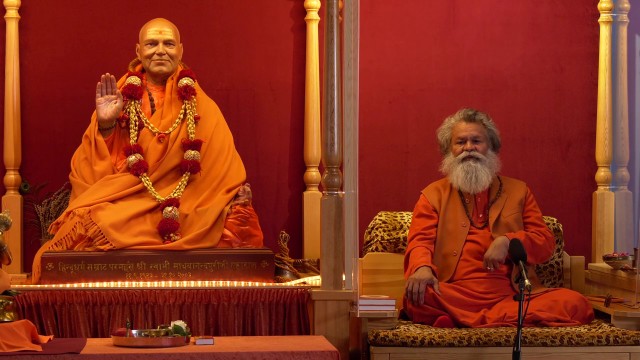
Morning satsang with Vishwaguruji from Guruji Ashram, Austria. Bhajan singing. We respect first the woman, the mother. Vishwaguruji tells the story of his parents. It is very good if we have children and they also practice yoga. Father is also very good because he works much. Yoga in Daily Life gives peace and understanding to the world. Our energy is based on our navel. The seed of our life is coming from the father.
We should understand the Yoga
21:05 - 21:58 (53 min)
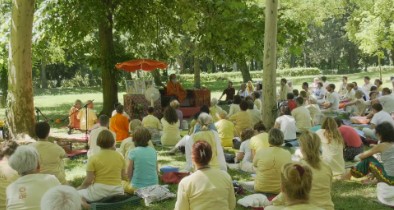
A spiritual discourse on the essence of yoga, scripture, and daily practice.
"Our seminar is a very good word; there, all are together in oneness." "We cannot say only this yoga is the best. Therefore, Yoga in Daily Life does not mean only that you should work or teach. It means practicing yoga in everyday life."
Swami Ji addresses a gathering, weaving together teachings on Śruti (revealed knowledge) and Smṛti (memory) with the core principles of the "Yoga in Daily Life" system. He emphasizes that intellectual knowledge is insufficient without consistent practice, using the analogy of a hollow bamboo versus a solid sugar cane. The talk explores various yoga paths—including Kuṇḍalinī, Patañjali's Aṣṭāṅga Yoga, Bhakti, and Jñāna—and shares the legendary story of the saint Jñāneśvara to illustrate spiritual power. He concludes with practical advice on family, compassion, and integrating practice into all aspects of life.
Filming location: Vép, Hungary
Vegetarian cooking lesson 11, Kadhi soup, Okra and chapatis
22:00 - 22:14 (14 min)

A cooking demonstration on preparing Marwa-style gāṭṭā kadhi, chapati, and regional vegetables.
"When I was thinking about how to explain or show the gāṭṭā... it came to my mind that it is like the attachment of this world. When we touch the besan dough, it sticks very quickly. Then we use the oil of wisdom, which gets rid of the attachment."
"The Marwa kitchen has very, very delicious food—spicy, tasty, healthy, and very natural. The people living there eat only regional food. They know the leaves and fruits growing in their area."
The speaker guides viewers through making kadhi with chickpea flour dumplings (gāṭṭā), using the sticky dough as a metaphor for worldly attachment. The process includes preparing the dough with yogurt and spices, boiling and testing the gāṭṭā, and making chapati. The talk highlights regional Marwa cuisine, mentioning local ingredients like guṇḍā and the health benefits of bitter gourd, which is promised for a future lesson.
Filming location: Vép, Hungary
A Guided Yoga Practice
22:00 - 22:21 (21 min)
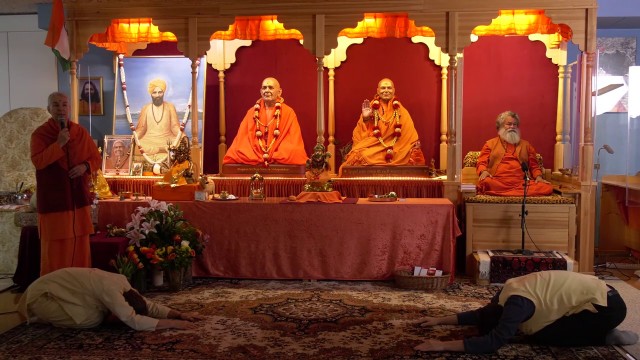
A guided yoga practice with instructions for postures and movement.
"Please, vajrāsana, vajrāsana. And very slowly, do not go quickly."
"Everybody has to know his or her body, so according to this, we should practice."
An instructor leads a group through a slow, detailed yoga sequence, calling out numbered steps and offering posture adjustments. The guidance emphasizes slow movement, stretching the back and legs, and adapting poses for individual limitations like back pain or high blood pressure. The session concludes with relaxation instructions.
Filming location: Khatu, Rajasthan, India
Yoga is One
22:20 - 22:51 (31 min)
A spiritual talk on the principles and practice of yoga in daily life.
"Yoga is the yoga. It’s the yoga, that’s all then. There’s nothing else."
"Yoga in daily life... means we should practice every day. That’s all. And that is for everyone, whether they are Hindus, Muslims, Christians, or anybody."
The speaker addresses a group, holding up the system's foundational book. He emphasizes that true yoga requires daily practice according to these teachings, not just theoretical knowledge. He discusses the importance of ethical living, notably vegetarianism, criticizes the dilution of yoga by other systems, and urges a return to disciplined, foundational practice. The talk meanders through topics including dietary rules, the global spread of yoga, and personal anecdotes.
Filming location: Austria
Birthday celebraion of Swami Avatarpuriji
22:55 - 23:25 (30 min)
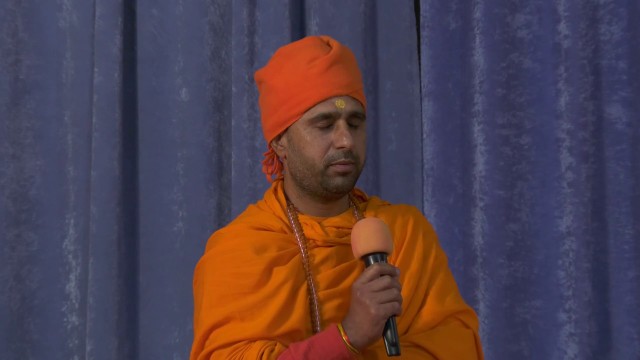
Evening satsang with Vishwaguruji from Jadan Ashram, Rajasthan, India. Speech of Mahamandaleshwar Swami Phulpuriji in english. Lecture by Vishwaguruji in Hindi.
Human and God
23:30 - 0:03 (33 min)
A spiritual discourse expressing concern for the decline of Sanātana Dharma and traditional values.
"Now we don’t know what is happening. We have started eating all kinds of food."
"In our Sanātana Dharma, please show mercy and look after our children."
The speaker, reflecting on years spent abroad and returning to India, delivers an impassioned monologue on perceived spiritual and cultural decay. Key themes include the loss of devotional practices like bhajan, the adoption of non-vegetarian diets, and the neglect of children's traditional education. The talk moves between personal anecdotes, critiques of modern habits, and a call for a return to conscientious living and connection with the divine.
Filming location: Jaipur, Rajasthan, India
American
Australian