
European
Bhajan singing from Vep
0:45 - 1:12 (27 min)
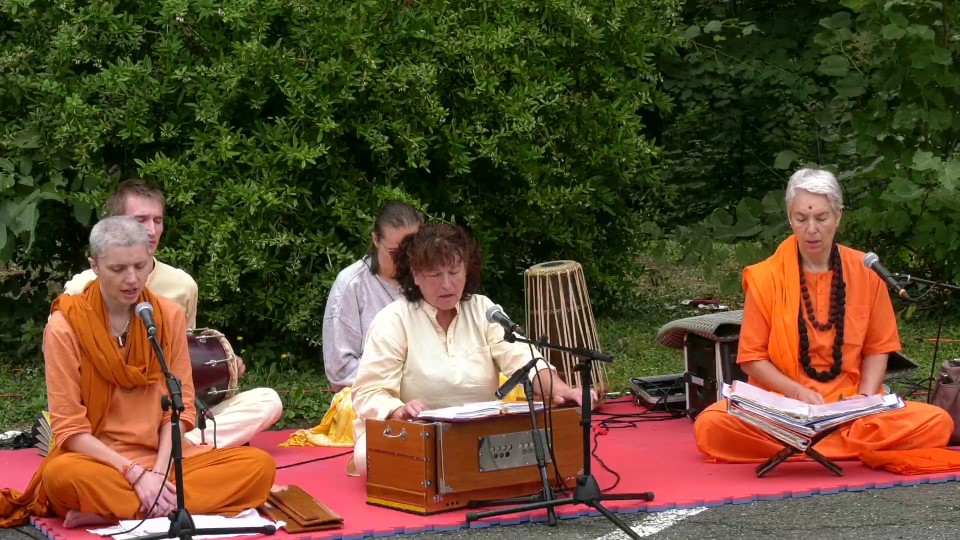
Morning satsang with Vishwaguruji from Vep, Hungary. Bhajan singing. Translation of the bhajan "Itna to karana Guruji"
Live webcast from Jadan Ashram
1:30 - 2:30 (60 min)
Evening satsang with Vishwaguruji from Jadan Ashram, Rajasthan, India.
Do good things and be happy
1:40 - 2:26 (46 min)
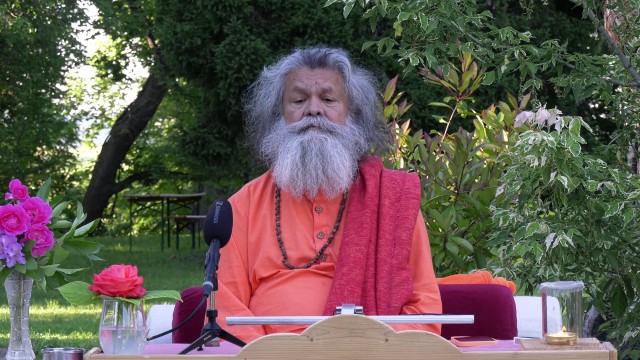
Evening satsang with Vishwaguruji from Strilky Ashram, Czech Republic. Bhajan singing. Bhajans are one of the best things in the world. When we sing good words come from our hearts and make other people happy. Sometimes people are happy also when they do bad things. The story of a sadhu and a tree. We should be peaceful and positive so we can go to God. Om Ashram is for the future generation. Half of iva was a woman and the other half was a man.
How did Vishwaguruji get the vision of Alakhpuriji?
2:30 - 3:15 (45 min)
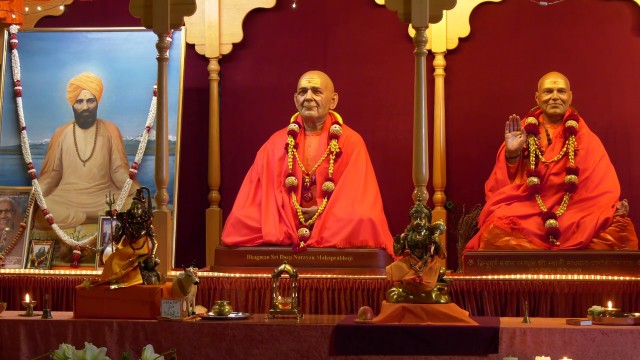
Evening satsang with Vishwaguruji from Vienna, Austria. Himalaya is a very spiritual place. Sadwi Shanti searched and found Alakhpuriji's place in the Himalayas. Vishwaguruji also went to the Himalayas to see Alakhpuriji's cave. Many people went with him to see God. The story of Vishwaguruji's visit to the Himalayas at Alakhpuriji's cave. The story of the death of Mataji. The story of Nandadevi who was the disciple of Alakhpuriji and the river Alakananda. When we come together we can get the energy of all our great Masters.
We should also be clean inside
3:20 - 4:00 (40 min)
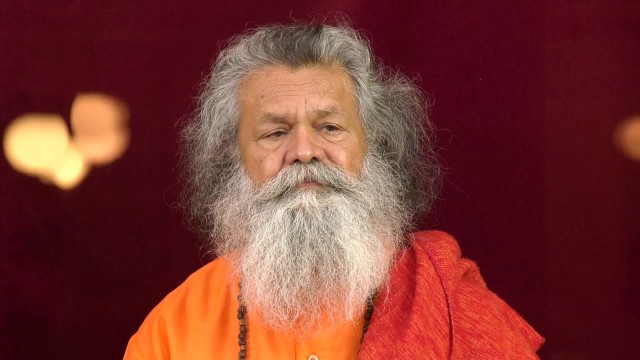
Evening satsang with Vishwaguruji from Strilky Ashram, Czech Republic. Strilky Ashram is very good place to practise spiritual sadhana. A jiva many times comes and goes, again and again. Every creature has the same atma. In the end, our atma arrives to God like a drop of water to the ocean. The story of a rakshasa (demon) who got a siddhi (special ability) from Shiva to burn anybody with his hand. God also burns up all negative qualities. God's light reaches everywhere. Those who are separated sooner or later will split. Dirty water is going out of the Ganga. Water is powerful. A bathe in the Alakhananda River cleanses us from all our negative qualities, thoughts and feelings. After that, if we are negative, it's like the dust coming to us again. We can clean ourselves with our breath.
We all will come to oneness
4:05 - 4:44 (39 min)
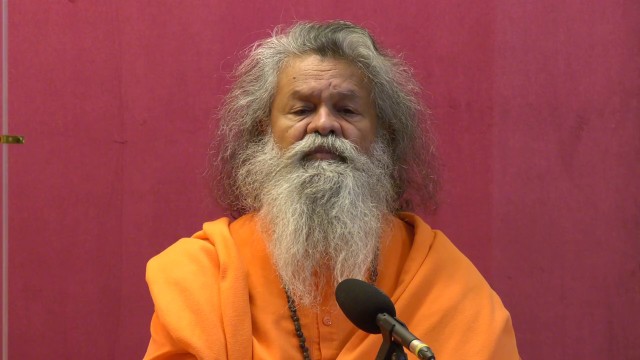
A satsang discourse on spiritual equality, service, and the soul's journey.
"Everyone, without exception, is equal in the eyes of our Gurujī, Mahāprabhujī."
"And when this ātmā, the soul, will go, then it is completely there. There is nothing; there is only one."
The lecturer addresses the community, emphasizing that all disciples—regardless of background or role—should be included in practices like pūjā. He teaches that service and respect form a spiritual family, illustrates oneness with an ocean metaphor for the soul, and shares an anecdote about Holy Gurujī and Mahāprabhujī to illustrate humble service.
Filming location: Vienna, Austria
Buddha
4:50 - 5:28 (38 min)
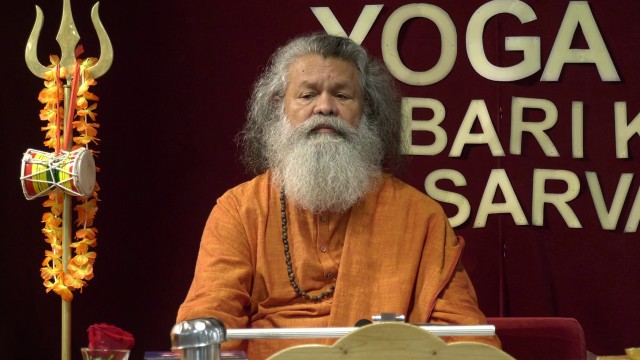
A spiritual discourse on the value of the present moment, weaving in personal anecdotes and stories of Buddha.
"Every second is irretrievably gone. So it is that we should always... be now with ourselves."
"The present is very great. The present is great. And the future we do not know. The past is gone."
The speaker, likely a swami, gives an unstructured talk emphasizing the importance of living fully in the present. He uses the metaphor of chewing food to illustrate savoring the moment, then recounts various stories: a legendary queen who disfigured her face to discourage admirers, details of Buddha's ascetic life, and a personal story about a banyan tree sapling from Bodhgaya being planted in central Australia. The themes revolve around mindfulness, detachment, and spiritual lineage.
Filming location: Strilky, Czech Republic
Keep the flame still
5:35 - 6:13 (38 min)
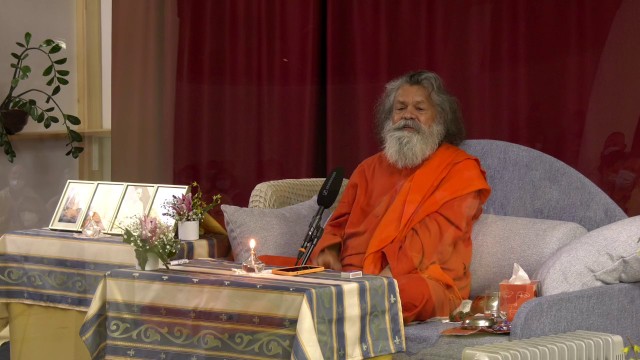
A spiritual discourse on maintaining the sacred flame of life within daily householder and community practice.
"You are already a yogī. You possess that science, yet you seek yogic attainment."
"This flame is what we call our ātmā, our spirit, which then departs. So when this is happening, we must learn from it."
The lecturer addresses a gathering, weaving together themes from the Yoga in Daily Life system. He emphasizes the dignity of the householder path, advocating for marriage and family life as spiritually vital. Using the extended metaphor of an oil lamp, he explains the body, life force, and spirit, urging the daily practice of lighting a lamp and maintaining temple pūjā in āśramas to nurture collective spirituality and personal health. He shares personal anecdotes and practical instructions, concluding with blessings and travel plans.
Filming location: Slovenia
Let me come to You
6:20 - 6:53 (33 min)
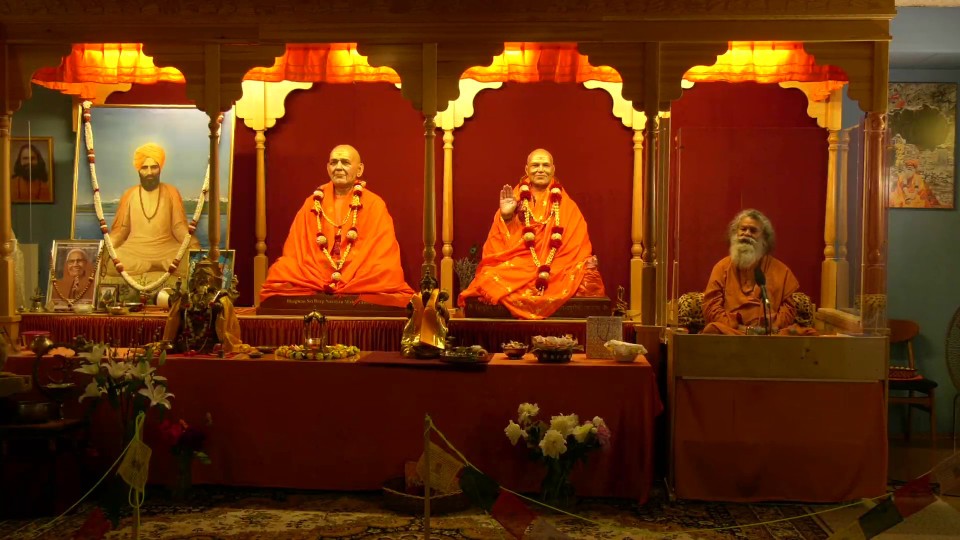
A spiritual discourse on the science of the soul and universal connection.
"To see you all, I know, is a matter of science. It doesn't matter what we think; it is about techniques—the techniques, the science."
"Our body is mortal, and our body will die. In our body, we have our ātmā, our soul. But in our body, there is not only one soul. Many souls are inside, very tiny, even in a cell of our body."
Swami Ji addresses a gathering, explaining yogic science as a means of direct, non-physical communication, as mastered by ancient ṛṣis. He explores the nature of the soul, using metaphors of telephones, honeybees, and fruit trees to describe multiplicity within unity and the spiritual connection between a guru and disciples globally. He touches on the challenges of Kali Yuga, the pandemic, and concludes with a personal anecdote about healing.
Filming location: Vienna, Austria
Human and God
7:00 - 7:33 (33 min)
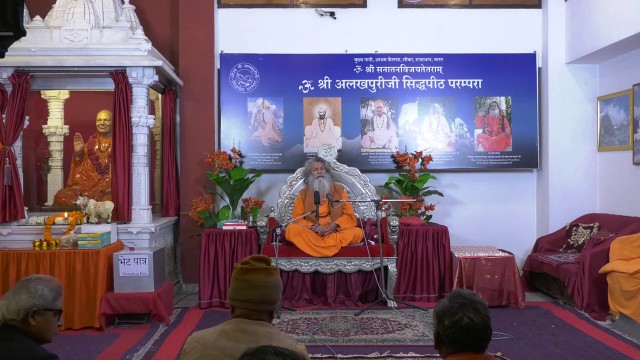
A spiritual discourse expressing concern for the decline of Sanātana Dharma and traditional values.
"Now we don’t know what is happening. We have started eating all kinds of food."
"In our Sanātana Dharma, please show mercy and look after our children."
The speaker, reflecting on years spent abroad and returning to India, delivers an impassioned monologue on perceived spiritual and cultural decay. Key themes include the loss of devotional practices like bhajan, the adoption of non-vegetarian diets, and the neglect of children's traditional education. The talk moves between personal anecdotes, critiques of modern habits, and a call for a return to conscientious living and connection with the divine.
Filming location: Jaipur, Rajasthan, India
Selfless action and bhajans
7:40 - 8:12 (32 min)
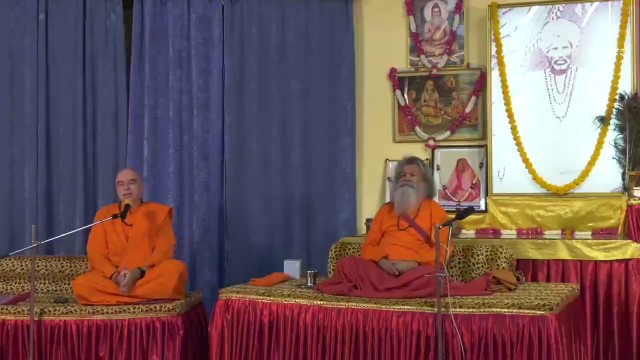
Evening satsang with Vishwaguruji from Jadan Ashram, Rajasthan, India. Swami Gyaneshwar's report from Jadan. You know, I've been living in India for a while now. If you come to Jadan from Jaipur, you will feel the special atmosphere, the peace of the place. In the minds of Indian sages, secular and spiritual knowledge go hand in hand. Karma yoga is selfless help. In Jadan, there is always the possibility to continue the work. In the West, people are used to being alone at any time, so it is difficult to work together with others. Chanting bhajans creates the emotional basis for karma yoga.
The origin of knowledge
8:20 - 8:51 (31 min)
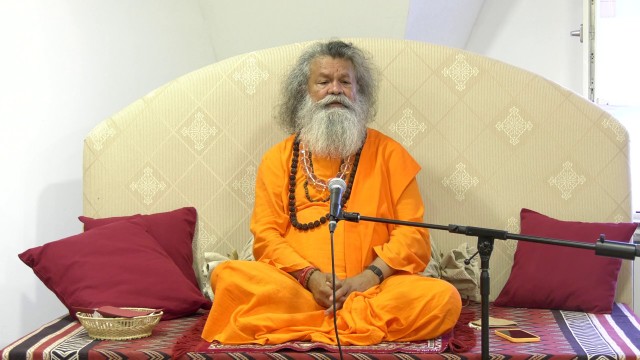
A spiritual discourse on the guru lineage and the vision for a unified ashram.
"In my heart, I tell you that if we have understood and you wish to do this, then you have already received Guru Kṛpā. It has already been given to you—not by me, but by Alak Purījī."
"And you all should be one; we all should become one... This āśram is for each and every one. Yes, all these countries."
The speaker addresses a gathering, tracing a spiritual lineage from Bhagavān Śiva through Alak Purījī to Mahāprabhujī. He emphasizes the received grace of this lineage and expresses a core desire for unity among all attendees and their countries. The discourse shifts to a practical vision for building a large, inclusive ashram through collective contributions, while also advising on spiritual conduct and mutual support.
Filming location: Zagreb, Croatia
Birthday celebraion of Swami Avatarpuriji
8:55 - 9:25 (30 min)
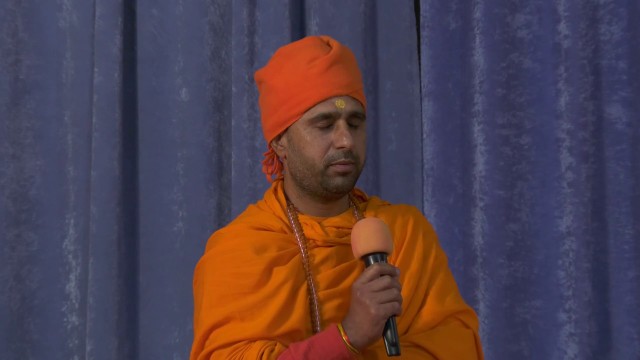
Evening satsang with Vishwaguruji from Jadan Ashram, Rajasthan, India. Speech of Mahamandaleshwar Swami Phulpuriji in english. Lecture by Vishwaguruji in Hindi.
We must now go further
9:30 - 9:59 (29 min)
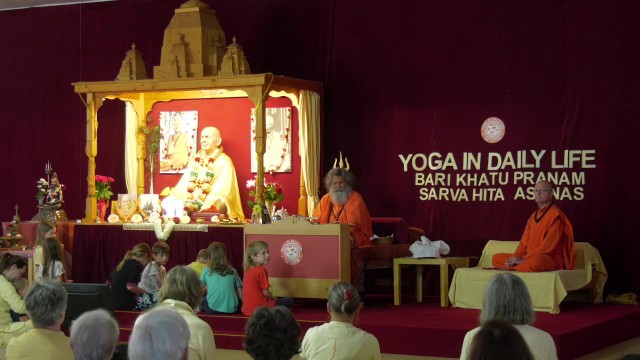
A spiritual talk on integrating practice into daily life and devotion.
"At home and everywhere, when we have the time, we should all be very nice. It is not only sitting and chanting 'om, om, om.' No, be very nice to your family."
"Until the last, until the last time, when you will be in your guru and in your sādhanā, then in the last minutes, then you will go as into Paramatmā."
A spiritual teacher addresses a gathering, emphasizing the importance of continuing yoga practice, prayer, and kindness within the family beyond retreats. The talk weaves personal anecdotes about the global yoga community during the pandemic and shares a story about the devoted passing of a disciple in America, illustrating the ideal of remaining in guru and sādhanā until the end.
Filming location: Strilky, Czech Republic
Advice for practising Anusthan
10:05 - 10:54 (49 min)
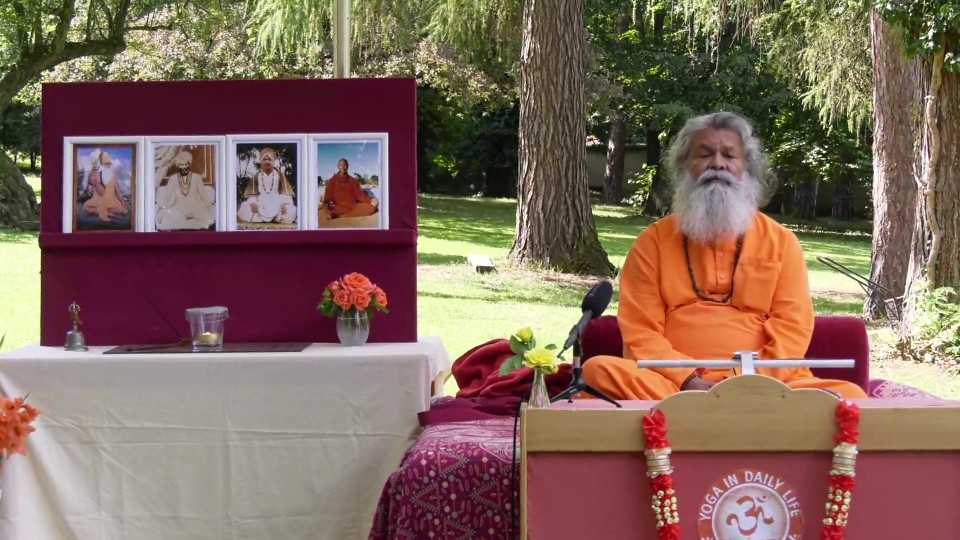
A satsang on establishing daily spiritual practice (sādhanā) and discipline.
"Holy Gurujī said, 'You can eat three times, but have nothing except water in between.'"
"The best time is early morning. Practice for twenty-five minutes, only once. Do not do two practices in one day."
The lecturer addresses participants of a seminar, giving practical guidance for integrating practice into daily life. He emphasizes moderation in eating, the importance of a consistent morning meditation routine, and previews a technique involving concentration on three points (forehead, chest, navel) to be taught the following day. The talk includes administrative notes and gentle humor.
Filming location: Strilky, Czech Republic
Mahaprabhuji's Mahasamadhi Celebration (1/3)
11:00 - 12:12 (72 min)
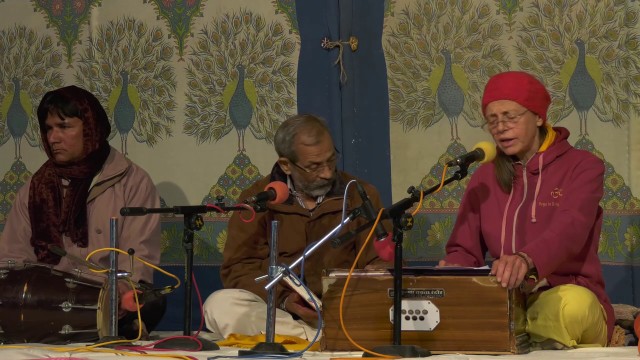
Satsang with Vishwaguruji in Om Ashram, Jadan village, Pali District, Rajasthan, India. Several hours of Bhajans.
Introduction to the chakras
12:20 - 13:04 (44 min)
A spiritual discourse exploring states of consciousness, divine mythology, and yoga practice.
"One state is just being completely relaxed. Or one has gone above."
"And you know that all my programs are gone... Guru's guru is the cobra, and that cobra, which some cobras have, like so many mouths."
The speaker delivers a free-flowing talk, weaving together personal anecdotes about a journey to Australia with teachings on Śiva, Viṣṇu, and the symbolism of the cobra. The discourse touches on Kuṇḍalinī awakening, the relationship between Śiva and Śakti, and the importance of yoga practice, kriyā, and devotion, concluding with the principle of "one in all, all in one."
Filming location: Vép, Hungary
The relation between Guru and disciple
13:50 - 14:54 (64 min)
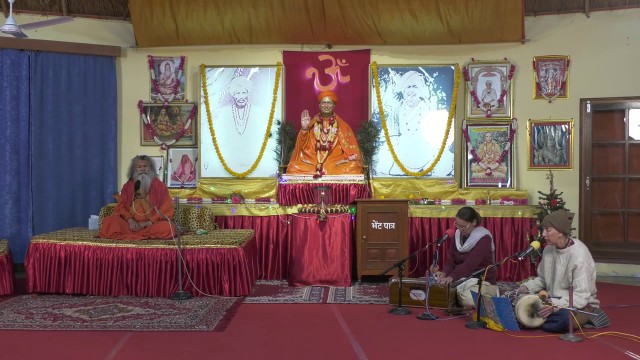
Evening satsang with Vishwaguruji from Jadan Ashram, Rajasthan, India. Holy Guruji and Sri Mahaprabhuji meeting in Jodhpur. How bhajans are performed in India and around the world. Guru and disciple are always in connection with each other. Just as the relationship between mother and child is forever, even if they are not physically in the same place.
Mahaprabhuji's Mahasamadhi Celebration (2/3)
15:00 - 16:18 (78 min)
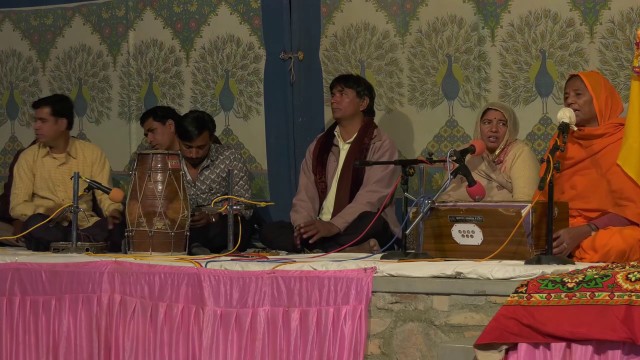
Satsang with Vishwaguruji in Om Ashram, Jadan village, Pali District, Rajasthan, India. Several hours of Bhajans.
Let me come to You
16:25 - 16:58 (33 min)
A spiritual discourse on the science of the soul and universal connection.
"To see you all, I know, is a matter of science. It doesn't matter what we think; it is about techniques—the techniques, the science."
"Our body is mortal, and our body will die. In our body, we have our ātmā, our soul. But in our body, there is not only one soul. Many souls are inside, very tiny, even in a cell of our body."
Swami Ji addresses a gathering, explaining yogic science as a means of direct, non-physical communication, as mastered by ancient ṛṣis. He explores the nature of the soul, using metaphors of telephones, honeybees, and fruit trees to describe multiplicity within unity and the spiritual connection between a guru and disciples globally. He touches on the challenges of Kali Yuga, the pandemic, and concludes with a personal anecdote about healing.
Filming location: Vienna, Austria
Yoga in Daily Life - exercise program
17:00 - 18:29 (89 min)

Morning Yoga exercise according to system Yoga in Daily Life from Mahaprabhudeep Ashram, Strilky, Czech Republic.
Follow the words of the Guru continuously
18:35 - 19:29 (54 min)
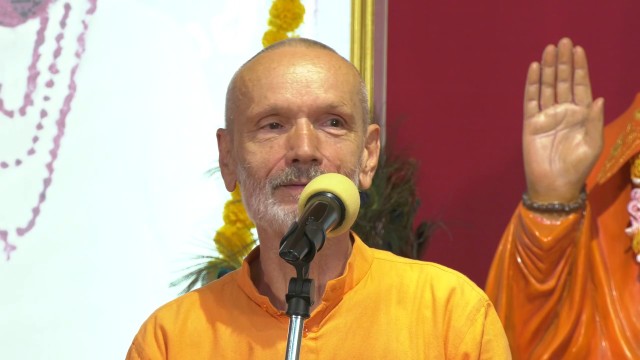
Evening satsang with Vishwaguruji from Jadan Ashram, Rajasthan, India. Swami Sudarsanpuri speaks some words about Guru vakya and Guru seva. We should find the correct way to the seva and the practice. There are many people in Europe and India also who are very disciplined and practise very seriously. Many people from many countries would like to follow Yoga in Daily Life. There are many great saints and Gurus in India. They all are very good. It is very good when families are living together and love children very much. The first Guru was Bhagavan Siva. The story of Siva Parvati and a merchant. Husband and wife should be one. Vishwaguruji organized the next day's work in the Ashram.
We are that drops
19:35 - 21:04 (89 min)
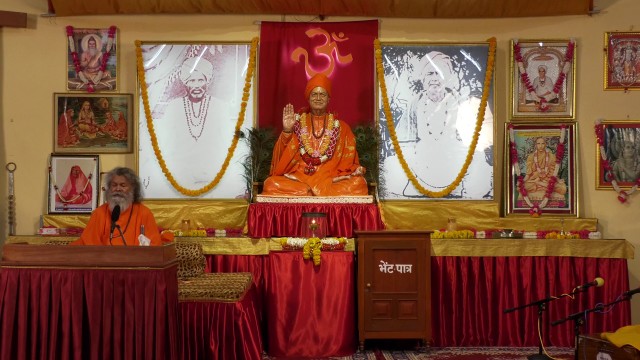
Evening satsang with Vishwaguruji from Jadan Ashram, Rajasthan, India. Bhajan singing. There are many yogis in the Jadan Ashram who are practising faithfully and do karma yoga also. Some animals eat only animals others eat grass. But humans shouldn't kill anyone. When we die our hands are open and nothing is in them. One drop of water and the ocean are the same. O Lord enlighten the mind of humans not to eat meat.
The importance of yoga dress
21:10 - 21:23 (13 min)
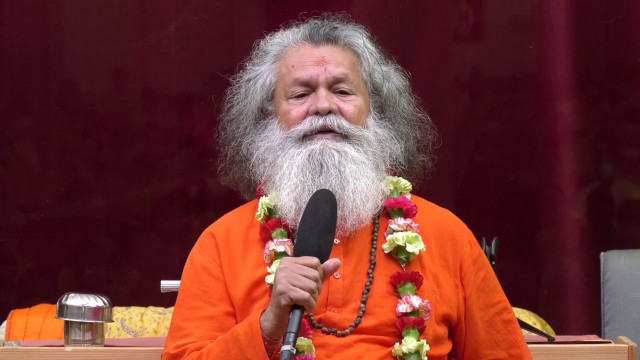
A spiritual teacher addresses a gathering on tradition, respect, and practice.
"According to our tradition, the Satguru is our Bhagavān: Śrī Dīp Nārāyaṇ, Mahāprabhujī, Devpurījī."
"I have told you many times, for at least 20 years, that all disciples of our Yoga in Daily Life should have this dress."
Swami Maheshvaranand speaks to practitioners, emphasizing reverence for the guru lineage during a holy period. He discusses the spiritual significance of traditional attire, urging modesty, while acknowledging personal choice. He then announces future ceremonies for Om Ashram and explains, through the metaphor of Lord Shiva and his bull Nandi, a protocol for making offerings and prayers.
Filming location: Strilky, Czech Republic
We all will come to oneness
21:30 - 22:09 (39 min)
A satsang discourse on spiritual equality, service, and the soul's journey.
"Everyone, without exception, is equal in the eyes of our Gurujī, Mahāprabhujī."
"And when this ātmā, the soul, will go, then it is completely there. There is nothing; there is only one."
The lecturer addresses the community, emphasizing that all disciples—regardless of background or role—should be included in practices like pūjā. He teaches that service and respect form a spiritual family, illustrates oneness with an ocean metaphor for the soul, and shares an anecdote about Holy Gurujī and Mahāprabhujī to illustrate humble service.
Filming location: Vienna, Austria
Respect the life of other creatures
22:15 - 23:03 (48 min)
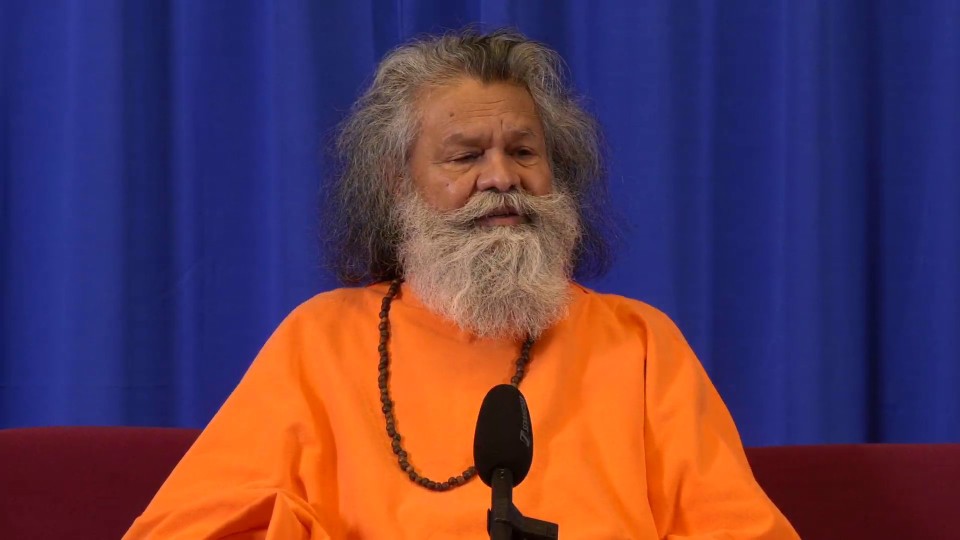
A satsang discourse on compassion, non-violence, and spiritual practice.
"All who are sitting with us are already in satsaṅg. 'Sat' is truth, peace, harmony, goodness—everything."
"Jīva jīva bhakṣate. Every animal eats animals, but we humans should not."
The lecturer addresses the gathering, explaining the essence of satsang as communion in truth. He uses metaphors of a ship and an airplane to illustrate the unity of all life, emphasizing that the soul (ātmā) is in every creature. The core teaching is a call for ahimsa (non-violence), urging humans to not kill other beings for food, contrasting human potential with animal nature. He discusses the challenges of Kali Yuga, advises against alcohol misuse, and clarifies protocols for offering garlands to guru photographs.
Filming location: Salzburg, Austria
Advice for practising Anusthan
23:10 - 23:59 (49 min)
A satsang on establishing daily spiritual practice (sādhanā) and discipline.
"Holy Gurujī said, 'You can eat three times, but have nothing except water in between.'"
"The best time is early morning. Practice for twenty-five minutes, only once. Do not do two practices in one day."
The lecturer addresses participants of a seminar, giving practical guidance for integrating practice into daily life. He emphasizes moderation in eating, the importance of a consistent morning meditation routine, and previews a technique involving concentration on three points (forehead, chest, navel) to be taught the following day. The talk includes administrative notes and gentle humor.
Filming location: Strilky, Czech Republic
American
Australian