
European
The importance of yoga dress
0:15 - 0:28 (13 min)
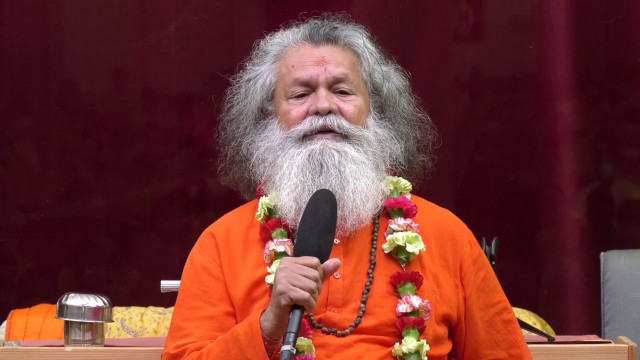
A spiritual teacher addresses a gathering on tradition, respect, and practice.
"According to our tradition, the Satguru is our Bhagavān: Śrī Dīp Nārāyaṇ, Mahāprabhujī, Devpurījī."
"I have told you many times, for at least 20 years, that all disciples of our Yoga in Daily Life should have this dress."
Swami Maheshvaranand speaks to practitioners, emphasizing reverence for the guru lineage during a holy period. He discusses the spiritual significance of traditional attire, urging modesty, while acknowledging personal choice. He then announces future ceremonies for Om Ashram and explains, through the metaphor of Lord Shiva and his bull Nandi, a protocol for making offerings and prayers.
Filming location: Strilky, Czech Republic
Practice every day
0:35 - 1:28 (53 min)
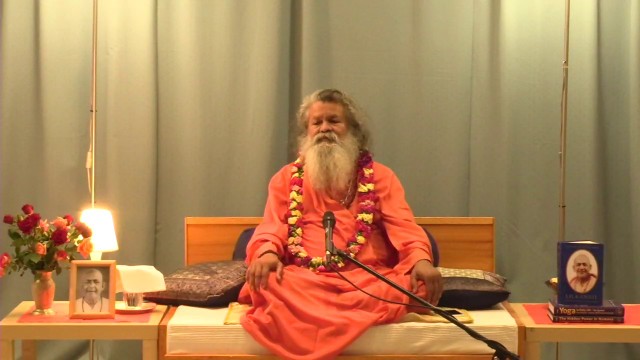
Morning satsang with Vishwaguruji from Melbourne, Victoria, Australia. First God is the mother of the child. Child begins to develop in the mother's body. People lost the science of cooking. In the beginning, there was only conscious and space. Yoga consists of three things: space, conscious and alert. First was the sound and resonance was in it. The first yogi was Shiva who appeared in meditation posture. There are three kinds of meditation external internal and on the Master.
You are free to choose good or bad
1:35 - 2:19 (44 min)
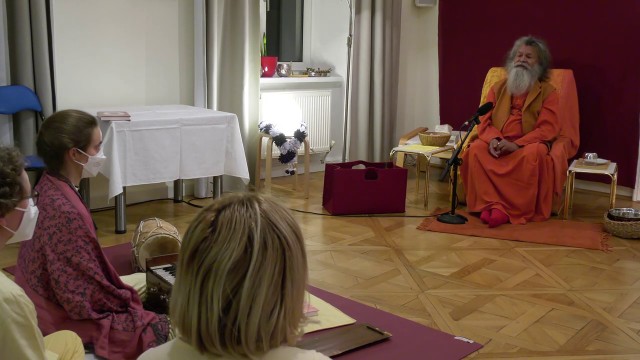
Evening satsang with Vishwaguruji from Linz, Austria. An instrument is a simple construction, but it can give very beautiful sounds. Our body is also like an instrument. We are free to do good or bad things. From our childhood we can develop in good or bad direction also. The story of a tiger baby who mixed among the sheeps. Everybody should know why we shouldn't to eat meat. Bhajan singing.
Keep the flame still
2:25 - 3:03 (38 min)
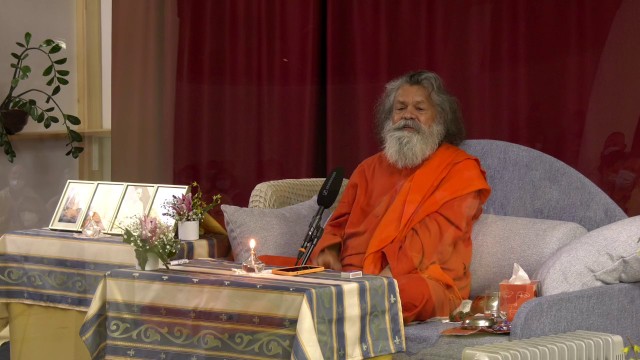
A spiritual discourse on maintaining the sacred flame of life within daily householder and community practice.
"You are already a yogī. You possess that science, yet you seek yogic attainment."
"This flame is what we call our ātmā, our spirit, which then departs. So when this is happening, we must learn from it."
The lecturer addresses a gathering, weaving together themes from the Yoga in Daily Life system. He emphasizes the dignity of the householder path, advocating for marriage and family life as spiritually vital. Using the extended metaphor of an oil lamp, he explains the body, life force, and spirit, urging the daily practice of lighting a lamp and maintaining temple pūjā in āśramas to nurture collective spirituality and personal health. He shares personal anecdotes and practical instructions, concluding with blessings and travel plans.
Filming location: Slovenia
Body and intellect
3:12 - 3:51 (39 min)
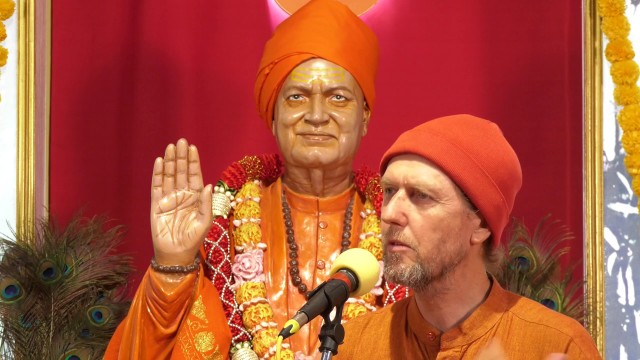
A spiritual lecture on the body as an instrument for self-realization.
"Look, what is actually the most important thing for us to have, or what we are blessed with?... Yes, there is something most important for all of us—maybe the most important possession, the most valuable object we have. And that's our body."
"Nothing is really important in life. Only one thing: look for the Self. Search for the self. Discover the self. Nothing else basically matters. And this self is sitting in our body."
Vishwaguruji introduces Swami Premanandaji, who delivers a discourse in English and German. Using the Bhagavad Gita's chariot allegory, he explains the body as a vehicle governed by the senses and mind, driven by the intellect, with the soul as the passenger. He discusses attachment, the role of discrimination (viveka), and the wisdom of using the body correctly to discover the inner Self.
Filming location: Jadan, Rajasthan, India
Around the world - Holy Sandals of the Guru
4:00 - 4:35 (35 min)
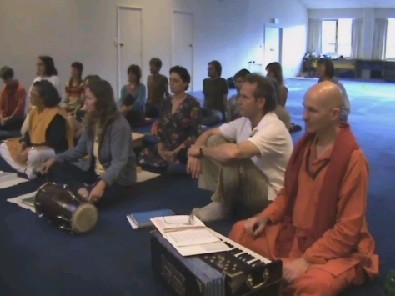
A commentary on Śaṅkara's Guru Pādukā Stotram, a hymn venerating the Guru's sandals.
"Salutations to the holy sandals of the Guru. These sandals help us cross the endless ocean of repeated births and deaths."
"Praying to the Guru's sandals can dry up this entire ocean of delusion."
The speaker provides a detailed exposition of the sacred hymn's significance, beginning with prayers to Gaṇeśa and the Guru lineage. He recounts the historical context of Ādi Śaṅkara's composition and explains selected verses, describing how the Guru's sandals bestow liberation, destroy afflictions like desire and anger, and grant dispassion and self-knowledge. The commentary integrates teachings from Swamijī and references devotional poets like Mīrābāī.
Filming location: Wellington, New Zealand
We are that drops
4:40 - 6:09 (89 min)
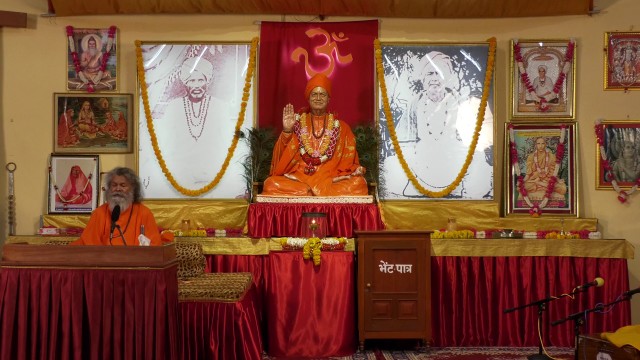
Evening satsang with Vishwaguruji from Jadan Ashram, Rajasthan, India. Bhajan singing. There are many yogis in the Jadan Ashram who are practising faithfully and do karma yoga also. Some animals eat only animals others eat grass. But humans shouldn't kill anyone. When we die our hands are open and nothing is in them. One drop of water and the ocean are the same. O Lord enlighten the mind of humans not to eat meat.
Part 1: The Science of Yoga and the Awakening of Inner Energy
6:15 - 7:30 (75 min)
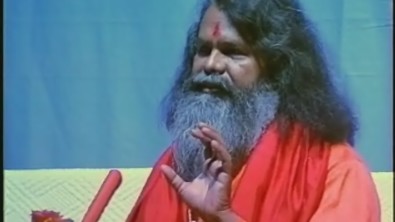
A lecture on the science of Kundalini yoga, consciousness, and world peace.
"Yoga is a balancing principle that harmonizes our body, mind, consciousness, emotions, and intellect."
"The most terrible tragedy that can befall a human is to die without God-realization. But God-realization cannot take place unless you realize yourself."
Swami Maheshwarananda delivers an extensive discourse, beginning with the cosmic origins of yoga and the nature of consciousness. He explains the human energy system, including the 72,000 nadis and eight main chakras, and leads a brief practical demonstration to awaken energy in the palms. The talk covers karma, destiny, the goal of liberation, and concludes with a call for religious tolerance and global harmony, announcing a film from the United Nations.
Filming location: Zagreb, Croatia
The most Important thing being in Unity
7:35 - 8:08 (33 min)
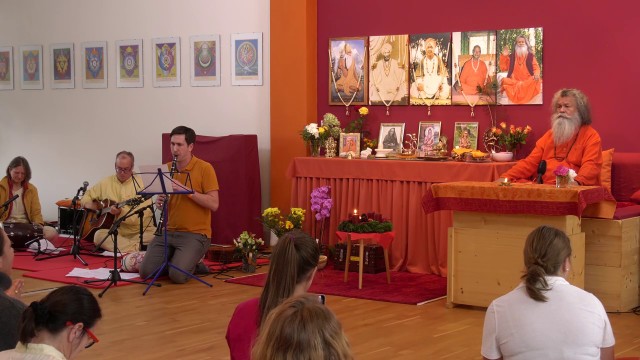
Morning program with Vishwaguruji from Villach, Austria. Come to this Ashram and be happy. Practice and bring good people here. I am very happy to spend two nights here. Now it is the time of holy festival here and in India. The tradition of holy days goes back a long time, without mantra and meditation we would not know what it means to be human.
Mantra is with you for your whole life
8:15 - 8:37 (22 min)
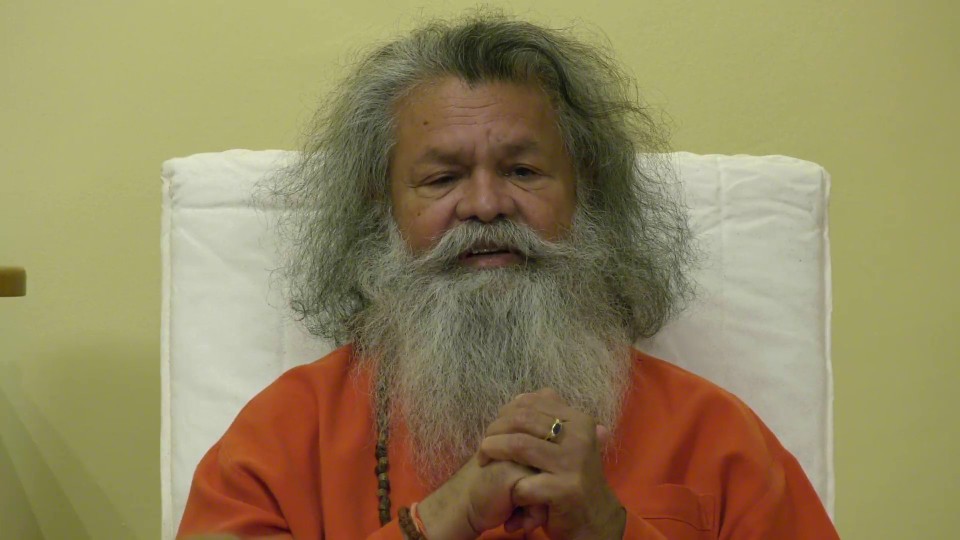
A spiritual discourse on life's two paths, illustrated through a parable about marriage and communication.
"You know very well... And there are two paths." "Spiritual human life is everything. This is what it is, and for that we are thinking."
The speaker presents two life paths: a worldly, professional path and a spiritual path centered on relationships and conscious living. He emphasizes the spiritual path through a lengthy parable about a married couple whose 50-year resentment stems from miscommunication over sharing bread, illustrating how small, unspoken issues can define a life. The talk concludes with the imparting of a lifelong mantra and instructions for a disciplined lifestyle, including vegetarianism.
Filming location: Salzburg, Austria
Mantra is with you for your whole life
8:45 - 9:07 (22 min)
A spiritual discourse on life's two paths, illustrated through a parable about marriage and communication.
"You know very well... And there are two paths." "Spiritual human life is everything. This is what it is, and for that we are thinking."
The speaker presents two life paths: a worldly, professional path and a spiritual path centered on relationships and conscious living. He emphasizes the spiritual path through a lengthy parable about a married couple whose 50-year resentment stems from miscommunication over sharing bread, illustrating how small, unspoken issues can define a life. The talk concludes with the imparting of a lifelong mantra and instructions for a disciplined lifestyle, including vegetarianism.
Filming location: Salzburg, Austria
Become one with yourself
9:15 - 10:14 (59 min)
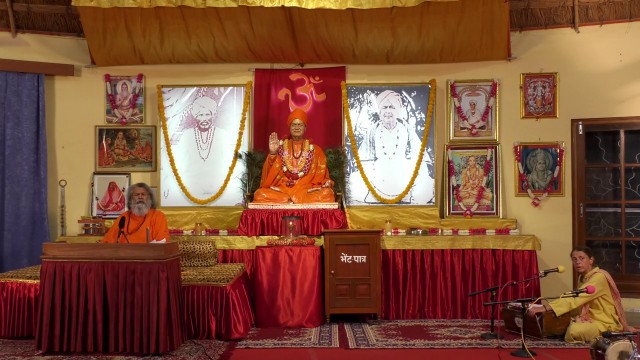
Evening satsang in Jadan Ashram, distr. Pali, Rajasthan, India. I have been to many places, all of which have their own songs. In India, there are many bhajans. The bhajans have a lot of beauty. Even the birds are whistling as if they are singing bhajans. The chanting of the Om starts from the navel, ascends from there and returns back to the navel. Then the yogis enter into meditation. Many people actually turn outwards during meditation. But what we need to do is to become one with ourselves, to unite with our Self.
Let me come to You
10:20 - 10:53 (33 min)
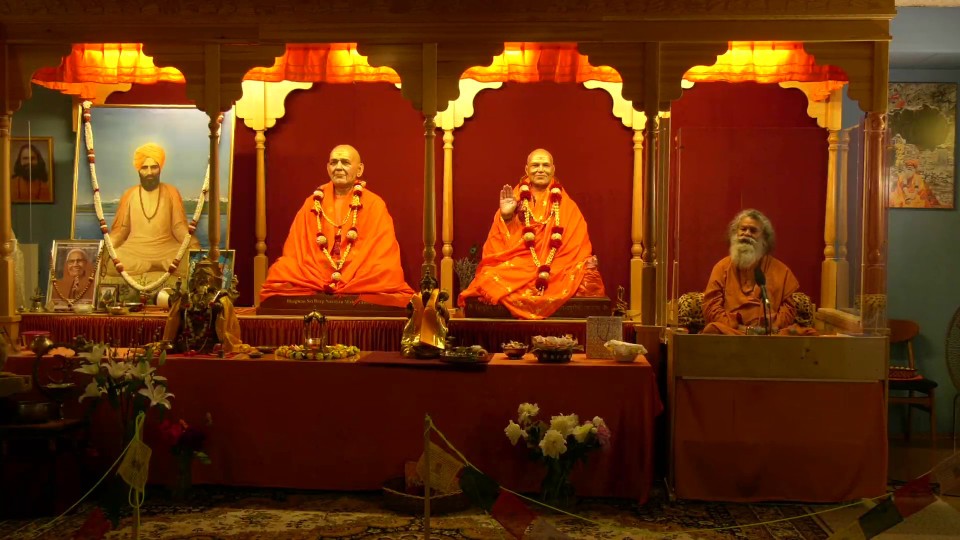
A spiritual discourse on the science of the soul and universal connection.
"To see you all, I know, is a matter of science. It doesn't matter what we think; it is about techniques—the techniques, the science."
"Our body is mortal, and our body will die. In our body, we have our ātmā, our soul. But in our body, there is not only one soul. Many souls are inside, very tiny, even in a cell of our body."
Swami Ji addresses a gathering, explaining yogic science as a means of direct, non-physical communication, as mastered by ancient ṛṣis. He explores the nature of the soul, using metaphors of telephones, honeybees, and fruit trees to describe multiplicity within unity and the spiritual connection between a guru and disciples globally. He touches on the challenges of Kali Yuga, the pandemic, and concludes with a personal anecdote about healing.
Filming location: Vienna, Austria
We are that drops
11:00 - 12:29 (89 min)
Evening satsang with Vishwaguruji from Jadan Ashram, Rajasthan, India. Bhajan singing. There are many yogis in the Jadan Ashram who are practising faithfully and do karma yoga also. Some animals eat only animals others eat grass. But humans shouldn't kill anyone. When we die our hands are open and nothing is in them. One drop of water and the ocean are the same. O Lord enlighten the mind of humans not to eat meat.
Mastery your sleep and dreams
12:35 - 14:03 (88 min)
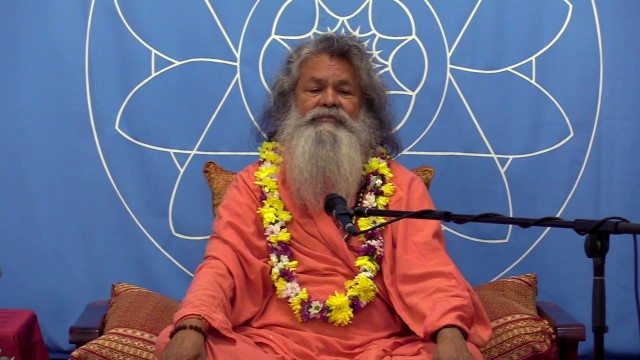
A spiritual discourse on the foundational gurus in life and the layers of human consciousness.
"The first God is the mother. We do not understand all that the mother is giving."
"Yoga is that going deep into every cell of our body. That is yoga."
The lecturer leads a satsang, beginning with the Vedic teaching to revere mother, father, and teacher as the first gods. He expands on the role of the guru as a remover of ignorance and explains the five sheaths (kośas) that cover the soul, from the physical body to the bliss body. He illustrates key concepts like controlling the mind's fluctuations (vṛttis) and mastering states of wakefulness, dream, and sleep with personal stories and analogies.
Filming location: Sydney, Australia
Feel your heart and be merciful for all
14:10 - 15:06 (56 min)
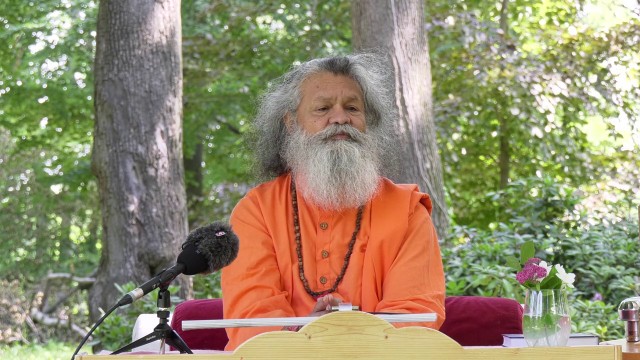
Morning satsang with Vishwaguruji from Stirlky Ashram, Czech Republic, Yoga was given to humans by Siva. He created asanas by observing the movements of the animals. All living beings are the creatures of God. Like humans with different colours of their skin are all one. The story of a rakshasa who wants to live forever. We should be peaceful and humble. We should read holy books and do our sadhana day by day. We shouldn't be like a monkey jumping here and there. Meditation on the heart.
Become one with yourself
15:10 - 16:09 (59 min)
Evening satsang in Jadan Ashram, distr. Pali, Rajasthan, India. I have been to many places, all of which have their own songs. In India, there are many bhajans. The bhajans have a lot of beauty. Even the birds are whistling as if they are singing bhajans. The chanting of the Om starts from the navel, ascends from there and returns back to the navel. Then the yogis enter into meditation. Many people actually turn outwards during meditation. But what we need to do is to become one with ourselves, to unite with our Self.
We should also be clean inside
16:15 - 16:55 (40 min)
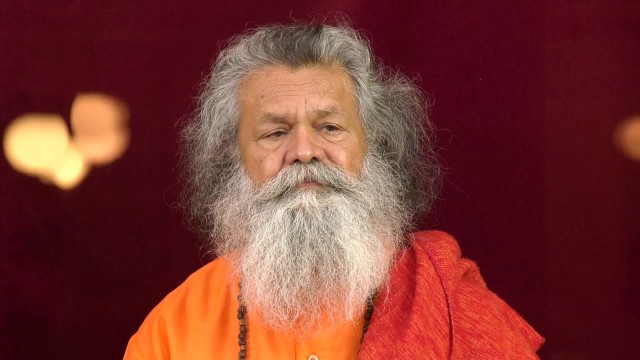
Evening satsang with Vishwaguruji from Strilky Ashram, Czech Republic. Strilky Ashram is very good place to practise spiritual sadhana. A jiva many times comes and goes, again and again. Every creature has the same atma. In the end, our atma arrives to God like a drop of water to the ocean. The story of a rakshasa (demon) who got a siddhi (special ability) from Shiva to burn anybody with his hand. God also burns up all negative qualities. God's light reaches everywhere. Those who are separated sooner or later will split. Dirty water is going out of the Ganga. Water is powerful. A bathe in the Alakhananda River cleanses us from all our negative qualities, thoughts and feelings. After that, if we are negative, it's like the dust coming to us again. We can clean ourselves with our breath.
Practicing of the system 'Yoga in Daily Life', Level 1 - Part 2
17:00 - 18:04 (64 min)
A guided morning yoga class from the Yoga in Daily Life system.
"Relax your whole body from the toes to the top of the head and from the top of the head to the toes."
"Prepare yourself for practicing prāṇāyāma, the breath technique... Breathe twenty times only through your left nostril."
An instructor leads a comprehensive session from the Om Vishwadeep Gurukul ashram. The practice begins with deep relaxation in Ānanda Āsana, followed by a series of gentle stretches, spinal twists, and core exercises like Pavanamuktāsana, all coordinated with conscious breathing. The class transitions to seated postures for spinal extension and flexion, concludes with guided relaxation and a round of Nāḍī Śodhana prāṇāyāma, and ends with a closing mantra.
Filming location: Jadan, Rajasthan, India
How did Vishwaguruji get the vision of Alakhpuriji?
18:10 - 18:55 (45 min)
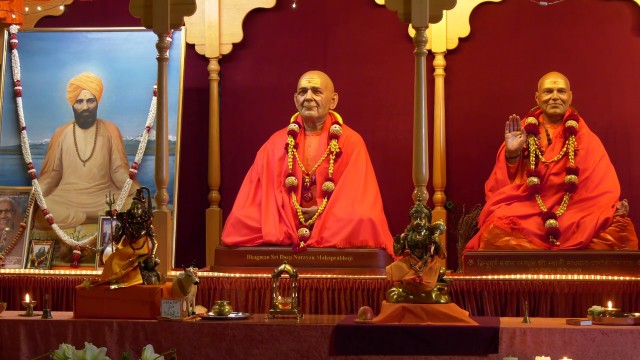
Evening satsang with Vishwaguruji from Vienna, Austria. Himalaya is a very spiritual place. Sadwi Shanti searched and found Alakhpuriji's place in the Himalayas. Vishwaguruji also went to the Himalayas to see Alakhpuriji's cave. Many people went with him to see God. The story of Vishwaguruji's visit to the Himalayas at Alakhpuriji's cave. The story of the death of Mataji. The story of Nandadevi who was the disciple of Alakhpuriji and the river Alakananda. When we come together we can get the energy of all our great Masters.
Kundalini and bhramari pranayama
19:00 - 19:54 (54 min)
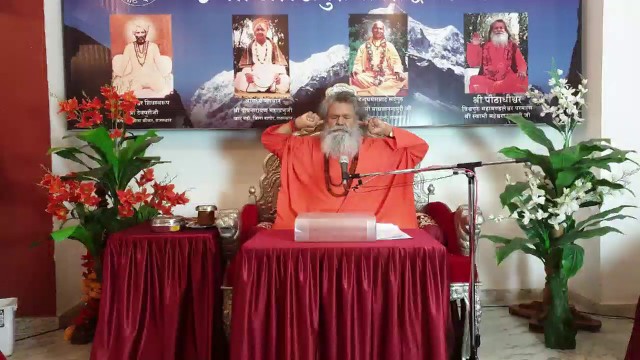
Eveng satsang with Vishwaguruji from Jaipur, Rajasthan, India. Chakras have 52 lotus petals and the Sanskrit alphabet have the same number of letters. Everybody speaks in his mother language at first. Vishwaguruji reads the Sataguru Chalisa- It is read and explained the Sri Kaka Battisi written by Holiguruji. In the Muladhara chakra, there are the 7 datus the 7 important elements of the human body. When kundalini awakens there is not any movements. Brahmari brings us harmony and peace. Demonstrating and practising some brahmari pranayama technics.
Part 1: The Role of Yoga and Meditation in Improving Quality of Life for Cancer Patients
20:00 - 21:07 (67 min)
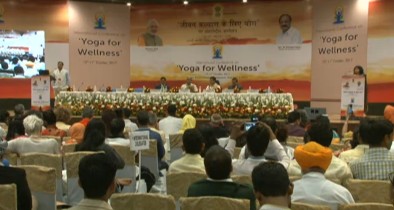
A medical lecture on the role of yoga and meditation as supportive care for cancer patients.
"We must note which specific yogic and meditative techniques were used, as these vary widely."
"Please do not give false hope that cancer will be cured... If a practitioner claims that prāṇāyāma, dhyāna, and some Ayurvedic herbs... can cure cancer, they are committing a grave sin against society."
A doctor from AIIMS Delhi presents a detailed analysis of scientific studies on yogic interventions for cancer patients, emphasizing they are complementary to standard treatments like chemotherapy. He strongly warns against practitioners falsely claiming yoga can cure cancer, shares data on benefits for quality of life and stress, and proposes a large-scale research trial combining yoga, meditation, and herbal products for cancer prevention and care.
Filming location: Delhi, India
Part 1: Welcoming Address and Valedictory Session on Yoga for Wellness
21:10 - 22:18 (68 min)
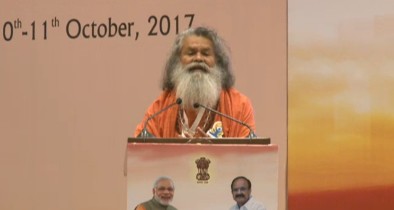
A valedictory session for a conference on "Yoga for Wellness," featuring addresses by government ministers and spiritual leaders.
"Yoga for wellness is this year’s subject. It is not just about the practice of yoga, but also about using it in the lives of every human being for achieving better health and wellness."
"Our method of treatment does not have any side effects. That is why we develop research about it, develop websites, develop programming, develop its videos."
The session opens with a welcome address emphasizing yoga's global role and the need to integrate traditional and modern medicine. Union Minister Nitin Gadkari delivers a valedictory address, sharing his personal health transformation through yoga and proposing structured training and research to professionalize the field. Following remarks from other ministers, Professor H.R. Nagendra gives a speech contrasting the multidimensional approach of yoga with modern medicine's limitations for non-communicable diseases. Swami Maheshvarananda and actress Anu Agarwal also share perspectives, with Agarwal recounting her recovery from a major accident through yoga.
Filming location: Delhi, India
Advice for practising Anusthan
22:20 - 23:09 (49 min)
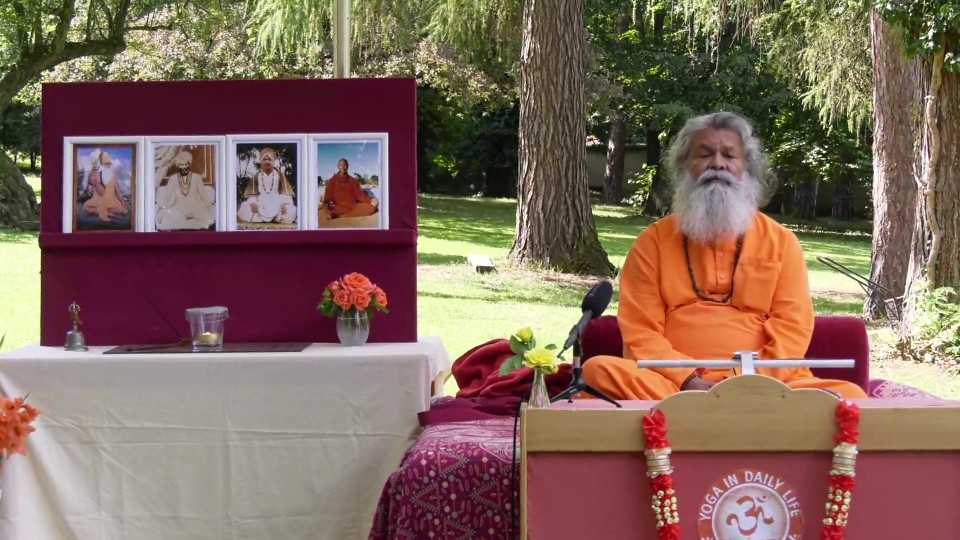
A satsang on establishing daily spiritual practice (sādhanā) and discipline.
"Holy Gurujī said, 'You can eat three times, but have nothing except water in between.'"
"The best time is early morning. Practice for twenty-five minutes, only once. Do not do two practices in one day."
The lecturer addresses participants of a seminar, giving practical guidance for integrating practice into daily life. He emphasizes moderation in eating, the importance of a consistent morning meditation routine, and previews a technique involving concentration on three points (forehead, chest, navel) to be taught the following day. The talk includes administrative notes and gentle humor.
Filming location: Strilky, Czech Republic
Practice every day
23:15 - 0:08 (53 min)
Morning satsang with Vishwaguruji from Melbourne, Victoria, Australia. First God is the mother of the child. Child begins to develop in the mother's body. People lost the science of cooking. In the beginning, there was only conscious and space. Yoga consists of three things: space, conscious and alert. First was the sound and resonance was in it. The first yogi was Shiva who appeared in meditation posture. There are three kinds of meditation external internal and on the Master.
American
Australian