
European
Do we reach?
0:40 - 0:58 (18 min)
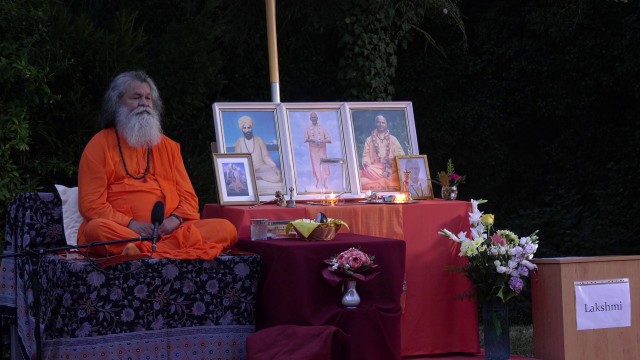
A spiritual discourse reflecting on human progress, simplicity, and the search for fulfillment.
"We were living very well. We were very happy because many people, on the farmer's side, had no telephone."
"Oh human, you will never be complete. You will never say, 'I am okay, finished.'"
The speaker, Swāmījī, recounts observations from life in Vienna, India, and America to contrast past communal simplicity with modern technological complexity. He questions whether material advancement leads to true achievement or contentment, suggesting it is a transient game. The talk concludes with an urging to look inward for lasting peace.
Filming location: Vép, Hungary
We should become white
1:05 - 1:25 (20 min)
A spiritual address reflecting on a return from India and community events.
"I have returned from India, and many of our disciples from India were there. For many years, we have known our Gurudev, Madhavananjī."
"Today I found someone here in this Czech country. Now I have received a message that someone here in the Czech Republic has died."
The speaker, likely a spiritual teacher, shares reflections on their journey to India, the greatness of the land and its saints like Devpurījī Mahāprabhujī, and the strength of their spiritual lineage. The talk takes a somber turn with the announcement of a death in the Czech community, prompting a request for donations and prayers for the departed soul. The speaker then offers guidance on maintaining spiritual practice, purity (symbolized by the color white), and adherence to Sanātana Dharma, encouraging the community to remain united and focused inward.
Filming location: Strilky, Czech Republic
Everything is within ourselves
1:30 - 2:07 (37 min)
A spiritual discourse on inner awakening and the role of the guru in yoga practice.
"Practice is that awakening within ourselves. We are the ones who practice. Practice does not come from outside; it comes from our inner self."
"Everything we have is within ourselves. It takes a long time if you want to learn the flute. We can learn, but after the teacher instructs you... that knowledge awakens in our consciousness."
Swami Maheshvarananda addresses a global audience, explaining that spiritual knowledge and capacity are inherent within each person but often lie dormant. Using analogies of a warning friend, a flute player, and a student driver, he describes how a guru or teacher serves to awaken this inner science. He emphasizes that true mastery requires constant, alert practice and integrates personal anecdotes about sleep and the practice of Brahmari Prānāyāma.
Filming location: Strilky, Czech Republic
Live webcast from India
1:30 - 3:00 (90 min)
Evening satsang with Vishwaguruji from Jaipur Ashram, India.
Mantra is with you for your whole life
2:15 - 2:37 (22 min)
A spiritual discourse on life's two paths, illustrated through a parable about marriage and communication.
"You know very well... And there are two paths." "Spiritual human life is everything. This is what it is, and for that we are thinking."
The speaker presents two life paths: a worldly, professional path and a spiritual path centered on relationships and conscious living. He emphasizes the spiritual path through a lengthy parable about a married couple whose 50-year resentment stems from miscommunication over sharing bread, illustrating how small, unspoken issues can define a life. The talk concludes with the imparting of a lifelong mantra and instructions for a disciplined lifestyle, including vegetarianism.
Filming location: Salzburg, Austria
The Essence of Prasād and Spiritual Practice
2:45 - 3:08 (23 min)
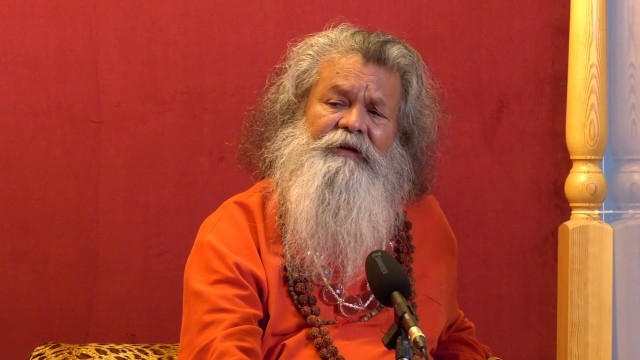
A spiritual discourse reflecting on the meaning of prasād and authentic practice.
"But what do we do with that? So many prasādas: fruits, chocolates, and so on."
"And we can say, in North India they also have temples, yes... But let us leave aside one aspect: meditation and such, practicing yoga—we want to practice yoga and so on. Let us focus there."
A female spiritual teacher addresses a gathering, questioning the ritualistic receipt and distribution of prasād (blessed offerings) and urging a focus on sincere inner practice like yoga and meditation. She speaks of seeing God within, shares a brief anecdote about a church visit, and emphasizes giving, love, and personal responsibility in one's spiritual journey, concluding with an invitation for attendees to speak up.
Filming location: Vienna, Austria
We can reach God through Satsang
3:15 - 3:53 (38 min)
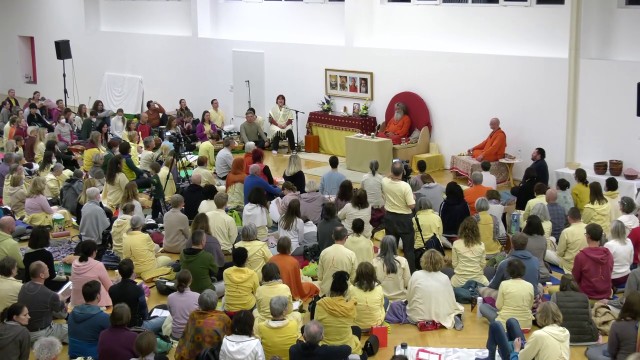
Evening satsang with Vishwaguruji from Ljubljana, Slovenia. Prasad is very great. It is given by God. We should live in peace and harmony otherwise we are lost. We can do good things only during our life. After death everything goes. A drop of water can become one with the ocean. We should be pure inside also. Satsang means to be together with our good friends and speak about the truth. Bhajan singing.
Part 1: The Role of Yoga and Meditation in Improving Quality of Life for Cancer Patients
4:00 - 5:07 (67 min)
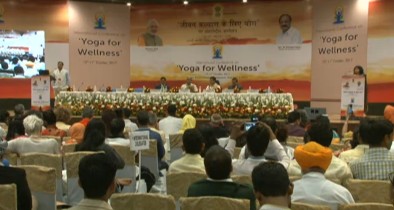
A medical lecture on the role of yoga and meditation as supportive care for cancer patients.
"We must note which specific yogic and meditative techniques were used, as these vary widely."
"Please do not give false hope that cancer will be cured... If a practitioner claims that prāṇāyāma, dhyāna, and some Ayurvedic herbs... can cure cancer, they are committing a grave sin against society."
A doctor from AIIMS Delhi presents a detailed analysis of scientific studies on yogic interventions for cancer patients, emphasizing they are complementary to standard treatments like chemotherapy. He strongly warns against practitioners falsely claiming yoga can cure cancer, shares data on benefits for quality of life and stress, and proposes a large-scale research trial combining yoga, meditation, and herbal products for cancer prevention and care.
Filming location: Delhi, India
Mastery your sleep and dreams
5:15 - 6:43 (88 min)
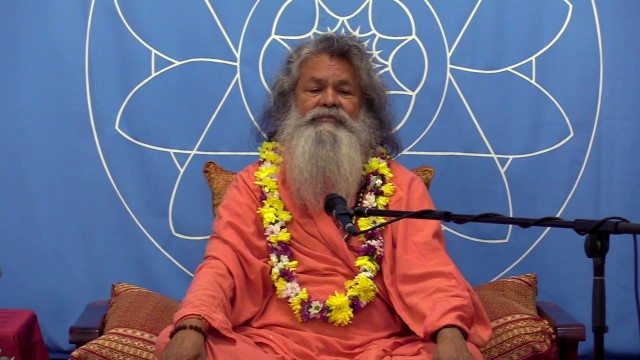
A spiritual discourse on the foundational gurus in life and the layers of human consciousness.
"The first God is the mother. We do not understand all that the mother is giving."
"Yoga is that going deep into every cell of our body. That is yoga."
The lecturer leads a satsang, beginning with the Vedic teaching to revere mother, father, and teacher as the first gods. He expands on the role of the guru as a remover of ignorance and explains the five sheaths (kośas) that cover the soul, from the physical body to the bliss body. He illustrates key concepts like controlling the mind's fluctuations (vṛttis) and mastering states of wakefulness, dream, and sleep with personal stories and analogies.
Filming location: Sydney, Australia
We come and go
6:50 - 7:36 (46 min)
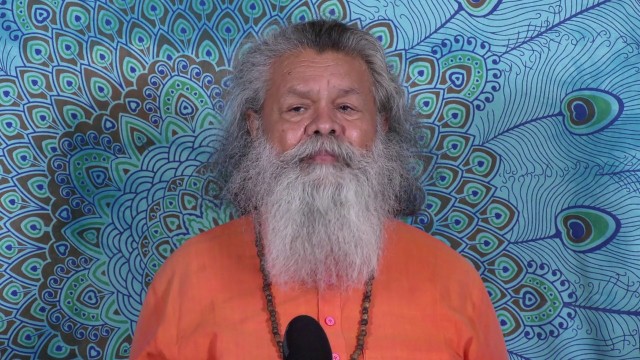
A spiritual talk and community address in a holy place after a long absence.
"After a long time, we are again here—nearly about three years or a little more. We were all very much thinking about when we would come here for our practice, yoga, etc."
"The memory, the memory remains... But they are gone. Their body is gone. But they remain. What? Their name. Their name. And this name remains forever."
Swami Maheshvaranandji addresses a gathering, reflecting on the long-awaited return to a sacred location and honoring the legacy of devotees like Krishnananda. He discusses the eternal nature of the Guru's name, the human journey from animal-like origins to spiritual awareness, and offers guidance on diet, dress, and the importance of practice for health and spiritual growth. The talk includes personal observations and calls for communal participation.
Filming location: Vép, Hungary
How did Vishwaguruji get the vision of Alakhpuriji?
7:40 - 8:25 (45 min)
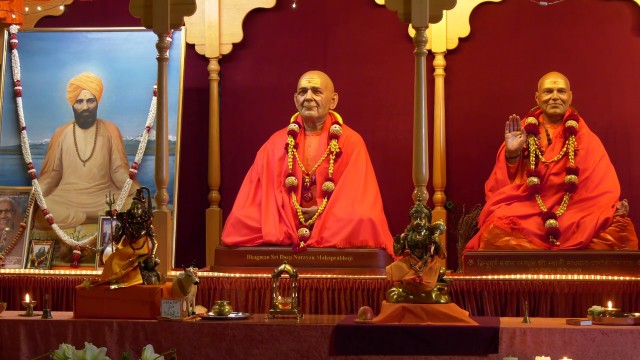
Evening satsang with Vishwaguruji from Vienna, Austria. Himalaya is a very spiritual place. Sadwi Shanti searched and found Alakhpuriji's place in the Himalayas. Vishwaguruji also went to the Himalayas to see Alakhpuriji's cave. Many people went with him to see God. The story of Vishwaguruji's visit to the Himalayas at Alakhpuriji's cave. The story of the death of Mataji. The story of Nandadevi who was the disciple of Alakhpuriji and the river Alakananda. When we come together we can get the energy of all our great Masters.
You are free to choose good or bad
8:30 - 9:14 (44 min)
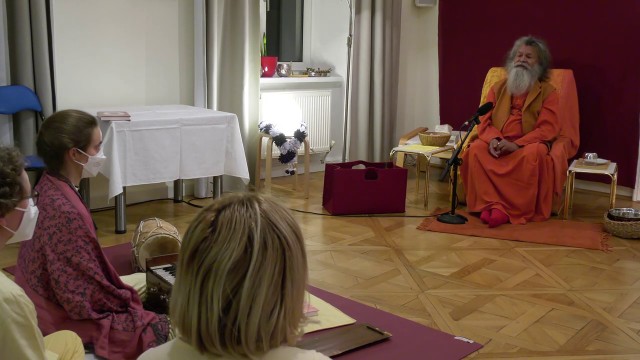
Evening satsang with Vishwaguruji from Linz, Austria. An instrument is a simple construction, but it can give very beautiful sounds. Our body is also like an instrument. We are free to do good or bad things. From our childhood we can develop in good or bad direction also. The story of a tiger baby who mixed among the sheeps. Everybody should know why we shouldn't to eat meat. Bhajan singing.
Body and intellect
9:20 - 9:59 (39 min)
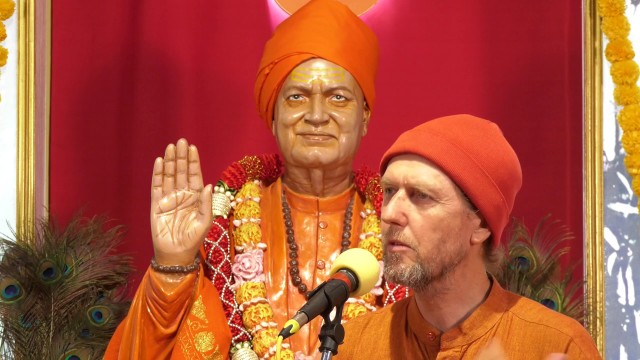
A spiritual lecture on the body as an instrument for self-realization.
"Look, what is actually the most important thing for us to have, or what we are blessed with?... Yes, there is something most important for all of us—maybe the most important possession, the most valuable object we have. And that's our body."
"Nothing is really important in life. Only one thing: look for the Self. Search for the self. Discover the self. Nothing else basically matters. And this self is sitting in our body."
Vishwaguruji introduces Swami Premanandaji, who delivers a discourse in English and German. Using the Bhagavad Gita's chariot allegory, he explains the body as a vehicle governed by the senses and mind, driven by the intellect, with the soul as the passenger. He discusses attachment, the role of discrimination (viveka), and the wisdom of using the body correctly to discover the inner Self.
Filming location: Jadan, Rajasthan, India
Gurudev is the servant of everyone
10:05 - 10:53 (48 min)
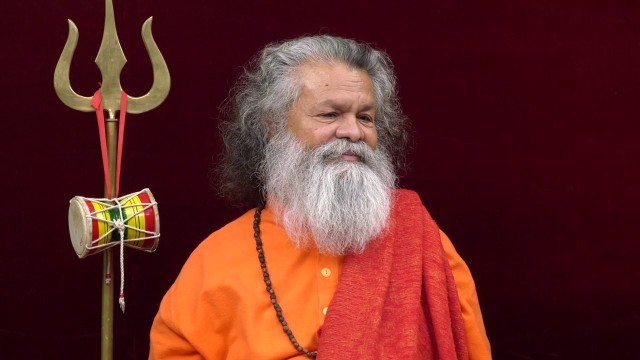
An evening satsang on humility, divine grace, and the guru-disciple relationship.
"Be very humble towards all, and you should bow down to them. Do not say, 'I am great,' and go."
"Guru is the Sākṣāt, the real life living with us, Parabrahma... Mokṣa mūlaṁ gurur kṛpā—liberation will be when we are at the feet of the Gurudev."
Paramhans Swami Maheshwarananda addresses a global audience, weaving personal anecdotes, analogies from nature, and teachings from his lineage. He emphasizes humility, stating that God provides for all creatures, and explores the guru's role as the embodiment of the divine and the source of liberation, concluding with traditional Sanskrit prayers.
Filming location: Strilky, Czech Republic
How can we become a good yoga teacher?
11:00 - 12:20 (80 min)
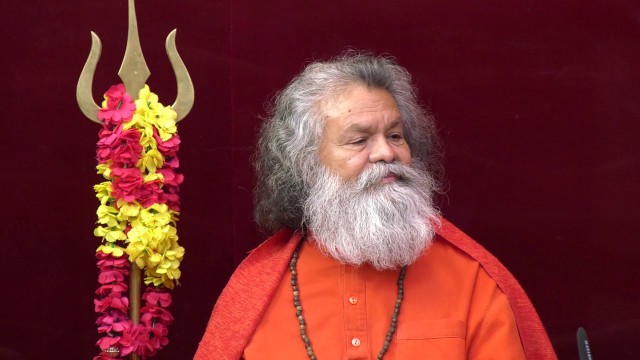
Evening satsang with Vishwaguruji from Strilky Ashram, Czech Republic. Practising Bari Khatu Pranam and Sarva hitta asanas led by Vidya. All Yoga in Daily Life yoga teachers has some years practising behind them. A person must learn many years to become a doctor. A person also must learn many years to become a good teacher. Lifelong we are learning and practising yoga. Yoga practise checks your body and mind. To become a real yoga teacher we need a Guru. Nowadays children are not under the control of the parents. There are yoga teachers who have no proper knowledge of yoga. We can get energy from all of our koshas. The story about a king and a man who became a friend of a wild horse. People who know about Jyotish tell that Shiva will come
Only the One is the truth
12:25 - 13:38 (73 min)
Evening satsang with Vishwaguruji from weekend seminar in Zagreb, Croatia. There are two kinds of karma. Selfish acts will finish very soon. Unselfish karma is what you are doing for the sake of everyone. Only the One is the truth, this world is like a dream. Our spiritual journey is very important, although there could be difficult situations in life. Keep on with your mantra.
Who will liberate us?
13:45 - 14:19 (34 min)
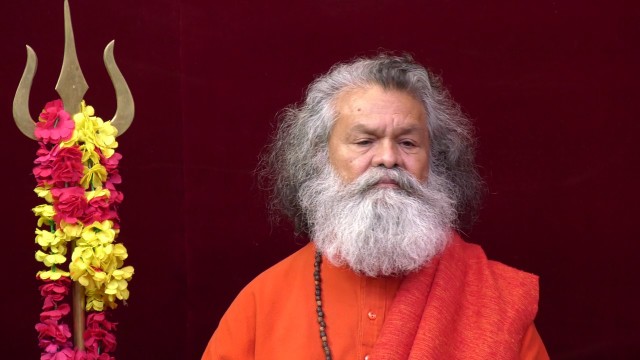
A spiritual discourse on the unity of all paths and the grace of the guru, delivered on Christmas.
"Names are different, places are different, languages are different, yet they are all. If you do not understand this and do not want equality, then know we have the same blood, same nerves, same bones; everything is the same."
"The guru is that who gives us knowledge... Guru Kṛupāhi Kevalaṁ Śiṣyaki Ānanda Maṅgalaṁ. When the Gurudeva is there, the disciple is happy, full of joy."
A spiritual teacher addresses a gathering, honoring Christmas and the universal teachings of all saints and religions. He emphasizes the non-dual unity behind all names and forms, discusses the essential roles of the divine mother (Śakti) and father (Śiva), and explains the irreplaceable role of the Satguru in liberating the individual from worldly attachment, illustrated through a metaphor of a spider trapped in its own web.
Filming location: Strilky, Czech Republic
Worship every God and incarnation
14:25 - 15:40 (75 min)
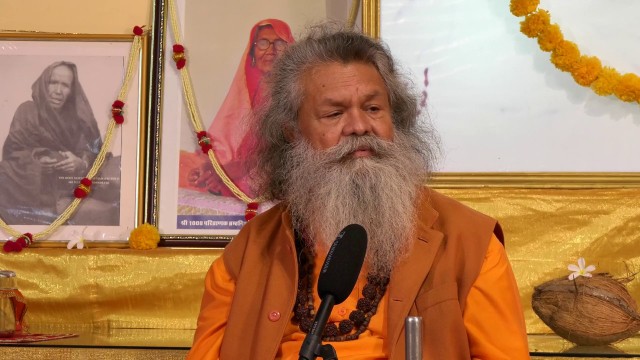
Evening satsang with Vishwaguruji from Jadan Ashram, Rajasthan, India. At this time of the year, many people in the world are waiting for Jesus to come. Krishna's mother was suffering very much like Jesus's mother Holy Maria. Now we worship every great saint. God is in every creature. Don't be the cause of the pain of any creatures. If you worship God first worship your mother. Mother animals also feel love for their babies and feel pain if they lose them. Bhajan singing.
Forgiveness, Kindness and Mercy
15:45 - 16:55 (70 min)
A satsang discourse on mercy as the root of dharma and the awakening of inner spiritual talents.
"Dayā dharam kā mūla hai, pāpa mūla abhimāna. Tulsī dayā na chhoḍīye, jab laga ghaṭame prāṇa." ("The root of dharma is mercy, the root of sin is ego. Tulsī, never abandon mercy as long as there is life in your body.")
"The best talent which can make us happy and free without fear—is to be merciful."
The lecturer leads a morning satsang, exploring the central teaching from Tulsīdās that mercy (dayā) is the foundation of righteousness. He explains how ego is the root of sin and illustrates mercy through stories, including one of a thief in the ashram being allowed to steal. The talk covers related inner talents like forgiveness (kṣamā) and compassion (karuṇā), warns against negative talents like anger, and emphasizes practice (abhyāsa) and awakening awareness through Guru's grace, concluding with an explanation of a devotional bhajan.
Filming location: USA
Meditation with Swamiji
17:00 - 17:42 (42 min)
Morning program with Vishwaguruji from Atlanta, Georgia, Guided meditation.
God is the father of all creatures
17:50 - 18:56 (66 min)
An evening satsang on spiritual practice, mantra, and devotion.
"Spirituality is a very rich food, which is not easy to digest. Junk food you can digest easily, but it is not healthy."
"Getting a mantra from the master is not only, 'Oh, I have a mantra, and I will eat my mokṣa.' You have to put it in the field—the field of the heart."
The speaker leads a satsang, using a parable about two men receiving a seed to illustrate the need to actively cultivate a mantra with devotion. He discusses the nature of God, the importance of purifying the heart, and the role of the Guru. The talk includes a recitation of a poet's praise for Mahaprabhuji and addresses questions from attendees on topics like managing family illness, expectations, and generational tragedy.
Candle meditation - Tratak
19:00 - 19:18 (18 min)
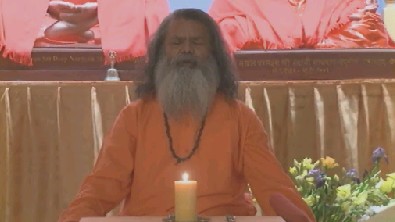
Candle meditation - Tratak. A very effective technique for stress release and improving the eye sight. Specially for the people spending a lot of time in the front of the computer. With explanation and practice. Recorded on 18th May 2010 in Vienna, Austria.
Love and Spirituality
19:25 - 20:31 (66 min)
A spiritual discourse on achieving immortality and the essence of a spiritual life.
"Spirituality is 24 hours. Whatever we do should be pure: eating, drinking, behaviour, working, relations, etc."
"Human life is the chance. This is the last milestone where we can come to the absolute, or immortality, or God consciousness, or oneness with God."
A spiritual teacher addresses an audience, explaining the concept of soul immortality versus physical impermanence and the human opportunity to break the cycle of rebirth. He defines true spirituality as all-encompassing purity in action and thought, critiques religious fanaticism and materialism, and shares parables on compassion. The talk concludes with an overview of yogic anatomy, describing nāḍīs (energy channels) and their role in health and consciousness.
Filming location: San Francisco, USA
Taste of the Divine Nectar
20:35 - 21:38 (63 min)
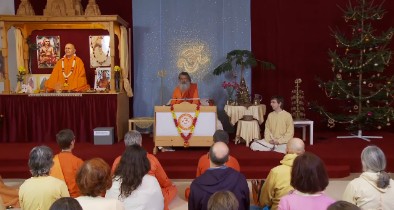
Satsang with Vishwaguru Swami Maheshwarananda, Strilky Ashram, Czech Republic. Yoga is a sattvic, pure practice. There is no harm in it - instead there is harmony of body, mind and soul. Yoga in Daily Life is a complete system. When a soul comes to this Earth as a human it has two aims: to clean the karma and try to create good karma. When we treat other creatures with mercy we create good karma and at the same time clean our negative karma. This is a real human quality.
For meditation we need calmness
21:45 - 22:46 (61 min)
A spiritual discourse on the prerequisites for true meditation and self-realization.
"If you are restless and you meditate, then you become even more restless."
"Mokṣa only can give Gurudev... And that guru is not what we are thinking, could be only in physical form."
A teacher addresses a gathering, explaining that discipline and a pure, guru-focused devotion are essential to overcome restlessness and attain meditation. He uses stories of Ramakrishna, Vivekananda, and a parable about a bamboo surrendering to God to illustrate the necessity of grace and surrender. The talk covers the pitfalls of ego, the levels of consciousness, and briefly touches on the yogic science of chakras and sacred sounds.
Filming location: Jaipur, Rajasthan, India
Christmas is the festival of Unity
22:50 - 23:45 (55 min)
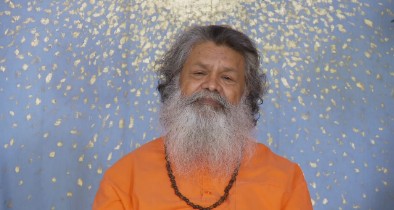
A satsang on the essence of Christmas and universal spirituality.
"Hundreds of thousands of people don't know. Rare people know rare."
"Christmas for us is a message of the spiritual incarnation, the incarnation of love, incarnation of the light, incarnation of the peace."
He presents Christmas as a universal message of love, light, and oneness, contrasting it with religious ignorance that leads to conflict. Through personal anecdotes, illustrative stories, and spiritual commentary, he emphasizes that true worship involves seeing God in all, respecting every culture and incarnation, and embodying love and humility in daily life.
Filming location: Strilky, Czech Republic
Christmas Time
23:50 - 0:57 (67 min)
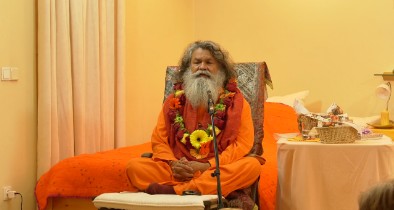
A spiritual talk on seasonal festivals, well-being, and Ayurvedic principles.
"This month is the month of happiness. And if you become unhappy, then all this unhappiness comes to you."
"The first happiness is a healthy body, the second happiness is having wealth at home."
Swamiji addresses a gathering, weaving together themes of Christmas, other religious festivals, and the importance of joy during the winter season. He discusses the Ayurvedic pillars of well-being, emphasizing diet, pranayama, and harmonious relationships, while sharing illustrative stories about figures like Jesus and Krishna. The talk concludes with practical advice for health and seasonal greetings.
Filming location: Salzburg, Austria
American
Australian