
European
The wisdom of the bhajans
0:20 - 0:41 (21 min)
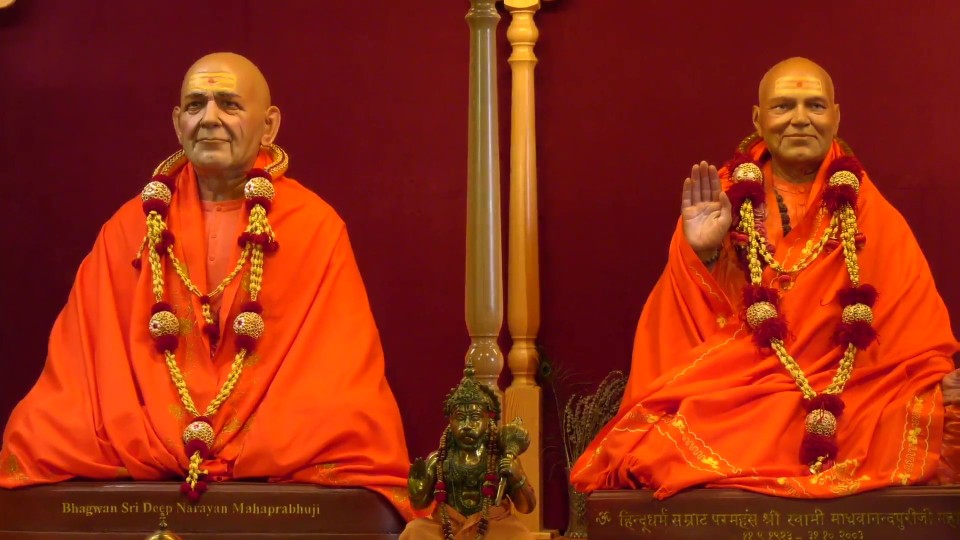
A satsang gathering focused on learning and understanding devotional bhajans.
"It is very good, beautiful bhajans are. Very good, but it is real because some people can understand, and many others, they like something is something, but we don't know the words about this."
"Gurujī Merā, my Gurū Dev. He gave me the Amara, which means the Unsterblichkeit, immortality... He came first to give me these herbs, so to speak, the immortality."
A speaker leads a session on the meaning of bhajans, emphasizing the need to understand the lyrics beyond just singing. They propose that the singer should explain each word. The session includes a detailed, bilingual (German and English) explanation of a specific bhajan dedicated to Gurudev, describing the gift of immortality and liberation from worldly attachments.
Filming location: Vienna, Austria
We have to be in unity
0:45 - 1:41 (56 min)
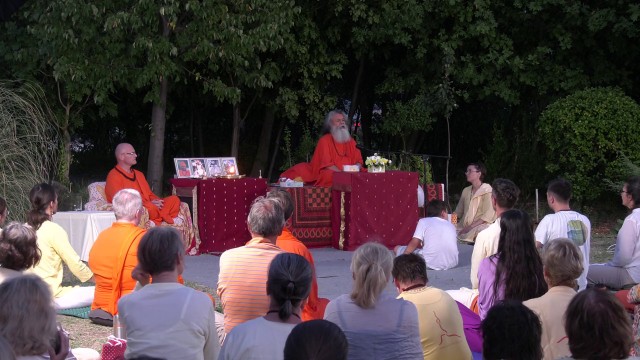
Evening satsang with Vishwaguruji from Rijeka Ashram, Croatia. We are different, but we are all going to the same destination. More and more people are following a vegan lifestyle, and you can see it on the planes. I have many students around the world who are practicing and meditating. Our goal is to achieve oneness, but we rarely do. Otherwise, duality remains. We have to achieve it within ourselves. We must all be good and peaceful, in unity.
Gurudev is for all of us
1:45 - 2:06 (21 min)
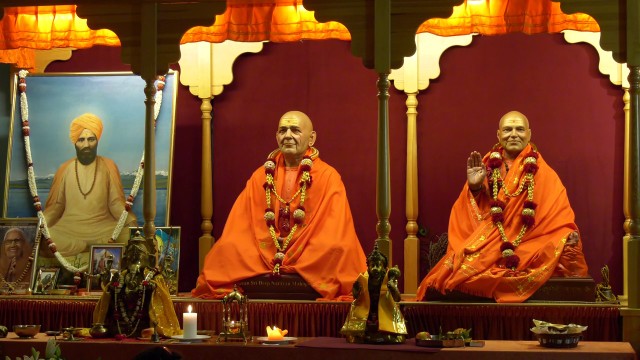
A spiritual discourse on unity, humility, and conduct within a community.
"Humans and our heart—we should be, and that is the best one, and that should have to be so."
"I'm not that God, but I'm only a servant, and a servant is for all."
A spiritual teacher addresses a gathering, emphasizing the oneness of the heart beyond physical or cultural differences. He discusses the need for humility, encouraging long-time attendees to make space for newcomers, and shares parables about compassion and containing anger. A listener interjects to agree and seek clarification on a practical ritual, to which the teacher responds by reiterating the core message of openness and inclusion.
Filming location: Vienna, Austria
We should become white
2:10 - 2:30 (20 min)
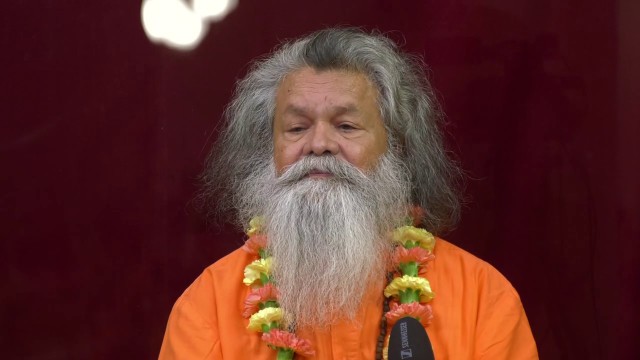
A spiritual address reflecting on a return from India and community events.
"I have returned from India, and many of our disciples from India were there. For many years, we have known our Gurudev, Madhavananjī."
"Today I found someone here in this Czech country. Now I have received a message that someone here in the Czech Republic has died."
The speaker, likely a spiritual teacher, shares reflections on their journey to India, the greatness of the land and its saints like Devpurījī Mahāprabhujī, and the strength of their spiritual lineage. The talk takes a somber turn with the announcement of a death in the Czech community, prompting a request for donations and prayers for the departed soul. The speaker then offers guidance on maintaining spiritual practice, purity (symbolized by the color white), and adherence to Sanātana Dharma, encouraging the community to remain united and focused inward.
Filming location: Strilky, Czech Republic
The Divali Festival
2:35 - 2:54 (19 min)
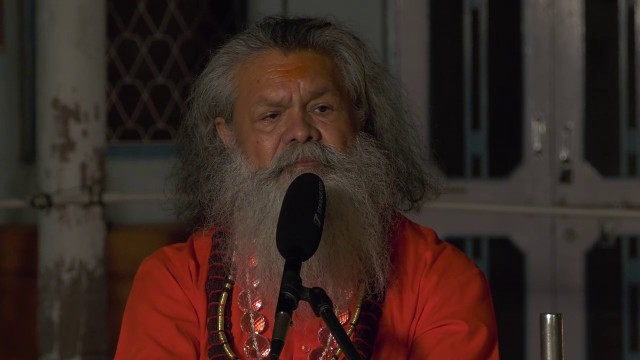
A spiritual discourse reflecting on Diwali, divine grace, and devotional narratives.
"From there, from there, this day, the day we see, this Dīvālī, with this Dīvālī, so in the whole world, it was with all the people."
"Now someone has said, and he has done, Rādhā. So Rādhā is there. Rādhā is a devotee, his disciple. She is not his wife."
In a satsang, a speaker offers a contemplative and stream-of-consciousness talk centered on the festival of Diwali. The narrative weaves together references to Lord Śiva, Viṣṇu, Rāma, and Kṛṣṇa, exploring themes of divine presence, grace, and devotion. The talk includes reflections on Rukmiṇī and Rādhā's relationship with Kṛṣṇa, and draws a parallel to Christian practice, all culminating in chants of "Om Rām Rām."
Filming location: Jadan, Rajasthan, India
We should live in real love
3:02 - 3:50 (48 min)
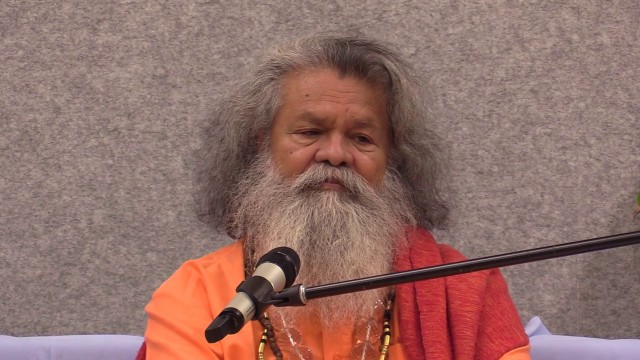
Morning satsang with Vishwaguruji from Trentwood Community Hub, Melbourne, Australia. Marriage means merge. It is a very beautiful ceremony. The story of a boy and a girl who married but they had a problem with the hard part of the bread. Married couples should live whole life happy together but kali yuga changed many things. Love is that where we are all happy healthy and helping each other. Explanation and singing of bhajan Sataguru satasangi and Sobavo satasangari.
Around The World - Vegetarianism and top sport, Part 1
4:00 - 4:24 (24 min)

A practical cooking demonstration and discussion on vegetarian nutrition for athletes from a yogic perspective.
"In our yoga tradition, everyone is vegetarian for moral reasons. For us, ahiṃsā paramo dharma—non-injury is the highest duty."
"The foundation of healthy vegetarian cooking is quality ingredients... Higher quality food is better utilized by the body, yielding better results."
Swami Avatarpuri, in the kitchen of Sridev Purījī Ashrama, explains the principles of a vegetarian diet tailored for elite sports performance. He emphasizes digestibility, energy provision, and muscle support, highlighting key ingredients like whole grains, tofu, and legumes. The talk covers the medicinal use of spices like turmeric and cumin, addresses protein and vitamin sources, and concludes by framing vegetarianism as a complete and health-supporting lifestyle rooted in the principle of non-harm.
Filming location: Zagreb, Croatia
The drop returns to the ocean
4:30 - 4:44 (14 min)
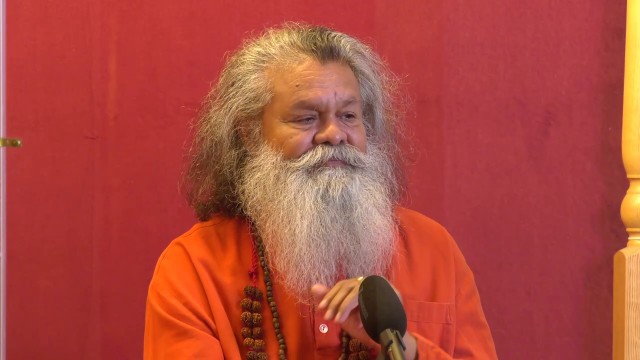
A spiritual talk on the practice of Brahmari pranayama and the nature of human life.
"Brahmari is very great. It is for the soul. And the whole brain—the whole brain—and it comes out the other side."
"Practice is where we are practicing, really, really... These Brahmari practices and these few things must be very, very, very good, everything."
A teacher addresses a gathering, offering guidance on the correct, pressure-free method for the humming bee breath (Brahmari), warning against overly long sessions. He shares personal reflections on inconsistent practice due to travel, then expands into broader themes of impermanence, using metaphors of birth, death, and a drop returning to the ocean to illustrate the soul's journey and the pursuit of purity.
Filming location: Vienna, Austria
The drop returns to the ocean
4:50 - 5:04 (14 min)
A spiritual talk on the practice of Brahmari pranayama and the nature of human life.
"Brahmari is very great. It is for the soul. And the whole brain—the whole brain—and it comes out the other side."
"Practice is where we are practicing, really, really... These Brahmari practices and these few things must be very, very, very good, everything."
A teacher addresses a gathering, offering guidance on the correct, pressure-free method for the humming bee breath (Brahmari), warning against overly long sessions. He shares personal reflections on inconsistent practice due to travel, then expands into broader themes of impermanence, using metaphors of birth, death, and a drop returning to the ocean to illustrate the soul's journey and the pursuit of purity.
Filming location: Vienna, Austria
We need real dedication
5:10 - 6:08 (58 min)
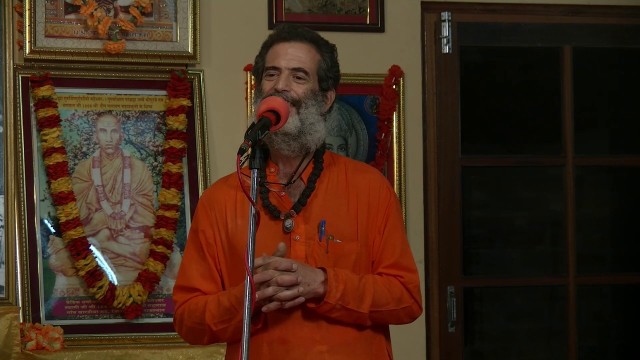
Evening Satsang with Vishwaguruji from Jadan Ashram, Rajasthan, India. There are two kinds of people living separately or in the family. Orange dress means renunciation. The story about two brothers one of them was studied and the other lived a spiritual life alone in a forest. There are two kinds of bhava. One is where there is some wish and the other has no wish. Birds know that there is their child in the eggs. Swami Haripuri speaks about his daily life and his spiritual experiences in different Ashrams.
Part 1: The Science of Yoga and the Awakening of Inner Energy
6:15 - 7:30 (75 min)
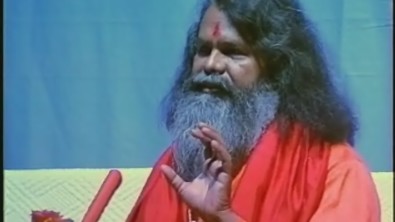
A lecture on the science of Kundalini yoga, consciousness, and world peace.
"Yoga is a balancing principle that harmonizes our body, mind, consciousness, emotions, and intellect."
"The most terrible tragedy that can befall a human is to die without God-realization. But God-realization cannot take place unless you realize yourself."
Swami Maheshwarananda delivers an extensive discourse, beginning with the cosmic origins of yoga and the nature of consciousness. He explains the human energy system, including the 72,000 nadis and eight main chakras, and leads a brief practical demonstration to awaken energy in the palms. The talk covers karma, destiny, the goal of liberation, and concludes with a call for religious tolerance and global harmony, announcing a film from the United Nations.
Filming location: Zagreb, Croatia
The living God
7:35 - 8:33 (58 min)
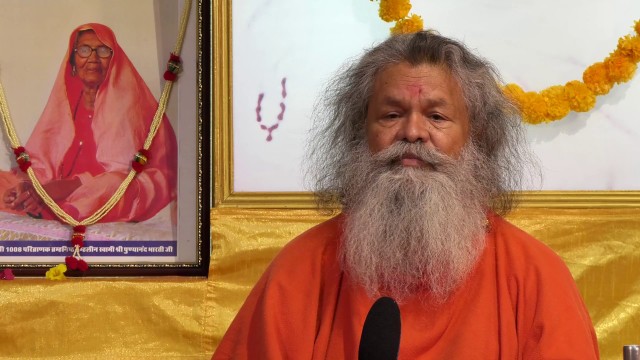
Evening satsang from Jadan Ashram, Rajasthan, India. Science is developing, which is good. Yoga is the science of the human being.The story of the professor who met a yogi while walking in the park. Where can we find God? Have you seen God? According to the teachings of Sanatana Dharma and Yoga, God lives here among us. Everyone has seen God. Each and every one of us is the living God, just like the ocean water is present in the raindrop. The same life is in all living beings. That is why we should not kill animals.
Feel the inner peace
8:40 - 9:46 (66 min)
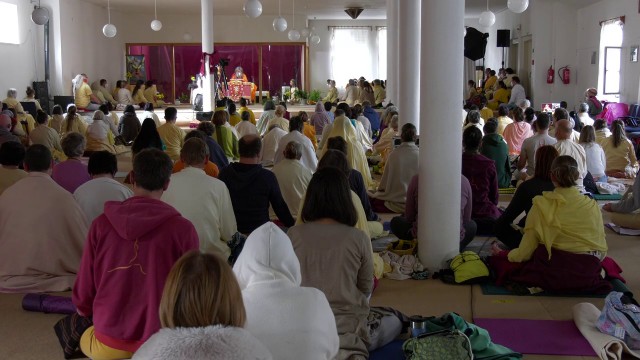
Morning satsang with Vishwaguruji from Strilky Ashram, Czech Republic. Relaxation in a sitting position and meditation. Relaxation in lying position. Practicing Bari Khatu Pranam.
Control your energy and mind
9:50 - 10:53 (63 min)
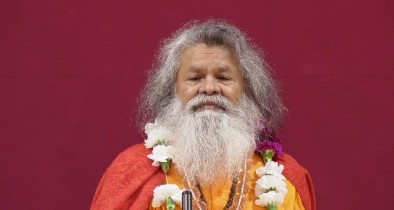
A spiritual discourse on the human journey and the five sheaths (kośas), following a tree-planting ceremony.
"The tree gives shade and fruit to everybody. Rain falls equally for everybody. The river flows for everybody, and the sun shines for everybody."
"Yoga is the science of humans... we have to go through Annamaya Kośa, Prāṇamayakośa, Manomayakośa, etc."
Swami Maheshwarananda (Viśva Gurujī) addresses an audience in Samobor, beginning with reflections on the symbolic planting of eleven trees. He expounds on the soul's journey through various life forms, the balancing principles of the sun and moon within yogic physiology, and the path of spiritual evolution through the five sheaths—from the physical body (Annamaya Kośa) to the bliss sheath (Ānandamaya Kośa). He emphasizes mastering the restless mind (Manomaya Kośa) as key to overcoming suffering and progressing toward higher consciousness.
Filming location: Croatia
The wisdom of the bhajans
11:00 - 11:21 (21 min)
A satsang gathering focused on learning and understanding devotional bhajans.
"It is very good, beautiful bhajans are. Very good, but it is real because some people can understand, and many others, they like something is something, but we don't know the words about this."
"Gurujī Merā, my Gurū Dev. He gave me the Amara, which means the Unsterblichkeit, immortality... He came first to give me these herbs, so to speak, the immortality."
A speaker leads a session on the meaning of bhajans, emphasizing the need to understand the lyrics beyond just singing. They propose that the singer should explain each word. The session includes a detailed, bilingual (German and English) explanation of a specific bhajan dedicated to Gurudev, describing the gift of immortality and liberation from worldly attachments.
Filming location: Vienna, Austria
Feel the inner peace
11:25 - 12:31 (66 min)
Morning satsang with Vishwaguruji from Strilky Ashram, Czech Republic. Relaxation in a sitting position and meditation. Relaxation in lying position. Practicing Bari Khatu Pranam.
Control your energy and mind
12:35 - 13:38 (63 min)
A spiritual discourse on the human journey and the five sheaths (kośas), following a tree-planting ceremony.
"The tree gives shade and fruit to everybody. Rain falls equally for everybody. The river flows for everybody, and the sun shines for everybody."
"Yoga is the science of humans... we have to go through Annamaya Kośa, Prāṇamayakośa, Manomayakośa, etc."
Swami Maheshwarananda (Viśva Gurujī) addresses an audience in Samobor, beginning with reflections on the symbolic planting of eleven trees. He expounds on the soul's journey through various life forms, the balancing principles of the sun and moon within yogic physiology, and the path of spiritual evolution through the five sheaths—from the physical body (Annamaya Kośa) to the bliss sheath (Ānandamaya Kośa). He emphasizes mastering the restless mind (Manomaya Kośa) as key to overcoming suffering and progressing toward higher consciousness.
Filming location: Croatia
We need real dedication
13:45 - 14:43 (58 min)
Evening Satsang with Vishwaguruji from Jadan Ashram, Rajasthan, India. There are two kinds of people living separately or in the family. Orange dress means renunciation. The story about two brothers one of them was studied and the other lived a spiritual life alone in a forest. There are two kinds of bhava. One is where there is some wish and the other has no wish. Birds know that there is their child in the eggs. Swami Haripuri speaks about his daily life and his spiritual experiences in different Ashrams.
Without Gurudev we cannot be successful
14:50 - 15:47 (57 min)
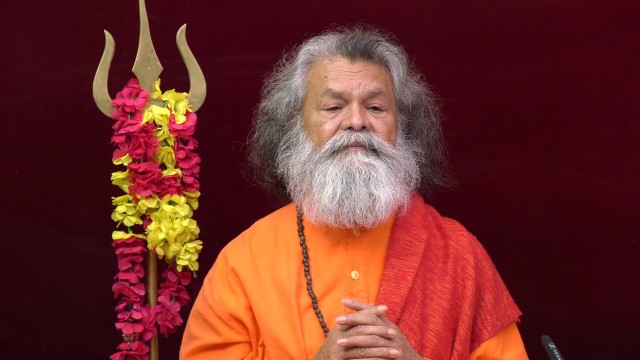
An evening satsang and yoga practice session on the necessity of the guru.
"Yoga has existed since the beginning of the Satya Yuga. It accompanies us through all ages and is present in every era."
"Gurū sa bina kārya na jaisā... Without Gurudeva, whatever we want to achieve cannot be done without Gurudeva."
A spiritual teacher addresses a global audience, explaining the eternal nature of yoga and the essential role of a true guru (Gurudeva) for spiritual success, emphasizing that self-effort alone cannot cross the ocean of worldly existence. He references a bhajan by Mahāprabhujī and discusses the soul's journey. The session transitions into a guided yoga practice led by Swami Umapuri, beginning with deep relaxation (Ānanda āsana) and proceeding through gentle stretches and torsion exercises for the spine and joints, concluding with a collective "Om" and peace chants.
Filming location: Bari Khatu, Rajasthan, India
The living God
15:55 - 16:53 (58 min)
Evening satsang from Jadan Ashram, Rajasthan, India. Science is developing, which is good. Yoga is the science of the human being.The story of the professor who met a yogi while walking in the park. Where can we find God? Have you seen God? According to the teachings of Sanatana Dharma and Yoga, God lives here among us. Everyone has seen God. Each and every one of us is the living God, just like the ocean water is present in the raindrop. The same life is in all living beings. That is why we should not kill animals.
Human being is miraculous - Yoga Practice
17:00 - 18:32 (92 min)
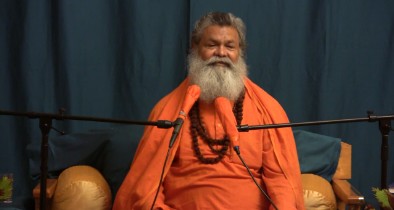
Morning program with Vishwaguruji from Alexandria, Virginia, USA. Folded hands awaken our awareness about real human qualities. Vishwaguruji starts leading practice with remembering: what makes us human?
Practising with Vishwaguruji
18:40 - 19:30 (50 min)
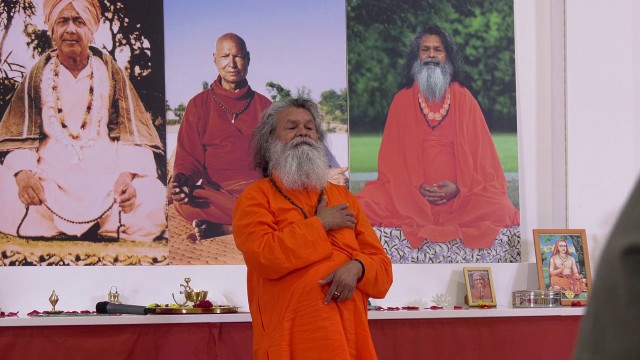
Evening satsang with Vishwaguruji from Rijeka Ashram, Croatia. Concentration on the heart and navel in a standing position. Practising asanas also in a standing position. Practising bhramari pranayama.
Bhajans from Rijeka
19:35 - 20:03 (28 min)
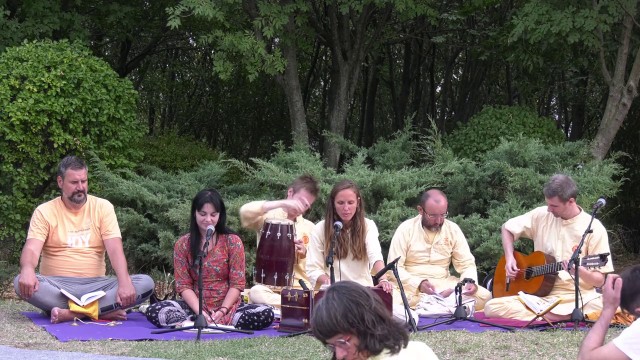
Evening satsang with Vishwaguruji from Rijeka Ashram, Croatia.
Gurudev is for all of us
20:10 - 20:31 (21 min)
A spiritual discourse on unity, humility, and conduct within a community.
"Humans and our heart—we should be, and that is the best one, and that should have to be so."
"I'm not that God, but I'm only a servant, and a servant is for all."
A spiritual teacher addresses a gathering, emphasizing the oneness of the heart beyond physical or cultural differences. He discusses the need for humility, encouraging long-time attendees to make space for newcomers, and shares parables about compassion and containing anger. A listener interjects to agree and seek clarification on a practical ritual, to which the teacher responds by reiterating the core message of openness and inclusion.
Filming location: Vienna, Austria
Humans are very good and not good at the same time
20:35 - 21:09 (34 min)
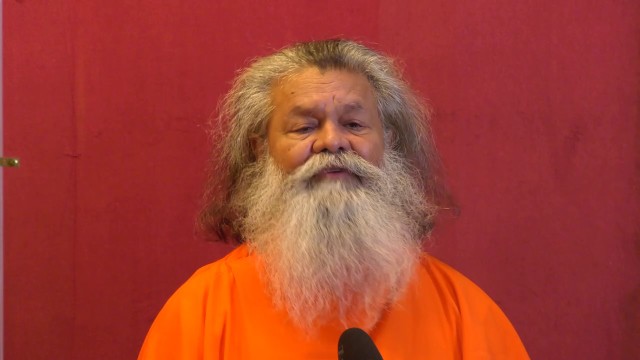
A spiritual discourse on the essence of satsaṅg and universal consciousness.
"Sat and saṅg, these two come together; that's enough. Always try to see yourself."
"Life is one. They don't understand, but we know, humans, we know. That's good, yes, very good. But that life, whether it is a human or an ant, is okay."
A spiritual teacher delivers an extemporaneous talk, exploring the meaning of true company (satsaṅg) and the singular life force in all beings. He uses parables, including one about a skeptic and God on a Himalayan rock face, and reflections on human nature versus animals to illustrate the unity of existence and the importance of non-violence. The discourse includes devotional singing.
Filming location: Vienna, Austria
The wisdom of the bhajans
21:15 - 21:36 (21 min)
A satsang gathering focused on learning and understanding devotional bhajans.
"It is very good, beautiful bhajans are. Very good, but it is real because some people can understand, and many others, they like something is something, but we don't know the words about this."
"Gurujī Merā, my Gurū Dev. He gave me the Amara, which means the Unsterblichkeit, immortality... He came first to give me these herbs, so to speak, the immortality."
A speaker leads a session on the meaning of bhajans, emphasizing the need to understand the lyrics beyond just singing. They propose that the singer should explain each word. The session includes a detailed, bilingual (German and English) explanation of a specific bhajan dedicated to Gurudev, describing the gift of immortality and liberation from worldly attachments.
Filming location: Vienna, Austria
The Unity of Humanity
21:40 - 22:11 (31 min)
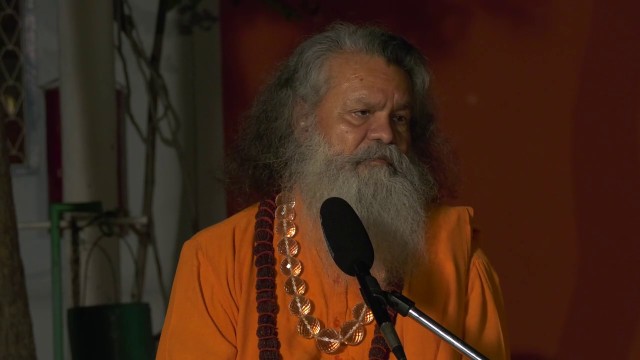
A spiritual discourse on universal unity and transcending human divisions.
"Does it matter which color, or which countries are this? We should now understand that God is everywhere."
"When we will die... There is nothing. Is that we are all? We are all."
A speaker addresses an audience, weaving together observations on geography, human migration, and history—often with factual inaccuracies and conflations of places like India, Australia, and Austria—to ultimately argue that national and religious identities are superficial. The core message is that all humans are fundamentally the same and should love one another, as all distinctions dissolve in death and before God. The talk concludes with a blessing for peace and brotherhood among all present.
Filming location: Jadan, Rajasthan, India
Do we reach?
22:15 - 22:33 (18 min)
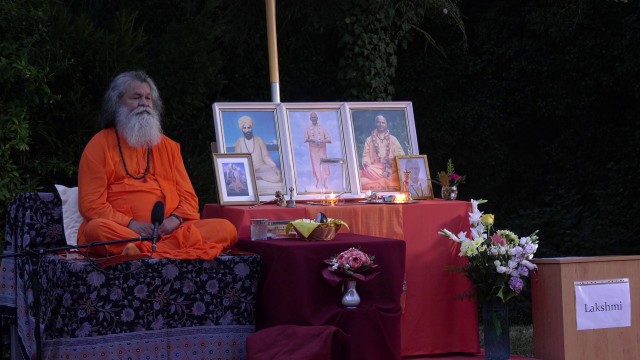
A spiritual discourse reflecting on human progress, simplicity, and the search for fulfillment.
"We were living very well. We were very happy because many people, on the farmer's side, had no telephone."
"Oh human, you will never be complete. You will never say, 'I am okay, finished.'"
The speaker, Swāmījī, recounts observations from life in Vienna, India, and America to contrast past communal simplicity with modern technological complexity. He questions whether material advancement leads to true achievement or contentment, suggesting it is a transient game. The talk concludes with an urging to look inward for lasting peace.
Filming location: Vép, Hungary
The Divali Festival
22:40 - 22:59 (19 min)
A spiritual discourse reflecting on Diwali, divine grace, and devotional narratives.
"From there, from there, this day, the day we see, this Dīvālī, with this Dīvālī, so in the whole world, it was with all the people."
"Now someone has said, and he has done, Rādhā. So Rādhā is there. Rādhā is a devotee, his disciple. She is not his wife."
In a satsang, a speaker offers a contemplative and stream-of-consciousness talk centered on the festival of Diwali. The narrative weaves together references to Lord Śiva, Viṣṇu, Rāma, and Kṛṣṇa, exploring themes of divine presence, grace, and devotion. The talk includes reflections on Rukmiṇī and Rādhā's relationship with Kṛṣṇa, and draws a parallel to Christian practice, all culminating in chants of "Om Rām Rām."
Filming location: Jadan, Rajasthan, India
We should have a flame
23:05 - 0:01 (56 min)
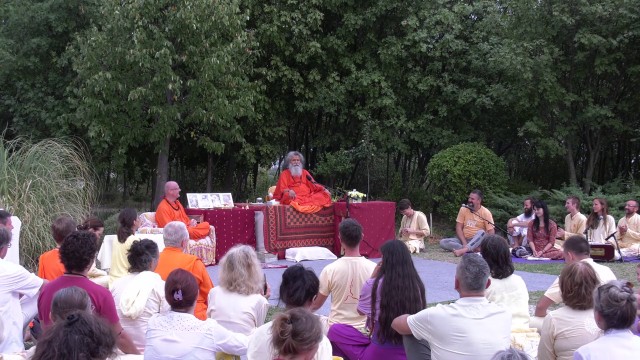
A spiritual discourse weaving personal anecdotes with teachings on discipline, the guru-disciple relationship, and reverence for all life.
"Those who are awake and active during Brahmamuhūrta become very spiritual; everything comes to them."
"We are all a lamp... as long as there is oil, the flame will come."
The speaker recounts childhood lessons from his Gurujī about the spiritual importance of the pre-dawn hour and shares stories of other disciples, like Phoolpurījī, to illustrate the transformative power of a guru's guidance. He expands into a metaphor of the individual soul as a flame, emphasizing interconnectedness, and concludes with reflections on non-violence, compassion for all creatures, and the sanctity of Mother Earth, referencing the conduct of Buddha and the perceived moral decline of modern times.
Filming location: Rijeka, Croatia
American
Australian