
European
Do we reach?
0:10 - 0:28 (18 min)
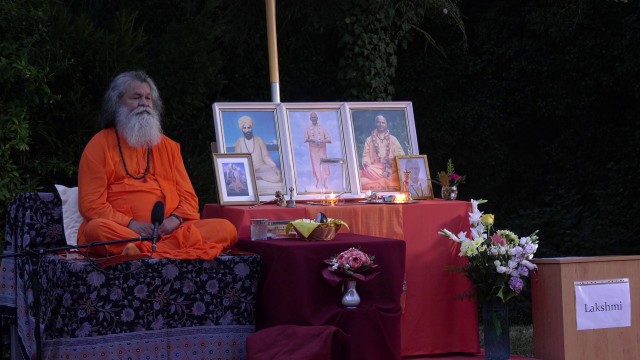
A spiritual discourse reflecting on human progress, simplicity, and the search for fulfillment.
"We were living very well. We were very happy because many people, on the farmer's side, had no telephone."
"Oh human, you will never be complete. You will never say, 'I am okay, finished.'"
The speaker, Swāmījī, recounts observations from life in Vienna, India, and America to contrast past communal simplicity with modern technological complexity. He questions whether material advancement leads to true achievement or contentment, suggesting it is a transient game. The talk concludes with an urging to look inward for lasting peace.
Filming location: Vép, Hungary
Feel your heart
0:35 - 0:51 (16 min)
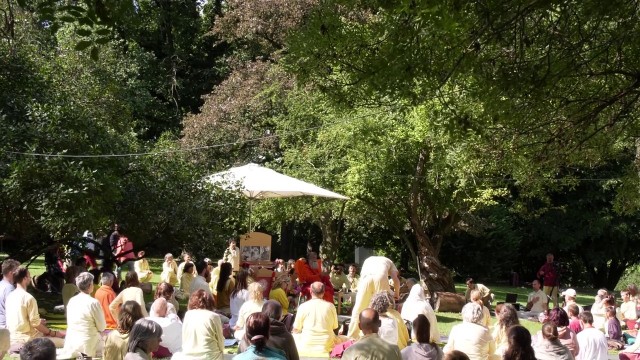
A guided meditation on heart-centered awareness and breath.
"Place your right hand gently on your heart. You will feel warmth. The breath originates from here; it is warm."
"The main thing is only to think in your heart. This is not easy. We think about other people, about where we are going, or what we can do."
A spiritual teacher guides participants through a meditation, instructing them to place a hand on the heart to feel its warmth as the source of the breath. The focus shifts between the heart and the navel, with an emphasis on inward attention, a straight posture, and a gentle breath. The teacher interjects with lighthearted, practical remarks to maintain a relaxed atmosphere while explaining the significance of these points from a yogic perspective regarding prāṇa.
Filming location: Strilky, Czech Republic
Ayurvedic medicine for joints
0:55 - 1:49 (54 min)
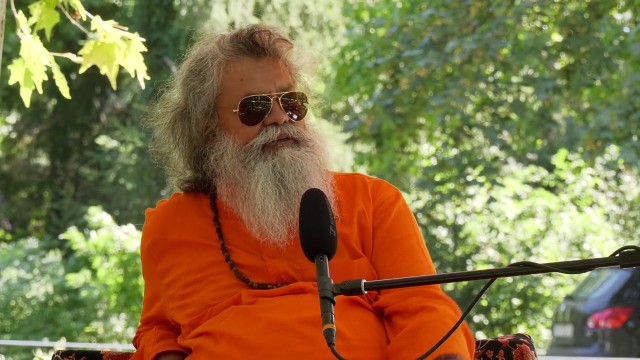
Morning satsang with Vishwaguruji from Vep, Hungary. Bhajan singing. Relaxation. There are some spices which are very good for joints like ginger and garlic. Agnidevi shows an ayurvedic medicine which is good for joints. She speaks about the ingredients and the preparation of that medicine. Vishwaguruji and Agnidevi answered some questions connecting this medicine. We should make it for ourselves and give it further. Its effect appears after two or three months.
One day it will come what you want
1:55 - 2:33 (38 min)
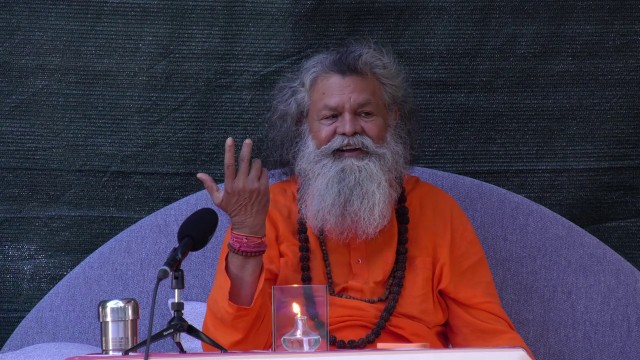
A spiritual discourse reflecting on tradition, modernity, and human relationships.
"All year, they have flowers somewhere, but they do not break them."
"Jīva jīva bhakṣate. Jīva means life, so life of the life of the Jīva, Jīva, Bhakṣate. And Bhakṣate means eating, killing and eating."
Swami Ji speaks informally, weaving together observations on strict Jain and traditional Hindu practices—like non-violence and monastic travel restrictions—with critiques of modern life. He uses the phrase "Jīva jīva bhakṣate" (life feeds on life) to bridge topics from vegetarianism to marital discord, illustrating his points with a lengthy parable about a married couple's lifelong misunderstanding over bread. The talk emphasizes patience, communication, and maintaining core values amidst change.
Filming location: Slovenia
The importance of bhajans
2:40 - 3:22 (42 min)
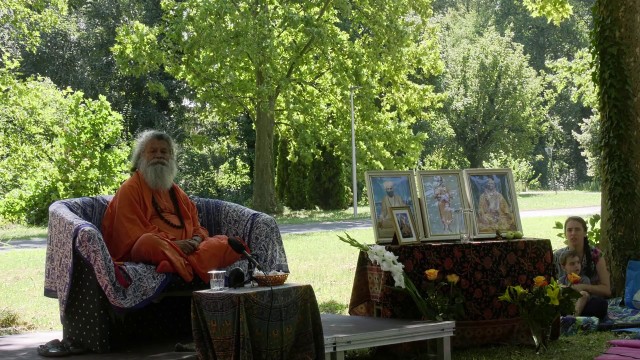
A spiritual discourse and guided practice focusing on devotional music and a breathing technique.
"Bhajan is one of the best in everything... When they sing beautiful bhajans like this, it goes in the whole body."
"So many people are only making bhajans... 'Kṛṣṇa, Kṛṣṇa,' and 'Hare, Hare.' But what is good, very good? But they don't understand."
The speaker leads a session beginning with devotional chanting in English and Hungarian. He discusses the deep, often misunderstood impact of devotional singing (bhajan), using an ambiguous parable about ants and a bee (Brahmari) to illustrate different levels of engagement. He then gives instructions for a breathing practice, likening its gradual mastery to learning to drive or pilot an aircraft.
Filming location: Vép, Hungary
Bhajan singing from Vep
3:30 - 4:21 (51 min)
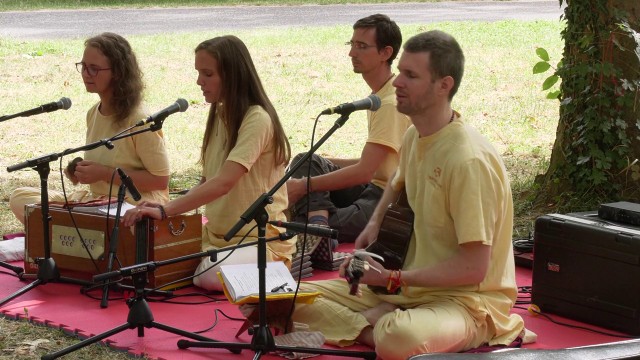
Morning satsang with Vishwaguruji from Vep, Hungary. Bhajan singing.
We are the Ocean
4:25 - 5:32 (67 min)
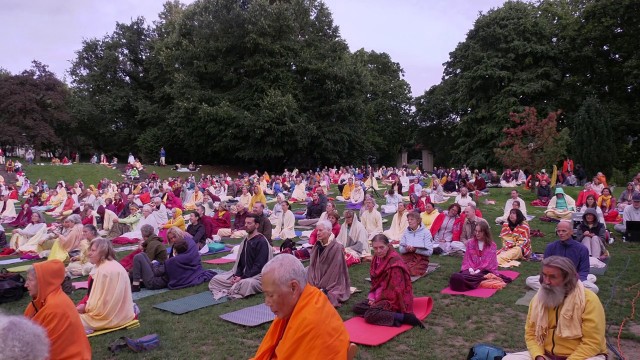
Evening satsang with Vishwaguruji from Strilky Ashram, Czech Republic. We came here from many countries to practice and we did a very good job in this beautiful place, our Ashram. I don't know who will be my successor. You know, Guru is Guru. Holy Guruji has so much love for me. He always supported me. You are all one in my heart. The humidity rises from the sea, we are like the ocean. Now close your eyes and take time in your hearts.
Who and how can become a saint
5:40 - 6:14 (34 min)
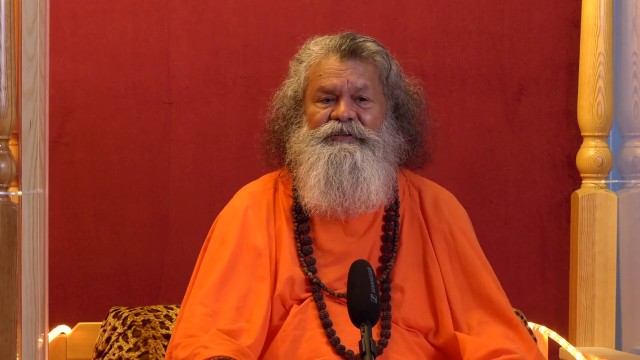
A spiritual discourse on the nature of the guru's grace and discipleship, using metaphorical teachings.
"When a single draft comes, if we can catch that one draft, we are already in the ocean." "Once you have that guru, a real guru, then you, we all will be there."
The teacher, returning after some time, delivers a satsang weaving together parables and metaphors—including the lifecycle of a wasp (Brahmari), the process of childbirth, and a story about a dog losing its chapati—to illustrate the elusive nature of true spiritual attainment and the singular, irrevocable bond with an authentic guru. He emphasizes purity, complete surrender, and warns against the distracted mind that seeks many things.
Filming location: Vienna, Austria
Bhajan singing from Vep
6:20 - 7:02 (42 min)
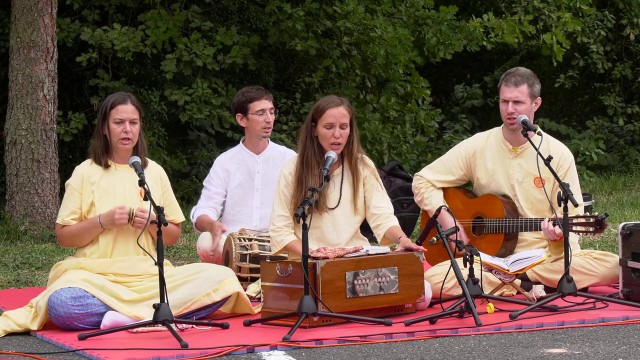
Morning program from Vep, Hungary. Singing bhajans in the presence of Gurudev.
Meditation for every creatures
7:10 - 8:13 (63 min)
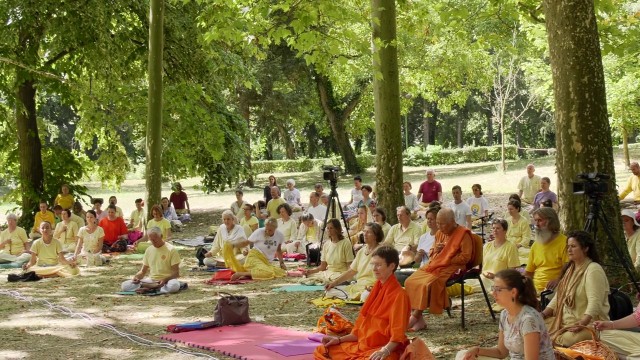
Morning satsang with Vishwaguruji from Vep, Hungary. We can't do too much for innocent creatures but we can give blessing from our heart for them in meditation. It is for every living beings. Silent meditation and relaxation.
Don't kill and don't eat meat
8:20 - 9:06 (46 min)
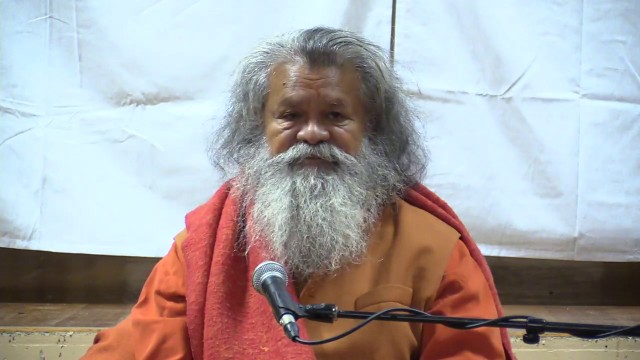
Evening satsang with Vishwaguruji from Launceston. Tasmania, Australia. We can become really human if we don't kill any creatures. Ant and elephant are different only in their bodies. Many years ago people generally didn't eat meat not like now. In China, people eat cats and they kill them very cruelly. Be peaceful and happy eating good but not meat and eggs. We should say every morning that "I am human" and we should feel the greatness of our Earth and water. The story of a blind man in a room that had only one door. Singing and explaining the bhajan Prabhu mere avaguna cit na dharo.
Introduction to Jadan Ashram
9:10 - 10:09 (59 min)
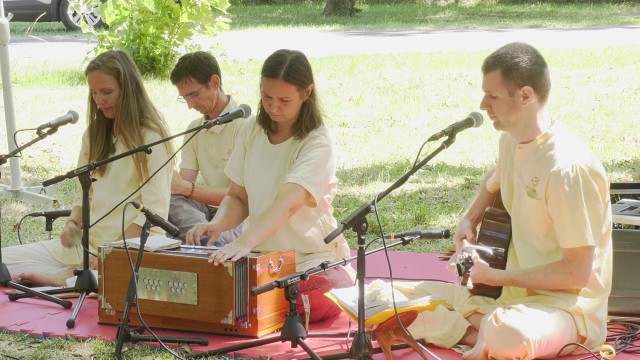
Morning satsang with Vishwaguruji from Vep, Hungary. Swami premanand talks about the special blessing of being together with Gurudeva at Vep. Explaining the significance of the Jadani Ashram. The Jadan Ashram is the embodiment of Gurudeva's plan, the Master's playground. Everyone who comes here will find their way. The practice of Bhramari pranayam.
We can reach God
10:15 - 10:52 (37 min)
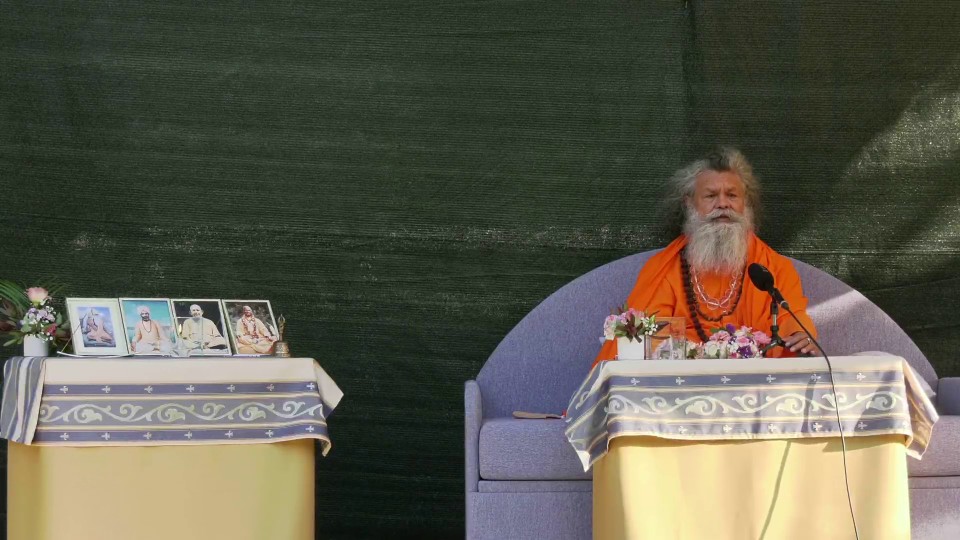
A spiritual discourse on purity, humility, and non-duality, using the metaphor of the ocean and the raindrop.
"One drop comes in our hand... And when this one drop drips into the ocean, everything becomes only the ocean."
"So we have to come ourselves humble, good, pure, and like a brother, like a sister, like a friend, and so on."
A spiritual teacher addresses a gathering, offering a meandering talk that blends creation narratives, the symbolism of Shiva and Vishnu, and the core analogy of the individual as a pure drop merging with the divine ocean. He emphasizes the need for humility in spiritual practice, warns against ego, and concludes with reflections on the equality of all at death, beyond religious identity.
Filming location: Slovenia
Guruji's life with Mahaprabuji
11:00 - 12:00 (60 min)
Evening Satsang from Vep
Eternal Journey of the Soul
12:05 - 13:03 (58 min)
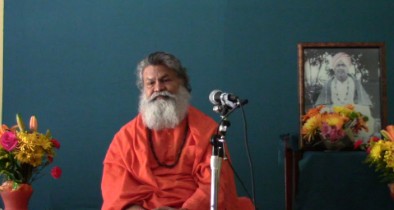
Morning satsang with Swamiji from Atlanta, Georgia, USA. The human being consists of five layers or koshas. In the centre the eternal, everlasting Atma is residing. In this lecture Vishwaguruji explains the structure of the human being in order to enlighten the meaning, importance and the aim of our life. Yoga is a way to achieve this aim.
Living In The Ocean Of Imagination
13:10 - 14:14 (64 min)
Duga Uvala, HR. Life is full of turbulences. Life is an up and down. We have many kind of illusions. We have no control over bad habits which will reduce our life. Many problems are only in our mind. Maya means ignorance. We are living in the ocean of imagination. It is not that what we need. It is only temporary. We are here to develop ourselves but if we don't come out from the ignorance, we will be victim of birth and death. We have to cross that ocean of ignorance and we have to come back to our happiness.
Follow the Guruvakyas and practice
14:20 - 15:18 (58 min)
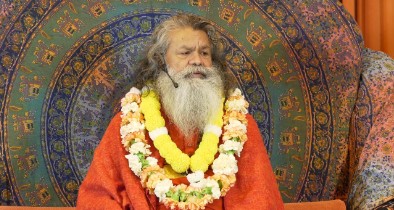
A spiritual discourse on the importance of consistent practice and good company.
"You were listening to what they were singing. It was beautiful. We are all on that path." and "If you are not practicing, you will not have success."
Swami Ji addresses a gathering after an evening of bhajans. He emphasizes that spiritual development comes from regular practice (sādhanā) and the company one keeps, using the proverb Jaisā kare saṅg, vaisā lāge raṅg. He shares personal anecdotes of his early morning practices with his Guru and warns against neglecting discipline, comparing it to medical treatments that only suppress illness if not fully addressed. The talk covers themes of karma, the human lifespan, and the necessity of following the Guru's guidance.
Filming location: Vép, Hungary
Read more about the holy scriptures
15:25 - 16:30 (65 min)
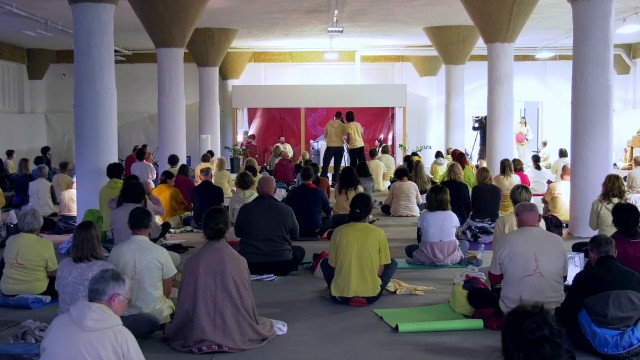
Evening satsang with Vishwaguruji from Slovenska Vas, Slovenia. Cancer is a terrible disease for humans because of many chemicals. Nowadays we shole buy seeds that are also not healthy for us. We shouldn't suffer too much before dying. We should take more time at home with our family. We should read holy scriptures more regularly. We should follow the teaching of the great saints. We also use makeup and that is unnatural. We should come back to nature to save our health. To fast two days in a week will help you to recover from many illnesses. To practise ashwini mudra problems of haemorrhoids will go away. The navel is the seed of our life. Practising bhramari pranayama and meditation.
We are here to learn more
16:35 - 16:55 (20 min)
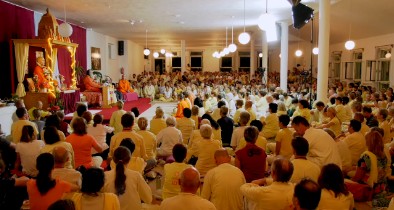
An introductory welcome and opening talk for a spiritual gathering featuring guest speaker Dr. Gulabji Kothari.
"Gulābjī will be with us for a few days and will perhaps give one talk a day, where you may also ask questions."
"Yoga is the science for humans, not merely āsanas and prāṇāyāma, but something beyond."
Swami Maheshwarananda welcomes attendees and honored guest Dr. Gulabji Kothari, a Vedic scholar, to the program. He introduces other visiting swamis and teachers, emphasizing the global reach of Yoga in Daily Life. The core theme is the human intellect's need for spiritual teaching and the deeper science of yoga for realizing the soul. Dr. Kothari gives brief remarks, expressing happiness to be in the Czech Republic and previewing the next day's topic on the body, karma, and the selfless transformation of the individual.
Filming location: Strilky, Czech Republic
Practicing Yoga Asanas
17:00 - 17:41 (41 min)
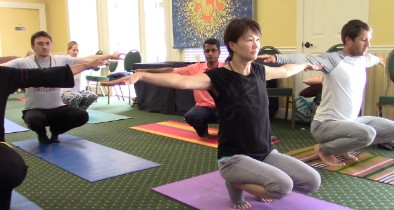
A yoga instruction session focusing on the practice and benefits of Vajrāsana and Vīrāsana.
"This Vajrāsana is designed especially to strengthen or to activate that Vajra Nāḍī."
"This will repair our digestion. This will repair our headache problems, also many, many things. This looks very simple, but it is very powerful."
An instructor guides students through the physical postures of Vajrāsana (thunderbolt pose) and Vīrāsana (hero pose), explaining their effects on the Vajra Nāḍī energy channel, digestion, and sciatic nerve. The session includes detailed alignment instructions, benefits for concentration and alertness, and transitions into other balancing postures and a forward bend before concluding.
Filming location: USA
Find your soul in your heart
17:45 - 19:36 (111 min)
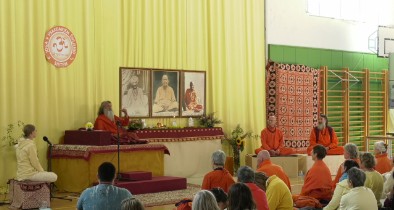
A satsang reflecting on the history and philosophy of Yoga in Daily Life in Slovenia and Croatia.
"We always think the stories in Līlāmṛta happened in the past, but I believe we all live in Līlāmṛta."
"Yoga is the science of humans. Yoga is the very first, because God Śiva brought yoga. He gave this name: yoga. Yoga means union."
Swami Maheshvaranand (Vishwaguruji) and disciples like Vivek Puri share stories of the spiritual movement's beginnings in the former Yugoslavia. They recount early seminars, personal encounters with the guru, and the growth of the community. The discourse expands into the nature of yoga, the soul, Sanātana Dharma, and advice for holistic, healthy living rooted in spiritual practice.
Filming location: Kranj, Slovenia
Phulpuriji becomes Mahamandaleshwar
19:00 - 20:09 (69 min)
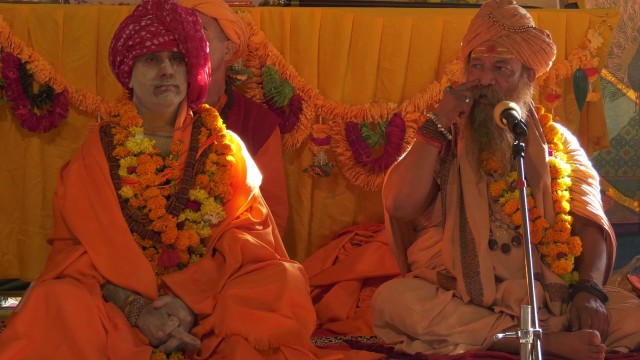
Morning satsang from Jadan Ashram, Rajasthan, India. Phulpuriji becomes Mahamandaleshwar.
This is the time to work on our inner self
19:40 - 20:25 (45 min)
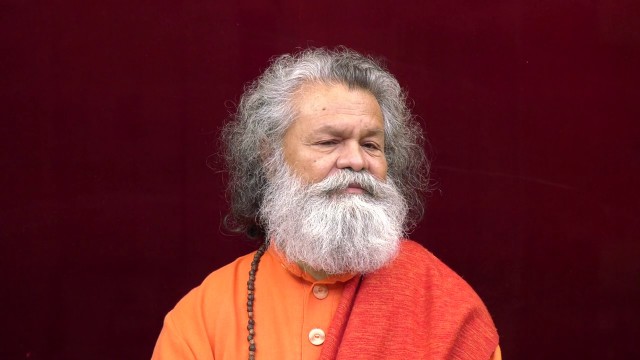
Evening satsang with Vishwaguruji from Strilky Ashram, Czech Republic. Human work very hard nowadays. We human do vary many good things for the world. We make very good roads but at the same time, we destroy the environment. We should work on ourselves also so hard. Singing a bhajan means to work inside us. We should work together in harmony. Yoga leads to peace harmony and understanding within us. Real ancient yoga positures also lead inside not outside. Guru is like a pilot- We have to go through the five koshas with the blessing of the Master.
Remembering Holy Guruji's Mahasamadhi
20:30 - 21:37 (67 min)

Evening satsang in Jadan Ashram on the occasion of the Mahasamadhi anniversary of Holy Guruji. With bhajan singing.
Only oneness leads to happiness
21:45 - 22:25 (40 min)
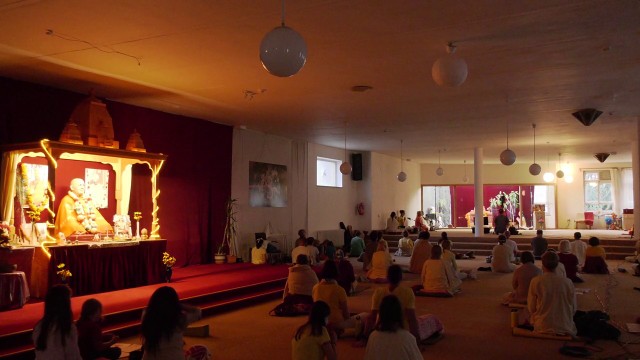
A spiritual discourse on the nature of consciousness, the soul, and worldly illusion.
"Cetana kī icchā nahīṁ. Consciousness has no desire, and from the inert, nothing is distant."
"Ekobrahman duttye nasti. That Brahman is only one. Where there are two, they are always equal; this is not good."
A speaker explores profound spiritual concepts, explaining the mantra Aum as the fundamental resonance of existence and distinguishing between conscious beings and inert matter. Using metaphors like a water drop seeking the ocean and a soul trapped by attachment to the body, the discourse examines the cycle of saṃsāra, the illusion of worldly desires, and the ultimate oneness of the soul (ātmā) with Brahman. The talk concludes with a critique of modern attachments and a reminder that the individual self is the source of its own suffering.
Filming location: Strilky, Czech Republic
The Science of Kriyā Yoga
22:30 - 23:10 (40 min)
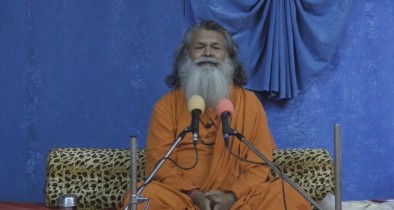
A spiritual discourse on the science and purpose of Kriyā Yoga.
"Yoga is a science of the body, mind, and consciousness. Yoga harmonizes body, mind, and soul."
"Kriyā Yoga is the highest technique within the yoga. But with that, you have to have a blessing."
A spiritual teacher from the Dalak Purījī Siddhāpīṭha Paramparā delivers a talk on Kriyā Yoga, tracing its origin to Swayambhū Śiva. He explains yoga as a holistic science for purification and self-realization, contrasting human spiritual potential with self-destructive tendencies like ego and hatred. He defines Kriyā as sacred action and movement inherent in the universe and the human body, detailing various purification techniques and emphasizing the necessity of Guru's grace and disciplined practice to ascend spiritually.
Filming location: Jadan, Rajasthan, India
Sound and resonance
23:15 - 0:11 (56 min)
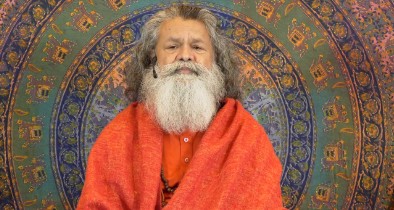
Morning Satsang with Vishwaguruji from Vep, Hungary. Regardless whether you understand bhajans or not, the resonance awakens spirituality in you. The resonance of the songs is reflected in our ten indriyas (organs of perception and action). Swami Sivananda said in his bhajan: those are my friends who understand my words. Shabda means sound, words. In the Gurukul, the warrior students learnt all mantras for archery. By the power of these mantras the arrow goes straight to where the sound of the tiger came from. Vishwaguruji explains the karmic sin of King Dasharatha, father of God Rama.
American
Australian