
European
Don't kill and don't eat meat
0:15 - 1:01 (46 min)
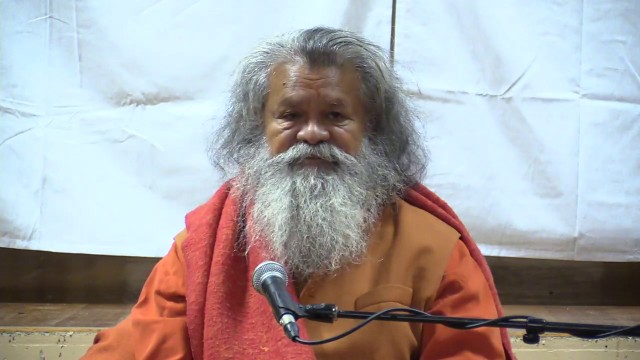
Evening satsang with Vishwaguruji from Launceston. Tasmania, Australia. We can become really human if we don't kill any creatures. Ant and elephant are different only in their bodies. Many years ago people generally didn't eat meat not like now. In China, people eat cats and they kill them very cruelly. Be peaceful and happy eating good but not meat and eggs. We should say every morning that "I am human" and we should feel the greatness of our Earth and water. The story of a blind man in a room that had only one door. Singing and explaining the bhajan Prabhu mere avaguna cit na dharo.
Australia and Fijij
1:00 - 1:39 (39 min)
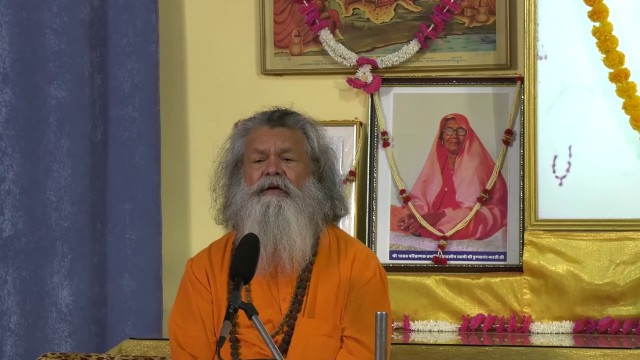
A spiritual teacher shares reflections on global travel, history, and community.
"Australia is a very large and beautiful country, but there are not too many people, and they do not wish for more." "Why do I do this? I go everywhere, and I'm thinking, so I see where, how people are living there."
The speaker recounts travels to Australia, Fiji, and other regions, discussing indigenous histories, colonial impacts, and the diaspora. He describes visiting disciples and ashrams, praising their spiritual devotion and peaceful life. The narrative weaves observations on geography, the role of the United Nations, and ethical living, concluding with reverence for his gurus and a critique of modern dietary habits.
Filming location: Fiji Islands
We are the Ocean
1:05 - 2:12 (67 min)
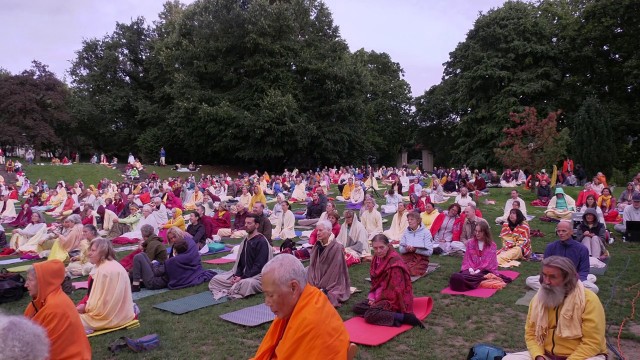
Evening satsang with Vishwaguruji from Strilky Ashram, Czech Republic. We came here from many countries to practice and we did a very good job in this beautiful place, our Ashram. I don't know who will be my successor. You know, Guru is Guru. Holy Guruji has so much love for me. He always supported me. You are all one in my heart. The humidity rises from the sea, we are like the ocean. Now close your eyes and take time in your hearts.
Live as a Human
2:20 - 2:54 (34 min)
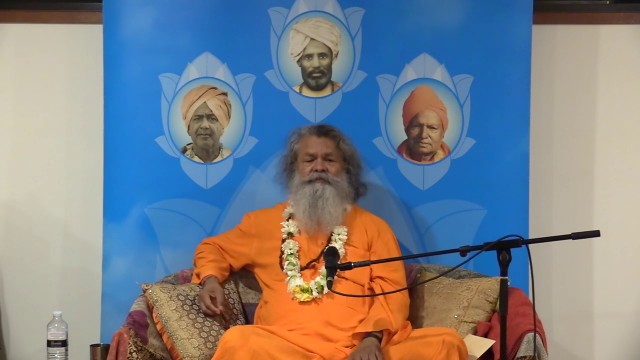
A spiritual discourse on non-violence, divine oneness, and the sanctity of all life.
"We are like other Swamis; we are the same. But we are working for everyone, every time, everywhere."
"Jīvā means life, life, and in that life there are all creatures: a little ant, this little ant, and humans, and all are all equal, what is living, living."
A Swami addresses a gathering, weaving together cosmology, ethics, and personal anecdote. He speaks of Bhagavān Śiva as the primordial source and emphasizes the fundamental equality of all life (Jīva). The core teaching is the practice of ahimsa (non-violence), advocating for a vegan lifestyle and abstaining from alcohol, framed as a recognition of our shared humanity. He instructs listeners to begin each day with the affirmation "I am human" to cultivate this awareness, and concludes with a bhajan.
Filming location: Gold Coast, Australia
Around the world - World peace in your hands
3:00 - 3:03 (3 min)

A promotional video about the Yoga in Daily Life organization and its founder, Paramahaṁsa Svāmī Maheśvarānanda.
"All elements are balanced in a perfect way, and that balancing principle, that is what I call yoga."
"Be the change you want to see."
The video profiles the global humanitarian and spiritual work of Svāmījī, founder of Yoga in Daily Life. It details the organization's reach, its United Nations affiliation, and its practical projects in education, healthcare, environmental protection, and interfaith dialogue aimed at fostering inner and world peace.
A Welcome Address on Peace and Yoga
3:10 - 3:17 (7 min)

A welcome address at a yoga and peace conference in Prague.
"Peace is a condition for which mankind has been longing to reach for thousands of years. But outer life circumstances are merely a reflection of the inner world of human beings."
"Through the system of Yoga in Daily Life given to us by Viśwa Gurujī, many thousands of people all over the world develop peace inside through practicing spiritual techniques."
A speaker from the International Śrī Svāmī Māta Vānanda Fellowship welcomes attendees, opening with a traditional peace mantra. The address frames world peace as an inner achievement, advocating for the "Yoga in Daily Life" system as a path to nonviolence. It honors the spiritual lineage of Viśwa Gurujī and Mahāprabhujī, and references the founding of a World Peace Council.
Filming location: Prague, Czech Republic
Karma Yoga
3:25 - 3:59 (34 min)
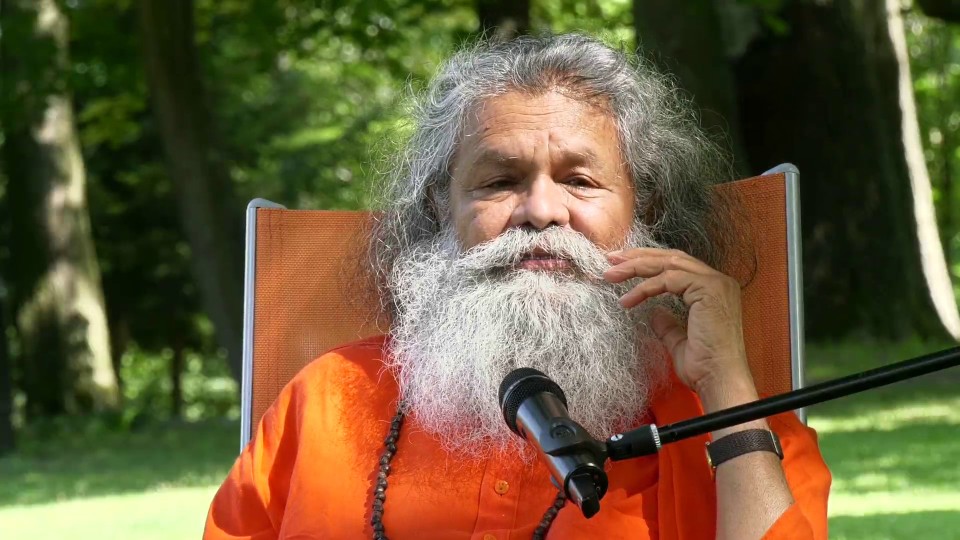
Morning satsang with Vishwaguruji from Strilky Ashram, Czech Republic. The Bhagavad Gita says that yoga is fulfilled through work. Doing something good or bad is also karma. God has given us to be born in this human form. We have to act in such a way that we attain cosmic light. Practising Asana and Bhramari pranayama.
Help every creature
4:05 - 4:30 (25 min)
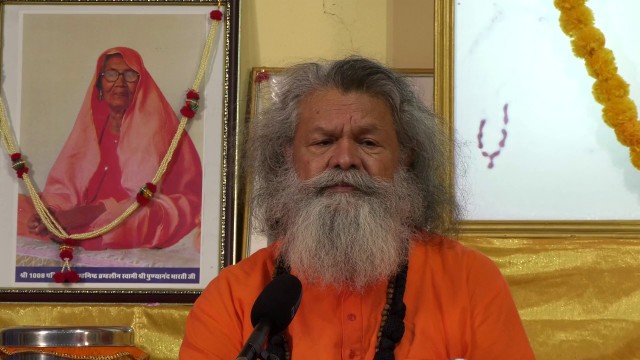
A spiritual discourse addressing suffering and compassionate action.
"Today, I am giving a message to the whole world. If we can all help someone, it is a great thing."
"This is the heart of the matter: when I see many animals dying and there is no water, I know something good will come again... But we must say we should help. We should help."
The speaker, addressing a global audience, reflects on the severe drought and suffering of animals, questioning divine providence. He shares a teaching story about a mother's ring, which symbolizes the cyclical nature of good and bad times, and references other spiritual narratives involving King Janaka and Ashtavakra. The core message is a call to practical compassion, urging listeners to conserve water and provide for all creatures.
Filming location: Jadan, Rajasthan, India
Who and how can become a saint
4:35 - 5:09 (34 min)
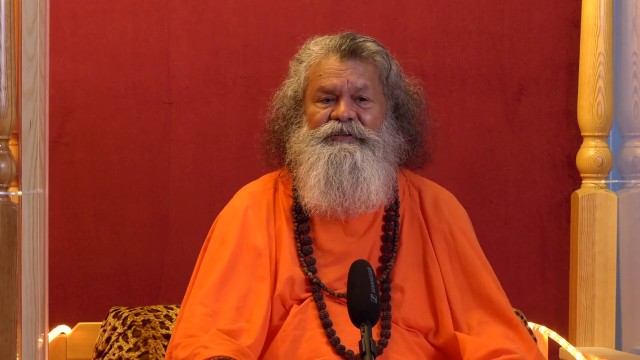
A spiritual discourse on the nature of the guru's grace and discipleship, using metaphorical teachings.
"When a single draft comes, if we can catch that one draft, we are already in the ocean." "Once you have that guru, a real guru, then you, we all will be there."
The teacher, returning after some time, delivers a satsang weaving together parables and metaphors—including the lifecycle of a wasp (Brahmari), the process of childbirth, and a story about a dog losing its chapati—to illustrate the elusive nature of true spiritual attainment and the singular, irrevocable bond with an authentic guru. He emphasizes purity, complete surrender, and warns against the distracted mind that seeks many things.
Filming location: Vienna, Austria
The blessed day of Gurupurnima
5:15 - 5:55 (40 min)
A satsang discourse on the significance of Guru Pūrṇimā.
"Gu means darkness, and ru means light. When the darkness disappears, the light appears."
"Gurudev is the jewel of the Parāś, and the disciple is the iron. When the disciple comes to the Gurudev, he changes from iron into gold."
A speaker explains the cosmic and spiritual importance of Guru Pūrṇimā, describing the Guru as the highest principle and the day as the start of the spiritual year. He discusses the Guru's role in transforming the disciple, shares devotional poetry and bhajans about longing for the master, and uses the analogy of a farmer's harvest to describe how devotees should present their spiritual progress. The talk concludes with blessings for the congregation's spiritual practice.
Filming location: Vép, Hungary
Bhajan singing from Vep
6:00 - 6:42 (42 min)
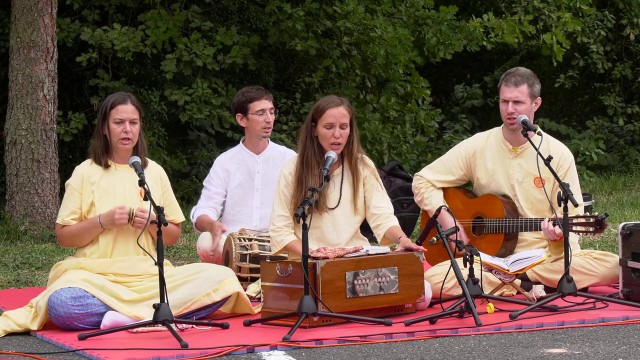
Morning program from Vep, Hungary. Singing bhajans in the presence of Gurudev.
We should awake
6:50 - 7:32 (42 min)
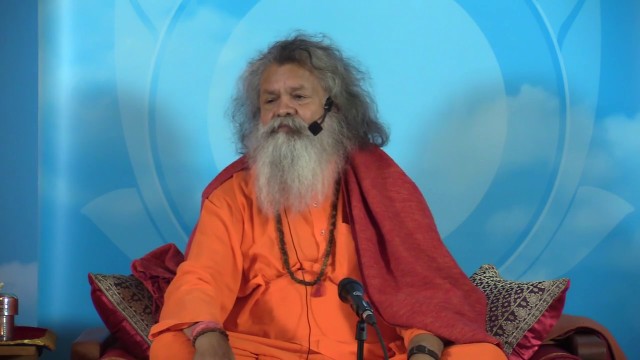
A spiritual discourse exploring states of consciousness, reality, and human identity.
"Sleeping is very great. They cannot sleep, not access this bill like that."
"And when we sleep, then there is no light, no thoughts, nothing. That time we became very quick."
A spiritual teacher delivers an extemporaneous talk, weaving together themes of deep sleep, awakening, and the nature of reality. He uses personal anecdotes, analogies of cars and airplanes, and references to lineage gurus like Mahāprabhujī to discuss the journey from individual awareness to a unified state. The talk emphasizes self-reminders like "I am awakened" and "I am human," and concludes by praising the purity of satsang.
Filming location: Brisbane, Australia
Bhramari Pranayama
7:40 - 8:21 (41 min)
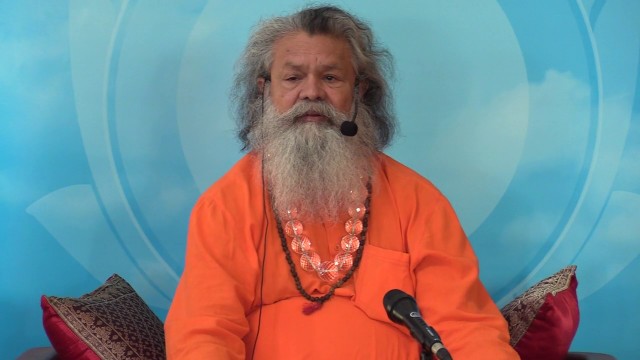
Evening satsang with Vishwaguruji from Brisbane Ashram, Australia.
Proper practising of Bhramari
8:25 - 8:25 (0 min)
Morning program with Vishwaguruji from Brisbane, Australia. Moodiji brought India and the whole world towards spirituality. We should practise bhramari regularly but not too much at one time. Explanation and demonstration of different bhramari pranayama technics.
Bhajan evening in Strilky Ashram
9:10 - 9:56 (46 min)
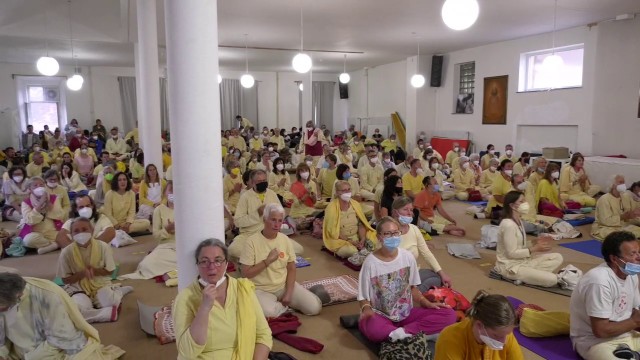
Evening satsang with Vishwaguruji from Strilky Ashram, Czech Republic. Bhajan singing.
We should awake
10:00 - 10:42 (42 min)
A spiritual discourse exploring states of consciousness, reality, and human identity.
"Sleeping is very great. They cannot sleep, not access this bill like that."
"And when we sleep, then there is no light, no thoughts, nothing. That time we became very quick."
A spiritual teacher delivers an extemporaneous talk, weaving together themes of deep sleep, awakening, and the nature of reality. He uses personal anecdotes, analogies of cars and airplanes, and references to lineage gurus like Mahāprabhujī to discuss the journey from individual awareness to a unified state. The talk emphasizes self-reminders like "I am awakened" and "I am human," and concludes by praising the purity of satsang.
Filming location: Brisbane, Australia
Live as a Human
10:50 - 11:24 (34 min)
A spiritual discourse on non-violence, divine oneness, and the sanctity of all life.
"We are like other Swamis; we are the same. But we are working for everyone, every time, everywhere."
"Jīvā means life, life, and in that life there are all creatures: a little ant, this little ant, and humans, and all are all equal, what is living, living."
A Swami addresses a gathering, weaving together cosmology, ethics, and personal anecdote. He speaks of Bhagavān Śiva as the primordial source and emphasizes the fundamental equality of all life (Jīva). The core teaching is the practice of ahimsa (non-violence), advocating for a vegan lifestyle and abstaining from alcohol, framed as a recognition of our shared humanity. He instructs listeners to begin each day with the affirmation "I am human" to cultivate this awareness, and concludes with a bhajan.
Filming location: Gold Coast, Australia
Proper practising of Bhramari
11:30 - 11:30 (0 min)
Morning program with Vishwaguruji from Brisbane, Australia. Moodiji brought India and the whole world towards spirituality. We should practise bhramari regularly but not too much at one time. Explanation and demonstration of different bhramari pranayama technics.
Bhajan singing from Vep
12:15 - 12:57 (42 min)
Morning program from Vep, Hungary. Singing bhajans in the presence of Gurudev.
We are the Ocean
13:05 - 14:12 (67 min)
Evening satsang with Vishwaguruji from Strilky Ashram, Czech Republic. We came here from many countries to practice and we did a very good job in this beautiful place, our Ashram. I don't know who will be my successor. You know, Guru is Guru. Holy Guruji has so much love for me. He always supported me. You are all one in my heart. The humidity rises from the sea, we are like the ocean. Now close your eyes and take time in your hearts.
Bhajan evening in Strilky Ashram
14:20 - 15:06 (46 min)
Evening satsang with Vishwaguruji from Strilky Ashram, Czech Republic. Bhajan singing.
Don't kill and don't eat meat
15:10 - 15:56 (46 min)
Evening satsang with Vishwaguruji from Launceston. Tasmania, Australia. We can become really human if we don't kill any creatures. Ant and elephant are different only in their bodies. Many years ago people generally didn't eat meat not like now. In China, people eat cats and they kill them very cruelly. Be peaceful and happy eating good but not meat and eggs. We should say every morning that "I am human" and we should feel the greatness of our Earth and water. The story of a blind man in a room that had only one door. Singing and explaining the bhajan Prabhu mere avaguna cit na dharo.
Morning Yoga practice, Umag, Croatia (8/9)
16:00 - 16:42 (42 min)
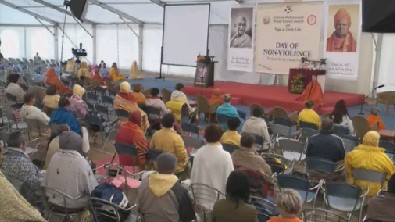
Morning Yoga practice from the international Yoga retreat Umag, Croatia
Bhramari Pranayama
16:50 - 17:31 (41 min)
Evening satsang with Vishwaguruji from Brisbane Ashram, Australia.
Karma Yoga
17:35 - 18:09 (34 min)
Morning satsang with Vishwaguruji from Strilky Ashram, Czech Republic. The Bhagavad Gita says that yoga is fulfilled through work. Doing something good or bad is also karma. God has given us to be born in this human form. We have to act in such a way that we attain cosmic light. Practising Asana and Bhramari pranayama.
Our soul is one
18:15 - 18:54 (39 min)
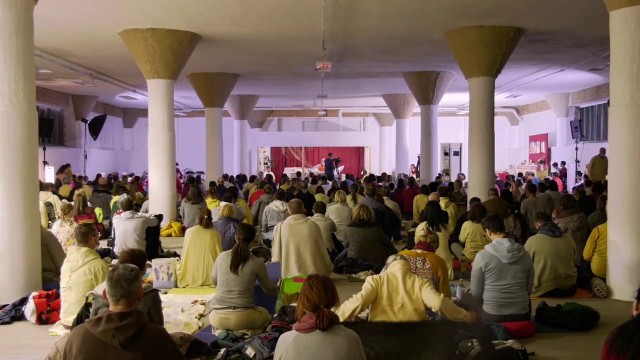
A spiritual discourse on the nature of life, non-violence, and the soul's journey, using the metaphor of a flame.
"God has given something special to the humans... a true human is the only one who does not say, 'I will live here, I will eat food, but I will not act in a way that causes pain to any humans, or animals, or birds, or anything.'"
"This life is yours, everyone's, and mine. My lamp is, I don't know how far it is, but I also have this lamp, and one day my lamp will be gone."
A swami addresses a gathering, explaining the preciousness of human life and the principle of non-violence (ahimsā) as the key to spiritual progress. He describes the soul (ātmā) as a flame that ultimately unites with the divine, contrasting it with the ego and the physical body. He concludes with practical guidance, urging daily maintenance of a lamp in one's home or ashram as a form of seva (service) and sādhanā (practice) to honor this inner light.
Filming location: Slovenia
Part 1: Yoga, Faith, and Integration: A Personal Journey and Panel Discussion
19:00 - 20:04 (64 min)
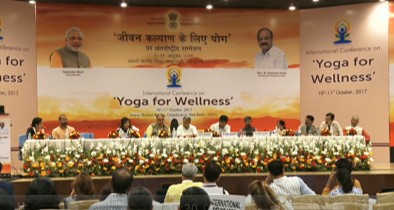
A personal testimony on faith-based yoga healing and a panel discussion on integrating traditional medical systems.
"I refused chemotherapy, radiotherapy, and surgery... I believed those fresh, positive thoughts in my consciousness would bleed down into my nervous system and start to talk to my cells."
"Yoga is not about the āsana. Why not? It is about God. If you allow God's energy to run into your system... God will provide the miracles."
Neil Patel shares his personal journey of using yoga and conscious thought to survive cancer for 18 years after refusing conventional treatment. Following his testimony, a moderated panel featuring practitioners of Homeopathy, Ayurveda, Siddha, and Yoga discusses pathways to integrate these AYUSH systems with modern medicine for holistic wellness. Key themes include treating the whole person, cost-effective care, managing non-communicable diseases, and yoga's role in raising consciousness beyond mere physical health.
Filming location: Delhi, India
Around The World - Summer Yoga at the Beach, Split, CRO
20:10 - 20:16 (6 min)
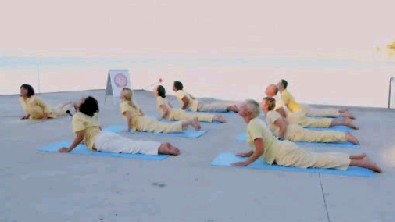
Summer Yoga at the Beach, Split, Croatia
Around The World - Surya Namaskar at Sri Devpuriji Ashram, Zagreb, CRO
20:20 - 20:56 (36 min)
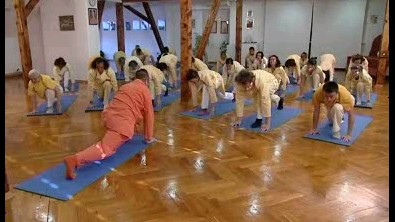
Surya Namaskar in Sri Devpuriji Ashram, Zagreb, Croatia with english subtitles
Vegetarian kitchen in praxis (part 2)
21:00 - 22:08 (68 min)
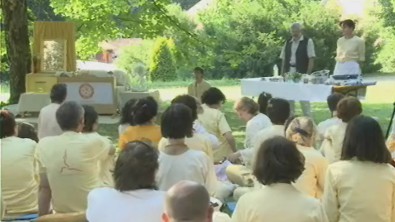
A culinary lecture and demonstration on vegetarian cooking, focusing on legumes and practical dietary wisdom.
"A common mistake is when someone says, 'I am independent of food; I am already a great yogī; I do not care what I eat.' But this is not a sign of spiritual maturity."
"The difference between us vegetarians and non-vegetarians is that we eat such food daily, while they might have it two or three times a week."
The speaker, Jaroslav, opens by discussing the philosophy of vegetarian food, arguing it should be a pleasurable gastronomic experience for everyone. He addresses protein sources, the role of fats, and critiques common dietary mistakes. His wife then takes over to explain detailed techniques for preparing legumes to improve digestibility, including soaking, peeling, and spicing. She also introduces a product called Hraška (pea flour) as a versatile, egg-like binding agent. The session concludes with a Q&A where the couple fields questions on soy sauce, legume varieties, and product availability.
Filming location: Strilky, Czech Republic
We can reach God
22:15 - 22:52 (37 min)
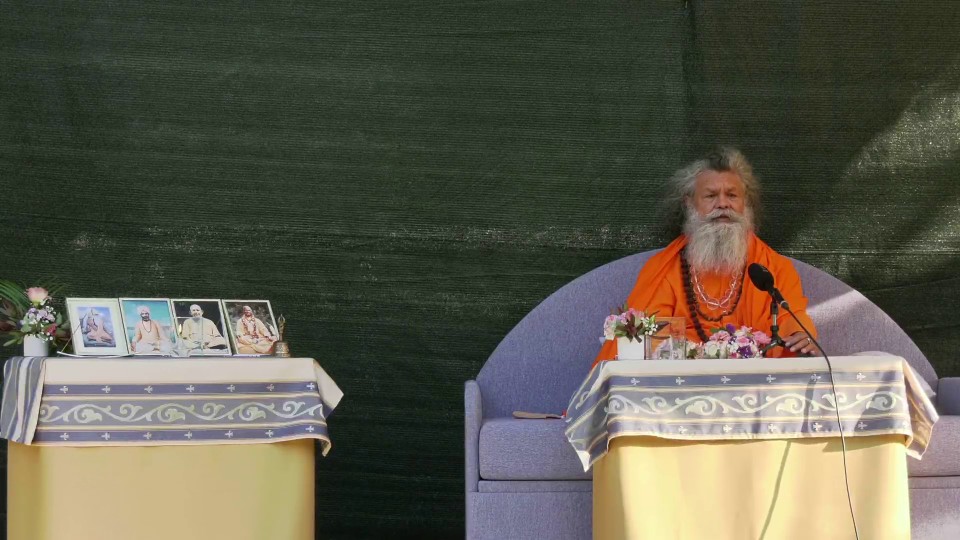
A spiritual discourse on purity, humility, and non-duality, using the metaphor of the ocean and the raindrop.
"One drop comes in our hand... And when this one drop drips into the ocean, everything becomes only the ocean."
"So we have to come ourselves humble, good, pure, and like a brother, like a sister, like a friend, and so on."
A spiritual teacher addresses a gathering, offering a meandering talk that blends creation narratives, the symbolism of Shiva and Vishnu, and the core analogy of the individual as a pure drop merging with the divine ocean. He emphasizes the need for humility in spiritual practice, warns against ego, and concludes with reflections on the equality of all at death, beyond religious identity.
Filming location: Slovenia
Sat sanga
23:00 - 23:27 (27 min)
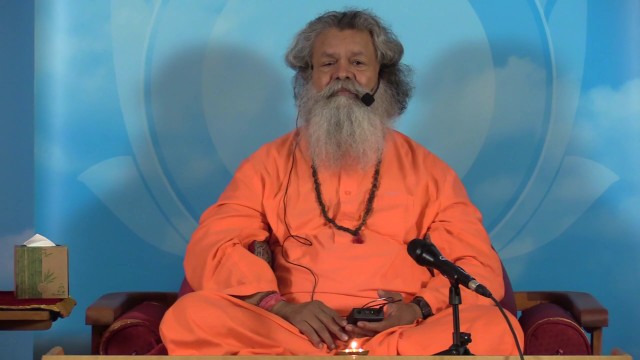
A spiritual discourse on the meaning and power of satsaṅga.
"It was very hard, very hard. I think in your country it was also, no? It was very much."
"Sat means truth. Satsaṅga, truth. Each and every word should be such that we should know the truth."
The lecturer addresses a gathering, reflecting on the global difficulties of the past years, including pandemic-related travel disruptions. He explores the concept of satsaṅga, defining "sat" as truth and emphasizing the importance of truthful company and spiritual practice. The talk meanders through themes of guru lineages, the impermanence of the body compared to the lasting nature of one's name, and the unifying principle of truth amidst worldly distinctions.
Filming location: Brisbane, Australia
Help every creature
23:35 - 0:00 (25 min)
A spiritual discourse addressing suffering and compassionate action.
"Today, I am giving a message to the whole world. If we can all help someone, it is a great thing."
"This is the heart of the matter: when I see many animals dying and there is no water, I know something good will come again... But we must say we should help. We should help."
The speaker, addressing a global audience, reflects on the severe drought and suffering of animals, questioning divine providence. He shares a teaching story about a mother's ring, which symbolizes the cyclical nature of good and bad times, and references other spiritual narratives involving King Janaka and Ashtavakra. The core message is a call to practical compassion, urging listeners to conserve water and provide for all creatures.
Filming location: Jadan, Rajasthan, India
American
Australian