
European
Spiritual Way Of Living
0:40 - 1:28 (48 min)
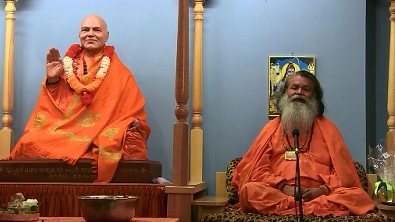
A satsang commemorating the 89th birth anniversary of Satguru Dev Swami Madhavanandaji.
"Everyone has birth, but rare are those who make this birth successful."
"Guru kṛpāhi kevalaṁ kṛpāḥ. On whom the kripa of the Gurudev is there, everyone’s kripa will be there."
A spiritual teacher leads a discourse honoring the birth anniversary of Satguru Dev. He explores the nature of a divine birth, where an immortal soul enters the mortal world as a guide. Key themes include the importance of blessings over curses, the eternal Guru Tattva principle, and the lineage of grace from Alakpuriji through Devpuriji to the present Satguru. The talk emphasizes surrendering negative qualities, following the Guru's word as mantra, and the protective power of faith.
Filming location: Vienna, Austria
The Path of Kindness and the Flow of Giving
1:35 - 2:12 (37 min)
A spiritual discourse and Q&A session on cultivating kindness, understanding karma, and overcoming personal blocks through selfless giving.
"Practice ahiṃsā. See yourself in others. If someone does something bad to you, how will you feel? The same is true if you have negative feelings or thoughts toward others; they will feel it too."
"The best way is to give. Give some seeds to the birds. Give water to the flowers... Give, give, give. Yes, we are coming here for giving."
A Swamiji leads the session, beginning with teachings on kindness and the principle of ahiṃsā, illustrated by the story of the saint Dadhīci Ṛṣi. He then answers questions on the accumulation of karma and how to overcome creative and energetic blocks, emphasizing the transformative power of generosity. He shares the story of Max Muller to illustrate faith and concludes by detailing the many forms of helpful giving that purify karma and open spiritual pathways.
Filming location: Kranj, Slovenia
Suffering And Sweetness
2:20 - 2:53 (33 min)
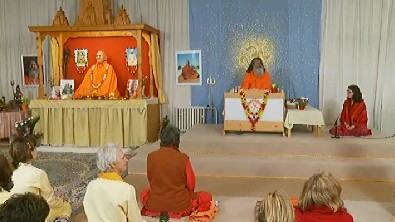
A spiritual discourse on the essence of all teachings, delivered on the occasion of Mahashivaratri.
"All beings desire happiness. So, all entities in this world, including people, have only two wishes: the attainment of happiness and freedom from troubles."
"Sukha and Duhkha are within us. Try to sweep out all the negative vrittis; then you will become free from Duhkha."
A speaker addresses the satsang gathering, exploring the fundamental human pursuit of happiness (Sukha) and freedom from sorrow (Duhkha). He explains that these states originate from within, cultivated by our positive or negative thoughts and actions. The talk weaves together teachings on fear, violence (himsa), non-violence (ahimsa), and the ultimate goal of merging individual consciousness with the divine, using the metaphor of a drop returning to the ocean. He references the wisdom of Satguru Dev and concludes with practical instructions for the upcoming Shivaratri observance.
Filming location: Strilky, Czech Republic
Message of the Deepak
3:00 - 3:30 (30 min)
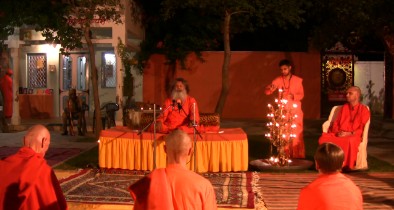
A spiritual discourse on the significance of Diwali (Dīpāvalī).
"This light is the truth, and we light these lights in everyone's heart. If we forget the sins of people, forgive them, and accept them, it means we light the candle again in their heart."
"Therefore, Dīvalī is not only for one day; Dīvalī is every day. When you open your eyes, you get the light, you see the light."
The speaker delivers a satsang on the festival of Diwali, explaining its origin in Lord Rama's return to Ayodhya and its deeper spiritual meaning as the inner light of Brahman. The talk explores the symbolism of the oil lamp—comparing the body to the pot, prana to the oil, the self to the wick, and the flame to the atman—and emphasizes themes of forgiveness, love (prem), non-violence (ahiṃsā), and daily spiritual practice. The discourse includes philosophical reflections, mantra chanting, and a critique of ritual animal sacrifice.
Filming location: Jadan, Rajasthan, India
The Living Light of God - Indian Saints
3:35 - 4:02 (27 min)
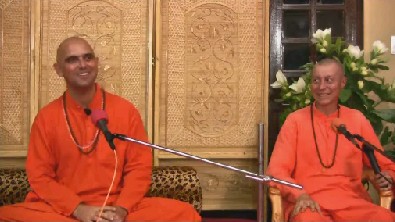
A satsang discourse using a parable to illustrate the guru's role and the disciple's responsibility.
"The saints are there to give us that light, to illuminate our path. The Guru provides the light so we can continue our journey more safely."
"But simultaneously, if we do not apply the brakes of self-discipline and engage in the practices he gives, then that light is of limited use."
The speaker shares a story of a saint offering a light to a speeding motorcyclist who has no brakes, using it as an analogy for spiritual guidance. He explains that the living tradition, or parampara, provides the illuminating light of wisdom through self-realized masters, but disciples must also practice self-discipline. The talk highlights how teachings evolve across generations while preserving their essence, referencing figures like Mahaprabhuji, Guruji, and Swamiji.
Filming location: Jadan, Rajasthan, India
The effect of the Moon to our life
4:10 - 4:26 (16 min)
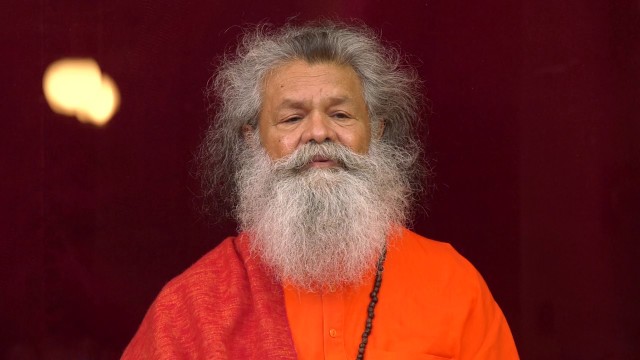
Evening satsang with Vishwaguruji from Strilky Ashram, Czech Republic. This is the day of water and forests and for crops because of the moving of the Moon. Moon is changing very much in our life. It balances the Earth. In a natural way, we can't eat the same fruit for the whole year. Moon has a stronger effect on us like Sun. In this time we can change our feelings and energies. Varaha brought the Earth out from the water. Swami Mataji sang one bhajan about Guru and Guru kripa.
Wonders of the human being
4:30 - 5:56 (86 min)
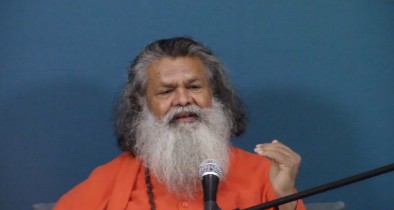
A morning satsang in a Canadian rainforest on the inner body, breath, and spiritual search.
"Where are you searching for me, oh my friend? My heart is in the forest, but I am dwelling in your breath."
"If you really search for me, I will meet you within a second."
Swami Satyanarayana Dasa gives a discourse, using the surrounding forest as a metaphor for the inner landscape of chakras and nadis. He explains the vital importance of breath (prana) and shares stories—including a parable of Ramakrishna and a devotee—to illustrate the intensity of devotion required to know God. The talk covers the five sheaths (Panchakosha), the caution around awakening kundalini, and practical guidance on pranayama and asanas for purifying the physical and energetic bodies.
Filming location: Vancouver, Canada
Incarnation Day Of Holy Guruji
6:00 - 6:57 (57 min)
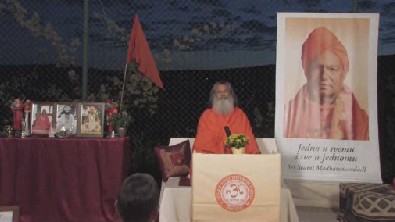
A satsang commemorating the incarnation day of Gurudev Śrī Svāmī Madhavānandapurījī Mahārāj.
"Today is a special blessing coming to you on the holy occasion of our beloved Gurudev."
"I live there, where my bhaktas sing my name with love, with devotion. There are the saints."
The lecturer leads the evening gathering, sharing teachings on the nature of divine incarnations and saints, illustrated by the story of Nārada and Viṣṇu. He recounts his own profound journey to his Guru, Śrī Svāmī Madhavānandapurījī, describing their first meeting and the transformative grace he received. Swami Jñāneśwar Purī Ji then offers heartfelt reflections on the blessings of both his Guru and Swamiji.
Satsang by Swami Jasrajpuri
7:05 - 8:01 (56 min)
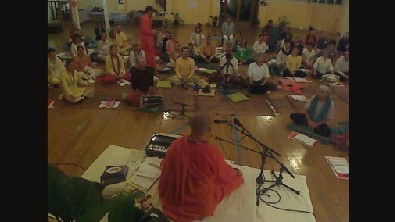
Satsang by Swami Jasrajpuri, on the 11th of September
Spiritual Way Of Living
8:05 - 8:53 (48 min)
A satsang commemorating the 89th birth anniversary of Satguru Dev Swami Madhavanandaji.
"Everyone has birth, but rare are those who make this birth successful."
"Guru kṛpāhi kevalaṁ kṛpāḥ. On whom the kripa of the Gurudev is there, everyone’s kripa will be there."
A spiritual teacher leads a discourse honoring the birth anniversary of Satguru Dev. He explores the nature of a divine birth, where an immortal soul enters the mortal world as a guide. Key themes include the importance of blessings over curses, the eternal Guru Tattva principle, and the lineage of grace from Alakpuriji through Devpuriji to the present Satguru. The talk emphasizes surrendering negative qualities, following the Guru's word as mantra, and the protective power of faith.
Filming location: Vienna, Austria
The day I met Holy Guruji
9:00 - 9:55 (55 min)
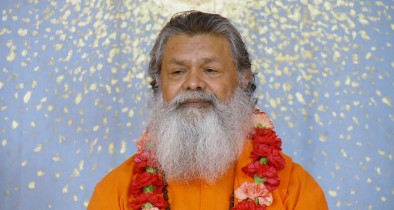
A spiritual discourse reflecting on divine descent, the guru-disciple relationship, and personal history.
"Every soul, when descending from the astral world to this mortal world, must be chosen by some higher hierarchies... You are not elected. You are selected, so such a divine great master comes to this world."
"The master is the master, and we are the raw rock. We have to go through all these situations. He will make you position, give you position on the altar, in the temple."
Swami Maheshwarananda (Swamiji) speaks intimately about the nature of a Satguru's incarnation, selected by divine will rather than personal karma. He shares the story of his own spiritual calling, describing his first encounter with his Guru, Swami Madhavananda, as a child and his determined journey to enter the ashram. He weaves in teachings on karma yoga, liberation, and the transformative, often arduous process of the disciple under the master's guidance, using the metaphor of a sculptor shaping a raw stone into a sacred statue.
Filming location: Strilky, Czech Republic
AUM and Chakras
10:00 - 11:05 (65 min)
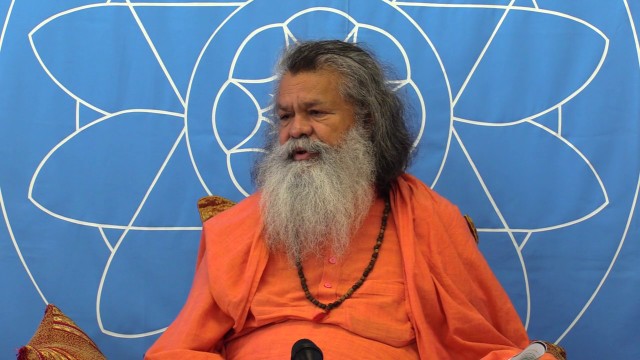
A yoga and prāṇāyāma workshop focusing on the subtle body, breath, and sound.
"These three nāḍīs—the left, right, and center—are coming till the end of these chakras... balancing our whole body, our awareness, our concentration."
"OM is that resonance... this is a very important mantra. It is not a mantra as a resonance, but we have to say it."
An instructor leads a detailed session on yogic anatomy, explaining the nāḍīs (energy channels), the lunar and solar influences on the body, and the therapeutic effects of sound. He provides instructions for several prāṇāyāma techniques, including Nāḍī Śodhana and the chanting of OM, emphasizing their role in purification, balance, and healing for the nervous system and organs.
Filming location: Sydney, Australia
People are good everywhere in the world
11:10 - 12:12 (62 min)
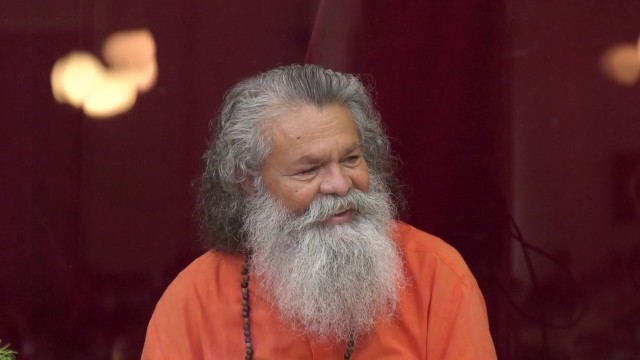
Morning satsang with Vishwaguruji from Strilky Ashram, Czech Republic. We have an international organization and very many ver very good and friendly people we are. But one drop of lemon can destroy the whole cup of milk. The story of Vishwaguruji and a Czechoslovakian ambassador and his family to take a trip in Algeria and their adventures there. We should respect everybody and every different culture. For long years we have got very much knowledge and spirituality through our yoga life. We have many great Swamis and many spiritually developed people. The story of Swami Hridayakamal in Fiji and in other countries. We should become free from attachment. Many people is born in different countries from their origin but it is good because in the end we also go to one place.
Don't change the Master
12:20 - 13:27 (67 min)
A spiritual discourse on the chakra system, kuṇḍalinī, and the yogic path to self-realization.
"Everything is in our body and is developing... yet, we have not yet discovered the process of the body in its safest place, which is within the body of the mother."
"Yoga is the science of humans. For the human brain, for human thoughts, there is a lot, a lot written in the Patañjali Yoga Sūtras, and by different other yogīs."
The lecturer delivers a satsang, explaining the universe's reflection within the human body through the chakras and nāḍīs. He discusses the journey of the soul, the importance of a single spiritual master, and the practical science of yoga for purifying the mind and body. The talk covers the iḍā, piṅgalā, and suṣumṇā channels, the significance of the haṁsa (swan), and the need for consistent, systematic practice over seeking quick experiences.
Filming location: Melbourne, Australia
Do we have seen God?
13:35 - 14:31 (56 min)
Evening satsang from Jaipur Ashram, Rajasthan, India. Swami Premanand told some beautiful greeting words from Jaipur Ashram. He remembers shortly about the history of Jaipur Ashram and his memories about Holiguruji who established this ashram. In this ashram, everybody can feel the atmosphere of peace harmony and understanding. Yoga is a science and not only a collection of physical practices. Yoga can give us that kind of knowledge to reach the Parabrahma Paramatma. We can see God in us. In meditation, we should go in and not out and we should trust in our master. Practising bhramari pranayam. Explanation of that technic and its influences.
How to overcome the obstacles of practicing
14:35 - 15:53 (78 min)
A spiritual discourse on the chakra system, focusing on the Maṇipūra chakra and the journey of self-mastery.
"My first master was my father, who imparted immense knowledge in a simple way. Through his instruction, I found my path."
"Strive for oneness, purity, without blemish. Do not stain your body."
Swami Maheśvarānand leads a satsang, weaving teachings on the manipura (navel) chakra with personal stories from his childhood and path to sannyas. He explains the symbolic animals and deities within each chakra, the role of the guṇas (qualities), and the necessity of a guru's guidance. The talk emphasizes practical discipline, advocating for specific prāṇāyāma techniques like Kapālabhāti and Bhastrikā to awaken inner energy, and concludes with a blessing.
Filming location: Wellington, New Zealand
Practicing of the system 'Yoga in Daily Life', Level 3 - Part 1
16:00 - 17:00 (60 min)
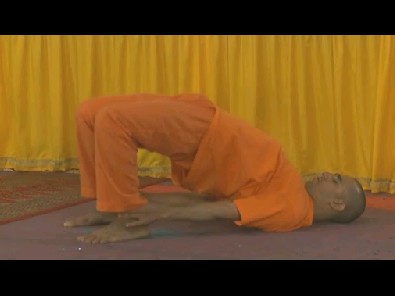
Practicing of the system "Yoga in Daily Life", Level 3 - Part 1, in Om Vishwa Deep Gurukul Swami Maheshwaranand Ashram, Jadan, Rajasthan, India on 27th of October 2009.
God is in the heart
17:05 - 17:52 (47 min)
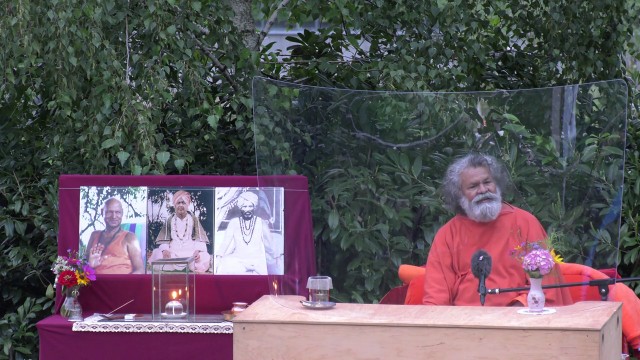
A spiritual discourse on devotion, divine immanence, and the essence of satsang.
"God is in your heart. Our God is so vast, and He is separated into many, many living beings—not only in humans, but in each and every creature."
"Where there is devotion, in that devotion we can say there is love. Love is that whole, whole universe. And that love, what we feel, is also that which brings peace and harmony."
A teacher leads an evening satsang, beginning with prayers and reflections on the peaceful gathering. He explores the nature of God, emphasizing the divine presence within all beings and the heart. He shares a lengthy parable about a seeker whose intense devotion leads to a divine vision, using it to illustrate themes of surrender, love, and the non-dual unity of the soul and God. The talk concludes with blessings and a reminder of life's impermanence.
Filming location: Strilky, Czech Republic
Live a healthy and spiritual life
18:00 - 18:46 (46 min)
Evening satsang with Vishwaguruji from Strilky Ashram, Czech Republic. Because of the coronavirus in recent years, many people could not come, and I was also elsewhere sometimes. But even though we were in a different place, we all were practicing. Alcohol and especially meat are not good for us. We should not kill animals. The science of Yoga was given to people by Bhagawan Shiva.
Real health comes from Nature
18:50 - 19:49 (59 min)
A satsang on health, natural remedies, and gentle yoga practice.
"I am not a doctor, yes? Please. I am Swami. I am a yogī. And I am you, a natural."
"So many things we do not know. We do not know that one has. If you know exactly, then everything is gone."
Swami Maheshvaranand leads a satsang, discussing the limitations of conventional medicine and praising natural, holistic approaches to health. He shares anecdotes about medicinal tree bark and the work of Yogī Ramdev, while also critiquing how doctors often manage rather than cure illness. The session concludes with instructions for a gentle, supine yoga exercise intended for digestive health.
Filming location: Strilky, Czech Republic
Our soul is one
19:55 - 20:34 (39 min)
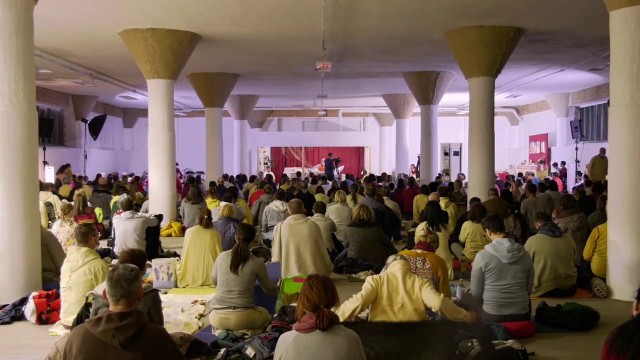
A spiritual discourse on the nature of life, non-violence, and the soul's journey, using the metaphor of a flame.
"God has given something special to the humans... a true human is the only one who does not say, 'I will live here, I will eat food, but I will not act in a way that causes pain to any humans, or animals, or birds, or anything.'"
"This life is yours, everyone's, and mine. My lamp is, I don't know how far it is, but I also have this lamp, and one day my lamp will be gone."
A swami addresses a gathering, explaining the preciousness of human life and the principle of non-violence (ahimsā) as the key to spiritual progress. He describes the soul (ātmā) as a flame that ultimately unites with the divine, contrasting it with the ego and the physical body. He concludes with practical guidance, urging daily maintenance of a lamp in one's home or ashram as a form of seva (service) and sādhanā (practice) to honor this inner light.
Filming location: Slovenia
The Human Dharma
20:40 - 21:29 (49 min)
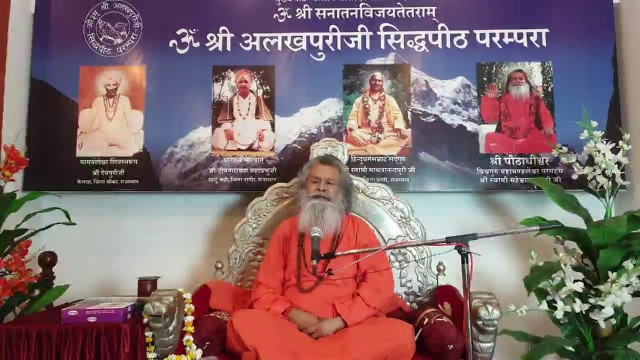
Evening satsang with Vishwaguruji from Jaipur, Rajasthan, India. Animals are eating each other. Human has given everything for humans. A human should not eat dead bodies. The essence of life is the same in every creature, like water in the raindrop and the ocean. God is ever with us. Explanation of the lineage of Gurus and the way how to chant Om properly.
Practicing from Strilky
21:35 - 22:07 (32 min)
Evening satsang with Vishwaguruji from Strilky Ashram, Czech Republic.
Keep the flame still
22:15 - 22:53 (38 min)
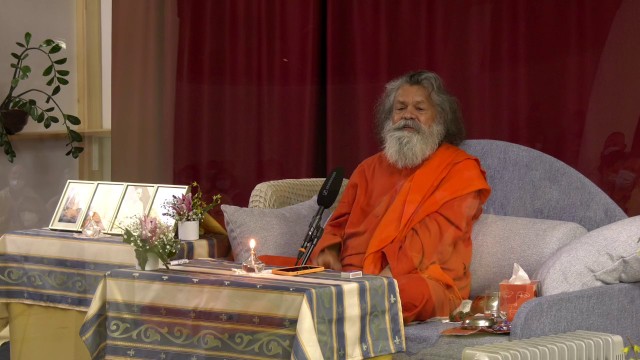
A spiritual discourse on maintaining the sacred flame of life within daily householder and community practice.
"You are already a yogī. You possess that science, yet you seek yogic attainment."
"This flame is what we call our ātmā, our spirit, which then departs. So when this is happening, we must learn from it."
The lecturer addresses a gathering, weaving together themes from the Yoga in Daily Life system. He emphasizes the dignity of the householder path, advocating for marriage and family life as spiritually vital. Using the extended metaphor of an oil lamp, he explains the body, life force, and spirit, urging the daily practice of lighting a lamp and maintaining temple pūjā in āśramas to nurture collective spirituality and personal health. He shares personal anecdotes and practical instructions, concluding with blessings and travel plans.
Filming location: Slovenia
Karma and bhakti bring us to Brahmaloka
23:00 - 23:46 (46 min)
An evening satsang on the intertwined paths of Bhakti and Karma Yoga.
"Bhakti Yoga is a sure one which will bring us to the Brahmalokas."
"Karma Yoga is Bhakti Yoga, and Bhakti Yoga is there... you can only do [bhakti] if you have done the karma yoga."
A spiritual teacher addresses practitioners, using the story of the saint Tukārām to illustrate pure devotion. He explains the essential unity of selfless service (Karma Yoga) and devotion (Bhakti Yoga), stating they purify the heart and destroy ego. He shares a personal pilgrimage account to the temple of Kālabhairava in Ujjain, emphasizing that sincere practice within a guru lineage leads to liberation.
Filming location: Strilky, Czech Republic
One day we will be together
23:50 - 0:34 (44 min)
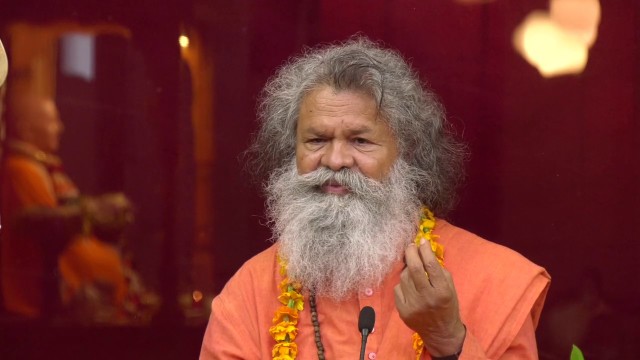
An evening satsang on spiritual unity and the essence of all paths.
"It is very important that everyone has their yoga center's name... but yoga is only one yoga; we simply have different names."
"All children are born into what we call a kindergarten. In the kindergarten, we see all children as very beautiful and very good."
The lecturer addresses the global Yoga in Daily Life community, using analogies of families, children, and the water cycle to illustrate the fundamental oneness underlying all yoga schools, religions, and human beings. He emphasizes respect for all traditions and lineages while cautioning against the discord created by attachment to names and identities. The talk concludes with a prayer for harmony and a reminder to seek inner unity.
Filming location: Strilky, Czech Republic
American
Australian