
European
Outer Situation Reflects The Inner Situation
0:30 - 1:27 (57 min)
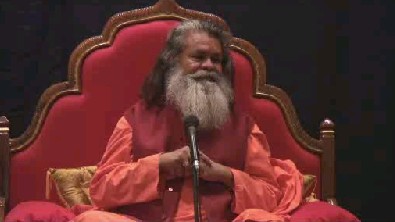
Satsang with Swamiji from Wellington, NZ. With the cleanness of our house we can see our inner condition. How we are keeping the ashram or the house in order, with this we can see our love and devotion. We can see if everything is in beauty. It is our inner beauty, the inner pureness, our inner clarity which is reflecting there. Doubts, desires and hidden wishes we did not clean up are spoiling our mind. If we are neglecting our sadhana, our duties, then tamas guna, the laziness takes over. It will grow more and more and we will find every self excuse for our mental pollution. Self enquiry meditation, which is taught in the Yoga in Daily life Yoga classes will help to clear up the question - not who am I but how am I. We have to search within, how is our inner world and how is our inner condition. Translation of the bhajan: Jag musafir dekh vo.
How to train our mind?
1:35 - 1:56 (21 min)
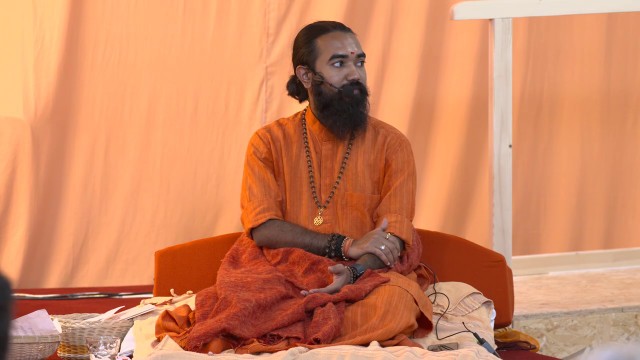
A spiritual discourse on taming the restless mind using a parable from Gurudeva.
"Our mind is chanchal. Chanchal means very restless, and that is normal for a human mind, but you need to learn how to train and tame your mind."
"In the same way, our minds are very restless, running around. We should just let it go; that is its job, to roam around and have thoughts continuously. Then, slowly, slowly, train your mind towards Guru Bhakti."
A speaker recounts Gurudeva's parable of a king's untamable horse and the patient trainer who tamed it through gentle, persistent companionship and reward. The story serves as an analogy for taming the restless mind through devotion to the Guru and the path of Bhakti, rather than forceful suppression. The session concludes with the guided recitation and explanation of a Sanskrit mantra focused on meditating on the Supreme Self within the heart.
Filming location: Strilky, Czech Republic
What is God?
2:00 - 2:58 (58 min)
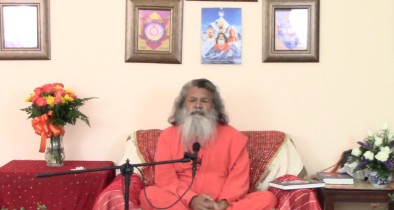
A spiritual discourse on the nature of God, human divinity, and traditional wisdom.
"A child asks a mother or father, 'What is the horizon? How far is it?' Have you ever reached or gone to the horizon?"
"Bhagavān Kṛṣṇa said to Arjuna: both are good, Nirākāra and Sākāra, the formless and with form. But he said, for you, Arjuna, it is easier to worship in form."
Swami Anand Arun explores the concepts of formless (Nirākāra) and personal (Sākāra) divinity, using the analogy of the unreachable horizon. He discusses the path of worship, the significance of divine forms and symbols in Hindu tradition, and the importance of sacred language and human relationships. The talk connects these themes to the science of the cakras, the significance of Vedic rituals like marriage, and the practical application of yoga and speech in daily life.
Filming location: USA
Prana is life energy
3:05 - 3:54 (49 min)
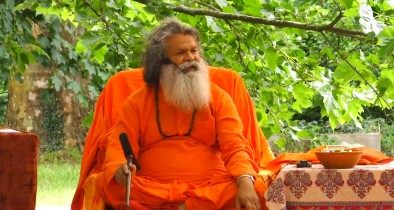
Morning satsang from Summer Retreat in Vep, Hungary. While prana is present in the body a human is alive, even if there are no breathing functions and the heart activity is not visible. Vishwaguruji explains the story of the great saint, Valmiki.
Opening Address: Yoga for World Peace and Non-Violence
4:00 - 4:07 (7 min)
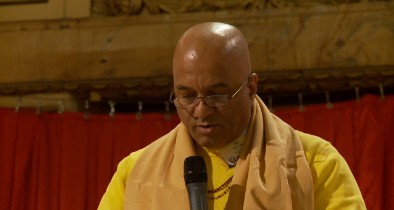
An opening address for the "Yoga for World Peace and Non-Violence" International Conference in Prague.
"Yoga is not a religion. It represents the original balancing principle that promotes nonviolence and peacefulness."
"To achieve peace in the world, we must start by achieving inner peace ourselves."
A representative of the Czech Hindu Religious Society, Vishwaguru Deep Hindu Mandir, welcomes attendees and explains his organization's role in co-organizing the conference. He honors the spiritual lineage of Swami Madhavanandaji and Swami Maheshvaranandaji, detailing global humanitarian projects and drawing a direct connection between yogic principles like non-violence (ahimsa) and the universal pursuit of peace. The speech emphasizes inner peace as the foundation for world peace.
Filming location: Prague, Czech Republic
Yoga in Daily Life: Health Promotion in the Czech Republic
4:15 - 4:28 (13 min)

A presentation on the integration of yoga into national health strategy in the Czech Republic.
"The main message of Yoga in Daily Life is the constant endeavor to support health promotion systematically through yoga training on four levels: the physical, mental, social, and spiritual."
"Today, we are the biggest yoga association in the Czech Republic... this harmonizing of the physical, mental, social, and spiritual level, is truly the only chance to keep peace and development in our society."
A representative of the Czech Association of Yoga in Daily Life addresses a conference, detailing the organization's role in national health promotion since 1973. He aligns the yoga system's four-level approach with the Czech government's National Health Strategy 2020, highlighting specific action plans where yoga can contribute, such as promoting physical activity and mental health. The presentation concludes with statistical growth and a tribute to the founding inspiration of Vishwaguruji.
Filming location: Prague, Czech Republic
Mental food
4:35 - 6:33 (118 min)
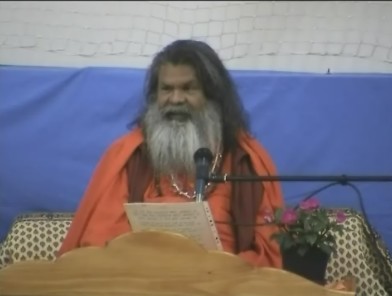
Swamiji in Sliac, April 2007
The Universal Embrace of Yoga and Spirituality
6:40 - 7:39 (59 min)
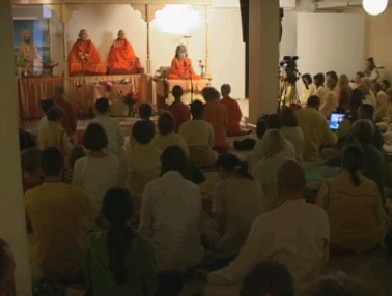
An evening satsang on the universal principles of yoga, karma, and selfless service.
"Yoga means unity. Yoga means harmony. Yoga means union. And Yoga also means balance."
"Through Sādhana and through Sevā—these two—spirituality grows."
Swami Ji from the Sri H. G. Ashram leads a discourse from Vienna, explaining yoga as a scientific path for harmony that connects the individual to the entire cosmos. He teaches that spiritual growth comes from balancing personal practice (Sādhana) with selfless service (Sevā), illustrating this with a story of Pārvatī's sacrifice. The talk covers interconnectedness, compassion, and overcoming the ego, concluding with a meditation.
Filming location: Vienna, Austria
Prashad
7:45 - 8:26 (41 min)
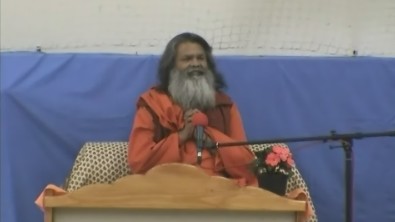
Swamiji in Sliac, 3rd April 2007.
Bhajans for World Peace (2/3)
8:30 - 9:36 (66 min)
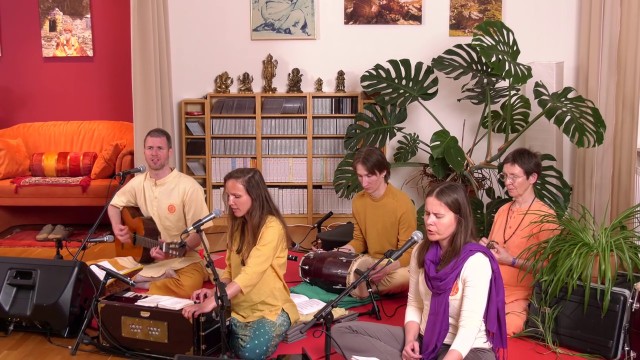
For world peace, first we need to find peace within ourselves. A recording of a live concert for world peace in YIDL center in Villach, Austria. Public concert lasted 6h with uninterrupted Bhajans. The concert was a part of a 24h of Bhajan Anushtana.
Bhajans for World Peace (3/3)
9:40 - 10:55 (75 min)
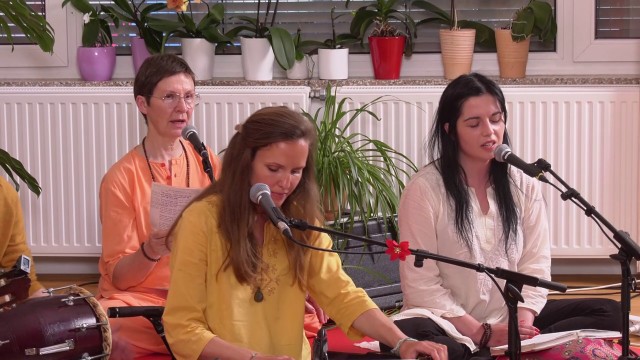
For world peace, first we need to find peace within ourselves. A recording of a live concert for world peace in YIDL center in Villach, Austria. Public concert lasted 6h with uninterrupted Bhajans. The concert was a part of a 24h of Bhajan Anushtana.
Bhajan evening from Vienna 1
11:00 - 11:28 (28 min)
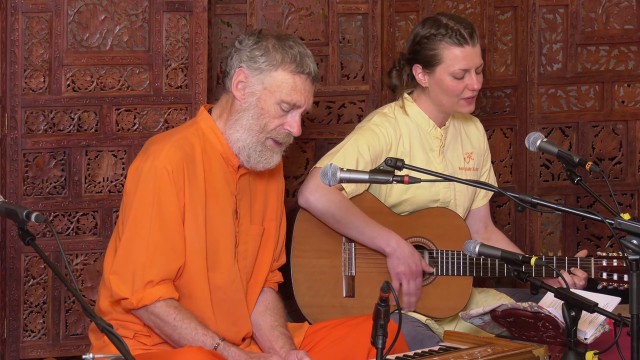
Evening Satsang with H.H.Vishwaguruji from Vienna, Austria. Bhajan singing.
Mental food
11:35 - 13:33 (118 min)
Swamiji in Sliac, April 2007
You are Infinite, Pula
13:40 - 15:16 (96 min)
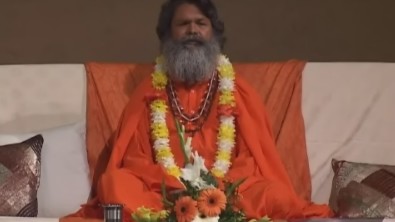
Public Lecture, Pula, Croatia, 2004
Seva will bring us to Brahmaloka
15:20 - 16:27 (67 min)
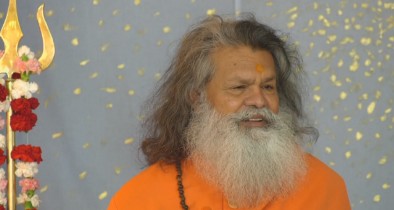
Satsang with Vishwaguru Maheshwarananda, Strilky Ashram, Czech Republic. God gives everything to everyone. We should have a happy life and happy united families. We should not kill any creatures in the name of God. Keep discipline and all beings will be happy. When we are doing real service (seva), it means that we shouldn’t expect anything. Unselfish seva will bring us to Brahmaloka.
How to train our mind?
16:35 - 16:56 (21 min)
A spiritual discourse on taming the restless mind using a parable from Gurudeva.
"Our mind is chanchal. Chanchal means very restless, and that is normal for a human mind, but you need to learn how to train and tame your mind."
"In the same way, our minds are very restless, running around. We should just let it go; that is its job, to roam around and have thoughts continuously. Then, slowly, slowly, train your mind towards Guru Bhakti."
A speaker recounts Gurudeva's parable of a king's untamable horse and the patient trainer who tamed it through gentle, persistent companionship and reward. The story serves as an analogy for taming the restless mind through devotion to the Guru and the path of Bhakti, rather than forceful suppression. The session concludes with the guided recitation and explanation of a Sanskrit mantra focused on meditating on the Supreme Self within the heart.
Filming location: Strilky, Czech Republic
Morning Yoga practice, Umag, Croatia (8/9)
17:00 - 17:42 (42 min)
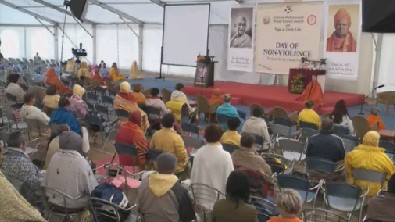
Morning Yoga practice from the international Yoga retreat Umag, Croatia
If you have dedication, you get everything
17:50 - 18:54 (64 min)
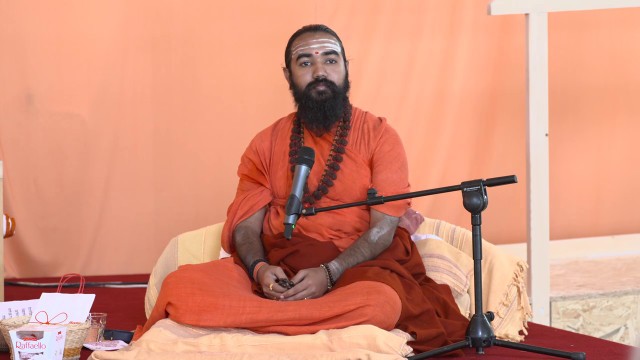
A morning satsang on simplicity, renunciation, and devotion.
"Life is simple. No need to complicate it. We just need two pieces of cloth, or even one."
"If you have true Guru Bhakti, if you have true dedication towards your Guru, if you believe in Him, then you will eventually get what you are waiting for."
The lecturer begins by demonstrating the traditional gati cloth worn by sadhus, explaining its symbolism and the meaning of the tripuṇḍ tilak. He shares a parable about a jealous priest and a magical conch to illustrate the folly of envy. The discourse then explores the life of Gautama Buddha as an exemplar of renunciation and dedication, followed by a story of the disciple Giri's devotion to Adi Shankaracharya. The session includes Sanskrit chants and concludes with a bhajan.
Filming location: Strilky, Czech Republic
The Practice and Power of Trāṭaka
19:00 - 19:52 (52 min)
An evening satsang on the theory and practice of Trāṭaka, or yogic gazing.
"Trāṭaka means gazing on one point. The best object is the flame from a lamp of good ghee from a cow—not from buffaloes, goats, or sheep."
"While practicing Trāṭaka, if you practice every day, morning and evening, without interruption for twelve years, you will attain a siddhi... a very pure, very kind, and merciful look in your eyes."
Swami Prakashananda Saraswati provides detailed instructions for the cleansing technique of Trāṭaka. He explains suitable objects for gazing, such as a pure ghee flame or a black dot, and warns against using a mirror. He describes the profound benefits, including purification of mind, improved speech, and the awakening of divine energy and intuition, while stressing the necessity of guidance from a properly trained teacher and the use of a Guru Mantra. The talk includes a cautionary story about two monks to illustrate the importance of inner purity and forgiveness.
Filming location: Australia
The Universal Embrace of Yoga and Spirituality
20:00 - 20:59 (59 min)
An evening satsang on the universal principles of yoga, karma, and selfless service.
"Yoga means unity. Yoga means harmony. Yoga means union. And Yoga also means balance."
"Through Sādhana and through Sevā—these two—spirituality grows."
Swami Ji from the Sri H. G. Ashram leads a discourse from Vienna, explaining yoga as a scientific path for harmony that connects the individual to the entire cosmos. He teaches that spiritual growth comes from balancing personal practice (Sādhana) with selfless service (Sevā), illustrating this with a story of Pārvatī's sacrifice. The talk covers interconnectedness, compassion, and overcoming the ego, concluding with a meditation.
Filming location: Vienna, Austria
What is God?
21:05 - 22:03 (58 min)
A spiritual discourse on the nature of God, human divinity, and traditional wisdom.
"A child asks a mother or father, 'What is the horizon? How far is it?' Have you ever reached or gone to the horizon?"
"Bhagavān Kṛṣṇa said to Arjuna: both are good, Nirākāra and Sākāra, the formless and with form. But he said, for you, Arjuna, it is easier to worship in form."
Swami Anand Arun explores the concepts of formless (Nirākāra) and personal (Sākāra) divinity, using the analogy of the unreachable horizon. He discusses the path of worship, the significance of divine forms and symbols in Hindu tradition, and the importance of sacred language and human relationships. The talk connects these themes to the science of the cakras, the significance of Vedic rituals like marriage, and the practical application of yoga and speech in daily life.
Filming location: USA
Outer Situation Reflects The Inner Situation
22:10 - 23:07 (57 min)
Satsang with Swamiji from Wellington, NZ. With the cleanness of our house we can see our inner condition. How we are keeping the ashram or the house in order, with this we can see our love and devotion. We can see if everything is in beauty. It is our inner beauty, the inner pureness, our inner clarity which is reflecting there. Doubts, desires and hidden wishes we did not clean up are spoiling our mind. If we are neglecting our sadhana, our duties, then tamas guna, the laziness takes over. It will grow more and more and we will find every self excuse for our mental pollution. Self enquiry meditation, which is taught in the Yoga in Daily life Yoga classes will help to clear up the question - not who am I but how am I. We have to search within, how is our inner world and how is our inner condition. Translation of the bhajan: Jag musafir dekh vo.
Kundalini: The Serpent Power of Destiny
23:15 - 0:05 (50 min)
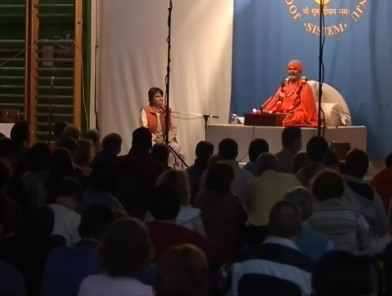
A discourse on Kundalini yoga, destiny, and spiritual wisdom.
"Kundalini is the Śakti, the power that directs our life. It is the dormant energy within our consciousness, connected to certain physical centers in the body."
"Destiny is the product of your own actions. No one is there to be blamed. You are only yourself responsible for your destiny."
Swami Satyananda Saraswati explains the nature of Kundalini as a dormant serpent power and its connection to personal destiny, which is shaped by past karma. He emphasizes the importance of acting with awareness of deśa (place) and kāla (time/circumstances) to achieve harmony and avoid problems. The talk explores the symbolism of the snake as both time/death and spiritual energy, concluding that self-realization frees one from destiny's power.
Filming location: Kranj, Slovenia
American
Australian