
European
Gurudeva hi Kevalam
1:45 - 2:40 (55 min)
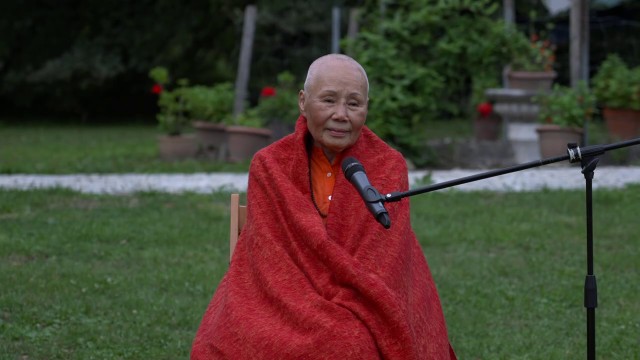
Evening satsang from Yoga Summer Retreat from Strilky, Czech Republic. As we know, things are changing in our lives. What comes shall go. A story of a man, who was a happy person, and used to make others happy. This man time to time went to his Guruji for darshan and advice. Gurudev knows what is going on in our minds. Karma yoga is a help for us. We are all blessed to have Gurudev's guidance. Bansuri flute music. Lecture by Swami Daya Mata, about good and bad things that are transient.
Time and destiny, Melbourne
2:45 - 3:55 (70 min)
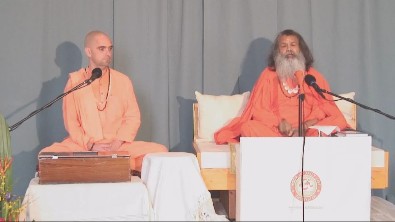
Every saint or holy incarnation has to go through certain experiences in life. Even God has to go through particular situaions. Does God have a destiny? The life of Jesus - he had to go through many hard situations in his life. Was this his destiny or was him given a task to go trough? Swamiji tells episodes from the life of the Sufi master Mansur Al-Hallaj and Hanumanji from the Ramayana. If we have faith - God and we are one - then nothing will happen. When we hold on God's name we will cross the ocean and reach the shore of happiness and peace. Kirtan is the repetition of God's name. The positive vibration will resonance in our whole body and will give positive effects. This will influence our destiny. Guruvakyas, Satsangs, Kirtans and Bhajans are good guidelines in our life. Recorded in Melbourne, Australia.
Around the world - Yoga camp for Kids Strilky
4:00 - 4:04 (4 min)
A guided visualization or ritual instruction involving symbolic objects and actions.
"If it shines forth in the darkness, it means you have saved it and that it has been fulfilled. Come and take from it."
"The cup is painted there, shining brightly. Behind that little pond, there is a tree stump. The cup is supposed to stand upon that stump, correct?"
An unseen guide leads participants through a symbolic sequence, identifying a location from a picture featuring a park with a whirlpool and pond. The focus is a brightly painted cup meant to be placed upon a tree stump. The instructions involve using colored pencils, initially to tie the cup but then not completely, before shifting to making the pencils into boats within groups.
Filming location: Strilky, Czech Republic
Around the world - Pranayama practice from Mexico City
4:10 - 4:41 (31 min)
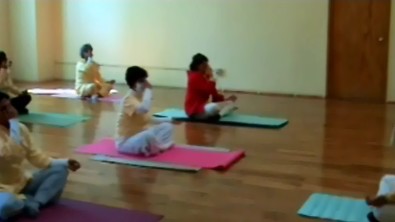
Pranayama practice.
We are full of resonance
4:45 - 5:39 (54 min)
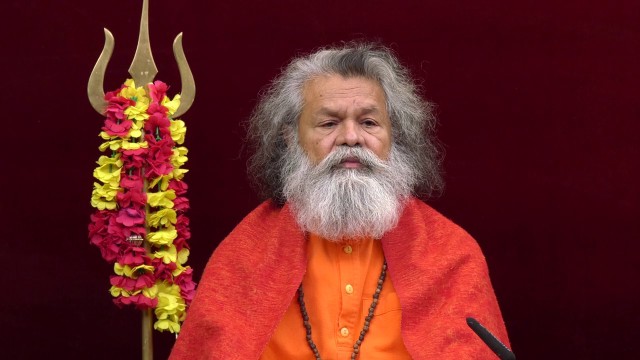
Evening satsang with Vishwaguruji from Strilky Ashram, Czech Republic. There are many Gods but finally, there are all one. Our soul is circling in the universe like water in the earth. The story about how can some seeds öf grain remain unbroken. Who is going to the Satsang they can reach the Supreme. Sometimes we see the karma but don't do that. Man saints past away but their name remained with us. Holiguruji was very lovely and strict for those persons who were around him. Holiguruji knew if somebody criticises him the bad karma went to that man. Diving to the ocean we can hear the beautiful sound and we hear this also if we plug our ears. Viswaguruji blows the conch three times for the honour of Holiguruji.
Mind and chakras
5:45 - 6:10 (25 min)
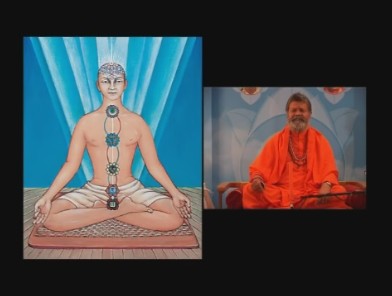
A lecture on the nature of the mind, subconscious impressions, and yogic philosophy.
"Our senses are mostly connected to and work with the consciousness, the awakened state."
"The mind is that principle which functions between the conscious and subconscious, pendling up and down."
The teacher provides a detailed explanation of how sensory impressions become stored desires in the subconscious, using the analogy of an unfulfilled ice cream craving manifesting in a dream. He describes the mind as a pendulum between conscious and subconscious levels, warning against blocking mental energy and instead advocating for directing it through self-discipline. The talk expands into the relationship between emotion, intellect, consciousness, and the nadis (Ida, Pingala, Sushumna), linking psychological concepts to the chakra system and the dormant energy of kundalini.
Filming location: Brisbane, Australia
Part 1: The Science of Yoga and the Awakening of Inner Energy
6:15 - 7:30 (75 min)
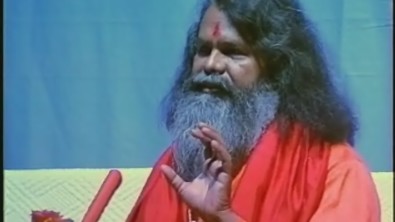
A lecture on the science of Kundalini yoga, consciousness, and world peace.
"Yoga is a balancing principle that harmonizes our body, mind, consciousness, emotions, and intellect."
"The most terrible tragedy that can befall a human is to die without God-realization. But God-realization cannot take place unless you realize yourself."
Swami Maheshwarananda delivers an extensive discourse, beginning with the cosmic origins of yoga and the nature of consciousness. He explains the human energy system, including the 72,000 nadis and eight main chakras, and leads a brief practical demonstration to awaken energy in the palms. The talk covers karma, destiny, the goal of liberation, and concludes with a call for religious tolerance and global harmony, announcing a film from the United Nations.
Filming location: Zagreb, Croatia
Practical guide to meditation (8/11)
7:30 - 9:31 (121 min)
Webcast of evening satsang from Strilky, Czech Republic.
Bhajan evening from Vep
8:30 - 9:25 (55 min)
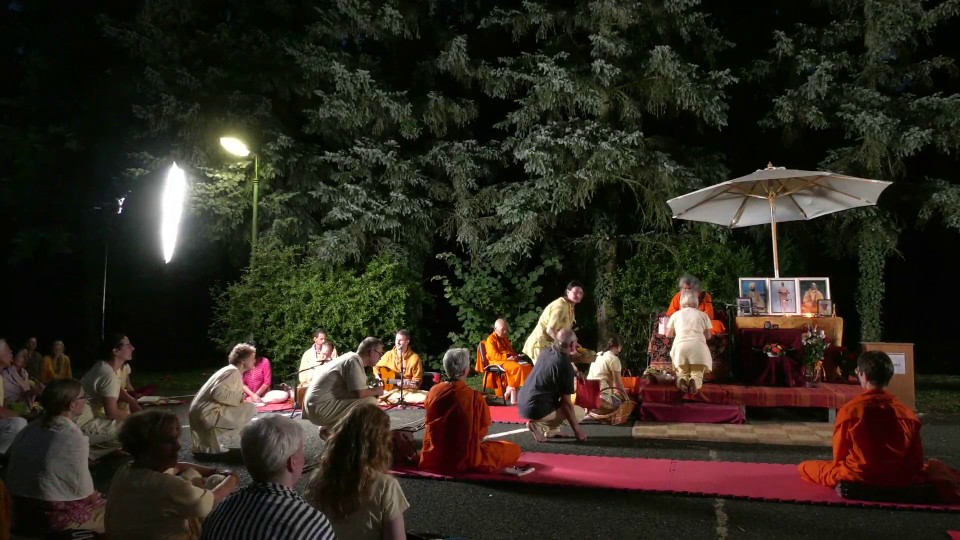
Evening satsang with Vishwaguruji from Vep, Hungary. Bhajan singing.
Bhajan singing from Vep
9:30 - 10:21 (51 min)
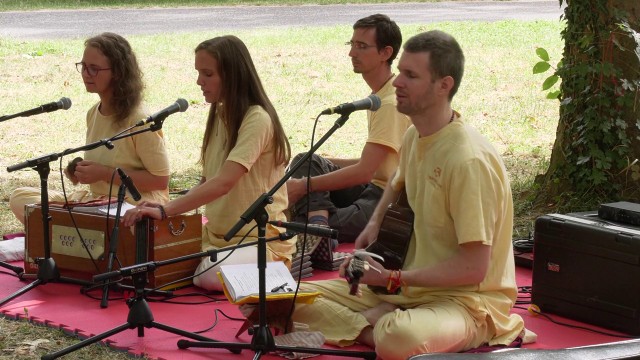
Morning satsang with Vishwaguruji from Vep, Hungary. Bhajan singing.
Bhajans from Strilky Ashram
10:25 - 11:59 (94 min)
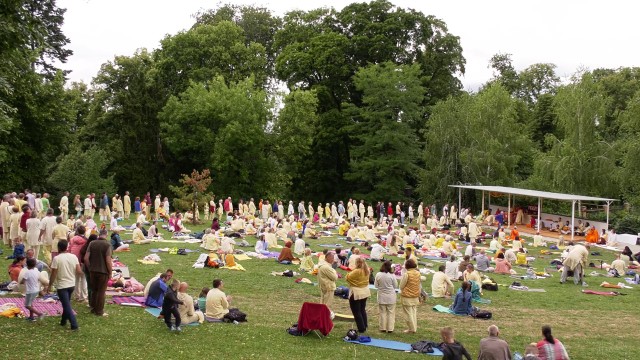
Morning satsang from Strilky Ashram, Czech Republic.
Devik shakti
12:05 - 12:35 (30 min)
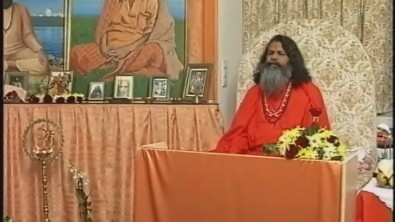
A spiritual discourse on the two fundamental forces of the universe, Devīśakti and Āsurīśakti.
"Both forces, Devīśakti and Āsurīśakti, exist. Devīśakti is positive power, and Āsurīśakti is negative power. But the origin of both is one: God Himself."
"Thus, Devīśakti and Āsurīśakti develop. The part of the power, the energy gathered in negative qualities, day by day, will become Āsurīśakti, and the positive forces will become Devīśakti."
The speaker explains the cosmic duality of divine and negative powers, both emanating from a single divine source. He describes how an individual's path—toward development or destruction—is influenced by their company (saṅga). The talk covers the three types of suffering (Tri-Tāpa), the importance of the Guru's grace for protection, and the significance of the Navarātri festival dedicated to the Divine Mother, or cosmic Śakti.
Filming location: Vienna, Austria
Live as a Human
12:40 - 13:14 (34 min)
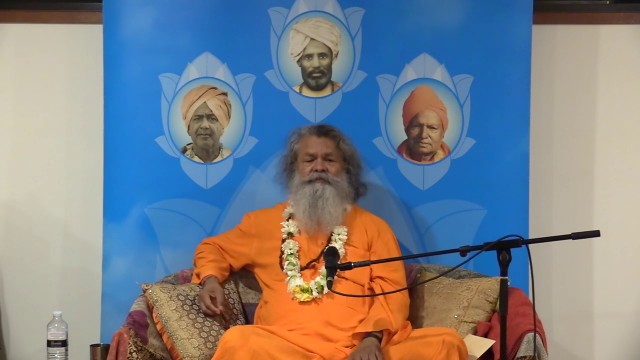
A spiritual discourse on non-violence, divine oneness, and the sanctity of all life.
"We are like other Swamis; we are the same. But we are working for everyone, every time, everywhere."
"Jīvā means life, life, and in that life there are all creatures: a little ant, this little ant, and humans, and all are all equal, what is living, living."
A Swami addresses a gathering, weaving together cosmology, ethics, and personal anecdote. He speaks of Bhagavān Śiva as the primordial source and emphasizes the fundamental equality of all life (Jīva). The core teaching is the practice of ahimsa (non-violence), advocating for a vegan lifestyle and abstaining from alcohol, framed as a recognition of our shared humanity. He instructs listeners to begin each day with the affirmation "I am human" to cultivate this awareness, and concludes with a bhajan.
Filming location: Gold Coast, Australia
The Imperative of Daily Practice
13:20 - 13:59 (39 min)
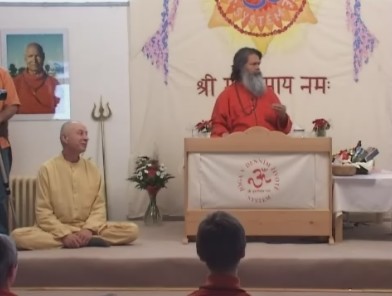
A direct address to yoga students on the necessity of disciplined daily practice for physical and mental purification.
"Practicing means at home—here you only learn. Practicing for just one week is ineffective; it must be a continuous, daily process."
"We must become sāttvic. Where the body is sāttvic, there is no vikāra. Vikāra exists in the mind as well."
Swami Avatarpuri (Swāmījī) leads a satsang, critiquing the lack of consistent practice among attendees. He stresses that health through daily āsana, prāṇāyāma, and seasonal cleansing techniques like Śaṅkha Prakṣālana is the essential foundation for spirituality. He expands on the concepts of vikāra (impurity/illness) and the guṇas, urging a transformation in diet (āhār), recreation (vihār), behavior (ācār), and thought (vicār). The talk includes practical instructions, responses to questions about cleansing practices, and a call for teachers to become examples of yogic health.
Filming location: Strilky, Czech Republic
Om Sri Deveshwar Mahadevaya Namaha
14:05 - 14:38 (33 min)
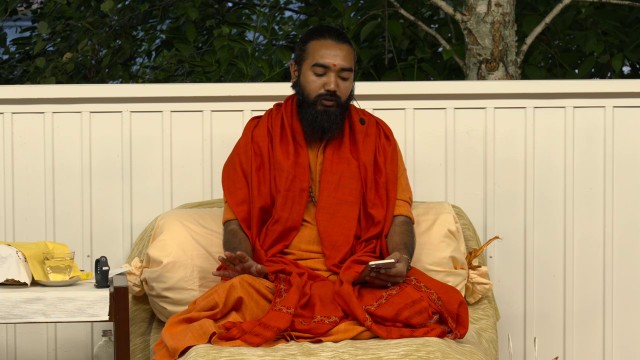
A group chanting and mantra recitation session.
"Today we will have a break from storytelling and cleanse our body a little bit. We will chant one powerful mantra of Swamijī 108 times."
"Once we know it by heart, then we go slow, but to learn it, the process is that we do it in parts. Then we do slowly, then we speed it up, and then we again go slowly."
A teacher leads participants in a session focused on mantra repetition. The group begins by chanting the "Oṁ Śrī Deveśvara Mahādevāya Namaḥ" mantra 108 times, followed by a review and speed practice of a previously learned Sanskrit verse from the Sannyasukta. The teacher explains the learning methodology of alternating slow and fast tempos, mentions plans to learn the Ganeśa Atharvaśīrṣa, and concludes with a series of devotional salutations and shorter prayers.
Filming location: Strilky, Czech Republic
The Nature of the Knower and the Self
14:45 - 15:20 (35 min)
A discourse on Advaita Vedanta and the nature of the Self, based on Śaṅkarācārya's teachings.
"This body is full of vikāra. Some have a cough, some a cold, some have lung problems... But Ātman is not born; there is no change in your Ātman, and it will not die either."
"If you have no form, what can death do to you?... You are Avināśī. So if you are Avināśī, no one can destroy you, no one can take you away; then why are you afraid?"
The speaker expounds on the true nature of the Self (Ātman) as distinct from the body, explaining key Sanskrit terms: Nirvikāra (free from decay/impurity), Nirākāra (formless), Nirmala (pure), and Avināśī (immortal). He emphasizes that identifying with the eternal, formless Self, rather than the impermanent body, is the path to overcoming fear, disease, and sorrow. The talk integrates scriptural commentary, practical advice like breath awareness and Self-inquiry, and concludes with the realization of the Self as all-pervading (Vyāpaka) consciousness.
Filming location: Vienna, Austria
The essence is always the same
15:25 - 16:03 (38 min)
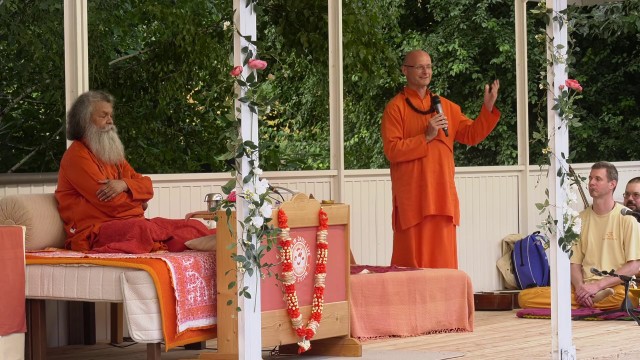
A satsang talk reflecting on spiritual transformation and the grace of the Guru.
"In yoga, it is very important to understand the concepts of Kāla and Deśa. This means that each era has its own appropriate way of behavior, and each place is different."
"What we learn from Viśva Gurujī is not only āsanas... but that we need to be flexible in our hearts and minds."
A speaker addresses the gathering after a Guru Purnima celebration, exploring how the essence of yoga remains constant while adapting across time and place. He shares stories illustrating the Guru's foresight, like predicting currency changes in Croatia, and emphasizes the transformative power of dedicated practice and being physically present in the ashram's energy. The talk uses metaphors like a spoon in honey to describe receptivity to grace and lighthouses for the role of ashrams.
Filming location: Strilky, Czech Republic
The bansuri flute
16:10 - 16:40 (30 min)
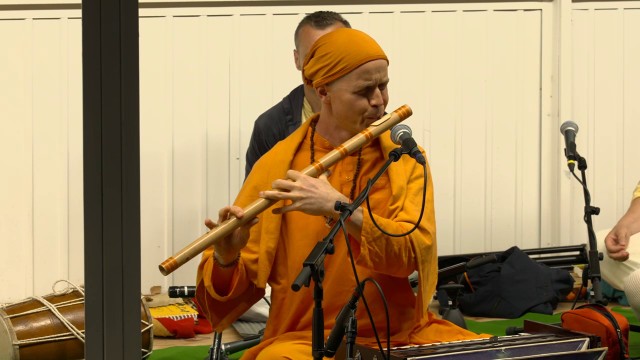
Evening satsang from Yoga Summer Retreat from Strilky, Czech Republic. Swami Madhuram introduces the bansuri flute, and how to play ragas on it. The story about the border between devotion and fanatism. Swami Madhhuram plays on bansuri.
Practising Asanas 1
17:00 - 18:12 (72 min)
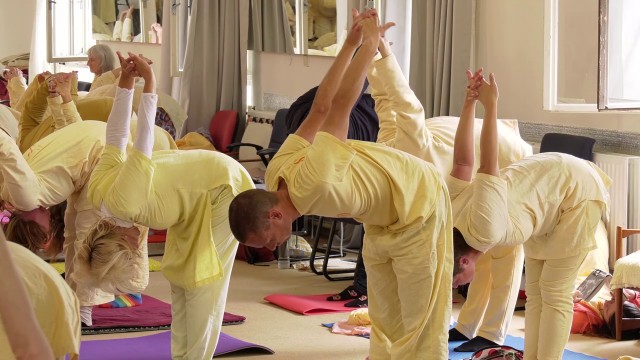
Morning satsang with Vishwaguruji from Strilky Ashram, Czech Republic. Pavanamuktasan, Marjari, Sasanka Asana, Shoulder cycling, Exercises for the foot, Ashva Sanchalanasan, Meru Akaranasan, Bhunamanasan, Meru Prishthasan, Dvikonasan, Setu Asan, Half Butterfly variations, Butterfly. Demonstration and explanation of the benefits of the exercise.
The real marriage
18:20 - 19:13 (53 min)
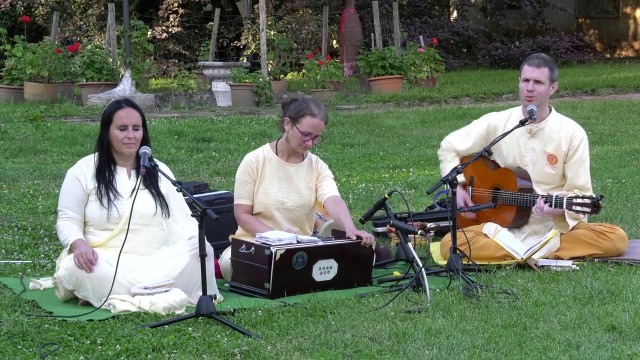
Evening satsang with Vishwaguruji from Strilky Ashram, Czech Republic. We don't know a lot about Sri Alakhpuriji. We know Sri Devpuruji's deeds well. Deva means God. The name reflects the whole life. Spirituality, purity of heart is more important than gold. What does it mean to be human? What did it mean to get married in the old days? Marriage was forever, the husband worked long hours and the wife could stay at home with the child. Young people did not marry before the age of 25. The story of the Indian couple who stayed together for 50 years. Today parents often leave their children.
The One in All and All in One
19:20 - 19:48 (28 min)
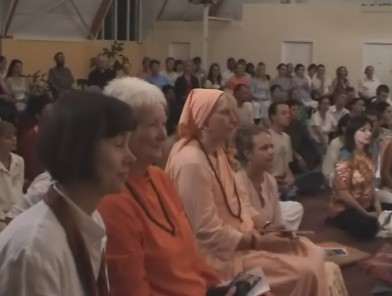
A spiritual discourse on universal consciousness, creation, and human purpose.
"Our great master used to say, 'One in all and all in one.'"
"Yoga is not physical postures... Yoga is the balancing principle... Where there is a balance, there is harmony."
The lecturer delivers a talk exploring the origins of the universe, consciousness, and the principle of yoga. He explains the Vedic concept of creation from sound (Aum) and the elemental evolution from space to earth. The discourse covers the oneness of all life, the unique potential of human intellect, and the importance of education in human values, tolerance, and understanding. He concludes by relating the cycle of rebirth to the modern concept of recycling.
Filming location: Brisbane, Australia
Mansik Puja, Vienna
19:55 - 20:43 (48 min)
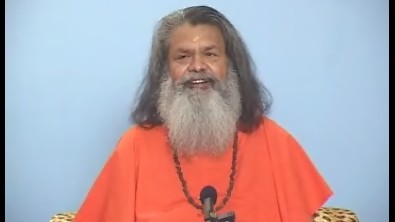
A discourse on the practice and philosophy of Mānasik Pūjā, or mental worship.
"Many people ask questions: how to meditate, what to imagine... So, the best solution is Mānasik Pūjā. When you perform the mental ceremony, you come out of your meditation full of strength, energy, love, and clarity."
"Imagine that you are in the seva of your iṣṭadevatā... For this much time mentally, you are together. You are with it, and then you also get prasāda... This is a beautiful mānasik pūjā."
The lecturer addresses devotees from an ashram in Vienna, explaining the concept and technique of mental worship of one's chosen deity (Iṣṭadevatā). He describes it as a solution to the emptiness that can arise in other forms of meditation, detailing how to mentally perform services like bathing, dressing, and offering food to the divine form. He shares a personal anecdote of his Guruji's disciplined practice and emphasizes that this internal seva cultivates love, dispels negative emotions, and reflects the divine light present in every heart.
Filming location: Vienna, Austria
Gurudev sees our past and future
20:50 - 22:06 (76 min)
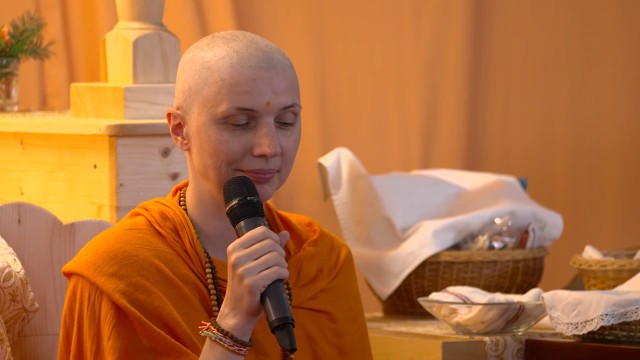
A satsang discourse on the guru's grace, destiny, and the power of surrender.
"Even the guru can change destiny, because there is no higher law than the guru’s law."
"Since the day I told Swāmījī, 'I surrender, do what you want,' I am in peace."
A speaker, likely a senior disciple, addresses the gathering following morning prayers. He discusses the validity of Vedic sciences like astrology (Jyotish) but emphasizes the supreme power of the guru's grace to alter destiny, illustrating this with a traditional parable about a guru changing the fate of two royal children. He shares personal anecdotes of learning to obey the guru's guidance, concluding that true peace comes from complete surrender to the guru's will, allowing him to manage one's life and mitigate karma.
Filming location: Strilky, Czech Republic
We are full of resonance
22:10 - 23:04 (54 min)
Evening satsang with Vishwaguruji from Strilky Ashram, Czech Republic. There are many Gods but finally, there are all one. Our soul is circling in the universe like water in the earth. The story about how can some seeds öf grain remain unbroken. Who is going to the Satsang they can reach the Supreme. Sometimes we see the karma but don't do that. Man saints past away but their name remained with us. Holiguruji was very lovely and strict for those persons who were around him. Holiguruji knew if somebody criticises him the bad karma went to that man. Diving to the ocean we can hear the beautiful sound and we hear this also if we plug our ears. Viswaguruji blows the conch three times for the honour of Holiguruji.
The real marriage
23:10 - 0:03 (53 min)
Evening satsang with Vishwaguruji from Strilky Ashram, Czech Republic. We don't know a lot about Sri Alakhpuriji. We know Sri Devpuruji's deeds well. Deva means God. The name reflects the whole life. Spirituality, purity of heart is more important than gold. What does it mean to be human? What did it mean to get married in the old days? Marriage was forever, the husband worked long hours and the wife could stay at home with the child. Young people did not marry before the age of 25. The story of the Indian couple who stayed together for 50 years. Today parents often leave their children.
American
Australian