
European
The bansuri flute
0:45 - 1:15 (30 min)
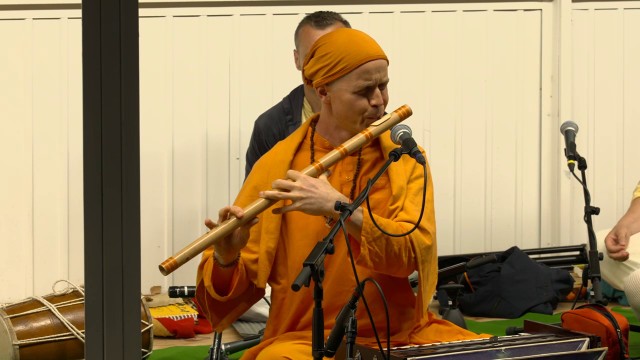
Evening satsang from Yoga Summer Retreat from Strilky, Czech Republic. Swami Madhuram introduces the bansuri flute, and how to play ragas on it. The story about the border between devotion and fanatism. Swami Madhhuram plays on bansuri.
Be happy be good
1:20 - 2:05 (45 min)
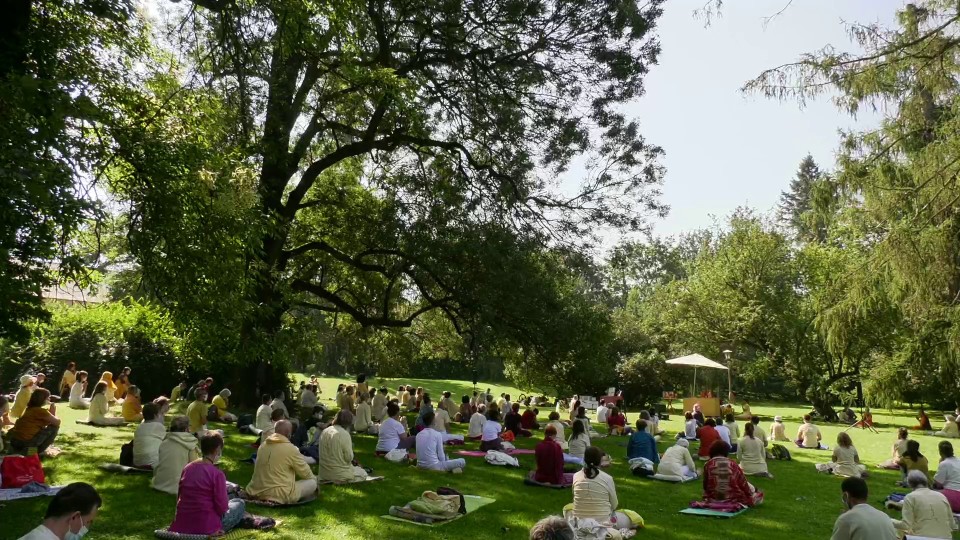
A closing address and prayer session at a spiritual seminar.
"For one week, we were very comfortable, very relaxed, and we had immense spiritual development and spiritual talks."
"What you have learned now, after a long time, it will come inside... You cannot say, 'Finally, I am perfect.'"
A teacher addresses participants at the conclusion of a week-long seminar, expressing gratitude and offering guidance for integrating the teachings. He discusses the gradual process of learning, warns against fear and superstition, emphasizes love for family, and clarifies that yoga extends beyond physical practice. The session includes chanting, a prayer, and final instructions for departure.
Filming location: Strilky, Czech Republic
Gurudev sees our past and future
2:10 - 3:26 (76 min)
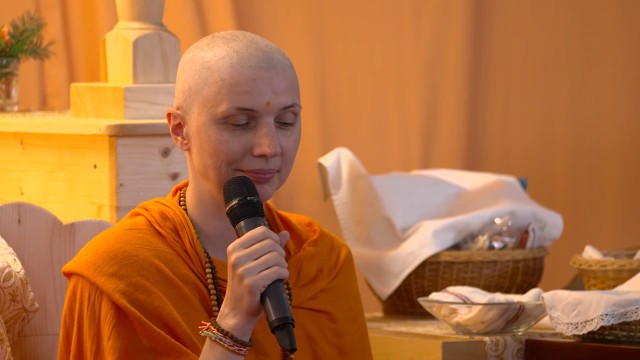
A satsang discourse on the guru's grace, destiny, and the power of surrender.
"Even the guru can change destiny, because there is no higher law than the guru’s law."
"Since the day I told Swāmījī, 'I surrender, do what you want,' I am in peace."
A speaker, likely a senior disciple, addresses the gathering following morning prayers. He discusses the validity of Vedic sciences like astrology (Jyotish) but emphasizes the supreme power of the guru's grace to alter destiny, illustrating this with a traditional parable about a guru changing the fate of two royal children. He shares personal anecdotes of learning to obey the guru's guidance, concluding that true peace comes from complete surrender to the guru's will, allowing him to manage one's life and mitigate karma.
Filming location: Strilky, Czech Republic
Sat sanga
3:30 - 3:57 (27 min)
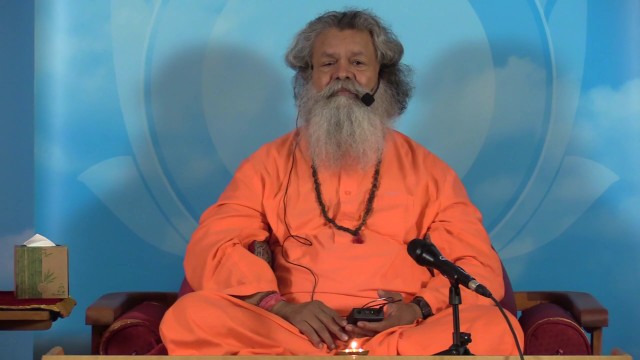
A spiritual discourse on the meaning and power of satsaṅga.
"It was very hard, very hard. I think in your country it was also, no? It was very much."
"Sat means truth. Satsaṅga, truth. Each and every word should be such that we should know the truth."
The lecturer addresses a gathering, reflecting on the global difficulties of the past years, including pandemic-related travel disruptions. He explores the concept of satsaṅga, defining "sat" as truth and emphasizing the importance of truthful company and spiritual practice. The talk meanders through themes of guru lineages, the impermanence of the body compared to the lasting nature of one's name, and the unifying principle of truth amidst worldly distinctions.
Filming location: Brisbane, Australia
Around the world - Opening of new YIDL center in Nadlac, Romania
4:00 - 4:40 (40 min)
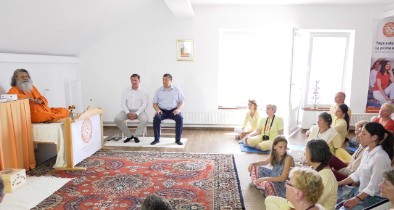
Morning satsang with Vishwaguruji from Nadlac, Romania.
The Divine Lineage of Alakpurījī: Saints, Siddhas, and the Eternal Guru
4:45 - 5:15 (30 min)
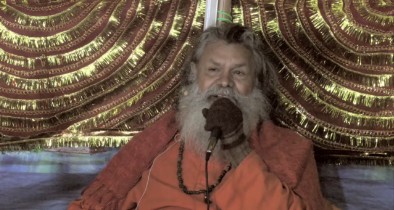
A discourse on the divine lineage of the Alakpurījī Siddha tradition.
"From time to time I incarnate in every yuga to protect the dharma, to liberate all the pure souls, and again to remove or destroy the āsurī śaktis."
"Guru Brahma, Guru Viṣṇu, Guru Devo Maheśvara, Guru Sākṣāt Para Brahma, Tasmai Śrī Guruve Namaha—the Guru Tattva, Śiva Tattva, Viṣṇu Tattva, and Brahma Tattva."
A spiritual teacher narrates from a high Himalayan valley, explaining the eternal Guru principle and the Nityāvatāra of great saints. He recounts the lineage from the ancient Alakpurījī to Devapurījī, then to Bhagavān Śrī Dīp Nārāyaṇa Mahāprabhujī, and finally to their Satguru, Swāmī Madhavānandapurījī, whose birth anniversary is being celebrated. The talk includes a parable about missing divine blessings and emphasizes surrender and patience on the spiritual path.
Filming location: India
The One in All and All in One
5:20 - 5:48 (28 min)
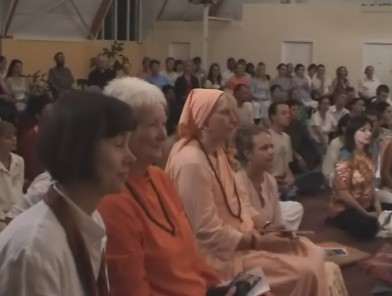
A spiritual discourse on universal consciousness, creation, and human purpose.
"Our great master used to say, 'One in all and all in one.'"
"Yoga is not physical postures... Yoga is the balancing principle... Where there is a balance, there is harmony."
The lecturer delivers a talk exploring the origins of the universe, consciousness, and the principle of yoga. He explains the Vedic concept of creation from sound (Aum) and the elemental evolution from space to earth. The discourse covers the oneness of all life, the unique potential of human intellect, and the importance of education in human values, tolerance, and understanding. He concludes by relating the cycle of rebirth to the modern concept of recycling.
Filming location: Brisbane, Australia
Sat sanga
5:49 - 6:16 (27 min)
A spiritual discourse on the meaning and power of satsaṅga.
"It was very hard, very hard. I think in your country it was also, no? It was very much."
"Sat means truth. Satsaṅga, truth. Each and every word should be such that we should know the truth."
The lecturer addresses a gathering, reflecting on the global difficulties of the past years, including pandemic-related travel disruptions. He explores the concept of satsaṅga, defining "sat" as truth and emphasizing the importance of truthful company and spiritual practice. The talk meanders through themes of guru lineages, the impermanence of the body compared to the lasting nature of one's name, and the unifying principle of truth amidst worldly distinctions.
Filming location: Brisbane, Australia
Narada cursed Vishnu
6:20 - 7:03 (43 min)
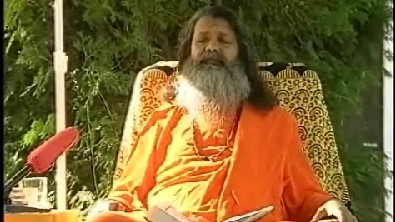
A narration of the mythological story of Nārada's curse upon Lord Viṣṇu, followed by a discourse on its spiritual meaning.
"You made me a monkey, and I tell you, when you will be in great trouble, only the monkey will help you, nobody else."
"The merciful Lord said, 'Nārada, that was all My icchā. It was My will.'"
The speaker recounts how the sage Nārada, enraged after being tricked by Viṣṇu's illusion (māyā), confronts the Lord to curse Him. In his anger, Nārada pronounces a curse that Viṣṇu will incarnate as Rāma, suffer separation from His wife, and be aided by monkeys. Viṣṇu accepts the curse, explaining it was His own divine will, and later dissolves the illusion. A remorseful Nārada seeks forgiveness, and Viṣṇu promises to give him a liberating Kriyā. The talk includes a tangential account of the churning of the ocean (Samudra Manthan) to illustrate Nārada's accusations.
Filming location: Vép, Hungary
Mind and chakras
7:05 - 7:30 (25 min)
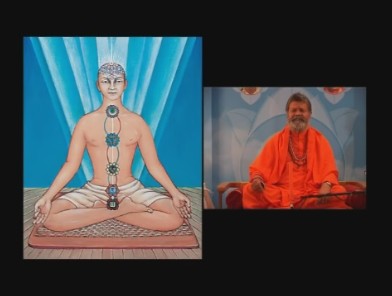
A lecture on the nature of the mind, subconscious impressions, and yogic philosophy.
"Our senses are mostly connected to and work with the consciousness, the awakened state."
"The mind is that principle which functions between the conscious and subconscious, pendling up and down."
The teacher provides a detailed explanation of how sensory impressions become stored desires in the subconscious, using the analogy of an unfulfilled ice cream craving manifesting in a dream. He describes the mind as a pendulum between conscious and subconscious levels, warning against blocking mental energy and instead advocating for directing it through self-discipline. The talk expands into the relationship between emotion, intellect, consciousness, and the nadis (Ida, Pingala, Sushumna), linking psychological concepts to the chakra system and the dormant energy of kundalini.
Filming location: Brisbane, Australia
Culture gives us the human quality
7:35 - 8:22 (47 min)
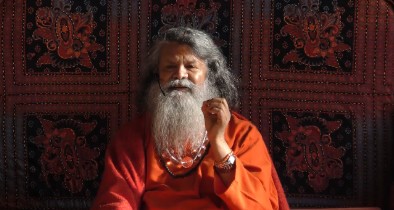
Morning satsang from Weekend Seminar in Vep, Hungary. Culture has mighty power, like tolerance, forgiveness, respect. These are the blossoms of the cultures of different countries. Where there is a human, there is culture. It helps us to protect our dharma and reach self-realization. The highest dharma is Sanatan Dharma, it is present in all of the cultures.
Singing Bhajans to the Masters
8:30 - 9:11 (41 min)
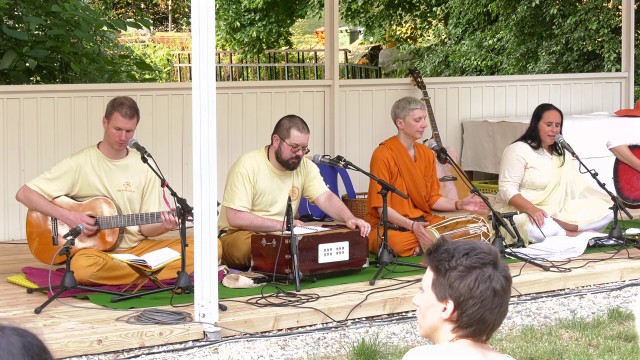
Evening satsang from Střílky Ashram, Czech Republic. Bhajans sung to the Master: Sobhāvo Satsaṅga Re, Yogi Jāno Kī Yoga Nidrā, Dhyān Karo, Hamẽ Hī Kam Satsaṅg Hī, Sataguru Sandeśo Moyē.
Bhajan singing from Strilky
9:15 - 9:50 (35 min)
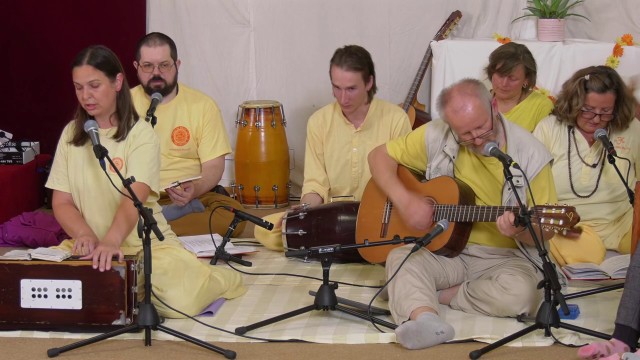
Evening satsang from Strilky Ashram, Czech Republic.
Bhajan evening from Strilky Ashram
9:55 - 10:21 (26 min)
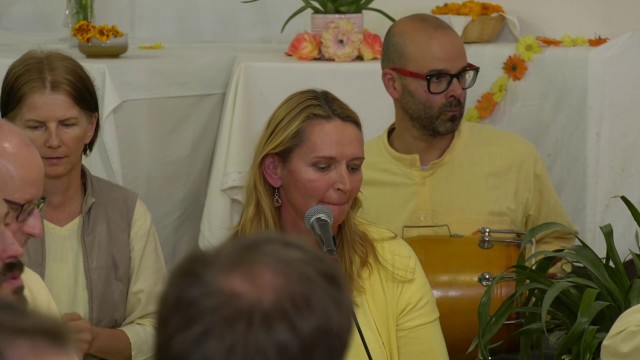
Evening satsang with Vishwaguruji from Strilky Ashram, Czech Republic.
Bhajan singing from Strilky Ashram
10:25 - 10:58 (33 min)
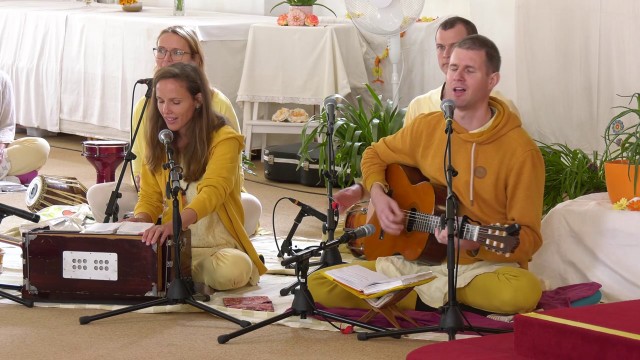
Morning satsang with Vishwaguruji from Strilky Ashram, Czech Republic.
Bhajan evening from Strilky
11:05 - 11:19 (14 min)
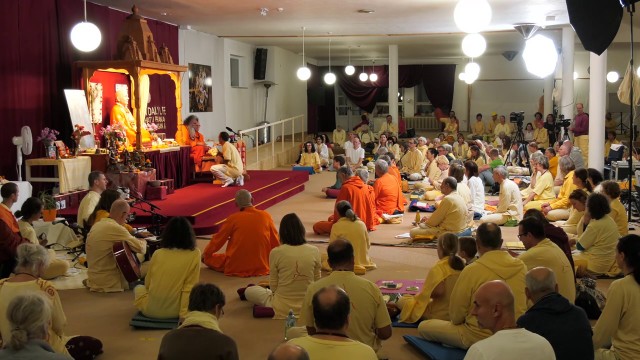
Evening satsang with Vishwaguruji from Strilky Ashram, Czech Republic.
Each persons body is like the temple of God
11:25 - 12:20 (55 min)
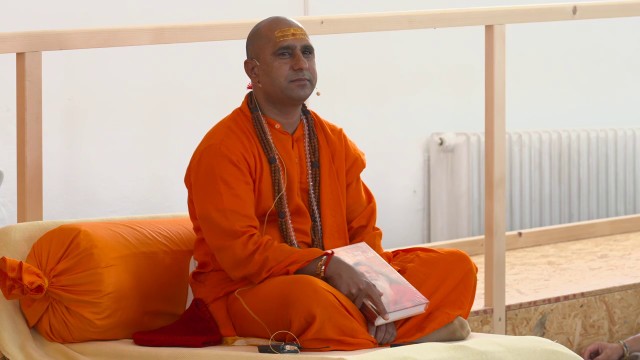
Morning program from Summer Yoga Camp, Strilky, Czech Republic. Lecture by MMS. Phulpuriji. Bhajans written by our Masters of our Parampara show us the way to the Brahmaloka. For us, God is here. Translation of the Bhajan written by one of the great Saints. Introduction of Vishwaguruji's Biography. The book is the Guru itself. Singin a Bhajan. Sort talk by Swami Avatarpuriji from the life of Sri Sankarajaryaji's life and works.
The Nature of the Knower and the Self
12:25 - 13:00 (35 min)
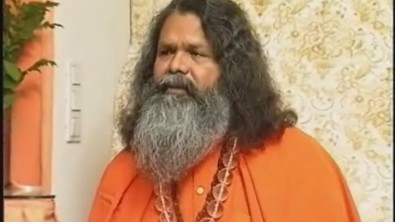
A discourse on Advaita Vedanta and the nature of the Self, based on Śaṅkarācārya's teachings.
"This body is full of vikāra. Some have a cough, some a cold, some have lung problems... But Ātman is not born; there is no change in your Ātman, and it will not die either."
"If you have no form, what can death do to you?... You are Avināśī. So if you are Avināśī, no one can destroy you, no one can take you away; then why are you afraid?"
The speaker expounds on the true nature of the Self (Ātman) as distinct from the body, explaining key Sanskrit terms: Nirvikāra (free from decay/impurity), Nirākāra (formless), Nirmala (pure), and Avināśī (immortal). He emphasizes that identifying with the eternal, formless Self, rather than the impermanent body, is the path to overcoming fear, disease, and sorrow. The talk integrates scriptural commentary, practical advice like breath awareness and Self-inquiry, and concludes with the realization of the Self as all-pervading (Vyāpaka) consciousness.
Filming location: Vienna, Austria
Gurudeva hi Kevalam
13:05 - 14:00 (55 min)
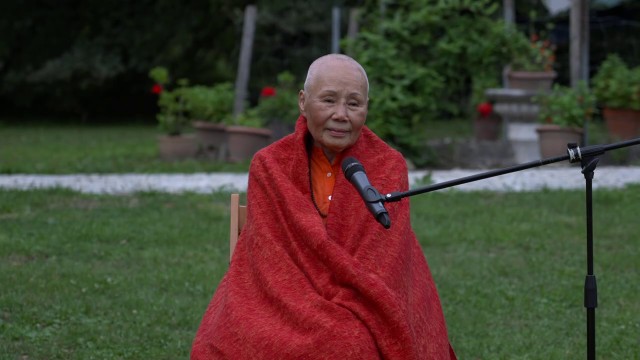
Evening satsang from Yoga Summer Retreat from Strilky, Czech Republic. As we know, things are changing in our lives. What comes shall go. A story of a man, who was a happy person, and used to make others happy. This man time to time went to his Guruji for darshan and advice. Gurudev knows what is going on in our minds. Karma yoga is a help for us. We are all blessed to have Gurudev's guidance. Bansuri flute music. Lecture by Swami Daya Mata, about good and bad things that are transient.
Culture gives us the human quality
14:05 - 14:52 (47 min)
Morning satsang from Weekend Seminar in Vep, Hungary. Culture has mighty power, like tolerance, forgiveness, respect. These are the blossoms of the cultures of different countries. Where there is a human, there is culture. It helps us to protect our dharma and reach self-realization. The highest dharma is Sanatan Dharma, it is present in all of the cultures.
We are full of resonance
15:00 - 15:54 (54 min)
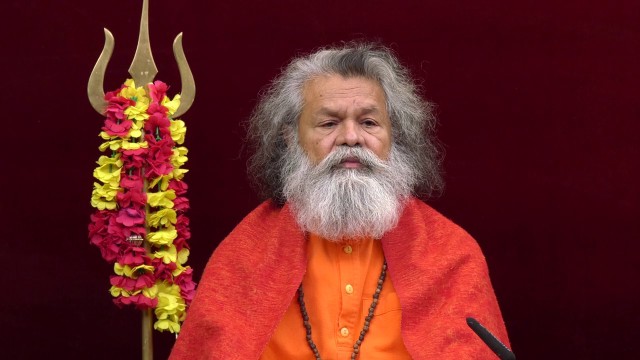
Evening satsang with Vishwaguruji from Strilky Ashram, Czech Republic. There are many Gods but finally, there are all one. Our soul is circling in the universe like water in the earth. The story about how can some seeds öf grain remain unbroken. Who is going to the Satsang they can reach the Supreme. Sometimes we see the karma but don't do that. Man saints past away but their name remained with us. Holiguruji was very lovely and strict for those persons who were around him. Holiguruji knew if somebody criticises him the bad karma went to that man. Diving to the ocean we can hear the beautiful sound and we hear this also if we plug our ears. Viswaguruji blows the conch three times for the honour of Holiguruji.
The real marriage
16:00 - 16:53 (53 min)
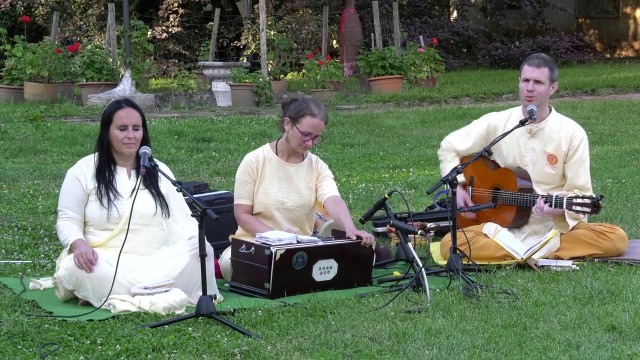
Evening satsang with Vishwaguruji from Strilky Ashram, Czech Republic. We don't know a lot about Sri Alakhpuriji. We know Sri Devpuruji's deeds well. Deva means God. The name reflects the whole life. Spirituality, purity of heart is more important than gold. What does it mean to be human? What did it mean to get married in the old days? Marriage was forever, the husband worked long hours and the wife could stay at home with the child. Young people did not marry before the age of 25. The story of the Indian couple who stayed together for 50 years. Today parents often leave their children.
Practising with Vishwaguruji
17:00 - 17:57 (57 min)
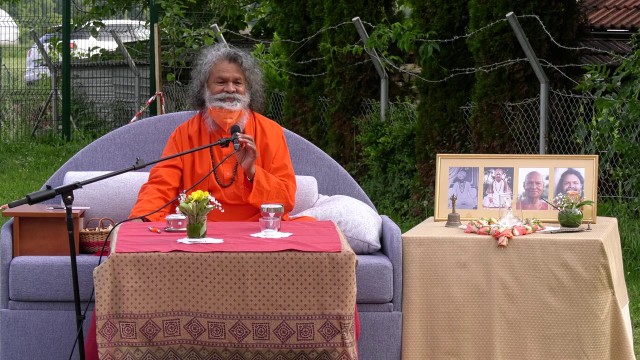
Evening Satsang with Vishwaguruji from Slovenia. Relaxation and bhajan singing. Vajra nadi gives the power of our whole body. Vajra nadi is like a tree it has a root and some branches. Practising sarva hita asanas and bhramari pranayama. If we practise asanas lifelong we will die very easy without pain.
The bansuri flute
18:05 - 18:35 (30 min)
Evening satsang from Yoga Summer Retreat from Strilky, Czech Republic. Swami Madhuram introduces the bansuri flute, and how to play ragas on it. The story about the border between devotion and fanatism. Swami Madhhuram plays on bansuri.
Gurudev sees our past and future
18:40 - 19:56 (76 min)
A satsang discourse on the guru's grace, destiny, and the power of surrender.
"Even the guru can change destiny, because there is no higher law than the guru’s law."
"Since the day I told Swāmījī, 'I surrender, do what you want,' I am in peace."
A speaker, likely a senior disciple, addresses the gathering following morning prayers. He discusses the validity of Vedic sciences like astrology (Jyotish) but emphasizes the supreme power of the guru's grace to alter destiny, illustrating this with a traditional parable about a guru changing the fate of two royal children. He shares personal anecdotes of learning to obey the guru's guidance, concluding that true peace comes from complete surrender to the guru's will, allowing him to manage one's life and mitigate karma.
Filming location: Strilky, Czech Republic
Part 1: The Practice of Śalabhāsana and Complementary Āsanas
20:00 - 20:59 (59 min)
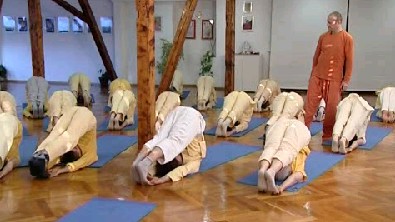
A detailed yoga class instruction covering śalabhāsana, sarvāṅgāsana, and prāṇāyāma.
"Śalabhāsana, being a backward bend that requires strong muscles, works very well on our self-confidence. It strengthens the sense of power and vitality."
"In this posture, simply allow one subtle, extended exhalation. This posture works on unburdening the heart, so less pumping is needed to nourish the brain."
An instructor guides students through a sequence of āsanas, including śalabhāsana (locust pose) variations, sarvāṅgāsana (shoulderstand), and halāsana (plow pose), explaining their physical and energetic benefits. The session incorporates preparatory poses, counterposes, and detailed alignment cues, concluding with instructions for Bhastrikā prāṇāyāma and a collective Oṁ chant.
Filming location: Zagreb, Croatia
Around the world - Yoga Class of Level 6, Zagreb
21:05 - 22:06 (61 min)
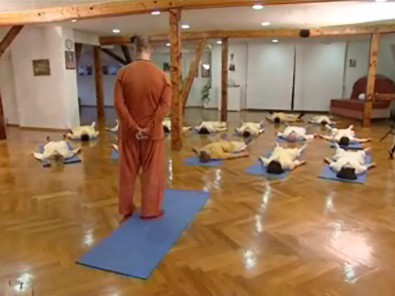
Yoga in Daily Life Class of Level 6 at Sri Devpuriji Ashram, Zagreb, Croatia.
Vegetarian cooking lesson 4, Vegetable Soup
22:00 - 22:23 (23 min)

A cooking demonstration for Hungarian lentil soup at a yoga seminar.
"If we want our family to enjoy vegetarian food, we can take care of these small details."
"Even friends who are not vegetarian or not really open to vegetarian food like this soup very much, and in this way, they come to appreciate the vegetarian kitchen."
Agnes Bugán Szabónyi from Vépr, Hungary, guides viewers through preparing a traditional Hungarian lentil soup. She details the ingredients, including lentils, paprika, and fresh vegetables, and explains the steps from soaking the lentils to sautéing spices and simmering the soup. She emphasizes the dish's appeal to non-vegetarians and shares tips for family-friendly preparation, concluding with well-wishes for a successful vegetarian lifestyle.
Filming location: Vép, Hungary
The completness of our being
22:30 - 23:41 (71 min)
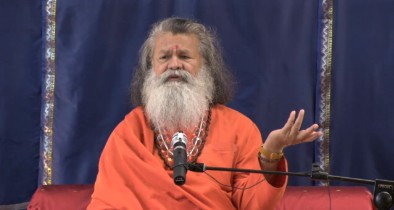
A spiritual discourse on the soul's journey, karma, and human practice.
"Understand this body, and then it is said—very easy to say, but it is said—overcome, control between two: the hunger and thirst."
"So we come as a human in this world, and then we are searching for the door to mokṣa, liberation. But when the chance comes, we take the hand away and scratch somewhere, meaning desires."
Swami Paramporul delivers a teaching on the eternal journey of the soul (jīvātmā), explaining its nature through metaphor and scripture. He discusses the body as a vehicle or bungalow where the divine resides, the importance of controlling the senses and emotions like jealousy, and the role of yoga, prāṇāyāma, and diet in purification. The talk covers the law of karma, rebirth across different life forms illustrated by a story of a tax collector reborn as a camel, and concludes with reflections on funeral rites and the imperative to use human life for spiritual progress.
Filming location: London, UK
Be happy be good
23:45 - 0:30 (45 min)
A closing address and prayer session at a spiritual seminar.
"For one week, we were very comfortable, very relaxed, and we had immense spiritual development and spiritual talks."
"What you have learned now, after a long time, it will come inside... You cannot say, 'Finally, I am perfect.'"
A teacher addresses participants at the conclusion of a week-long seminar, expressing gratitude and offering guidance for integrating the teachings. He discusses the gradual process of learning, warns against fear and superstition, emphasizes love for family, and clarifies that yoga extends beyond physical practice. The session includes chanting, a prayer, and final instructions for departure.
Filming location: Strilky, Czech Republic
American
Australian