
European
The Divine Lineage of Alakpurījī: Saints, Siddhas, and the Eternal Guru
0:05 - 0:35 (30 min)
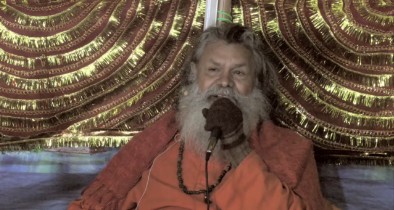
A discourse on the divine lineage of the Alakpurījī Siddha tradition.
"From time to time I incarnate in every yuga to protect the dharma, to liberate all the pure souls, and again to remove or destroy the āsurī śaktis."
"Guru Brahma, Guru Viṣṇu, Guru Devo Maheśvara, Guru Sākṣāt Para Brahma, Tasmai Śrī Guruve Namaha—the Guru Tattva, Śiva Tattva, Viṣṇu Tattva, and Brahma Tattva."
A spiritual teacher narrates from a high Himalayan valley, explaining the eternal Guru principle and the Nityāvatāra of great saints. He recounts the lineage from the ancient Alakpurījī to Devapurījī, then to Bhagavān Śrī Dīp Nārāyaṇa Mahāprabhujī, and finally to their Satguru, Swāmī Madhavānandapurījī, whose birth anniversary is being celebrated. The talk includes a parable about missing divine blessings and emphasizes surrender and patience on the spiritual path.
Filming location: India
We are full of resonance
0:40 - 1:34 (54 min)
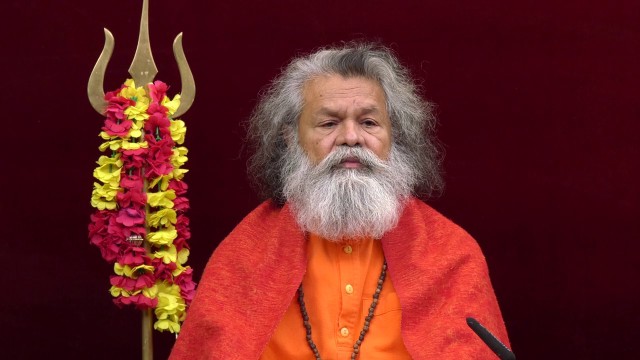
Evening satsang with Vishwaguruji from Strilky Ashram, Czech Republic. There are many Gods but finally, there are all one. Our soul is circling in the universe like water in the earth. The story about how can some seeds öf grain remain unbroken. Who is going to the Satsang they can reach the Supreme. Sometimes we see the karma but don't do that. Man saints past away but their name remained with us. Holiguruji was very lovely and strict for those persons who were around him. Holiguruji knew if somebody criticises him the bad karma went to that man. Diving to the ocean we can hear the beautiful sound and we hear this also if we plug our ears. Viswaguruji blows the conch three times for the honour of Holiguruji.
The real marriage
1:40 - 2:33 (53 min)
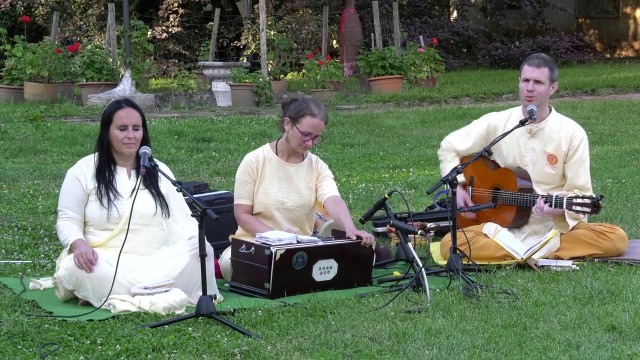
Evening satsang with Vishwaguruji from Strilky Ashram, Czech Republic. We don't know a lot about Sri Alakhpuriji. We know Sri Devpuruji's deeds well. Deva means God. The name reflects the whole life. Spirituality, purity of heart is more important than gold. What does it mean to be human? What did it mean to get married in the old days? Marriage was forever, the husband worked long hours and the wife could stay at home with the child. Young people did not marry before the age of 25. The story of the Indian couple who stayed together for 50 years. Today parents often leave their children.
The completness of our being
2:40 - 3:51 (71 min)
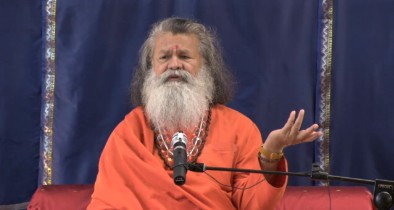
A spiritual discourse on the soul's journey, karma, and human practice.
"Understand this body, and then it is said—very easy to say, but it is said—overcome, control between two: the hunger and thirst."
"So we come as a human in this world, and then we are searching for the door to mokṣa, liberation. But when the chance comes, we take the hand away and scratch somewhere, meaning desires."
Swami Paramporul delivers a teaching on the eternal journey of the soul (jīvātmā), explaining its nature through metaphor and scripture. He discusses the body as a vehicle or bungalow where the divine resides, the importance of controlling the senses and emotions like jealousy, and the role of yoga, prāṇāyāma, and diet in purification. The talk covers the law of karma, rebirth across different life forms illustrated by a story of a tax collector reborn as a camel, and concludes with reflections on funeral rites and the imperative to use human life for spiritual progress.
Filming location: London, UK
A Message of Peace from Prague
4:00 - 4:07 (7 min)

A Czech parliamentarian delivers a message of peace at a conference, drawing on spiritual and historical themes.
"There is only one God, the universal God, only one religion, humanity, and only one nation, humankind."
"Peace among nations is dependent on peace in human beings."
The speaker, a member of Parliamentarians for Nuclear Non-Proliferation and Disarmament (PNND), opens by quoting from Swamiji's Yoga in Daily Life. He shares an observation of harmony at Prague's Christmas market as a model for the world, then outlines diplomatic efforts for nuclear disarmament and addresses global conflicts. He conveys greetings from the Czech Prime Minister and concludes by thanking those who seek inner peace through yoga.
Filming location: Prague, Czech Republic
Around The World - Vegetarianism and top sport, Part 1
4:15 - 4:39 (24 min)

A practical cooking demonstration and discussion on vegetarian nutrition for athletes from a yogic perspective.
"In our yoga tradition, everyone is vegetarian for moral reasons. For us, ahiṃsā paramo dharma—non-injury is the highest duty."
"The foundation of healthy vegetarian cooking is quality ingredients... Higher quality food is better utilized by the body, yielding better results."
Swami Avatarpuri, in the kitchen of Sridev Purījī Ashrama, explains the principles of a vegetarian diet tailored for elite sports performance. He emphasizes digestibility, energy provision, and muscle support, highlighting key ingredients like whole grains, tofu, and legumes. The talk covers the medicinal use of spices like turmeric and cumin, addresses protein and vitamin sources, and concludes by framing vegetarianism as a complete and health-supporting lifestyle rooted in the principle of non-harm.
Filming location: Zagreb, Croatia
Waiting for Gurudev
4:45 - 5:13 (28 min)
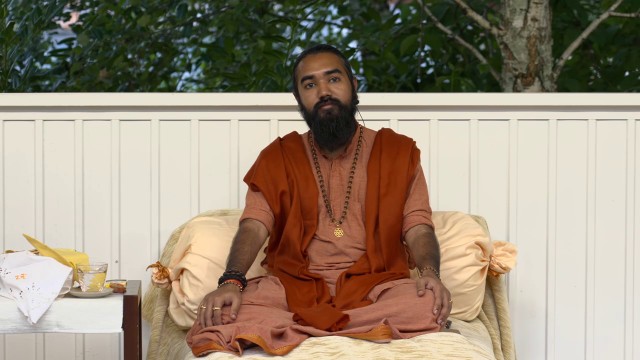
Evening satsang from Summer Yoga Retreat from Strilky, Czech Republic. Practicing Sannyasa Sukhta. We sing this mantra while waiting for Gurudev to come. Only renunciation leads us to immortality.
We need Gurudev
5:20 - 6:14 (54 min)
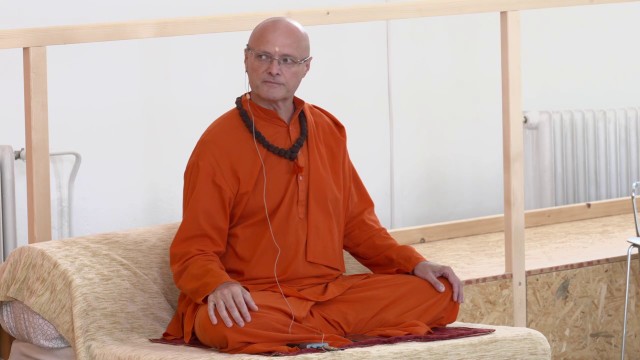
A satsang discourse on the necessity of the guru and the goal of Advaita philosophy.
"The moment you begin to think you have already heard and know everything, in that moment your free fall begins."
"Understand from this that the guru is not the physical body. It is most important to understand that the guru is that Guru-Tattva, the element of the guru."
A speaker leads a satsang, emphasizing the eternal student's attitude and the critical role of the embodied spiritual master (Guru-Tattva) as the essential guide. Using stories and analogies—such as the matchbox with a diamond, the friend with a boat, and the river merging into the ocean—the talk explains the guru's function and explores the ultimate goal of yoga: to transcend the cycle of rebirth and realize the Advaita (non-dual) union of the individual self with the cosmic Self.
Filming location: Strilky, Czech Republic
The blessed day of Gurupurnima
6:15 - 6:55 (40 min)
A satsang discourse on the significance of Guru Pūrṇimā.
"Gu means darkness, and ru means light. When the darkness disappears, the light appears."
"Gurudev is the jewel of the Parāś, and the disciple is the iron. When the disciple comes to the Gurudev, he changes from iron into gold."
A speaker explains the cosmic and spiritual importance of Guru Pūrṇimā, describing the Guru as the highest principle and the day as the start of the spiritual year. He discusses the Guru's role in transforming the disciple, shares devotional poetry and bhajans about longing for the master, and uses the analogy of a farmer's harvest to describe how devotees should present their spiritual progress. The talk concludes with blessings for the congregation's spiritual practice.
Filming location: Vép, Hungary
Story of Great Sage Narada
7:00 - 7:58 (58 min)
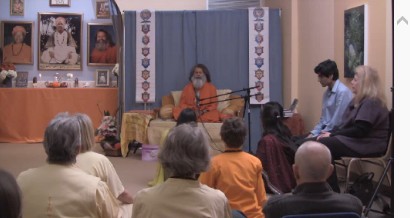
A spiritual discourse on the divine nature of saints and the interplay of devotion and illusion.
"O Nārada, there is no difference between me and my saints. Those who will see the dualities between me and the saints, they will go straight into hell."
"Lakṣmījī said, 'O Bhagavān Viṣṇu, I am a servant of the saints. Wherever my saints step on the earth, I put my palms under there.'"
The lecturer delivers a satsang from the ashram, weaving together mythology and teaching. He narrates how Lord Vishnu explained to Narada that saints are the embodiment of the divine, and recounts a parable where Vishnu and Goddess Lakshmi test a devotee's true allegiance—to God or to wealth. The talk also touches on the cycles of creation, the role of sages like Narada, and the importance of spiritual sacraments (sanskars).
Filming location: Alexandria, USA
The Day of Saints' Meeting
8:00 - 8:27 (27 min)
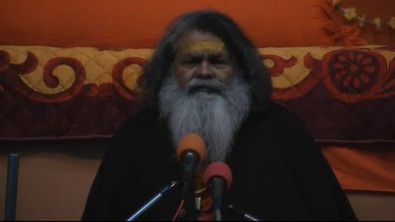
A satsang discourse on the importance of saintly association and spiritual practice, followed by an introduction to a guru's work.
"Go to the meeting of the saints, go to the meeting of the saints... The one who goes to see the saint is called a Koṭi Yajña or Koṭi Yajña."
"If you want to live in happiness, then first you have to see how your life is going... You have to speak to everyone with love."
An initial speaker narrates a story from the Mahabharata to illustrate the supreme merit of seeking the company of saints (satsang), explaining how it liberates the soul. He concludes due to a cough. Mahāmaṇḍaleśwar Jasrāj Ji then speaks, introducing his Satguru Dev, a guru with a global network of yoga centers and ashrams. He describes the guru's charitable projects in Rajasthan and explains the Sanskrit etymology of happiness (sukha) and sorrow (duḥkha), advising that righteous living straightens one's path.
Filming location: Allahabad, India
Bhajan evening in Jadan Ashram
8:30 - 8:52 (22 min)
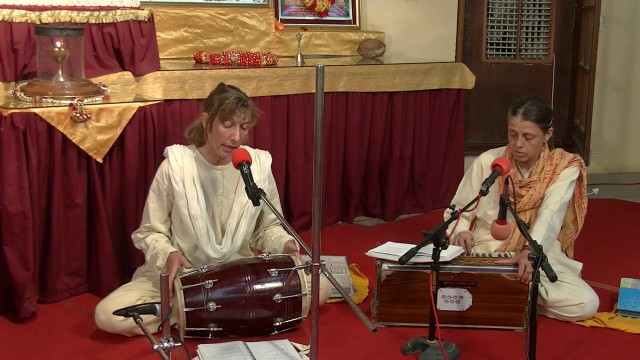
Evening satsang with Vishwaguruji from Jadan Ashram, Rajasthan, India. Bhajan singing.
Bhajan evening from Jadan Ashram
9:00 - 9:37 (37 min)
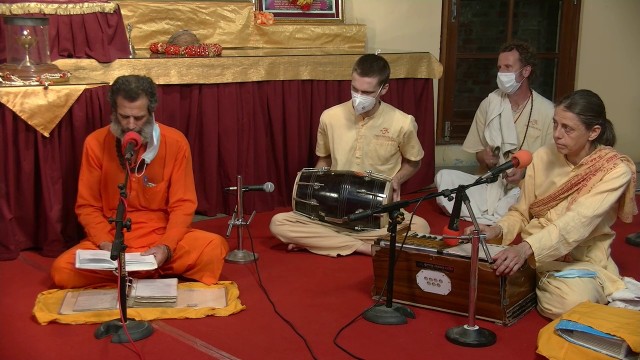
Evening satsang with Vishwaguruji from Jadan Ashram, Rajasthan, India. Bhajan singing.
Bhajan singing from Jadan Ashram
9:45 - 10:20 (35 min)
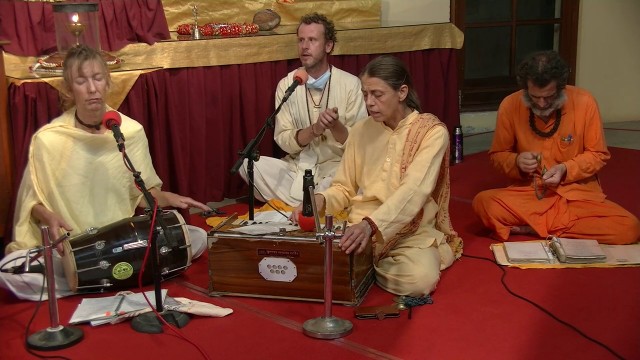
Evening Satsang with Vishwaguruji from Jadan Ashram, Rajasthan, India. Singing bhajans.
Bhajan Singing from Jadan
10:25 - 11:35 (70 min)
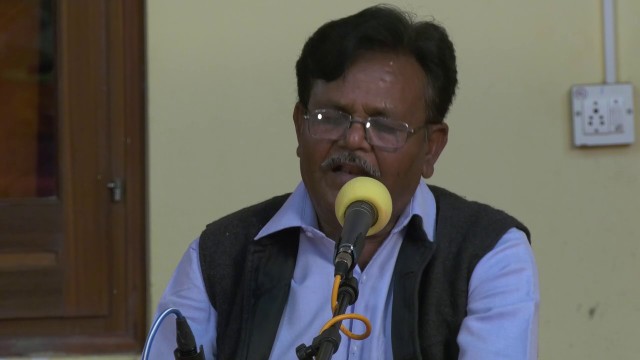
Evening satsang with Vishwaguruji from Jadan Ashram, Rajasthan, India.
Each persons body is like the temple of God
11:40 - 12:35 (55 min)
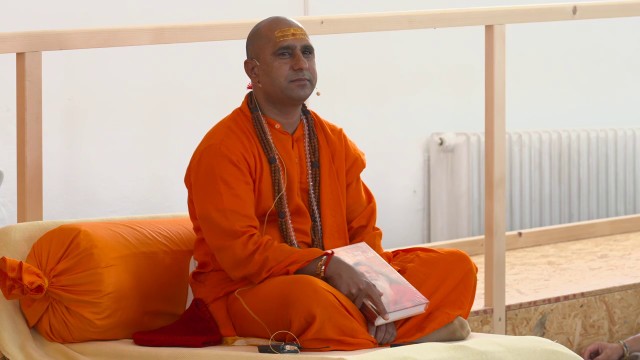
Morning program from Summer Yoga Camp, Strilky, Czech Republic. Lecture by MMS. Phulpuriji. Bhajans written by our Masters of our Parampara show us the way to the Brahmaloka. For us, God is here. Translation of the Bhajan written by one of the great Saints. Introduction of Vishwaguruji's Biography. The book is the Guru itself. Singin a Bhajan. Sort talk by Swami Avatarpuriji from the life of Sri Sankarajaryaji's life and works.
The real yoga nidra
12:40 - 13:43 (63 min)
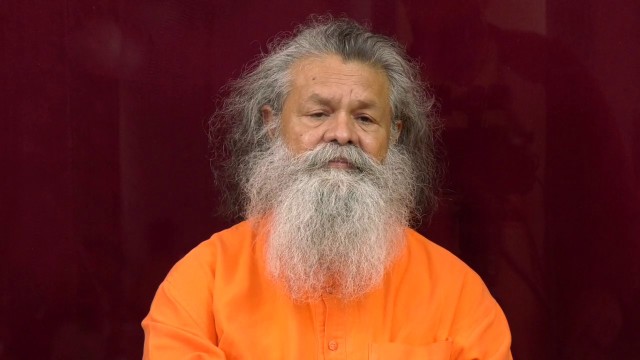
Morning satsang with Vishwaguruji from Strilky Ashram, Czech Republic. We should practise real yoga nidra but in a sitting position according to Mahaprabhuji's instructions. Singing Yoga nidra bhajan. If we only sleep during yoga nidra we don't get anything. The story of a man who beat the snake with a stick in the sand. Animals also have their path and they follow it. They also have their struggles with each other. Our like is like a thorny bush with sweet fruits in it. What do we choose the ice cream or the stick? Bhajan singing.
Yoga Is In Our Destiny
13:50 - 14:54 (64 min)
A spiritual discourse on yoga as the path to self-realization and universal unity.
"The practice of yoga means to realize oneness again with God." "The life of the bird depends on your hands. Your life depends on you."
The lecturer addresses a gathering at the Yogananda Life Center in Vancouver. He explores the core principle of yoga as union—the merging of the individual soul with the universal soul. Using stories, scriptural references, and philosophical inquiry, he discusses overcoming duality, the nature of reality (Satya) versus the changing world (Asatya), and the human dharma of self-realization. He emphasizes seeing the divine in all, practicing non-discrimination, and taking personal responsibility for one's spiritual journey.
Filming location: Vancouver, Canada
The real marriage
15:00 - 15:53 (53 min)
Evening satsang with Vishwaguruji from Strilky Ashram, Czech Republic. We don't know a lot about Sri Alakhpuriji. We know Sri Devpuruji's deeds well. Deva means God. The name reflects the whole life. Spirituality, purity of heart is more important than gold. What does it mean to be human? What did it mean to get married in the old days? Marriage was forever, the husband worked long hours and the wife could stay at home with the child. Young people did not marry before the age of 25. The story of the Indian couple who stayed together for 50 years. Today parents often leave their children.
We are full of resonance
16:00 - 16:54 (54 min)
Evening satsang with Vishwaguruji from Strilky Ashram, Czech Republic. There are many Gods but finally, there are all one. Our soul is circling in the universe like water in the earth. The story about how can some seeds öf grain remain unbroken. Who is going to the Satsang they can reach the Supreme. Sometimes we see the karma but don't do that. Man saints past away but their name remained with us. Holiguruji was very lovely and strict for those persons who were around him. Holiguruji knew if somebody criticises him the bad karma went to that man. Diving to the ocean we can hear the beautiful sound and we hear this also if we plug our ears. Viswaguruji blows the conch three times for the honour of Holiguruji.
Practising asanas with Vishwaguruji
17:00 - 18:13 (73 min)
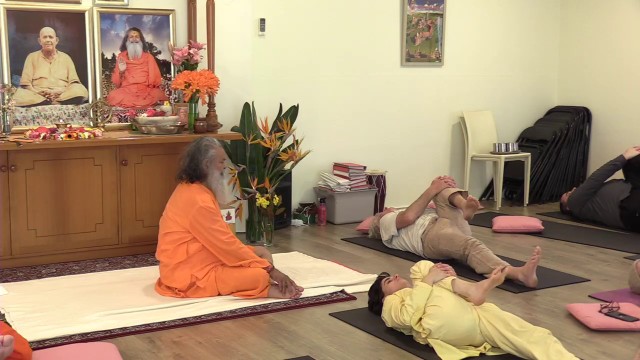
Morning program with Vishwaguruji from Sydney Ashram, Australia. Practising asanas and relaxation with Vishwaguruji.
Make a path through the forest
18:20 - 19:11 (51 min)
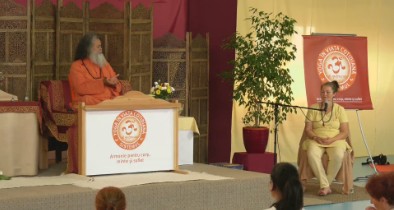
Evening satsang with Vishwaguruji from weekend Yoga Seminar in Nadlac, Romania. Prana is stronger than the physical body. There are always problems in daily life. Partners are together for a period of time then conflicts arise - that is similar to spiritual life. We need a clear path, a sattvic (pure) life, and have to make this path through the forest. Just reading does not help us. We should change ourself inside, otherwise, time is lost. The realisation of Atma Gyana (Self-knowledge) takes more time.
Be happy be good
19:15 - 20:00 (45 min)
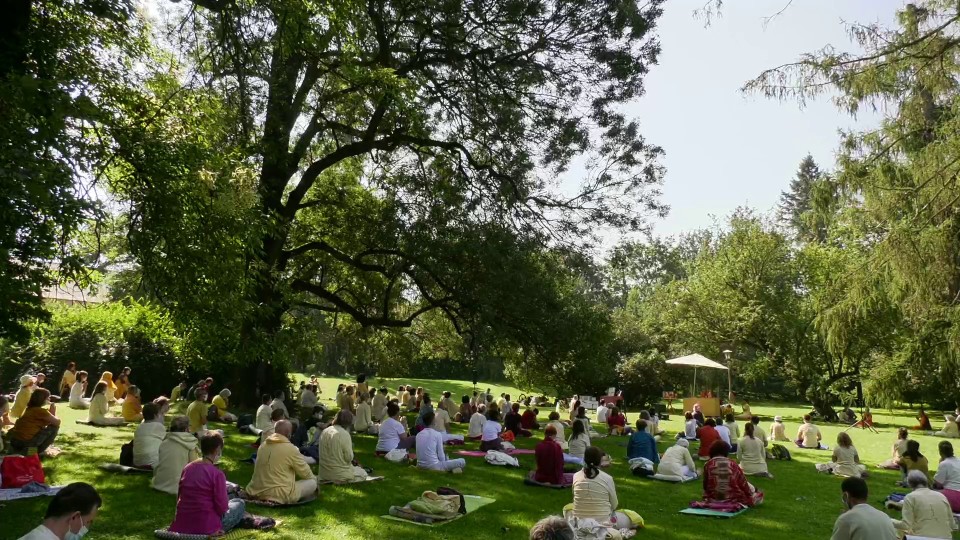
A closing address and prayer session at a spiritual seminar.
"For one week, we were very comfortable, very relaxed, and we had immense spiritual development and spiritual talks."
"What you have learned now, after a long time, it will come inside... You cannot say, 'Finally, I am perfect.'"
A teacher addresses participants at the conclusion of a week-long seminar, expressing gratitude and offering guidance for integrating the teachings. He discusses the gradual process of learning, warns against fear and superstition, emphasizes love for family, and clarifies that yoga extends beyond physical practice. The session includes chanting, a prayer, and final instructions for departure.
Filming location: Strilky, Czech Republic
Live as a Human
20:05 - 20:39 (34 min)
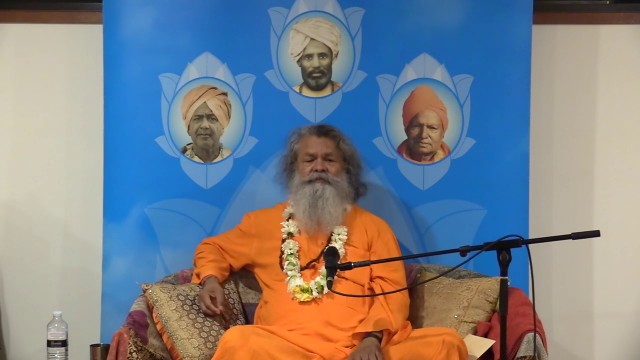
A spiritual discourse on non-violence, divine oneness, and the sanctity of all life.
"We are like other Swamis; we are the same. But we are working for everyone, every time, everywhere."
"Jīvā means life, life, and in that life there are all creatures: a little ant, this little ant, and humans, and all are all equal, what is living, living."
A Swami addresses a gathering, weaving together cosmology, ethics, and personal anecdote. He speaks of Bhagavān Śiva as the primordial source and emphasizes the fundamental equality of all life (Jīva). The core teaching is the practice of ahimsa (non-violence), advocating for a vegan lifestyle and abstaining from alcohol, framed as a recognition of our shared humanity. He instructs listeners to begin each day with the affirmation "I am human" to cultivate this awareness, and concludes with a bhajan.
Filming location: Gold Coast, Australia
Waiting for Gurudev
20:45 - 21:13 (28 min)
Evening satsang from Summer Yoga Retreat from Strilky, Czech Republic. Practicing Sannyasa Sukhta. We sing this mantra while waiting for Gurudev to come. Only renunciation leads us to immortality.
The Divine Lineage of Alakpurījī: Saints, Siddhas, and the Eternal Guru
21:20 - 21:50 (30 min)
A discourse on the divine lineage of the Alakpurījī Siddha tradition.
"From time to time I incarnate in every yuga to protect the dharma, to liberate all the pure souls, and again to remove or destroy the āsurī śaktis."
"Guru Brahma, Guru Viṣṇu, Guru Devo Maheśvara, Guru Sākṣāt Para Brahma, Tasmai Śrī Guruve Namaha—the Guru Tattva, Śiva Tattva, Viṣṇu Tattva, and Brahma Tattva."
A spiritual teacher narrates from a high Himalayan valley, explaining the eternal Guru principle and the Nityāvatāra of great saints. He recounts the lineage from the ancient Alakpurījī to Devapurījī, then to Bhagavān Śrī Dīp Nārāyaṇa Mahāprabhujī, and finally to their Satguru, Swāmī Madhavānandapurījī, whose birth anniversary is being celebrated. The talk includes a parable about missing divine blessings and emphasizes surrender and patience on the spiritual path.
Filming location: India
The bansuri flute
21:55 - 22:25 (30 min)
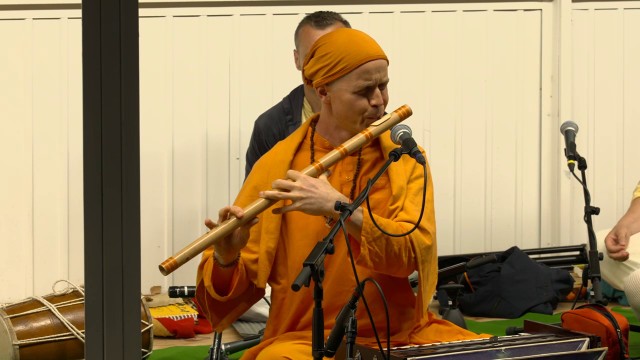
Evening satsang from Yoga Summer Retreat from Strilky, Czech Republic. Swami Madhuram introduces the bansuri flute, and how to play ragas on it. The story about the border between devotion and fanatism. Swami Madhhuram plays on bansuri.
Om Sri Deveshwar Mahadevaya Namaha
22:30 - 23:03 (33 min)
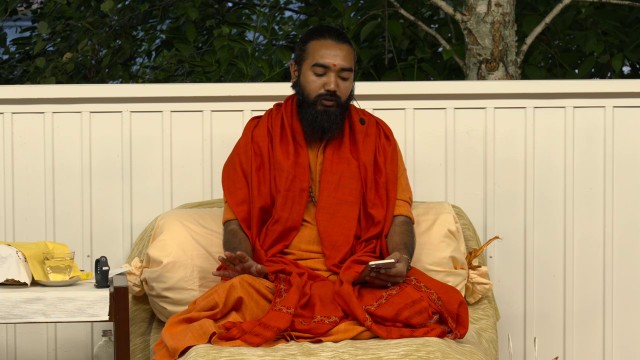
A group chanting and mantra recitation session.
"Today we will have a break from storytelling and cleanse our body a little bit. We will chant one powerful mantra of Swamijī 108 times."
"Once we know it by heart, then we go slow, but to learn it, the process is that we do it in parts. Then we do slowly, then we speed it up, and then we again go slowly."
A teacher leads participants in a session focused on mantra repetition. The group begins by chanting the "Oṁ Śrī Deveśvara Mahādevāya Namaḥ" mantra 108 times, followed by a review and speed practice of a previously learned Sanskrit verse from the Sannyasukta. The teacher explains the learning methodology of alternating slow and fast tempos, mentions plans to learn the Ganeśa Atharvaśīrṣa, and concludes with a series of devotional salutations and shorter prayers.
Filming location: Strilky, Czech Republic
Devik shakti
23:10 - 23:40 (30 min)
A spiritual discourse on the two fundamental forces of the universe, Devīśakti and Āsurīśakti.
"Both forces, Devīśakti and Āsurīśakti, exist. Devīśakti is positive power, and Āsurīśakti is negative power. But the origin of both is one: God Himself."
"Thus, Devīśakti and Āsurīśakti develop. The part of the power, the energy gathered in negative qualities, day by day, will become Āsurīśakti, and the positive forces will become Devīśakti."
The speaker explains the cosmic duality of divine and negative powers, both emanating from a single divine source. He describes how an individual's path—toward development or destruction—is influenced by their company (saṅga). The talk covers the three types of suffering (Tri-Tāpa), the importance of the Guru's grace for protection, and the significance of the Navarātri festival dedicated to the Divine Mother, or cosmic Śakti.
Filming location: Vienna, Austria
The completness of our being
23:45 - 0:56 (71 min)
A spiritual discourse on the soul's journey, karma, and human practice.
"Understand this body, and then it is said—very easy to say, but it is said—overcome, control between two: the hunger and thirst."
"So we come as a human in this world, and then we are searching for the door to mokṣa, liberation. But when the chance comes, we take the hand away and scratch somewhere, meaning desires."
Swami Paramporul delivers a teaching on the eternal journey of the soul (jīvātmā), explaining its nature through metaphor and scripture. He discusses the body as a vehicle or bungalow where the divine resides, the importance of controlling the senses and emotions like jealousy, and the role of yoga, prāṇāyāma, and diet in purification. The talk covers the law of karma, rebirth across different life forms illustrated by a story of a tax collector reborn as a camel, and concludes with reflections on funeral rites and the imperative to use human life for spiritual progress.
Filming location: London, UK
American
Australian