
European
Opening Address: Yoga for World Peace and Non-Violence
4:00 - 4:07 (7 min)
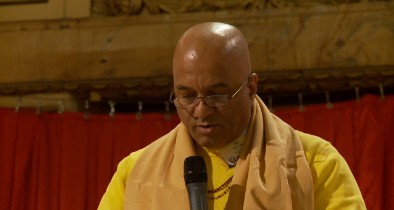
An opening address for the "Yoga for World Peace and Non-Violence" International Conference in Prague.
"Yoga is not a religion. It represents the original balancing principle that promotes nonviolence and peacefulness."
"To achieve peace in the world, we must start by achieving inner peace ourselves."
A representative of the Czech Hindu Religious Society, Vishwaguru Deep Hindu Mandir, welcomes attendees and explains his organization's role in co-organizing the conference. He honors the spiritual lineage of Swami Madhavanandaji and Swami Maheshvaranandaji, detailing global humanitarian projects and drawing a direct connection between yogic principles like non-violence (ahimsa) and the universal pursuit of peace. The speech emphasizes inner peace as the foundation for world peace.
Filming location: Prague, Czech Republic
The Path of Yoga for Universal Peace
4:15 - 4:38 (23 min)
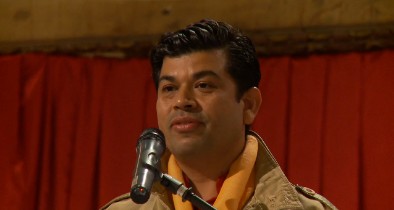
A keynote address advocating for yoga as a universal path to global peace.
"If you want a result in one year, plant crops; in ten years, plant fruit trees; if you want a result forever, practice yoga."
"Yoga is less than 30% physical; it is more than that—it is emotional, mental, and spiritual. For humankind, it is the interconnection from the individual to people, from people to nature, and from nature to the planet."
A speaker from Nepal addresses a World Peace Council conference, framing yoga as a non-religious, practical solution to violence and unrest. He argues for its integration into global education and diplomacy, urging governments to invest in yoga over military spending. The talk blends philosophical teachings from multiple faiths with calls for personal and political action, concluding with a collective peace chant and meditation.
Filming location: Prague, Czech Republic
The Inner Conflict of Śiva
6:15 - 7:10 (55 min)
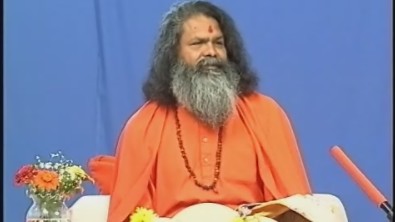
A narrative discourse exploring the inner conflict of Lord Śiva following Satī's test of Lord Rāma.
"Sometimes, to speak the truth is not easy. You hesitate to tell something; you do not want to lose face."
"Therefore, God, please, you can take everything away, or may I lose everything, but not one thing: my belief, my devotion to you."
The speaker recounts the mythological story where Satī, after testing Rāma by disguising herself as Sītā, lies to Śiva about her actions. Śiva, the knower of all, discovers the truth through his divine sight and is plunged into a profound inner conflict. He wrestles with a dilemma: to love Satī in her transformed state feels like a sin that would compromise his pure devotion (bhakti) to Rāma, yet he cannot reject his pure and faithful consort. The discourse uses this story to examine themes of truth, doubt, devotion, and the painful inner arguments that arise when faith is tested, concluding that only divine mercy can resolve such struggles.
Bhajan evening in Jadan Ashram
8:30 - 8:52 (22 min)
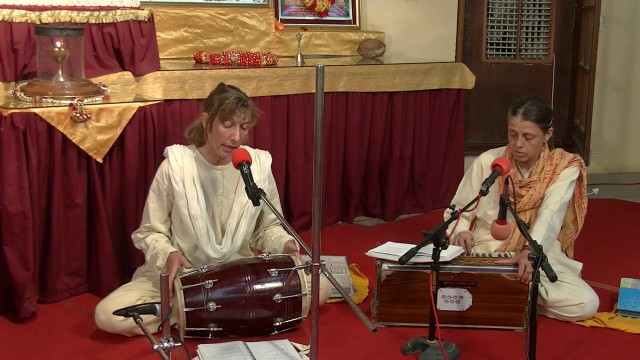
Evening satsang with Vishwaguruji from Jadan Ashram, Rajasthan, India. Bhajan singing.
Bhajan singing from Jadan Ashram
9:00 - 9:35 (35 min)
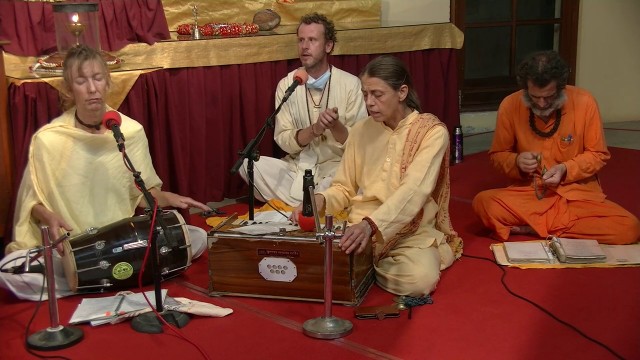
Evening Satsang with Vishwaguruji from Jadan Ashram, Rajasthan, India. Singing bhajans.
Bhajan evening in the Jadan Ashram
9:40 - 10:19 (39 min)
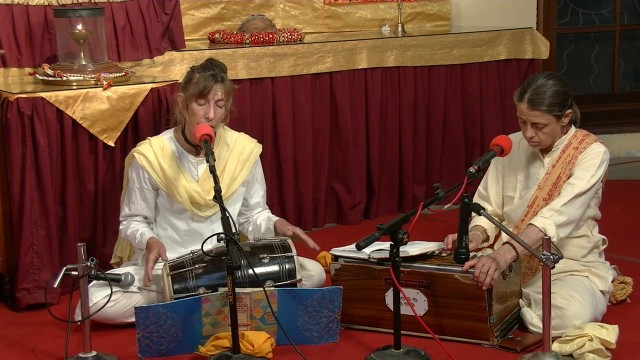
Evening satsang from Jadan Ashram, Rajasthan, India. Bhajan singing.
Bhajan singing in the Jadan Ashram
10:25 - 11:43 (78 min)
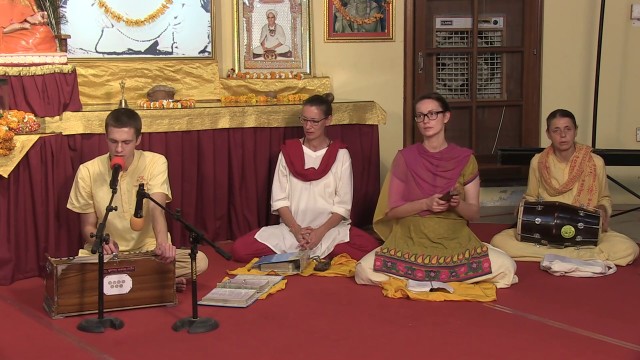
Evening satsang with Vishwaguruji from Jadan Ashram, Rajasthan, India. Bhajan singing evening.
Practising asanas from Rijeka
17:00 - 17:41 (41 min)
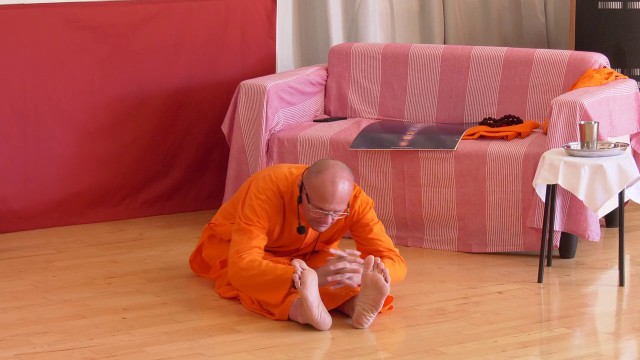
A guided yoga practice focusing on chakra awareness through specific postures and breath.
"Try to understand that the chakra and its location are like a reflection zone... It is the same with some āsanas; they influence and activate a point in our body connected to a cakra."
"If we are concentrated on one point, we will remain without movement. When our mind starts to go here and there, we lose concentration."
An instructor leads a session of āsanas (postures) and mudrās (seals) designed to bring awareness and sensation to the energy centers (chakras) from Mūlādhāra to Sahasrāra. The practice includes Maṇḍūkāsana for the root chakra, rolling movements for Maṇipūra and Viśuddhi, Ākarandanurāsana for Ājñā chakra focus, and Ekapāda Praṇāmāsana for concentration and Anāhata. The teaching connects physical sensation to energetic and mental states, referencing yoga texts and epic stories.
Filming location: Rijeka, Croatia
American
Australian