
European
Yoga leads to the healthy way of life
0:00 - 0:44 (44 min)
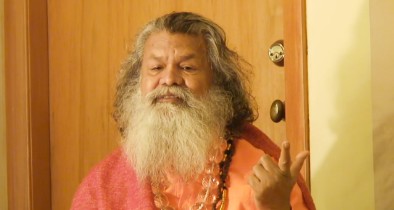
A spiritual gathering and discourse celebrating a new mayor and exploring yoga's role in society.
"Yoga is not a part of any religion. If, then, all religion is a part of yoga, because yoga is good health, happiness, harmony, peace, non-violence, understanding, kindness, and love."
"Rāja Yoga means discipline... So, what is a Rājayoga? So long ago, there were people... So, how the rāja-nīti, how the politics was born? The politics came in life."
Swami Viśvagunānanda (Viśva Gurujī) leads a ceremony at Śrī Devapurījī Ashram following the election of Gurū Nāthanjī as Mayor of the Kāpiti Coast. After introductory remarks and a speech from the new mayor, Swamijī delivers a discourse. He connects the concept of Rāja Yoga (the yoga of discipline and kingship) to ethical governance, explains the universal principles of yoga beyond physical postures, and blesses the mayor's mission to build community. The talk includes commentary on the International Day of Yoga and concludes with Vedic prayers for peace.
Filming location: New Zealand
The Incarnation of Holy Guruji
0:50 - 1:39 (49 min)
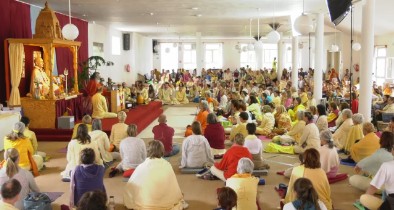
A satsang commemorating the incarnation day of Satguru Dharamsamrat Sri Swami Madhavanandji.
"The bhajans we are singing are the words of the Vedas." "To wear orange robes is not to be a real sannyāsī. You have to live life as a sannyāsī."
A speaker venerates his Satguru, Guruji, on his auspicious incarnation day. He describes Guruji as a Nitya Avatara whose divinely inspired bhajans carry the resonance of Brahmajnana. He shares personal stories illustrating Guruji's oneness with his own Guru, Mahaprabhuji, and the tests of faith and surrender on the path, including an account of being sent on a journey without provisions. The talk also covers the spiritual lineage and practical instructions for an upcoming pilgrimage to Alakpuriji's cave in the Himalayas.
Filming location: Strilky, Czech Republic
Practising yoga strengthens the immune system
1:45 - 2:03 (18 min)
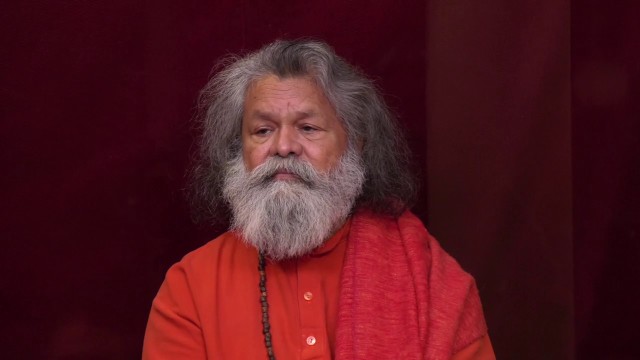
A satsang on yoga's role in health and global community, featuring Swami Maheshvarananda and the Indian Ambassador to the Czech Republic.
"Mostly, myself, I can tell you that I am out of the countries, from India. So, all these yogīs in their lives around the whole world were practicing very peacefully and very well, healthy."
"Swamiji has rightly pointed out that during the COVID times, yoga has really helped us in developing our immune system. And I’m glad that people who are practicing this form of yoga have remained safe and healthy despite the pandemic."
Swami Maheshvarananda opens the gathering, discussing the health of the global Yoga in Daily Life community during the pandemic and comparing yoga practice in India and abroad. The Indian Ambassador then speaks, thanking the organization and highlighting yoga's resurgence in India and their collaborative embassy classes, concluding with an invitation to celebrate India's Republic Day.
Filming location: Strilky, Czech Republic
Purify yourself inside and out
2:10 - 2:53 (43 min)
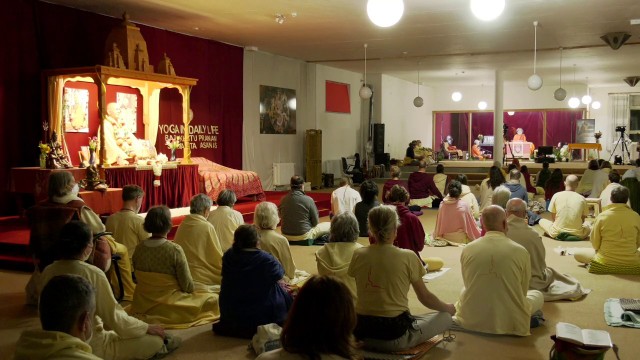
Evening Satsang with Vishwaguruji from Strilky Ashram, Czech Republic. Satguru is a Guru who knows everything and gives knowledge to everyone. The words of Satguru Chalisa are like pearls coming from the haven. God's energy is pure and goes to everyone. We can do neti every morning to clean our nose and lungs also. It is better to clean our teeth with our fingers without a brush. Sometimes animals are also cleaning their teeth. Many diseases begin to develop from the tension which can be between husband and wife. We learn the movements of animals with the help of yoga.
The Essence of Yoga in Daily Life
3:00 - 3:35 (35 min)
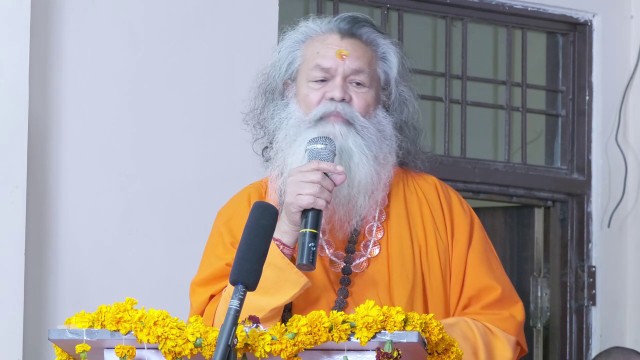
A spiritual discourse and award ceremony on integrating yoga and Sanātana Dharma into daily life.
"You should know why you have come to this world." "Yoga in daily life means in the whole world, in the whole world."
A speaker, referencing Gurudev and Swami Madhavanand, delivers a wide-ranging talk emphasizing the purpose of human life, the principles of yoga, and the protection of animals and Indian culture. He shares anecdotes about teaching yoga abroad, insists on vegetarianism for practitioners, and discusses the global spread of both meat-eating and veganism. The event includes the presentation of awards for promoting Indian culture and peace, with thanks given to organizing institutions like Apex University and the Yoga in Daily Life Foundation.
Filming location: Jaipur, Rajasthan, India
Miracles are in our service
3:40 - 4:55 (75 min)
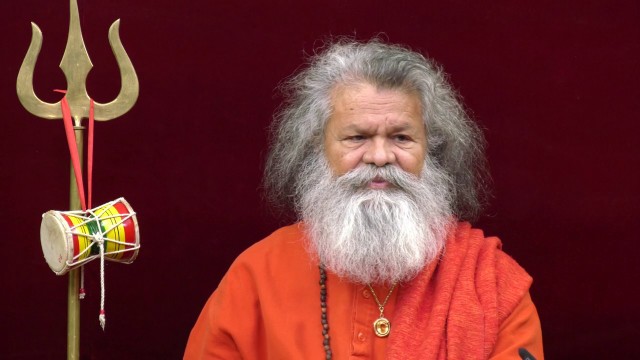
An evening satsang sharing stories of grace and miracles from the Guru lineage.
"Mahāprabhujī said, 'Why are you always thinking, "There is no more food"?' ... He opened the cloth, and the pot was full of halvā soup."
"Mahāprabhujī was singing a very nice bhajan. People sang many, many bhajans. It is said prasāda means enough, more than enough."
The lecturer addresses a global audience, offering blessings and narrating miraculous anecdotes involving his Gurus, Mahāprabhujī and Devpurījī. He recounts tales of multiplying food, fulfilling devotees' desires, and personal experiences of divine light, emphasizing themes of selfless service (seva), contentment (santosh), and faith over the pursuit of miracles. The talk concludes with a parable about a healed leper, known as the "Sonāmukhī Gurujī," whose faith and a simple laxative lead to a series of wondrous events.
Filming location: Strilky, Czech Republic
The spiritual family
5:00 - 5:51 (51 min)
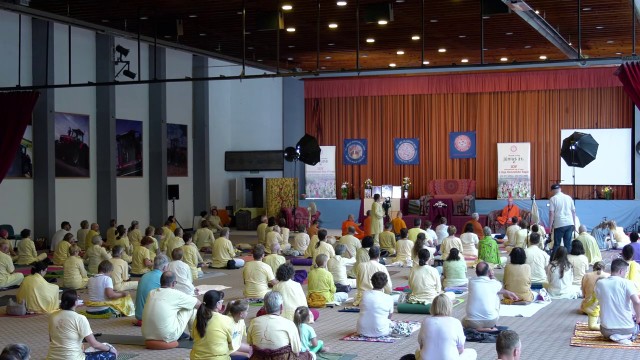
An opening talk at a spiritual seminar addressing the absence of the guru and the purpose of gathering.
"People are always complaining, 'Oh, Kali Yuga is not good, Kali Yuga is a terrible time.' But if you know how to utilize it, Kali Yuga is also excellent."
"We need to be like a Paramahaṁsa... We should be like that. In this world, we have so many things... we should be like the Haṁsa: take the pearls, take the milk, and leave the water."
A senior disciple addresses the assembled spiritual family at the Vép seminar, acknowledging the physical absence of Viśvagurūjī. He reframes the gathering as a vital opportunity to recharge, strengthen spiritual family bonds, and deepen personal practice. Key themes include extracting the essence from the Kali Yuga, the necessity of a supportive community for sādhanā, and using the seminar for introspection, mauna (silence), and focused practice of āsana and prāṇāyāma to calm the mind.
Filming location: Vép, Hungary
The spiritual family
5:55 - 6:46 (51 min)
An opening talk at a spiritual seminar addressing the absence of the guru and the purpose of gathering.
"People are always complaining, 'Oh, Kali Yuga is not good, Kali Yuga is a terrible time.' But if you know how to utilize it, Kali Yuga is also excellent."
"We need to be like a Paramahaṁsa... We should be like that. In this world, we have so many things... we should be like the Haṁsa: take the pearls, take the milk, and leave the water."
A senior disciple addresses the assembled spiritual family at the Vép seminar, acknowledging the physical absence of Viśvagurūjī. He reframes the gathering as a vital opportunity to recharge, strengthen spiritual family bonds, and deepen personal practice. Key themes include extracting the essence from the Kali Yuga, the necessity of a supportive community for sādhanā, and using the seminar for introspection, mauna (silence), and focused practice of āsana and prāṇāyāma to calm the mind.
Filming location: Vép, Hungary
Become one with the energy of Bhagawan
6:50 - 7:23 (33 min)
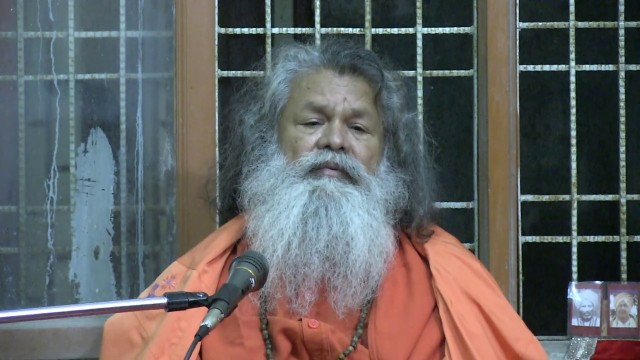
A spiritual discourse on pilgrimage and devotion delivered at Badrinath.
"All dear ones, you are, luckily, ātmā—soul. You are engaged in such a sādhanā... that you could come here to Badrī Viśāl, to Bhagavān Badrināth."
"In India it is like that... in a diamond mine there is only diamond; in a white stone quarry there is only white stone."
A spiritual teacher addresses a group of pilgrims at the Badrinath temple. He explains the rarity and merit of completing such a pilgrimage, using the metaphor of a cherry tree where few blossoms survive to become ripe fruit. He contrasts ancient, arduous pilgrimages with modern travel, emphasizes the sacred energy of the site, and discusses themes of devotion, non-attachment (vairāgya), and India's unique spiritual status as Bhārat Mātā. The talk includes references to the Kedarnath flood as a divine lesson and concludes with an invitation to daily satsang.
Filming location: India
Bhajans from Strilky
7:30 - 8:01 (31 min)
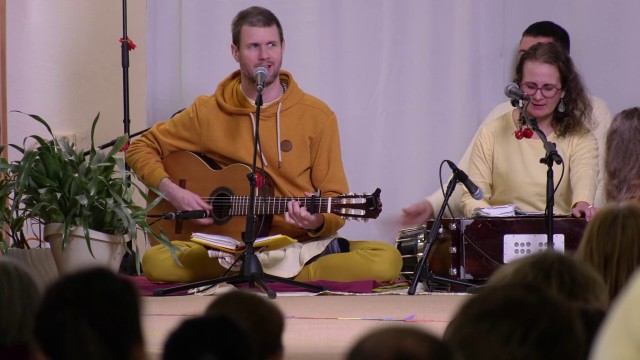
Bhajan singing from Strilky Ashram, Czech Republic.
Bhajan singing from Vep
8:05 - 8:32 (27 min)
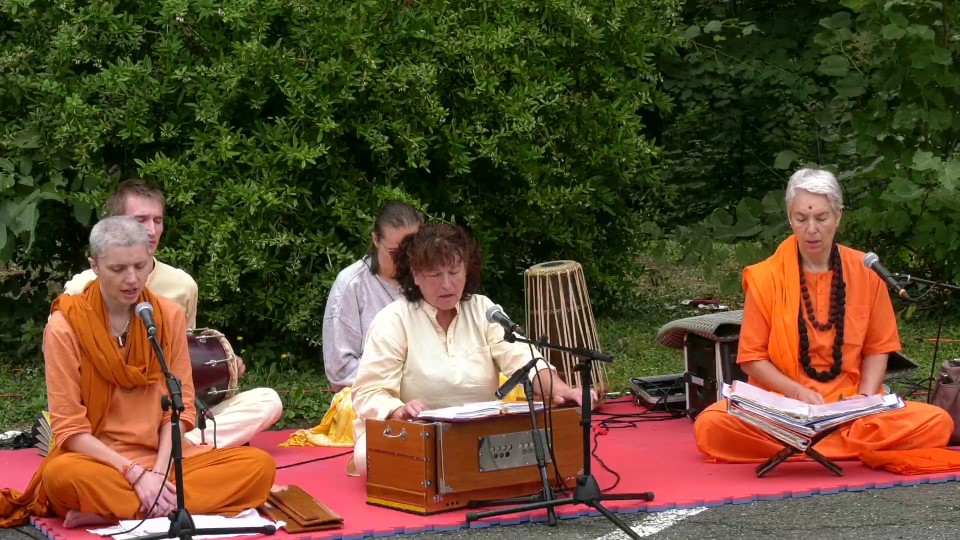
Morning satsang with Vishwaguruji from Vep, Hungary. Bhajan singing. Translation of the bhajan "Itna to karana Guruji"
Bhajans from Rijeka
8:40 - 9:00 (20 min)
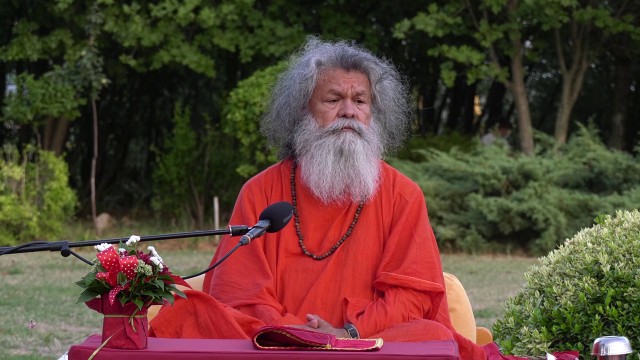
Evening satsang with Vishwaguruji from Rijeka Ashram, Croatia. Singing Bhajans.
Bhajans from Rijeka
9:05 - 9:33 (28 min)
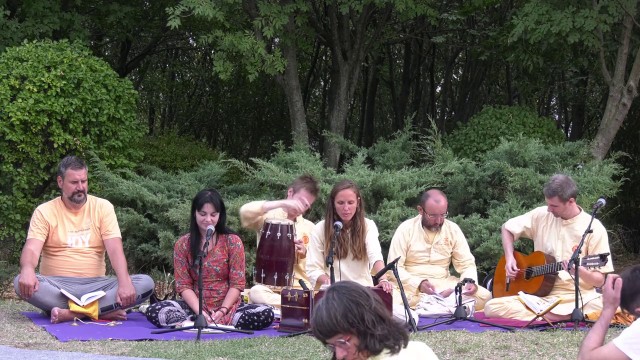
Evening satsang with Vishwaguruji from Rijeka Ashram, Croatia.
Bhajan evening from Vep
9:40 - 10:35 (55 min)
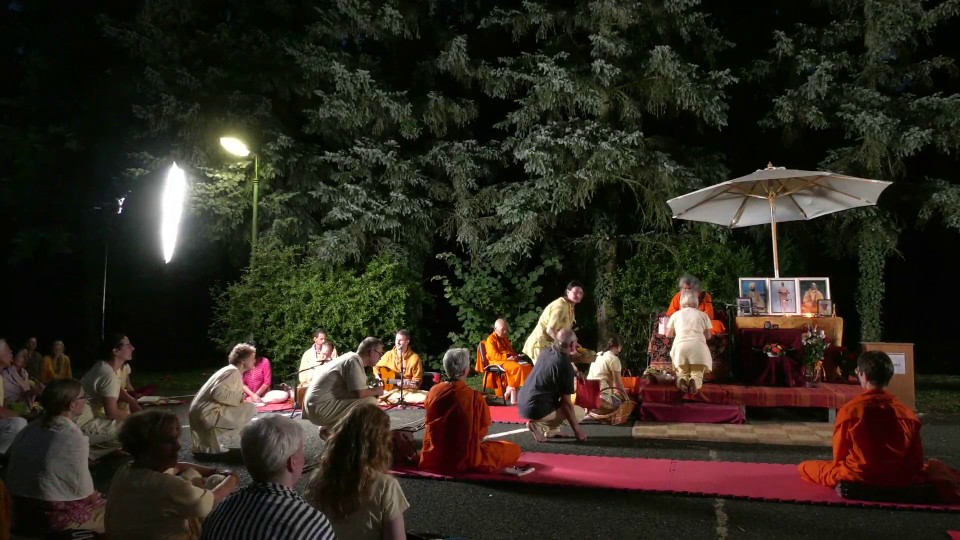
Evening satsang with Vishwaguruji from Vep, Hungary. Bhajan singing.
Chakras in the human
10:40 - 11:50 (70 min)
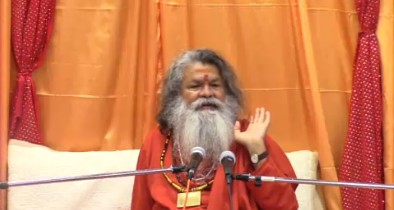
A lecture on the cosmic origin and holistic practice of yoga.
"Yoga is one of the first principles in creation." "That’s called yoga: our physical body, our mental body, and our subtle body. These are three, according to yogic science. Balance, complete."
Swami Paramananda addresses a temple gathering, invited to speak on yoga. He presents a cosmological view of yoga's origin from Anant Brahmāṇḍ (infinite universes), sound (Nāda), and the self-manifested Śiva. He explains the traditional concept of 8.4 million life forms and argues for a vegetarian diet to attain higher consciousness. The talk covers the need for a guru, the 72,000 nerve systems, the five kośas (sheaths), and a detailed, practical guide to the chakras—from the earth chakras in the feet to the higher centers. He concludes with practical techniques like chanting AUM and a stress-relief exercise, ending with a peace mantra.
Filming location: USA
Chantiing A-U-M and Kundalini Shakti
11:55 - 13:08 (73 min)
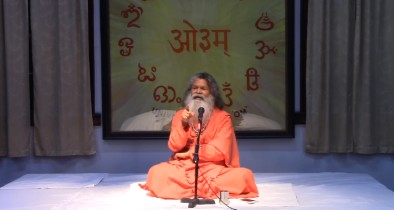
Program at Vedic Temple with Vishwaguruji from Atlanta, Georgia, USA. This place is like the center of the Universe. We need Vedic culture for the knowledge of how to be a human. According to the Upanishads, the first guru/God is the mother. The yogi is able to utilize amrit, the nectar which is coming from Bindu Chakra. Vishwaguruj explains how to chant A-U-M.
A Guru gives everything that we need
13:15 - 14:16 (61 min)
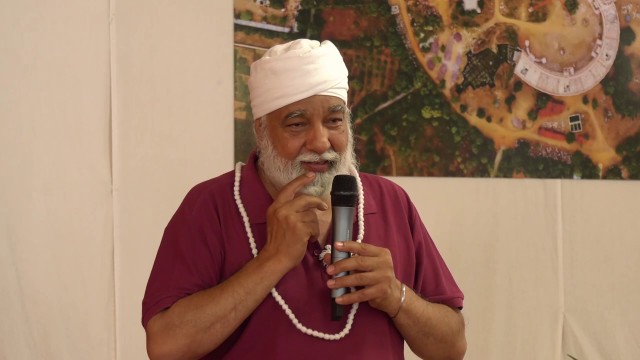
Evening satsang from Strilky Ashram, Czech Republic. The story of Krishna and Vidura's wife. Explanation and sing of bhajan Prabhu Prema Bina Nahi Ave. Strilky Ashram is a heaven on earth. We should know what Guru really means. Our biggest problems are our ego and jealousy. The real Guru mantra can liberate our minds. Our yoga name helps us to go towards our aims. We have to do seva (selfless service) in order to get the blessing. Miracles can happen to each of us. Karma is happening to every country. Yoga has become an industry in the world. There are some institutes which want to control yoga and ayurveda also. It should create a universal benchmark for yoga and ayurveda. In Britain, many people can legally use yoga and ayurveda as medicine. Bhajan explanation and singing Prabhu Mere Avaguna Chita Na Caro.
Become one with the energy of Bhagawan
14:20 - 14:53 (33 min)
A spiritual discourse on pilgrimage and devotion delivered at Badrinath.
"All dear ones, you are, luckily, ātmā—soul. You are engaged in such a sādhanā... that you could come here to Badrī Viśāl, to Bhagavān Badrināth."
"In India it is like that... in a diamond mine there is only diamond; in a white stone quarry there is only white stone."
A spiritual teacher addresses a group of pilgrims at the Badrinath temple. He explains the rarity and merit of completing such a pilgrimage, using the metaphor of a cherry tree where few blossoms survive to become ripe fruit. He contrasts ancient, arduous pilgrimages with modern travel, emphasizes the sacred energy of the site, and discusses themes of devotion, non-attachment (vairāgya), and India's unique spiritual status as Bhārat Mātā. The talk includes references to the Kedarnath flood as a divine lesson and concludes with an invitation to daily satsang.
Filming location: India
Introduction to Bhramari Pranayama
15:00 - 15:55 (55 min)
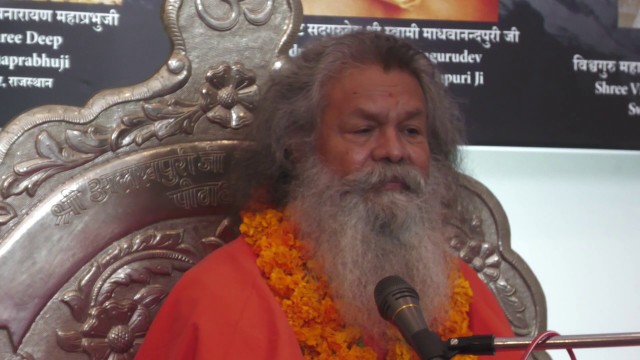
Evening satsang from Jaipur Ashram, Rajasthan India. Bhajan singing. Today, we will again deal with the Bhramari pranayama. Yoga is more than just doing exercises and meditation. Sound means vibration, words. When we speak, both hemispheres of the brain vibrate, and the Sanskrit language is very balanced in this respect. Bhramari pranayama also vibrates the brain hemispheres. Practicing Bhramari pranayama.
Morning Yoga practice, Umag, Croatia (5/9)
16:00 - 17:31 (91 min)
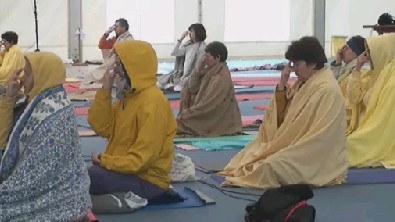
Morning Yoga practice from the international Yoga retreat Umag, Croatia on 29th of September 2010.
Everyday practising is important
17:35 - 17:56 (21 min)
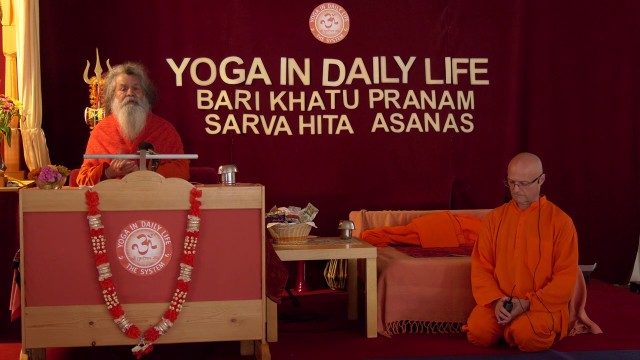
Morning satsang with Vishwaguruji from Strilky Ashram, Czech Republic. Yoga is very good for us in all aspects. But we have to practice every day. We have family at home, we have to go to work, so we can't spend very much time practising. It is very good if we can find time to practice every day. When you go home, you have to practice on your own.
Hatha Yoga Kriyas (2/3)
18:00 - 18:27 (27 min)
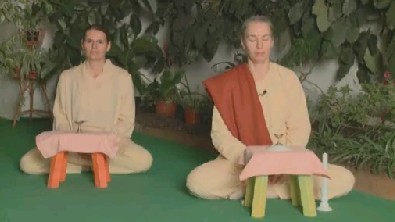
Hatha Yoga Kriyas, with Swamiji and Uma Puri, from Strilky Ashram, (CZ) on 14th November 2009.
Follow the path of Bhakti
18:35 - 19:57 (82 min)
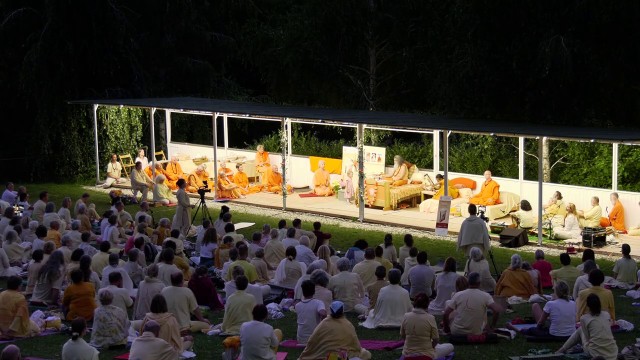
Evening satsang with Vishwaguruji from Strilky, Czech Republic. Lecture by Swami Avatarpuriji. You can't run away from Maya. The story of a sadhu who was living in the Himalayas. Only by following the right path and Gurudev we can cross the ocean of ignorance. Finally, we should follow the path of Bhakti. Explanation of how Gurudev helps us to overcome our troubles. Mind is restless, but using mantra it can be focused. Chanting and learning mantras, including Mahamrityur Jayamantra. Lecture by Mahamandaleshwar Swami Vivekpuriji. The mind is like a horse. Why we are telling stories when we are teaching someone. What is important is the feeling in the heart.
Miracles are in our service
20:05 - 21:20 (75 min)
An evening satsang sharing stories of grace and miracles from the Guru lineage.
"Mahāprabhujī said, 'Why are you always thinking, "There is no more food"?' ... He opened the cloth, and the pot was full of halvā soup."
"Mahāprabhujī was singing a very nice bhajan. People sang many, many bhajans. It is said prasāda means enough, more than enough."
The lecturer addresses a global audience, offering blessings and narrating miraculous anecdotes involving his Gurus, Mahāprabhujī and Devpurījī. He recounts tales of multiplying food, fulfilling devotees' desires, and personal experiences of divine light, emphasizing themes of selfless service (seva), contentment (santosh), and faith over the pursuit of miracles. The talk concludes with a parable about a healed leper, known as the "Sonāmukhī Gurujī," whose faith and a simple laxative lead to a series of wondrous events.
Filming location: Strilky, Czech Republic
You are the helper of everyone
21:25 - 22:18 (53 min)
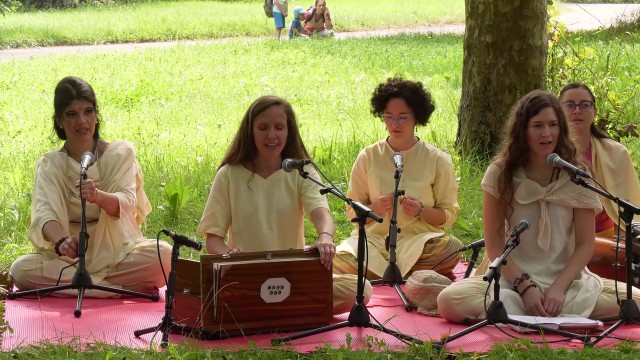
A spiritual discourse on the meaning and practice of a specific mantra.
"Oṃ, the Uncreated Body. It is not referring to the physical body. It is pointing to the body of Consciousness, the body of Awareness, the body of Being."
"When we chant this mantra, we are not invoking something outside of ourselves. We are recognising and affirming our true nature."
A teacher provides a detailed commentary on the mantra "Oṃ Aki Rāchanā Śarīra," explaining its meaning as a pointer to the eternal, unchanging Self or Awareness beyond the physical form. He instructs listeners on how to chant it as a practice of self-recognition and disidentification from the body-mind, describing it as the subjective space of pure knowing.
Filming location: Vép, Hungary
The spiritual family
22:25 - 23:16 (51 min)
An opening talk at a spiritual seminar addressing the absence of the guru and the purpose of gathering.
"People are always complaining, 'Oh, Kali Yuga is not good, Kali Yuga is a terrible time.' But if you know how to utilize it, Kali Yuga is also excellent."
"We need to be like a Paramahaṁsa... We should be like that. In this world, we have so many things... we should be like the Haṁsa: take the pearls, take the milk, and leave the water."
A senior disciple addresses the assembled spiritual family at the Vép seminar, acknowledging the physical absence of Viśvagurūjī. He reframes the gathering as a vital opportunity to recharge, strengthen spiritual family bonds, and deepen personal practice. Key themes include extracting the essence from the Kali Yuga, the necessity of a supportive community for sādhanā, and using the seminar for introspection, mauna (silence), and focused practice of āsana and prāṇāyāma to calm the mind.
Filming location: Vép, Hungary
The Incarnation of Holy Guruji
23:20 - 0:09 (49 min)
A satsang commemorating the incarnation day of Satguru Dharamsamrat Sri Swami Madhavanandji.
"The bhajans we are singing are the words of the Vedas." "To wear orange robes is not to be a real sannyāsī. You have to live life as a sannyāsī."
A speaker venerates his Satguru, Guruji, on his auspicious incarnation day. He describes Guruji as a Nitya Avatara whose divinely inspired bhajans carry the resonance of Brahmajnana. He shares personal stories illustrating Guruji's oneness with his own Guru, Mahaprabhuji, and the tests of faith and surrender on the path, including an account of being sent on a journey without provisions. The talk also covers the spiritual lineage and practical instructions for an upcoming pilgrimage to Alakpuriji's cave in the Himalayas.
Filming location: Strilky, Czech Republic
American
Australian