
European
Mantra and Guru
0:10 - 1:03 (53 min)
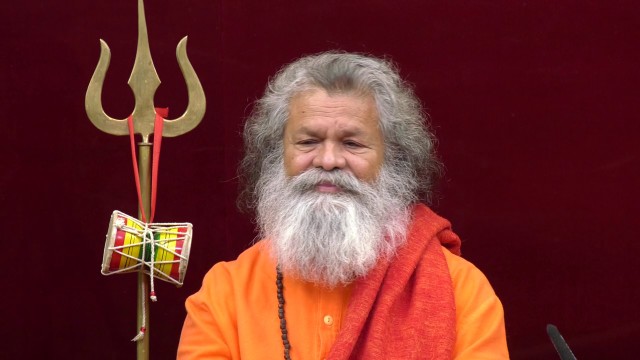
An evening satsang on spiritual practice, the role of the guru, and a morning prayer ritual.
"Early morning is called Brahmamuhūrta... it is said that one of the best nectars is in that time."
"Don't change your gurus. If you are changing, then you will not achieve anything."
Swami Maheshwarananda addresses a global audience, discussing the universal human search for meaning amidst modern confusion. He outlines an ideal morning routine of purification, prayer, and light, and explains the hierarchical concept of the guru, from parents and teachers to one's irreplaceable spiritual master. He concludes by teaching and explaining the lyrics of a devotional Āratī song.
Filming location: Strilky, Czech Republic
Mantra for harmony
1:10 - 1:58 (48 min)
A spiritual discourse exploring the multifaceted nature and power of mantra.
"Man is the mind, and tra is also called the desire. And that can be negative or positive. And this mantra can make good and bad."
"Every bhajan is full of wisdom. That is a mantra... it is very, very important that we have positive respect, love, and harmony. That is the best mantra."
Swami Ji leads a satsang, explaining that mantra originates from the mind and can be any powerful speech, from a wife's worrying words to sacred chants. He discusses fear, cultural differences between India and Europe, and shares anecdotes, including one from the 1970s about cultural exchange. The talk weaves through themes of spirituality, the role of the Guru, and concludes with the recitation of sacred mantras.
Filming location: Salzburg, Austria
Yoga leads to the healthy way of life
2:05 - 2:49 (44 min)
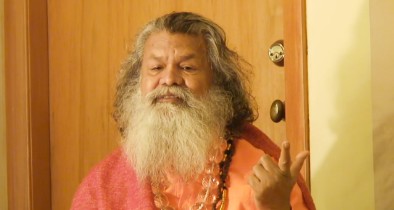
A spiritual gathering and discourse celebrating a new mayor and exploring yoga's role in society.
"Yoga is not a part of any religion. If, then, all religion is a part of yoga, because yoga is good health, happiness, harmony, peace, non-violence, understanding, kindness, and love."
"Rāja Yoga means discipline... So, what is a Rājayoga? So long ago, there were people... So, how the rāja-nīti, how the politics was born? The politics came in life."
Swami Viśvagunānanda (Viśva Gurujī) leads a ceremony at Śrī Devapurījī Ashram following the election of Gurū Nāthanjī as Mayor of the Kāpiti Coast. After introductory remarks and a speech from the new mayor, Swamijī delivers a discourse. He connects the concept of Rāja Yoga (the yoga of discipline and kingship) to ethical governance, explains the universal principles of yoga beyond physical postures, and blesses the mayor's mission to build community. The talk includes commentary on the International Day of Yoga and concludes with Vedic prayers for peace.
Filming location: New Zealand
Around the world - Yoga For Wellness (3/5)
3:00 - 4:08 (68 min)
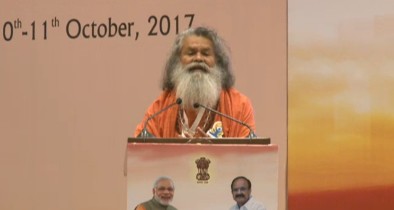
International Conference "Yoga For Welness". Organized by Indian Ministry of Ayush, Government of India in New Delhi, India.
Removing pollution from the body and mind
4:15 - 4:56 (41 min)
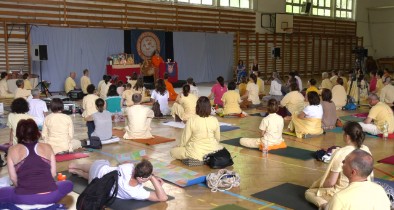
A spiritual discourse on the ancient origins and modern practice of yoga and Ayurveda.
"The science of yoga is ancient. Ayurveda is also that old."
"Health is not everything, but without health, everything is nothing."
A speaker addresses an audience, passionately recounting the divine origins of yoga from Shiva and Ayurveda from Dhanvantari, using the story of Hanuman fetching the Sanjivani herb to illustrate Ayurveda's ancient power. He critiques official claims that these sciences are only 5,000 years old, urging listeners to petition the government for correction. The talk expands to cover the purpose of yoga in overcoming stress and mental impurities (mala, vikshepa, avarana), explains how specific asanas like Bhujangasana affect the mind and body, and reflects critically on human nature, pollution, and dietary habits.
Filming location: Debrecen, Hungary
In the home of the soul
5:15 - 6:18 (63 min)
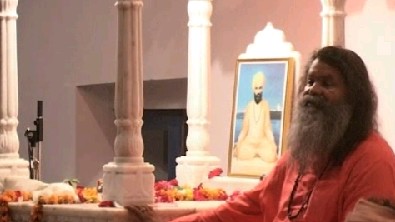
Summer 2003. in India with presentation of Yoga In Daily Life projects and Swamijis lecture
Do not kill animals
6:25 - 7:02 (37 min)
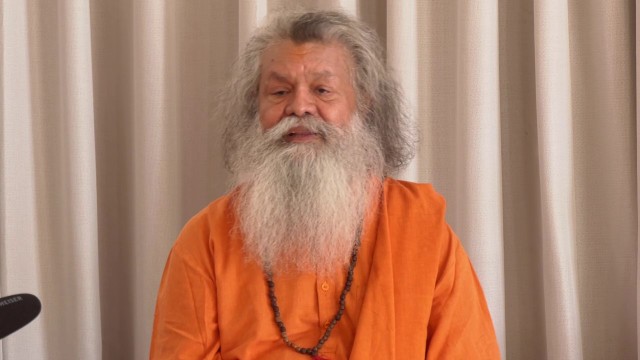
A spiritual discourse on purity, diet, and human relationships.
"If we advise others, saying, 'Do not eat this; it is not good,' they may threaten us."
"Early morning, she makes pūjā. Pūjā for whom? For her husband. And always she's in meditation."
A swami shares a meandering talk, beginning with his personal experience defending vegetarianism in India and observing how others eventually adopted the practice. He uses the metaphor of water's cycle to describe spiritual purity and ascent, then discusses themes of marital devotion, conception, and the roles of men and women, often shifting topics without clear transitions. The session concludes with chanting.
Filming location: Rijeka, Croatia
Bhajan singing from Strilky Ashram
7:30 - 8:03 (33 min)
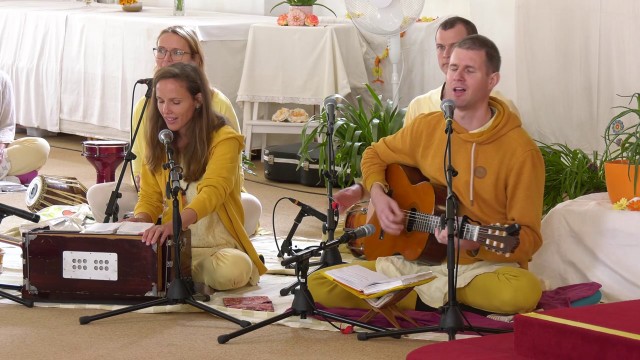
Morning satsang with Vishwaguruji from Strilky Ashram, Czech Republic.
Bhajan evening from Strilky
8:10 - 8:24 (14 min)
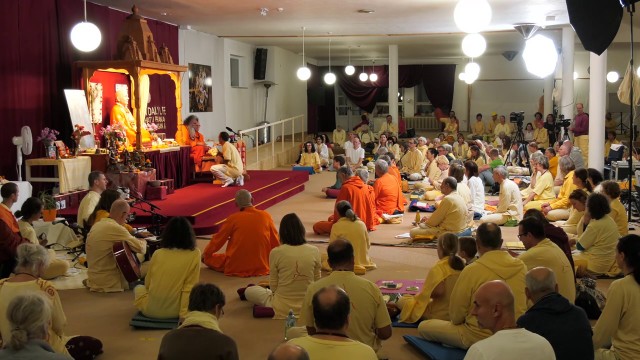
Evening satsang with Vishwaguruji from Strilky Ashram, Czech Republic.
Hymns of Adoration and the Nirvāṇa Ṣaṭkam
8:30 - 8:53 (23 min)
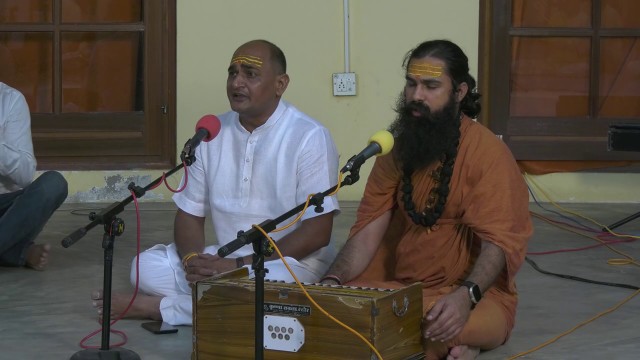
A devotional video featuring the chanting of Sanskrit hymns dedicated to Lord Shiva.
"Na me dveṣa rāgau. Na me lobho, na mādo, neva me neva sāryabhā. Na dharmo, na cārtho, na kāmo, na mokṣaḥ. Cidānanda-rūpaḥ śivo'ham, śivo'ham."
"Brahmā Murārī Surārchitaliṅgam, Nirmalabhāśita Śobhitaliṅgam, Janmajaḍukha Vināśakaliṅgam, Tat praṇamāmi Sadāśivaliṅgam."
The video consists of a continuous recitation of three primary hymns: the Rudrāṣṭakam, the Nirvāṇa Ṣaṭkam (a declaration of the true Self as consciousness and bliss), and the Liṅgāṣṭakam. The chanting is interspersed with and concluded by energetic salutations (jaya) to a lineage of spiritual masters, including Śrī Alakhpurīṣa Mahādeva, Śrī Devapurījī, Śrī Dīp Nārāyaṇa Mahāprabhujī, and others.
Filming location: Jadan, Rajasthan, India
Bhajan singing from Jadan
9:00 - 9:17 (17 min)
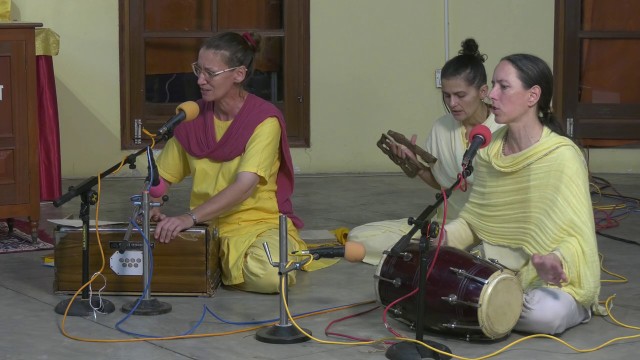
Evening satsang with Vishwaguruji from Jadan Ashram, Rajasthan, India.
Bhajan singing from Strilky Ashram
9:25 - 10:06 (41 min)
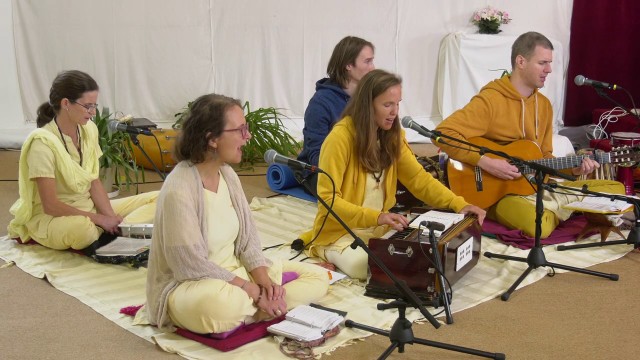
Morning program from Strilky, Czech Republic. Bhajan singing.
Bhajans on the Satsang
10:10 - 11:00 (50 min)
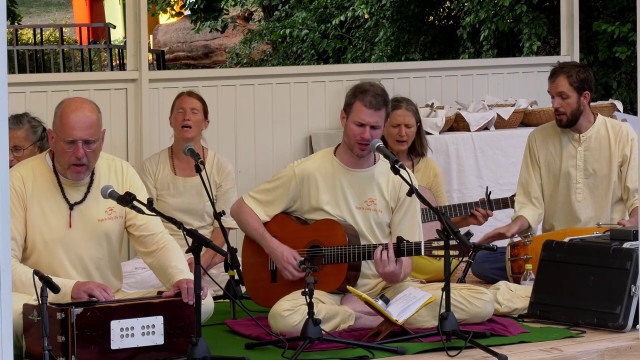
Evening satsang with Vishwaguruji. Bhajan singing.
Miracles are in our service
11:05 - 12:20 (75 min)
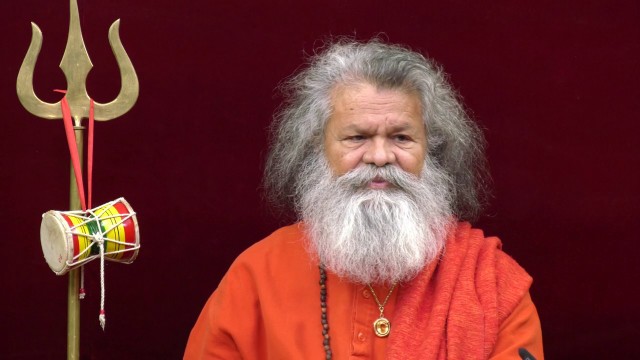
An evening satsang sharing stories of grace and miracles from the Guru lineage.
"Mahāprabhujī said, 'Why are you always thinking, "There is no more food"?' ... He opened the cloth, and the pot was full of halvā soup."
"Mahāprabhujī was singing a very nice bhajan. People sang many, many bhajans. It is said prasāda means enough, more than enough."
The lecturer addresses a global audience, offering blessings and narrating miraculous anecdotes involving his Gurus, Mahāprabhujī and Devpurījī. He recounts tales of multiplying food, fulfilling devotees' desires, and personal experiences of divine light, emphasizing themes of selfless service (seva), contentment (santosh), and faith over the pursuit of miracles. The talk concludes with a parable about a healed leper, known as the "Sonāmukhī Gurujī," whose faith and a simple laxative lead to a series of wondrous events.
Filming location: Strilky, Czech Republic
Chakras in the human
12:25 - 13:35 (70 min)
A lecture on the cosmic origin and holistic practice of yoga.
"Yoga is one of the first principles in creation." "That’s called yoga: our physical body, our mental body, and our subtle body. These are three, according to yogic science. Balance, complete."
Swami Paramananda addresses a temple gathering, invited to speak on yoga. He presents a cosmological view of yoga's origin from Anant Brahmāṇḍ (infinite universes), sound (Nāda), and the self-manifested Śiva. He explains the traditional concept of 8.4 million life forms and argues for a vegetarian diet to attain higher consciousness. The talk covers the need for a guru, the 72,000 nerve systems, the five kośas (sheaths), and a detailed, practical guide to the chakras—from the earth chakras in the feet to the higher centers. He concludes with practical techniques like chanting AUM and a stress-relief exercise, ending with a peace mantra.
Filming location: USA
What have you done for others?
13:40 - 14:25 (45 min)
Lecture by Sadhvi Shanti from Summer Yoga Camp in Vep, Hungary. We are climbing to the top of the mountain step by step. To follow the path is very important. At the end of your life, God will ask: "what have you done for others?" There are many things in nature that we can use for our spiritual development. The tree is always ready to accept.
Follow the path of Bhakti
14:30 - 15:52 (82 min)
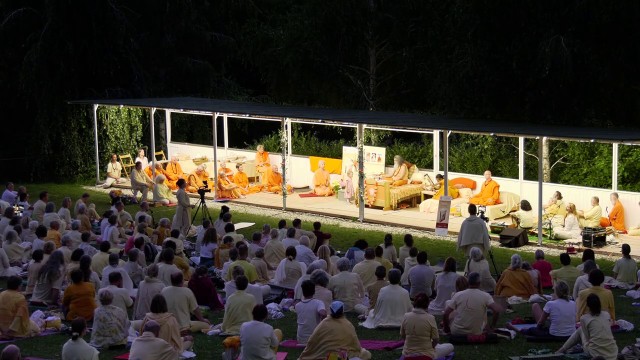
Evening satsang with Vishwaguruji from Strilky, Czech Republic. Lecture by Swami Avatarpuriji. You can't run away from Maya. The story of a sadhu who was living in the Himalayas. Only by following the right path and Gurudev we can cross the ocean of ignorance. Finally, we should follow the path of Bhakti. Explanation of how Gurudev helps us to overcome our troubles. Mind is restless, but using mantra it can be focused. Chanting and learning mantras, including Mahamrityur Jayamantra. Lecture by Mahamandaleshwar Swami Vivekpuriji. The mind is like a horse. Why we are telling stories when we are teaching someone. What is important is the feeling in the heart.
Practicing of the system 'Yoga in Daily Life', Level 2 - Part 2
16:00 - 17:11 (71 min)
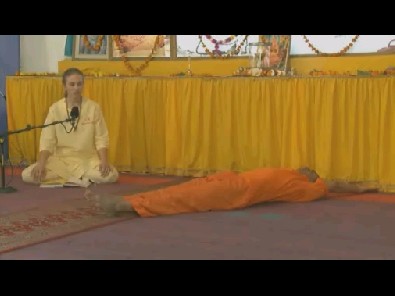
A guided yoga practice session for Level Two of the "Yoga in Daily Life" system.
"This light has been transferred through the centuries from one master to another without any interruption."
"Āsana means, except for other meanings, also comfortable. So āsana should be a comfortable position."
An instructor leads a comprehensive yoga class at Parananda Ashram, systematically guiding practitioners through the second level of the "Yoga in Daily Life" system. The session begins with relaxation and breath awareness (full yoga breath), followed by a series of āsanas including Meru Pṛṣṭhāsana, Catuṣpada Āsana, Cakrāsana, Dvikoṇāsana, Bhūta Āsana, Setu Āsana, Hastapādāṅguṣṭhāsana, Sumeru Āsana, and Meruvakrāsana. Each posture is explained with detailed alignment cues and its physical and energetic benefits. The practice concludes with deep relaxation, a prāṇāyāma (alternate nostril breathing) exercise, and a closing meditation with Oṁ and Śānti chants.
Filming location: Jadan, Rajasthan, India
Yoga for a Healthier and Happier Life
17:15 - 18:02 (47 min)
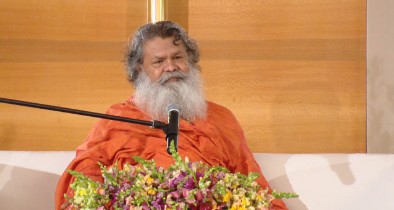
A public lecture on yoga as a holistic science for health and peace.
"If you want to know what is Parabrahma, what is God, it is that resonance, that energy."
"Yoga practice is balancing, harmonizing, and keeping health. The practice of āsanas is not a competition."
Swami Maheshwarananda addresses an audience including the Indian Ambassador to the EU and the President of Zagreb. He presents yoga as a divine science originating from Śiva, sharing traditional stories about blessings and longevity, and critiques modern commercialized forms. He emphasizes yoga's role in creating personal health and world peace, concluding with a demonstration of the Kāṭupraṇām exercise.
Filming location: Zagreb, Croatia
Removing pollution from the body and mind
18:10 - 18:51 (41 min)
A spiritual discourse on the ancient origins and modern practice of yoga and Ayurveda.
"The science of yoga is ancient. Ayurveda is also that old."
"Health is not everything, but without health, everything is nothing."
A speaker addresses an audience, passionately recounting the divine origins of yoga from Shiva and Ayurveda from Dhanvantari, using the story of Hanuman fetching the Sanjivani herb to illustrate Ayurveda's ancient power. He critiques official claims that these sciences are only 5,000 years old, urging listeners to petition the government for correction. The talk expands to cover the purpose of yoga in overcoming stress and mental impurities (mala, vikshepa, avarana), explains how specific asanas like Bhujangasana affect the mind and body, and reflects critically on human nature, pollution, and dietary habits.
Filming location: Debrecen, Hungary
The Incarnation of Holy Guruji
18:55 - 19:44 (49 min)
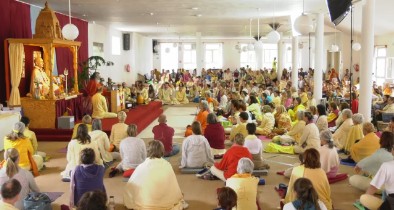
A satsang commemorating the incarnation day of Satguru Dharamsamrat Sri Swami Madhavanandji.
"The bhajans we are singing are the words of the Vedas." "To wear orange robes is not to be a real sannyāsī. You have to live life as a sannyāsī."
A speaker venerates his Satguru, Guruji, on his auspicious incarnation day. He describes Guruji as a Nitya Avatara whose divinely inspired bhajans carry the resonance of Brahmajnana. He shares personal stories illustrating Guruji's oneness with his own Guru, Mahaprabhuji, and the tests of faith and surrender on the path, including an account of being sent on a journey without provisions. The talk also covers the spiritual lineage and practical instructions for an upcoming pilgrimage to Alakpuriji's cave in the Himalayas.
Filming location: Strilky, Czech Republic
The Eternal Resonance of Sacred Sound
19:50 - 20:49 (59 min)
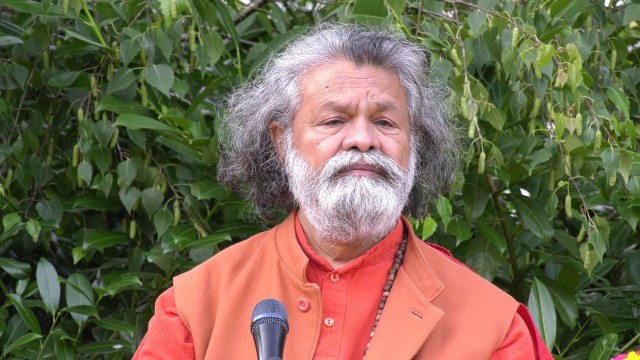
A satsang discourse on the eternal nature of sacred sound and spiritual lineage.
"Even if someone died a thousand years ago, or five thousand years, or more than that, he or she who wrote this or sang that song, that person is still alive here."
"All they have eaten the cream... But they did not eat the cow. Milk the cow and take the butter."
The speaker explores the ancient origins of the Vedas and yoga, challenging the notion they are only 5,000 years old. Using the story of Dhruva becoming the Pole Star, he illustrates eternal divine justice and the lasting resonance of a true name or sound. He emphasizes the importance of honoring the original authors of bhajans and scriptures, recounting a story where his Guruji advised a disciple to find fresh inspiration from the eternal source, like milking a cow for new butter. The talk concludes with the singing of bhajans.
Filming location: Strilky, Czech Republic
Mantra for harmony
20:55 - 21:43 (48 min)
A spiritual discourse exploring the multifaceted nature and power of mantra.
"Man is the mind, and tra is also called the desire. And that can be negative or positive. And this mantra can make good and bad."
"Every bhajan is full of wisdom. That is a mantra... it is very, very important that we have positive respect, love, and harmony. That is the best mantra."
Swami Ji leads a satsang, explaining that mantra originates from the mind and can be any powerful speech, from a wife's worrying words to sacred chants. He discusses fear, cultural differences between India and Europe, and shares anecdotes, including one from the 1970s about cultural exchange. The talk weaves through themes of spirituality, the role of the Guru, and concludes with the recitation of sacred mantras.
Filming location: Salzburg, Austria
How to educate the children?
21:50 - 22:53 (63 min)
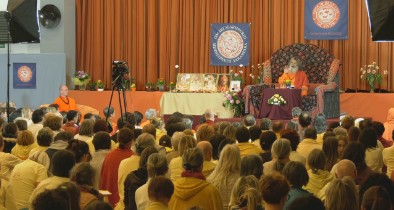
A spiritual discourse on education, habits, health, and yoga.
"Habit is the second nature of man."
"The guru converts his disciple into the guru. That's it. That's the difference."
Swami Maheshwarananda reflects on a lecture about educating children, using personal anecdotes to discuss the role of discipline, society, and fear in shaping youth. He expands into broader themes of health, criticizing modern habits and diseases while advocating for yoga and natural living as paths to long, happy life. The talk weaves together teachings on karma, the guru-disciple relationship, and practical wisdom.
Filming location: Vép, Hungary
A Guru gives everything that we need
23:00 - 0:01 (61 min)
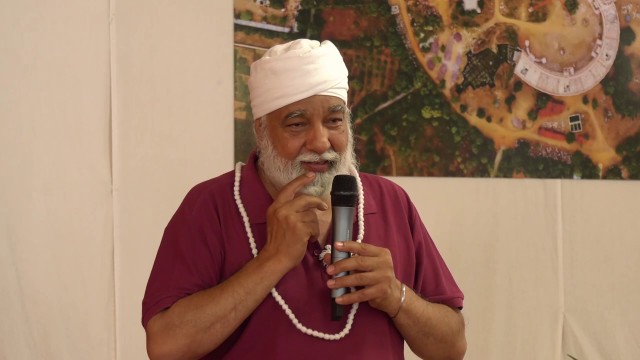
Evening satsang from Strilky Ashram, Czech Republic. The story of Krishna and Vidura's wife. Explanation and sing of bhajan Prabhu Prema Bina Nahi Ave. Strilky Ashram is a heaven on earth. We should know what Guru really means. Our biggest problems are our ego and jealousy. The real Guru mantra can liberate our minds. Our yoga name helps us to go towards our aims. We have to do seva (selfless service) in order to get the blessing. Miracles can happen to each of us. Karma is happening to every country. Yoga has become an industry in the world. There are some institutes which want to control yoga and ayurveda also. It should create a universal benchmark for yoga and ayurveda. In Britain, many people can legally use yoga and ayurveda as medicine. Bhajan explanation and singing Prabhu Mere Avaguna Chita Na Caro.
American
Australian