
European
Suffering makes us strong
0:25 - 0:57 (32 min)
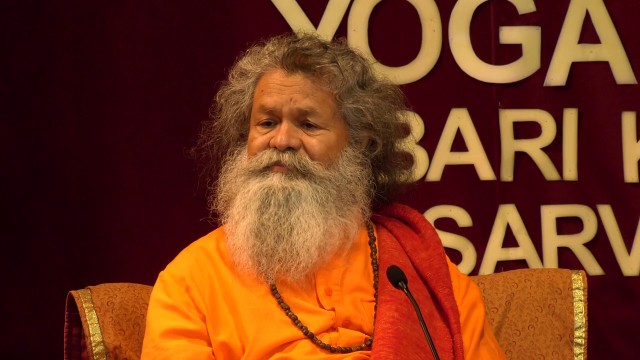
A spiritual discourse on suffering and divine incarnation, referencing Krishna and Jesus.
"In very hard times... those who are whole, suffering will be very strong. That means they are coming very solid, strong."
"Many sādhus, munis... all were suffering. Why are they suffering? They are taking from others our heart, our pain."
An unnamed speaker reflects on the universal nature of suffering in Kali Yuga, asserting that even divine incarnations like Krishna and Jesus endured great pain to absorb the suffering of humanity. The talk includes a personal anecdote about a lonely old man met in Austria, illustrating the impermanence of worldly success and the inevitability of suffering. The themes of divine descent, the purpose of hardship, and the transient nature of the material world are explored in a contemplative, narrative style.
Filming location: Strilky, Czech Republic
Suffering makes us strong
1:05 - 1:37 (32 min)
A spiritual discourse on suffering and divine incarnation, referencing Krishna and Jesus.
"In very hard times... those who are whole, suffering will be very strong. That means they are coming very solid, strong."
"Many sādhus, munis... all were suffering. Why are they suffering? They are taking from others our heart, our pain."
An unnamed speaker reflects on the universal nature of suffering in Kali Yuga, asserting that even divine incarnations like Krishna and Jesus endured great pain to absorb the suffering of humanity. The talk includes a personal anecdote about a lonely old man met in Austria, illustrating the impermanence of worldly success and the inevitability of suffering. The themes of divine descent, the purpose of hardship, and the transient nature of the material world are explored in a contemplative, narrative style.
Filming location: Strilky, Czech Republic
Live your days spiritually
1:45 - 2:20 (35 min)
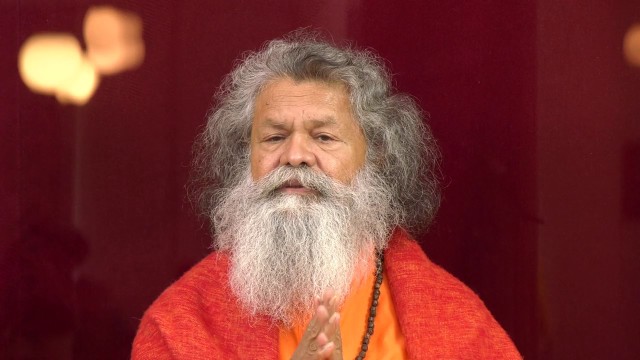
Morning satsang with Vishwaguruji from Strilky Ashram, Czech Republic. We should practise our spiritual exercises every day to save us from the negative effects of Kali Yuga. We should feel that we are human. We have two mothers - our birth mother and Mother Earth. We should respect our father and mother till the end of our life. We should respect the prana, air and water also. We should respect our gurus and every animal also. Fire and water cannot exist without each other. We should do puja every morning. Mantras and prayers protect us in a spiritual way. Swami Daya Mataji tells that Swamiji TV has great importance for us in our spiritual development, all over the world. She suggested that everybody who can, to give some donations to support the webcasting.
Vegetarianism is spreading
2:25 - 3:26 (61 min)
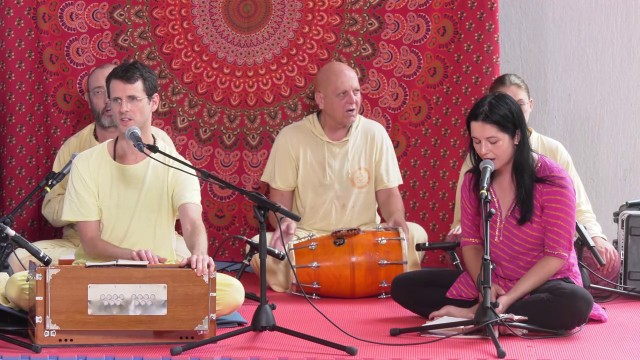
Morning program with Vishwaguruji from Vep, Hungary. Practice led by Vishwaguruji. Short lectures about the advantages of being vegetarian and consuming bioproducts. How diet can make us healthy.
Quality of yoga is missing
3:30 - 4:30 (60 min)
A morning satsang on the purpose of human life and authentic spiritual practice.
"Human life is rare. It is the last milestone for divine realization or becoming one with God."
"Yoga practice is good for our health, but then we should do the system scientifically. Never torture your body, never force your body."
The lecturer addresses a global audience, contrasting superficial modern yoga with the deep, enduring practice of true tapasyā (austerity). He discusses the rarity of human birth, the cycle of karma, and the need to cultivate qualities that lead to light, using examples from scripture, anecdotes of ancient sādhus, and everyday situations to illustrate the principles of endurance, forgiveness, and connecting to cosmic energy.
Filming location: USA
Where is our happiness?
4:35 - 5:22 (47 min)
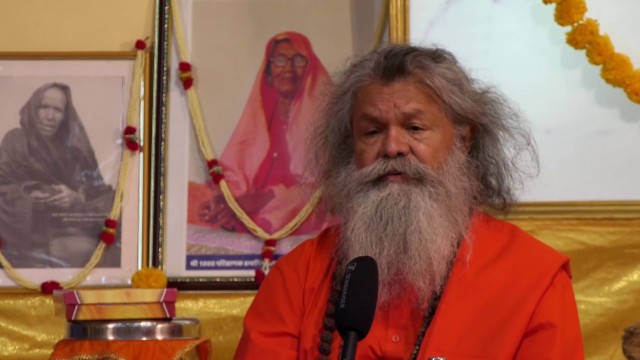
Evening satsang with Vishwaguruji from Jadan Ashram, Rajasthan, India. God can be happy and unhappy also. We can make him happy and unhappy like our parents. Animals also can be happy and we must not kill them to make them unhappy. Every morning we should be thankful to God that we are human. Don't marry before you completely finished your study. We also should be thankful for God before eating. Bhajan singing.
The Journey of the Soul: From the Ocean to the Drop
5:30 - 6:24 (54 min)
A spiritual discourse using the water cycle as a metaphor for the soul's journey.
"This jīvā, the soul, is on the journey of the eternal."
"When this drop falls into the ocean, the Jīva becomes the Ātmā. This drop becomes the ocean."
Swami Avatarpuri gives a satsang, explaining the soul's separation from and longing to return to the divine source through an extended analogy of evaporation and rainfall. He emphasizes the purifying role of satsang and the Guru, shares anecdotes about introducing mantra in Eastern Europe and criticizes modern chemical pollution and vanity as spiritual impediments, concluding with a call for natural living and collective chanting.
Filming location: London, UK
The Oneness of Ātmā
6:30 - 7:22 (52 min)
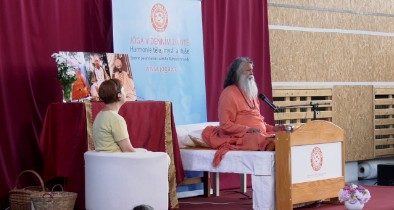
A spiritual discourse on the oneness of the soul and the nature of life.
"Our Gurudev, Holy Gurujī Madhavānandajī, said: 'One in all and all in one.'"
"Water is water; it does not matter which quality. Now, there are some machines, and they are purifying the water."
The lecturer leads a satsang exploring the non-difference between Paramātmā, ātmā, and jīvātmā, using the metaphor of seeds from a single cherry tree. He discusses the proliferation of life in water, on land, and in the air (Jalchar, Thalchar, Nabchar), the inherent violence in nature, and the unique human capacity for mercy and the dharma of non-violence (Ahiṃsā). The talk covers the purification of consciousness, the pitfalls of negative qualities in the chakras, and concludes with an intention to sing a bhajan and meditate.
Filming location: Prague, Czech Republic
Bhajan singing in the presence of Vishwaguruji
7:30 - 9:05 (95 min)
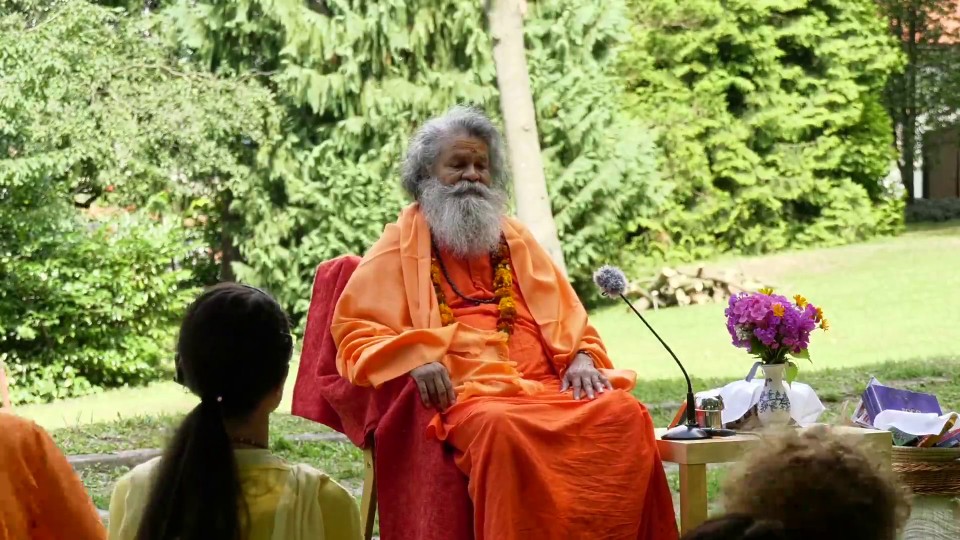
Morning satsang with Vishwaguruji from Strilky Ashram, Czech Republic.
Bhajans from Strilky
9:10 - 9:34 (24 min)
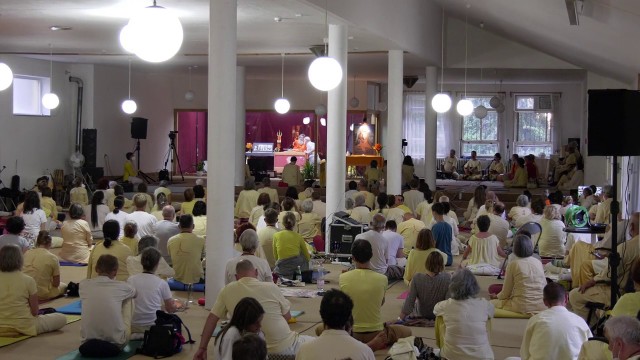
Evening satsang with Vishwaguruji from Strilky Ashram, Czech Republic.
Bhajan singing from Vep
9:40 - 10:03 (23 min)
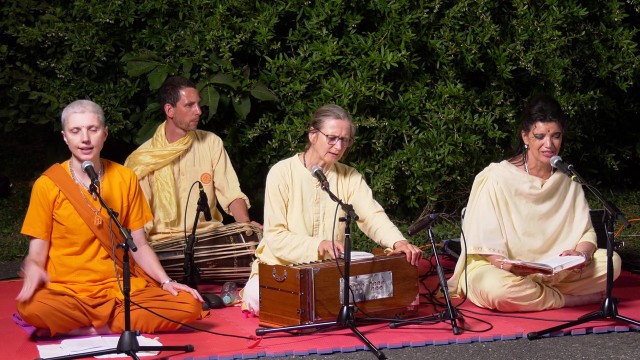
Morning satsang with Vishwaguruji from Vep, Hungary. Bhajan singing.
Bhajans from Rijeka
10:10 - 10:38 (28 min)
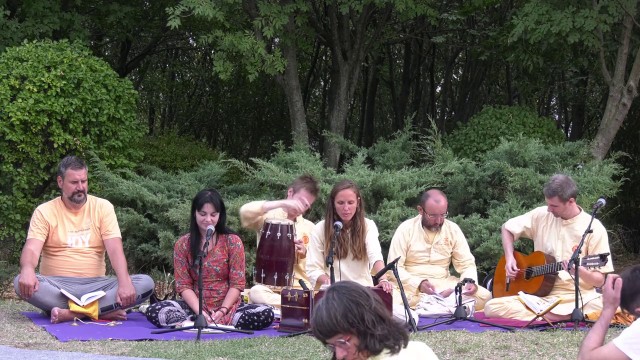
Evening satsang with Vishwaguruji from Rijeka Ashram, Croatia.
Children's program on Gurupurnima
10:45 - 11:14 (29 min)
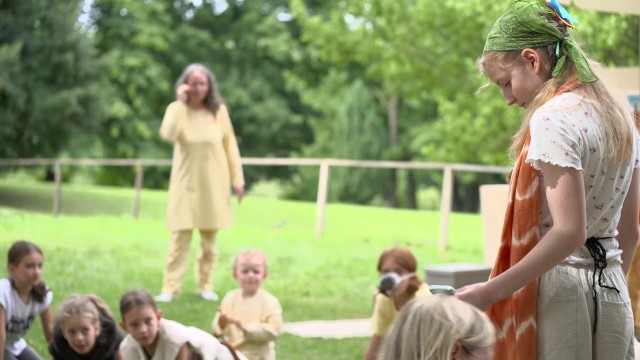
Morning satsang with Vishwaguruji from Strilky Ashram, Czech Republic. Salutation to the lotus feet of Gurudev. Children's program on Gurupurnima.
Develop the quality
11:20 - 12:01 (41 min)
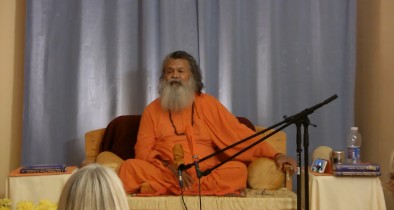
A spiritual discourse on the five koshas and the necessity of inner purity.
"Billions of people strive intensely for that Brahma Jñāna, for that self-realization. My dear, it is not so simple."
"You must purify your physical, mental, emotional, and intellectual energies; you have to clean them all."
The lecturer continues teachings on the five bodies (koshas), emphasizing the arduous pursuit of pure quality in one's energy and practice. He explains how impurity leads to confusion after death, using parables like the fly leaving sandalwood for filth to illustrate how aspirants reject sublime teachings. The talk covers the roles of mind, intellect, and senses, stressing renunciation of negative tendencies to attain higher consciousness.
Filming location: Alexandria, USA
What have you done for others?
12:05 - 12:50 (45 min)
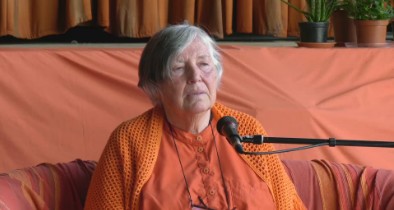
Lecture by Sadhvi Shanti from Summer Yoga Camp in Vep, Hungary. We are climbing to the top of the mountain step by step. To follow the path is very important. At the end of your life, God will ask: "what have you done for others?" There are many things in nature that we can use for our spiritual development. The tree is always ready to accept.
Yoga for a Healthier and Happier Life
12:55 - 13:42 (47 min)
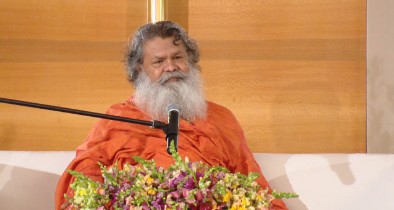
A public lecture on yoga as a holistic science for health and peace.
"If you want to know what is Parabrahma, what is God, it is that resonance, that energy."
"Yoga practice is balancing, harmonizing, and keeping health. The practice of āsanas is not a competition."
Swami Maheshwarananda addresses an audience including the Indian Ambassador to the EU and the President of Zagreb. He presents yoga as a divine science originating from Śiva, sharing traditional stories about blessings and longevity, and critiques modern commercialized forms. He emphasizes yoga's role in creating personal health and world peace, concluding with a demonstration of the Kāṭupraṇām exercise.
Filming location: Zagreb, Croatia
Removing pollution from the body and mind
13:50 - 14:31 (41 min)
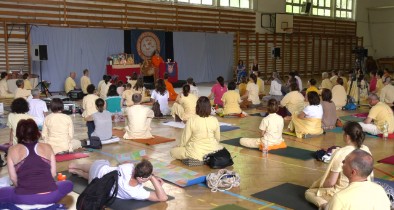
A spiritual discourse on the ancient origins and modern practice of yoga and Ayurveda.
"The science of yoga is ancient. Ayurveda is also that old."
"Health is not everything, but without health, everything is nothing."
A speaker addresses an audience, passionately recounting the divine origins of yoga from Shiva and Ayurveda from Dhanvantari, using the story of Hanuman fetching the Sanjivani herb to illustrate Ayurveda's ancient power. He critiques official claims that these sciences are only 5,000 years old, urging listeners to petition the government for correction. The talk expands to cover the purpose of yoga in overcoming stress and mental impurities (mala, vikshepa, avarana), explains how specific asanas like Bhujangasana affect the mind and body, and reflects critically on human nature, pollution, and dietary habits.
Filming location: Debrecen, Hungary
Suffering makes us strong
14:35 - 15:07 (32 min)
A spiritual discourse on suffering and divine incarnation, referencing Krishna and Jesus.
"In very hard times... those who are whole, suffering will be very strong. That means they are coming very solid, strong."
"Many sādhus, munis... all were suffering. Why are they suffering? They are taking from others our heart, our pain."
An unnamed speaker reflects on the universal nature of suffering in Kali Yuga, asserting that even divine incarnations like Krishna and Jesus endured great pain to absorb the suffering of humanity. The talk includes a personal anecdote about a lonely old man met in Austria, illustrating the impermanence of worldly success and the inevitability of suffering. The themes of divine descent, the purpose of hardship, and the transient nature of the material world are explored in a contemplative, narrative style.
Filming location: Strilky, Czech Republic
Do not kill animals
15:15 - 15:52 (37 min)
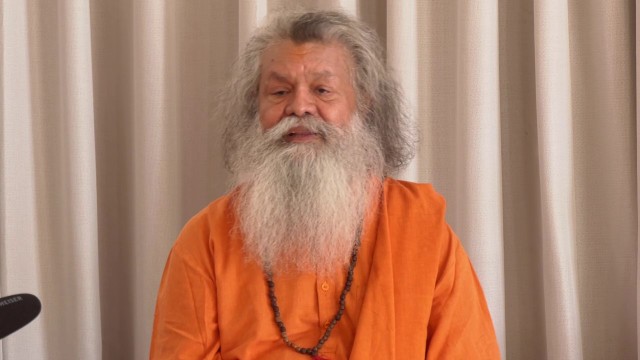
A spiritual discourse on purity, diet, and human relationships.
"If we advise others, saying, 'Do not eat this; it is not good,' they may threaten us."
"Early morning, she makes pūjā. Pūjā for whom? For her husband. And always she's in meditation."
A swami shares a meandering talk, beginning with his personal experience defending vegetarianism in India and observing how others eventually adopted the practice. He uses the metaphor of water's cycle to describe spiritual purity and ascent, then discusses themes of marital devotion, conception, and the roles of men and women, often shifting topics without clear transitions. The session concludes with chanting.
Filming location: Rijeka, Croatia
The Space of Practice
16:00 - 17:01 (61 min)
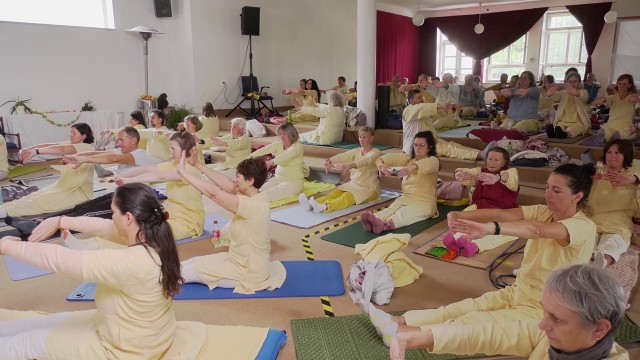
A guided yoga and meditation session focusing on awareness and spinal health.
"For life and death, two square meters is enough."
"That is the beauty of yoga, Kāla and Deśa. And for that, we need a Guru to lead us through time and space and make us update and upgrade."
An instructor leads a group through a series of āsanas including Pavanamuktāsana, Bhujaṅgāsana preparation, Bhuñamānāsana, and Meru Ākhara Āsana. The practice emphasizes the principles of stretching and rotating the spine, correcting kyphosis, and cultivating body awareness. The teacher integrates philosophical teachings on time, space, and the need for a guide, alongside practical benefits for the back, shoulders, and digestion.
Filming location: Strilky, Czech Republic
We are in a blessed place
17:05 - 18:19 (74 min)
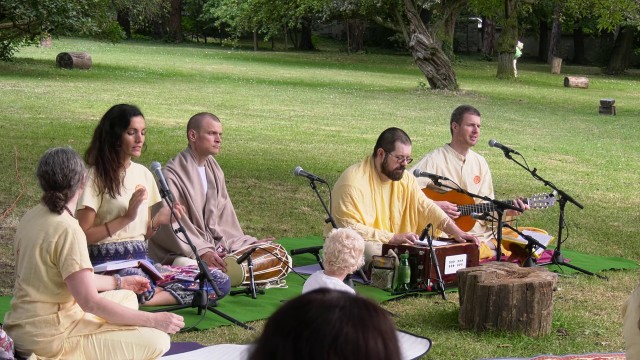
Morning satsang from Strilky Ashram, Czech Republic. Singing bhajans. Vishwaguruji tells a story about a huge satsang organized by Holy Guruji. Many people came there, including one Sadhu. Vishwaguruji showed the place in the ashram, where Holy Guruji was sitting. When we come here we are so happy, we feel the protection of our God. We humans like God, but we kill animals. Practicing anulom-vilom pranayama, led by Vishwaguruji.
How to educate the children?
18:25 - 19:28 (63 min)
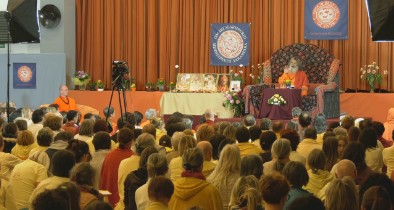
A spiritual discourse on education, habits, health, and yoga.
"Habit is the second nature of man."
"The guru converts his disciple into the guru. That's it. That's the difference."
Swami Maheshwarananda reflects on a lecture about educating children, using personal anecdotes to discuss the role of discipline, society, and fear in shaping youth. He expands into broader themes of health, criticizing modern habits and diseases while advocating for yoga and natural living as paths to long, happy life. The talk weaves together teachings on karma, the guru-disciple relationship, and practical wisdom.
Filming location: Vép, Hungary
Suffering makes us strong
19:35 - 20:07 (32 min)
A spiritual discourse on suffering and divine incarnation, referencing Krishna and Jesus.
"In very hard times... those who are whole, suffering will be very strong. That means they are coming very solid, strong."
"Many sādhus, munis... all were suffering. Why are they suffering? They are taking from others our heart, our pain."
An unnamed speaker reflects on the universal nature of suffering in Kali Yuga, asserting that even divine incarnations like Krishna and Jesus endured great pain to absorb the suffering of humanity. The talk includes a personal anecdote about a lonely old man met in Austria, illustrating the impermanence of worldly success and the inevitability of suffering. The themes of divine descent, the purpose of hardship, and the transient nature of the material world are explored in a contemplative, narrative style.
Filming location: Strilky, Czech Republic
How came Vishwaguruji to Hungary first
20:15 - 20:37 (22 min)
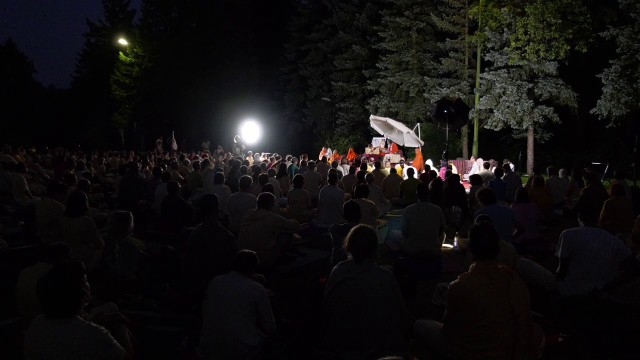
A devotee shares personal memories of first meeting and hosting her spiritual master, Svāmījī, in Hungary.
"We were really lucky that in 1976 we had the chance to go to Czechoslovakia, and we got to know Libuše Pilárová. I saw Svāmījī for the first time on the wall of her home."
"Svāmījī went to see this flat and looked around at the mattresses and said, 'This is what I need, this is what I need, this is what I need.' And my ego jumped to the ceiling."
The speaker recounts how, after seeing a picture of Svāmījī in Czechoslovakia, she and her companion Kṛṣṇānanda worked to invite him to Hungary. She describes his arrival by train, the humble accommodations in a neighbor's small flat filled with mattresses, and the month-long stay that began their discipleship. She recalls the emotional farewell at the train station and early yoga camps, expressing deep gratitude for the grace of meeting her master.
Filming location: Vép, Hungary
How to educate the children?
20:45 - 21:48 (63 min)
A spiritual discourse on education, habits, health, and yoga.
"Habit is the second nature of man."
"The guru converts his disciple into the guru. That's it. That's the difference."
Swami Maheshwarananda reflects on a lecture about educating children, using personal anecdotes to discuss the role of discipline, society, and fear in shaping youth. He expands into broader themes of health, criticizing modern habits and diseases while advocating for yoga and natural living as paths to long, happy life. The talk weaves together teachings on karma, the guru-disciple relationship, and practical wisdom.
Filming location: Vép, Hungary
Quality of yoga is missing
21:55 - 22:55 (60 min)
A morning satsang on the purpose of human life and authentic spiritual practice.
"Human life is rare. It is the last milestone for divine realization or becoming one with God."
"Yoga practice is good for our health, but then we should do the system scientifically. Never torture your body, never force your body."
The lecturer addresses a global audience, contrasting superficial modern yoga with the deep, enduring practice of true tapasyā (austerity). He discusses the rarity of human birth, the cycle of karma, and the need to cultivate qualities that lead to light, using examples from scripture, anecdotes of ancient sādhus, and everyday situations to illustrate the principles of endurance, forgiveness, and connecting to cosmic energy.
Filming location: USA
The Eternal Resonance of Sacred Sound
23:00 - 23:59 (59 min)
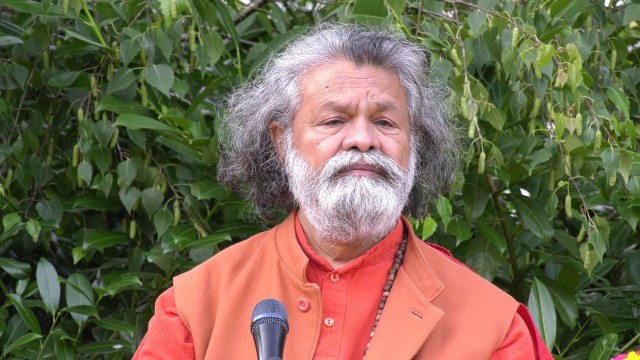
A satsang discourse on the eternal nature of sacred sound and spiritual lineage.
"Even if someone died a thousand years ago, or five thousand years, or more than that, he or she who wrote this or sang that song, that person is still alive here."
"All they have eaten the cream... But they did not eat the cow. Milk the cow and take the butter."
The speaker explores the ancient origins of the Vedas and yoga, challenging the notion they are only 5,000 years old. Using the story of Dhruva becoming the Pole Star, he illustrates eternal divine justice and the lasting resonance of a true name or sound. He emphasizes the importance of honoring the original authors of bhajans and scriptures, recounting a story where his Guruji advised a disciple to find fresh inspiration from the eternal source, like milking a cow for new butter. The talk concludes with the singing of bhajans.
Filming location: Strilky, Czech Republic
American
Australian