Video details
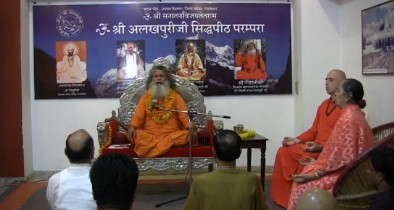
Guidelines for Meditation and Self-Inquiry
A guide to seated meditation and self-inquiry.
Sit upright with space between bodies. Form Chin Mudrā in the left hand, symbolizing the union of the individual soul and supreme consciousness. Hold your mālā in the right hand to repeat your guru's mantra; it will guide you. Relax the body completely from toes to head, ensuring the spine is relaxed. Withdraw awareness from the external world to the inner self. Feel the body become motionless to generate bliss. Coordinate awareness with the natural breath, harmonizing body and mind. Focus the breath between the navel and throat. Then, concentrate on the space behind the forehead, visualizing a sunrise within as a symbol of dawning wisdom. Maintain stillness for self-inquiry. Conclude by gently moving and chanting.
"The yogī’s aim is the union of ātmā and Paramātmā."
"Feel the motionlessness of the body, and when you have completely relaxed... your aura becomes balanced."
Filming location: Jaipur, Rajasthan, India
This text is transcribed and grammar corrected by AI. If in doubt what was actually said in the recording, use the transcript to double click the desired cue. This will position the recording in most cases just before the sentence is uttered.
The text contains hyperlinks in bold to three authoritative books on yoga, written by humans, to clarify the context of the lecture:
- Yoga in Daily Life - The System
Paramhans Swami Maheshwarananda. Ibera Verlag, Vienna, 2000. ISBN 978-3-85052-000-3 - The Hidden Power in Humans - Chakras and Kundalini
Paramhans Swami Maheshwarananda. Ibera Verlag, Vienna, 2004. ISBN 978-3-85052-197-0 - Lila Amrit - The Divine Life of Sri Mahaprabhuji
Paramhans Swami Madhavananda. Int. Sri Deep Madhavananda Ashram Fellowship, Vienna, 1998. ISBN 3-85052-104-4
