Video details
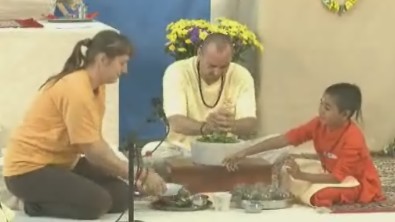
The Art of Chutney and the Culture of the Home
A practical introduction to making chutney and understanding spices. Preparing chutney involves grinding whole spices on a stone to release their natural oils and flavors. Select spices according to the vegetable and desired taste, such as ajwain, coriander seeds, mustard, black pepper, chili, turmeric, cumin, and fresh herbs like basil and coriander. Turmeric is especially beneficial for bone health. Adjust heat levels for children. The process requires physical effort and patience. Spices have Ayurvedic value; for example, hot chili induces perspiration for a cooling effect in hot climates, relating to the rajas guna. Use spices in proper measure, as with salt or sugar. "When we are grinding the spices in this way, it’s very natural without any machine, just pure stone and pure seeds, and all natural oils will come out." "Spices are something which is a permanent Āyurvedic remedy for you."
Filming location: Kranj, Slovenia
This text is transcribed and grammar corrected by AI. If in doubt what was actually said in the recording, use the transcript to double click the desired cue. This will position the recording in most cases just before the sentence is uttered.
The text contains hyperlinks in bold to three authoritative books on yoga, written by humans, to clarify the context of the lecture:
- Yoga in Daily Life - The System
Paramhans Swami Maheshwarananda. Ibera Verlag, Vienna, 2000. ISBN 978-3-85052-000-3 - The Hidden Power in Humans - Chakras and Kundalini
Paramhans Swami Maheshwarananda. Ibera Verlag, Vienna, 2004. ISBN 978-3-85052-197-0 - Lila Amrit - The Divine Life of Sri Mahaprabhuji
Paramhans Swami Madhavananda. Int. Sri Deep Madhavananda Ashram Fellowship, Vienna, 1998. ISBN 3-85052-104-4
