
European
Respect is important
1:10 - 2:03 (53 min)
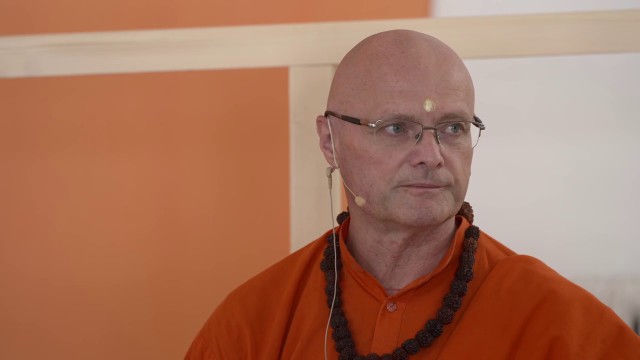
A spiritual discourse and mantra teaching session on the power of language, respect, and energy.
"Spirituality does not mean wholly very slow... But with this different energy inside, just try to be aware of this thing: in which way are we addressing other people?"
"You get from an object only as much as you respect it... If your mālā has some value for you, you will keep it in a safe place... Because of that, you will, from your mālā, get energy when you need it."
A speaker leads a satsang, emphasizing the profound impact of words, gestures, and intention. He discusses how language shapes reality, using examples from addressing others to serving food and respecting spiritual objects like a mala. The talk covers the importance of positive speech, respectful action, and the energy behind our deeds. The session concludes with Swami Avatar Puri teaching and explaining the "Nāma kamala nābhāya" mantra, including its translation and significance.
Filming location: Strilky, Czech Republic
Every creature have its karma
2:10 - 3:03 (53 min)
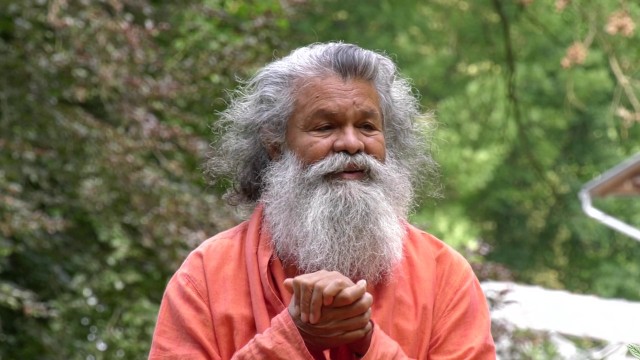
A spiritual discourse on karma, interconnectedness, and human nature.
"Karma is not only for humans; it is for all creatures, any animal."
"So always, our people, our friends, we do not know who is thinking today, now."
The lecturer addresses a gathering, exploring the universal law of karma that binds all life—humans, animals, and even trees. He shares parables, including a story of an ancient tree foretold to die by a yogi, to illustrate how actions interconnect. The talk weaves through themes of compassion, environmental destruction, and personal responsibility, concluding with a call to do good for all.
Filming location: Strilky, Czech Republic
Yoga, Āyurveda, and the Journey Beyond: From Vikāra to Turīya
3:10 - 4:05 (55 min)
A spiritual discourse on Yoga, Āyurveda, and consciousness, transitioning into teachings on Yoga Nidrā.
"Āyurveda has now again brought this science forward and is very, very helpful."
"Meditation is one of the best ways to realize that this is not a reality now, what I am worrying."
Swami Anand Arun leads a morning satsang, continuing a two-day series. He discusses Āyurveda's approach to physical and mental disease (vikāra), focusing on the destructive nature of worries (cintā) and overthinking (cintan). He explains how unfulfilled desires reside in the subconscious, introducing Yoga Nidrā as a technique to purify these layers and master the states of waking, dreaming, and deep sleep to access higher consciousness.
Filming location: Auckland, New Zealand
Live webcast from Strilky
3:30 - 5:00 (90 min)
Evening satsang from Strilky Ashram, Czech Republic.
Be positive
4:10 - 5:20 (70 min)
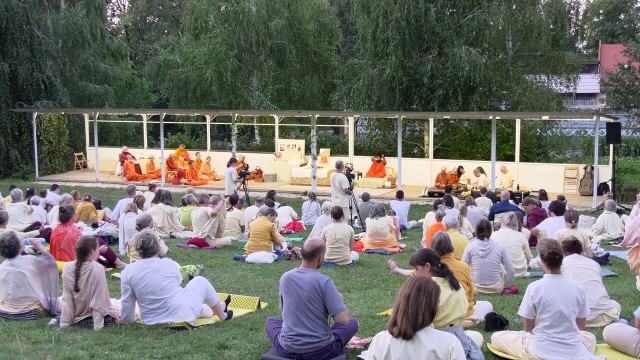
Evening satsang from Summer Yoga Retreat from Strilky, Czech Republic. Find your own mistakes first instead of finding bad points in others. Swami Avatarpuriji tells stories about the positive and negative side of things. Mantras and Yoga Nidra.
Bhajan evening in the Jadan Ashram
5:30 - 6:09 (39 min)
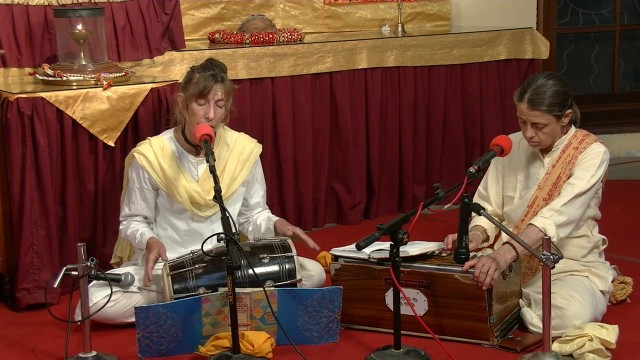
Evening satsang from Jadan Ashram, Rajasthan, India. Bhajan singing.
Bhajan singing in the Jadan Ashram
6:15 - 7:33 (78 min)
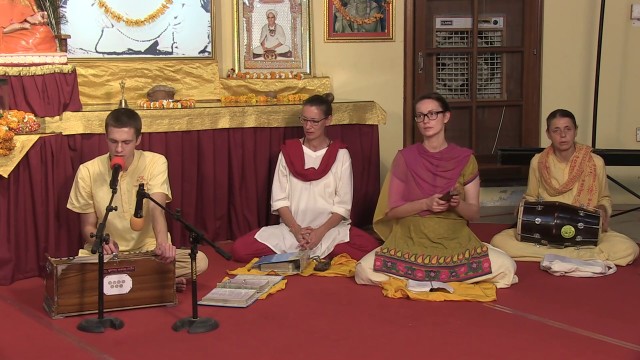
Evening satsang with Vishwaguruji from Jadan Ashram, Rajasthan, India. Bhajan singing evening.
Bhajan evening in Jadan Ashram
7:40 - 8:02 (22 min)
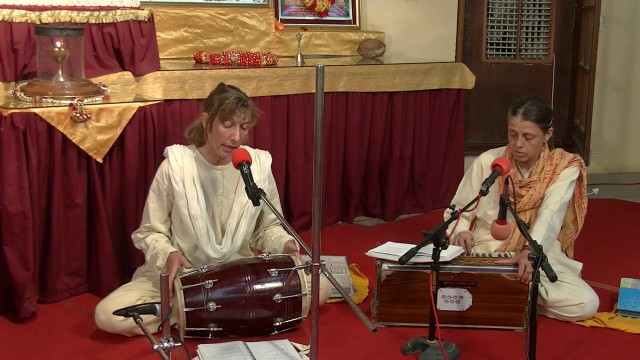
Evening satsang with Vishwaguruji from Jadan Ashram, Rajasthan, India. Bhajan singing.
Bhajan evening from Jadan Ashram
8:10 - 8:47 (37 min)
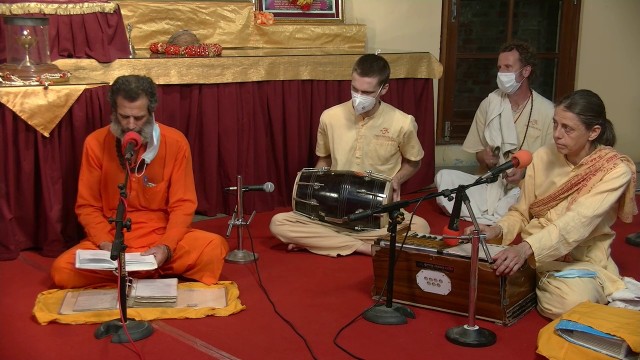
Evening satsang with Vishwaguruji from Jadan Ashram, Rajasthan, India. Bhajan singing.
We have to become one
8:55 - 10:29 (94 min)
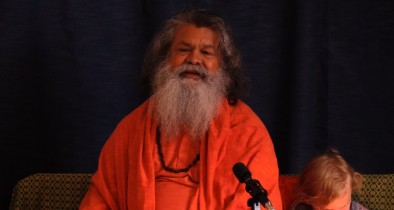
Evening satsang with Vishwaguruji from Auckland, New Zealand. There are many things in the space. We should stop our attachment. Great yogis do not attach to anything and to anybody. Break from the attachment and join to God. Nothing is mine. Explanation of bhadzsan Chidananda Rupam Sivoham Sivoham. Sometimes we can not understand wisdom. Shiva means only space. He is everywhere in everything and nowhere. Explanation of bhadzsan Ragupati Raghava Raj Ram. One in all and all in one. Explanation of bhadzsan Sabda Sanehi Mhari Jatra. A story or a poem can help you to understand knowledge. The knowledge what we have we should understand, realize and give further. Chakras are the major stations in our body. The Earth connected to the Sun. The system of elements and chakras in our body.
Death is a transition
10:35 - 11:36 (61 min)
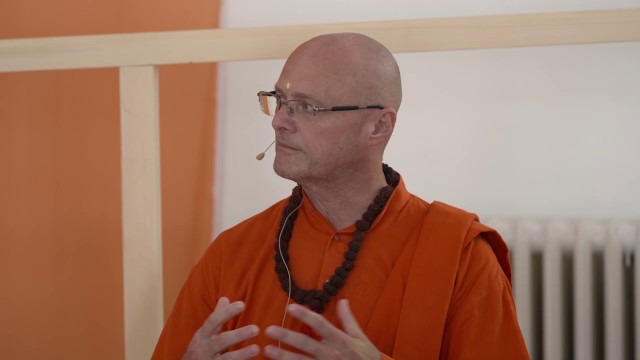
Morning satsang with Vishwaguruji from Strilky Ashram, Czech Republic. Lecture by Swami Avatarpuriji. Once we realize that death is basically a transition from this body to a higher place it is not scary. Who comes will go, that the universal law. A story about king Vidhur, who had a fear about what will happen when he dies. Learnig and translating mantras, a prayer to Lord Vishnu. Salutations to the infinite one, who has thousands forms... Lecture by Swami Vivekpuriji. What is a Guru, how we are feeling about the Guru?
Every creature have its karma
11:40 - 12:33 (53 min)
A spiritual discourse on karma, interconnectedness, and human nature.
"Karma is not only for humans; it is for all creatures, any animal."
"So always, our people, our friends, we do not know who is thinking today, now."
The lecturer addresses a gathering, exploring the universal law of karma that binds all life—humans, animals, and even trees. He shares parables, including a story of an ancient tree foretold to die by a yogi, to illustrate how actions interconnect. The talk weaves through themes of compassion, environmental destruction, and personal responsibility, concluding with a call to do good for all.
Filming location: Strilky, Czech Republic
Be positive
12:40 - 13:50 (70 min)
Evening satsang from Summer Yoga Retreat from Strilky, Czech Republic. Find your own mistakes first instead of finding bad points in others. Swami Avatarpuriji tells stories about the positive and negative side of things. Mantras and Yoga Nidra.
Practising Asanas from Vep
14:00 - 14:57 (57 min)
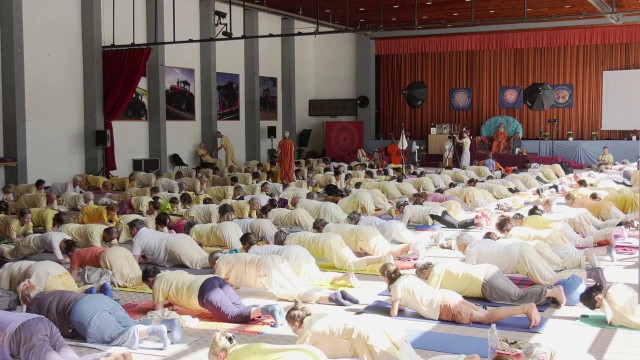
A guided yoga session with detailed instructions and corrections for group synchronization.
"Make your neck long; do not shorten it. Stabilize your lower back with your belly muscles."
"Śaśāṅkāsana is very, very good for our digestion. It works immediately, also for children."
An instructor leads a group through a series of yoga poses, including leg lifts, Śaśāṅkāsana (Rabbit Pose), Uttānapṛṣṭhāsana (a trunk-lifting pose), and a variation of Marjari (Cat Pose) on the forearms. The session focuses on precise alignment, breath coordination, and repeatedly attempts to get all participants to move in unison. It concludes with relaxation and permission to drink water.
Filming location: Vép, Hungary
The spiritual family
15:05 - 15:56 (51 min)
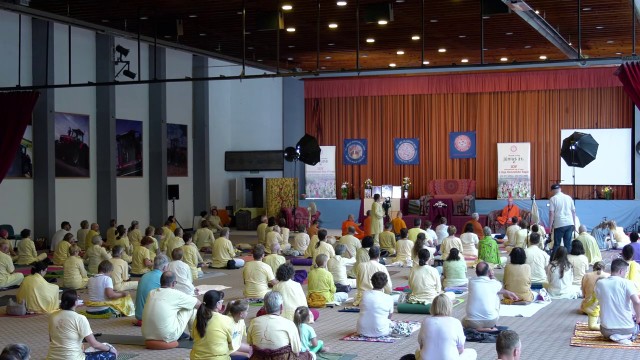
An opening talk at a spiritual seminar addressing the absence of the guru and the purpose of gathering.
"People are always complaining, 'Oh, Kali Yuga is not good, Kali Yuga is a terrible time.' But if you know how to utilize it, Kali Yuga is also excellent."
"We need to be like a Paramahaṁsa... We should be like that. In this world, we have so many things... we should be like the Haṁsa: take the pearls, take the milk, and leave the water."
A senior disciple addresses the assembled spiritual family at the Vép seminar, acknowledging the physical absence of Viśvagurūjī. He reframes the gathering as a vital opportunity to recharge, strengthen spiritual family bonds, and deepen personal practice. Key themes include extracting the essence from the Kali Yuga, the necessity of a supportive community for sādhanā, and using the seminar for introspection, mauna (silence), and focused practice of āsana and prāṇāyāma to calm the mind.
Filming location: Vép, Hungary
Śaṅkha Prakṣālana and Kunjal Kriyā: Purification of the Intestine and Stomach
16:00 - 16:40 (40 min)
A practical demonstration and instructional lecture on the Haṭha Yoga purification techniques of Śaṅkha Prakṣālana and Kunjal Kriyā.
"Śaṅkha Prakṣālana is a very good exercise, but it has to be done early in the morning, of course, on an empty stomach."
"After Śaṅkha Prakṣālana, after purification, you have to keep a diet for at least, strictly, seven days, one week, and up to one month."
An instructor leads a session at an ashram, detailing the procedures for intestinal and stomach cleansing. He explains the preparation, the specific exercises and drinking process for Śaṅkha Prakṣālana, and the subsequent technique for Kunjal Kriyā (Vaman Dhautī), assisted by two experienced practitioners. Key themes include the importance of timing, dietary restrictions post-practice, and the health benefits of these purification rituals.
Filming location: Strilky, Czech Republic
Atma is spotless
16:45 - 17:31 (46 min)
A spiritual discourse on divine presence, the nature of the soul, and the guru's grace, illustrated through parables and teachings.
"When the difficult time comes, then you should know that you are now with God."
"Śrī Guru Ātmā, that is the highest... our Ātmā is connected to Holy Gurujī."
A teacher shares parables, including one where God carries a devotee through hardship and another where a renunciate yogi refuses Lord Shiva's offer. He explains the spotless, all-pervading nature of the soul (Ātmā) and its connection to the Guru, weaving in teachings on devotion, renunciation, and the elements of the body.
Filming location: Australia
Live in a natural way
17:35 - 18:17 (42 min)
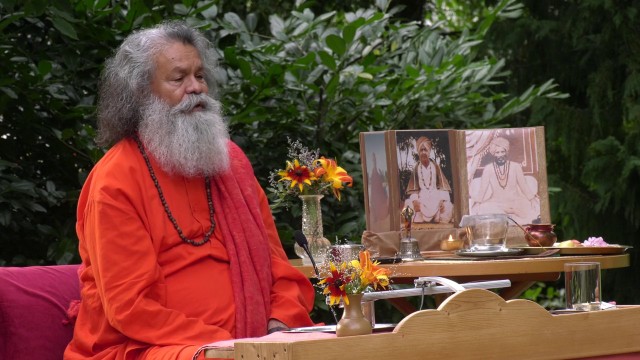
An evening address on the purity of an ashram environment and holistic well-being.
"This is a beautiful, beautiful place. It is full of prāṇa, very much prāṇa."
"We are recovering from all oxygen issues, chemicals, and what we call the Corona."
The lecturer speaks to a gathering at a large ashram, describing its pristine, chemical-free natural environment which promotes health through clean air, water, and earth. He contrasts this with the impurities and financial stresses of the modern world, advocating for a simple, spiritual life centered on meditation, community, and pure food. The talk meanders through topics including the ashram's capacity, the value of money, and the importance of natural seeds.
Filming location: Strilky, Czech Republic
Be joyful
18:25 - 18:52 (27 min)
A satsang discourse on the spiritual significance of a guru's birthday, drawing parallels to Christmas.
"I recall Swāmījī saying, 'I was observing one person who was practicing Kriyā under the tree.'"
"For us, the day of incarnation of Mahāprabhujī, the day of incarnation of Swāmījī, Gurujī, is Christmas. But even more than Christmas, because that is our guru."
A spiritual teacher addresses a gathering, explaining why the birthday of a guru is a sacred celebration akin to Christmas. He emphasizes the necessity of a living guru for correct spiritual practice and describes the Guru Tattva (the essence of the guru) as a pure, divine light within a physical form. He explains how devotees can connect to this energy through satsang, devotion, and bhajans, transforming their own energy and creating a joyful spiritual life. The talk includes practical advice on using prayer, song, and positive thinking to change one's internal state and the surrounding atmosphere.
Filming location: Vép, Hungary
Live webcast from Strilky
19:00 - 20:30 (90 min)
Morning satsang from Strilky Ashram, Czech Republic.
Identification with the name
19:00 - 20:08 (68 min)
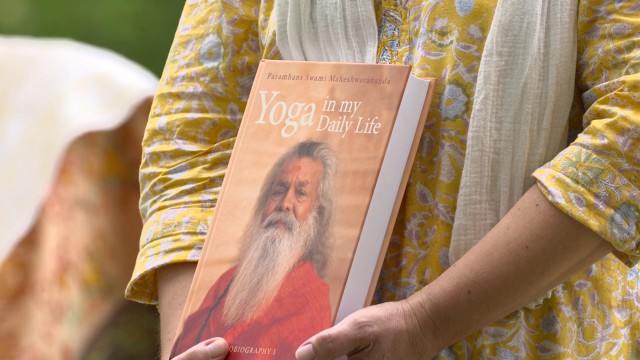
Morning satsang from Summer Yoga Retreat in Strilky, Czech Republic. Introduction of the Vishwaguruji's autobiography. Bhajan singing with swami Gajanandji. Lecture by Swami Gajanandji. A story of the two aspirants who got a seed from the Master to preserve it. Explanation of how Swamiji gives spiritual names.
Webcast from Strilky
20:15 - 20:32 (17 min)
The spiritual family
20:35 - 21:26 (51 min)
An opening talk at a spiritual seminar addressing the absence of the guru and the purpose of gathering.
"People are always complaining, 'Oh, Kali Yuga is not good, Kali Yuga is a terrible time.' But if you know how to utilize it, Kali Yuga is also excellent."
"We need to be like a Paramahaṁsa... We should be like that. In this world, we have so many things... we should be like the Haṁsa: take the pearls, take the milk, and leave the water."
A senior disciple addresses the assembled spiritual family at the Vép seminar, acknowledging the physical absence of Viśvagurūjī. He reframes the gathering as a vital opportunity to recharge, strengthen spiritual family bonds, and deepen personal practice. Key themes include extracting the essence from the Kali Yuga, the necessity of a supportive community for sādhanā, and using the seminar for introspection, mauna (silence), and focused practice of āsana and prāṇāyāma to calm the mind.
Filming location: Vép, Hungary
The health of the bones
21:30 - 22:22 (52 min)
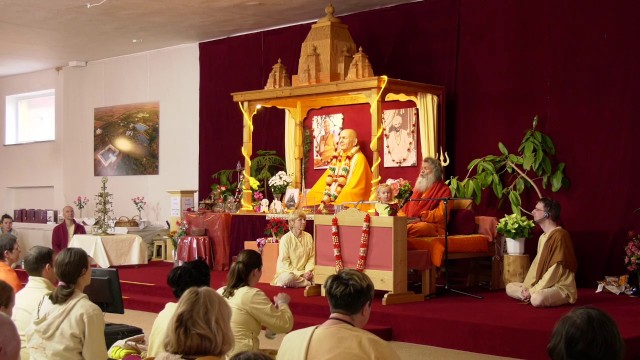
A spiritual talk on the purification of the body and mind, focusing on holy water and natural self-care.
"You can give this, what we call, the holy water. Give this to all your friends and everybody this Christmas."
"So bring the happiness... put a holy, a holy thought within us. 'Holy' means the clean and have a good energy."
Swami Ji offers a wide-ranging discourse, encouraging the use of holy water for purification and harmony during Christmas. He advises on caring for the physical body through natural means—like simple oils, yoga, and avoiding synthetic creams—linking it to the care of the subtle bodies (kośas). The talk includes personal anecdotes about habits and diet, emphasizing a return to simplicity and gratitude.
Filming location: Strilky, Czech Republic
Bhaktas are longing for Satsang
22:30 - 23:18 (48 min)
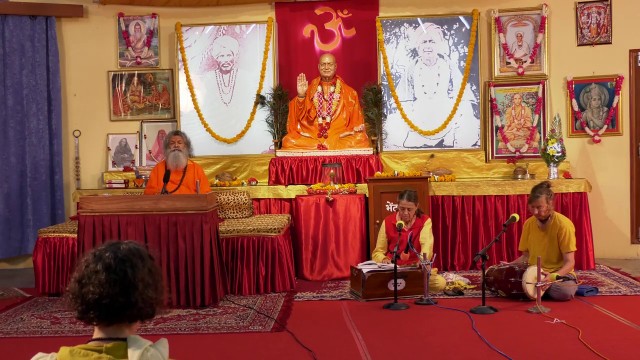
Evening satsang from Jadan Ashram, Rajasthan, India. Bhajan singing. Swami Umapuri says some words about her spiritual development in the Jadan Ashram. She spoke about her experiences with Yoga Nidra. She explains the bhajans of Swami Sivananda and Bhagwan Sri Deep Mahaprabhuji.
Don't kill Animals!
23:25 - 0:23 (58 min)
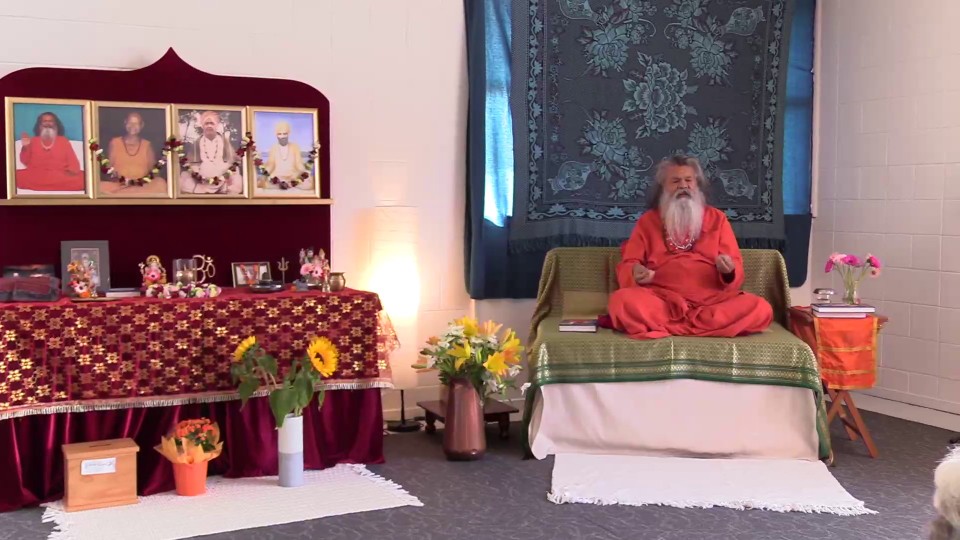
Morning satsang with Vishwaguruji from Auckland, New Zealand. The origin of many diseases is in our relationships. We can solve problems if we are practicing yoga. Advice from Vishwaguruji for good health. Search your Guru in the heart. We have to follow the words of the Saint's. Do not kill animals and eat them. Humans cause immense pain to innocent animals. That is why viruses are coming as a strike-back.
American
Australian