
European
Respect is important
0:10 - 1:03 (53 min)
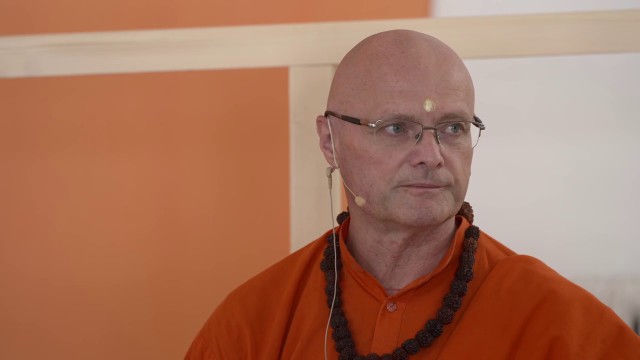
A spiritual discourse and mantra teaching session on the power of language, respect, and energy.
"Spirituality does not mean wholly very slow... But with this different energy inside, just try to be aware of this thing: in which way are we addressing other people?"
"You get from an object only as much as you respect it... If your mālā has some value for you, you will keep it in a safe place... Because of that, you will, from your mālā, get energy when you need it."
A speaker leads a satsang, emphasizing the profound impact of words, gestures, and intention. He discusses how language shapes reality, using examples from addressing others to serving food and respecting spiritual objects like a mala. The talk covers the importance of positive speech, respectful action, and the energy behind our deeds. The session concludes with Swami Avatar Puri teaching and explaining the "Nāma kamala nābhāya" mantra, including its translation and significance.
Filming location: Strilky, Czech Republic
Death is a transition
1:10 - 2:11 (61 min)
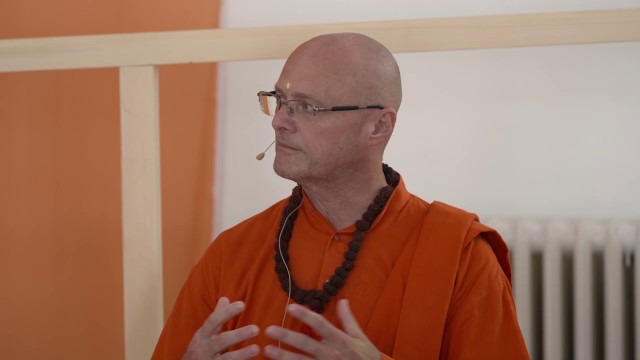
Morning satsang with Vishwaguruji from Strilky Ashram, Czech Republic. Lecture by Swami Avatarpuriji. Once we realize that death is basically a transition from this body to a higher place it is not scary. Who comes will go, that the universal law. A story about king Vidhur, who had a fear about what will happen when he dies. Learnig and translating mantras, a prayer to Lord Vishnu. Salutations to the infinite one, who has thousands forms... Lecture by Swami Vivekpuriji. What is a Guru, how we are feeling about the Guru?
The spiritual family
2:15 - 3:06 (51 min)
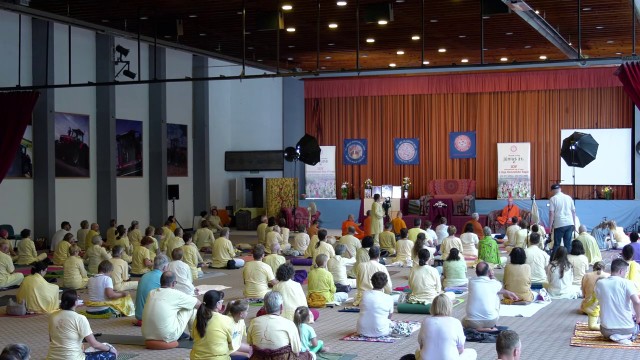
An opening talk at a spiritual seminar addressing the absence of the guru and the purpose of gathering.
"People are always complaining, 'Oh, Kali Yuga is not good, Kali Yuga is a terrible time.' But if you know how to utilize it, Kali Yuga is also excellent."
"We need to be like a Paramahaṁsa... We should be like that. In this world, we have so many things... we should be like the Haṁsa: take the pearls, take the milk, and leave the water."
A senior disciple addresses the assembled spiritual family at the Vép seminar, acknowledging the physical absence of Viśvagurūjī. He reframes the gathering as a vital opportunity to recharge, strengthen spiritual family bonds, and deepen personal practice. Key themes include extracting the essence from the Kali Yuga, the necessity of a supportive community for sādhanā, and using the seminar for introspection, mauna (silence), and focused practice of āsana and prāṇāyāma to calm the mind.
Filming location: Vép, Hungary
Mahaprabhuji is endless joy
3:15 - 3:34 (19 min)
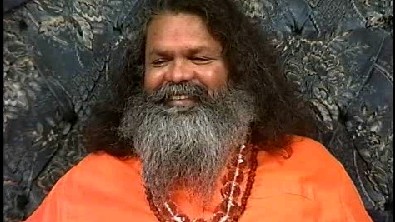
A satsang discourse on the duality of worldly joy and the singular refuge of divine grace.
"The joy of the joyous is very short, but the suffering of the joyous is longer."
"He can give you everything, but he can’t give you what he can give you. We need only confidence, that’s all."
The speaker reflects on the fleeting nature of worldly happiness, which is always paired with hidden sorrow, contrasting it with the endless joy of the divine. He proclaims Mahāprabhujī as the incarnate God and liberator, emphasizing that true peace is found only in unwavering devotion and surrender to this grace, using the metaphor of a seabird that must return to its ship in a vast ocean.
Filming location: Vép, Hungary
Live webcast from Strilky
3:30 - 5:00 (90 min)
Evening satsang from Strilky Ashram, Czech Republic.
Science of chakras
3:40 - 4:56 (76 min)
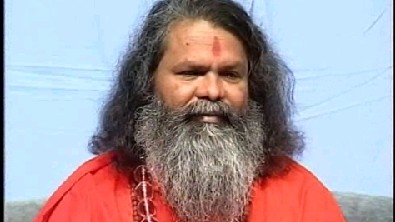
An introductory lecture on yoga philosophy, culminating in a practical demonstration for activating healing energy.
"Yoga means union—the union of the individual consciousness with the cosmic consciousness."
"In every creature, human or animal, where there is life, there is a light of God. That is God, the Creator of all creatures."
Swami Jyotirmayananda opens a discourse on "Kundalini and the Chakras" by defining yoga as a path to cosmic consciousness. He explains the journey of the soul, the yogic anatomy of energy channels (nāḍīs), and the system of chakras. The session includes a guided exercise to awaken the healing energy in one's palms, followed by practical tips for activating the Bindu chakra to improve eyesight and memory.
Filming location: Croatia
Awakening of Divine Love
5:00 - 5:20 (20 min)
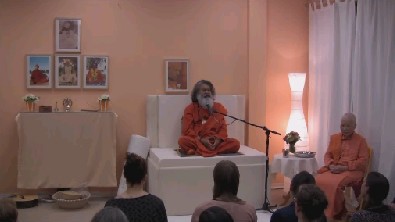
A discourse on the traditional Hindu stages of life and the nature of divine love.
"Renunciation is not easy; to detach from attachments is difficult. Yet if we cannot renounce, we will not be happy."
"Love is love. Even if you love a small plant or a flower, it is the same love as love for God."
A spiritual teacher explains the four āśramas, detailing the transition from householder duties to the renounced life of a sannyāsī. He defines this final stage as dedicating oneself to universal welfare and meditation, permissible only with attachment to the spiritual path. The talk then explores the awakening of divine love, describing it as an unconditional, non-violent compassion that dispels inner darkness like light in a cave. He emphasizes the necessity of discipline, selfless service, and passing on one's wisdom to others.
Filming location: Vancouver, British Columbia, Canada
Bhajan evening from Jadan Ashram
5:30 - 6:09 (39 min)
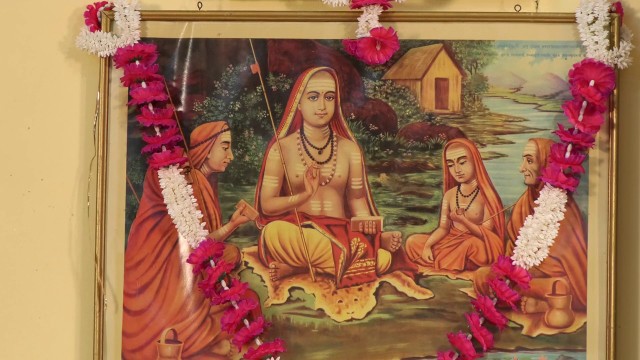
Evening satsang with Vishwaguruji from Jadan Ashram, Rajasthan, India. Singing bhajans.
Bhajan - Dhyan Karo
6:15 - 6:25 (10 min)
Recording from the morning satsang with Vishwaguruji in Villach, Austria.
Bhajan Singing from from Strilky
6:30 - 7:22 (52 min)
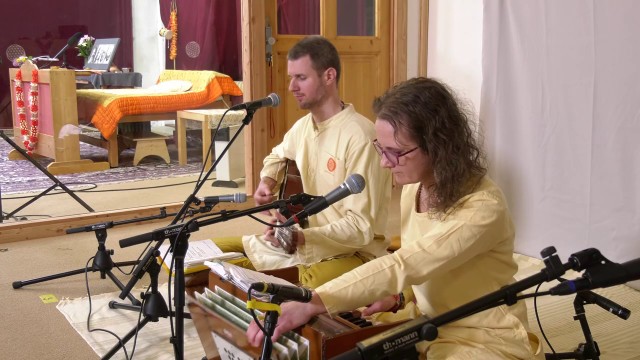
Evening satsang with Vishwaguruji from Strilky Ashram, Czech Republic.
Bhajan evening in Jadan Ashram
7:30 - 7:52 (22 min)
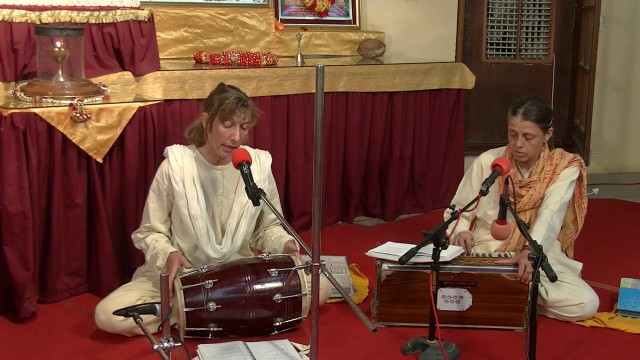
Evening satsang with Vishwaguruji from Jadan Ashram, Rajasthan, India. Bhajan singing.
Bhajan singing from Jadan Ashram
8:00 - 8:35 (35 min)
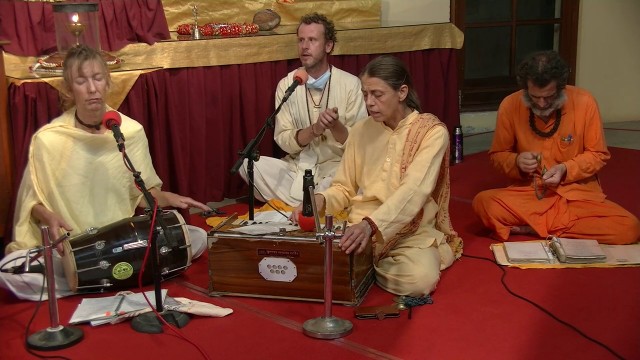
Evening Satsang with Vishwaguruji from Jadan Ashram, Rajasthan, India. Singing bhajans.
Live in a natural way
8:40 - 9:22 (42 min)
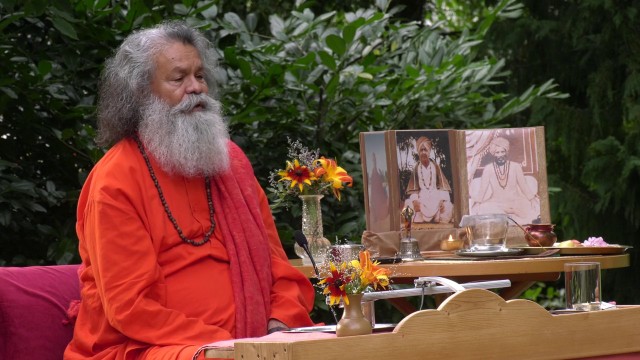
An evening address on the purity of an ashram environment and holistic well-being.
"This is a beautiful, beautiful place. It is full of prāṇa, very much prāṇa."
"We are recovering from all oxygen issues, chemicals, and what we call the Corona."
The lecturer speaks to a gathering at a large ashram, describing its pristine, chemical-free natural environment which promotes health through clean air, water, and earth. He contrasts this with the impurities and financial stresses of the modern world, advocating for a simple, spiritual life centered on meditation, community, and pure food. The talk meanders through topics including the ashram's capacity, the value of money, and the importance of natural seeds.
Filming location: Strilky, Czech Republic
Maya can destroy everything
9:30 - 10:12 (42 min)
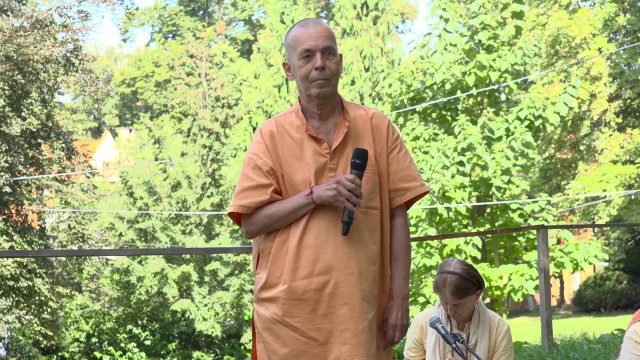
A spiritual discourse warning against greed and emphasizing correct devotional practice.
"Kāma, krodha, mada, lobha, ahaṅkāra. These are all important factors in the downfall of any spiritual seeker."
"For us, our Māyā should be Gurudev. We should run behind him. We should remember Him all the time."
A swami leads a satsang, using parables and a personal anecdote to illustrate the destructive power of greed (lobha). He stresses constant devotion to the Guru over material illusion. The talk concludes with detailed instructions for performing mantra japa correctly, including how to hold a mala and the significance of different rudrākṣa beads, while ultimately pointing to pure devotion as the supreme principle.
Filming location: Strilky, Czech Republic
Listen to only ourselves and our Gurudev
10:20 - 11:00 (40 min)
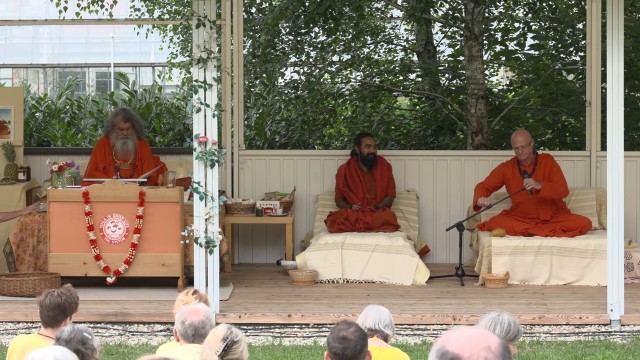
A satsang discourse on the true purpose of spiritual holidays and the importance of guru guidance.
"Coming here to the Ashram... after a whole year of working and school, is truly a holiday."
"The only way for that is to be in satsaṅg, to have darśan with a self-realized person, a guru, and to be in peace."
A speaker addresses attendees at Strelka Ashram, contrasting modern distractions with the ancient value of solitude (ekānta) for reflection. He emphasizes that a spiritual holiday involves satsang, darshan, and unity within the spiritual family. He shares a cautionary tale of a couple who, by listening to others' opinions instead of directly approaching their guru, create conflict, illustrating the need for direct guidance and discernment.
Filming location: Strilky, Czech Republic
Support your heart
11:05 - 11:44 (39 min)
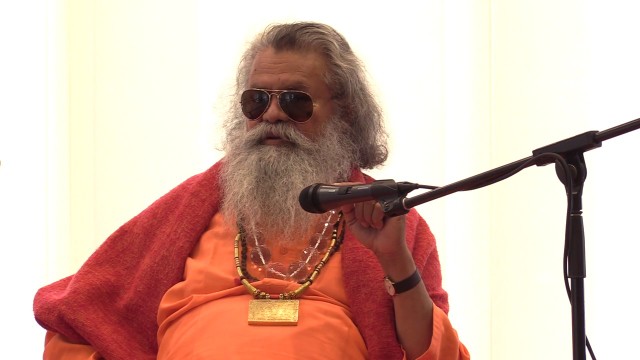
Live webcast from Melbourne, Australia. We all know the heart, the seat of love and life. Many people have problems with their hearts. I want to show you some simple exercises that are very good for the health of the heart. Practice and demonstration.
The Seed Has To Die To Become A Tree
11:50 - 12:23 (33 min)

A spiritual discourse on the endless nature of knowledge and the Manipūra Chakra.
"They ate the butter, not the cow. Feed the cow with love, milk it day and night. So, Sarasvatī Vidyā, knowledge, has no end."
"Our navel is not just our navel; that is the navel of the universe. That is the center of the universe, because you come from there."
The lecturer addresses the assembly, reflecting on a recent collective visual journey to the Himalayas. He shares a parable from his Guruji about knowledge being an endless well, not a finite resource. The discourse then focuses on the profound and limitless nature of the Manipūra Chakra, describing it as the foundational center of life and a storehouse of spiritual jewels, contrasting material poverty with spiritual wealth.
Filming location: Vép, Hungary
Be joyful
12:30 - 12:57 (27 min)
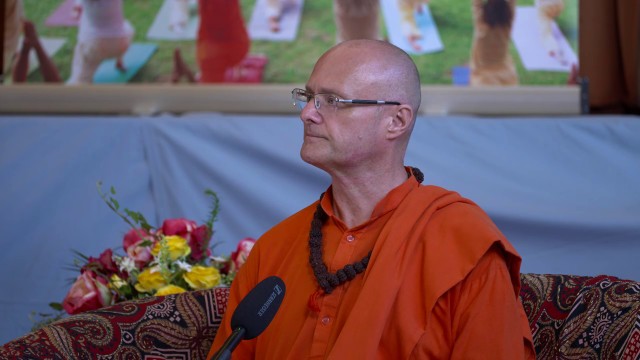
A satsang discourse on the spiritual significance of a guru's birthday, drawing parallels to Christmas.
"I recall Swāmījī saying, 'I was observing one person who was practicing Kriyā under the tree.'"
"For us, the day of incarnation of Mahāprabhujī, the day of incarnation of Swāmījī, Gurujī, is Christmas. But even more than Christmas, because that is our guru."
A spiritual teacher addresses a gathering, explaining why the birthday of a guru is a sacred celebration akin to Christmas. He emphasizes the necessity of a living guru for correct spiritual practice and describes the Guru Tattva (the essence of the guru) as a pure, divine light within a physical form. He explains how devotees can connect to this energy through satsang, devotion, and bhajans, transforming their own energy and creating a joyful spiritual life. The talk includes practical advice on using prayer, song, and positive thinking to change one's internal state and the surrounding atmosphere.
Filming location: Vép, Hungary
The spiritual family
13:05 - 13:56 (51 min)
An opening talk at a spiritual seminar addressing the absence of the guru and the purpose of gathering.
"People are always complaining, 'Oh, Kali Yuga is not good, Kali Yuga is a terrible time.' But if you know how to utilize it, Kali Yuga is also excellent."
"We need to be like a Paramahaṁsa... We should be like that. In this world, we have so many things... we should be like the Haṁsa: take the pearls, take the milk, and leave the water."
A senior disciple addresses the assembled spiritual family at the Vép seminar, acknowledging the physical absence of Viśvagurūjī. He reframes the gathering as a vital opportunity to recharge, strengthen spiritual family bonds, and deepen personal practice. Key themes include extracting the essence from the Kali Yuga, the necessity of a supportive community for sādhanā, and using the seminar for introspection, mauna (silence), and focused practice of āsana and prāṇāyāma to calm the mind.
Filming location: Vép, Hungary
Morning practice from Strilky
14:00 - 15:19 (79 min)
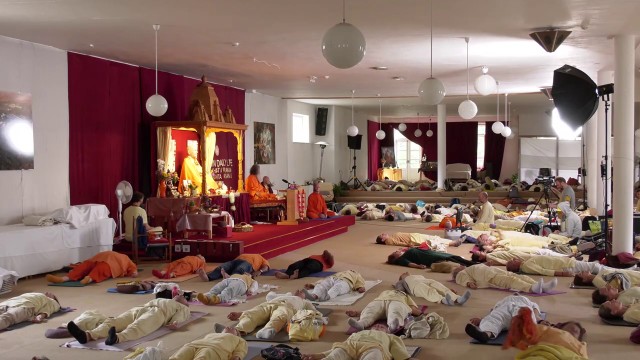
Morning satsang from Strilky Ashram, Czech Republic. Morning practice from Strilky in the presence of Vishwaguruji, led by M. M. Swami Vivekpuriji.
Listen to only ourselves and our Gurudev
15:20 - 16:00 (40 min)
A satsang discourse on the true purpose of spiritual holidays and the importance of guru guidance.
"Coming here to the Ashram... after a whole year of working and school, is truly a holiday."
"The only way for that is to be in satsaṅg, to have darśan with a self-realized person, a guru, and to be in peace."
A speaker addresses attendees at Strelka Ashram, contrasting modern distractions with the ancient value of solitude (ekānta) for reflection. He emphasizes that a spiritual holiday involves satsang, darshan, and unity within the spiritual family. He shares a cautionary tale of a couple who, by listening to others' opinions instead of directly approaching their guru, create conflict, illustrating the need for direct guidance and discernment.
Filming location: Strilky, Czech Republic
Atma is spotless
16:01 - 16:47 (46 min)
A spiritual discourse on divine presence, the nature of the soul, and the guru's grace, illustrated through parables and teachings.
"When the difficult time comes, then you should know that you are now with God."
"Śrī Guru Ātmā, that is the highest... our Ātmā is connected to Holy Gurujī."
A teacher shares parables, including one where God carries a devotee through hardship and another where a renunciate yogi refuses Lord Shiva's offer. He explains the spotless, all-pervading nature of the soul (Ātmā) and its connection to the Guru, weaving in teachings on devotion, renunciation, and the elements of the body.
Filming location: Australia
Part 1: The Role of Yoga and Meditation in Improving Quality of Life for Cancer Patients
16:50 - 17:57 (67 min)
A medical lecture on the role of yoga and meditation as supportive care for cancer patients.
"We must note which specific yogic and meditative techniques were used, as these vary widely."
"Please do not give false hope that cancer will be cured... If a practitioner claims that prāṇāyāma, dhyāna, and some Ayurvedic herbs... can cure cancer, they are committing a grave sin against society."
A doctor from AIIMS Delhi presents a detailed analysis of scientific studies on yogic interventions for cancer patients, emphasizing they are complementary to standard treatments like chemotherapy. He strongly warns against practitioners falsely claiming yoga can cure cancer, shares data on benefits for quality of life and stress, and proposes a large-scale research trial combining yoga, meditation, and herbal products for cancer prevention and care.
Filming location: Delhi, India
Part 1: Welcoming Address and Valedictory Session on Yoga for Wellness
18:00 - 19:08 (68 min)
A valedictory session for a conference on "Yoga for Wellness," featuring addresses by government ministers and spiritual leaders.
"Yoga for wellness is this year’s subject. It is not just about the practice of yoga, but also about using it in the lives of every human being for achieving better health and wellness."
"Our method of treatment does not have any side effects. That is why we develop research about it, develop websites, develop programming, develop its videos."
The session opens with a welcome address emphasizing yoga's global role and the need to integrate traditional and modern medicine. Union Minister Nitin Gadkari delivers a valedictory address, sharing his personal health transformation through yoga and proposing structured training and research to professionalize the field. Following remarks from other ministers, Professor H.R. Nagendra gives a speech contrasting the multidimensional approach of yoga with modern medicine's limitations for non-communicable diseases. Swami Maheshvarananda and actress Anu Agarwal also share perspectives, with Agarwal recounting her recovery from a major accident through yoga.
Filming location: Delhi, India
Live webcast from Strilky
19:00 - 20:30 (90 min)
Morning satsang from Strilky Ashram, Czech Republic.
Vegetarian cooking lesson 16, Indian Gunda and Sangri Sabji
19:10 - 19:29 (19 min)
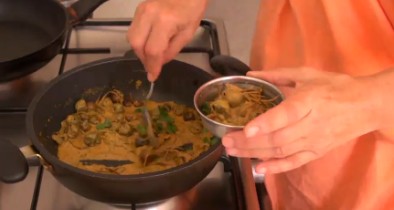
A cooking demonstration for preparing traditional Indian vegetables.
"Both the guṇḍā and the saṅgrī grow in the desert of Rajasthan, at our Jadon Ashram in the Pali district."
"For me, and for all of us, it is very important always to know where our food comes from, what we are eating, its origin, and through whose hands it has passed."
A monk prepares a dish of guṇḍā and saṅgrī, vegetables harvested from ashram lands in Rajasthan. He explains the sourcing and preparation of the dried ingredients, then cooks them with spices, onion, and yogurt, while also demonstrating how to make chapati. The process is interwoven with spiritual reflections on food origins and chants.
Filming location: Vép, Hungary
The spiritual family
19:30 - 20:21 (51 min)
An opening talk at a spiritual seminar addressing the absence of the guru and the purpose of gathering.
"People are always complaining, 'Oh, Kali Yuga is not good, Kali Yuga is a terrible time.' But if you know how to utilize it, Kali Yuga is also excellent."
"We need to be like a Paramahaṁsa... We should be like that. In this world, we have so many things... we should be like the Haṁsa: take the pearls, take the milk, and leave the water."
A senior disciple addresses the assembled spiritual family at the Vép seminar, acknowledging the physical absence of Viśvagurūjī. He reframes the gathering as a vital opportunity to recharge, strengthen spiritual family bonds, and deepen personal practice. Key themes include extracting the essence from the Kali Yuga, the necessity of a supportive community for sādhanā, and using the seminar for introspection, mauna (silence), and focused practice of āsana and prāṇāyāma to calm the mind.
Filming location: Vép, Hungary
Don't kill Animals!
20:22 - 21:20 (58 min)
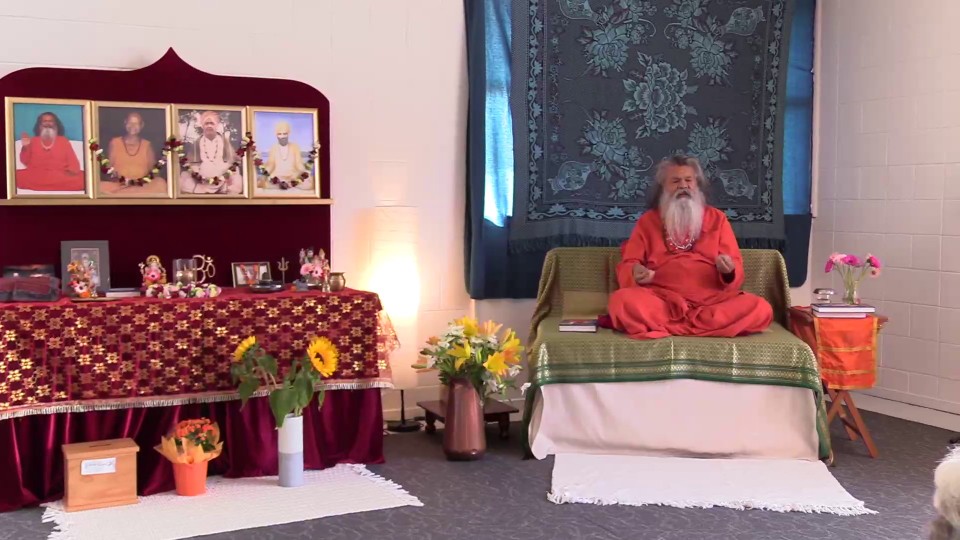
Morning satsang with Vishwaguruji from Auckland, New Zealand. The origin of many diseases is in our relationships. We can solve problems if we are practicing yoga. Advice from Vishwaguruji for good health. Search your Guru in the heart. We have to follow the words of the Saint's. Do not kill animals and eat them. Humans cause immense pain to innocent animals. That is why viruses are coming as a strike-back.
Death is a transition
21:25 - 22:26 (61 min)
Morning satsang with Vishwaguruji from Strilky Ashram, Czech Republic. Lecture by Swami Avatarpuriji. Once we realize that death is basically a transition from this body to a higher place it is not scary. Who comes will go, that the universal law. A story about king Vidhur, who had a fear about what will happen when he dies. Learnig and translating mantras, a prayer to Lord Vishnu. Salutations to the infinite one, who has thousands forms... Lecture by Swami Vivekpuriji. What is a Guru, how we are feeling about the Guru?
The health of the bones
22:30 - 23:22 (52 min)
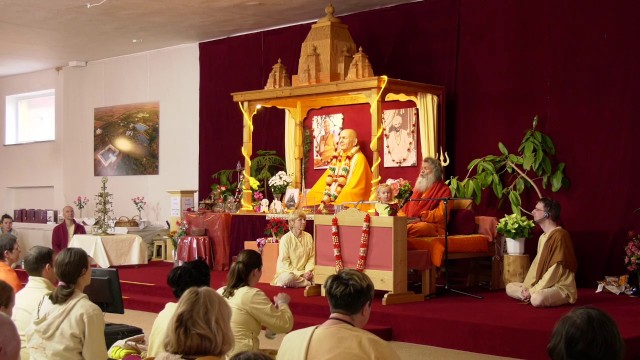
A spiritual talk on the purification of the body and mind, focusing on holy water and natural self-care.
"You can give this, what we call, the holy water. Give this to all your friends and everybody this Christmas."
"So bring the happiness... put a holy, a holy thought within us. 'Holy' means the clean and have a good energy."
Swami Ji offers a wide-ranging discourse, encouraging the use of holy water for purification and harmony during Christmas. He advises on caring for the physical body through natural means—like simple oils, yoga, and avoiding synthetic creams—linking it to the care of the subtle bodies (kośas). The talk includes personal anecdotes about habits and diet, emphasizing a return to simplicity and gratitude.
Filming location: Strilky, Czech Republic
We have to become one
23:30 - 1:04 (94 min)
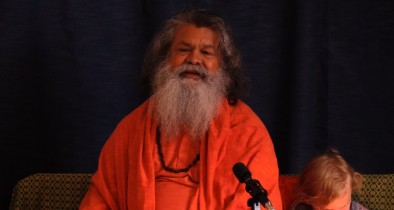
Evening satsang with Vishwaguruji from Auckland, New Zealand. There are many things in the space. We should stop our attachment. Great yogis do not attach to anything and to anybody. Break from the attachment and join to God. Nothing is mine. Explanation of bhadzsan Chidananda Rupam Sivoham Sivoham. Sometimes we can not understand wisdom. Shiva means only space. He is everywhere in everything and nowhere. Explanation of bhadzsan Ragupati Raghava Raj Ram. One in all and all in one. Explanation of bhadzsan Sabda Sanehi Mhari Jatra. A story or a poem can help you to understand knowledge. The knowledge what we have we should understand, realize and give further. Chakras are the major stations in our body. The Earth connected to the Sun. The system of elements and chakras in our body.
American
Australian