
European
Remain pure
0:05 - 0:54 (49 min)
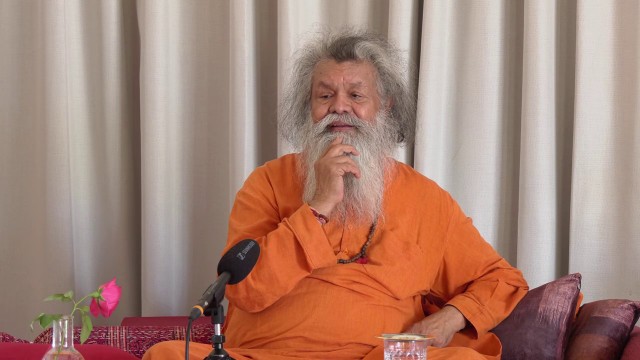
Morning program with Vishwaguruji from Rijeka, Croatia. Vishwaguruji explains problems if one of the parents eats meat. We should take care. He introduces a picture about the nadis. God made women and man, but the whole universe is one.
Around the world - Yoga for children CRO
1:00 - 1:08 (8 min)
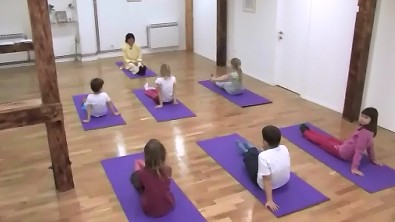
A yoga class for children, focusing on mindful movement, self-observation, and breathwork.
"You can repeat it silently three times. It is certain to manifest."
"There is no competition with others, no comparison like in other sports about who is better at something."
An instructor guides children through a session that begins with setting a personal intention (saṅkalpa) and body awareness. The class includes physical postures, described through alignment cues and animal-inspired movements (āsanas), and prepares for breathing practice (prāṇāyāma). The instructor reflects on the joy of witnessing the children's progress and the personal rejuvenation found in teaching.
Filming location: Croatia
Around the world - Yoga for Kids from Hungary
1:15 - 1:20 (5 min)
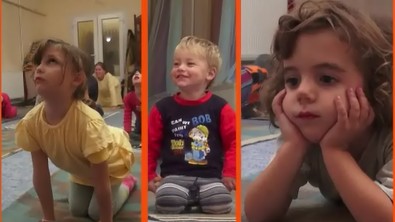
A family yoga program for children and parents at a Budapest sports club.
"Through the practice of yoga, a child gains not only flexibility, agility, and the ability to concentrate, but the practice of āsanas also helps keep many illnesses at bay."
"We practice based on the Paramhanszámi Mahasrananda Yoga Children's Kecsmi book. Using this, both children and adults can participate in playful yoga sessions."
The host, Kirām, welcomes participants to a monthly family yoga session, explaining its inclusive nature and benefits for children's holistic development. The practice uses a specific children's yoga book, connecting postures with animals and plants. The session includes storytelling, craft activities like candle decorating for upcoming festivals, and watching a short animated film about Hanumān.
Filming location: Hungary
The Seed Has To Die To Become A Tree
1:25 - 1:58 (33 min)

A spiritual discourse on the endless nature of knowledge and the Manipūra Chakra.
"They ate the butter, not the cow. Feed the cow with love, milk it day and night. So, Sarasvatī Vidyā, knowledge, has no end."
"Our navel is not just our navel; that is the navel of the universe. That is the center of the universe, because you come from there."
The lecturer addresses the assembly, reflecting on a recent collective visual journey to the Himalayas. He shares a parable from his Guruji about knowledge being an endless well, not a finite resource. The discourse then focuses on the profound and limitless nature of the Manipūra Chakra, describing it as the foundational center of life and a storehouse of spiritual jewels, contrasting material poverty with spiritual wealth.
Filming location: Vép, Hungary
The Seed of Practice
2:05 - 2:30 (25 min)
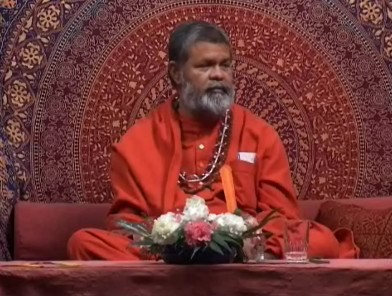
A spiritual discourse on the importance of practice over mere intellectual knowledge.
"Too much reading also leads you nowhere. It’s only intellectual information. Therefore, practicing is very important."
"God is more happy to them, those who are doing with a pure heart, not only with a pure intellect."
The speaker emphasizes the necessity of faithful spiritual practice, critiquing humanity's self-inflicted suffering and disconnect from nature. He illustrates this with a parable of two brothers, a jñāna yogi focused on intellectual correctness and a bhakti yogi devoted to simple worship. The story demonstrates that sincere devotion, not perfect technique, yields spiritual power, a point reinforced by a concluding analogy about a seed growing regardless of how it is planted.
Filming location: Vép, Hungary
How to train our mind?
2:35 - 2:56 (21 min)
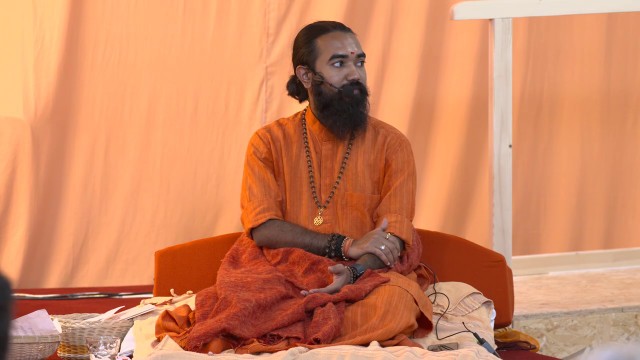
A spiritual discourse on taming the restless mind using a parable from Gurudeva.
"Our mind is chanchal. Chanchal means very restless, and that is normal for a human mind, but you need to learn how to train and tame your mind."
"In the same way, our minds are very restless, running around. We should just let it go; that is its job, to roam around and have thoughts continuously. Then, slowly, slowly, train your mind towards Guru Bhakti."
A speaker recounts Gurudeva's parable of a king's untamable horse and the patient trainer who tamed it through gentle, persistent companionship and reward. The story serves as an analogy for taming the restless mind through devotion to the Guru and the path of Bhakti, rather than forceful suppression. The session concludes with the guided recitation and explanation of a Sanskrit mantra focused on meditating on the Supreme Self within the heart.
Filming location: Strilky, Czech Republic
Repeat the name of Gurudev
3:00 - 3:27 (27 min)
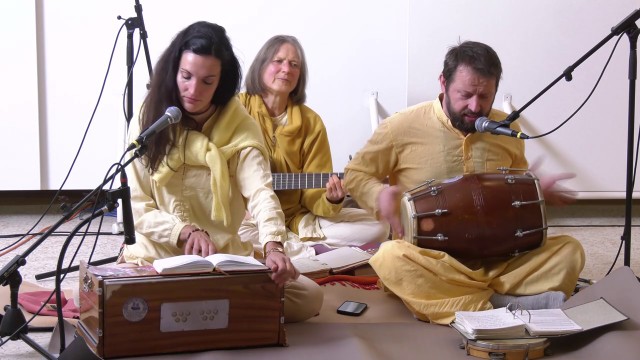
Evening satsang with Vishwaguruji from Vienna, Austria. Bhajan singinig to the Guru. Guru carano me arasatha tiratha he
To be independent
3:35 - 4:49 (74 min)
Evening satsang in the occasion of Gurudev's Birthday What means independency to you? Many people where witnessing several wars. The ambition to fight is in any human and animals too. When the human gets the ambition to fight for position, for money and creating or awakening cruel thoughts, to kill or damage properties, that means, that the animal qualities awakens in their body and intellect. That we call the animal instinct. When that awakens, then the human is blinded and focusing only on that illness. There is no remedy to cure such qualities. When the animal instinct comes into the human mind and emotions, means the ambition to fight for the position, or the money and for governing the rules, then only knowledge can give us freedom and liberation. The burning desire to get liberation, this is the independent day in the life.
Repeat the name of Gurudev
4:55 - 5:22 (27 min)
Evening satsang with Vishwaguruji from Vienna, Austria. Bhajan singinig to the Guru. Guru carano me arasatha tiratha he
Yuga Yuga Jivo Maheshwarananda
5:30 - 5:37 (7 min)
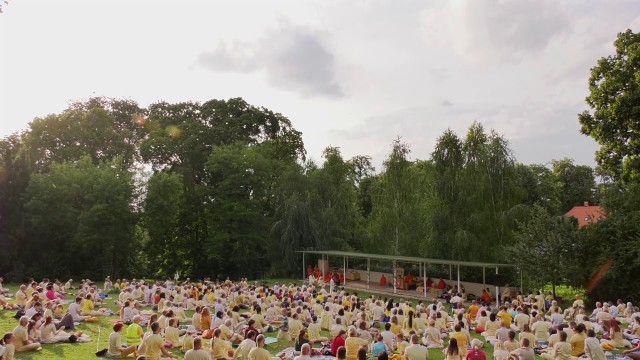
Evening satsang with Vishwaguruji from Strilky Ashram, Czech Republic. Bhajan singing on Gurupurnima satsang.
Sataguru rakho laj hamari
5:45 - 5:51 (6 min)
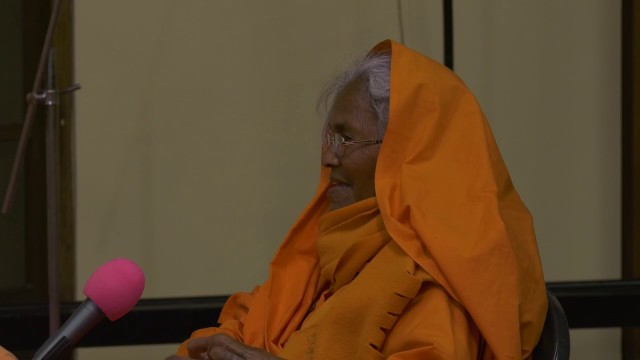
Evening satsang from Jadan Ashram, Rajasthan, India. Vishwaguruji"s sister sings Bhajans.
Repeat the name of Gurudev
5:55 - 6:22 (27 min)
Evening satsang with Vishwaguruji from Vienna, Austria. Bhajan singinig to the Guru. Guru carano me arasatha tiratha he
Bhajan singing in the presence of the Master
6:30 - 7:17 (47 min)
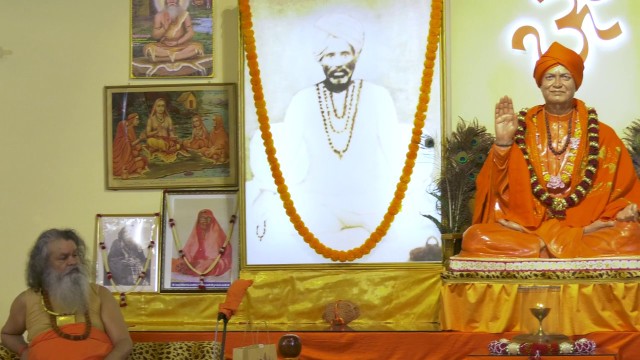
Evening satsang from Jadan Ashram, Rajasthan, India. Bhajan singing from Jadan. Including He nath ab to, Suno sakhi Sataguru aya, Guru carano me arasatha tiratha he
Guru bhakta jagata me na rahe
7:25 - 8:08 (43 min)
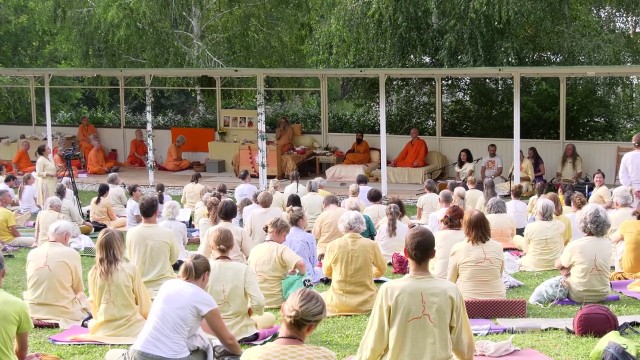
Evening satsang with Vishwaguruji from Strilky Ashram, Czech Republic. Bhajan singing on satsang, including bahajan Guru bhakta jagata me na rahe, Prema ka pyala Hari
Pyare darashana diyo aj
8:15 - 8:18 (3 min)
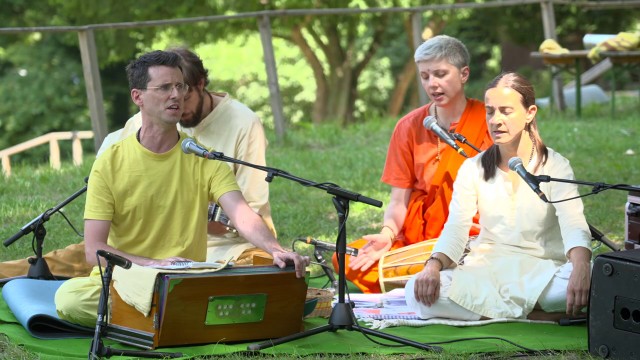
A spiritual song expressing longing for divine vision, followed by analytical remarks on the text's structure.
"Ākula vyākula fero re na dhinna" and "Darśan na dī chokhā. Darśan sannakā nindā, Nairin divasannā."
The content consists of poetic lyrics lamenting the agony of separation and the unfulfilled desire for divine sight (Darśan). This is followed by a separate section of critical remarks that analyze the song's text, pointing out its abrupt language shift, unclear referents, and narrative discontinuity.
Filming location: Strilky, Czech Republic
Bhajans from Vep
8:25 - 8:49 (24 min)
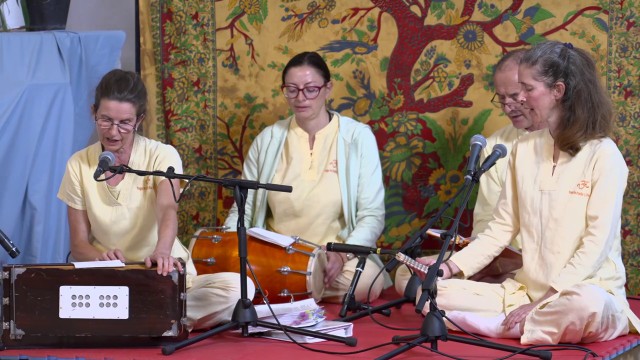
Yoga Summer Retreat from Vep, Hungary. Bhajan singing including Guruvara me cal usa una des.
Morning Lecture from Vep
8:55 - 10:05 (70 min)
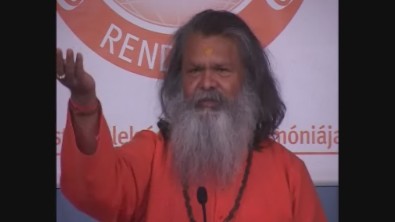
Morning satsang from weekend yoga seminar from Vep, Hungary.
Who are we to judge
10:10 - 11:16 (66 min)
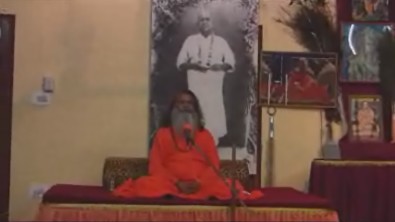
Evening satsang from Jadan Ashram. On the begining Swamiji is chanting Om Namah Shivaya.
Webcast from Slovenska Vas
11:20 - 12:02 (42 min)
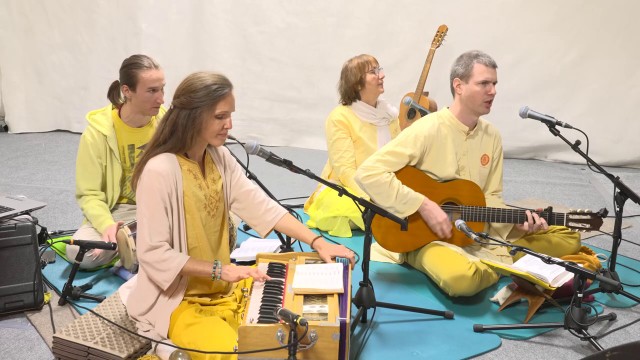
Evening satsang with Vishwaguruji from Slovenska Vas, Slovenia.
God is everywhere
12:10 - 13:51 (101 min)
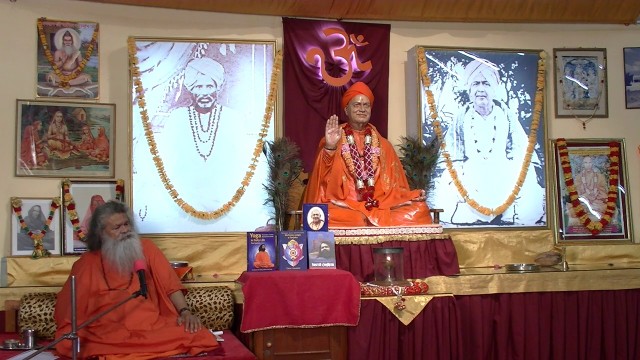
Evening satsang with Vishwaguruji from Jadan Ashram, Rajasthan, India. First Swami Avatarpuri and Swami Premanand are speaking. The sixth day of Navratri is dedicated to Goddess Katyayani. Goddess Katyayani is revered on the sixth day of Navratri. She is an incarnation of Durga, came to protect the whole World against demon Maheesasur. Worship is everywhere. All of our actions becomes worship, we are a part of God. Just allow yourself to get locked in the room if you would like to know the World - said Hafiz. Vishwaguruji is speaking about Bhagwan Ram and Bhagwan Krishna. Many people are not understanding Bhagwan Shiva and do not worship. Yoga means knowledge, Gurudev will make disciple Guru.
Practising sarva hitta asanas
14:00 - 14:44 (44 min)
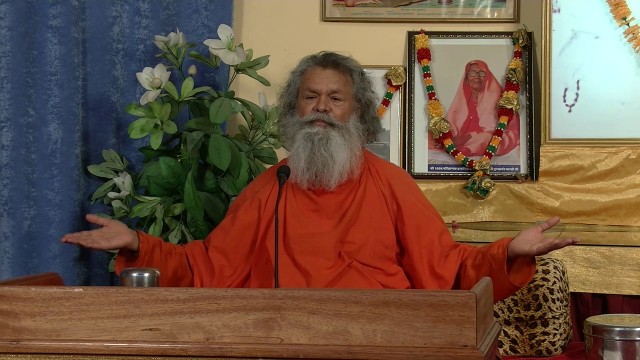
Evening satsang with Vishwaguruji from Jadan Ashram, Rajasthan, India. Practising sarva hita asanas in standing position.
Sri Devpurijis Gnade
14:50 - 15:52 (62 min)
Vienna, June 2000
The Purifying Path of Haṭha Yoga: An Introduction to Ṣaṭkarma
16:00 - 16:47 (47 min)
An instructional webcast introducing the Haṭha Yoga purification techniques (Ṣaṭkarma).
"Haṭha Yoga is not only that we clean and purify our whole system, our whole body, but it also has a very great effect on our nervous system."
"Haṭha means willpower to do these Haṭha Yoga techniques. And with this, you also get the willpower, the strength to persevere, to continue, to get rid of the laziness."
A teacher from the Śrīkī Ashram, joined by assistants, explains the purpose and benefits of the six purification acts. The session features a detailed, practical demonstration of Jala Netī (nasal cleansing with salt water) and Kapāla Bhāti, followed by an introduction to Agni Sāra and the Naulī Kriyā for digestive health. The instruction emphasizes using natural elements, proper technique, and the holistic effects on physical and energetic systems.
Filming location: Strilky, Czech Republic
Longing for God
16:55 - 17:54 (59 min)
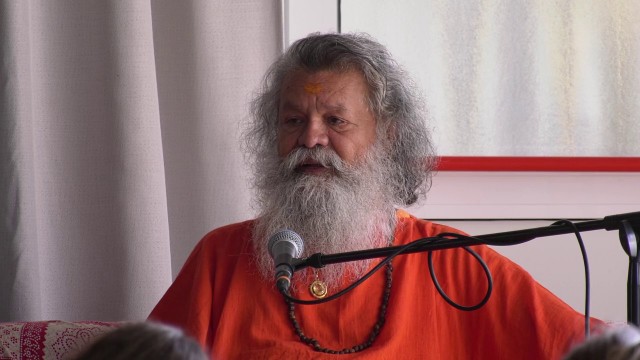
Morning satsang with Vishwaguruji from Rijeka Ashram, Croatia. Bhajan singing. We should be careful with our bodies and we should live very healthily. Our practice is very important and also our good food. We are really yogis. We have learnt many things that are really important in yoga. Real yogis should practise yoga every day. We help other people to become spiritual. Some people eat cats and kill them in a very cruel way. We should feel every creature in our hearts. The story of a man who wanted to see God. The story of an Indian lady living near Rupavas who became a holy person. The other story is of a woman in Gujarat who doesn't eat and doesn't drink anything.
Yoga, Āyurveda, and the Journey Beyond: From Vikāra to Turīya
18:00 - 18:55 (55 min)
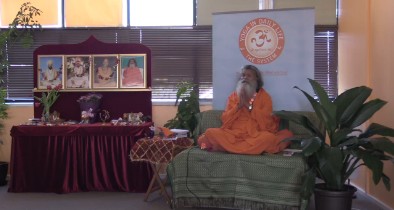
A spiritual discourse on Yoga, Āyurveda, and consciousness, transitioning into teachings on Yoga Nidrā.
"Āyurveda has now again brought this science forward and is very, very helpful."
"Meditation is one of the best ways to realize that this is not a reality now, what I am worrying."
Swami Anand Arun leads a morning satsang, continuing a two-day series. He discusses Āyurveda's approach to physical and mental disease (vikāra), focusing on the destructive nature of worries (cintā) and overthinking (cintan). He explains how unfulfilled desires reside in the subconscious, introducing Yoga Nidrā as a technique to purify these layers and master the states of waking, dreaming, and deep sleep to access higher consciousness.
Filming location: Auckland, New Zealand
Respect is important
19:00 - 19:53 (53 min)
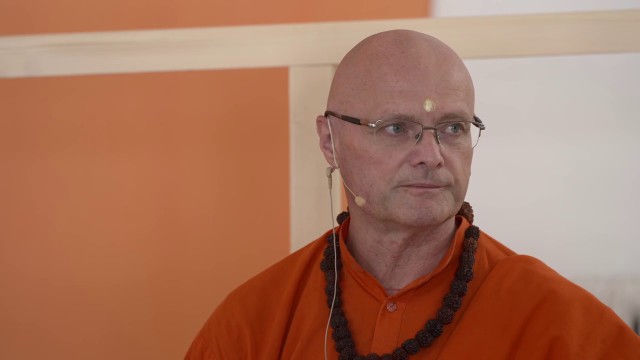
A spiritual discourse and mantra teaching session on the power of language, respect, and energy.
"Spirituality does not mean wholly very slow... But with this different energy inside, just try to be aware of this thing: in which way are we addressing other people?"
"You get from an object only as much as you respect it... If your mālā has some value for you, you will keep it in a safe place... Because of that, you will, from your mālā, get energy when you need it."
A speaker leads a satsang, emphasizing the profound impact of words, gestures, and intention. He discusses how language shapes reality, using examples from addressing others to serving food and respecting spiritual objects like a mala. The talk covers the importance of positive speech, respectful action, and the energy behind our deeds. The session concludes with Swami Avatar Puri teaching and explaining the "Nāma kamala nābhāya" mantra, including its translation and significance.
Filming location: Strilky, Czech Republic
Live webcast from Strilky
19:00 - 20:30 (90 min)
Morning satsang from Strilky Ashram, Czech Republic.
The spiritual family
20:00 - 20:51 (51 min)
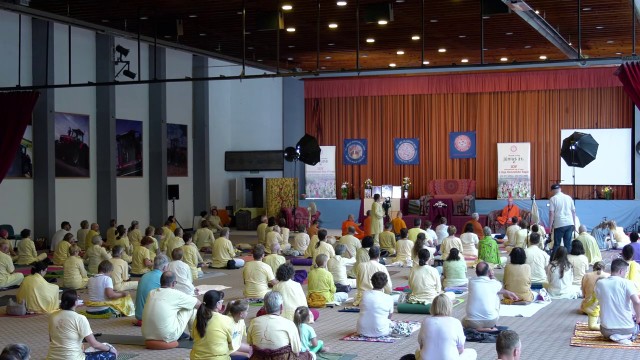
An opening talk at a spiritual seminar addressing the absence of the guru and the purpose of gathering.
"People are always complaining, 'Oh, Kali Yuga is not good, Kali Yuga is a terrible time.' But if you know how to utilize it, Kali Yuga is also excellent."
"We need to be like a Paramahaṁsa... We should be like that. In this world, we have so many things... we should be like the Haṁsa: take the pearls, take the milk, and leave the water."
A senior disciple addresses the assembled spiritual family at the Vép seminar, acknowledging the physical absence of Viśvagurūjī. He reframes the gathering as a vital opportunity to recharge, strengthen spiritual family bonds, and deepen personal practice. Key themes include extracting the essence from the Kali Yuga, the necessity of a supportive community for sādhanā, and using the seminar for introspection, mauna (silence), and focused practice of āsana and prāṇāyāma to calm the mind.
Filming location: Vép, Hungary
Remain pure
20:55 - 21:44 (49 min)
Morning program with Vishwaguruji from Rijeka, Croatia. Vishwaguruji explains problems if one of the parents eats meat. We should take care. He introduces a picture about the nadis. God made women and man, but the whole universe is one.
Inner awakening: be with the dharma
21:50 - 22:37 (47 min)
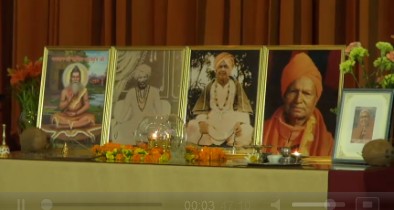
A spiritual discourse on inner awakening and the hidden powers of consciousness, beginning on the Mahāsamādhi day of Holy Mother.
"God has bestowed upon each a kind of talent according to the need or requirement of its life."
"One in all and all in one. That is the reflection of that Ātmā."
The lecturer leads a satsang, explaining the journey of the individual soul (Jīvātmā) through 8.4 million life forms and its relationship with the indestructible Ātmā. He discusses duality, non-duality, and the karmic consequences that define a soul as dharmātmā or pāpātmā. Using the analogies of the moon's reflection and stories of Krishna, Duryodhana, and Vidura, he emphasizes that divine grace comes only through selfless love (prema), not through material offerings.
Filming location: Vép, Hungary
The Seed Has To Die To Become A Tree
22:45 - 23:18 (33 min)
A spiritual discourse on the endless nature of knowledge and the Manipūra Chakra.
"They ate the butter, not the cow. Feed the cow with love, milk it day and night. So, Sarasvatī Vidyā, knowledge, has no end."
"Our navel is not just our navel; that is the navel of the universe. That is the center of the universe, because you come from there."
The lecturer addresses the assembly, reflecting on a recent collective visual journey to the Himalayas. He shares a parable from his Guruji about knowledge being an endless well, not a finite resource. The discourse then focuses on the profound and limitless nature of the Manipūra Chakra, describing it as the foundational center of life and a storehouse of spiritual jewels, contrasting material poverty with spiritual wealth.
Filming location: Vép, Hungary
The Seed of Practice
23:25 - 23:50 (25 min)
A spiritual discourse on the importance of practice over mere intellectual knowledge.
"Too much reading also leads you nowhere. It’s only intellectual information. Therefore, practicing is very important."
"God is more happy to them, those who are doing with a pure heart, not only with a pure intellect."
The speaker emphasizes the necessity of faithful spiritual practice, critiquing humanity's self-inflicted suffering and disconnect from nature. He illustrates this with a parable of two brothers, a jñāna yogi focused on intellectual correctness and a bhakti yogi devoted to simple worship. The story demonstrates that sincere devotion, not perfect technique, yields spiritual power, a point reinforced by a concluding analogy about a seed growing regardless of how it is planted.
Filming location: Vép, Hungary
How to train our mind?
23:55 - 0:16 (21 min)
A spiritual discourse on taming the restless mind using a parable from Gurudeva.
"Our mind is chanchal. Chanchal means very restless, and that is normal for a human mind, but you need to learn how to train and tame your mind."
"In the same way, our minds are very restless, running around. We should just let it go; that is its job, to roam around and have thoughts continuously. Then, slowly, slowly, train your mind towards Guru Bhakti."
A speaker recounts Gurudeva's parable of a king's untamable horse and the patient trainer who tamed it through gentle, persistent companionship and reward. The story serves as an analogy for taming the restless mind through devotion to the Guru and the path of Bhakti, rather than forceful suppression. The session concludes with the guided recitation and explanation of a Sanskrit mantra focused on meditating on the Supreme Self within the heart.
Filming location: Strilky, Czech Republic
American
Australian