
European
Dharma and Satsang
1:10 - 2:19 (69 min)
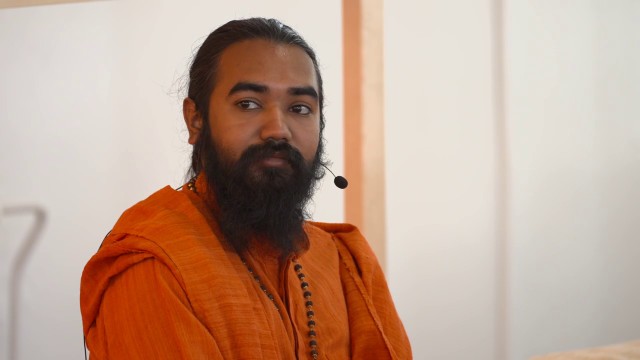
A satsang discourse on dharma, spiritual practice, and the importance of community.
"We always try to find the shortcuts, and we always try to find the easy way out."
"In the satsaṅg, on the full moon, usually we listen to Guru Gītā. Try to really listen to Guru Gītā. I have listened to Guru Gītā for more than 40 years, and I must say that every time I hear something new inside."
Following traditional invocations, a speaker addresses a gathering, weaving teachings on personal duty (dharma) with illustrative stories, including a sādhu persistently saving a scorpion and Nārada's lesson from Lord Viṣṇu. The talk emphasizes perseverance in one's path, learning from failures, and the critical role of regular satsang and deep, repetitive study of core teachings like the Guru Gītā over seeking novel techniques. A letter from the Indian Prime Minister congratulating the opening of Om Ashram is read. The session includes chanting and concludes with a universal peace mantra and final salutations.
Filming location: Strilky, Czech Republic
Shivaratri Satsang with Vishwaguruji
2:25 - 3:00 (35 min)
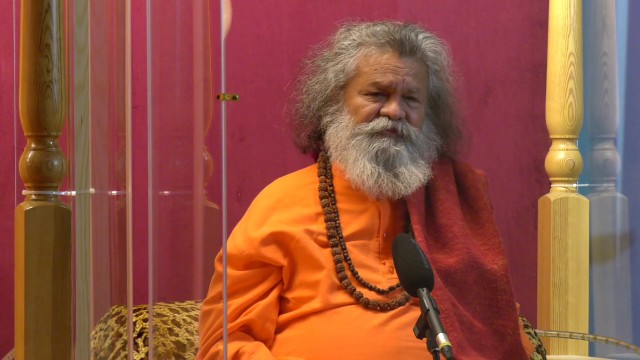
A spiritual discourse on the unity of consciousness, the elements, and the nature of the guru.
"And so it is that we are never separate. We are always with one and one and one."
"You are all guru. Guru means who is giving us. What means giving us? Training, etc."
An elder teacher addresses a gathering, weaving together cosmological concepts of Śiva and Śakti, the five elements, and the pervasive presence of the ātmā (soul). He explains fundamental oneness using the metaphor of a drop merging with the ocean, and expansively defines the guru as any source of knowledge, from a parent to a driving instructor. The talk touches on comparative religion, personal anecdotes, and concludes with an invitation for future meditation.
Filming location: Vienna, Austria
Questions and answers from Debrecen
3:05 - 3:45 (40 min)
A satsang addressing practical yogic living and dietary discipline.
"If you really want to do your yoga sādhānā, then, first control over your tongue, the test. You will see that 90% of all difficulties in your body will disappear."
"Yoga begins with discipline. Atha yoga anuśāsana."
Swami Satyananda Saraswati answers questions from attendees, first offering advice on starting a yogic farm community in Hungary. He then delivers a core teaching on foundational spiritual practice, emphasizing strict dietary control (limited intake, no snacking, avoidance of processed foods and alcohol) as the primary step for health, discipline, and preparing for meditation. He expands on the importance of satsang, prāṇāyāma, and consuming local, organic, seasonal foods, using soy cultivation and an anecdote about Australian milk regulations as cautionary examples.
Filming location: Debrecen, Hungary
Gurudev always works for his bhaktas
3:30 - 4:28 (58 min)
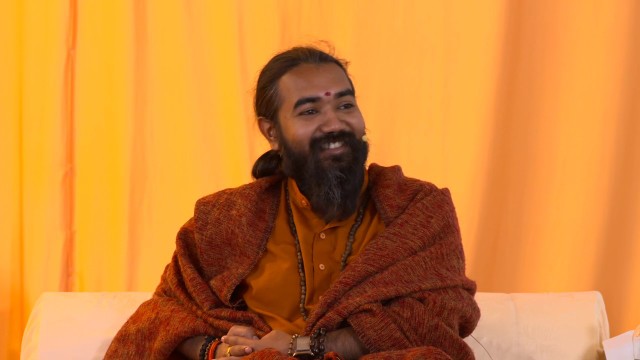
Evening satsang from Strilky Ashram, Czech Republic. Atma is immortal. The story of Naciketa and Yanaraj. Yamaraj tells Nacikata the nature of the Atman. Gurudev forms us like a smith forms the iron into a beautiful shape. But we need patience. Gurudev helps us attain liberation. A story of a man who didn’t want to go with his Guru. If we solve one problem the same time we create two other. Only surrender to Gurudev can really solve our problems.
The real Guru is in oneness
3:50 - 4:51 (61 min)
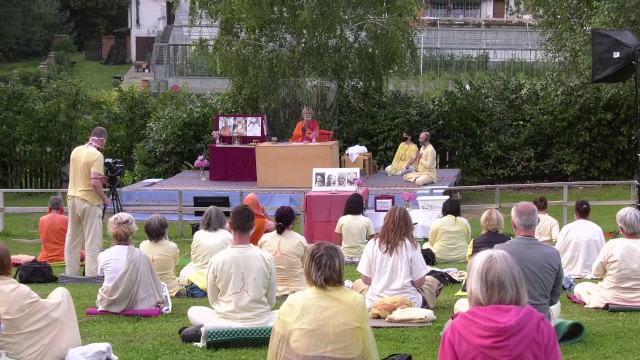
A spiritual discourse on universal oneness and the nature of the divine path.
"If a God says, 'Do not worship that God,' then neither is that God right, nor are you good. We have to come to oneness."
"The drop is not there. I am not a drop. I am the ocean. Similarly, we are in that condition. But you are still not near the beach of the ocean."
The speaker, likely a spiritual teacher, leads a satsang exploring the essential unity of all spiritual paths and deities. He emphasizes that a true guru or God would never forbid the worship of another, advocating for a non-sectarian devotion. Using metaphors like a drop merging into the ocean and the irreversible flight of an airplane, he discusses the preciousness of time, the journey of the soul, and the nature of prana (life force) as both a suffering entity and a divine connection. The talk weaves between philosophical points, practical advice, and anecdotal reflections, concluding with a call for inner purity and an end to religious duality.
Filming location: Strilky, Czech Republic
Bhajan singing from Jadan Ashram
5:30 - 6:05 (35 min)
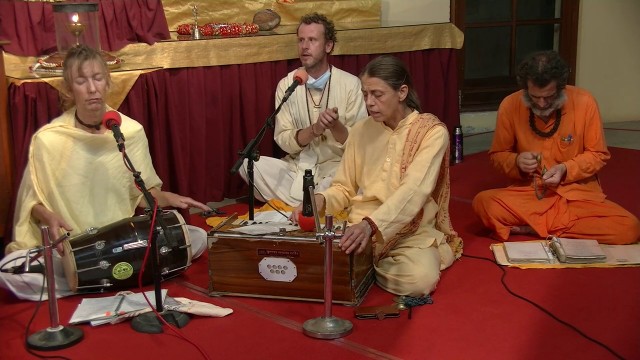
Evening Satsang with Vishwaguruji from Jadan Ashram, Rajasthan, India. Singing bhajans.
Bhajan Singing from Jadan
6:10 - 7:20 (70 min)
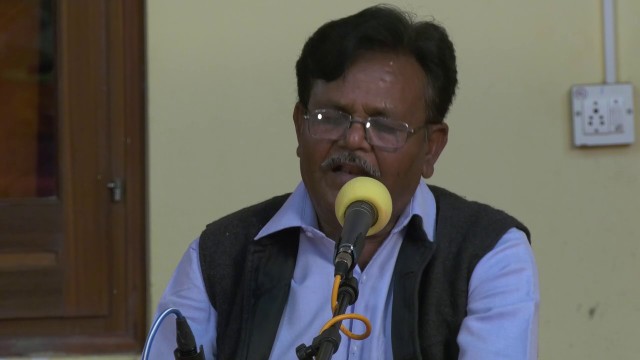
Evening satsang with Vishwaguruji from Jadan Ashram, Rajasthan, India.
Bhajans with Swami Gajanandji
7:25 - 8:04 (39 min)
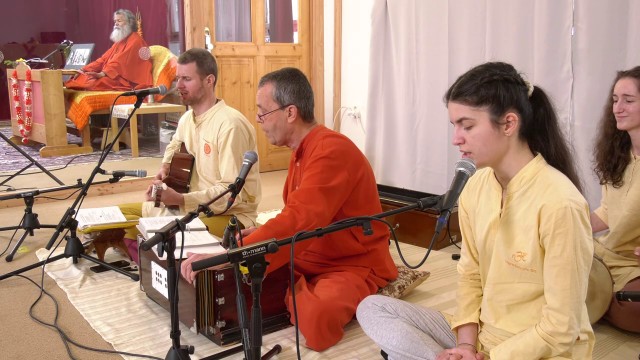
Morning satsang with Vishwaguruji from Strilky Ashram, Czech Republic.
Bhajans from Poprad
8:10 - 8:54 (44 min)
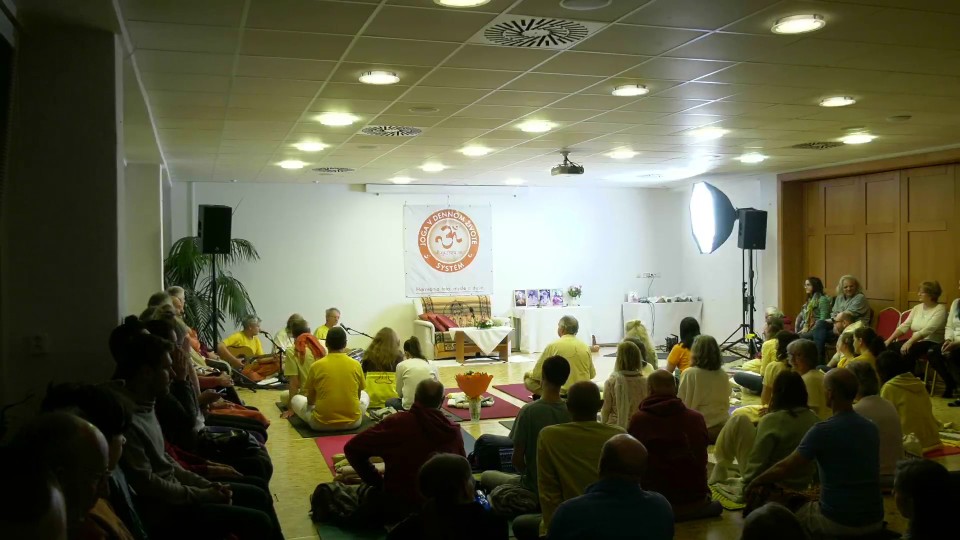
Bhajans from Tatra Hotel, Poprad, Slovakia.
Yoga is a science
9:00 - 10:19 (79 min)
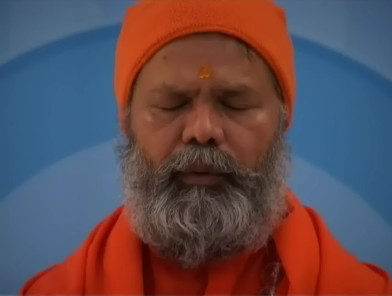
A spiritual lecture on Kuṇḍalinī, chakras, and the purpose of human life.
"Yoga is the science of body, mind, consciousness, and soul. Yoga without spirituality is like a body without a soul."
"Chakra is that which is purifying our body, mind, and consciousness. Chakra has to be purified through practice of mantra, prayers, or some yogic kriyās. Then the kuṇḍalinī will awake."
The teacher continues a multi-day seminar, delving into the nature of human consciousness through the lens of Kuṇḍalinī energy and the chakra system. He explains the five layers of the body (kośas), the persistence of karma using an analogy of salt in water, and the symbolism of the Mūlādhāra chakra—its red color, lotus imagery, and four petals representing the four aims of life: dharma, artha, kāma, and mokṣa. The discourse expands into themes of universal love, friendship, and living in the world with detachment, like a lotus in water.
Filming location: Australia
Past is gone future is not here yet
10:25 - 11:09 (44 min)
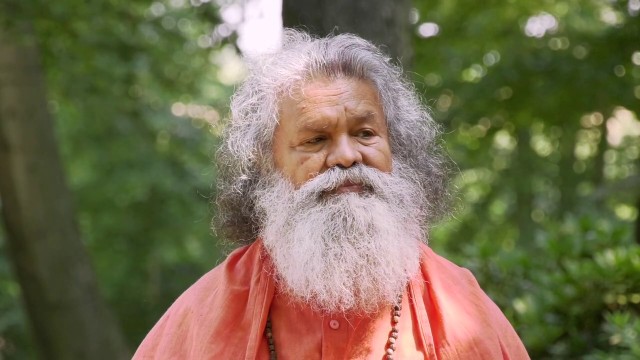
A spiritual discourse on living in the present moment and the nature of past, present, and future.
"Therefore, it is at present. Be in the present."
"So the past is gone. The present is here. But you think, 'In the future, I will also get this.' But you will not get it. That’s it."
An instructor addresses a group, advising them to release attachment to past experiences and future anxieties. He advocates for a simple, relaxed practice, contrasting it with other meditation techniques. Using stories, such as a dog losing its bread by coveting a reflection, he illustrates the futility of dwelling on what is gone or what might be, emphasizing that true practice (Anuṣṭhāna) is about being grounded in the now.
Filming location: Strilky, Czech Republic
Yoga Nidra or bhajan singing is like meditation
11:15 - 12:30 (75 min)
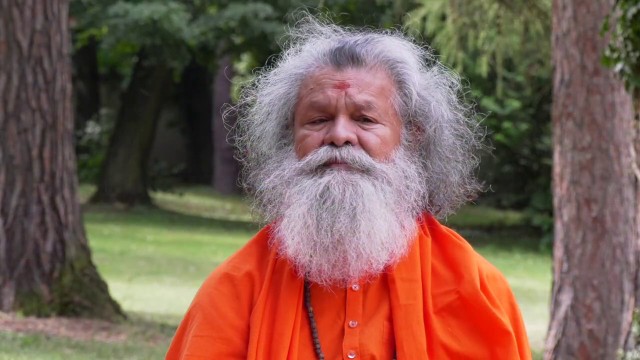
Morning satsang with Vishwaguruji from Strilky Ashram, Czech Republic. Singing bhajan Yogi jano ki Yoga Nidra. Bhajans sometimes are like meditation. We are awakened but in that state, it is very good to do yoga nidra or sing bhajans. There is a difference between yogi and rogi. The story of a great yogi and a young girl in Jaipur. The other story of an Italian professor and Vishwaguruji. The story of why Vishwaguruji changed the name of savasana to anandasana. Practising relaxation and bhramari pranayama.
How to overcome the obstacles of practicing
12:35 - 13:53 (78 min)
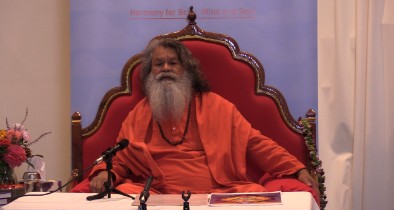
A spiritual discourse on the chakra system, focusing on the Maṇipūra chakra and the journey of self-mastery.
"My first master was my father, who imparted immense knowledge in a simple way. Through his instruction, I found my path."
"Strive for oneness, purity, without blemish. Do not stain your body."
Swami Maheśvarānand leads a satsang, weaving teachings on the manipura (navel) chakra with personal stories from his childhood and path to sannyas. He explains the symbolic animals and deities within each chakra, the role of the guṇas (qualities), and the necessity of a guru's guidance. The talk emphasizes practical discipline, advocating for specific prāṇāyāma techniques like Kapālabhāti and Bhastrikā to awaken inner energy, and concludes with a blessing.
Filming location: Wellington, New Zealand
Morning Yoga practice, Umag, Croatia (7/9)
14:00 - 15:54 (114 min)
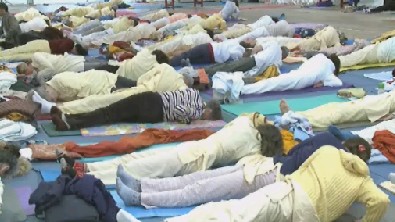
Morning Yoga practice from the international Yoga retreat Umag, Croatia on 1st of October
Dharma and Satsang
16:00 - 17:09 (69 min)
A satsang discourse on dharma, spiritual practice, and the importance of community.
"We always try to find the shortcuts, and we always try to find the easy way out."
"In the satsaṅg, on the full moon, usually we listen to Guru Gītā. Try to really listen to Guru Gītā. I have listened to Guru Gītā for more than 40 years, and I must say that every time I hear something new inside."
Following traditional invocations, a speaker addresses a gathering, weaving teachings on personal duty (dharma) with illustrative stories, including a sādhu persistently saving a scorpion and Nārada's lesson from Lord Viṣṇu. The talk emphasizes perseverance in one's path, learning from failures, and the critical role of regular satsang and deep, repetitive study of core teachings like the Guru Gītā over seeking novel techniques. A letter from the Indian Prime Minister congratulating the opening of Om Ashram is read. The session includes chanting and concludes with a universal peace mantra and final salutations.
Filming location: Strilky, Czech Republic
We are a part of God
17:15 - 18:25 (70 min)
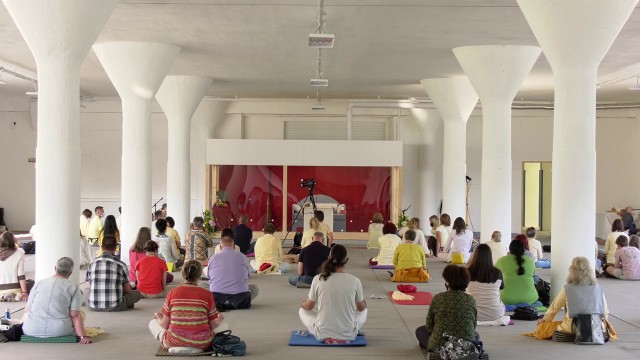
A spiritual discourse on the unity of yoga and the soul's journey.
"Yoga is not only physical, for the physical body, or just breath and concentration, etc. Yoga is very far-reaching."
"I said, your soul, your ātmā in you is your God."
A teacher addresses a gathering, explaining that all forms of yoga are one and that practice is a lifelong endeavor. He describes the soul's cyclical journey through 8.4 million life forms, the divine nature within each person, and the ultimate aim of merging with the cosmic consciousness. He concludes with a practical morning ritual, encouraging attendees to affirm "I am human" upon waking.
Filming location: Slovenia
Symbolical stories about Tat Tvam Asi and Ganesha
19:15 - 19:53 (38 min)
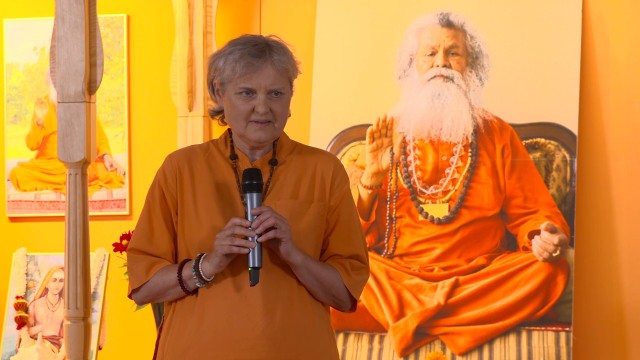
A satsang discourse weaving Upanishadic teachings with personal reflection on a spiritual name.
"The father explained that everything in the space comes from one cause. That cause is Brahma, or the Absolute."
"Gaṇeśa is the lord of these elements... What does it mean if someone is ruling over the elements? It means he is able to control, to balance, to harmonize all the elements."
Following opening prayers, the speaker narrates the Upanishadic story of a father teaching his son Śvetaketu the Mahāvākya "Tat Tvam Asi" (You are That), using analogies of clay, seeds, salt in water, and rivers in the ocean to illustrate the all-pervading Brahma. The discourse then shifts to a personal exploration of the speaker's name, Gajanant (Gaṇeśa), explaining its symbolism through Purāṇic stories, its role in bhajans as an invocation of the guru, and finally, its deepest meaning as the yogic principle that harmonizes the elements.
Filming location: Strilky, Czech Republic
Karma and koshas
20:05 - 21:01 (56 min)
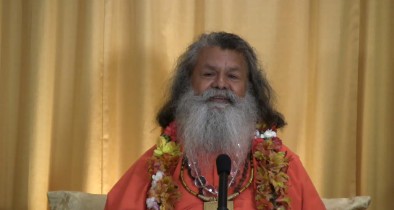
A spiritual discourse on the soul's journey, karma, and the five sheaths of being.
"When this all went back to the astral world, it was not easy... All the time in the astral world, the certain situation of the karma, the destiny, is going on."
"God has given the humans that 'I give you the freedom. Now I liberate you.' But there is a 'but.' Whatever you will do again, you have to face the karma."
A spiritual teacher delivers a satsang, explaining the cycle of birth, death, and karma across the astral and mortal worlds. He uses parables, like walking through a coal mine, to illustrate the challenges of human life and the consequences of action. The talk introduces the first two of the five kośas (sheaths), focusing on the physical (annamaya) and energy (prāṇamaya) bodies, emphasizing proper nourishment and life force.
Filming location: Alexandria, USA
Instructions for mantra practicing
21:05 - 22:02 (57 min)
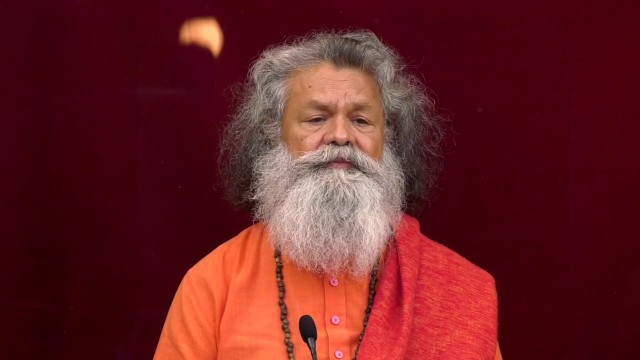
A spiritual seminar on the guru-disciple relationship and spiritual practice.
"Guru Kṛpā Hi Kevalam—the Gurudeva's blessings. And śiṣya kī ānanda maṅgalam. The disciples have happiness, joy."
"When we get mantra, guru mantra, then you should have that cloth. We are also going through the mantra. Then it means you have already taken your seat."
A spiritual teacher addresses a gathering, expounding on the principle that the guru's grace is everything and the disciple's state is one of auspicious joy. He discusses the nature of a true guru, the importance of the guru lineage (paramparā), and the correct use of a personal meditation seat (āsana). He shares a story about two disciples to illustrate the importance of following a guru's instructions without mental attachment, and concludes with practical advice for daily practice.
Filming location: Strilky, Czech Republic
Pollution
22:10 - 23:11 (61 min)
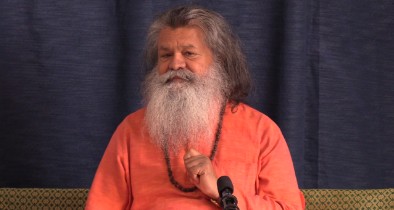
A spiritual discourse on the five sheaths (kośas) and the impact of nourishment.
"Jaisā khāī annā, vaisā rahe man—what kind of nourishment or food you are eating—like that will turn your mind."
"So first is the physical nourishment, Annamaya Kośa... What kind of food you will eat, like that will be your mentality."
Swami Ji explains the five layers of human existence, beginning with the food sheath (Annamaya Kośa). He emphasizes how diet shapes one's energy, mind, and consciousness, weaving in critiques of modern food systems, historical anecdotes about pre-industrial community life, and cautionary tales about arguing with a spiritual master. The talk uses the symbol of the crocodile in the Svādhiṣṭhāna chakra to represent destructive emotions.
Filming location: Auckland, New Zealand
The real Guru is in oneness
23:15 - 0:16 (61 min)
A spiritual discourse on universal oneness and the nature of the divine path.
"If a God says, 'Do not worship that God,' then neither is that God right, nor are you good. We have to come to oneness."
"The drop is not there. I am not a drop. I am the ocean. Similarly, we are in that condition. But you are still not near the beach of the ocean."
The speaker, likely a spiritual teacher, leads a satsang exploring the essential unity of all spiritual paths and deities. He emphasizes that a true guru or God would never forbid the worship of another, advocating for a non-sectarian devotion. Using metaphors like a drop merging into the ocean and the irreversible flight of an airplane, he discusses the preciousness of time, the journey of the soul, and the nature of prana (life force) as both a suffering entity and a divine connection. The talk weaves between philosophical points, practical advice, and anecdotal reflections, concluding with a call for inner purity and an end to religious duality.
Filming location: Strilky, Czech Republic
American
Australian