
European
The origin of Jyotir Linga
0:00 - 0:53 (53 min)
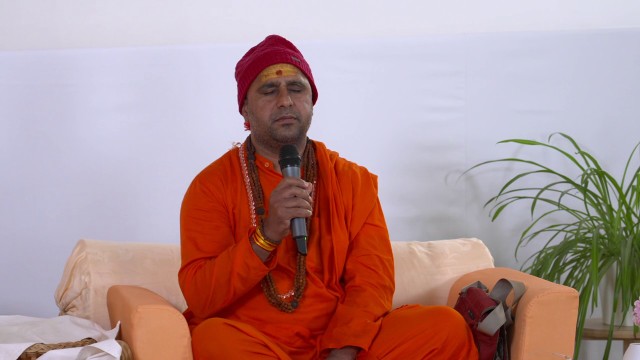
A satsang session featuring personal reflections and scriptural discourse.
"It’s not so much about what the voice is telling you. It’s more about how the voice is speaking with you."
"According to Śiva Purāṇa, Śiva was the creator of Brahmā and Viṣṇu... and that is the beginning."
Nārāyaṇa Purī, a life coach and childhood friend of the swamis, shares insights on managing the inner voice during high-pressure situations like sports, relating it to mantra practice. Swami Phulpuri then answers questions from devotees, explaining the origin of the Śivaliṅga according to the Śiva Purāṇa and affirming the Mahābhārata and Rāmāyaṇa as real historical texts offering lessons on overcoming negative thoughts.
Filming location: Strilky, Czech Republic
Morning Yoga practice, Umag, Croatia (6/9)
1:00 - 2:56 (116 min)
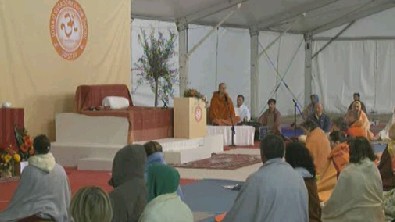
Morning Yoga practice from the international Yoga retreat Umag, Croatia on 30th of September
The same light lits in all of us
3:00 - 3:44 (44 min)
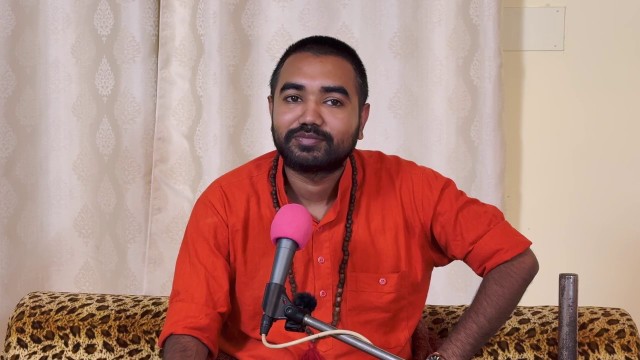
A satsang discourse on the nature of the Guru and the path to inner peace.
"Guru is Brahmā, Guru is Viṣṇu, and Guru is Maheśa. He holds all the qualities, or he is higher than God."
"The ultimate goal for us is mokṣa, self-realization. The help, the guidance, will always come from Gurudev, but the work has to be done by ourselves."
A speaker addresses a gathering, expounding on the supreme position of the Satguru as the embodiment of the divine trinity and the essential guide. He discusses the necessity of personal effort, surrender, and enduring the Guru's disciplining 'hammering' to progress spiritually. Themes include moving from ego to witness consciousness, the importance of faith over expectation, and finding lasting peace within.
Filming location: Jadan, Rajasthan, India
We are in the boat of Gurudev
3:50 - 4:38 (48 min)

Evening satsang from Strilky Ashram, Czech Republic. We are in a boat and should trust the captain, who is our guide, Gurudev. There are four kripas for us. Deva kripa, sastra kripa, Guru kripa, Kudki kripa. A Guru shows us the way, but we should decide whether to follow him or not. Our good karmas of past lives made it possible to have a Guru. Nothing is permanent in this world, only the bond between us and Gurudev. Sri Phulpuriji's story from his childhood. It is the 36th birthday of Sri Phulpiriji. There is Vishwaguruji's energy in every tree and stone in Strilky Ashram.
How can I love myself?
4:45 - 5:18 (33 min)
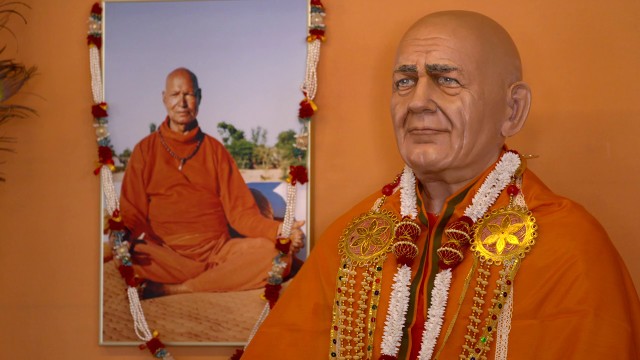
A satsang exploring the concept of self-love through the framework of the four aspects of divine grace (kripa).
"Swāmījī did not really use this word, but I know it comes from Holī Gurujī; he is always using that."
"Love each and every living being, if not more, then at least as much as yourself."
Guru Lilā, addressing the community, explains the four aspects of kripa: Deva Kripa (grace of the gods), Śāstra Kripa (grace of the scriptures), Guru Kripa (the Guru's grace), and Kuṭkī Kripa (self-grace). He focuses on Kuṭkī Kripa as self-love, arguing it is a prerequisite for loving others. He outlines a practical path to self-love through self-acceptance, self-understanding, and self-giving, linking it to core teachings. He shares an anecdote about a woman healing from ALS through self-love and concludes with a traditional story about Guru Nānak illustrating the complex workings of karma.
Filming location: Strilky, Czech Republic
We will go one day
5:25 - 6:08 (43 min)
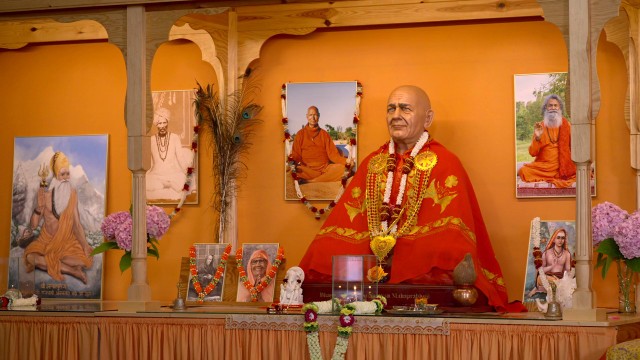
Evening satsang from Strilky Ashram, Czech Republic. We always worry about death. Death is a universal law. Our mind is always restless. We can train it by mantra. Manas is the storehouse of memories. Yogis are not attached to things. Only the bond between the disciple and the Guru is permanent. The story of a man who planned that when Yama came, he would hide somewhere. We should meditate always not only when we are in trouble. We should remember God every day, at least a little bit. Unfortunately present Indian generation is beginning to forget their roots. Birth and death come and go, but remember the name of God.
How can I love myself?
6:15 - 6:48 (33 min)
A satsang exploring the concept of self-love through the framework of the four aspects of divine grace (kripa).
"Swāmījī did not really use this word, but I know it comes from Holī Gurujī; he is always using that."
"Love each and every living being, if not more, then at least as much as yourself."
Guru Lilā, addressing the community, explains the four aspects of kripa: Deva Kripa (grace of the gods), Śāstra Kripa (grace of the scriptures), Guru Kripa (the Guru's grace), and Kuṭkī Kripa (self-grace). He focuses on Kuṭkī Kripa as self-love, arguing it is a prerequisite for loving others. He outlines a practical path to self-love through self-acceptance, self-understanding, and self-giving, linking it to core teachings. He shares an anecdote about a woman healing from ALS through self-love and concludes with a traditional story about Guru Nānak illustrating the complex workings of karma.
Filming location: Strilky, Czech Republic
The name of the God you can't get everywhere
6:55 - 7:28 (33 min)

Jadan Ashram, Rajasthan, India. Talk by M. M. Phulpuriji about the value of the Ashram. Everyday satsang motivate all. Devotees have divine light. Spiritual knowledge is day by day growing. To get peace, harmony and self realization. Without this human life is similar to animal life. Mirabaai bhajan translation.
Unity, love, forgiveness, and devotion
7:35 - 8:18 (43 min)

An evening satsang on unity, awareness, and forgiveness.
"Whenever Bhaktas come, unite, and sit together, that is Dīvālī, that is Christmas."
"More than anything, there is forgiveness. When we forgive people for what they have done, it's not for them, it's for us."
A swami addresses a full hall, emphasizing the power of collective devotion to transform the age. He discusses the importance of awareness in daily life, using personal anecdotes about zoning out while driving and reducing phone use. He stresses that selfless service (seva) requires devotion (bhava) and explains unity through the metaphor of beads on a thread of Guru Bhakti. He shares a story from the Ramayana about a dog seeking justice to illustrate forgiveness and the dangers of ego, concluding with teachings on living in the present and protecting dharma.
Filming location: Strilky, Czech Republic
The whole world is my family
8:25 - 9:07 (42 min)
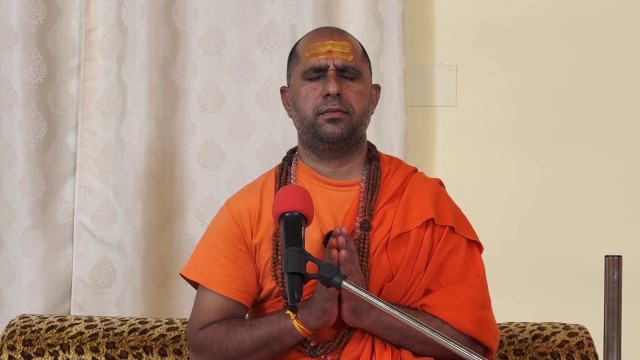
Evening Satsang from Jadan Ashram, Rajasthan, India. Many people in the world practise prayer and meditation, but they don't know the aim of human life. Great rishis are praying for every living being. We should control all of our senses. There is God's light in every creature. Great spiritual personalities blessed the inauguration of the Rupavas temple with their presence. All the Masters of our parampara were taking care of cows, and Vishwaguruji also does. Cows hold an important place in Indian culture. The products of the cow are very valuable. Never kill cows, but take care of them.
The Presence of the Guru
9:15 - 9:58 (43 min)
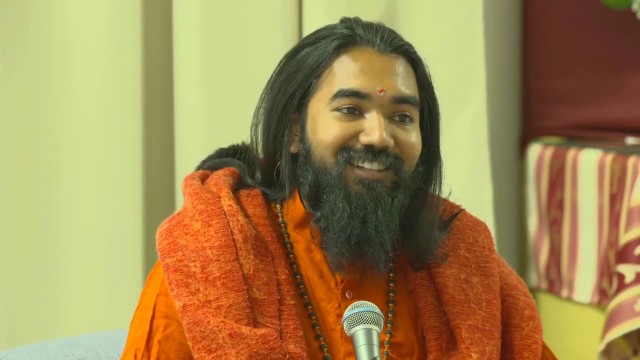
A satsang on devotion, surrender, and relating to the spiritual teacher.
"Gurudev is in the same space, same region, I would say, but we all should know that Gurudev is watching. It doesn’t matter where he is, he is always observing everything."
"If we have that mindset within us, that whatever we are doing, it’s him doing... then nothing is going to stop us in this world."
The lecturer addresses disciples in Slovenia, sharing insights from traveling with Gurudev, Sri Vishwaguru Mahamandaleshwar Paramahamsa Maheshwaranand Puri. He discusses the Guru's omnipresence, the importance of selfless service (seva), and cultivating trust over logic. He advises on etiquette in the Guru's presence, tells a parable about faith, and leads a guided meditation (manasik puja) to feel the Guru's inner presence.
Filming location: Slovenia
The same light lits in all of us
10:05 - 10:49 (44 min)
A satsang discourse on the nature of the Guru and the path to inner peace.
"Guru is Brahmā, Guru is Viṣṇu, and Guru is Maheśa. He holds all the qualities, or he is higher than God."
"The ultimate goal for us is mokṣa, self-realization. The help, the guidance, will always come from Gurudev, but the work has to be done by ourselves."
A speaker addresses a gathering, expounding on the supreme position of the Satguru as the embodiment of the divine trinity and the essential guide. He discusses the necessity of personal effort, surrender, and enduring the Guru's disciplining 'hammering' to progress spiritually. Themes include moving from ego to witness consciousness, the importance of faith over expectation, and finding lasting peace within.
Filming location: Jadan, Rajasthan, India
Only your spiritual work will go with you
10:55 - 11:41 (46 min)
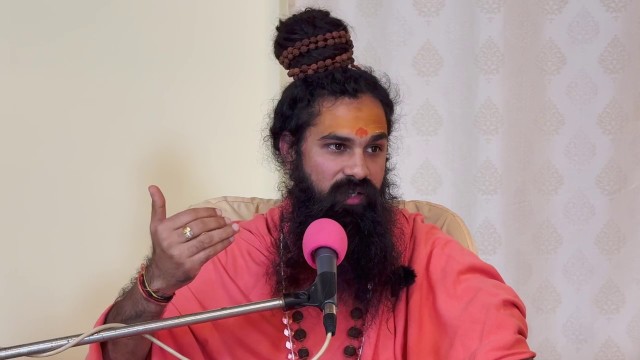
A spiritual discourse on the preciousness and purpose of human life.
"Vishwagurujī is always mentioning that 8.4 million creatures are in this world. And this is one human life. That life, if we get, then we can get liberated."
"If you are human, what should be the difference?... If we have some dharma, if we are doing bhakti, if we are doing spiritual practices, if we are following guru ājñā... then we are the human in human body."
A speaker at Om Ashram addresses a gathering, explaining why human life is a rare opportunity for liberation. He uses an allegory of a man trapped in a well to describe attachment to worldly illusion (māyā) and the need for a guru's guidance. The talk contrasts basic animal instincts with the spiritual duties that define a human being, urging the audience to follow the path of seva, bhakti, and sādhanā.
Filming location: Jadan, Rajasthan, India
The Inner States: Jagrat, Svapna, Suṣupti, and Beyond
11:45 - 11:59 (14 min)
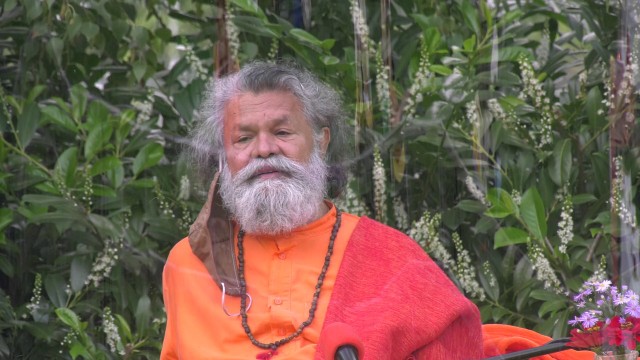
A spiritual discourse on the states of consciousness and the importance of sleep.
"First, we are Jāgrat. Jagrat means awake... This is whatever we see now: we were cooking, we are eating, we are drinking, we are shopping—anything we are doing. This is from outside to inside."
"What this sleep means is that we are 100% aware about our Self, and so it is very comfortable, relaxed, and peaceful. That is your life."
Swami Madhvānandaji addresses the community, explaining the three common states of waking (Jagrat), dreaming (Svapna), and deep sleep (Suṣupta). He emphasizes the divine quality of sleep as a time to be with the inner Self (Ātmā) and introduces the higher state of Yoga Nidrā, described as a conscious sleep where yogis are awake to the Supreme. The talk concludes with a transition to the Sandhyā prayer, marking the junction of day and night.
Filming location: Strilky, Czech Republic
Around the world - Satsang YC Blanicka
12:00 - 12:06 (6 min)
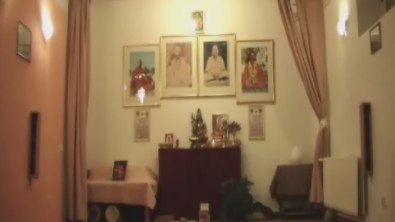
New Year satsang from Blanicka Yoga Centre Prague.
Around the world - Shivaratri at Jadan Ashram
12:10 - 12:17 (7 min)
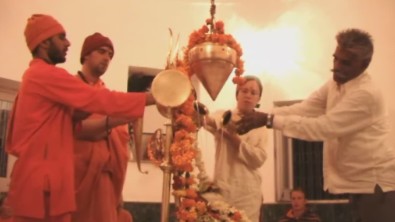
Explanation of the Isa Upanisad
12:25 - 12:39 (14 min)
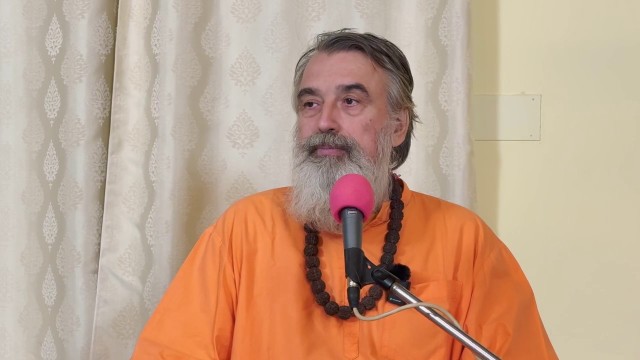
A discourse on the Īśāvāsya Upaniṣad, focusing on the integration of worldly and spiritual knowledge.
"Those who are studying this knowledge [worldly] are going into the darkness... But those who are concentrated only on spiritual knowledge are finishing even in the worst darkness."
"From time immemorial, the Vedas were telling karma yoga and spiritual practice go together. Always go together."
The lecturer explains the sixth mantra, which presents a paradox: exclusive pursuit of either worldly knowledge (avidyā) or spiritual knowledge (vidyā) leads to a form of darkness. He clarifies that the path is to use both together—worldly knowledge for life and spiritual knowledge to transcend death. The teaching emphasizes understanding both the manifest and unmanifest realities to cross beyond attachment and attain liberation.
Filming location: Jadan, Rajasthan, India
Trust and faith
12:45 - 12:57 (12 min)
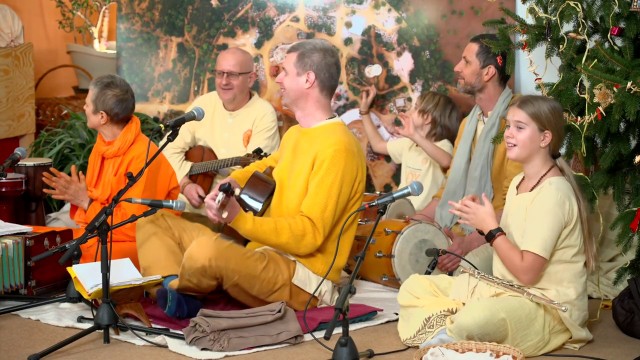
A morning satsang on faith, trust, and overcoming inner enemies.
"When we have faith in someone or something, when we trust in Gurudev and his vision, then things flow automatically in our life."
"If you become one with that guru and you become one and realize that he is observing, he knows everything, you tell everything to him inwardly."
The lecturer leads the second morning of a seminar, addressing distractions and the inner enemies like jealousy and the restless 'monkey mind'. He shares a story from the Lilā Amṛta about Holy Guruji's unwavering faith during a train journey without a ticket, illustrating complete surrender. The talk emphasizes realizing the self as the observer and uniting with the guru's consciousness.
Filming location: Strilky, Czech Republic
Parama Guru Swamiji
13:05 - 14:07 (62 min)
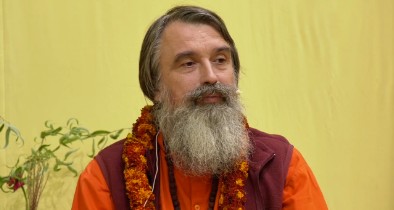
Evening satsang from weekend Yoga seminar in Kranj, Slovenia. Mahamandaleshwar Swami Gyaneshwar Puri explains the importance of the work of the Guru by translating the bhajan, "Parama Guru Swamiji".
The Endless Glory of the Rāmāyaṇa
14:15 - 15:06 (51 min)
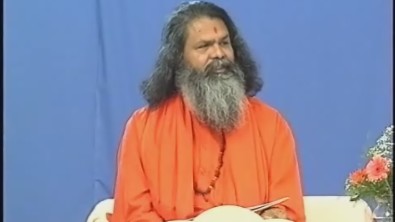
A discourse on the glory of the Rāmāyaṇa and the sacred city of Ayodhyā.
"The glory of God is Ānanda, endless. There is never an end to God’s glory."
"In those hearts where God is known, that heart is a temple. Otherwise, it is a cave of the Rakṣasas, or a grave."
The speaker expounds on the infinite, joyful nature of the Rāmāyaṇa's wisdom, explaining its transmission from Lord Śiva to Pārvatī and then through Tulsīdās. He describes the divine qualities of Lord Rāma, the holiness of Ayodhyā and the Sarayū River, and emphasizes remembering God in all circumstances. The talk connects devotion to environmental reverence and concludes with the liberating power of the sacred land.
Filming location: Strilky, Czech Republic
Explanation of the Isa Upanisad
15:10 - 15:24 (14 min)
A discourse on the Īśāvāsya Upaniṣad, focusing on the integration of worldly and spiritual knowledge.
"Those who are studying this knowledge [worldly] are going into the darkness... But those who are concentrated only on spiritual knowledge are finishing even in the worst darkness."
"From time immemorial, the Vedas were telling karma yoga and spiritual practice go together. Always go together."
The lecturer explains the sixth mantra, which presents a paradox: exclusive pursuit of either worldly knowledge (avidyā) or spiritual knowledge (vidyā) leads to a form of darkness. He clarifies that the path is to use both together—worldly knowledge for life and spiritual knowledge to transcend death. The teaching emphasizes understanding both the manifest and unmanifest realities to cross beyond attachment and attain liberation.
Filming location: Jadan, Rajasthan, India
The origin of Jyotir Linga
15:30 - 16:23 (53 min)
A satsang session featuring personal reflections and scriptural discourse.
"It’s not so much about what the voice is telling you. It’s more about how the voice is speaking with you."
"According to Śiva Purāṇa, Śiva was the creator of Brahmā and Viṣṇu... and that is the beginning."
Nārāyaṇa Purī, a life coach and childhood friend of the swamis, shares insights on managing the inner voice during high-pressure situations like sports, relating it to mantra practice. Swami Phulpuri then answers questions from devotees, explaining the origin of the Śivaliṅga according to the Śiva Purāṇa and affirming the Mahābhārata and Rāmāyaṇa as real historical texts offering lessons on overcoming negative thoughts.
Filming location: Strilky, Czech Republic
Bhajans with Swami Gajanandji
16:30 - 17:09 (39 min)
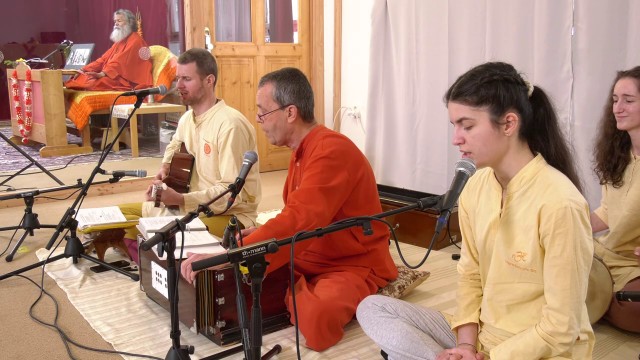
Morning satsang with Vishwaguruji from Strilky Ashram, Czech Republic.
Bhajans from Poprad
17:15 - 17:59 (44 min)
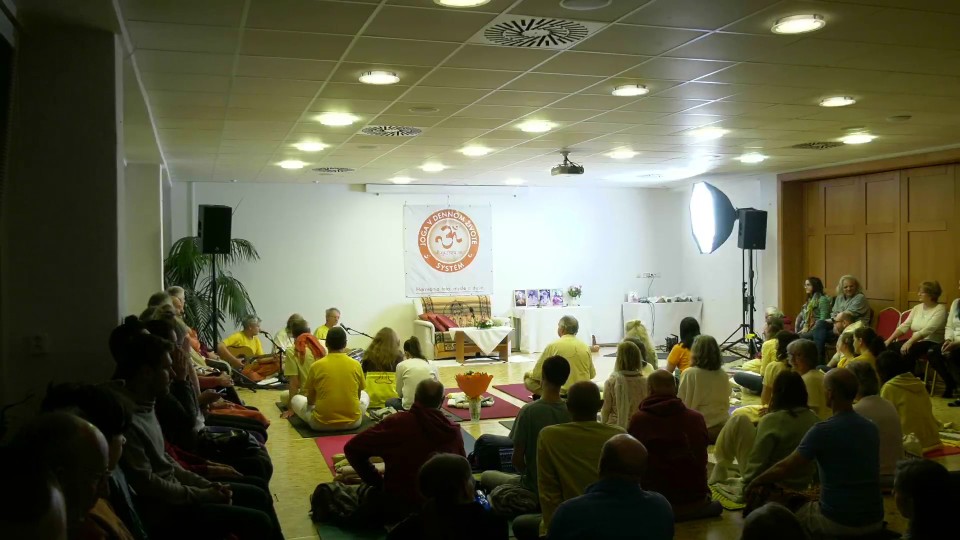
Bhajans from Tatra Hotel, Poprad, Slovakia.
Bhajan evening from Strilky Ashram
18:05 - 18:53 (48 min)
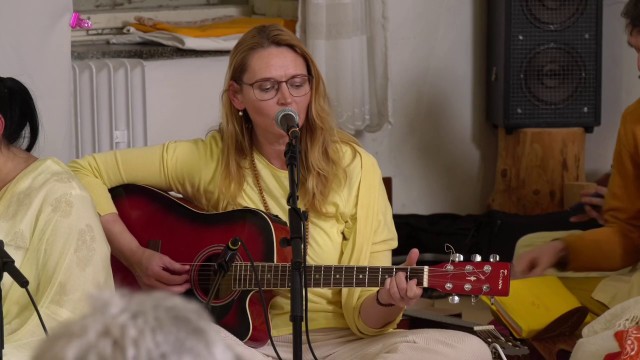
Evening satsang with Vishwaguruji from Strilky Ashram, Czech Republic. Bhajan singing.
The calling of Sri Alakhpuriji
19:00 - 19:11 (11 min)
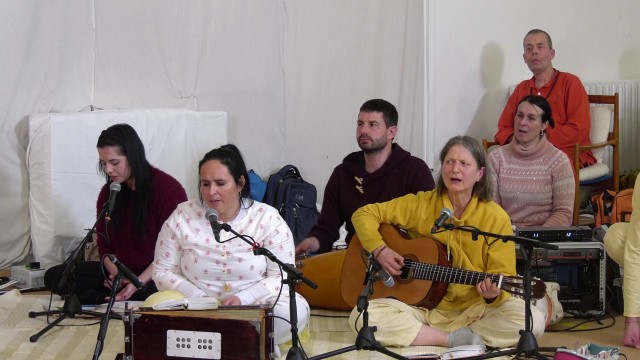
Evening satsang with Vishwaguruji from Strilky Ashram, Czech Republic. Bhajan Sataguru Alakha Puriji Avo.
Bhajans from Oosterhout
19:15 - 20:20 (65 min)
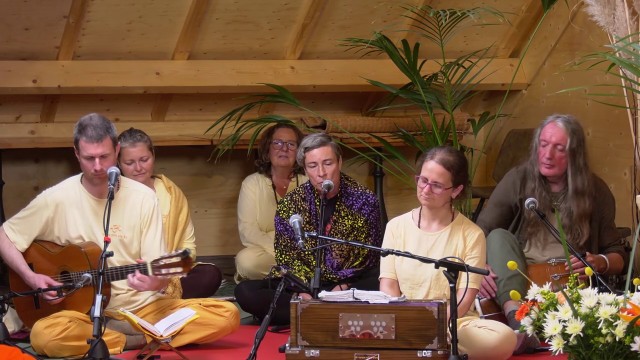
Evening satsang with Vishwaguruji from Oosterhout, Noord-Brabant, The Netherlands.
For meditation we need calmness
20:25 - 21:26 (61 min)
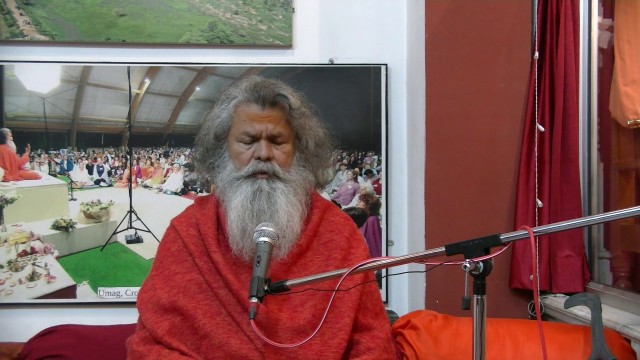
A spiritual discourse on the prerequisites for true meditation and self-realization.
"If you are restless and you meditate, then you become even more restless."
"Mokṣa only can give Gurudev... And that guru is not what we are thinking, could be only in physical form."
A teacher addresses a gathering, explaining that discipline and a pure, guru-focused devotion are essential to overcome restlessness and attain meditation. He uses stories of Ramakrishna, Vivekananda, and a parable about a bamboo surrendering to God to illustrate the necessity of grace and surrender. The talk covers the pitfalls of ego, the levels of consciousness, and briefly touches on the yogic science of chakras and sacred sounds.
Filming location: Jaipur, Rajasthan, India
Sources of happiness
21:30 - 22:52 (82 min)
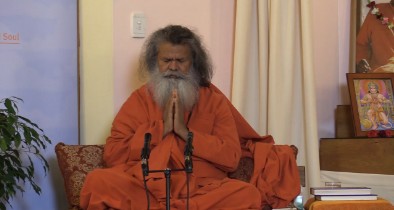
A satsang on the foundations of health and happiness through Yoga and Āyurveda.
"Health is not everything, but everything is nothing without health."
"Yoga and Āyurveda are like the two wings of a bird to fly."
Swami Maheshvarananda leads an evening talk, presenting health as the primary wealth and outlining Āyurvedic principles for a harmonious life. He shares a parable about a king and a beggar with a bottomless pot to illustrate the insatiability of human desire. The session includes practical demonstrations of energy-awareness and touch techniques for self-healing, and concludes with a critique of modern diet and lifestyle.
Filming location: New Zealand
There is no yoga with meat and alcohol
23:01 - 0:00 (59 min)
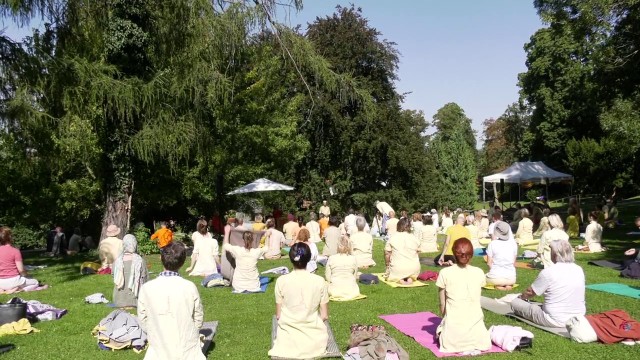
Sri Holy Guruji Jayanti Morning satsang with Vishwaguruji from Strilky Ashram, Czech Republic. Yogis have different techniques. But all of them are yoga. Many years ago, people in Europe didn't know what yoga is. Slowly people began to love animals more and they got more peace. Nowadays in many yoga schools they do not speak about meat and alcohol. Many people give up eating meat to be more healthy. Practising Bari Khatu Pranam, ashwini mudra, AUM chanting, relaxation in sashanka asana, bhramari pranayama and concentration.
American
Australian