
European
Practice from Wellington with MM Vivekpuri
1:00 - 1:59 (59 min)

Wellington, New Zealand
Beauty is in our heart
2:05 - 2:53 (48 min)
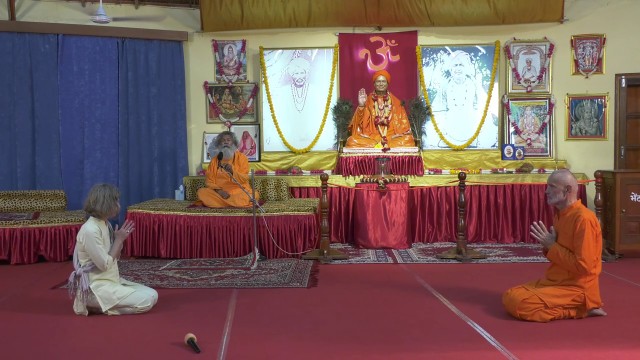
Evening satsang with Vishwaguruji from Jadan Ashram, Rajasthan, India. Yogis don't eat meat and don't drink alcohol. Nowadays there are many people in the world who don't eat meat. Practising Bari Khatu Pranam, relaxation, concentration om tha navel, bhramari pranayama and concentration on the heart. Beauty is in our heart.
Pollution
3:00 - 4:01 (61 min)
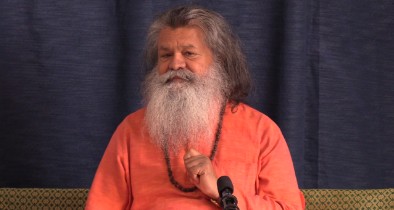
A spiritual discourse on the five sheaths (kośas) and the impact of nourishment.
"Jaisā khāī annā, vaisā rahe man—what kind of nourishment or food you are eating—like that will turn your mind."
"So first is the physical nourishment, Annamaya Kośa... What kind of food you will eat, like that will be your mentality."
Swami Ji explains the five layers of human existence, beginning with the food sheath (Annamaya Kośa). He emphasizes how diet shapes one's energy, mind, and consciousness, weaving in critiques of modern food systems, historical anecdotes about pre-industrial community life, and cautionary tales about arguing with a spiritual master. The talk uses the symbol of the crocodile in the Svādhiṣṭhāna chakra to represent destructive emotions.
Filming location: Auckland, New Zealand
Whole universe is in our body
4:05 - 4:56 (51 min)
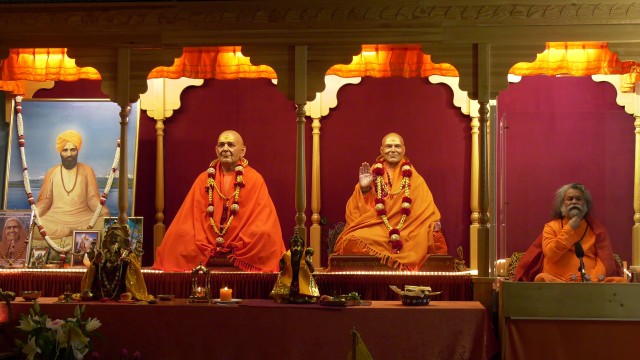
Evening satsang with Vishwaguruji from Vienna, Austria. Silent meditation and prayer with Vishwaguruji.
Release your bad qualities
5:00 - 5:52 (52 min)
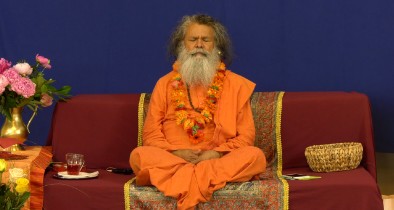
Morning satsang with Vishwaguruji from weekend Yoga seminar in Salzburg, Austria. Traditions are important and more or less similar in the whole world. The Austrian culture is very rich and beautiful. Many books of ancient Indian culture was destroyed by Moguls. We can digest everything except the truth. Tell honestly yourself your negative qualities. Remain natural as it is. Culture and education we should get from our parents. Short meditation how to turn negative to positive.
The Guru can change our destiny
6:00 - 6:22 (22 min)
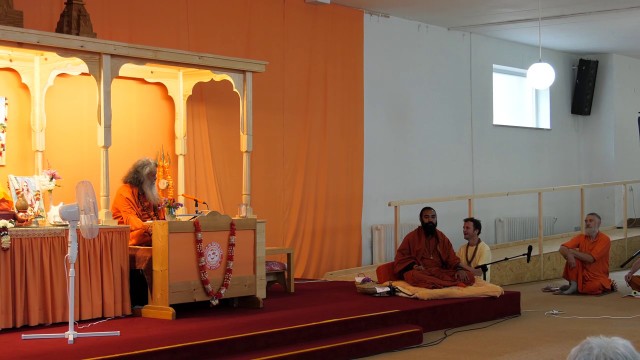
A spiritual discourse on the guru's power to transform destiny.
"Everything depends on our karmas... What is written for you, what is written in your destiny, that is what is going to happen."
"Guru Kṛpāhi Kevalam... So this is Guru Kṛpā. The guru is the one who can actually change your destiny if he wants."
The lecturer narrates a traditional story from Holī Gurujī about a king's guru and the Vedāntā, the deity who writes destiny. The tale illustrates how a guru's compassion and clever guidance can alter the seemingly fixed fate of two princes, demonstrating the supreme grace of the guru. The discourse emphasizes the guru's equal love for all, regardless of status.
Filming location: Strilky, Czech Republic
Shiva and the Chakras
6:30 - 7:55 (85 min)
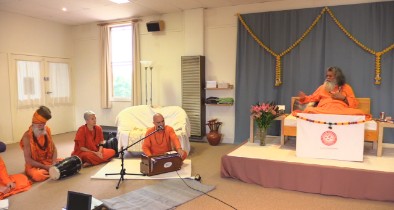
Evening satsang with Vishwaguruji from Melbourne, Australia. One of the best ways to memorize something is to create a little story about it. This is similar with songs. Vishwaguruji explains the meaning of the ancient story about the nectar of immortality rising from the churning of the ocean. The first lower chakras in the feet are the so-called earth chakras; chakras further up in the legs are connected with vegetation; and then continur up to the animal qualities.
How to coordinate with the outer world, Vep
8:00 - 8:50 (50 min)
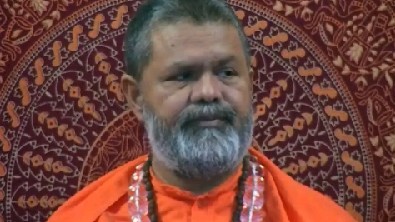
A spiritual discourse on the foundational principles of sādhanā (spiritual practice).
"Practices alone will not help us. They can only be fruitful if we follow physical and mental principles. These are called Śayamit and Niyamit."
"Viveka is that which will divide truth and untruth completely... who has viveka all the time is the happiest and safest person."
The speaker explains the core disciplines for a spiritual life: Śayamit (self-control and setting boundaries) and Niyamit (daily discipline). He details how these practices, along with regular prayer (sandhyā), purify the mind and senses. The discourse emphasizes the critical role of viveka (discrimination) in distinguishing truth from untruth, leading to the discovery of the inner fountain of joy and the immortal Ātmā.
Filming location: Vép, Hungary
We need Gurudev
8:55 - 9:49 (54 min)
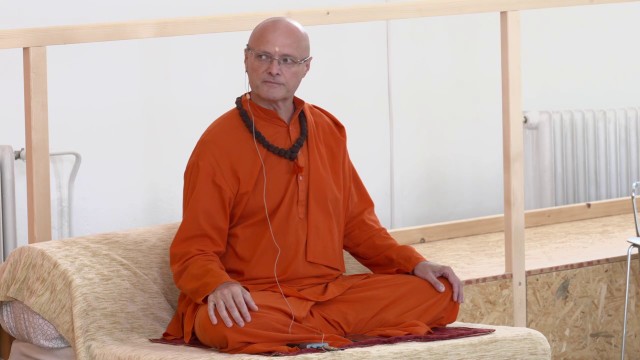
A satsang discourse on the necessity of the guru and the goal of Advaita philosophy.
"The moment you begin to think you have already heard and know everything, in that moment your free fall begins."
"Understand from this that the guru is not the physical body. It is most important to understand that the guru is that Guru-Tattva, the element of the guru."
A speaker leads a satsang, emphasizing the eternal student's attitude and the critical role of the embodied spiritual master (Guru-Tattva) as the essential guide. Using stories and analogies—such as the matchbox with a diamond, the friend with a boat, and the river merging into the ocean—the talk explains the guru's function and explores the ultimate goal of yoga: to transcend the cycle of rebirth and realize the Advaita (non-dual) union of the individual self with the cosmic Self.
Filming location: Strilky, Czech Republic
The form of God is the vibration
9:55 - 10:55 (60 min)
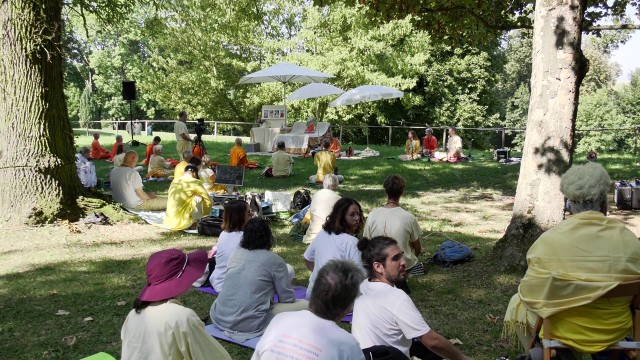
Morning satsang from Summer Yoga Retreat in Strilky, Czech Republic. Lecture by Swami Gajanandji about Om. Om is that on which yogis meditate all the time. Om is the original mantra, every other mantras should contain the Om. Chanting Om all together, and a short meditation on Om. Singing the bhajan about Om.
Whole Night Satsang - Rupawas
10:30 - 13:30 (180 min)
Whole night satsang from Shri Maheshwar Mahadev Mandir. The Satsang will be held in the holy presence of Vishwaguru Mahamandaleshwar Paramhans Shri Swami Maheshwaranandpuri Ji Maharaj and other saints, including: - Nirvan Pithadhishwar Mahamandaleshwar Swami Vishokanand Bharti Ji Maharaj - Brahmasavitri Siddha Pithadhishwar Shri Tulchharam Ji Maharaj - Mahamandaleshwar Swami Atmanandpuri Ji Maharaj - Mahamandaleshwar Swami Jagdish Puri Ji Maharaj Location: Shri Maheshwar Mahadev Mandir, Rupawas, Tehsil: Sojat, District: Pali (Rajasthan).
Time according to Vedas and Puranas I part
11:00 - 11:55 (55 min)
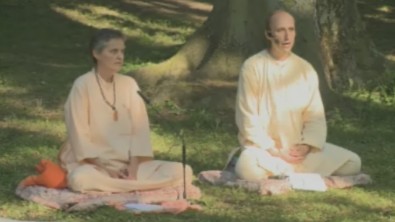
A lecture on the Vedic and Purāṇic concept of cyclical time.
"The concept of time, as understood by the Vedas and those ancient scriptures, is cyclical. Everything moves in a circle."
"One thousand Mahāyugas form one Kalpa... A Kalpa lasts 4.32 billion years. It is either Brahmā’s day or Brahmā’s night."
A speaker at a yoga retreat in Střílky explains the vast, cyclical time scales of Hindu cosmology. He details the durations of the four yugas, the Mahāyuga, and the Kalpa, describing the periodic dissolutions (Laya, Pralaya) and the roles of Brahmā, Viṣṇu, and Śiva. He draws parallels to modern scientific concepts like the expanding universe and the cosmological singularity, and shares a story about Indra to illustrate the transience of even divine positions.
Filming location: Strilky, Czech Republic
Part 1: Welcoming Address and Valedictory Session on Yoga for Wellness
12:00 - 13:08 (68 min)
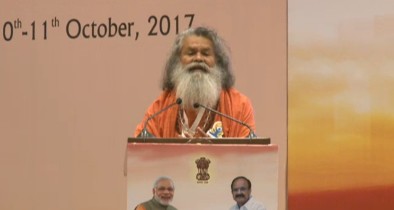
A valedictory session for a conference on "Yoga for Wellness," featuring addresses by government ministers and spiritual leaders.
"Yoga for wellness is this year’s subject. It is not just about the practice of yoga, but also about using it in the lives of every human being for achieving better health and wellness."
"Our method of treatment does not have any side effects. That is why we develop research about it, develop websites, develop programming, develop its videos."
The session opens with a welcome address emphasizing yoga's global role and the need to integrate traditional and modern medicine. Union Minister Nitin Gadkari delivers a valedictory address, sharing his personal health transformation through yoga and proposing structured training and research to professionalize the field. Following remarks from other ministers, Professor H.R. Nagendra gives a speech contrasting the multidimensional approach of yoga with modern medicine's limitations for non-communicable diseases. Swami Maheshvarananda and actress Anu Agarwal also share perspectives, with Agarwal recounting her recovery from a major accident through yoga.
Filming location: Delhi, India
How to use the mantra
13:15 - 13:53 (38 min)
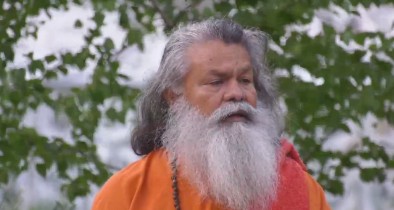
A spiritual discourse on the power and techniques of mantra chanting.
"The chanting of the name of God, spiritual songs, or a saint’s name brings peace of mind."
"When you chant mantras, it creates a resonance. That resonance spreads into the environment, purifying it."
Swami Ji explains the profound effects of mantra practice on purifying the individual and the environment. He details five techniques: writing (likhit), audible chanting, whispered repetition (upāṁśu), mental repetition (mānasik), and spontaneous repetition (ajapa). The talk connects mantra resonance to the body's chakras, warns against spiritual greed, and concludes with a call to practice and a group chant.
Filming location: Strilky, Czech Republic
Feel your heart
13:55 - 14:11 (16 min)
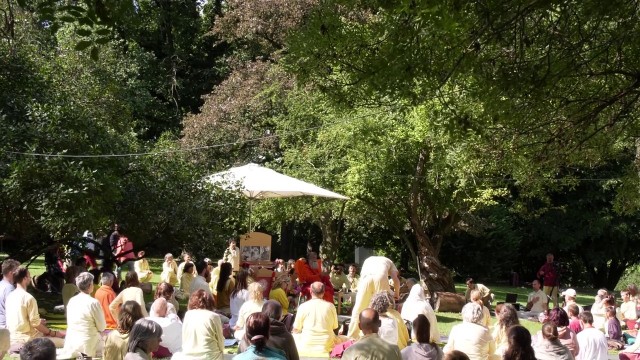
A guided meditation on heart-centered awareness and breath.
"Place your right hand gently on your heart. You will feel warmth. The breath originates from here; it is warm."
"The main thing is only to think in your heart. This is not easy. We think about other people, about where we are going, or what we can do."
A spiritual teacher guides participants through a meditation, instructing them to place a hand on the heart to feel its warmth as the source of the breath. The focus shifts between the heart and the navel, with an emphasis on inward attention, a straight posture, and a gentle breath. The teacher interjects with lighthearted, practical remarks to maintain a relaxed atmosphere while explaining the significance of these points from a yogic perspective regarding prāṇa.
Filming location: Strilky, Czech Republic
Part 1: Yoga in Daily Life: Union, Harmony, and Self-Knowledge
14:15 - 15:32 (77 min)
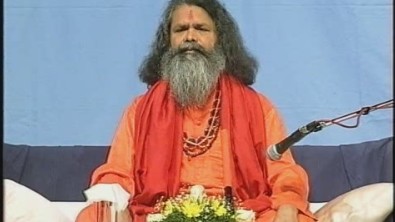
A public lecture on integrating yoga philosophy and practice into daily life, focusing on self-knowledge and chakra awakening.
"Yoga is a balancing principle which balances the entire universe. Where there is balance, there is harmony."
"Unless we change our qualities, we cannot become one with God. Human qualities are love, understanding, kindness, mercifulness, helping, spiritual, and so on."
Swami Paramadvaiti addresses an audience, explaining yoga as a science for achieving harmony and union with the cosmic consciousness. He discusses the nature of human problems, the journey of the individual soul, and the importance of cultivating positive qualities. The lecture then delves into practical yoga techniques for health and stress relief, before providing a detailed teaching on the energy body, focusing on the awakening and purification of the Svādhiṣṭhāna chakra and its associated emotions.
Filming location: Croatia
Mantra and Mala
15:41 - 16:19 (38 min)
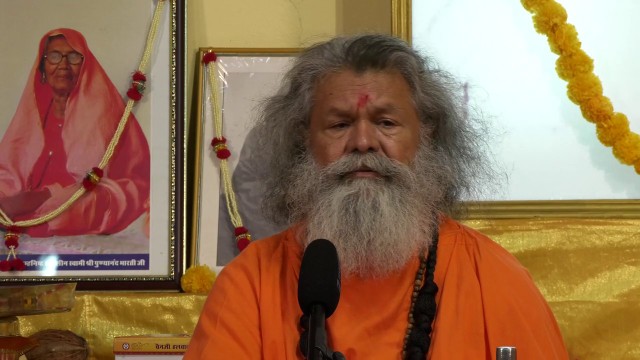
A spiritual discourse on the use of prayer beads (mala) and the practice of mantra.
"Life is everything. Whether it is a human, a cow, a buffalo, a goat, or any being... its soul, that Ātmā, is to see our Self."
"One mala means for us one step toward God. One step to God. This mala goes with mantra."
A speaker delivers a teaching on spiritual practice, emphasizing reverence for all life and the importance of constant remembrance of God. He explains the purpose of the mala as a tool for mantra repetition, detailing two methods: one with a guru bead for seated practice and another for constant, walking remembrance (sumaran). He shares anecdotes about devotion, including a story about Hanuman, and concludes by describing the ultimate goal of merging with divine light.
Filming location: Jadan, Rajasthan, India
Bhajans from Strilky
16:30 - 17:01 (31 min)
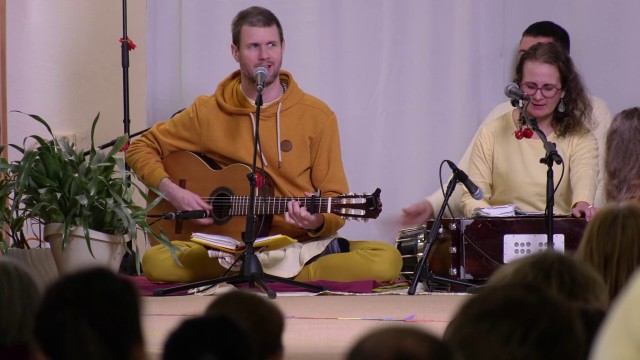
Bhajan singing from Strilky Ashram, Czech Republic.
Bhajan singing from Vep
17:05 - 17:32 (27 min)
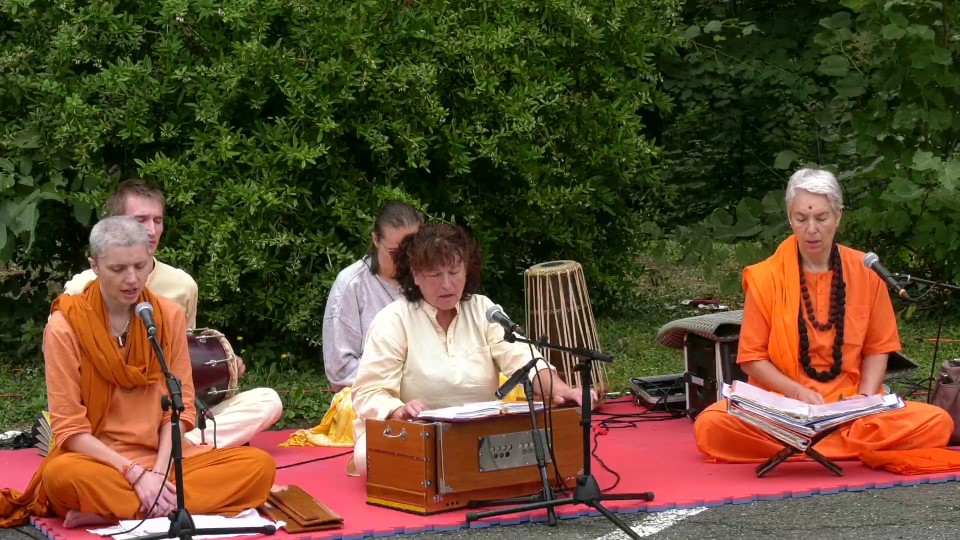
Morning satsang with Vishwaguruji from Vep, Hungary. Bhajan singing. Translation of the bhajan "Itna to karana Guruji"
Bhajans from Rijeka
17:40 - 18:00 (20 min)
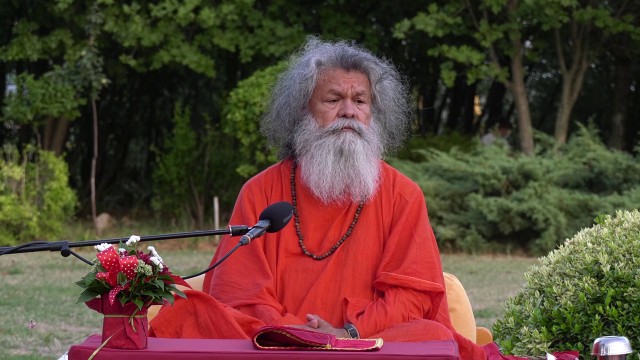
Evening satsang with Vishwaguruji from Rijeka Ashram, Croatia. Singing Bhajans.
Bhajans from Rijeka
18:05 - 18:33 (28 min)
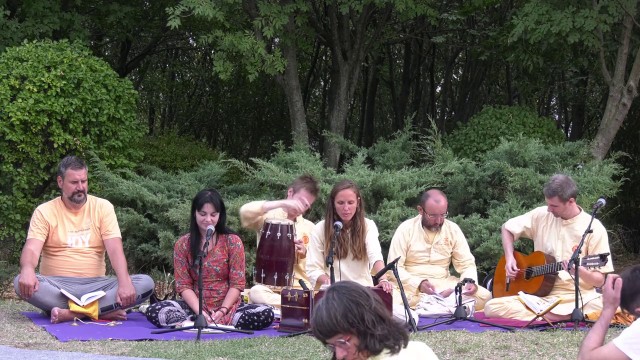
Evening satsang with Vishwaguruji from Rijeka Ashram, Croatia.
Bhajan evening from Vep
18:40 - 19:35 (55 min)
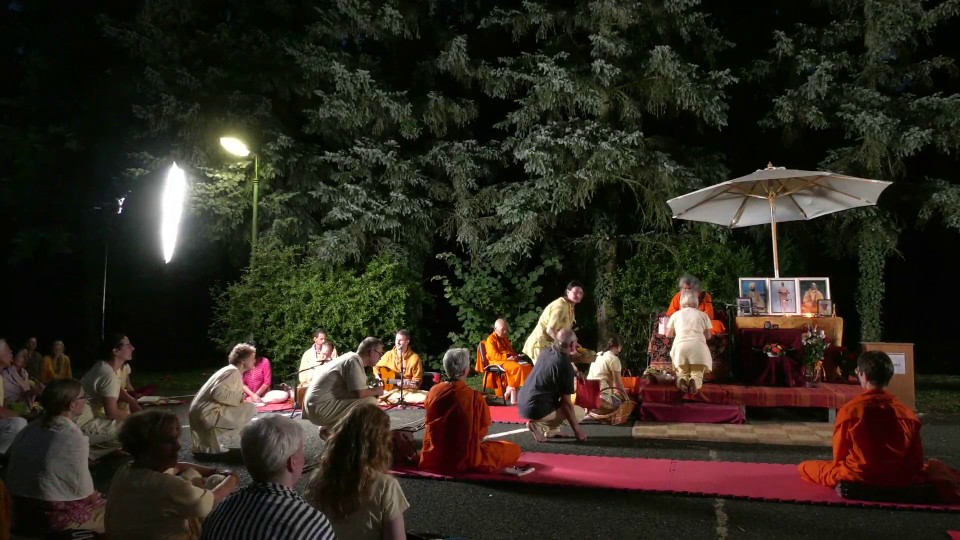
Evening satsang with Vishwaguruji from Vep, Hungary. Bhajan singing.
Success in Yoga
19:40 - 20:55 (75 min)
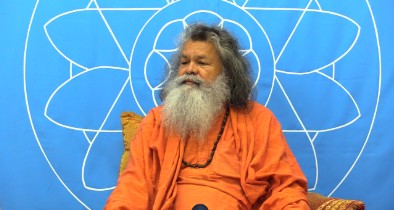
A spiritual discourse on the essence of yoga, cosmology, and the path to liberation.
"If you practice yoga or pursue any goal in life, you need a master to achieve it."
"Yoga is a lifelong journey... Yoga is ancient, the very first element in creation, given by God, by Śiva."
The speaker delivers an extensive teaching, weaving together the origins of yoga from Śiva, the divine trinity of Brahmā, Viṣṇu, and Śiva, and the symbolic journey of the Kuṇḍalinī through the chakras. He uses stories from the Mahāśivapurāṇa, analogies from nature, and personal anecdotes to illustrate the necessity of a true Satguru, the perils of wrong association (ku-saṅgha), and the disciplined, lifelong commitment required for authentic spiritual practice.
Filming location: Sydney, Australia
The Guru can change our destiny
21:00 - 21:22 (22 min)
A spiritual discourse on the guru's power to transform destiny.
"Everything depends on our karmas... What is written for you, what is written in your destiny, that is what is going to happen."
"Guru Kṛpāhi Kevalam... So this is Guru Kṛpā. The guru is the one who can actually change your destiny if he wants."
The lecturer narrates a traditional story from Holī Gurujī about a king's guru and the Vedāntā, the deity who writes destiny. The tale illustrates how a guru's compassion and clever guidance can alter the seemingly fixed fate of two princes, demonstrating the supreme grace of the guru. The discourse emphasizes the guru's equal love for all, regardless of status.
Filming location: Strilky, Czech Republic
Anahat chakra and spirituality
21:30 - 22:38 (68 min)
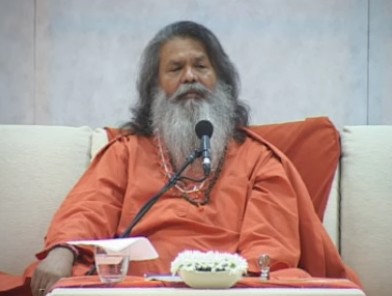
In the city of Celje, Slovenija in the blue hall of the fair center, Swamiji had a lecture on the topic of Anahat chakra and Spirituality on the 5th October 2008.
Pollution
22:45 - 23:46 (61 min)
A spiritual discourse on the five sheaths (kośas) and the impact of nourishment.
"Jaisā khāī annā, vaisā rahe man—what kind of nourishment or food you are eating—like that will turn your mind."
"So first is the physical nourishment, Annamaya Kośa... What kind of food you will eat, like that will be your mentality."
Swami Ji explains the five layers of human existence, beginning with the food sheath (Annamaya Kośa). He emphasizes how diet shapes one's energy, mind, and consciousness, weaving in critiques of modern food systems, historical anecdotes about pre-industrial community life, and cautionary tales about arguing with a spiritual master. The talk uses the symbol of the crocodile in the Svādhiṣṭhāna chakra to represent destructive emotions.
Filming location: Auckland, New Zealand
The way how yoga is helping us
23:50 - 0:53 (63 min)
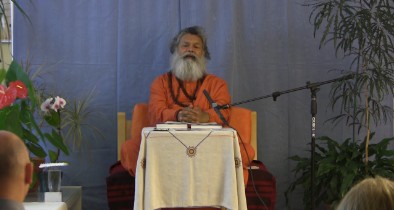
A lecture on the chakra system and spiritual purification.
"The human birth and human body possess very special abilities and a most powerful tool: the intellect. Through our intellect, we can discover all our hidden powers."
"Before we awake or open the chapter of the chakra... [there are] three negative points to address... mala, vikṣepa, and āvaraṇa."
Swami Paramananda leads an evening satsang from the Yoga and Life Ashram, continuing a series on the chakras. He explains the human body's subtle anatomy, including the 72,000 nerves and the three primary nāḍīs (Iḍā, Piṅgalā, Suṣumṇā). The core teaching focuses on the three obstacles to spiritual awakening: impurities (mala), mental disturbances (vikṣepa), and the veil of ignorance (āvaraṇa). He details methods for purification through Haṭha Yoga techniques, control of the senses, and satsang, weaving in stories and analogies about the mind, karma, and the goal of liberation beyond the cycle of birth and death.
Filming location: New York, USA
American
Australian