
European
The bansuri flute
0:25 - 0:55 (30 min)
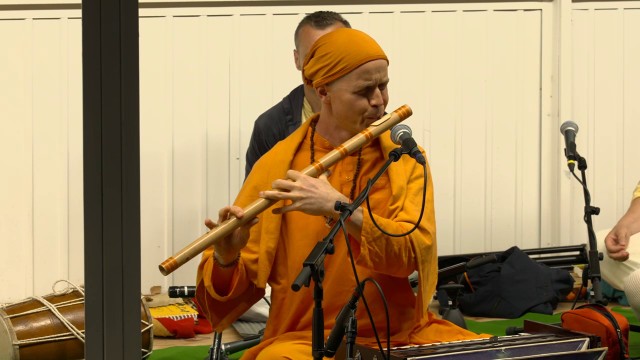
Evening satsang from Yoga Summer Retreat from Strilky, Czech Republic. Swami Madhuram introduces the bansuri flute, and how to play ragas on it. The story about the border between devotion and fanatism. Swami Madhhuram plays on bansuri.
Śaṅkha Prakṣālana and Kunjal Kriyā: Purification of the Intestine and Stomach
1:00 - 1:40 (40 min)
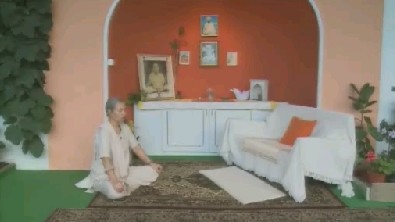
A practical demonstration and instructional lecture on the Haṭha Yoga purification techniques of Śaṅkha Prakṣālana and Kunjal Kriyā.
"Śaṅkha Prakṣālana is a very good exercise, but it has to be done early in the morning, of course, on an empty stomach."
"After Śaṅkha Prakṣālana, after purification, you have to keep a diet for at least, strictly, seven days, one week, and up to one month."
An instructor leads a session at an ashram, detailing the procedures for intestinal and stomach cleansing. He explains the preparation, the specific exercises and drinking process for Śaṅkha Prakṣālana, and the subsequent technique for Kunjal Kriyā (Vaman Dhautī), assisted by two experienced practitioners. Key themes include the importance of timing, dietary restrictions post-practice, and the health benefits of these purification rituals.
Filming location: Strilky, Czech Republic
The Self and The Soul, Melbourne
1:45 - 3:15 (90 min)
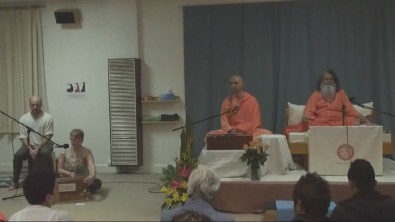
Sri Ram - Kirtan sung by Ally. Swami Jasraj Puri brings an example: When on the spiritual path arise doubts - hold on, it will calm down. Swami Sannyasanand speaks about Pranayama, Ida and Pingala breathing. Swamiji speaks about Lord Shiva,Yog Shakti, the sound OM and Siddhis - the supernatural powers. Atman is universal, the Self, it is immortal. It is like the space, no one can destroy,fire cannot burn nor dead can effect it. Jivatma is individual,is born,reborn comming and going. It is a bundle of our karmas and there are 4 ways to do karma. Swamiji tells a episode from the Ramayana, about Garuda, the carrier of Lord Vishnu as he lost his bhakti to Lord Rama and he was suffering a lot because of his doubts. We have 9 doors where the soul will go out of the body.We can lead ourselves to the Brahman or we can lead ourselves down, it depends on our individual karma and our practice. Translation of the bhajan: Shivoham Shivoham.
Each persons body is like the temple of God
3:20 - 4:15 (55 min)
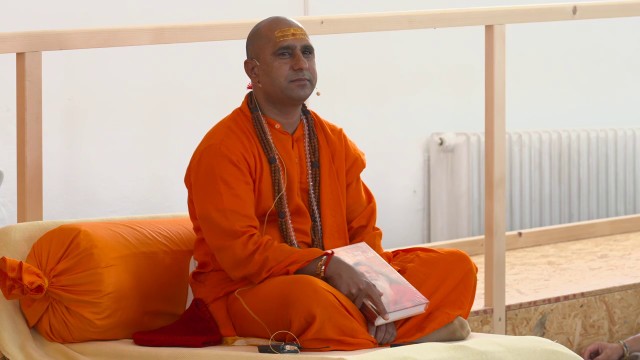
Morning program from Summer Yoga Camp, Strilky, Czech Republic. Lecture by MMS. Phulpuriji. Bhajans written by our Masters of our Parampara show us the way to the Brahmaloka. For us, God is here. Translation of the Bhajan written by one of the great Saints. Introduction of Vishwaguruji's Biography. The book is the Guru itself. Singin a Bhajan. Sort talk by Swami Avatarpuriji from the life of Sri Sankarajaryaji's life and works.
We are full of resonance
4:20 - 5:14 (54 min)
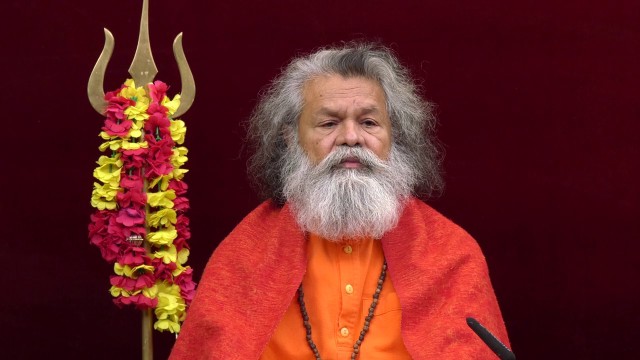
Evening satsang with Vishwaguruji from Strilky Ashram, Czech Republic. There are many Gods but finally, there are all one. Our soul is circling in the universe like water in the earth. The story about how can some seeds öf grain remain unbroken. Who is going to the Satsang they can reach the Supreme. Sometimes we see the karma but don't do that. Man saints past away but their name remained with us. Holiguruji was very lovely and strict for those persons who were around him. Holiguruji knew if somebody criticises him the bad karma went to that man. Diving to the ocean we can hear the beautiful sound and we hear this also if we plug our ears. Viswaguruji blows the conch three times for the honour of Holiguruji.
The real marriage
5:20 - 6:13 (53 min)
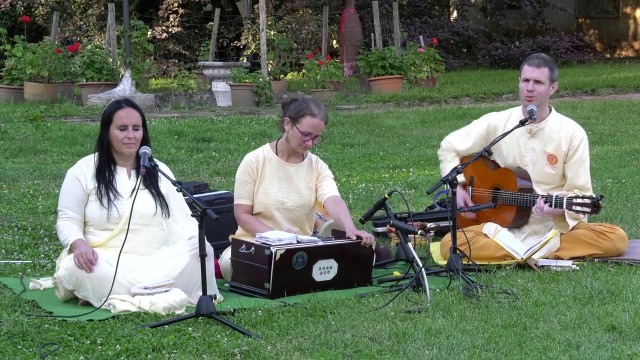
Evening satsang with Vishwaguruji from Strilky Ashram, Czech Republic. We don't know a lot about Sri Alakhpuriji. We know Sri Devpuruji's deeds well. Deva means God. The name reflects the whole life. Spirituality, purity of heart is more important than gold. What does it mean to be human? What did it mean to get married in the old days? Marriage was forever, the husband worked long hours and the wife could stay at home with the child. Young people did not marry before the age of 25. The story of the Indian couple who stayed together for 50 years. Today parents often leave their children.
Your Body Should Not Be a Coffin
6:20 - 6:59 (39 min)
Lecture from Strilky (CZ) in November 2004.
Atmagyana
7:05 - 7:40 (35 min)
Lecture from Vienna
Live as a Human
7:45 - 8:19 (34 min)
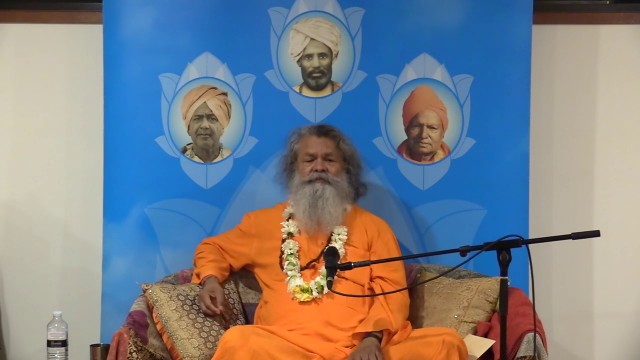
A spiritual discourse on non-violence, divine oneness, and the sanctity of all life.
"We are like other Swamis; we are the same. But we are working for everyone, every time, everywhere."
"Jīvā means life, life, and in that life there are all creatures: a little ant, this little ant, and humans, and all are all equal, what is living, living."
A Swami addresses a gathering, weaving together cosmology, ethics, and personal anecdote. He speaks of Bhagavān Śiva as the primordial source and emphasizes the fundamental equality of all life (Jīva). The core teaching is the practice of ahimsa (non-violence), advocating for a vegan lifestyle and abstaining from alcohol, framed as a recognition of our shared humanity. He instructs listeners to begin each day with the affirmation "I am human" to cultivate this awareness, and concludes with a bhajan.
Filming location: Gold Coast, Australia
Om Sri Deveshwar Mahadevaya Namaha
8:25 - 8:58 (33 min)
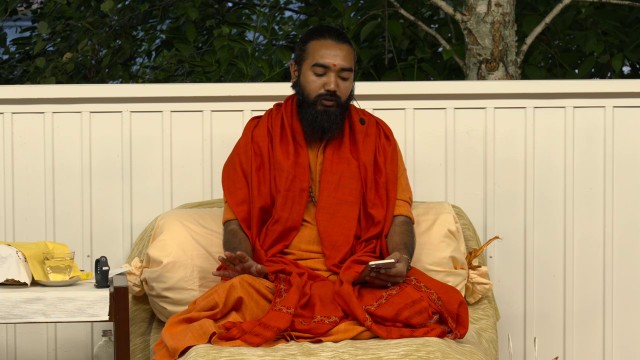
A group chanting and mantra recitation session.
"Today we will have a break from storytelling and cleanse our body a little bit. We will chant one powerful mantra of Swamijī 108 times."
"Once we know it by heart, then we go slow, but to learn it, the process is that we do it in parts. Then we do slowly, then we speed it up, and then we again go slowly."
A teacher leads participants in a session focused on mantra repetition. The group begins by chanting the "Oṁ Śrī Deveśvara Mahādevāya Namaḥ" mantra 108 times, followed by a review and speed practice of a previously learned Sanskrit verse from the Sannyasukta. The teacher explains the learning methodology of alternating slow and fast tempos, mentions plans to learn the Ganeśa Atharvaśīrṣa, and concludes with a series of devotional salutations and shorter prayers.
Filming location: Strilky, Czech Republic
Devik shakti
9:05 - 9:35 (30 min)
Lecture from Vienna
The Divine Lineage of Alakpurījī: Saints, Siddhas, and the Eternal Guru
9:40 - 10:10 (30 min)
A discourse on the divine lineage of the Alakpurījī Siddha tradition.
"From time to time I incarnate in every yuga to protect the dharma, to liberate all the pure souls, and again to remove or destroy the āsurī śaktis."
"Guru Brahma, Guru Viṣṇu, Guru Devo Maheśvara, Guru Sākṣāt Para Brahma, Tasmai Śrī Guruve Namaha—the Guru Tattva, Śiva Tattva, Viṣṇu Tattva, and Brahma Tattva."
A spiritual teacher narrates from a high Himalayan valley, explaining the eternal Guru principle and the Nityāvatāra of great saints. He recounts the lineage from the ancient Alakpurījī to Devapurījī, then to Bhagavān Śrī Dīp Nārāyaṇa Mahāprabhujī, and finally to their Satguru, Swāmī Madhavānandapurījī, whose birth anniversary is being celebrated. The talk includes a parable about missing divine blessings and emphasizes surrender and patience on the spiritual path.
Filming location: India
In the begining
10:15 - 10:43 (28 min)
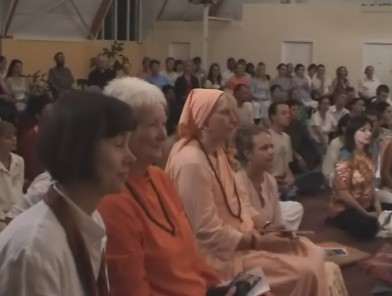
Lecture from Brisbane 29th of March 2005.
Mental food
10:50 - 12:48 (118 min)
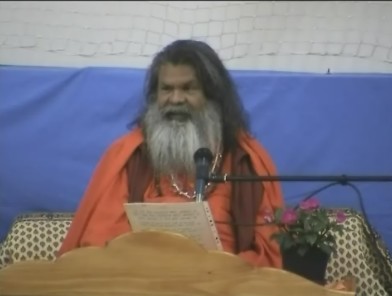
Swamiji in Sliac, April 2007
The Self and The Soul, Melbourne
12:55 - 14:25 (90 min)
Sri Ram - Kirtan sung by Ally. Swami Jasraj Puri brings an example: When on the spiritual path arise doubts - hold on, it will calm down. Swami Sannyasanand speaks about Pranayama, Ida and Pingala breathing. Swamiji speaks about Lord Shiva,Yog Shakti, the sound OM and Siddhis - the supernatural powers. Atman is universal, the Self, it is immortal. It is like the space, no one can destroy,fire cannot burn nor dead can effect it. Jivatma is individual,is born,reborn comming and going. It is a bundle of our karmas and there are 4 ways to do karma. Swamiji tells a episode from the Ramayana, about Garuda, the carrier of Lord Vishnu as he lost his bhakti to Lord Rama and he was suffering a lot because of his doubts. We have 9 doors where the soul will go out of the body.We can lead ourselves to the Brahman or we can lead ourselves down, it depends on our individual karma and our practice. Translation of the bhajan: Shivoham Shivoham.
Bhajans evening from the Strilky Ashram
14:30 - 15:33 (63 min)
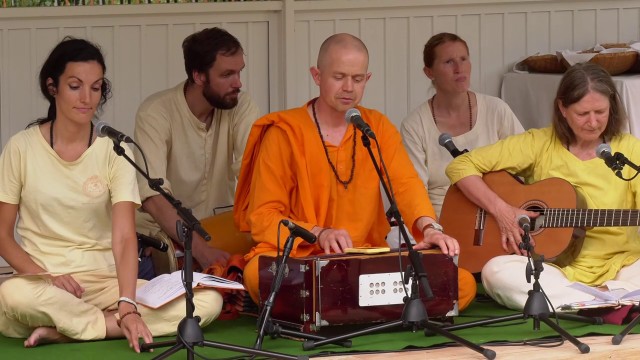
Evening satsang from Strilky Ashram, Czech Republic. Bhajan singing and translation.
Bhajan evening in the Strilky Ashram
15:40 - 16:33 (53 min)
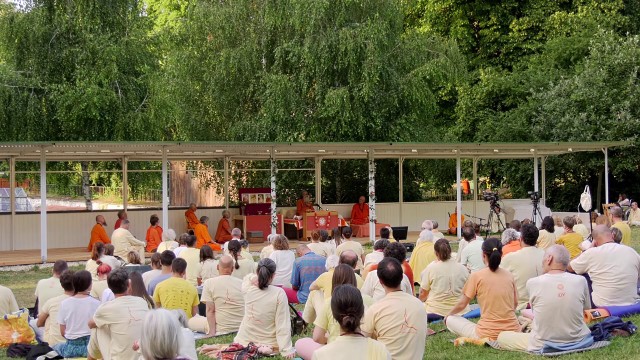
Evening satsang from Strilky Ashram, Czech Republic. Bhajan singing and translations. We shouldn't hold animals in a cage. They feel much pain there. Let them be free. We are also like that bird in the
Bhajan singing from Jadan
16:40 - 16:51 (11 min)
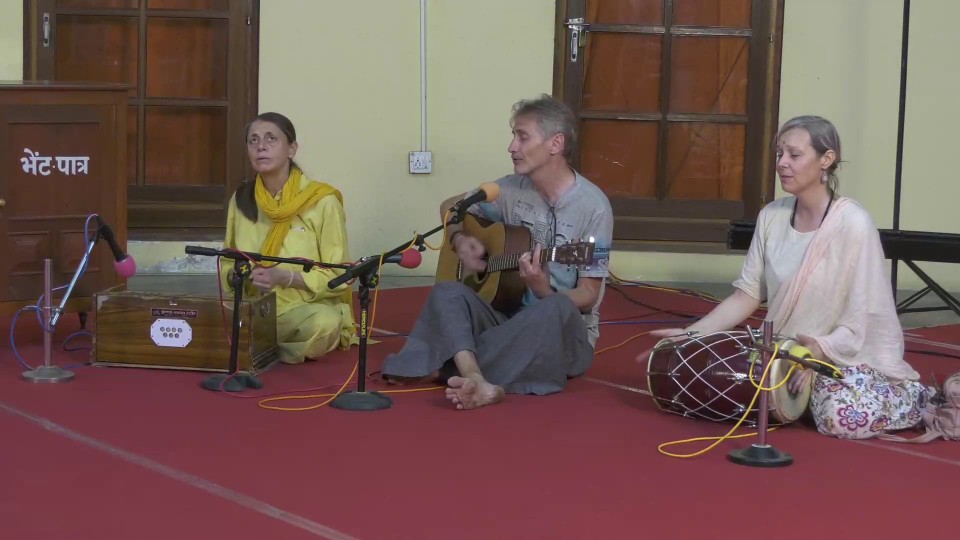
Evening satsang with Vishwaguruji from Jadan Ashram, Rajasthan, India.
Yuga Yuga Jivo Maheshwarananda
16:55 - 17:02 (7 min)
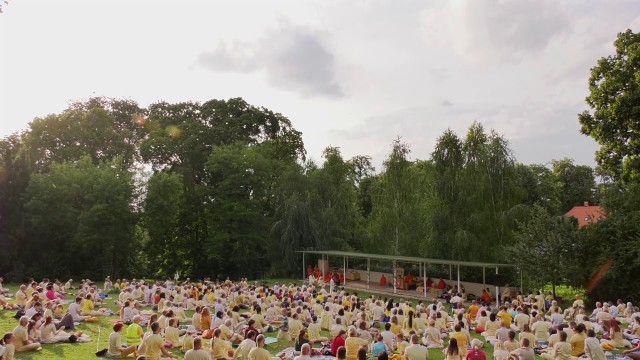
Evening satsang with Vishwaguruji from Strilky Ashram, Czech Republic. Bhajan singing on Gurupurnima satsang.
Sataguru rakho laj hamari
17:10 - 17:16 (6 min)
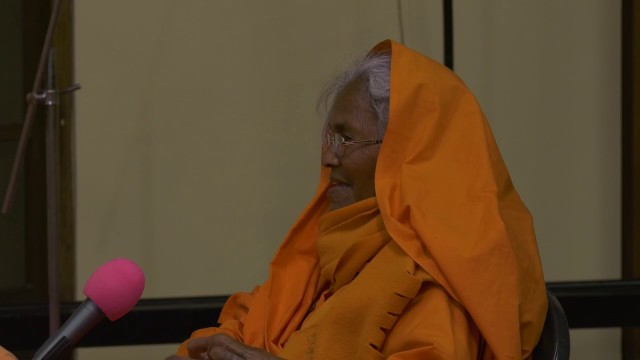
Evening satsang from Jadan Ashram, Rajasthan, India. Vishwaguruji"s sister sings Bhajans.
Repeat the name of Gurudev
17:20 - 17:47 (27 min)
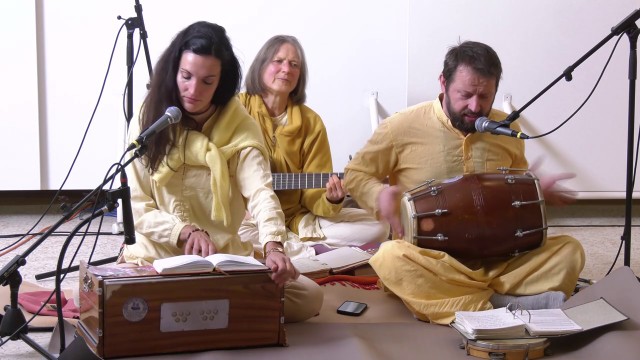
Evening satsang with Vishwaguruji from Vienna, Austria. Bhajan singinig to the Guru. Guru carano me arasatha tiratha he
Mental food
17:55 - 19:53 (118 min)
Swamiji in Sliac, April 2007
The Self and The Soul, Melbourne
20:00 - 21:30 (90 min)
Sri Ram - Kirtan sung by Ally. Swami Jasraj Puri brings an example: When on the spiritual path arise doubts - hold on, it will calm down. Swami Sannyasanand speaks about Pranayama, Ida and Pingala breathing. Swamiji speaks about Lord Shiva,Yog Shakti, the sound OM and Siddhis - the supernatural powers. Atman is universal, the Self, it is immortal. It is like the space, no one can destroy,fire cannot burn nor dead can effect it. Jivatma is individual,is born,reborn comming and going. It is a bundle of our karmas and there are 4 ways to do karma. Swamiji tells a episode from the Ramayana, about Garuda, the carrier of Lord Vishnu as he lost his bhakti to Lord Rama and he was suffering a lot because of his doubts. We have 9 doors where the soul will go out of the body.We can lead ourselves to the Brahman or we can lead ourselves down, it depends on our individual karma and our practice. Translation of the bhajan: Shivoham Shivoham.
Gurudev sees our past and future
21:35 - 22:51 (76 min)
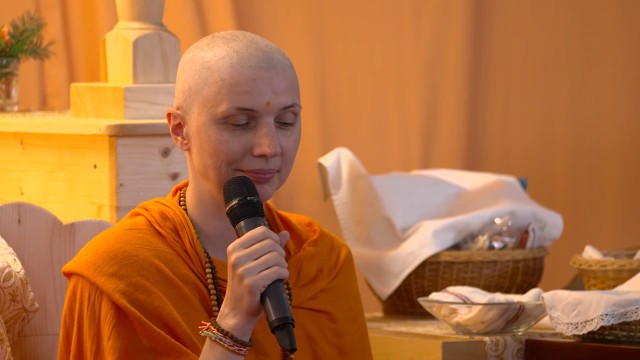
A satsang discourse on the guru's grace, destiny, and the power of surrender.
"Even the guru can change destiny, because there is no higher law than the guru’s law."
"Since the day I told Swāmījī, 'I surrender, do what you want,' I am in peace."
A speaker, likely a senior disciple, addresses the gathering following morning prayers. He discusses the validity of Vedic sciences like astrology (Jyotish) but emphasizes the supreme power of the guru's grace to alter destiny, illustrating this with a traditional parable about a guru changing the fate of two royal children. He shares personal anecdotes of learning to obey the guru's guidance, concluding that true peace comes from complete surrender to the guru's will, allowing him to manage one's life and mitigate karma.
Filming location: Strilky, Czech Republic
A Gentle Yoga Practice
23:00 - 0:07 (67 min)
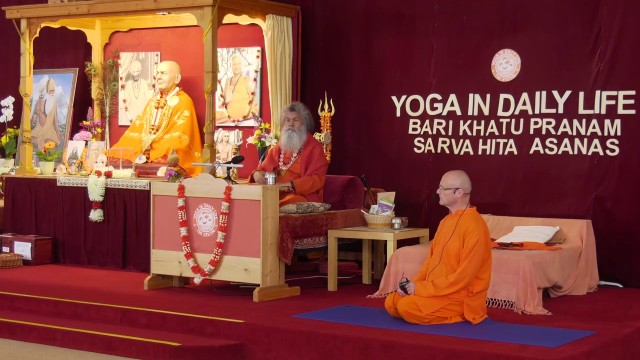
A guided gentle yoga class focusing on breath and alignment.
"Pavanamuktāsana is excellent for digestion." "When we start to breathe a little deeper, we immediately have more energy and less tension."
An instructor leads a group through a sequence of postures, including Pavanamuktāsana on the back and standing, Uttānāsana, and balancing poses like Ekapāda Uttānāsana. The guidance emphasizes anatomical awareness, the benefits for circulation and focus, and connects the physical practice to the cleansing of the nāḍīs for prāṇic flow. The session concludes with Bhujaṅgāsana and relaxation.
Filming location: Strilky, Czech Republic
American
Australian