
European
The bansuri flute
0:05 - 0:35 (30 min)
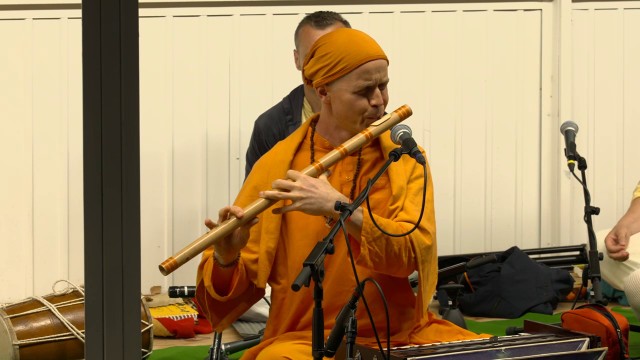
Evening satsang from Yoga Summer Retreat from Strilky, Czech Republic. Swami Madhuram introduces the bansuri flute, and how to play ragas on it. The story about the border between devotion and fanatism. Swami Madhhuram plays on bansuri.
Gurudev sees our past and future
0:40 - 1:56 (76 min)
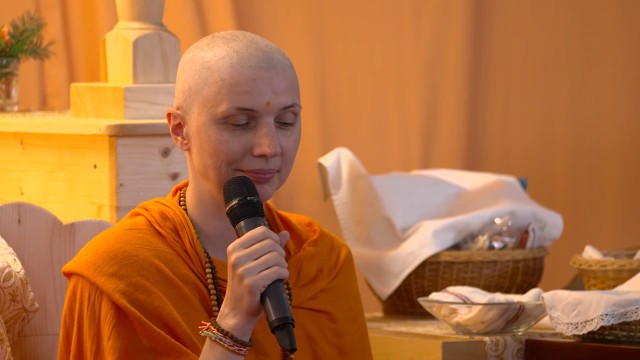
A satsang discourse on the guru's grace, destiny, and the power of surrender.
"Even the guru can change destiny, because there is no higher law than the guru’s law."
"Since the day I told Swāmījī, 'I surrender, do what you want,' I am in peace."
A speaker, likely a senior disciple, addresses the gathering following morning prayers. He discusses the validity of Vedic sciences like astrology (Jyotish) but emphasizes the supreme power of the guru's grace to alter destiny, illustrating this with a traditional parable about a guru changing the fate of two royal children. He shares personal anecdotes of learning to obey the guru's guidance, concluding that true peace comes from complete surrender to the guru's will, allowing him to manage one's life and mitigate karma.
Filming location: Strilky, Czech Republic
Around the world - Yoga Class of Level 5, Zagreb, CRO (2/2)
2:00 - 2:59 (59 min)
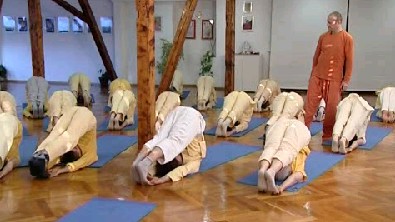
Yoga in Daily Life Class of Level 5 at Sri Devpuriji Ashram, Zagreb, Croatia, January 2011
Around the world - Yoga Class of Level 6, Zagreb
3:05 - 4:06 (61 min)
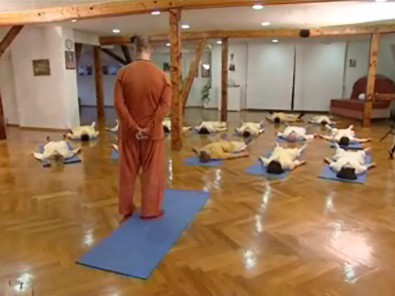
Yoga in Daily Life Class of Level 6 at Sri Devpuriji Ashram, Zagreb, Croatia.
Vegetarian cooking lesson 4, Vegetable Soup
4:00 - 4:23 (23 min)

A cooking demonstration for Hungarian lentil soup at a yoga seminar.
"If we want our family to enjoy vegetarian food, we can take care of these small details."
"Even friends who are not vegetarian or not really open to vegetarian food like this soup very much, and in this way, they come to appreciate the vegetarian kitchen."
Agnes Bugán Szabónyi from Vépr, Hungary, guides viewers through preparing a traditional Hungarian lentil soup. She details the ingredients, including lentils, paprika, and fresh vegetables, and explains the steps from soaking the lentils to sautéing spices and simmering the soup. She emphasizes the dish's appeal to non-vegetarians and shares tips for family-friendly preparation, concluding with well-wishes for a successful vegetarian lifestyle.
Filming location: Vép, Hungary
The completness of our being
4:30 - 5:41 (71 min)
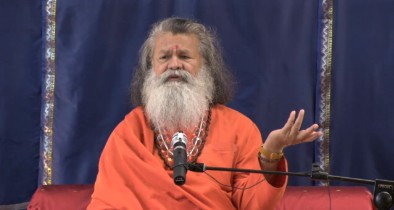
A spiritual discourse on the soul's journey, karma, and human practice.
"Understand this body, and then it is said—very easy to say, but it is said—overcome, control between two: the hunger and thirst."
"So we come as a human in this world, and then we are searching for the door to mokṣa, liberation. But when the chance comes, we take the hand away and scratch somewhere, meaning desires."
Swami Paramporul delivers a teaching on the eternal journey of the soul (jīvātmā), explaining its nature through metaphor and scripture. He discusses the body as a vehicle or bungalow where the divine resides, the importance of controlling the senses and emotions like jealousy, and the role of yoga, prāṇāyāma, and diet in purification. The talk covers the law of karma, rebirth across different life forms illustrated by a story of a tax collector reborn as a camel, and concludes with reflections on funeral rites and the imperative to use human life for spiritual progress.
Filming location: London, UK
Be happy be good
5:45 - 6:30 (45 min)
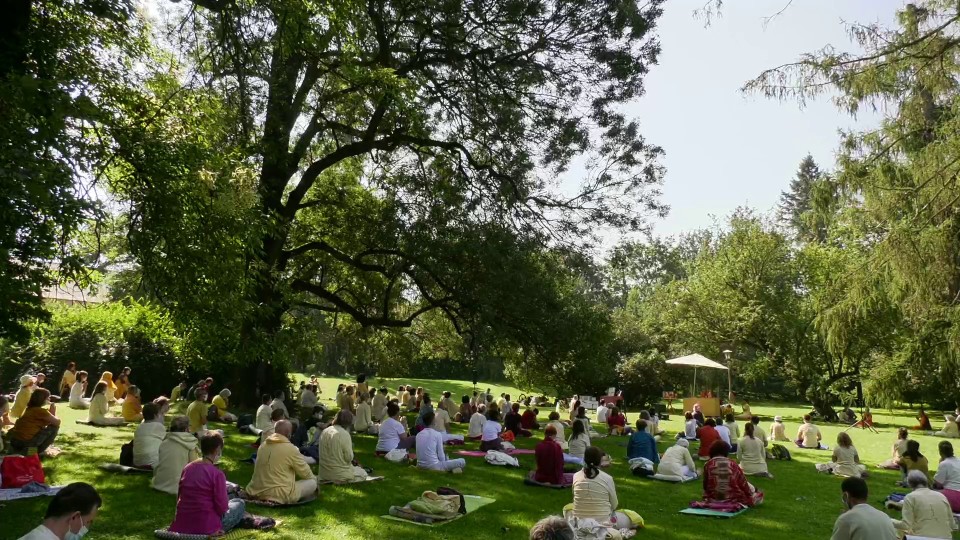
A closing address and prayer session at a spiritual seminar.
"For one week, we were very comfortable, very relaxed, and we had immense spiritual development and spiritual talks."
"What you have learned now, after a long time, it will come inside... You cannot say, 'Finally, I am perfect.'"
A teacher addresses participants at the conclusion of a week-long seminar, expressing gratitude and offering guidance for integrating the teachings. He discusses the gradual process of learning, warns against fear and superstition, emphasizes love for family, and clarifies that yoga extends beyond physical practice. The session includes chanting, a prayer, and final instructions for departure.
Filming location: Strilky, Czech Republic
Devik shakti
6:35 - 7:05 (30 min)
Lecture from Vienna
Time and destiny, Melbourne
7:10 - 8:20 (70 min)
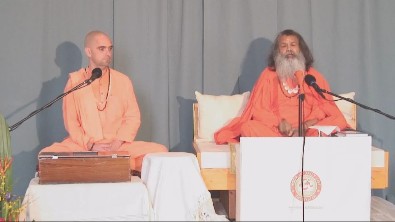
Every saint or holy incarnation has to go through certain experiences in life. Even God has to go through particular situaions. Does God have a destiny? The life of Jesus - he had to go through many hard situations in his life. Was this his destiny or was him given a task to go trough? Swamiji tells episodes from the life of the Sufi master Mansur Al-Hallaj and Hanumanji from the Ramayana. If we have faith - God and we are one - then nothing will happen. When we hold on God's name we will cross the ocean and reach the shore of happiness and peace. Kirtan is the repetition of God's name. The positive vibration will resonance in our whole body and will give positive effects. This will influence our destiny. Guruvakyas, Satsangs, Kirtans and Bhajans are good guidelines in our life. Recorded in Melbourne, Australia.
The Self and The Soul, Melbourne
8:25 - 9:55 (90 min)
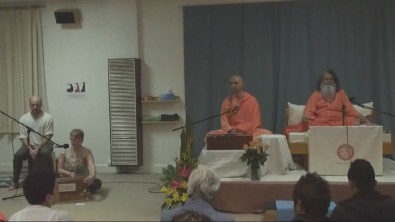
Sri Ram - Kirtan sung by Ally. Swami Jasraj Puri brings an example: When on the spiritual path arise doubts - hold on, it will calm down. Swami Sannyasanand speaks about Pranayama, Ida and Pingala breathing. Swamiji speaks about Lord Shiva,Yog Shakti, the sound OM and Siddhis - the supernatural powers. Atman is universal, the Self, it is immortal. It is like the space, no one can destroy,fire cannot burn nor dead can effect it. Jivatma is individual,is born,reborn comming and going. It is a bundle of our karmas and there are 4 ways to do karma. Swamiji tells a episode from the Ramayana, about Garuda, the carrier of Lord Vishnu as he lost his bhakti to Lord Rama and he was suffering a lot because of his doubts. We have 9 doors where the soul will go out of the body.We can lead ourselves to the Brahman or we can lead ourselves down, it depends on our individual karma and our practice. Translation of the bhajan: Shivoham Shivoham.
Around the world - Anandpuriji Sannyas
10:00 - 10:04 (4 min)
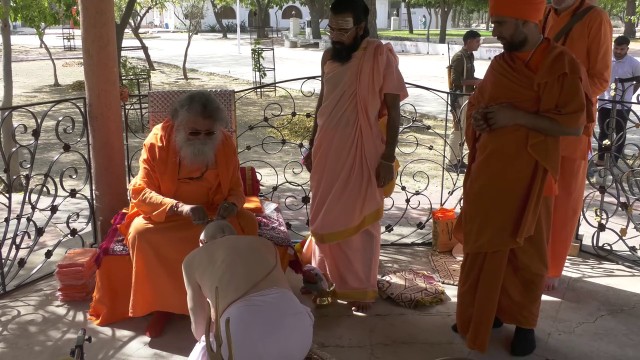
Around the world - Bhajans from Kailash(1/3)
10:10 - 10:58 (48 min)
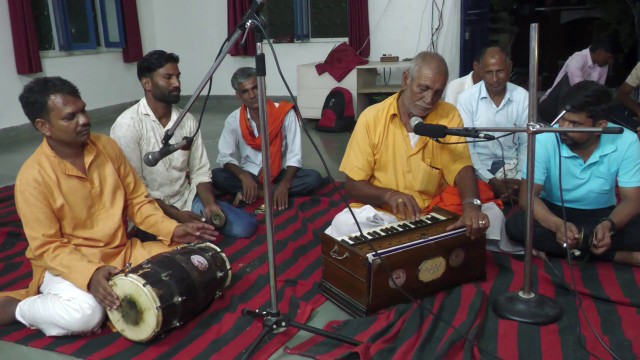
Evening satsang from Kaliash Ashram, Rajasthan, India. Bhajans on the occasion of Sri Devpuriji Mahasamadhi.
Mind and chakras
11:05 - 11:30 (25 min)
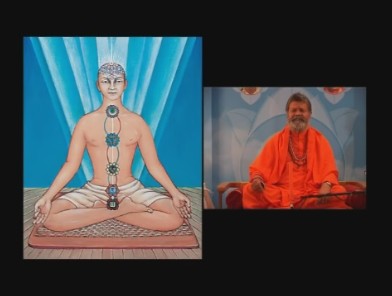
Lecture from Brisbane, 29th March 2005.
The Divine Lineage of Alakpurījī: Saints, Siddhas, and the Eternal Guru
11:35 - 12:05 (30 min)
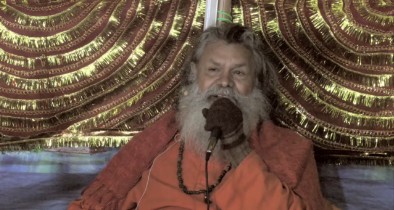
A discourse on the divine lineage of the Alakpurījī Siddha tradition.
"From time to time I incarnate in every yuga to protect the dharma, to liberate all the pure souls, and again to remove or destroy the āsurī śaktis."
"Guru Brahma, Guru Viṣṇu, Guru Devo Maheśvara, Guru Sākṣāt Para Brahma, Tasmai Śrī Guruve Namaha—the Guru Tattva, Śiva Tattva, Viṣṇu Tattva, and Brahma Tattva."
A spiritual teacher narrates from a high Himalayan valley, explaining the eternal Guru principle and the Nityāvatāra of great saints. He recounts the lineage from the ancient Alakpurījī to Devapurījī, then to Bhagavān Śrī Dīp Nārāyaṇa Mahāprabhujī, and finally to their Satguru, Swāmī Madhavānandapurījī, whose birth anniversary is being celebrated. The talk includes a parable about missing divine blessings and emphasizes surrender and patience on the spiritual path.
Filming location: India
Live as a Human
12:10 - 12:44 (34 min)
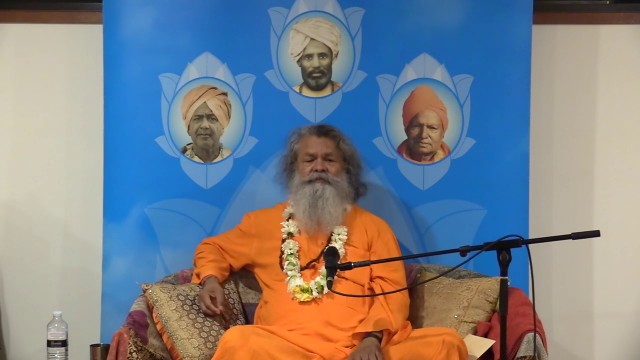
A spiritual discourse on non-violence, divine oneness, and the sanctity of all life.
"We are like other Swamis; we are the same. But we are working for everyone, every time, everywhere."
"Jīvā means life, life, and in that life there are all creatures: a little ant, this little ant, and humans, and all are all equal, what is living, living."
A Swami addresses a gathering, weaving together cosmology, ethics, and personal anecdote. He speaks of Bhagavān Śiva as the primordial source and emphasizes the fundamental equality of all life (Jīva). The core teaching is the practice of ahimsa (non-violence), advocating for a vegan lifestyle and abstaining from alcohol, framed as a recognition of our shared humanity. He instructs listeners to begin each day with the affirmation "I am human" to cultivate this awareness, and concludes with a bhajan.
Filming location: Gold Coast, Australia
In the begining
12:50 - 13:18 (28 min)
Lecture from Brisbane 29th of March 2005.
Om Sri Deveshwar Mahadevaya Namaha
13:25 - 13:58 (33 min)
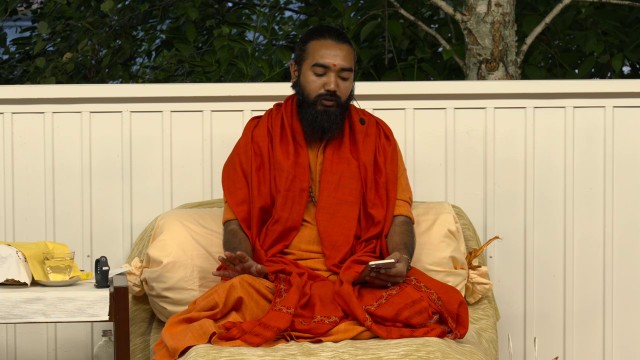
A group chanting and mantra recitation session.
"Today we will have a break from storytelling and cleanse our body a little bit. We will chant one powerful mantra of Swamijī 108 times."
"Once we know it by heart, then we go slow, but to learn it, the process is that we do it in parts. Then we do slowly, then we speed it up, and then we again go slowly."
A teacher leads participants in a session focused on mantra repetition. The group begins by chanting the "Oṁ Śrī Deveśvara Mahādevāya Namaḥ" mantra 108 times, followed by a review and speed practice of a previously learned Sanskrit verse from the Sannyasukta. The teacher explains the learning methodology of alternating slow and fast tempos, mentions plans to learn the Ganeśa Atharvaśīrṣa, and concludes with a series of devotional salutations and shorter prayers.
Filming location: Strilky, Czech Republic
Hymns of Adoration and the Nirvāṇa Ṣaṭkam
14:30 - 14:53 (23 min)
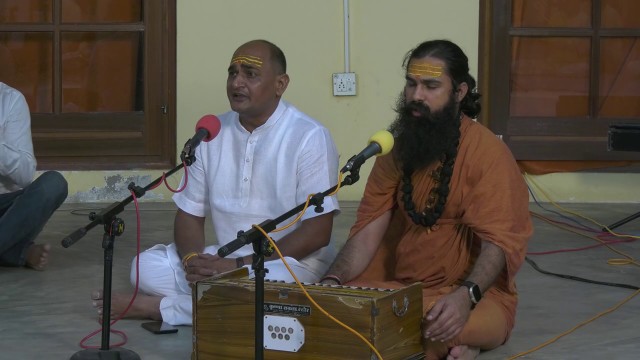
A devotional video featuring the chanting of Sanskrit hymns dedicated to Lord Shiva.
"Na me dveṣa rāgau. Na me lobho, na mādo, neva me neva sāryabhā. Na dharmo, na cārtho, na kāmo, na mokṣaḥ. Cidānanda-rūpaḥ śivo'ham, śivo'ham."
"Brahmā Murārī Surārchitaliṅgam, Nirmalabhāśita Śobhitaliṅgam, Janmajaḍukha Vināśakaliṅgam, Tat praṇamāmi Sadāśivaliṅgam."
The video consists of a continuous recitation of three primary hymns: the Rudrāṣṭakam, the Nirvāṇa Ṣaṭkam (a declaration of the true Self as consciousness and bliss), and the Liṅgāṣṭakam. The chanting is interspersed with and concluded by energetic salutations (jaya) to a lineage of spiritual masters, including Śrī Alakhpurīṣa Mahādeva, Śrī Devapurījī, Śrī Dīp Nārāyaṇa Mahāprabhujī, and others.
Filming location: Jadan, Rajasthan, India
Bhajan singing from Jadan
15:00 - 15:17 (17 min)
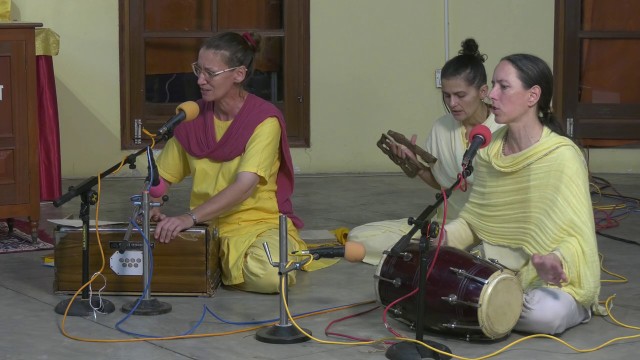
Evening satsang with Vishwaguruji from Jadan Ashram, Rajasthan, India.
Bhajan singing from Strilky Ashram
15:25 - 16:06 (41 min)
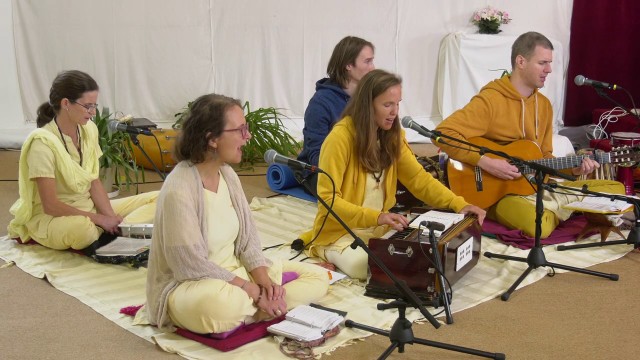
Morning program from Strilky, Czech Republic. Bhajan singing.
Bhajans on the Satsang
16:10 - 17:00 (50 min)
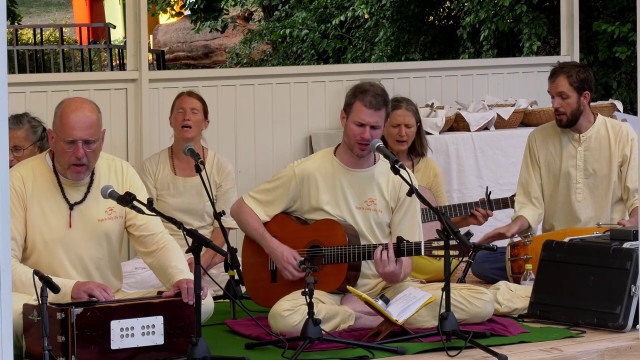
Evening satsang with Vishwaguruji. Bhajan singing.
Bhajan singing on the Satsang
17:05 - 17:32 (27 min)
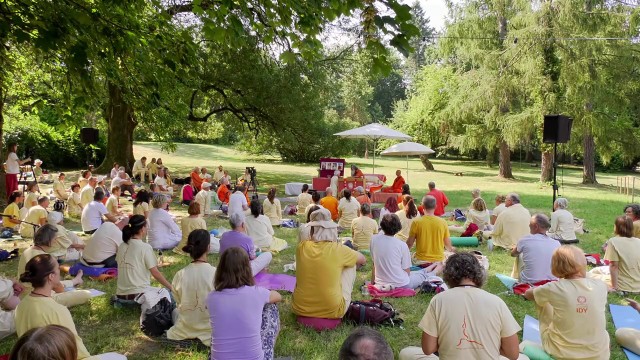
A devotional introduction and singing of a traditional bhajan.
"We can sing a very beautiful bhajan from Swāmī Lālā Nānjī. It is called Manarata Nāma, and it means, 'Oh my mind, repeat the name of God, repeat your mantra.'"
"Give your body and mind to Sāddhā Gurudeva, and he will destroy all your doubts and all your bad qualities. In the holy lotus feet of Satguru Deva reside all holy pilgrimages."
The speaker introduces a lesser-sung bhajan by Swāmī Lālā Nānjī, emphasizing the urgency of spiritual practice in human life. They explain the bhajan's theme of repeating the divine name and extol the glory and essential role of the true Guru in guiding devotees across the ocean of worldly existence. The session includes singing verses from the bhajan and concludes with salutations.
Filming location: Strilky, Czech Republic
Gurudev sees our past and future
17:40 - 18:56 (76 min)
A satsang discourse on the guru's grace, destiny, and the power of surrender.
"Even the guru can change destiny, because there is no higher law than the guru’s law."
"Since the day I told Swāmījī, 'I surrender, do what you want,' I am in peace."
A speaker, likely a senior disciple, addresses the gathering following morning prayers. He discusses the validity of Vedic sciences like astrology (Jyotish) but emphasizes the supreme power of the guru's grace to alter destiny, illustrating this with a traditional parable about a guru changing the fate of two royal children. He shares personal anecdotes of learning to obey the guru's guidance, concluding that true peace comes from complete surrender to the guru's will, allowing him to manage one's life and mitigate karma.
Filming location: Strilky, Czech Republic
The completness of our being
19:00 - 20:11 (71 min)
A spiritual discourse on the soul's journey, karma, and human practice.
"Understand this body, and then it is said—very easy to say, but it is said—overcome, control between two: the hunger and thirst."
"So we come as a human in this world, and then we are searching for the door to mokṣa, liberation. But when the chance comes, we take the hand away and scratch somewhere, meaning desires."
Swami Paramporul delivers a teaching on the eternal journey of the soul (jīvātmā), explaining its nature through metaphor and scripture. He discusses the body as a vehicle or bungalow where the divine resides, the importance of controlling the senses and emotions like jealousy, and the role of yoga, prāṇāyāma, and diet in purification. The talk covers the law of karma, rebirth across different life forms illustrated by a story of a tax collector reborn as a camel, and concludes with reflections on funeral rites and the imperative to use human life for spiritual progress.
Filming location: London, UK
Mind and chakras
20:15 - 20:40 (25 min)
Lecture from Brisbane, 29th March 2005.
Time and destiny, Melbourne
20:45 - 21:55 (70 min)
Every saint or holy incarnation has to go through certain experiences in life. Even God has to go through particular situaions. Does God have a destiny? The life of Jesus - he had to go through many hard situations in his life. Was this his destiny or was him given a task to go trough? Swamiji tells episodes from the life of the Sufi master Mansur Al-Hallaj and Hanumanji from the Ramayana. If we have faith - God and we are one - then nothing will happen. When we hold on God's name we will cross the ocean and reach the shore of happiness and peace. Kirtan is the repetition of God's name. The positive vibration will resonance in our whole body and will give positive effects. This will influence our destiny. Guruvakyas, Satsangs, Kirtans and Bhajans are good guidelines in our life. Recorded in Melbourne, Australia.
Gurudeva hi Kevalam
22:00 - 22:55 (55 min)
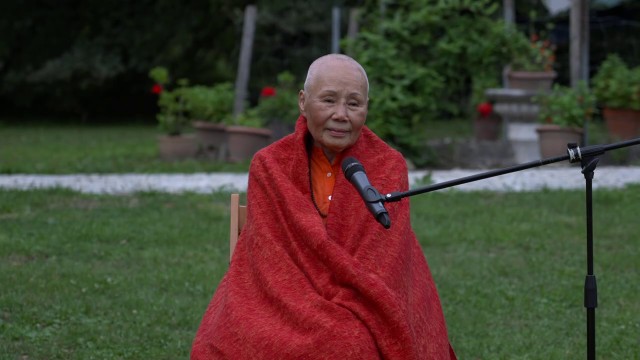
Evening satsang from Yoga Summer Retreat from Strilky, Czech Republic. As we know, things are changing in our lives. What comes shall go. A story of a man, who was a happy person, and used to make others happy. This man time to time went to his Guruji for darshan and advice. Gurudev knows what is going on in our minds. Karma yoga is a help for us. We are all blessed to have Gurudev's guidance. Bansuri flute music. Lecture by Swami Daya Mata, about good and bad things that are transient.
Practising from Jadan
23:00 - 23:27 (27 min)
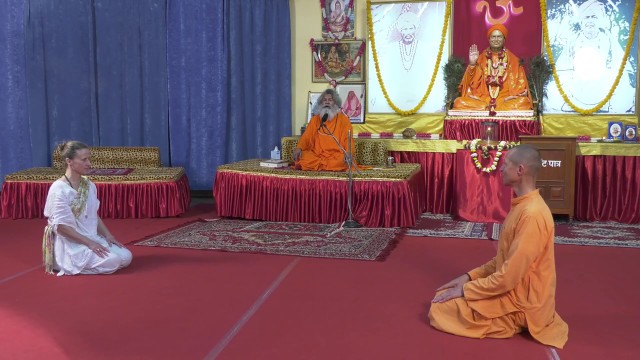
Evening satsang with Vishwaguruji from Jadan Ashram, Rajasthan, India. Practising Bari Khatu Pranam.
Be happy be good
23:35 - 0:20 (45 min)
A closing address and prayer session at a spiritual seminar.
"For one week, we were very comfortable, very relaxed, and we had immense spiritual development and spiritual talks."
"What you have learned now, after a long time, it will come inside... You cannot say, 'Finally, I am perfect.'"
A teacher addresses participants at the conclusion of a week-long seminar, expressing gratitude and offering guidance for integrating the teachings. He discusses the gradual process of learning, warns against fear and superstition, emphasizes love for family, and clarifies that yoga extends beyond physical practice. The session includes chanting, a prayer, and final instructions for departure.
Filming location: Strilky, Czech Republic
American
Australian