
European
Live spiritual life
1:10 - 1:43 (33 min)
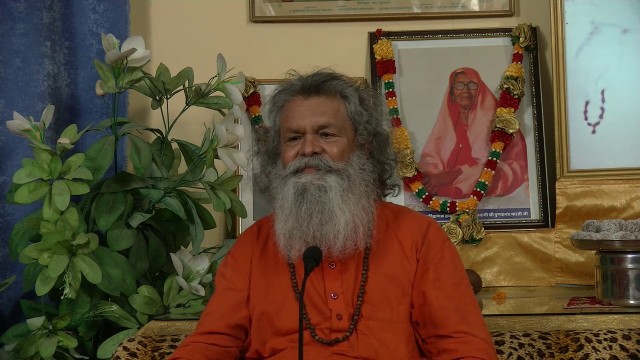
Evening satsang with Vishwaguruji from Jadan Ashram, Rajasthan, India. India is closed for four days because of the corona. It has more time to overthink our life. Spirituality is in our mind in our heart and in our feelings. Spiritual people are praying for others and animals also. Birds can trust in the tiger and lion but not in the human. The story about some sadhu from Gujarat and a tiger. Bhajan singing.
The Glory of Gurudeva's Name
1:50 - 2:09 (19 min)
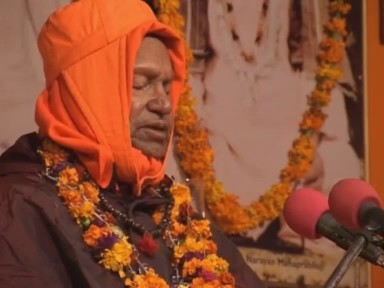
A satsang discourse on the essential role of the true Guru for liberation and bliss.
"Until today, no one in this world has attained the Ātmā-Paramātmā without Gurudev, and no one ever will." "If one chants the Guru's name with faith, one will surely reach the shore."
A speaker addresses the assembly, asserting that true happiness and Self-knowledge come only through grace of a Satguru. He illustrates this with stories of the powerful ascetic Sanghdev, who was liberated by Sant Gyaneshwar, and the egoistic tantric Bhaskarananda, who was humbled by Bhagavan Shri Dip Narayana Mahaprabhuji. The talk emphasizes that rituals and powers are insufficient without the Guru, who alone can dispel ignorance and bestow the bliss of liberation.
Filming location: Bari Khatu, Rajasthan, India
Singing bhajans by Swami Gajanandji
2:30 - 3:07 (37 min)
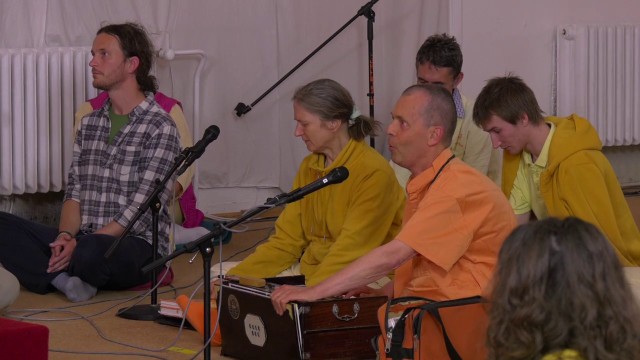
Evening satsang with Vishwaguruji from Strilky Ashram, Czech Republic. Singing bhajans by Swami Gajanandji.
Bhajan evening from Vep
3:15 - 4:10 (55 min)
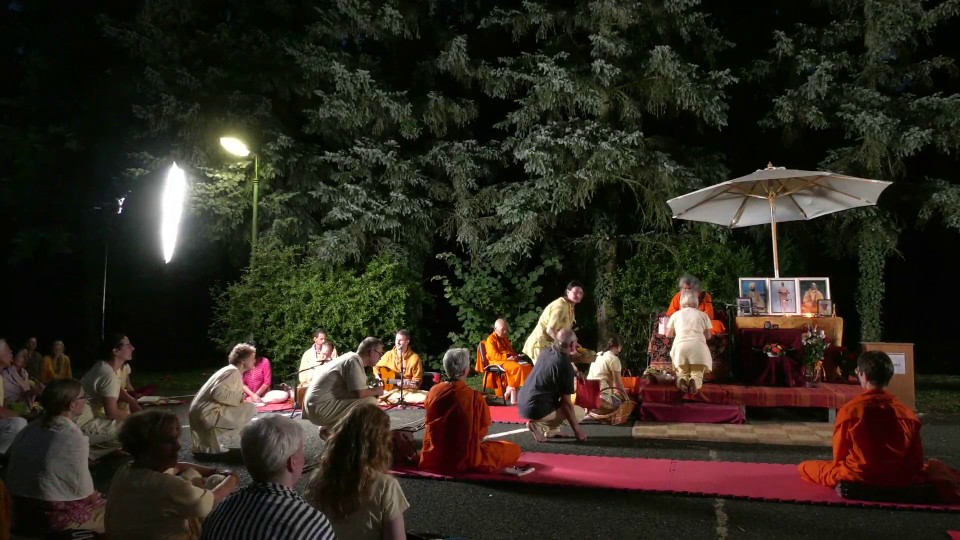
Evening satsang with Vishwaguruji from Vep, Hungary. Bhajan singing.
Bhajan singing from Vep
4:15 - 5:06 (51 min)
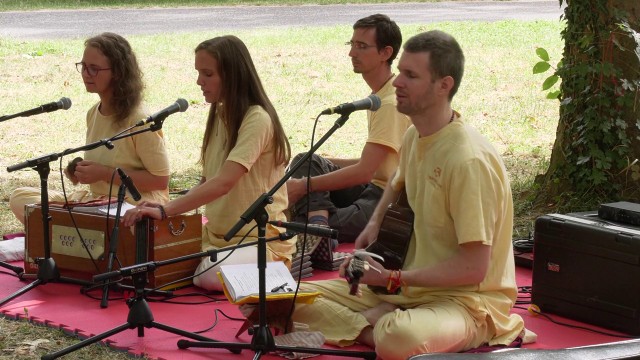
Morning satsang with Vishwaguruji from Vep, Hungary. Bhajan singing.
Bhajans from Strilky Ashram
5:10 - 6:44 (94 min)
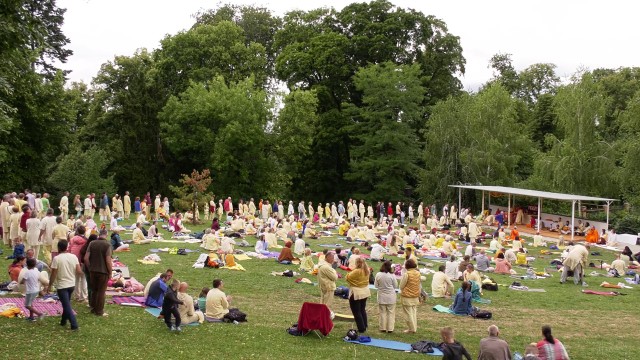
Morning satsang from Strilky Ashram, Czech Republic.
Practicing from Strilky
11:00 - 11:41 (41 min)
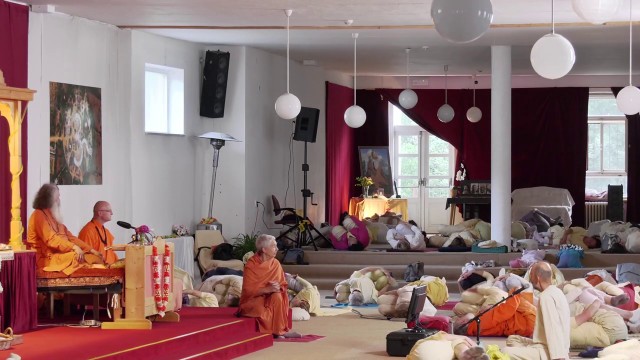
Evening satsang from Strilky Ashram, Czech Republic. Practice with Vishwaguruji and Swami Umapuriji.
The Purifying Path of Haṭha Yoga: An Introduction to Ṣaṭkarma
13:00 - 13:47 (47 min)

An instructional webcast introducing the Haṭha Yoga purification techniques (Ṣaṭkarma).
"Haṭha Yoga is not only that we clean and purify our whole system, our whole body, but it also has a very great effect on our nervous system."
"Haṭha means willpower to do these Haṭha Yoga techniques. And with this, you also get the willpower, the strength to persevere, to continue, to get rid of the laziness."
A teacher from the Śrīkī Ashram, joined by assistants, explains the purpose and benefits of the six purification acts. The session features a detailed, practical demonstration of Jala Netī (nasal cleansing with salt water) and Kapāla Bhāti, followed by an introduction to Agni Sāra and the Naulī Kriyā for digestive health. The instruction emphasizes using natural elements, proper technique, and the holistic effects on physical and energetic systems.
Filming location: Strilky, Czech Republic
The Glory of Gurudeva's Name
13:55 - 14:14 (19 min)
A satsang discourse on the essential role of the true Guru for liberation and bliss.
"Until today, no one in this world has attained the Ātmā-Paramātmā without Gurudev, and no one ever will." "If one chants the Guru's name with faith, one will surely reach the shore."
A speaker addresses the assembly, asserting that true happiness and Self-knowledge come only through grace of a Satguru. He illustrates this with stories of the powerful ascetic Sanghdev, who was liberated by Sant Gyaneshwar, and the egoistic tantric Bhaskarananda, who was humbled by Bhagavan Shri Dip Narayana Mahaprabhuji. The talk emphasizes that rituals and powers are insufficient without the Guru, who alone can dispel ignorance and bestow the bliss of liberation.
Filming location: Bari Khatu, Rajasthan, India
The origin of Jyotir Linga
14:20 - 15:13 (53 min)
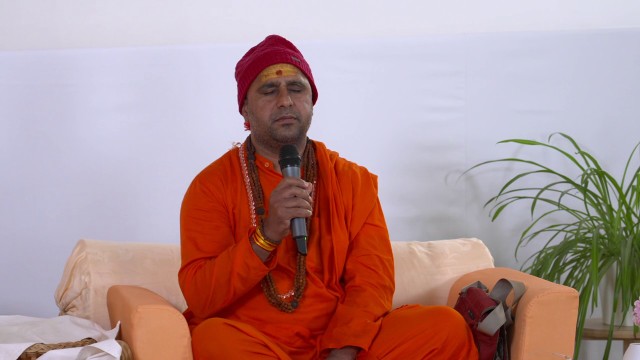
A satsang session featuring personal reflections and scriptural discourse.
"It’s not so much about what the voice is telling you. It’s more about how the voice is speaking with you."
"According to Śiva Purāṇa, Śiva was the creator of Brahmā and Viṣṇu... and that is the beginning."
Nārāyaṇa Purī, a life coach and childhood friend of the swamis, shares insights on managing the inner voice during high-pressure situations like sports, relating it to mantra practice. Swami Phulpuri then answers questions from devotees, explaining the origin of the Śivaliṅga according to the Śiva Purāṇa and affirming the Mahābhārata and Rāmāyaṇa as real historical texts offering lessons on overcoming negative thoughts.
Filming location: Strilky, Czech Republic
Be aware of the importance of your life!
15:20 - 16:01 (41 min)
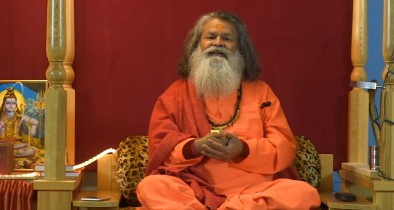
Evening satsang with Vishwaguruji from Vienna, Austria. The full moon affects us whether we are aware of it or not. We are searching for our aim, but we have many complications in this world. Finally we have to leave with empty hands. By practicing yoga vidya we can awaken our awareness.
How can I love myself?
16:05 - 16:38 (33 min)
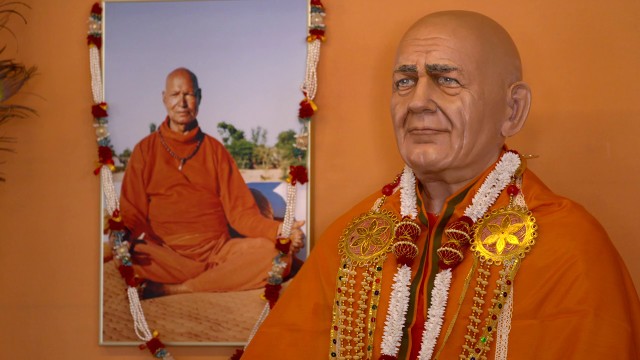
A satsang exploring the concept of self-love through the framework of the four aspects of divine grace (kripa).
"Swāmījī did not really use this word, but I know it comes from Holī Gurujī; he is always using that."
"Love each and every living being, if not more, then at least as much as yourself."
Guru Lilā, addressing the community, explains the four aspects of kripa: Deva Kripa (grace of the gods), Śāstra Kripa (grace of the scriptures), Guru Kripa (the Guru's grace), and Kuṭkī Kripa (self-grace). He focuses on Kuṭkī Kripa as self-love, arguing it is a prerequisite for loving others. He outlines a practical path to self-love through self-acceptance, self-understanding, and self-giving, linking it to core teachings. He shares an anecdote about a woman healing from ALS through self-love and concludes with a traditional story about Guru Nānak illustrating the complex workings of karma.
Filming location: Strilky, Czech Republic
Live spiritual life
16:45 - 17:18 (33 min)
Evening satsang with Vishwaguruji from Jadan Ashram, Rajasthan, India. India is closed for four days because of the corona. It has more time to overthink our life. Spirituality is in our mind in our heart and in our feelings. Spiritual people are praying for others and animals also. Birds can trust in the tiger and lion but not in the human. The story about some sadhu from Gujarat and a tiger. Bhajan singing.
The Presence of the Guru
17:25 - 18:08 (43 min)
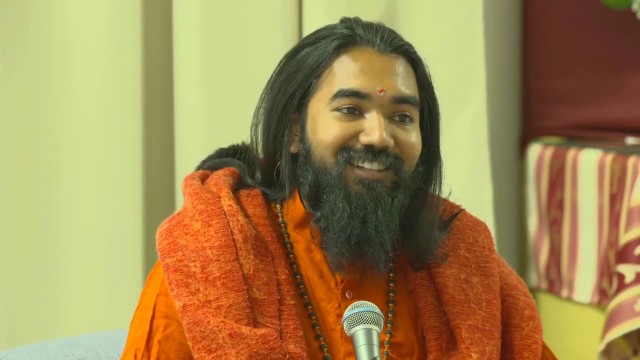
A satsang on devotion, surrender, and relating to the spiritual teacher.
"Gurudev is in the same space, same region, I would say, but we all should know that Gurudev is watching. It doesn’t matter where he is, he is always observing everything."
"If we have that mindset within us, that whatever we are doing, it’s him doing... then nothing is going to stop us in this world."
The lecturer addresses disciples in Slovenia, sharing insights from traveling with Gurudev, Sri Vishwaguru Mahamandaleshwar Paramahamsa Maheshwaranand Puri. He discusses the Guru's omnipresence, the importance of selfless service (seva), and cultivating trust over logic. He advises on etiquette in the Guru's presence, tells a parable about faith, and leads a guided meditation (manasik puja) to feel the Guru's inner presence.
Filming location: Slovenia
Why we do Anusthan
18:15 - 19:15 (60 min)
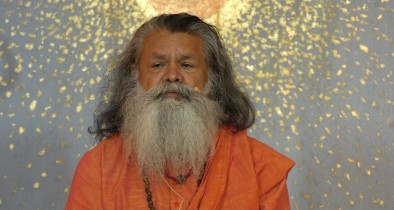
A discourse on the purpose and practice of Anuṣṭhāna, a spiritual observance.
"Anuṣṭhāna is when you make a saṅkalpa. Saṅkalpa means you promise yourself to undertake a practice for a certain purpose: for spiritual development, for good health, for success."
"We pray that all creatures should live in peace, harmony, and health. God protect all. This is our Anuṣṭhāna for this year."
A spiritual teacher explains the traditional practice of Anuṣṭhāna, a vowed observance for specific purposes like family harmony, health, or agricultural success. He contrasts its ideal use for unity and blessings with modern distortions, like praying for divorce. The talk expands to advocate for Anuṣṭhāna as a prayer for universal well-being, encompassing family, community, nature, and all living creatures, emphasizing harmony with the natural world and compassion for animals.
Filming location: Strilky, Czech Republic
Pollution
19:20 - 20:21 (61 min)
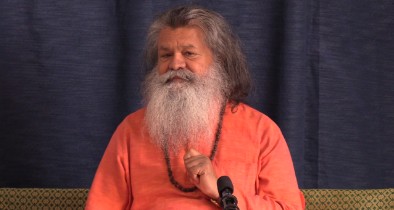
A spiritual discourse on the five sheaths (kośas) and the impact of nourishment.
"Jaisā khāī annā, vaisā rahe man—what kind of nourishment or food you are eating—like that will turn your mind."
"So first is the physical nourishment, Annamaya Kośa... What kind of food you will eat, like that will be your mentality."
Swami Ji explains the five layers of human existence, beginning with the food sheath (Annamaya Kośa). He emphasizes how diet shapes one's energy, mind, and consciousness, weaving in critiques of modern food systems, historical anecdotes about pre-industrial community life, and cautionary tales about arguing with a spiritual master. The talk uses the symbol of the crocodile in the Svādhiṣṭhāna chakra to represent destructive emotions.
Filming location: Auckland, New Zealand
Bring people to oneness
20:25 - 21:26 (61 min)
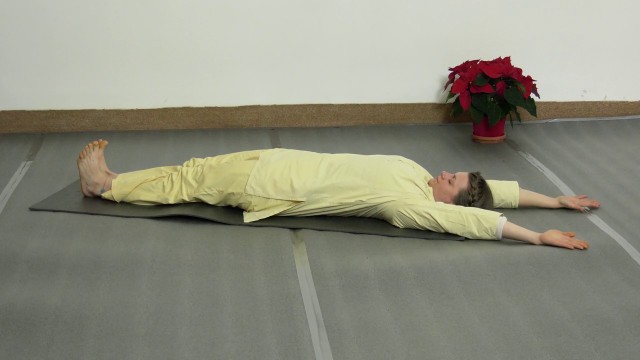
A spiritual discourse and yoga session on universal oneness and seasonal traditions.
"We need our world, our humans, to be in oneness." "One in all and all in one. That's all."
Swami delivers a message of interfaith unity, reflecting on December traditions like St. Nicholas Day and Christmas as expressions of shared human spirituality. He explains the core teaching of "one in all and all in one" from his guru, connecting it to the philosophy of Yoga in Daily Life. The session transitions into a guided Sarvahita Asana practice, beginning with relaxation and including gentle stretches and a torsion exercise.
Filming location: Strilky, Czech Republic
Vishwagurujis speech at peace conference in Prague
21:30 - 22:09 (39 min)
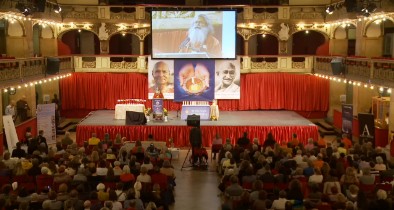
A satsang on the spiritual lineage and core principles of Yoga in Daily Life.
"I waited a long time—about 51 years—because... until I could find the roots, I did not speak more about it."
"When compassion awakens in your heart, you become a mother. That womb of the mother is the heart. You feel the pain, the pity, the suffering of others—not only humans, but every creature."
Swami Maheshwarananda (Swamiji) addresses a gathering, revealing the ancient Himalayan roots of his yoga tradition stemming from the saint Ālakapurījī. He explains the foundational role of compassion and non-violence (ahiṁsā) in spiritual practice, describing the journey from individual soul to universal Ātmā. He shares anecdotes about introducing yoga to Czechoslovakia, praising the peaceful adoption of the practice and its role in fostering personal and social harmony.
Filming location: Prague, Czech Republic
The Pearl of Everlasting Bliss
22:15 - 22:36 (21 min)
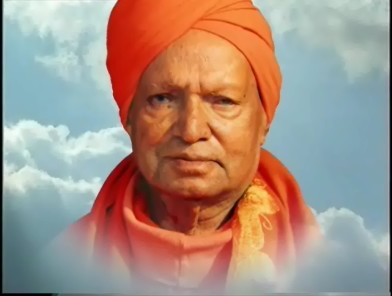
A biographical tribute to the life and legacy of Hindu saint Paramahaṁsa Śrī Svāmī Madhavānandajī.
"My eyes filled with tears, and I fell to my knees. I knew I had found the everlasting light of my life. I was home at last."
"All humans belong to one religion, and that is humanity... ahiṃsā paramo dharma: non-violence is the highest religion."
The narrative chronicles the spiritual journey of Swami Madhavānandaji, from his childhood in Rajasthan and transformative meeting with his guru, Bhagavān Śrīdīp Nārāyaṇa Mahāprabhujī, to his life of devotion, teaching, and global service. It details his initiation, his work establishing ashrams, and his teachings on non-dualism and universal love, culminating in his Mahāsamādhi in 2003 and the continuation of his lineage through his disciple, Swami Māheśvarānandajī.
Filming location: Rajasthan, India; Kathu Ashram, India; Bola Guda Ashram, India; Nepal
God is the giver
22:40 - 23:18 (38 min)
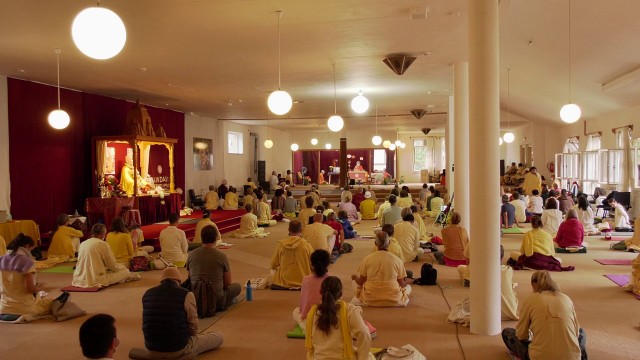
A spiritual discourse following bhajans for Guru Pūrṇimā.
"If you have no time for practicing yoga or anything, then it means you also have no time for eating."
"God knows everything: when, how, and where He is acting. So do not be proud of yourself."
A speaker addresses a gathering, reflecting on the recent bhajans and the attendees' spiritual practice (anuṣṭhāna). The talk emphasizes the necessity of sādhanā, comparing it to the essential need for food, and explores themes of divine grace, humility, and the interconnectedness of all life. Using analogies of rain, a water well, and a caged parrot, the speaker advises constant prayer, mantra repetition, and cultivating goodwill for all creatures to ultimately realize oneness.
Filming location: Strilky, Czech Republic
Yoga is spiritual
23:25 - 0:35 (70 min)
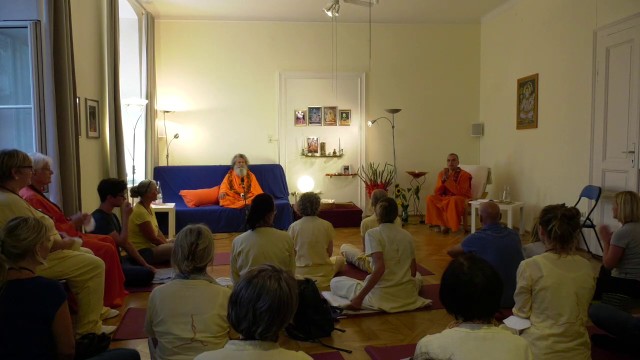
Satsang from Linz, Austria. Translation of the bhajan Sri Madhavanandaji Prabhu Ananda Dijo. This bhajan was written by our Gurudeva many many years ago. He requests Holy Guruji to grant us happiness and accept our service. Explanation and practice of Ashwini mudra, AUM chanting and Bhramari pranayama.
American
Australian