
European
The Endless Glory of the Rāmāyaṇa
0:15 - 1:06 (51 min)
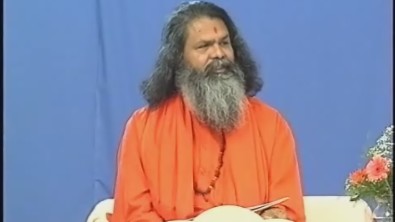
A discourse on the glory of the Rāmāyaṇa and the sacred city of Ayodhyā.
"The glory of God is Ānanda, endless. There is never an end to God’s glory."
"In those hearts where God is known, that heart is a temple. Otherwise, it is a cave of the Rakṣasas, or a grave."
The speaker expounds on the infinite, joyful nature of the Rāmāyaṇa's wisdom, explaining its transmission from Lord Śiva to Pārvatī and then through Tulsīdās. He describes the divine qualities of Lord Rāma, the holiness of Ayodhyā and the Sarayū River, and emphasizes remembering God in all circumstances. The talk connects devotion to environmental reverence and concludes with the liberating power of the sacred land.
Filming location: Strilky, Czech Republic
The Pearl of Everlasting Bliss
1:10 - 1:31 (21 min)
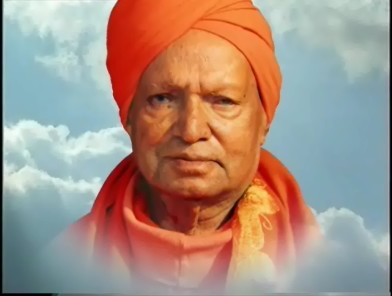
A biographical tribute to the life and legacy of Hindu saint Paramahaṁsa Śrī Svāmī Madhavānandajī.
"My eyes filled with tears, and I fell to my knees. I knew I had found the everlasting light of my life. I was home at last."
"All humans belong to one religion, and that is humanity... ahiṃsā paramo dharma: non-violence is the highest religion."
The narrative chronicles the spiritual journey of Swami Madhavānandaji, from his childhood in Rajasthan and transformative meeting with his guru, Bhagavān Śrīdīp Nārāyaṇa Mahāprabhujī, to his life of devotion, teaching, and global service. It details his initiation, his work establishing ashrams, and his teachings on non-dualism and universal love, culminating in his Mahāsamādhi in 2003 and the continuation of his lineage through his disciple, Swami Māheśvarānandajī.
Filming location: Rajasthan, India; Kathu Ashram, India; Bola Guda Ashram, India; Nepal
Jadan Ashram sets an example
1:35 - 2:22 (47 min)
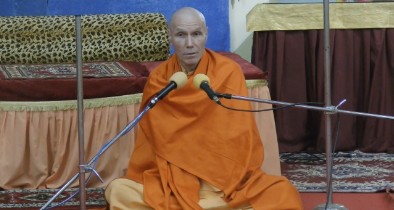
A spiritual discourse on environmental restoration and inner transformation at an ashram in Rajasthan.
"Slowly, slowly, the forests were disappearing, and the deserts were appearing."
"We are pumping the blood of Mother Earth... No jungle, no forest, no rain."
A speaker recounts the 25-year journey of the Jadan ashram, founded by Swāmījī (Gurudev Viśwa Gurujī), to regenerate a degraded landscape. He describes how human attachment and greed led to environmental decline, placing the story within the context of Kali Yuga. The talk details the practical methods used to capture rainwater, raise the water table, and reforest the land with native species, transforming the site into a thriving ecosystem that attracts wildlife. He parallels this physical transformation with the disciples' inner spiritual journey, facilitated by the Master's guidance and seva, turning a "spiritual desert" into a flourishing state.
Filming location: Jadan, Rajasthan, India
The 3rd Sri Swami Maheshwarananda Festival (4/4)
2:30 - 3:45 (75 min)
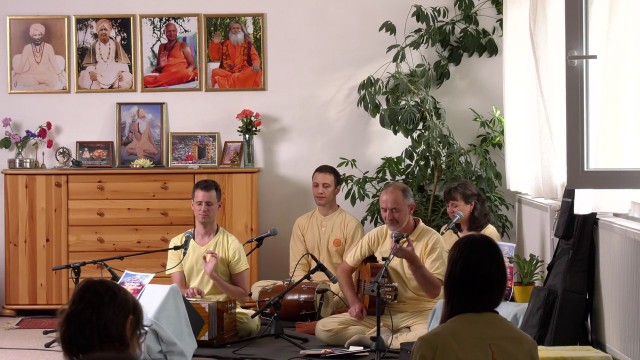
Welcome to the third Sri Swami Maheshwarananda Festival of Spiritual Music, Debrecen, Hungary.
Sri Swami Maheshwarananda Festival from Vienna
3:50 - 5:37 (107 min)
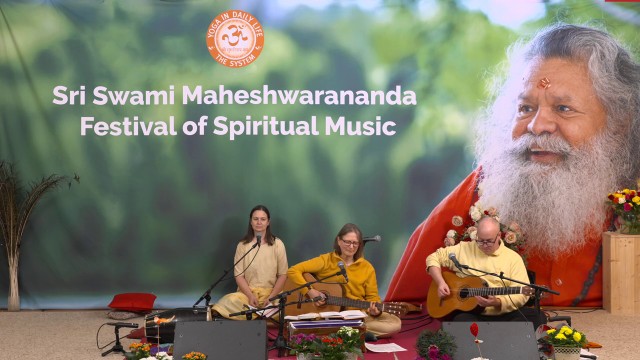
Welcome to the first Sri Swami Maheshwarananda Festival of Spiritual Music. This first event of its kind will take place in Guruji Ashram, Vienna, Austria. You are most welcome to join also in person for a 15 EUR entry fee.
Ab Sop Diya Is Jivan Ka
5:45 - 6:00 (15 min)
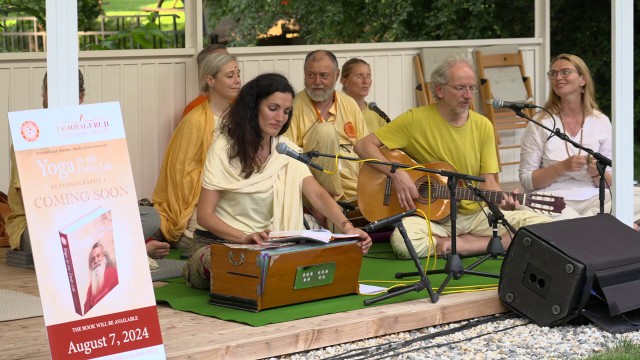
Evening satsang from Strilky Ashram, Czech Republic. Bhajan singing fron Strilky. Ab Sop Diya, Aba Hama
Shiva and the Chakras
6:05 - 7:30 (85 min)
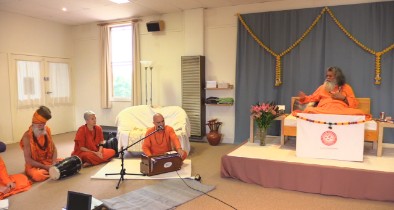
Evening satsang with Vishwaguruji from Melbourne, Australia. One of the best ways to memorize something is to create a little story about it. This is similar with songs. Vishwaguruji explains the meaning of the ancient story about the nectar of immortality rising from the churning of the ocean. The first lower chakras in the feet are the so-called earth chakras; chakras further up in the legs are connected with vegetation; and then continur up to the animal qualities.
Be aware of the importance of your life!
7:35 - 8:16 (41 min)
Evening satsang with Vishwaguruji from Vienna, Austria. The full moon affects us whether we are aware of it or not. We are searching for our aim, but we have many complications in this world. Finally we have to leave with empty hands. By practicing yoga vidya we can awaken our awareness.
Success in Yoga
8:20 - 9:35 (75 min)
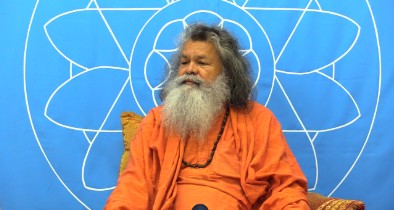
A spiritual discourse on the essence of yoga, cosmology, and the path to liberation.
"If you practice yoga or pursue any goal in life, you need a master to achieve it."
"Yoga is a lifelong journey... Yoga is ancient, the very first element in creation, given by God, by Śiva."
The speaker delivers an extensive teaching, weaving together the origins of yoga from Śiva, the divine trinity of Brahmā, Viṣṇu, and Śiva, and the symbolic journey of the Kuṇḍalinī through the chakras. He uses stories from the Mahāśivapurāṇa, analogies from nature, and personal anecdotes to illustrate the necessity of a true Satguru, the perils of wrong association (ku-saṅgha), and the disciplined, lifelong commitment required for authentic spiritual practice.
Filming location: Sydney, Australia
Good eating
9:40 - 10:53 (73 min)
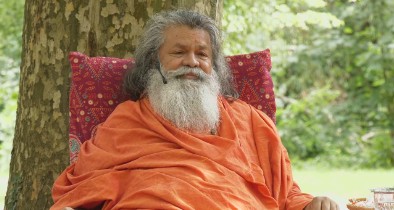
A satsang discourse addressing food purity, vegetarian ethics, and modern dietary challenges.
"If you use pesticide, the urea we call it, then once you give it, it takes 10 to 15 years to purify that earth again." "Sin is that which creatures, beautiful creatures, are there... torturing them, what they call halal, is a pain; the pain is the sin."
Swami Avatarpuri responds to a question about potatoes, expanding into a wide-ranging talk on the dangers of pesticides, hybridized wheat, and refined oils. He discusses the karmic implications of meat consumption and animal cruelty, shares personal anecdotes about contaminated food, and advocates for organic produce, home preservation, and dietary variety. The talk concludes with a mythological story about Shakti and a reference to a breatharian saint.
Filming location: Vép, Hungary
Practicing led by Vishwaguruji
11:00 - 11:39 (39 min)
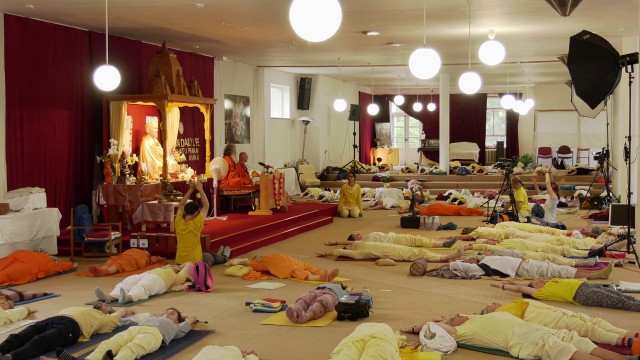
Morning satsang from Strilky Ashram, Czech Republic.
Yoga and Ayurveda for wellbeing
11:45 - 13:10 (85 min)
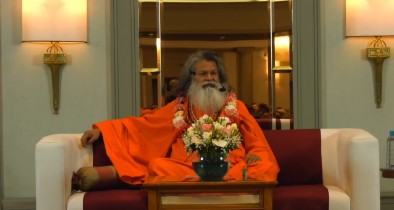
Public lecture of Vishwaguruji from Hotel Sheraton in Zagreb, Croatia.
Vishwagurujis speech at peace conference in Prague
13:15 - 13:54 (39 min)
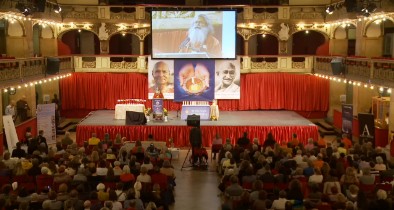
A satsang on the spiritual lineage and core principles of Yoga in Daily Life.
"I waited a long time—about 51 years—because... until I could find the roots, I did not speak more about it."
"When compassion awakens in your heart, you become a mother. That womb of the mother is the heart. You feel the pain, the pity, the suffering of others—not only humans, but every creature."
Swami Maheshwarananda (Swamiji) addresses a gathering, revealing the ancient Himalayan roots of his yoga tradition stemming from the saint Ālakapurījī. He explains the foundational role of compassion and non-violence (ahiṁsā) in spiritual practice, describing the journey from individual soul to universal Ātmā. He shares anecdotes about introducing yoga to Czechoslovakia, praising the peaceful adoption of the practice and its role in fostering personal and social harmony.
Filming location: Prague, Czech Republic
Part 1: The Role of Yoga and Meditation in Improving Quality of Life for Cancer Patients
14:00 - 15:07 (67 min)
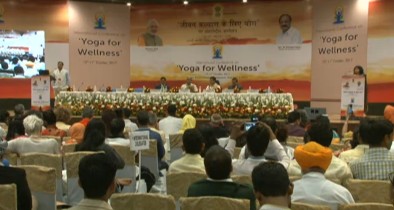
A medical lecture on the role of yoga and meditation as supportive care for cancer patients.
"We must note which specific yogic and meditative techniques were used, as these vary widely."
"Please do not give false hope that cancer will be cured... If a practitioner claims that prāṇāyāma, dhyāna, and some Ayurvedic herbs... can cure cancer, they are committing a grave sin against society."
A doctor from AIIMS Delhi presents a detailed analysis of scientific studies on yogic interventions for cancer patients, emphasizing they are complementary to standard treatments like chemotherapy. He strongly warns against practitioners falsely claiming yoga can cure cancer, shares data on benefits for quality of life and stress, and proposes a large-scale research trial combining yoga, meditation, and herbal products for cancer prevention and care.
Filming location: Delhi, India
Part 1: Welcoming Address and Valedictory Session on Yoga for Wellness
15:15 - 16:23 (68 min)
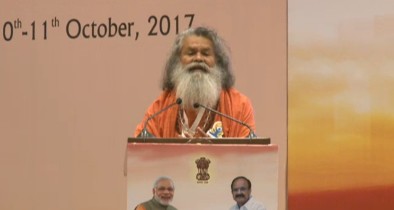
A valedictory session for a conference on "Yoga for Wellness," featuring addresses by government ministers and spiritual leaders.
"Yoga for wellness is this year’s subject. It is not just about the practice of yoga, but also about using it in the lives of every human being for achieving better health and wellness."
"Our method of treatment does not have any side effects. That is why we develop research about it, develop websites, develop programming, develop its videos."
The session opens with a welcome address emphasizing yoga's global role and the need to integrate traditional and modern medicine. Union Minister Nitin Gadkari delivers a valedictory address, sharing his personal health transformation through yoga and proposing structured training and research to professionalize the field. Following remarks from other ministers, Professor H.R. Nagendra gives a speech contrasting the multidimensional approach of yoga with modern medicine's limitations for non-communicable diseases. Swami Maheshvarananda and actress Anu Agarwal also share perspectives, with Agarwal recounting her recovery from a major accident through yoga.
Filming location: Delhi, India
Vegetarian cooking lesson 6
16:00 - 16:07 (7 min)

Vegetarian cooking lesson from Yoga Summer Seminar in Vep, Hungary
Pollution
16:15 - 17:16 (61 min)
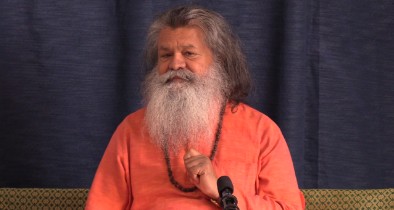
A spiritual discourse on the five sheaths (kośas) and the impact of nourishment.
"Jaisā khāī annā, vaisā rahe man—what kind of nourishment or food you are eating—like that will turn your mind."
"So first is the physical nourishment, Annamaya Kośa... What kind of food you will eat, like that will be your mentality."
Swami Ji explains the five layers of human existence, beginning with the food sheath (Annamaya Kośa). He emphasizes how diet shapes one's energy, mind, and consciousness, weaving in critiques of modern food systems, historical anecdotes about pre-industrial community life, and cautionary tales about arguing with a spiritual master. The talk uses the symbol of the crocodile in the Svādhiṣṭhāna chakra to represent destructive emotions.
Filming location: Auckland, New Zealand
Jadan Ashram sets an example
17:20 - 18:07 (47 min)
A spiritual discourse on environmental restoration and inner transformation at an ashram in Rajasthan.
"Slowly, slowly, the forests were disappearing, and the deserts were appearing."
"We are pumping the blood of Mother Earth... No jungle, no forest, no rain."
A speaker recounts the 25-year journey of the Jadan ashram, founded by Swāmījī (Gurudev Viśwa Gurujī), to regenerate a degraded landscape. He describes how human attachment and greed led to environmental decline, placing the story within the context of Kali Yuga. The talk details the practical methods used to capture rainwater, raise the water table, and reforest the land with native species, transforming the site into a thriving ecosystem that attracts wildlife. He parallels this physical transformation with the disciples' inner spiritual journey, facilitated by the Master's guidance and seva, turning a "spiritual desert" into a flourishing state.
Filming location: Jadan, Rajasthan, India
Why we do Anusthan
18:15 - 19:15 (60 min)
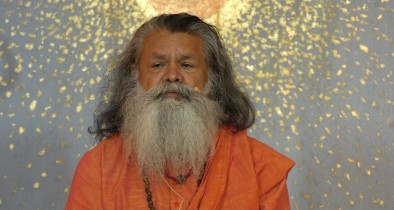
A discourse on the purpose and practice of Anuṣṭhāna, a spiritual observance.
"Anuṣṭhāna is when you make a saṅkalpa. Saṅkalpa means you promise yourself to undertake a practice for a certain purpose: for spiritual development, for good health, for success."
"We pray that all creatures should live in peace, harmony, and health. God protect all. This is our Anuṣṭhāna for this year."
A spiritual teacher explains the traditional practice of Anuṣṭhāna, a vowed observance for specific purposes like family harmony, health, or agricultural success. He contrasts its ideal use for unity and blessings with modern distortions, like praying for divorce. The talk expands to advocate for Anuṣṭhāna as a prayer for universal well-being, encompassing family, community, nature, and all living creatures, emphasizing harmony with the natural world and compassion for animals.
Filming location: Strilky, Czech Republic
The origin of Jyotir Linga
19:20 - 20:13 (53 min)
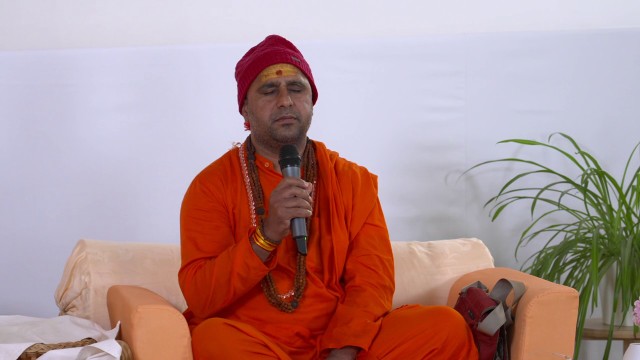
A satsang session featuring personal reflections and scriptural discourse.
"It’s not so much about what the voice is telling you. It’s more about how the voice is speaking with you."
"According to Śiva Purāṇa, Śiva was the creator of Brahmā and Viṣṇu... and that is the beginning."
Nārāyaṇa Purī, a life coach and childhood friend of the swamis, shares insights on managing the inner voice during high-pressure situations like sports, relating it to mantra practice. Swami Phulpuri then answers questions from devotees, explaining the origin of the Śivaliṅga according to the Śiva Purāṇa and affirming the Mahābhārata and Rāmāyaṇa as real historical texts offering lessons on overcoming negative thoughts.
Filming location: Strilky, Czech Republic
The Pearl of Everlasting Bliss
20:20 - 20:41 (21 min)
A biographical tribute to the life and legacy of Hindu saint Paramahaṁsa Śrī Svāmī Madhavānandajī.
"My eyes filled with tears, and I fell to my knees. I knew I had found the everlasting light of my life. I was home at last."
"All humans belong to one religion, and that is humanity... ahiṃsā paramo dharma: non-violence is the highest religion."
The narrative chronicles the spiritual journey of Swami Madhavānandaji, from his childhood in Rajasthan and transformative meeting with his guru, Bhagavān Śrīdīp Nārāyaṇa Mahāprabhujī, to his life of devotion, teaching, and global service. It details his initiation, his work establishing ashrams, and his teachings on non-dualism and universal love, culminating in his Mahāsamādhi in 2003 and the continuation of his lineage through his disciple, Swami Māheśvarānandajī.
Filming location: Rajasthan, India; Kathu Ashram, India; Bola Guda Ashram, India; Nepal
Bring people to oneness
20:45 - 21:46 (61 min)
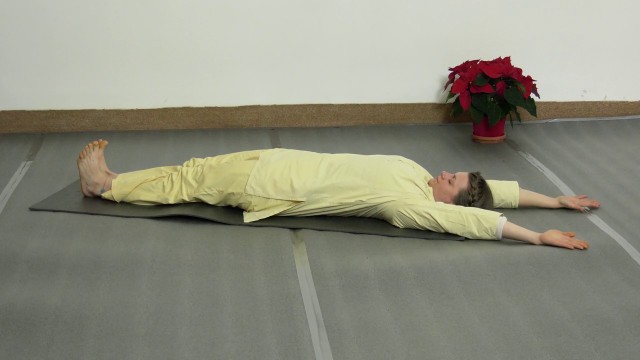
A spiritual discourse and yoga session on universal oneness and seasonal traditions.
"We need our world, our humans, to be in oneness." "One in all and all in one. That's all."
Swami delivers a message of interfaith unity, reflecting on December traditions like St. Nicholas Day and Christmas as expressions of shared human spirituality. He explains the core teaching of "one in all and all in one" from his guru, connecting it to the philosophy of Yoga in Daily Life. The session transitions into a guided Sarvahita Asana practice, beginning with relaxation and including gentle stretches and a torsion exercise.
Filming location: Strilky, Czech Republic
World Peace is in Our Hands
22:00 - 22:05 (5 min)

A keynote address on global responsibility and the path to world peace.
"A world without peace will not survive. A world without distributing wealth will not survive. A world without taking care of our beautiful planet will not survive."
"World peace is in our hands... Peace is never achieved without good intentions and cooperation with others. Even more importantly, it requires coherence or balance with one’s self."
The speaker, representing Slovenia, addresses an international conference, arguing that creating resilient societies and active global citizenship is essential for survival. They share Slovenia's initiative to co-create a national vision aligned with the UN Sustainable Development Goals as a model of responsible action. The speech concludes by linking outer peace to inner balance, proposing yoga as a means to achieve it.
Filming location: Prague, Czech Republic
Yoga, Health, and Peace: A Medical Perspective
22:10 - 22:22 (12 min)

A medical doctor presents a scientific perspective on yoga's role in holistic health and peace.
"To create a healthy world, we must be healthy ourselves."
"Yoga techniques influence us on all levels: physical, mental, social, and spiritual."
The speaker, addressing an audience including Vishwa Guruji, explains how modern lifestyles cause stress and disease, contrasting this with the integrated approach of the Yoga in Daily Life system. He details how specific yoga practices—like meditation, prāṇāyāma, and āsanas—scientifically support health by influencing the brain's cortical and subcortical levels and peripheral organs. The talk covers preventing memory loss and depression, advocates for a vegetarian diet, and concludes that balanced self-realization through yoga fosters global peace.
Filming location: Prague, Czech Republic
God is the giver
22:30 - 23:08 (38 min)
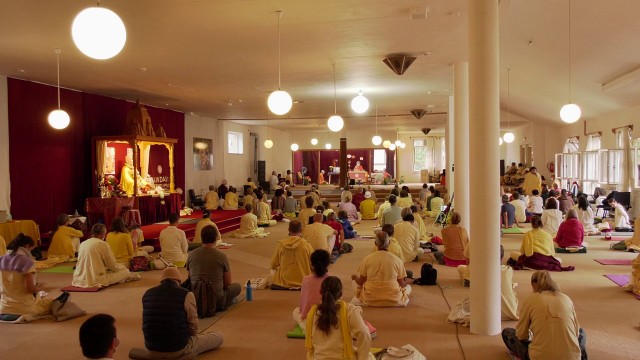
A spiritual discourse following bhajans for Guru Pūrṇimā.
"If you have no time for practicing yoga or anything, then it means you also have no time for eating."
"God knows everything: when, how, and where He is acting. So do not be proud of yourself."
A speaker addresses a gathering, reflecting on the recent bhajans and the attendees' spiritual practice (anuṣṭhāna). The talk emphasizes the necessity of sādhanā, comparing it to the essential need for food, and explores themes of divine grace, humility, and the interconnectedness of all life. Using analogies of rain, a water well, and a caged parrot, the speaker advises constant prayer, mantra repetition, and cultivating goodwill for all creatures to ultimately realize oneness.
Filming location: Strilky, Czech Republic
How can I love myself?
23:15 - 23:48 (33 min)
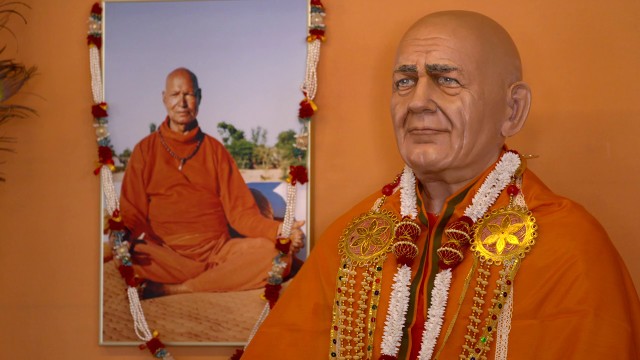
A satsang exploring the concept of self-love through the framework of the four aspects of divine grace (kripa).
"Swāmījī did not really use this word, but I know it comes from Holī Gurujī; he is always using that."
"Love each and every living being, if not more, then at least as much as yourself."
Guru Lilā, addressing the community, explains the four aspects of kripa: Deva Kripa (grace of the gods), Śāstra Kripa (grace of the scriptures), Guru Kripa (the Guru's grace), and Kuṭkī Kripa (self-grace). He focuses on Kuṭkī Kripa as self-love, arguing it is a prerequisite for loving others. He outlines a practical path to self-love through self-acceptance, self-understanding, and self-giving, linking it to core teachings. He shares an anecdote about a woman healing from ALS through self-love and concludes with a traditional story about Guru Nānak illustrating the complex workings of karma.
Filming location: Strilky, Czech Republic
Yoga is spiritual
23:55 - 1:05 (70 min)
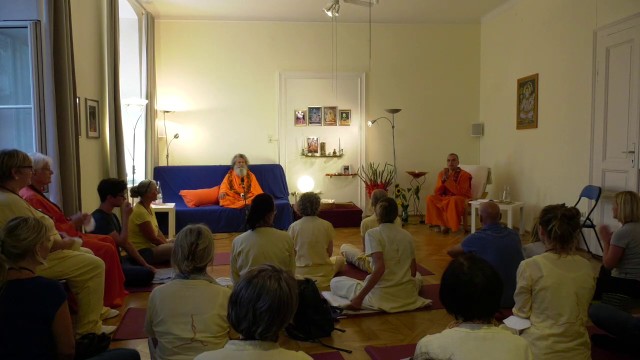
Satsang from Linz, Austria. Translation of the bhajan Sri Madhavanandaji Prabhu Ananda Dijo. This bhajan was written by our Gurudeva many many years ago. He requests Holy Guruji to grant us happiness and accept our service. Explanation and practice of Ashwini mudra, AUM chanting and Bhramari pranayama.
American
Australian