
European
How do we practice Bhramari?
0:00 - 0:19 (19 min)
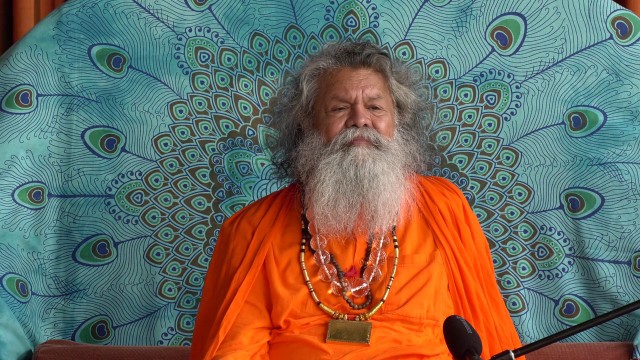
A teaching session on breathwork and the Brahmari technique.
"You are very good persons, and you must practice every day." "You should do only three practices: on the chest, on the heart, in the navel, and then Brahmari."
A spiritual teacher instructs a group on daily breathing practices, using the analogy of a varied meal to explain the need for different techniques. He outlines a sequence focusing on the heart and navel, details methods of inhalation and exhalation through the nose and mouth, and gives specific guidance on practicing the Brahmari sound. The talk includes practical warnings about social settings and concludes with an encouragement to practice at home.
Filming location: Vép, Hungary
Bhajan singing from Vep
0:25 - 0:48 (23 min)
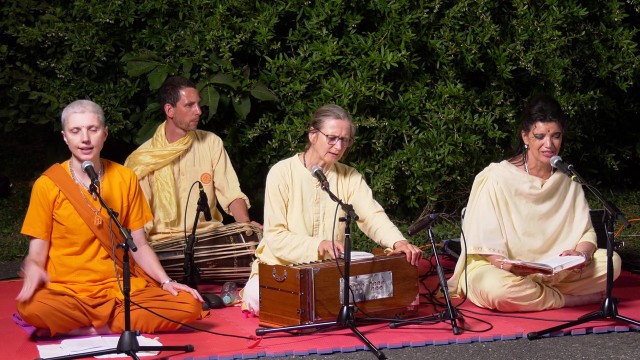
Morning satsang with Vishwaguruji from Vep, Hungary. Bhajan singing.
What does Yoga in Daily Life mean?
0:55 - 1:21 (26 min)
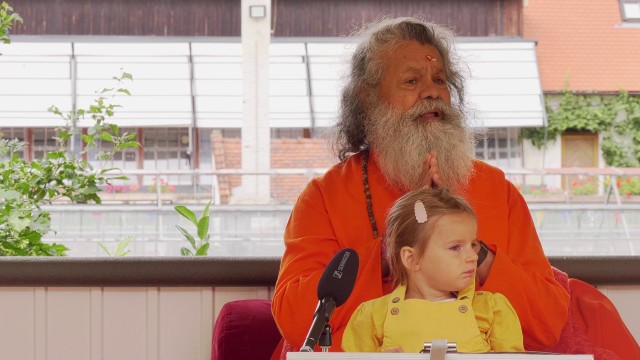
A spiritual discourse on the legacy of "Yoga in Daily Life" and the significance of a sacred chair.
"Holy Gurujī said, 'My servant, I give you this place, this place where we are sitting here on this chair.'"
"One in all, and all in one. These were the words given to our holy Gurujī."
The lecturer addresses a gathering, reflecting on the origins and global spread of the Yoga in Daily Life system from its beginnings in Czechoslovakia. He discusses receiving the spiritual "Chair of Oneness" from his guru, linking it to a lineage of masters like Ālagpurījī and Devapurījī. The talk weaves personal anecdotes, including a story about installing a Nandi statue, with teachings on practice, unity, and the guru-disciple relationship.
Filming location: Strilky, Czech Republic
Bhajans from Rijeka
1:25 - 1:53 (28 min)
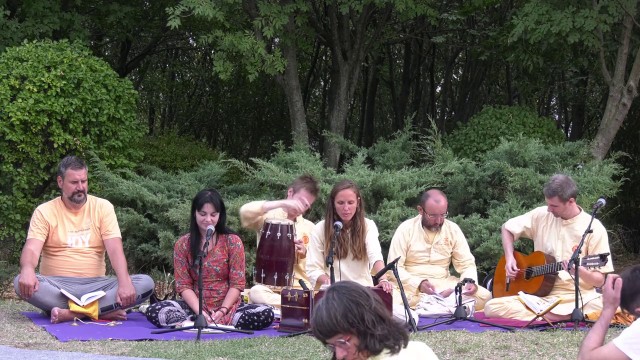
Evening satsang with Vishwaguruji from Rijeka Ashram, Croatia.
The teaching of a Guru is for ever
2:00 - 3:16 (76 min)
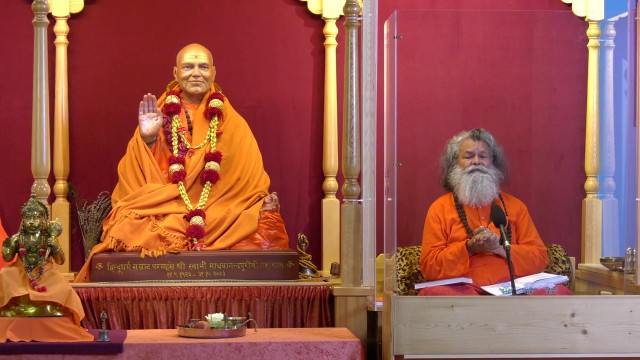
Guru Purnima celebration from Vienna, Austria. Siva was the first living being in the Earth. The story of a photograph what shows a Rishi in the Himalayas. Australian inhabitants are originated from India. British people were very cruel to them. Explanation of bhajan Sataguru Alakapurijji avo. The story of a boy and a girl who married but they had a problem with the hard part of the bread. The story of the river Alakhananda. Practising bhramari and bhujangini pranayama.
Longing for God
3:20 - 4:19 (59 min)
Morning satsang with Vishwaguruji from Rijeka Ashram, Croatia. Bhajan singing. We should be careful with our bodies and we should live very healthily. Our practice is very important and also our good food. We are really yogis. We have learnt many things that are really important in yoga. Real yogis should practise yoga every day. We help other people to become spiritual. Some people eat cats and kill them in a very cruel way. We should feel every creature in our hearts. The story of a man who wanted to see God. The story of an Indian lady living near Rupavas who became a holy person. The other story is of a woman in Gujarat who doesn't eat and doesn't drink anything.
Why are we making war?
4:25 - 5:48 (83 min)
Evening satsang with Vishwaguruji from Strilky Ashram, Czech Republic. Why do we come here, sometimes from very far distances? Because we want to become better humans. We shouldn't be fighting wars and killing. This is also the teaching of Jesus. Many people do not understand this and follow their own will. The explanation of the meaning of the traditional welcoming hand gesture when the two palms meet.
We are only one
5:55 - 6:35 (40 min)
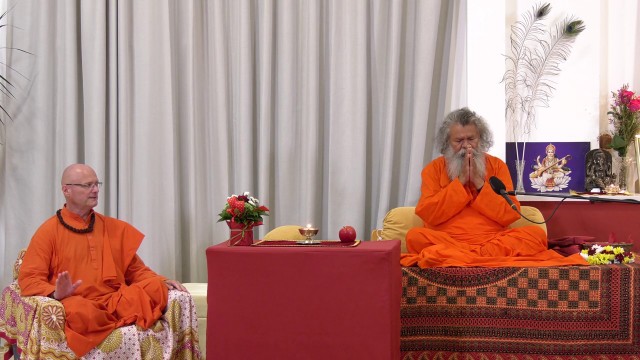
Evening satsang with Vishwaguruji from Rijeka Ashram, Croatia. We are the ones who are in this hall. When we come together and meditate we radiate good energy to each other. People who left our system sooner or later will come back because of the attraction of our energy. we should say good or bad if we get a question. We should be alert. Many people practise Yoga in Daily Life in Croatia. You and I are one in my heart.
Practice with concentration
6:40 - 7:54 (74 min)
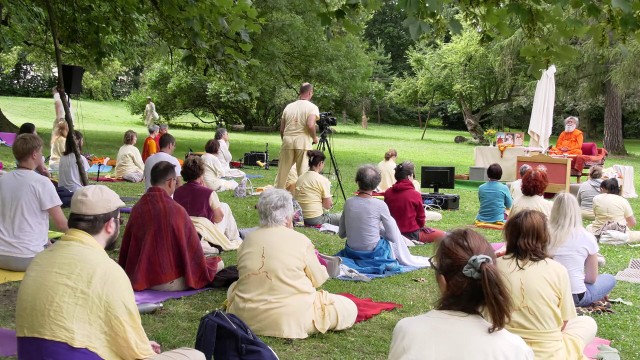
Morning satsang with Vishwaguruji from Strilky Ashram, Czech Republic. Practising Bari Khatu Pranam relaxation. Explanation of the sound and movement of bhramari. The story of how a bhramari makes a worm to bhramari. Many things we learnt from nature. Practising bhramari pranayama. We can feel the vibration of bhramari in the Sanskrit language. During bhramari we can feel the vibration in the navel in our head and the chest. We were informed about the last 12 months' program of the International Madhawananda World Peace Council.
Yoga in Daily Life - excercise program
8:00 - 9:32 (92 min)
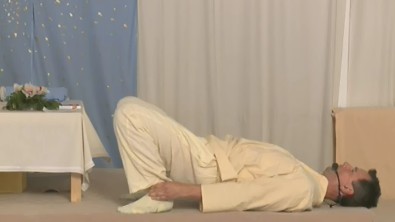
Morning Yoga excercise according to system Yoga in Daily Life from Mahaprabhudeep Ashram, Strilky, Czech Republic.
We should have a flame
9:40 - 10:36 (56 min)
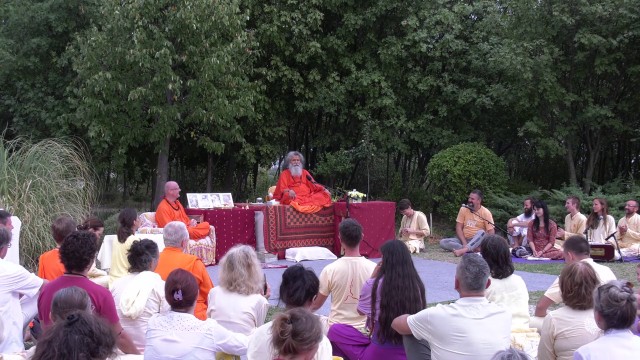
A spiritual discourse weaving personal anecdotes with teachings on discipline, the guru-disciple relationship, and reverence for all life.
"Those who are awake and active during Brahmamuhūrta become very spiritual; everything comes to them."
"We are all a lamp... as long as there is oil, the flame will come."
The speaker recounts childhood lessons from his Gurujī about the spiritual importance of the pre-dawn hour and shares stories of other disciples, like Phoolpurījī, to illustrate the transformative power of a guru's guidance. He expands into a metaphor of the individual soul as a flame, emphasizing interconnectedness, and concludes with reflections on non-violence, compassion for all creatures, and the sanctity of Mother Earth, referencing the conduct of Buddha and the perceived moral decline of modern times.
Filming location: Rijeka, Croatia
We should live in real love
10:40 - 11:28 (48 min)
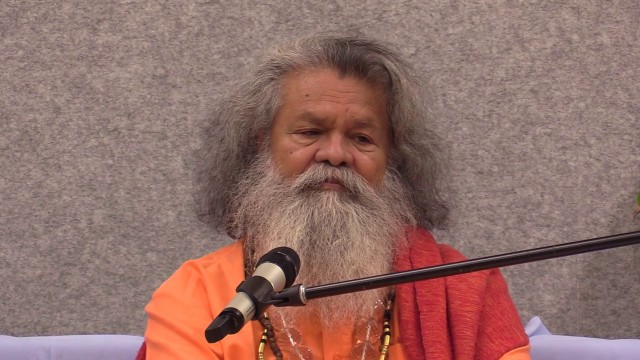
Morning satsang with Vishwaguruji from Trentwood Community Hub, Melbourne, Australia. Marriage means merge. It is a very beautiful ceremony. The story of a boy and a girl who married but they had a problem with the hard part of the bread. Married couples should live whole life happy together but kali yuga changed many things. Love is that where we are all happy healthy and helping each other. Explanation and singing of bhajan Sataguru satasangi and Sobavo satasangari.
Respect the life of other creatures
11:35 - 12:23 (48 min)
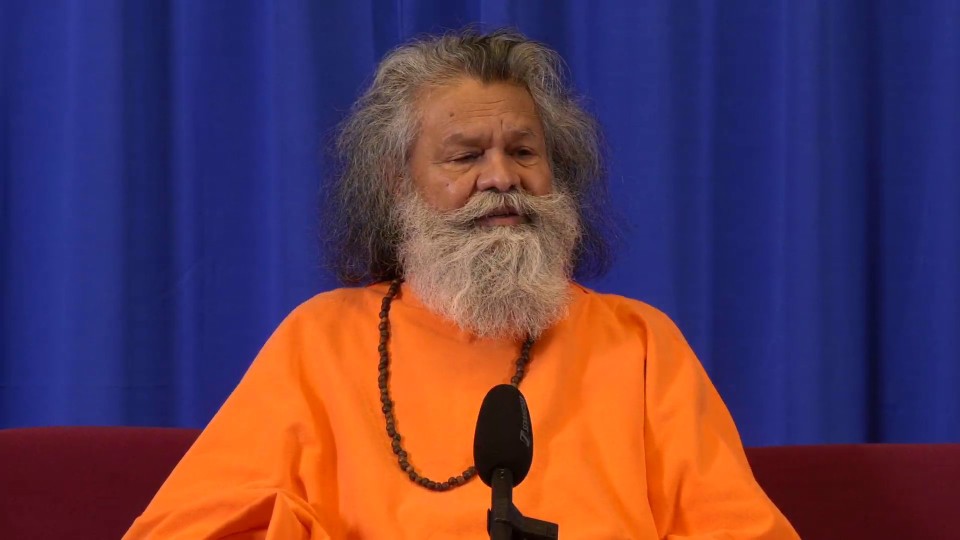
A satsang discourse on compassion, non-violence, and spiritual practice.
"All who are sitting with us are already in satsaṅg. 'Sat' is truth, peace, harmony, goodness—everything."
"Jīva jīva bhakṣate. Every animal eats animals, but we humans should not."
The lecturer addresses the gathering, explaining the essence of satsang as communion in truth. He uses metaphors of a ship and an airplane to illustrate the unity of all life, emphasizing that the soul (ātmā) is in every creature. The core teaching is a call for ahimsa (non-violence), urging humans to not kill other beings for food, contrasting human potential with animal nature. He discusses the challenges of Kali Yuga, advises against alcohol misuse, and clarifies protocols for offering garlands to guru photographs.
Filming location: Salzburg, Austria
Find God within
12:30 - 13:22 (52 min)
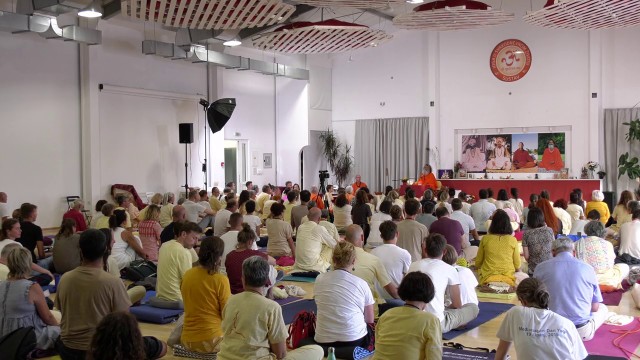
Evening satsang with Vishwaguruji from Rijeka Ashram, Croatia. Nowadays, people lose their teeth quickly.We should get back to nature again. There are many things in nature that can improve the health of teeth as well. Violin music and singing for the soul. We must find God within ourselves. The story of an American practitioner and the very beginning of the OM Ashram.
We should have a flame
13:30 - 14:26 (56 min)
A spiritual discourse weaving personal anecdotes with teachings on discipline, the guru-disciple relationship, and reverence for all life.
"Those who are awake and active during Brahmamuhūrta become very spiritual; everything comes to them."
"We are all a lamp... as long as there is oil, the flame will come."
The speaker recounts childhood lessons from his Gurujī about the spiritual importance of the pre-dawn hour and shares stories of other disciples, like Phoolpurījī, to illustrate the transformative power of a guru's guidance. He expands into a metaphor of the individual soul as a flame, emphasizing interconnectedness, and concludes with reflections on non-violence, compassion for all creatures, and the sanctity of Mother Earth, referencing the conduct of Buddha and the perceived moral decline of modern times.
Filming location: Rijeka, Croatia
Practising with Vishwaguruji
14:30 - 15:20 (50 min)
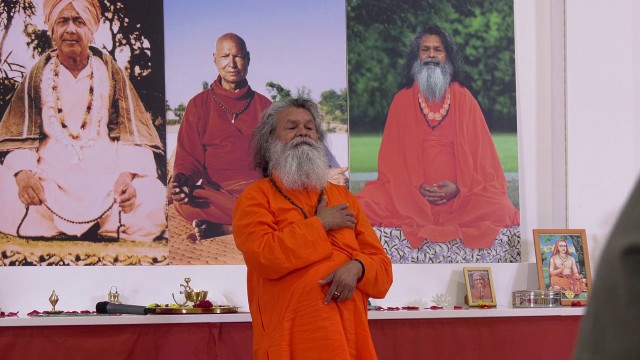
Evening satsang with Vishwaguruji from Rijeka Ashram, Croatia. Concentration on the heart and navel in a standing position. Practising asanas also in a standing position. Practising bhramari pranayama.
Gurudev bring us haven to haven
15:25 - 16:14 (49 min)
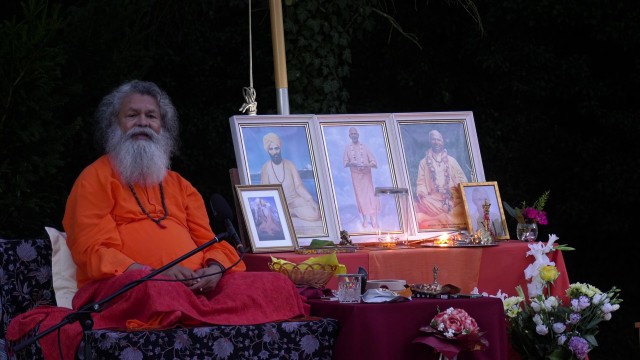
A spiritual discourse on the guru principle and the practice of Brahmārī.
"Above them is the guru. That guru, even Śiva."
"Everybody who is giving us something is our guru."
A teacher leads a satsang, offering a meandering talk on the nature of the true guru, placing it above even the Hindu trinity. He discusses the ambiguous concept of 'Brahmārī,' linking it to spiritual centers, creatures, and Sanskrit pronunciation, and gives fragmented instructions for a breathing technique involving the heart and navel. The talk blends personal anecdotes about his lineage with philosophical musings on gender and existence.
Filming location: Vép, Hungary
We have to be in unity
16:20 - 17:16 (56 min)
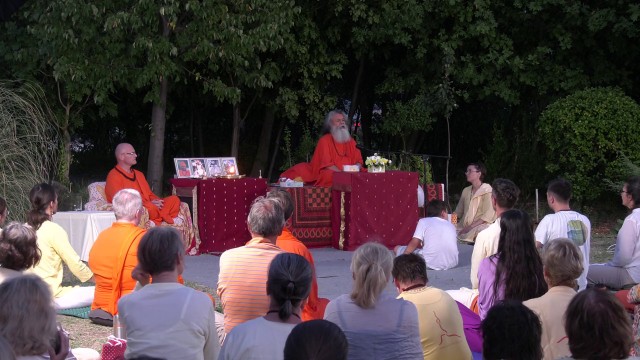
Evening satsang with Vishwaguruji from Rijeka Ashram, Croatia. We are different, but we are all going to the same destination. More and more people are following a vegan lifestyle, and you can see it on the planes. I have many students around the world who are practicing and meditating. Our goal is to achieve oneness, but we rarely do. Otherwise, duality remains. We have to achieve it within ourselves. We must all be good and peaceful, in unity.
Bhajans from Strilky Ashram
17:20 - 18:54 (94 min)
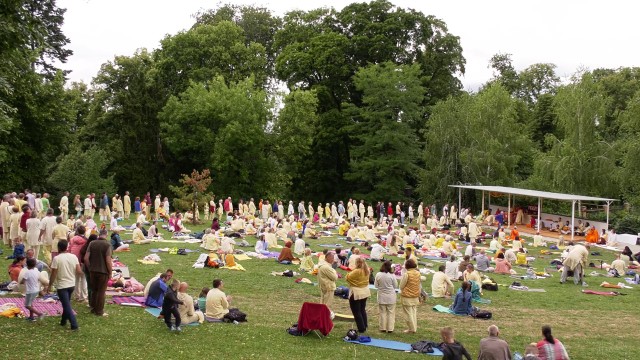
Morning satsang from Strilky Ashram, Czech Republic.
World Peace is in Our Hands
19:00 - 19:05 (5 min)

A keynote address on global responsibility and the path to world peace.
"A world without peace will not survive. A world without distributing wealth will not survive. A world without taking care of our beautiful planet will not survive."
"World peace is in our hands... Peace is never achieved without good intentions and cooperation with others. Even more importantly, it requires coherence or balance with one’s self."
The speaker, representing Slovenia, addresses an international conference, arguing that creating resilient societies and active global citizenship is essential for survival. They share Slovenia's initiative to co-create a national vision aligned with the UN Sustainable Development Goals as a model of responsible action. The speech concludes by linking outer peace to inner balance, proposing yoga as a means to achieve it.
Filming location: Prague, Czech Republic
Yoga, Health, and Peace: A Medical Perspective
19:10 - 19:22 (12 min)

A medical doctor presents a scientific perspective on yoga's role in holistic health and peace.
"To create a healthy world, we must be healthy ourselves."
"Yoga techniques influence us on all levels: physical, mental, social, and spiritual."
The speaker, addressing an audience including Vishwa Guruji, explains how modern lifestyles cause stress and disease, contrasting this with the integrated approach of the Yoga in Daily Life system. He details how specific yoga practices—like meditation, prāṇāyāma, and āsanas—scientifically support health by influencing the brain's cortical and subcortical levels and peripheral organs. The talk covers preventing memory loss and depression, advocates for a vegetarian diet, and concludes that balanced self-realization through yoga fosters global peace.
Filming location: Prague, Czech Republic
What does Yoga in Daily Life mean?
19:30 - 19:56 (26 min)
A spiritual discourse on the legacy of "Yoga in Daily Life" and the significance of a sacred chair.
"Holy Gurujī said, 'My servant, I give you this place, this place where we are sitting here on this chair.'"
"One in all, and all in one. These were the words given to our holy Gurujī."
The lecturer addresses a gathering, reflecting on the origins and global spread of the Yoga in Daily Life system from its beginnings in Czechoslovakia. He discusses receiving the spiritual "Chair of Oneness" from his guru, linking it to a lineage of masters like Ālagpurījī and Devapurījī. The talk weaves personal anecdotes, including a story about installing a Nandi statue, with teachings on practice, unity, and the guru-disciple relationship.
Filming location: Strilky, Czech Republic
Bhajans from Rijeka
20:00 - 20:28 (28 min)
Evening satsang with Vishwaguruji from Rijeka Ashram, Croatia.
We are one in the Satsang
20:30 - 21:02 (32 min)
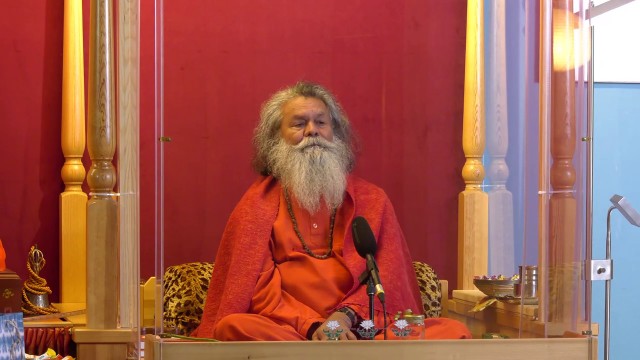
A spiritual discourse on the essence of true spiritual fellowship (satsaṅg).
"We all wish to share with one another. If I know I am very happy and I am here for satsaṅg with my friends, my sisters, with you, then it means we are our own Guru."
"Satsaṅg means together... We should think only one, only one, and how? We are so many, and that is only one, yes, because that is yours for all."
Swami Avatarpuri (Swāmījī) addresses a gathering, explaining the profound meaning of satsaṅg by breaking it into sat (truth, purity) and saṅg (togetherness). He contrasts deep, familial connection with transient lecture attendance, urging attendees to embody selfless, motherly care and genuine oneness, free from judgment. The talk blends philosophical definition with personal anecdotes from his travels and concludes with a line from a bhajan.
Filming location: Vienna, Austria
Releasing the knots of the heart
20:35 - 21:11 (36 min)
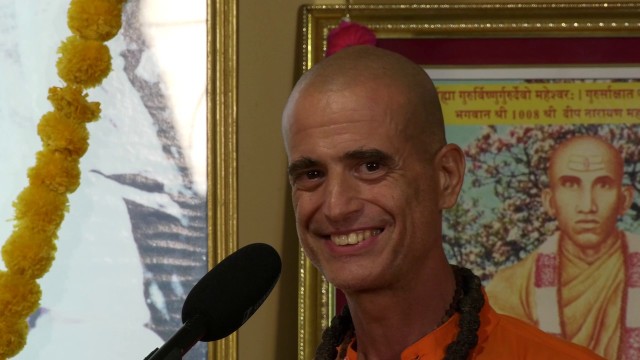
A spontaneous satsang talk by Swami Haripuri, sharing his personal journey and insights from ashram life.
"Life is not to give you joy. Life is to teach you."
"Once you remember this, of being present, you see that you are more calm, you are more centered, you are more relaxed."
Swami Haripuri recounts his spiritual journey, beginning with his arrival in India in 1996 and his subsequent training in Jadan. He describes years of intense seva and learning across various ashrams, including Kailash and Nepal, focusing on the challenges and lessons of community living. The core of his talk is an honest self-analysis of his own stubborn patterns, particularly a fear of negative responses that hinders communication. He emphasizes using daily life and seva as a "real playground" for self-understanding, breaking karmic patterns, and practicing presence.
Filming location: Jadan, Rajasthan, India
Mahaprabhuji is endless joy
21:15 - 21:34 (19 min)
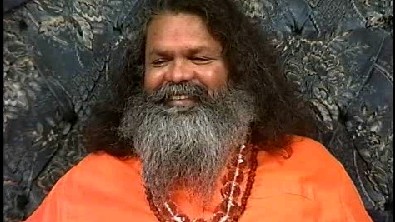
A satsang discourse on the duality of worldly joy and the singular refuge of divine grace.
"The joy of the joyous is very short, but the suffering of the joyous is longer."
"He can give you everything, but he can’t give you what he can give you. We need only confidence, that’s all."
The speaker reflects on the fleeting nature of worldly happiness, which is always paired with hidden sorrow, contrasting it with the endless joy of the divine. He proclaims Mahāprabhujī as the incarnate God and liberator, emphasizing that true peace is found only in unwavering devotion and surrender to this grace, using the metaphor of a seabird that must return to its ship in a vast ocean.
Filming location: Vép, Hungary
Science of chakras
21:40 - 22:56 (76 min)
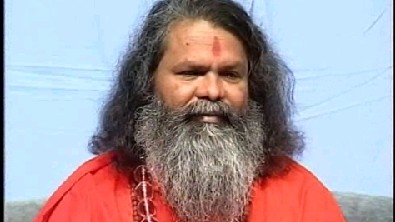
An introductory lecture on yoga philosophy, culminating in a practical demonstration for activating healing energy.
"Yoga means union—the union of the individual consciousness with the cosmic consciousness."
"In every creature, human or animal, where there is life, there is a light of God. That is God, the Creator of all creatures."
Swami Jyotirmayananda opens a discourse on "Kundalini and the Chakras" by defining yoga as a path to cosmic consciousness. He explains the journey of the soul, the yogic anatomy of energy channels (nāḍīs), and the system of chakras. The session includes a guided exercise to awaken the healing energy in one's palms, followed by practical tips for activating the Bindu chakra to improve eyesight and memory.
Filming location: Croatia
How the worm becomes Bhramari
23:00 - 23:44 (44 min)
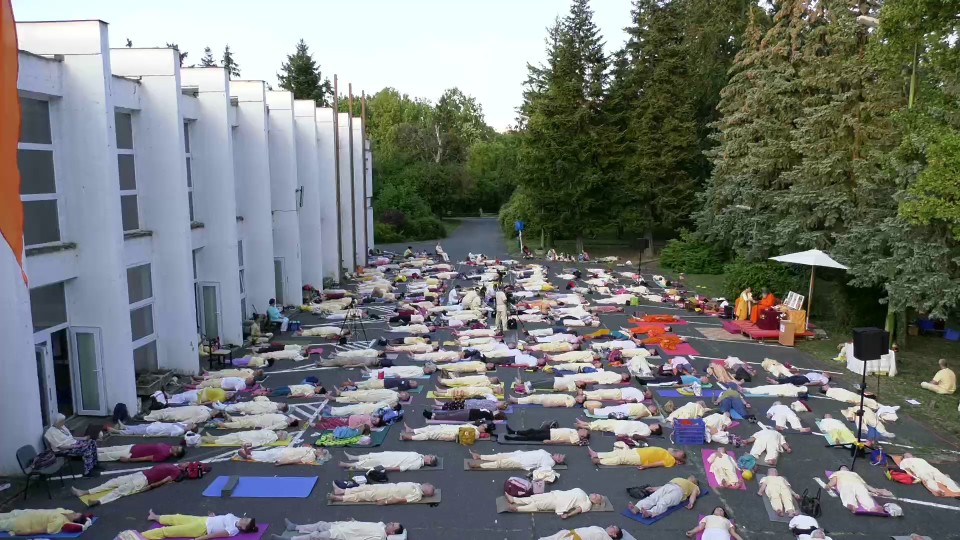
Evening satsang with Vishwaugurji from Vep, Hungary. Relaxation. Concentration on the navel and the heart. There are three different forms of bhramari. They have the same voice. One of them lives on the earth the second builds their nest in our house. They can bite us. The nest of bhramari is very comfortable. they bring worms there. Slowly slowly the worm transforms into a bhramari. We should practise bhramari only for short time.
Bhajans from Slovenska Vas
23:50 - 0:34 (44 min)
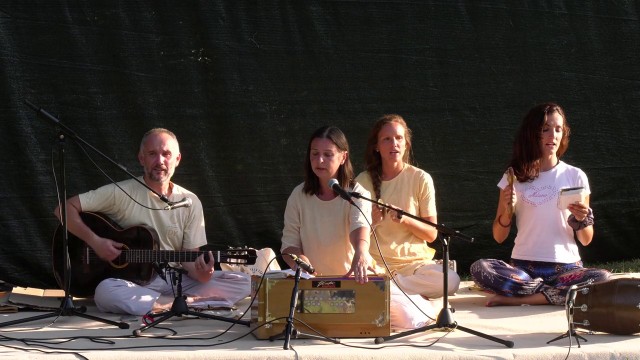
Evening satsang from Slovenska Vas, Slovenia.
American
Australian