
European
Build your intellect supportive
0:15 - 1:31 (76 min)
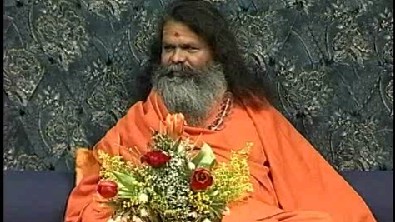
A spiritual discourse on maintaining clarity of purpose and guarding against negative influences.
"Your aim should be clear. Nothing can change me. The sun and moon can change their direction, but I will not change my direction."
"One stupid thought, one stupid person can destroy all your spiritual sādhanā, which you made years and years long with great confidence and with great love."
Swami Ji addresses the community, explaining how a lack of clear aim allows the intellect to be distracted and how negative gossip and jealousy can spoil one's spiritual practice, like lemon curdling milk. He narrates the story of Nārada creating doubt between Śiva and Pārvatī to illustrate the destructive power of negative talk, and emphasizes the need for humility, love, and avoiding harmful company to protect one's spiritual progress.
Filming location: Vép, Hungary
Practicing relaxation
1:35 - 2:12 (37 min)
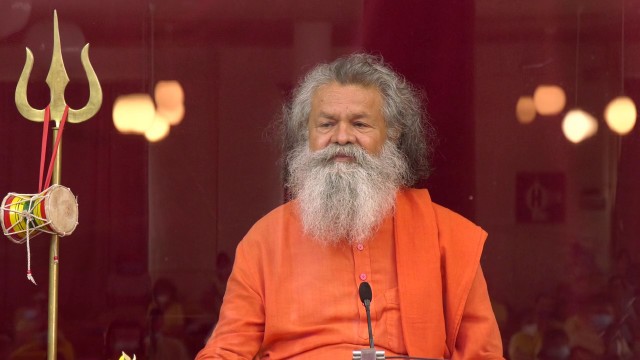
Morning satsang with Vishwaguruji from Strilky Ashram, Czech Republic. Some are trying to make negative things, they will lose the fruits. We are like one tree, that gives so many fruits. We should not kill animals. Teach yoga but first, get your diploma.
Dharma and adharma
2:20 - 2:55 (35 min)
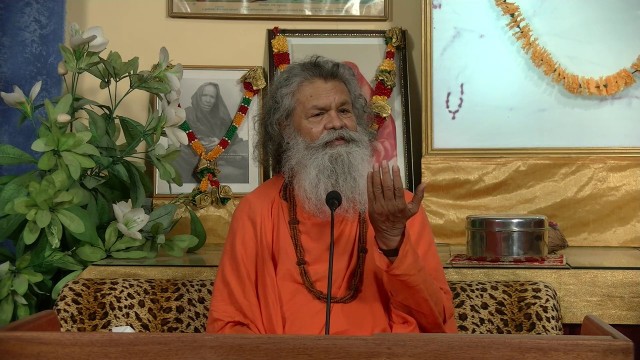
Evening satsang with Viswhaguruji from Jadan Ashram, Rajasthan, India. Our prayers have strength only if we follow ahimsa. Also don't say painful words to anyone. Don't use water unnecessarily because it is our life. Air is also life. Tulsi is not only a saint plant but it is God himself. Don't think negative of others. Bhajan singing.
The beauty of Mahaprabhudeep Ashram
3:00 - 3:30 (30 min)
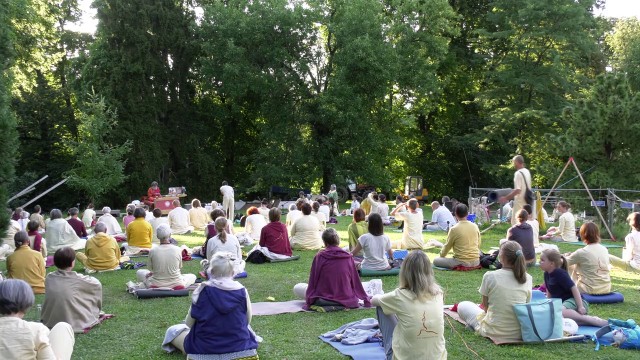
A spiritual discourse and devotional singing from an ashram, praising India's sacred land and the blessings of the Guru.
"Dhanya Dhanya Bhārata Bhūmi, svahitha kari paramasukhāsāgara Prabhu Nelliyaihi Avatāra Anantariṣimuni Yorayogī."
"If one can come here only for one hour or two hours, that is also very much. For one day, two days, three days, four days, day by day, everything comes: the purification, meditation, concentration, peace, harmony, health."
A speaker, likely a swami or devotee, leads a session that begins with Sanskrit chants and hymns glorifying India (Bharat Bhumi) and its divine incarnations. He describes the beautiful, healing atmosphere of the ashram in the forest, emphasizing the benefits of visiting for purification and spiritual practice. He discusses the upcoming Guru Purnima celebration, encourages attendance, and shares insights on karma yoga and the virtues of organic gardening from the ashram's land. The session includes a direct appeal to Indra, the rain god, for clear weather and concludes with devotional singing and the mantra "Śivo'ham."
Filming location: Strilky, Czech Republic
Gold and God
3:35 - 4:02 (27 min)
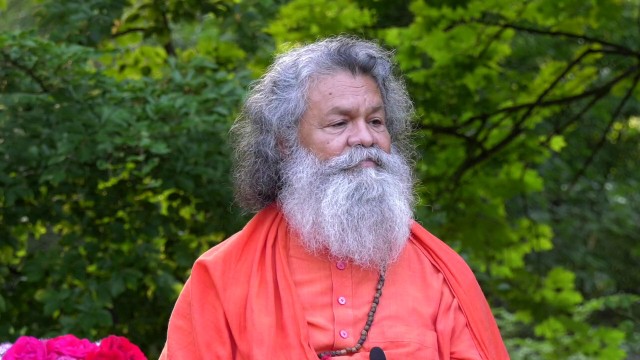
An evening satsang on the universal gift of yoga, transcending divisions of school or religion.
"Yoga is for good health, harmony, understanding, peace, and long life, and to be friends. This is the purpose of yoga."
"It does not matter which religion, which place, anywhere. Only human. If one is human, that is all."
A spiritual teacher addresses a global audience, emphasizing yoga as a divine tool for health, happiness, and harmony meant for all humanity. He recounts a parable about the introduction of gold and money, contrasting a past era of simple, reciprocal giving with modern complexity and attachment. The core message is that yoga, given by God, is a unifying practice beyond any sectarian or material divisions.
Filming location: Strilky, Czech Republic
Do Good
4:10 - 4:59 (49 min)
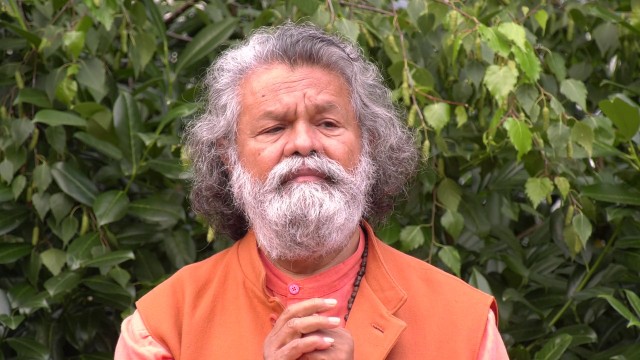
A spiritual discourse on the nature of the true guru, liberation, and spiritual practice.
"Sometimes it is good if we are running and running and running, and we don’t care about it... Then God said, 'I must give him some knowledge.'"
"Guru Brahmā, Guru Viṣṇu, Guru Devo Maheśvara. So where should we meditate so that we get all these three?"
The lecturer delivers a satsang, beginning with reflections on global challenges and India's cultural response during the pandemic. He critiques inauthentic yoga teachers and discusses the paradoxical path to mokṣa (liberation), explaining it as a state beyond positive and negative dualities. Using parables and teachings, he emphasizes the supreme nature of the true Guru and the importance of sincere, long-term practice over superficial achievements.
Filming location: Strilky, Czech Republic
How the energy circulating in our body
5:05 - 6:29 (84 min)
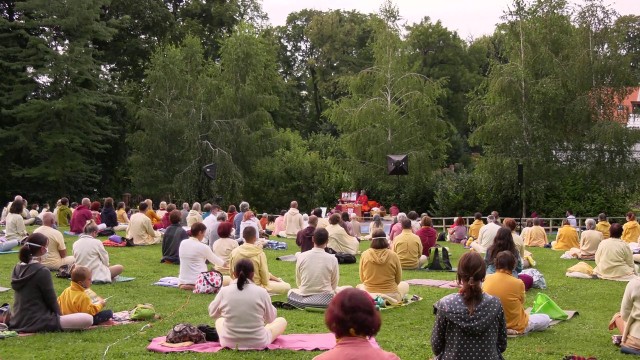
Evening satsang with Vishwaguruji from Strilky Ashram, Czech Republic. Moon is one of the Siva's symbols. Married couples have also that symbol of the moon on their head. In the Indian wedding ceremony, the female represents the Moon and the mail represents the Sun. Movements are in the nerve system to balance the Sun and Moon energy in the body in a serpent way. Snake is a symbol of its kind of movement. The Earth is held by a snake inbalance. When it moves a little there are many problems. Water and fire can not exist without each other. Practising kriya helps us to manifest our real human qualities. The story about two brothers who have educated themselves in different directions. In every petal of our chakras, there is a certain energy in it. Our roots are in the navel. In every chakra there is resonance. When we chant OM our tongue shouldn't move.
We are all the light of Shiva
6:35 - 7:50 (75 min)
A spiritual discourse weaving philosophy, mythology, and practical teachings.
"There is no moon and sun, and no stars. That light is beyond the sun and moon. And that light is the light of self-realization."
"Gaṇeśa is the first remembered, and Gaṇeśa is that which removes all the obstacles... Therefore, in the foundation we put Ganesha."
Swami Ji delivers a satsang exploring non-dual awareness, symbolized as the ever-present light beyond celestial bodies. He explains the unity of Brahmā, Viṣṇu, and Śiva through analogies of human roles, and delves into the significance of Gaṇeśa as the foundational energy. The talk covers Vāstu Śāstra (architecture science), the symbolism of serpents (Nāga-Nāginī) representing Śiva and Śakti, and concludes with a lengthy, illustrative story about Shiva, Parvati, and the parrot in the Amarnath cave, which conveys lessons on mantra transmission, detachment, and the origin of the sage Sukadeva.
Filming location: Vép, Hungary
Mahamrityunjaya Mantra And Swara Yoga
7:55 - 9:04 (69 min)
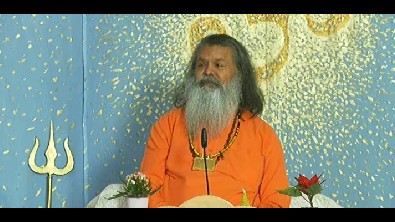
Morning Satsang with Swamiji from Strilky Ashram, Czech Republic. The Mahamrityunjaya mantra is known as the great death - conquering mantra, also called the Tryambakam mantra and is a verse of the Rig Veda. It is addressed to Lord Shiva. This mantra is a great protection and prevention of accidents and negative happenings. Swara Yoga enables us to understand the nature of breath and its influence on the body. Different modes of breathing leads to different types of actions, physical, mental and spiritual. Swara means sound of one's own breath and its fundamental application is to realize the breath as being the medium of the cosmic life force
Svargaloka
9:10 - 10:15 (65 min)
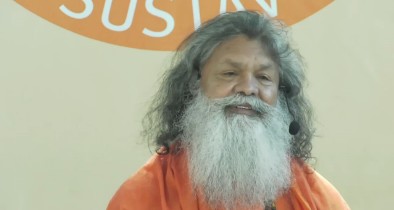
Morning satsang with Vishwaguruji from Rijeka, Croatia. There are only two things: Ayurveda and Yoga. Yoga will be successful through doing karma yoga. Karma means action. In kaliyuga we are have become slaves of money. Good actions lead us to Heaven/ Svarga Loka, while devotion to the master leads us to the highest world of Brahman - Brahma Loka.
Shiva Tattva
10:20 - 10:54 (34 min)
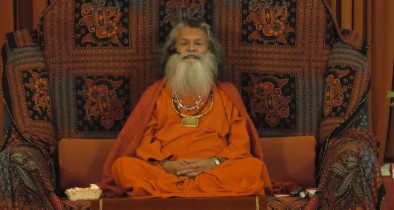
A spiritual discourse on cosmic cycles, human suffering, and the path to liberation.
"Every Yuga I come, I manifest, or I come through my Yogamāyā."
"Kali Yuga keval nām ādhāra... repeat your Mantra, repeat your Mantra to cross the ocean of this ignorance."
The speaker explains the cyclical process of creation (Sṛṣṭi) and dissolution, describing the appearances of Viṣṇu and Śiva across different Yugas. He emphasizes that repeating the divine name is the primary hope in the current Kali Yuga. The discourse outlines the inherent sufferings of human life, from birth to old age, framing existence as a form of Tapasyā (austerity) meant to ultimately merge the individual soul (Jīva) with the supreme consciousness (Śiva). The talk concludes with a call for disciplined practice and an announcement for the next meditation session.
Filming location: Vép, Hungary
The Thirsty Horse and the Path of Spirituality
11:00 - 11:52 (52 min)
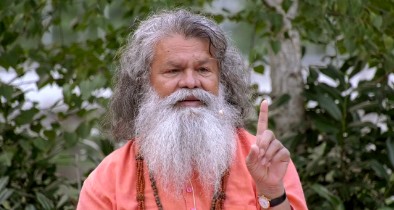
An evening satsang on overcoming worldly stress and pursuing spiritual practice.
"We are thirsty horses in this world, from little children to older people. We are all in this stress."
"If you want to quench your thirst for spirituality, then you should do it... amidst the sound of the generator... amidst this noise of the world."
The lecturer addresses the pervasive stress of modern life, using the parable of a thirsty horse afraid of a water pump to illustrate the need to practice spirituality amidst worldly noise. He discusses the inescapable realities of time and karma, explaining concepts of sin (pāpa) and piety (puṇya) and the impurities of the inner instrument (Antaḥkaraṇa). He narrates the transformative stories of the sage Valmiki, a bandit who became a seer through chanting, and the poet Tulsidas, who was inspired by his wife to turn his love toward God. The talk emphasizes continuing spiritual practice (sādhanā) with humility despite life's obligations.
Filming location: Strilky, Czech Republic
Knowledge is given to give further
12:00 - 12:59 (59 min)
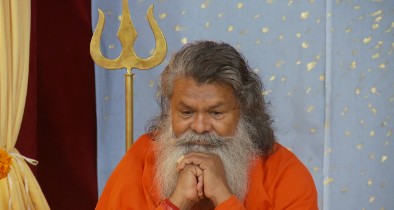
Satsang with Vishwaguru Mahamandaleshwar Paramhans Swami Maheshwarananda, Strilky Ashram, Czech Republic. Vishwaguruji explains what knowledge is, and how to utilize and preserve it in a good way. If we are not using the knowledge, we will lose the ability of using it. Remain with discipline, follow your master lifelong. The words of the Gurudev are for you the highest mantra.
Value of Satsang and practicing
13:05 - 13:58 (53 min)
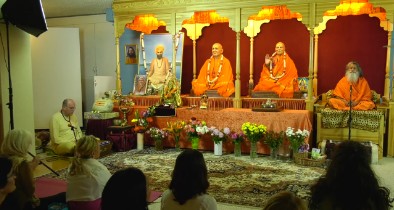
A satsang discourse on the rarity of spiritual community and the foundational science of yoga.
"Sant Samāgam Hari Kathā... these are rare."
"Yoga is that science whose original seed... is Śiva."
The lecturer leads a satsang in Vienna, emphasizing the preciousness of such spiritual gatherings. He explores yoga as a divine science, explaining how the Sanskrit alphabet resonates within the body's chakras and discussing the origins of consciousness as the union of Śiva and Śakti. The talk covers the importance of balanced practice, the nature of mental impurities (vikāras), and the karmic consequences of thought and action.
Filming location: Vienna, Austria
Guru Tattva cleans everything
14:05 - 14:53 (48 min)
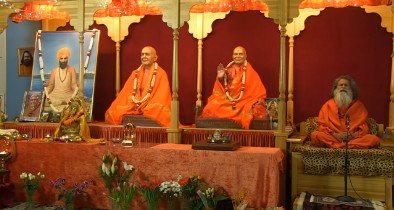
A Guru Purnima discourse on the essence of the Guru principle and spiritual practice.
"We have two Gurus. One is our Gurudev in saguṇa svarūpa, in a physical body... The second is nirguṇa, that is within ourself; the same Gurudev is within."
"So Holy Gurujī answered, 'In Ahmedabad, I was with Gurujī... When your mother comes, which temptation do you have? When your sister comes, what kind of temptation do you have?... So why don't you awaken that kind of thought in you, in which form you want to see?'"
A spiritual teacher delivers a satsang on Guru Purnima, exploring the dual nature of the Guru as both formless consciousness and physical guide. He discusses purifying the mind through sacred perception—seeing others as mother, sister, or daughter—to transform energy and dissolve ego. The talk weaves in teachings on the Nātha lineage, the power of Guru's words as divine nectar, and the necessity of surrendering the heart to achieve equal vision and liberation.
Filming location: Vienna, Austria
Unity with the Master
15:00 - 15:53 (53 min)
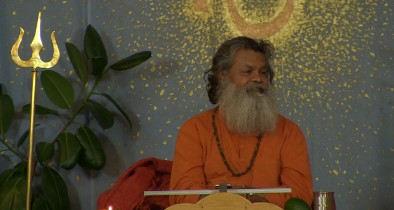
A spiritual discourse on the living succession within a guru lineage.
"The Master never dies. The body goes, for they become one with Brahman. As long as the master is living in the body, he is with us. When he passes away or leaves this body, then he is not with us, but he is within us."
"Anger, greed, jealousy, hate, etc.—these negative qualities create a barrier... So anger—not only towards the Master, but towards anyone. Anger is there where there is fear."
A speaker explains the eternal nature of the master's consciousness, which transcends the physical body and is passed to a prepared successor, making them the same person in a "different cloth." He emphasizes that receiving this consciousness (parāvidyā) depends on purity and the elimination of negative qualities like anger, not academic learning. The talk includes a story of Guru Gauraknāth, references to devotional songs, and an anecdote about the integrity of former Indian President Abdul Kalam to illustrate spiritual principles.
Filming location: Strilky, Czech Republic
Understanding Shiva
15:55 - 17:01 (66 min)
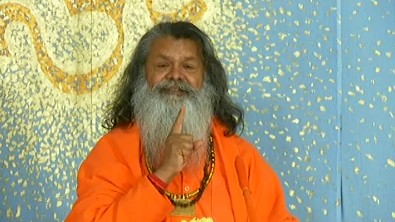
Morning session of Maha Shivaratri weekend seminar in Strilky, Czech Republic. Shiva is the center point of Shivaratri celebrations which is known as the long night of Shiva. How to understand Shiva consciousness and what is the Shakti? What means Abhisheka and what is the meaning of the tiny little blue light? What is the meaning of the Shiva Lingam symbol? Can we see or find the Shiva energy? Not only this explanations but much more is given by Swamiji, he tells us also mythological legends of Shiva and Parvati which we can find in the Shiva Purana.
Practising with Vishwaguruji
16:00 - 16:58 (58 min)
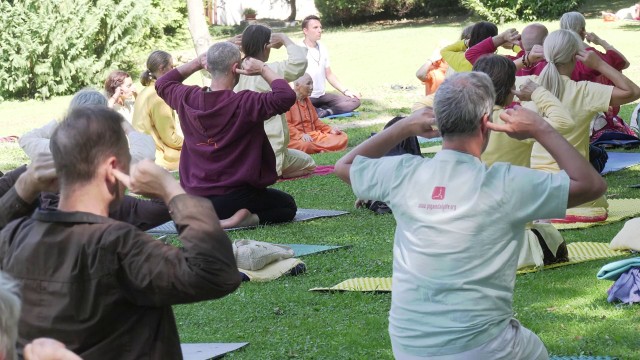
Morning satsang with Vishwaguruji from Strilky Ashram, Czech Republic. Practising relaxation and pranayama technics with Vishwaguruji.
When troubles come, God Incarnates
17:05 - 17:44 (39 min)
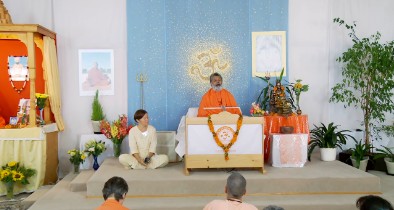
A spiritual discourse celebrating Krishna Janmashtami, the day of Lord Krishna's incarnation.
"The Bhagavad Gītā contains the very proper teachings and message of Śrī Kṛṣṇa." "Whenever dharma is suffering, and adharma comes, that time, O Arjuna, I manifest myself, I come through my yoga māyā."
The speaker delivers a talk on the significance of Krishna's birth, exploring the nature of divine incarnations (avatāras) and timeless principles. He discusses the eternal wisdom of scriptures like the Bhagavad Gītā, the symbolic meaning of deities like Gaṇeśa, and the ancient lineage of the ṛṣis (sages). The talk blends philosophical explanations with mythological narratives, emphasizing that divine intervention arises to restore righteousness. It concludes with a blessing and a devotional song (bhajan) in honor of Krishna.
Filming location: Strilky, Czech Republic
Practice leads to the development
17:50 - 18:33 (43 min)
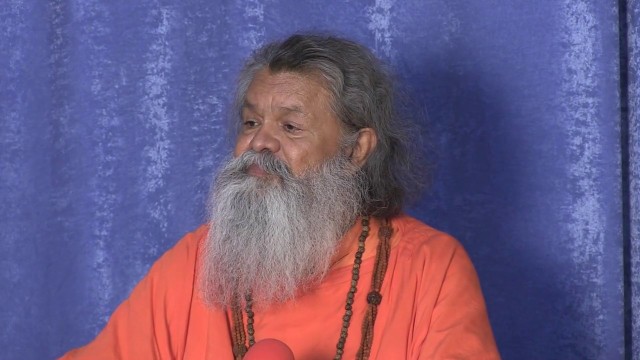
Evening satsang with Vishwaguruji from Jadan Ashram, Rajasthan, India. We are not connected to the time. There is only oneness in the oneness. The best way is yoga. Do not meditate on outer things. The development will come by practicing. Shiva puja gives calmness. It is very important how to worship Gurupurnima, tomorrow we are going to show it.
The way to Sri Devpuriji's cave
18:40 - 19:25 (45 min)

Evening satsang from Strilky Ashram, Czech Republic. Sadhvi Umapuri reports on the Sri Devpuriji cave trip. The journey started from Delhi towards Rishikesh - at the foot of the Himalayas - then Josimath and Badrinath, at an elevation of about 3000m. Sri Alakhpuriji's cave is located near Vasudhara Falls, in a beautiful valley near the 'last village' of India called Mana. Lakshmi Van is the first landmark towards Sri Devpuriji's cave, which is located at about 5000m, close to the peak called Neelkanth.
In honor of Sri Devpuriji's Mahasamadhi
19:30 - 20:16 (46 min)
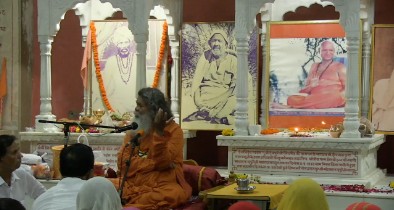
A spiritual discourse on the sacred lineage of Alag Purī and a Himalayan pilgrimage.
"In our renunciation, in our saints, there is no attachment. We do not speak of it as a great sorrow; we say that divine soul has merged with Brahman."
"The guru, Gurudev, never truly departs; even if he leaves the body, what does it matter? They have given the mantra, it is with you."
A spiritual teacher addresses a gathering on the holy day of Śrāvaṇa Dūj. He begins by honoring the departed saint Dev Purī Jī and the nature of renunciation. He shares his own spiritual journey and a "magic" of mental worship before Gurudev. The discourse shifts to social commentary on family, culture, and Hindu identity before focusing on the core theme: the sacred paramparā (lineage). He narrates the legendary abode of Alag Purī in the Himalayas, describing its association with Dev Purījī, Kubera, and the confluence of sacred rivers. He details a personal pilgrimage to the remote region, including visiting a cave, bathing in the Vashudhārā waterfall, and interactions with priests and officials, ultimately affirming the reality of this spiritual seat. He concludes by citing textual references like the Meghadūta and inviting all to sing bhajans.
Filming location: Rajasthan, India
Being a human
20:20 - 20:51 (31 min)
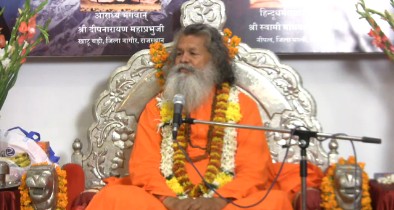
A spiritual discourse on human life, discipline, and the sacred culture of Jaipur.
"When it was established, about four or five hundred meters away, there was a small village called Sodala. From there, you could see a very small cottage, and then there was nothing—only sand and sand and sand."
"In the same way, when the human soul enters into the human body, God gives us freedom, but then we become bound to karma. And that karma is what we call action."
A spiritual teacher addresses devotees at the Shyamnagar ashram in Jaipur. He describes the ashram's founding and extols Jaipur as a sacred city of wisdom and festivals, specifically mentioning the upcoming Śrāvaṇī festival. He discusses the human journey, the importance of following traditional principles (saṃskāras) and discipline, and the inescapable nature of karma and divine awareness, illustrating points with a parable about a disciple, a pigeon, and a story about a king debating diet.
Filming location: Jaipur, Rajasthan, India
The nature of Vikara
20:55 - 21:47 (52 min)
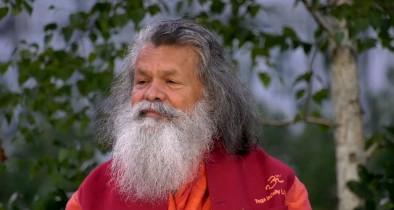
An evening satsang on the nature of vikāra (modifications) and the light of true knowledge.
"Vikāra is also in everyone. It is not easy to remove the vikāra. Physical vikāra is physical vikāra, and the mental vikāras are mental vikāras."
"Jñāna is one of the best protectors for our life... what to do and what not to do."
The lecturer leads a discourse exploring the physical and mental modifications that affect human beings. He discusses the anatomy of the body as vikāra, and the mental vikāras like anger, jealousy, and ego that lie dormant in the intellect. Using analogies like popcorn to describe anger and a story of a yogi and a skeptical scientist, he emphasizes the role of true wisdom (jñāna) and spiritual practice in overcoming these impurities. The talk concludes with a bhajan.
Filming location: Strilky, Czech Republic
Attributes of Shiva
21:50 - 21:58 (8 min)
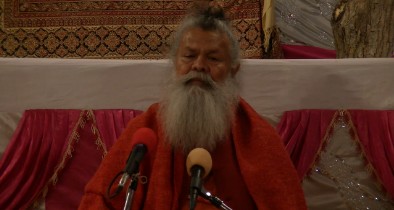
Evening satsang with Vishwaguruji from Khatu, Rajasthan, India. Shiva is the creator as well as the liberator; he is the merciful one.
Around the world - Yoga for senior HU
22:00 - 22:22 (22 min)
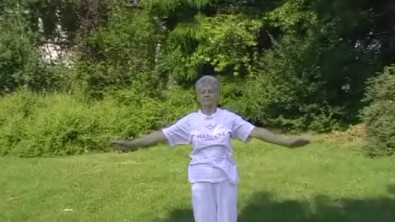
Yoga Asanas, Pranayam and meditation presented by 78 years old Hack Antalne and her expirences with practising Yoga in daily life. Production in August 2010 by Tata YIDL group, Nyergesujfalu, Hungary.
Shiva changed poison into nectar
22:30 - 23:22 (52 min)
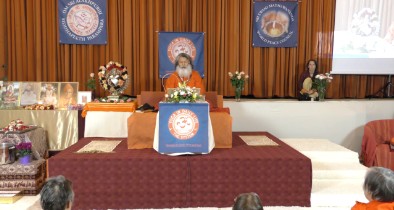
Evening satsang with Vishwaguruji from Vep, Hungary.
Learn to renounce
23:25 - 0:13 (48 min)
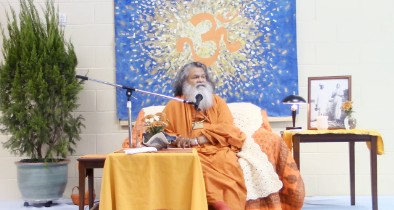
Evening satsang with Vishwaguruji from Atlanta, Georgia, USA. As time is passing we are getting old and feeling inside threatened by this situation, it is not easy to retire. Some people are afraid about the death, or about the way how one will die. We can’t avoid this, but it can be very nice. For that we have to change our thoughts and learn to renounce, but not from the good things like freedom, happiness.
Sri Devpuriji Mahasamadhi Anniversary
23:30 - 0:39 (69 min)
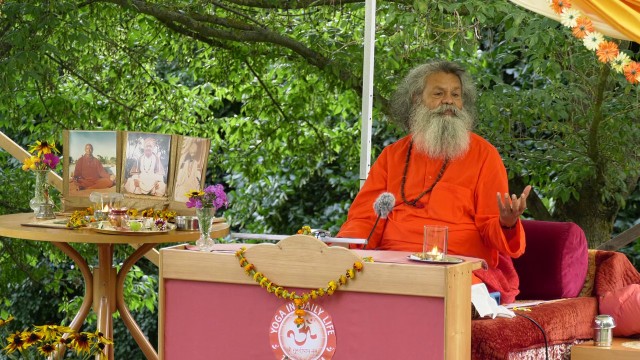
Sri Devpuriji Mahasamadhi Anniversary - evening satsang with Vishwaguruji from Strilky Ashram, Czech Republic. Alakhpuriji was in Shiva's time but he is also living now everywhere, in his astral form. At that time human life was completely different. That time yogis did tapasya - austerities. The development of humans was very quick in many aspects. At that time, there was also good and bad, like now. We don't know why covid only attacks humans. At that time were the seven rishis - the seven stars (of the Great Bear/Big Dipper constellation). They are seeing us and protecting us. Alakhpuriji and Devpuriji come from the area of Lake Mansarovar. It was very strange when Devpuriji appeared. The story of Devpuriji cut the silver money into many pieces. We are very lucky that our parampara is originated from the Satya Yuga Siva time.
American
Australian