
European
Advice for practicing Yoga
0:10 - 1:01 (51 min)
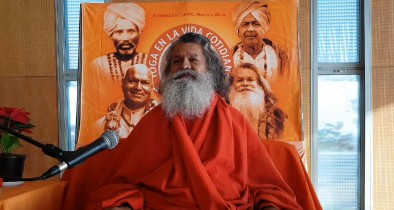
Satsang with Vishwaguruji from Barcelona, Spain. The body consists of five elements. These element are present within us and outside as well. There are different techniques to purify and balance the elements. We should take care of the body while practicing Yoga. Pranayama is also important to practice. It is said that every breath is counted.
Perfections
1:05 - 2:03 (58 min)
An evening satsang on the gurukul tradition, spiritual abilities, and the importance of live spiritual practice.
"Humans are born as embodiments of God, but God found that he made a mistake. Therefore, he took away or hid within them those miracles, abilities, and knowledge."
"Through that sādhana, the opening of the third eye of Śiva, they could see far distances, hear far distances, and communicate over far distances."
The lecturer addresses attendees at a seminar, framing the gathering as a modern 'gurukul of the heart'. He discusses the guru-disciple relationships of divine figures like Rama and Krishna, laments the loss of ancient spiritual sciences and siddhis (powers) in the modern age, and explains why such abilities are concealed from humanity to prevent misuse. He shares a story of Mahaprabhuji's clairvoyant healing, illustrates the need to purify mental impurities, and emphasizes the irreplaceable value of being physically present in a sanctified environment over watching webcasts. The talk concludes with thanks to volunteers and an invitation to a pilgrimage.
Filming location: Vép, Hungary
Without work, nothing can happen
2:10 - 3:08 (58 min)
A spiritual discourse weaving ancient creation myths with teachings on dharma and modern life.
"Jīva jīva bhakṣate: all creatures eat other creatures. So that began to move."
"Dharma is spirituality and good, not killing anyone, taking care of everyone. Adharma is the opposite."
A spiritual teacher narrates a syncretic creation story, blending tales of Varāha lifting the earth, Brahmā's emergence from a lotus, and the evolutionary rise of life. He explains the primordial cycle of life consuming life (jīva jīva bhakṣate) and the subsequent establishment of dharma. The discourse shifts to contemporary lessons, advocating for non-violence, mindful consumption, self-reliance, and environmental responsibility, while cautioning against addiction.
Filming location: Strilky, Czech Republic
You will be according to what you eat
3:15 - 3:51 (36 min)
A spiritual discourse on nourishment, habits, and holistic well-being.
"If you want to enjoy the taste, then take less into the mouth and chew it well, so the tongue and the whole mouth experience the taste."
"That is why many yogīs, many, many, they said: eat less, drink only as needed, and meditate more."
The speaker addresses an audience after a spiritual retreat, using the example of eating halušky (dumplings) to discuss the principles of mindful eating, digestion, and respect for food preparers. He expands the topic to contrast ordinary food with 'ān' (divine seed or essence), discusses forming harmonious habits, and cautions against the misuse of substances like alcohol. The talk concludes with well-wishes for the journey home and an invitation for future gatherings.
Filming location: Strilky, Czech Republic
The Yogic Science
3:55 - 4:54 (59 min)
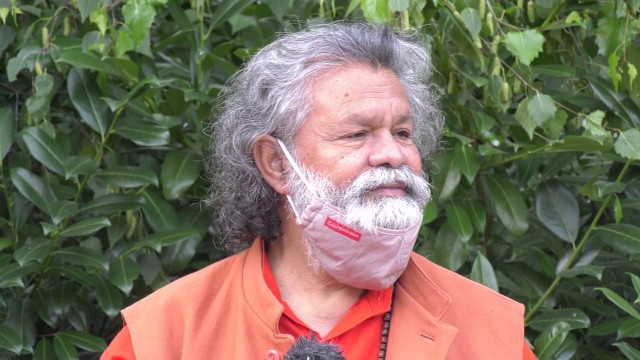
Evening satsang with Vishwaguruji from Strilky Ashram, Czech Republic. We want to become one as a human. Quality is one of the best. A good education gives good quality as a nice statue can be formed from a big rock. Energy and the five elements are connecting to the Yogi. We are entering into the oneness when entering into the practice hall. Atma is the pilot or captain of our airplane. If something is not good we can't fly. We have to be alert, the Sadhana is very important, as Holy Guruji wrote in one bhajan.
The Yogic Science
5:00 - 5:59 (59 min)
Evening satsang with Vishwaguruji from Strilky Ashram, Czech Republic. We want to become one as a human. Quality is one of the best. A good education gives good quality as a nice statue can be formed from a big rock. Energy and the five elements are connecting to the Yogi. We are entering into the oneness when entering into the practice hall. Atma is the pilot or captain of our airplane. If something is not good we can't fly. We have to be alert, the Sadhana is very important, as Holy Guruji wrote in one bhajan.
Jyotish is the third eye of God
6:05 - 7:12 (67 min)
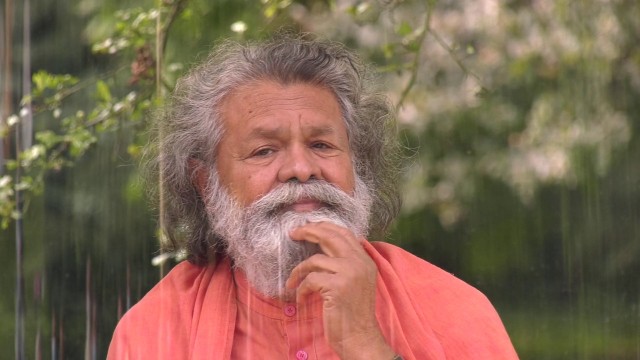
A spiritual discourse on tradition, knowledge, and the eternal path.
"Sometimes it is said that something was only in the old times and no longer matters now. But consider this: in the past, when a couple married... That was a marriage. And now? Bye-bye."
"Our lineage is from Satyuga, from Śiva’s time, and that is called Ālak Purījī... There was no duality. There was no name of religion. It was Sanātana. 'San' means all, and all are one."
A spiritual teacher delivers a wide-ranging satsang, contrasting modern life with ancient traditions. He speaks of the timeless Sanātana Dharma, the composition of the Vedas by Vyāsa with Gaṇeśa as scribe, and the importance of respecting parents and teachers. The talk delves into the ancient science of Jyotiṣ (Vedic astrology), illustrating its precision with personal anecdotes, and concludes by framing yoga as more than physical practice.
Filming location: Strilky, Czech Republic
Perfections
7:20 - 8:18 (58 min)
An evening satsang on the gurukul tradition, spiritual abilities, and the importance of live spiritual practice.
"Humans are born as embodiments of God, but God found that he made a mistake. Therefore, he took away or hid within them those miracles, abilities, and knowledge."
"Through that sādhana, the opening of the third eye of Śiva, they could see far distances, hear far distances, and communicate over far distances."
The lecturer addresses attendees at a seminar, framing the gathering as a modern 'gurukul of the heart'. He discusses the guru-disciple relationships of divine figures like Rama and Krishna, laments the loss of ancient spiritual sciences and siddhis (powers) in the modern age, and explains why such abilities are concealed from humanity to prevent misuse. He shares a story of Mahaprabhuji's clairvoyant healing, illustrates the need to purify mental impurities, and emphasizes the irreplaceable value of being physically present in a sanctified environment over watching webcasts. The talk concludes with thanks to volunteers and an invitation to a pilgrimage.
Filming location: Vép, Hungary
Karma and destiny
8:25 - 9:18 (53 min)
A satsang featuring a personal testimony followed by a discourse on divine justice and karma.
"My life has been connected with spirituality since I was 21. At that point, my life changed a lot. I caused an accident while driving to work and ran over a person."
"It is the justice of God. When the soul goes, there are two ways: Svarga or Naraka, heaven or hell. Hell is presided over by Yama, the god of death."
A seeker named Janez shares his spiritual journey, beginning with a traumatic accident that led him to spirituality. Swāmījī then responds by giving him the spiritual name Dharmadrasa and launches into an extensive teaching on the afterlife. He describes the roles of Yamarāja (the lord of death) and Dharmarāja (the lord of righteousness) in judging souls based on their karma, emphasizing the consequences of actions like meat-eating and the importance of kindness. He illustrates these principles with stories, including one from the Mahāśivapurāṇa about Śiva protecting a devotee from Yama.
Filming location: Strilky, Czech Republic
I am not the doer
9:25 - 9:47 (22 min)
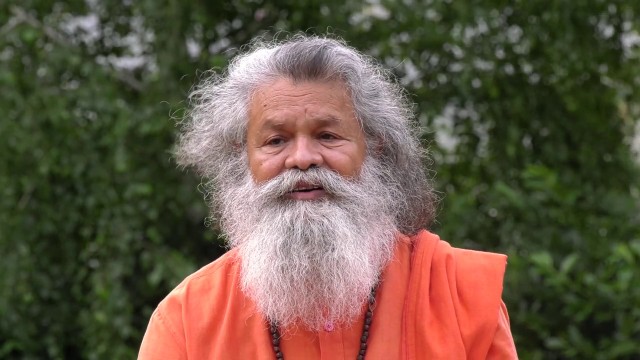
Evening satsang with Vishwaguruji from Strilky Ashram, Czech Republic. Bhajan singing. Chanting mantras. We are not the doer. During all of our life a Supreme leads us and does everything. We are swiming in the ocean of life. Our spiritual life should be happy. The story of a bird on the boat in the ocean.
Without work, nothing can happen
9:55 - 10:53 (58 min)
A spiritual discourse weaving ancient creation myths with teachings on dharma and modern life.
"Jīva jīva bhakṣate: all creatures eat other creatures. So that began to move."
"Dharma is spirituality and good, not killing anyone, taking care of everyone. Adharma is the opposite."
A spiritual teacher narrates a syncretic creation story, blending tales of Varāha lifting the earth, Brahmā's emergence from a lotus, and the evolutionary rise of life. He explains the primordial cycle of life consuming life (jīva jīva bhakṣate) and the subsequent establishment of dharma. The discourse shifts to contemporary lessons, advocating for non-violence, mindful consumption, self-reliance, and environmental responsibility, while cautioning against addiction.
Filming location: Strilky, Czech Republic
Practicing Khatu Pranam
11:00 - 11:44 (44 min)
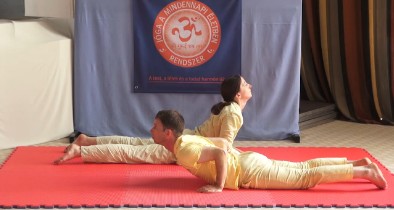
Satsang with Vishwaguruji from Vep, Hungary. Introduction to the second, extended version of Khatu Pranam.
Our duty to have a devotion
11:50 - 13:06 (76 min)
A spiritual discourse on lineage, devotion, and the nature of the soul.
"Our generation to generation to generation is of Alak Purījī. It is a tradition, and the tradition is not merely a tradition; it is, and it has to be, to receive the blessing of adoration."
"The reality is clear: spirituality needs to be in our heart. It does not matter what happens; I will not give up."
Swami Maheshwarananda (Swamiji) addresses a gathering, centering on the rediscovered lineage from Alak Purījī through Devpurījī and Mahāprabhujī to the present. He emphasizes unwavering devotion to the guru, illustrates the master-disciple relationship with anecdotes, and discusses the responsibilities and detachment required of a sannyāsī. The talk expands into teachings on the layers of existence (kośas), karma, and the soul's journey, using everyday metaphors for spiritual concepts.
Filming location: Slovenia
Chakras in the human being
13:10 - 13:55 (45 min)
A lecture on the science of yoga, focusing on the kuṇḍalinī, the chakras, and specifically the Viśuddhi cakra.
"The definition of a chakra is a cycle, and chakra means turning."
"Viṣ means poison. Everything negative, unpleasant, and harmful for us is a poison. The opposite is nectar, the good things."
Swami Madhavanandji Bhagavan delivers the fifth lecture in a series on chakras. He explains chakras as fundamental cycles of energy, describes the five layers of the human body (kośas), and details the function of the Viśuddhi (throat) chakra in purifying psychic and emotional poison. He illustrates this with the story of Lord Śiva drinking the ocean's poison and holding it at his throat. The talk concludes with a promise to teach practical purification techniques and an invitation for questions.
Filming location: Vancouver, Canada
The Path of the Pilot: Mastering the Inner Aeroplane
14:00 - 14:52 (52 min)
A spiritual discourse using the metaphor of a pilot to discuss self-mastery and inner power.
"The pilot knows what is happening, yet he remains peaceful. When they all land in the same place, they are happy again."
"Therefore, how we are sitting here is not possible; it is not easy. Power, inner power."
The lecturer leads a satsang, explaining that the individual is the pilot of the body's "aeroplane." He discusses the need to control the mind and nervous system (Vajranāḍī), shares stories about disciples undergoing surgery without anesthesia through yogic focus, and describes witnessing fire-walking rituals to illustrate the power of mantra and sādhanā.
Filming location: Strilky, Czech Republic
The Thirsty Horse and the Path of Spirituality
15:00 - 15:52 (52 min)
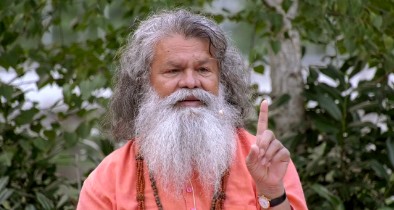
An evening satsang on overcoming worldly stress and pursuing spiritual practice.
"We are thirsty horses in this world, from little children to older people. We are all in this stress."
"If you want to quench your thirst for spirituality, then you should do it... amidst the sound of the generator... amidst this noise of the world."
The lecturer addresses the pervasive stress of modern life, using the parable of a thirsty horse afraid of a water pump to illustrate the need to practice spirituality amidst worldly noise. He discusses the inescapable realities of time and karma, explaining concepts of sin (pāpa) and piety (puṇya) and the impurities of the inner instrument (Antaḥkaraṇa). He narrates the transformative stories of the sage Valmiki, a bandit who became a seer through chanting, and the poet Tulsidas, who was inspired by his wife to turn his love toward God. The talk emphasizes continuing spiritual practice (sādhanā) with humility despite life's obligations.
Filming location: Strilky, Czech Republic
Always Give The Blessing
15:55 - 16:58 (63 min)
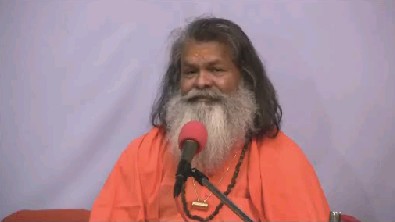
A satsang discourse on the altruistic nature of saints and the power of blessings.
"For the sake of others, the tree bears fruit; for the sake of others, the cow gives milk; for the sake of others, the rivers flow; and for the sake of others, this body exists."
"Where great saints and mahāpuruṣas reside, that land becomes a sacred pilgrimage site, and for ages and ages, it grants peace, gratitude, and liberation to all beings."
A speaker delivers a spiritual talk, extolling the selfless nature of saints, who exist solely for the welfare of others like fruit-bearing trees. Using analogies from nature and anecdotes from scripture, including the story of Lakshmana's momentary doubt while following Lord Rama, he emphasizes how the holy presence of saints sanctifies a place. He explores themes of blessings versus curses, telling a story about Emperor Bahadur Shah and a sage's prophecy, and narrates the tale of Mārtaṇa Ṛṣi, whose life was extended through devoted blessings and the Maha Mrityunjaya mantra.
Practising with Vishwaguruji
16:00 - 17:00 (60 min)
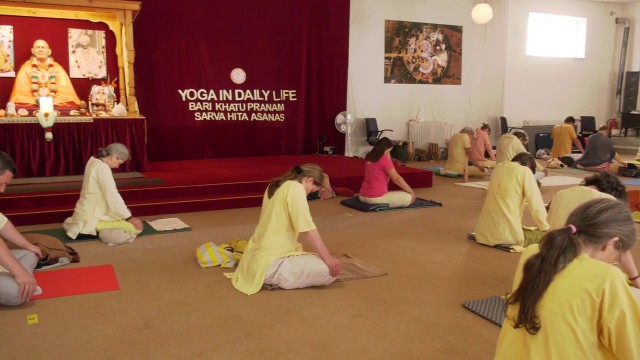
Morning satsang with Vishwaguruji from Strilky Ashram, Czech Republic. Practising relaxation and pranayama technics with Vishwaguruji.
Great saints are always awakened
17:05 - 17:53 (48 min)
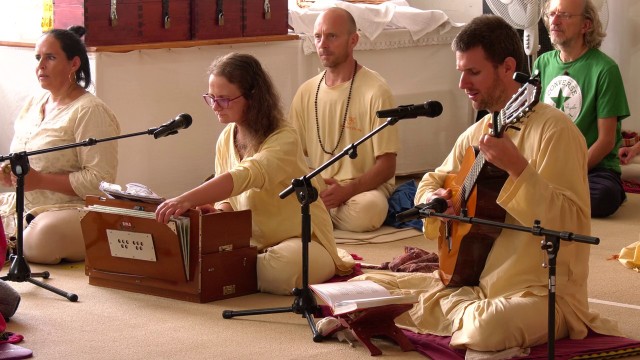
Evening satsang with Vishwaguruji from Strilky Ashram, Czech Republic. We pray to Mahaprabhuji and ask for his blessing. Great saints are for all. Great yogis are always awakened. They practise the yogic way of sleeping that is yoga nidra. Mahaprabhuji sent a message to his disciples in the Yoga nidra bhajan. Jiva is always awakened. we are bounded to the samsara which is senseless. Atma goes to paramatma like a drop to the ocean. We are attached to many things. When we die we should release everything. Only yogis nknow what is the real yoga nidra.
Do Good
18:00 - 18:49 (49 min)
A spiritual discourse on the nature of the true guru, liberation, and spiritual practice.
"Sometimes it is good if we are running and running and running, and we don’t care about it... Then God said, 'I must give him some knowledge.'"
"Guru Brahmā, Guru Viṣṇu, Guru Devo Maheśvara. So where should we meditate so that we get all these three?"
The lecturer delivers a satsang, beginning with reflections on global challenges and India's cultural response during the pandemic. He critiques inauthentic yoga teachers and discusses the paradoxical path to mokṣa (liberation), explaining it as a state beyond positive and negative dualities. Using parables and teachings, he emphasizes the supreme nature of the true Guru and the importance of sincere, long-term practice over superficial achievements.
Filming location: Strilky, Czech Republic
Karma yoga means serving
18:55 - 19:35 (40 min)
A morning satsang on karma yoga, seva, and skillful action.
"In karma yoga, it is easier to progress further in yogic sādhana, to reach the higher consciousness of the yogī."
"Yogaḥ karmasu kauśalam—yoga is skill in action. Yoga will be successful through the sādhana of karma."
Following a group practice in a meadow, the speaker addresses the assembly, describing the four groups present at the ashram. He defines karma yoga as selfless service, illustrating it with examples from Christian charity to simple daily kindnesses. A story about a disciple mistakenly moving a snail teaches that service must be skillful and informed. The talk emphasizes that seva is the foremost practice, accessible to everyone in countless ways.
Filming location: Strilky, Czech Republic
The fire element
19:40 - 20:31 (51 min)
A spiritual discourse on the five elements, focusing on the fire principle and its impact on health and consciousness.
"Fire is very holy. There are different kinds of fire. The first is the light of God, the divine light."
"Without fire, we cannot survive at all. This is the element we have to maintain. Our health depends on this principle, the fire element."
A spiritual teacher explains the dual nature of the fire element, contrasting the divine light of wisdom and peace with the destructive fires of anger, ignorance, and burnout. He connects this principle to mental health, societal behavior, and traditional Vedic ceremonies for homes and life stages. The talk concludes with a Q&A session addressing charity, balancing work and family, and dealing with falsehoods.
Filming location: UK
Karma yoga means serving
20:35 - 21:15 (40 min)
A morning satsang on karma yoga, seva, and skillful action.
"In karma yoga, it is easier to progress further in yogic sādhana, to reach the higher consciousness of the yogī."
"Yogaḥ karmasu kauśalam—yoga is skill in action. Yoga will be successful through the sādhana of karma."
Following a group practice in a meadow, the speaker addresses the assembly, describing the four groups present at the ashram. He defines karma yoga as selfless service, illustrating it with examples from Christian charity to simple daily kindnesses. A story about a disciple mistakenly moving a snail teaches that service must be skillful and informed. The talk emphasizes that seva is the foremost practice, accessible to everyone in countless ways.
Filming location: Strilky, Czech Republic
You will be according to what you eat
21:20 - 21:56 (36 min)
A spiritual discourse on nourishment, habits, and holistic well-being.
"If you want to enjoy the taste, then take less into the mouth and chew it well, so the tongue and the whole mouth experience the taste."
"That is why many yogīs, many, many, they said: eat less, drink only as needed, and meditate more."
The speaker addresses an audience after a spiritual retreat, using the example of eating halušky (dumplings) to discuss the principles of mindful eating, digestion, and respect for food preparers. He expands the topic to contrast ordinary food with 'ān' (divine seed or essence), discusses forming harmonious habits, and cautions against the misuse of substances like alcohol. The talk concludes with well-wishes for the journey home and an invitation for future gatherings.
Filming location: Strilky, Czech Republic
Around the world - Yoga for Kids from Hungary
22:00 - 22:05 (5 min)
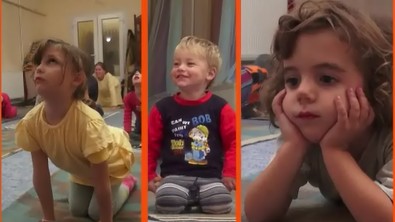
A family yoga program for children and parents at a Budapest sports club.
"Through the practice of yoga, a child gains not only flexibility, agility, and the ability to concentrate, but the practice of āsanas also helps keep many illnesses at bay."
"We practice based on the Paramhanszámi Mahasrananda Yoga Children's Kecsmi book. Using this, both children and adults can participate in playful yoga sessions."
The host, Kirām, welcomes participants to a monthly family yoga session, explaining its inclusive nature and benefits for children's holistic development. The practice uses a specific children's yoga book, connecting postures with animals and plants. The session includes storytelling, craft activities like candle decorating for upcoming festivals, and watching a short animated film about Hanumān.
Filming location: Hungary
Part 1: The Practice of Śalabhāsana and Complementary Āsanas
22:10 - 23:09 (59 min)
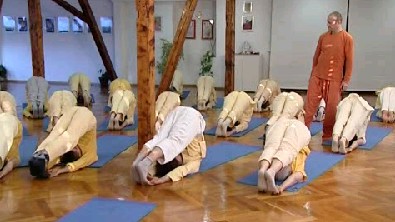
A detailed yoga class instruction covering śalabhāsana, sarvāṅgāsana, and prāṇāyāma.
"Śalabhāsana, being a backward bend that requires strong muscles, works very well on our self-confidence. It strengthens the sense of power and vitality."
"In this posture, simply allow one subtle, extended exhalation. This posture works on unburdening the heart, so less pumping is needed to nourish the brain."
An instructor guides students through a sequence of āsanas, including śalabhāsana (locust pose) variations, sarvāṅgāsana (shoulderstand), and halāsana (plow pose), explaining their physical and energetic benefits. The session incorporates preparatory poses, counterposes, and detailed alignment cues, concluding with instructions for Bhastrikā prāṇāyāma and a collective Oṁ chant.
Filming location: Zagreb, Croatia
In the home of the soul
23:10 - 0:13 (63 min)
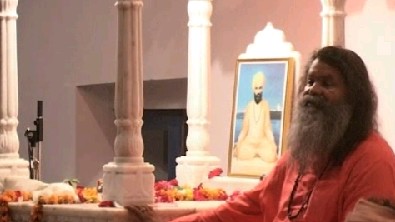
Summer 2003. in India with presentation of Yoga In Daily Life projects and Swamijis lecture
Try to open your heart
23:45 - 0:45 (60 min)
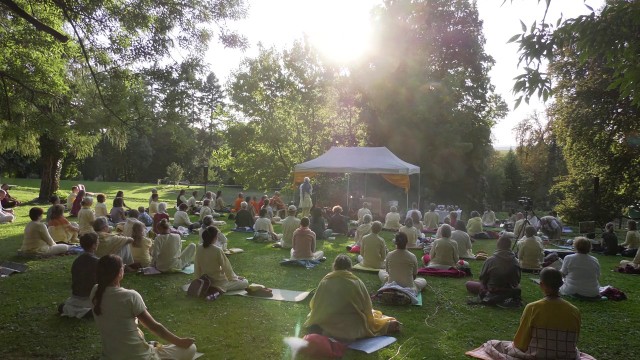
Evening satsang with Vishwaguruji from Strilky Ashram, Czech Republic. People in Strilky Ashram are relaxed and comfortable like the birds are in their nest. Everybody is very happy in this place like every bird. This is yoga. Sometimes we make ourselves unhappy. The story of a married couple who knew each other from their childhood and were good friends.
American
Australian