
European
Awakening of muladhar
0:15 - 0:57 (42 min)
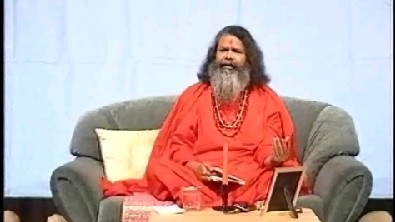
A lecture on the Mūlādhāra chakra, karma, and associated yoga practices.
"Prārabdha, or karma prārabdha, first your destiny is created, and then your body."
"The awakening of the Kuṇḍalinī means wisdom. You become very wise, you become self-confident."
The speaker delivers an in-depth explanation of the root (Mūlādhāra) energy center, linking it to one's karma, destiny, and foundational consciousness. He describes its symbolism—the red color, four-petaled lotus, elephant, and coiled serpent representing past karmas—and clarifies the nature of a true Kuṇḍalinī awakening. The session includes practical guidance, with demonstrators showing postures like Bhujaṅgāsana and Śalabhāsana to activate and regulate this chakra.
Filming location: Croatia
The Path of the Pilot: Mastering the Inner Aeroplane
1:05 - 1:57 (52 min)
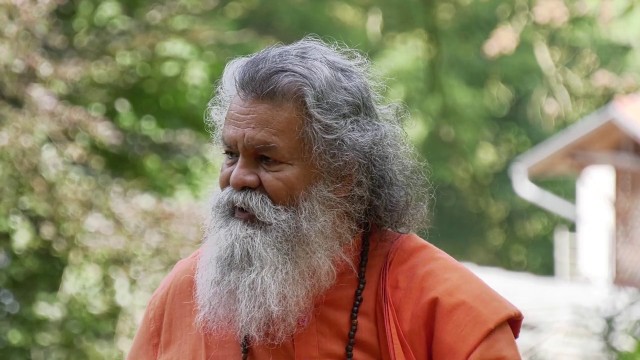
A spiritual discourse using the metaphor of a pilot to discuss self-mastery and inner power.
"The pilot knows what is happening, yet he remains peaceful. When they all land in the same place, they are happy again."
"Therefore, how we are sitting here is not possible; it is not easy. Power, inner power."
The lecturer leads a satsang, explaining that the individual is the pilot of the body's "aeroplane." He discusses the need to control the mind and nervous system (Vajranāḍī), shares stories about disciples undergoing surgery without anesthesia through yogic focus, and describes witnessing fire-walking rituals to illustrate the power of mantra and sādhanā.
Filming location: Strilky, Czech Republic
The Thirsty Horse and the Path of Spirituality
2:05 - 2:57 (52 min)
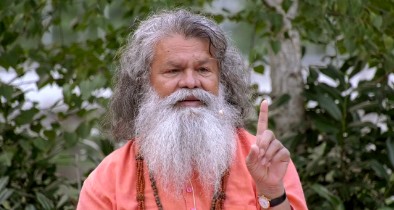
An evening satsang on overcoming worldly stress and pursuing spiritual practice.
"We are thirsty horses in this world, from little children to older people. We are all in this stress."
"If you want to quench your thirst for spirituality, then you should do it... amidst the sound of the generator... amidst this noise of the world."
The lecturer addresses the pervasive stress of modern life, using the parable of a thirsty horse afraid of a water pump to illustrate the need to practice spirituality amidst worldly noise. He discusses the inescapable realities of time and karma, explaining concepts of sin (pāpa) and piety (puṇya) and the impurities of the inner instrument (Antaḥkaraṇa). He narrates the transformative stories of the sage Valmiki, a bandit who became a seer through chanting, and the poet Tulsidas, who was inspired by his wife to turn his love toward God. The talk emphasizes continuing spiritual practice (sādhanā) with humility despite life's obligations.
Filming location: Strilky, Czech Republic
Chakras in the human being
3:05 - 3:50 (45 min)
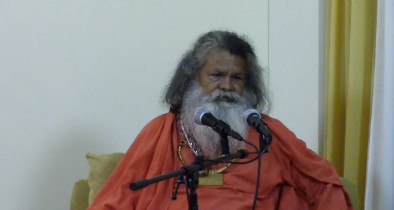
A lecture on the science of yoga, focusing on the kuṇḍalinī, the chakras, and specifically the Viśuddhi cakra.
"The definition of a chakra is a cycle, and chakra means turning."
"Viṣ means poison. Everything negative, unpleasant, and harmful for us is a poison. The opposite is nectar, the good things."
Swami Madhavanandji Bhagavan delivers the fifth lecture in a series on chakras. He explains chakras as fundamental cycles of energy, describes the five layers of the human body (kośas), and details the function of the Viśuddhi (throat) chakra in purifying psychic and emotional poison. He illustrates this with the story of Lord Śiva drinking the ocean's poison and holding it at his throat. The talk concludes with a promise to teach practical purification techniques and an invitation for questions.
Filming location: Vancouver, Canada
Karma yoga means serving
3:55 - 4:35 (40 min)
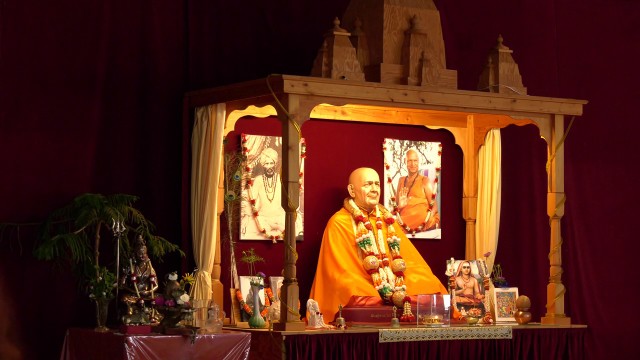
A morning satsang on karma yoga, seva, and skillful action.
"In karma yoga, it is easier to progress further in yogic sādhana, to reach the higher consciousness of the yogī."
"Yogaḥ karmasu kauśalam—yoga is skill in action. Yoga will be successful through the sādhana of karma."
Following a group practice in a meadow, the speaker addresses the assembly, describing the four groups present at the ashram. He defines karma yoga as selfless service, illustrating it with examples from Christian charity to simple daily kindnesses. A story about a disciple mistakenly moving a snail teaches that service must be skillful and informed. The talk emphasizes that seva is the foremost practice, accessible to everyone in countless ways.
Filming location: Strilky, Czech Republic
The beauty of Mahaprabhudeep Ashram
4:45 - 5:15 (30 min)
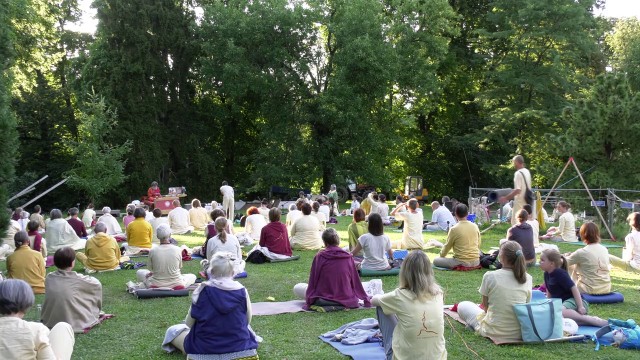
A spiritual discourse and devotional singing from an ashram, praising India's sacred land and the blessings of the Guru.
"Dhanya Dhanya Bhārata Bhūmi, svahitha kari paramasukhāsāgara Prabhu Nelliyaihi Avatāra Anantariṣimuni Yorayogī."
"If one can come here only for one hour or two hours, that is also very much. For one day, two days, three days, four days, day by day, everything comes: the purification, meditation, concentration, peace, harmony, health."
A speaker, likely a swami or devotee, leads a session that begins with Sanskrit chants and hymns glorifying India (Bharat Bhumi) and its divine incarnations. He describes the beautiful, healing atmosphere of the ashram in the forest, emphasizing the benefits of visiting for purification and spiritual practice. He discusses the upcoming Guru Purnima celebration, encourages attendance, and shares insights on karma yoga and the virtues of organic gardening from the ashram's land. The session includes a direct appeal to Indra, the rain god, for clear weather and concludes with devotional singing and the mantra "Śivo'ham."
Filming location: Strilky, Czech Republic
Great saints are always awakened
5:20 - 6:08 (48 min)
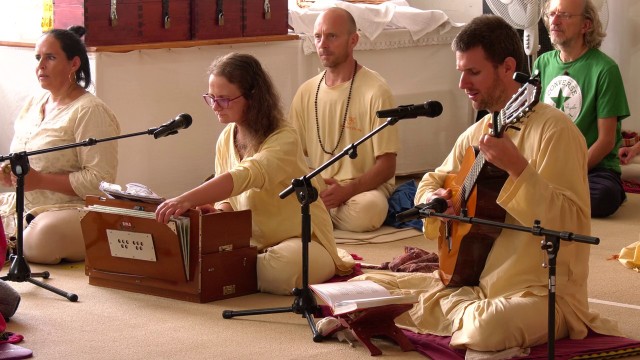
Evening satsang with Vishwaguruji from Strilky Ashram, Czech Republic. We pray to Mahaprabhuji and ask for his blessing. Great saints are for all. Great yogis are always awakened. They practise the yogic way of sleeping that is yoga nidra. Mahaprabhuji sent a message to his disciples in the Yoga nidra bhajan. Jiva is always awakened. we are bounded to the samsara which is senseless. Atma goes to paramatma like a drop to the ocean. We are attached to many things. When we die we should release everything. Only yogis nknow what is the real yoga nidra.
The attributes of the Sun
6:10 - 7:22 (72 min)
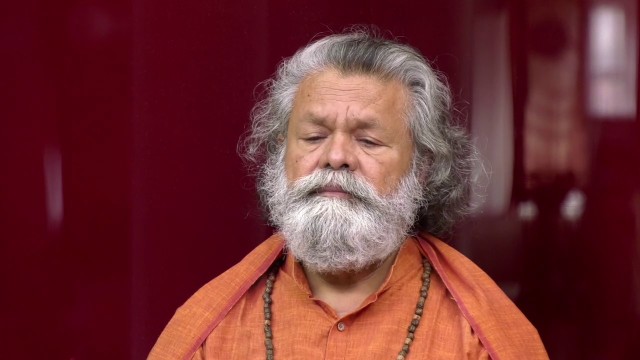
Morning satsang with Vishwaguruji from Strilky Ashram, Czech Republic. Indra is the God of the rain, and today we got a blessing from him. Principles of nature are present everywhere. The source of our energy and confidence is in the vajra nadi. Chakra means cycle and connected to the Sun, Surya. The explanation of the attributes of the Sun and the fourteen worlds. Explanation of success, development, and falling down.
Our duty to have a devotion
7:30 - 8:46 (76 min)
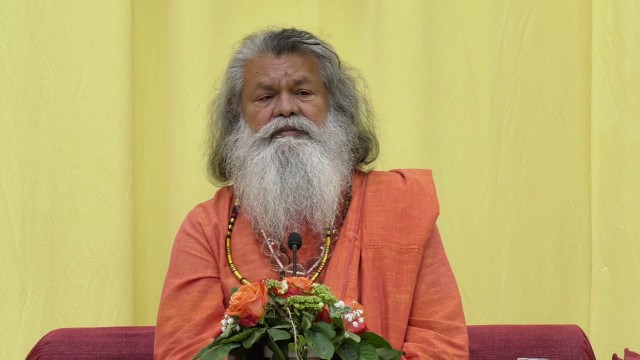
A spiritual discourse on lineage, devotion, and the nature of the soul.
"Our generation to generation to generation is of Alak Purījī. It is a tradition, and the tradition is not merely a tradition; it is, and it has to be, to receive the blessing of adoration."
"The reality is clear: spirituality needs to be in our heart. It does not matter what happens; I will not give up."
Swami Maheshwarananda (Swamiji) addresses a gathering, centering on the rediscovered lineage from Alak Purījī through Devpurījī and Mahāprabhujī to the present. He emphasizes unwavering devotion to the guru, illustrates the master-disciple relationship with anecdotes, and discusses the responsibilities and detachment required of a sannyāsī. The talk expands into teachings on the layers of existence (kośas), karma, and the soul's journey, using everyday metaphors for spiritual concepts.
Filming location: Slovenia
The fire element
8:50 - 9:41 (51 min)
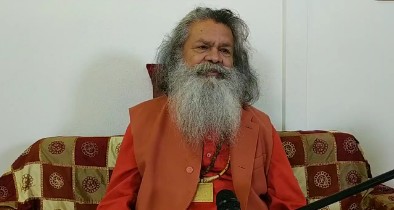
A spiritual discourse on the five elements, focusing on the fire principle and its impact on health and consciousness.
"Fire is very holy. There are different kinds of fire. The first is the light of God, the divine light."
"Without fire, we cannot survive at all. This is the element we have to maintain. Our health depends on this principle, the fire element."
A spiritual teacher explains the dual nature of the fire element, contrasting the divine light of wisdom and peace with the destructive fires of anger, ignorance, and burnout. He connects this principle to mental health, societal behavior, and traditional Vedic ceremonies for homes and life stages. The talk concludes with a Q&A session addressing charity, balancing work and family, and dealing with falsehoods.
Filming location: UK
Jyotish is the third eye of God
9:45 - 10:52 (67 min)
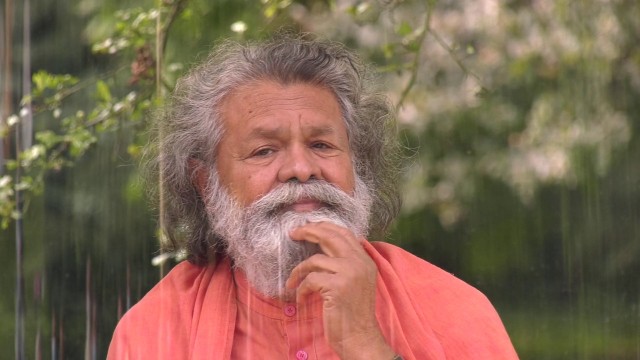
A spiritual discourse on tradition, knowledge, and the eternal path.
"Sometimes it is said that something was only in the old times and no longer matters now. But consider this: in the past, when a couple married... That was a marriage. And now? Bye-bye."
"Our lineage is from Satyuga, from Śiva’s time, and that is called Ālak Purījī... There was no duality. There was no name of religion. It was Sanātana. 'San' means all, and all are one."
A spiritual teacher delivers a wide-ranging satsang, contrasting modern life with ancient traditions. He speaks of the timeless Sanātana Dharma, the composition of the Vedas by Vyāsa with Gaṇeśa as scribe, and the importance of respecting parents and teachers. The talk delves into the ancient science of Jyotiṣ (Vedic astrology), illustrating its precision with personal anecdotes, and concludes by framing yoga as more than physical practice.
Filming location: Strilky, Czech Republic
Practising third level of Yoga in Daily Life System
11:00 - 12:38 (98 min)
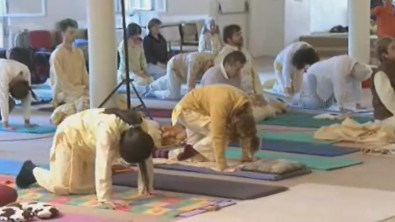
Morning practising. Third part of the System" Yoga in Daily Life" from Mahaprabhudeep Ashram, Strilky, Czech Republic
Karma yoga means serving
12:45 - 13:25 (40 min)
A morning satsang on karma yoga, seva, and skillful action.
"In karma yoga, it is easier to progress further in yogic sādhana, to reach the higher consciousness of the yogī."
"Yogaḥ karmasu kauśalam—yoga is skill in action. Yoga will be successful through the sādhana of karma."
Following a group practice in a meadow, the speaker addresses the assembly, describing the four groups present at the ashram. He defines karma yoga as selfless service, illustrating it with examples from Christian charity to simple daily kindnesses. A story about a disciple mistakenly moving a snail teaches that service must be skillful and informed. The talk emphasizes that seva is the foremost practice, accessible to everyone in countless ways.
Filming location: Strilky, Czech Republic
I am not the doer
13:30 - 13:52 (22 min)
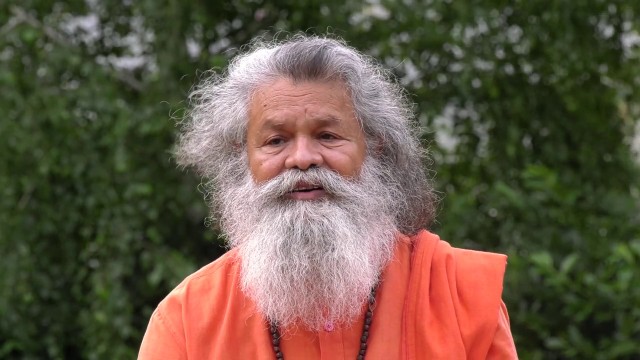
Evening satsang with Vishwaguruji from Strilky Ashram, Czech Republic. Bhajan singing. Chanting mantras. We are not the doer. During all of our life a Supreme leads us and does everything. We are swiming in the ocean of life. Our spiritual life should be happy. The story of a bird on the boat in the ocean.
Meditation with Vishwaguruji from "Yoga for Wellness" Conference, India
14:00 - 14:20 (20 min)
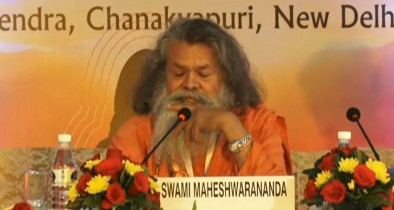
Vishwaguruji leads a Meditation at the International Conference 'Yoga for Wellness' organized by the Ministry of AYUSH, Government of India and held at Pravasi Bariyat Kendra in New Delhi. The inaugural session was attended by the Vice President of India.
Inaugurual session of the conference "Yoga for Wellness"
14:25 - 15:34 (69 min)
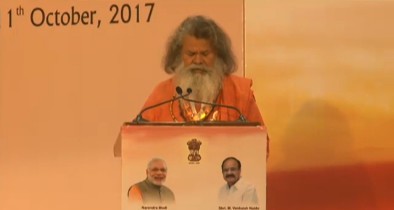
Inaugurual session of the conference on 'Yoga for Wellness' organized by the Ministry of AYUSH, Government of India and held at Pravasi Bariyat Kendra in New Delhi. The inaugural session was attended by the Vice President of India.
Trees also have karma
15:40 - 16:02 (22 min)
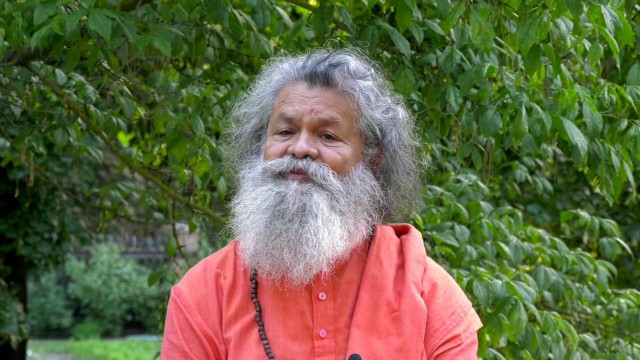
A spiritual discourse sharing a parable about a talking tree and the nature of karma.
"Ṛṣi, you take care of yourself. I am okay."
"Therefore, we should always be careful and always be very happy and kind to others."
The speaker narrates a story set in an ancient forest, where a ṛṣi prophesies the death of a proud, ancient tree. Through a dialogue between the ṛṣi and the tree, the tale explores themes of karma, humility, and the unexpected sources of danger, concluding with a lesson on kindness and non-harm. The telling blends this parable with personal reflections on sacred forests in the speaker's ashrams.
Filming location: Strilky, Czech Republic
How to teach Yoga in Daily Life?
16:00 - 16:38 (38 min)
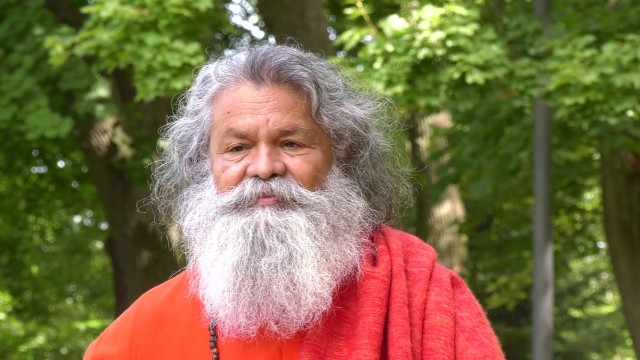
A morning satsang on yoga practice, teaching methods, and spirituality.
"Practicing only physical movement is not enough. But also, without movements of the body is also not good."
"When I came to Europe... anybody can come to a yoga class, okay, come on, I will teach you also, no problem. So many times, people were very confused."
The lecturer addresses attendees after a morning program, reflecting on the practice. He emphasizes the need for a structured, step-by-step approach to teaching yoga, using an analogy to school systems. He discusses the global spread of yoga, the relationship between yoga, spirituality, and religion, and shares anecdotes from his early teaching experiences in Europe, touching on dietary discussions within yoga.
Filming location: Strilky, Czech Republic
Vegetarian cooking lesson 2
16:05 - 16:22 (17 min)
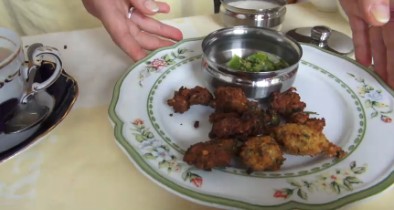
A cooking demonstration on preparing traditional Indian snacks and yoga tea.
"You can use any kind of lentil. Here we have moong dal, urad dal, and other kinds of dal, such as green dal, yellow, red, and also black-eyed beans."
"For yoga tea, we need spices. It is very good; it is an energy drink. Here we have cardamom, cloves, pepper, cinnamon, ginger."
Gaṅgā Devī from Croatia leads a practical cooking session at an international yoga seminar. She demonstrates how to make pakoras from soaked lentils and spices, a versatile chutney sauce, and a spiced yoga tea, explaining each ingredient and step in the process. The focus is on simple, wholesome recipes for energy and sharing.
Filming location: Vép, Hungary
The Path of the Pilot: Mastering the Inner Aeroplane
16:25 - 17:17 (52 min)
A spiritual discourse using the metaphor of a pilot to discuss self-mastery and inner power.
"The pilot knows what is happening, yet he remains peaceful. When they all land in the same place, they are happy again."
"Therefore, how we are sitting here is not possible; it is not easy. Power, inner power."
The lecturer leads a satsang, explaining that the individual is the pilot of the body's "aeroplane." He discusses the need to control the mind and nervous system (Vajranāḍī), shares stories about disciples undergoing surgery without anesthesia through yogic focus, and describes witnessing fire-walking rituals to illustrate the power of mantra and sādhanā.
Filming location: Strilky, Czech Republic
Perfections
17:25 - 18:23 (58 min)
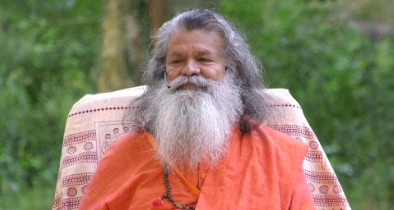
An evening satsang on the gurukul tradition, spiritual abilities, and the importance of live spiritual practice.
"Humans are born as embodiments of God, but God found that he made a mistake. Therefore, he took away or hid within them those miracles, abilities, and knowledge."
"Through that sādhana, the opening of the third eye of Śiva, they could see far distances, hear far distances, and communicate over far distances."
The lecturer addresses attendees at a seminar, framing the gathering as a modern 'gurukul of the heart'. He discusses the guru-disciple relationships of divine figures like Rama and Krishna, laments the loss of ancient spiritual sciences and siddhis (powers) in the modern age, and explains why such abilities are concealed from humanity to prevent misuse. He shares a story of Mahaprabhuji's clairvoyant healing, illustrates the need to purify mental impurities, and emphasizes the irreplaceable value of being physically present in a sanctified environment over watching webcasts. The talk concludes with thanks to volunteers and an invitation to a pilgrimage.
Filming location: Vép, Hungary
Karma and destiny
18:30 - 19:23 (53 min)
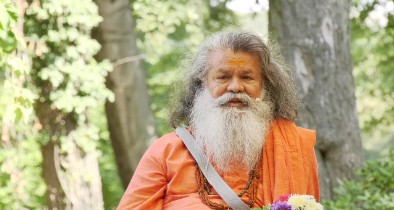
A satsang featuring a personal testimony followed by a discourse on divine justice and karma.
"My life has been connected with spirituality since I was 21. At that point, my life changed a lot. I caused an accident while driving to work and ran over a person."
"It is the justice of God. When the soul goes, there are two ways: Svarga or Naraka, heaven or hell. Hell is presided over by Yama, the god of death."
A seeker named Janez shares his spiritual journey, beginning with a traumatic accident that led him to spirituality. Swāmījī then responds by giving him the spiritual name Dharmadrasa and launches into an extensive teaching on the afterlife. He describes the roles of Yamarāja (the lord of death) and Dharmarāja (the lord of righteousness) in judging souls based on their karma, emphasizing the consequences of actions like meat-eating and the importance of kindness. He illustrates these principles with stories, including one from the Mahāśivapurāṇa about Śiva protecting a devotee from Yama.
Filming location: Strilky, Czech Republic
Do Good
19:30 - 20:19 (49 min)
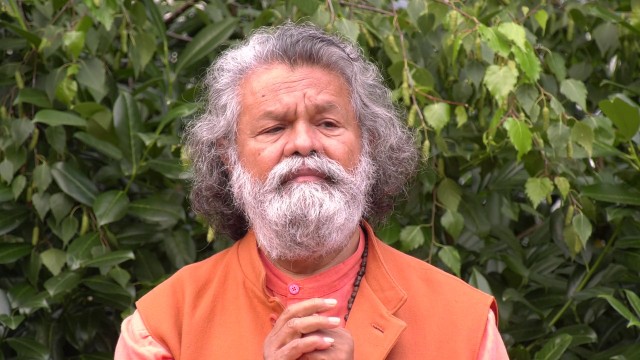
A spiritual discourse on the nature of the true guru, liberation, and spiritual practice.
"Sometimes it is good if we are running and running and running, and we don’t care about it... Then God said, 'I must give him some knowledge.'"
"Guru Brahmā, Guru Viṣṇu, Guru Devo Maheśvara. So where should we meditate so that we get all these three?"
The lecturer delivers a satsang, beginning with reflections on global challenges and India's cultural response during the pandemic. He critiques inauthentic yoga teachers and discusses the paradoxical path to mokṣa (liberation), explaining it as a state beyond positive and negative dualities. Using parables and teachings, he emphasizes the supreme nature of the true Guru and the importance of sincere, long-term practice over superficial achievements.
Filming location: Strilky, Czech Republic
The Thirsty Horse and the Path of Spirituality
20:25 - 21:17 (52 min)
An evening satsang on overcoming worldly stress and pursuing spiritual practice.
"We are thirsty horses in this world, from little children to older people. We are all in this stress."
"If you want to quench your thirst for spirituality, then you should do it... amidst the sound of the generator... amidst this noise of the world."
The lecturer addresses the pervasive stress of modern life, using the parable of a thirsty horse afraid of a water pump to illustrate the need to practice spirituality amidst worldly noise. He discusses the inescapable realities of time and karma, explaining concepts of sin (pāpa) and piety (puṇya) and the impurities of the inner instrument (Antaḥkaraṇa). He narrates the transformative stories of the sage Valmiki, a bandit who became a seer through chanting, and the poet Tulsidas, who was inspired by his wife to turn his love toward God. The talk emphasizes continuing spiritual practice (sādhanā) with humility despite life's obligations.
Filming location: Strilky, Czech Republic
The beauty of Mahaprabhudeep Ashram
21:25 - 21:55 (30 min)
A spiritual discourse and devotional singing from an ashram, praising India's sacred land and the blessings of the Guru.
"Dhanya Dhanya Bhārata Bhūmi, svahitha kari paramasukhāsāgara Prabhu Nelliyaihi Avatāra Anantariṣimuni Yorayogī."
"If one can come here only for one hour or two hours, that is also very much. For one day, two days, three days, four days, day by day, everything comes: the purification, meditation, concentration, peace, harmony, health."
A speaker, likely a swami or devotee, leads a session that begins with Sanskrit chants and hymns glorifying India (Bharat Bhumi) and its divine incarnations. He describes the beautiful, healing atmosphere of the ashram in the forest, emphasizing the benefits of visiting for purification and spiritual practice. He discusses the upcoming Guru Purnima celebration, encourages attendance, and shares insights on karma yoga and the virtues of organic gardening from the ashram's land. The session includes a direct appeal to Indra, the rain god, for clear weather and concludes with devotional singing and the mantra "Śivo'ham."
Filming location: Strilky, Czech Republic
Around the world - Yoga for children CRO
22:00 - 22:08 (8 min)
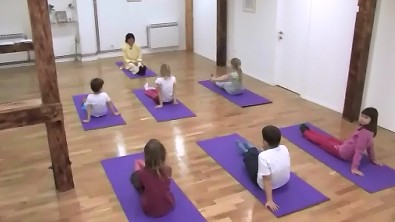
A yoga class for children, focusing on mindful movement, self-observation, and breathwork.
"You can repeat it silently three times. It is certain to manifest."
"There is no competition with others, no comparison like in other sports about who is better at something."
An instructor guides children through a session that begins with setting a personal intention (saṅkalpa) and body awareness. The class includes physical postures, described through alignment cues and animal-inspired movements (āsanas), and prepares for breathing practice (prāṇāyāma). The instructor reflects on the joy of witnessing the children's progress and the personal rejuvenation found in teaching.
Filming location: Croatia
Yoga in Daily Life: The Fifth Level
22:15 - 22:53 (38 min)
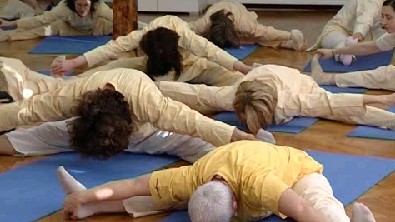
A fifth-level "Yoga in Daily Life" class focused on asana practice and breath awareness.
"Everything we practice in yoga has its purpose, and if we ask ourselves why, we must receive an answer. That is why we say that yoga is the science of the body, mind, spirit, and soul."
"Āsanas do not act only on the body. They are also a correction of our behavior; they act on our consciousness; they affect our entire being."
An instructor guides students through a detailed session, beginning with relaxation in Ānandāsana and emphasizing the purpose behind each alignment detail for reducing stress. The class progresses through a series of asanas including Pavanamuktāsana, Marjari Āsana, Paścimottānāsana, Upaviṣṭha Koṇāsana, Jānu Śīrṣāsana, and Mṛgāsana, with continuous focus on diaphragmatic breathing, mindful movement without strain, and the physical and subtle effects of each posture.
Filming location: Zagreb, Croatia
We should believe in God
23:00 - 0:14 (74 min)
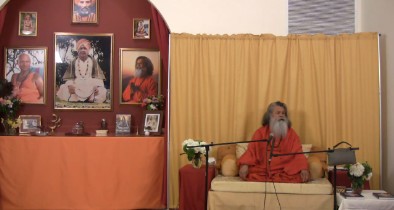
A spiritual discourse on the human journey, purpose, and overcoming worldly attachments.
"Among these 8.4 million [life forms], one is the human being... In that development, we have one chance to come into oneness, which you may call God."
"Therefore, we come to this path to understand for what God gave us this life... What does that mean? It means we protect all other creatures."
A teacher leads a satsang, explaining the rare opportunity of human birth for spiritual progress. He discusses the pitfalls of habitual consumption, using stories from the lives of Kṛṣṇa and Jesus to illustrate that difficulties foster remembrance of God and spiritual growth. The talk weaves in teachings on non-duality, the elements, and the purpose of aligning human life with divine unity.
Filming location: Alexandria, USA
American
Australian