
European
Mahaprabhuji is endless joy
0:15 - 0:34 (19 min)
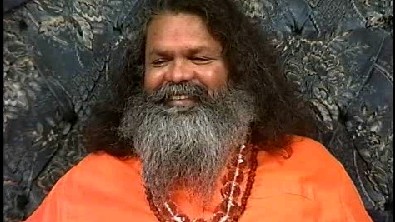
A satsang discourse on the duality of worldly joy and the singular refuge of divine grace.
"The joy of the joyous is very short, but the suffering of the joyous is longer."
"He can give you everything, but he can’t give you what he can give you. We need only confidence, that’s all."
The speaker reflects on the fleeting nature of worldly happiness, which is always paired with hidden sorrow, contrasting it with the endless joy of the divine. He proclaims Mahāprabhujī as the incarnate God and liberator, emphasizing that true peace is found only in unwavering devotion and surrender to this grace, using the metaphor of a seabird that must return to its ship in a vast ocean.
Filming location: Vép, Hungary
Science of chakras
0:40 - 1:56 (76 min)
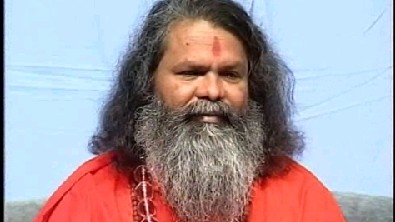
An introductory lecture on yoga philosophy, culminating in a practical demonstration for activating healing energy.
"Yoga means union—the union of the individual consciousness with the cosmic consciousness."
"In every creature, human or animal, where there is life, there is a light of God. That is God, the Creator of all creatures."
Swami Jyotirmayananda opens a discourse on "Kundalini and the Chakras" by defining yoga as a path to cosmic consciousness. He explains the journey of the soul, the yogic anatomy of energy channels (nāḍīs), and the system of chakras. The session includes a guided exercise to awaken the healing energy in one's palms, followed by practical tips for activating the Bindu chakra to improve eyesight and memory.
Filming location: Croatia
The Path of the Pilot: Mastering the Inner Aeroplane
2:00 - 2:52 (52 min)
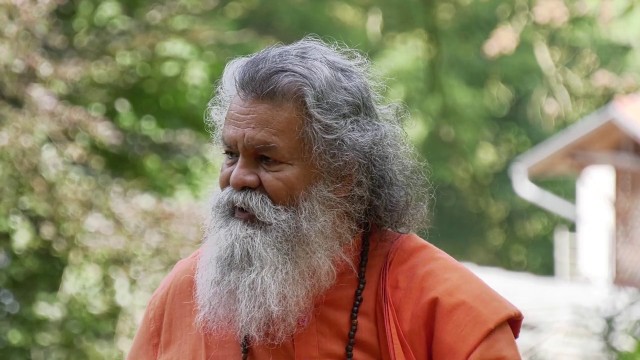
A spiritual discourse using the metaphor of a pilot to discuss self-mastery and inner power.
"The pilot knows what is happening, yet he remains peaceful. When they all land in the same place, they are happy again."
"Therefore, how we are sitting here is not possible; it is not easy. Power, inner power."
The lecturer leads a satsang, explaining that the individual is the pilot of the body's "aeroplane." He discusses the need to control the mind and nervous system (Vajranāḍī), shares stories about disciples undergoing surgery without anesthesia through yogic focus, and describes witnessing fire-walking rituals to illustrate the power of mantra and sādhanā.
Filming location: Strilky, Czech Republic
The Thirsty Horse and the Path of Spirituality
3:00 - 3:52 (52 min)
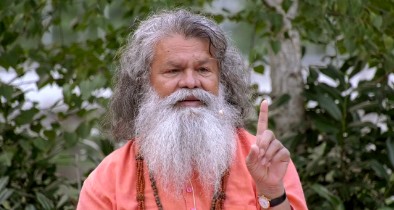
An evening satsang on overcoming worldly stress and pursuing spiritual practice.
"We are thirsty horses in this world, from little children to older people. We are all in this stress."
"If you want to quench your thirst for spirituality, then you should do it... amidst the sound of the generator... amidst this noise of the world."
The lecturer addresses the pervasive stress of modern life, using the parable of a thirsty horse afraid of a water pump to illustrate the need to practice spirituality amidst worldly noise. He discusses the inescapable realities of time and karma, explaining concepts of sin (pāpa) and piety (puṇya) and the impurities of the inner instrument (Antaḥkaraṇa). He narrates the transformative stories of the sage Valmiki, a bandit who became a seer through chanting, and the poet Tulsidas, who was inspired by his wife to turn his love toward God. The talk emphasizes continuing spiritual practice (sādhanā) with humility despite life's obligations.
Filming location: Strilky, Czech Republic
You will be according to what you eat
4:00 - 4:36 (36 min)
A spiritual discourse on nourishment, habits, and holistic well-being.
"If you want to enjoy the taste, then take less into the mouth and chew it well, so the tongue and the whole mouth experience the taste."
"That is why many yogīs, many, many, they said: eat less, drink only as needed, and meditate more."
The speaker addresses an audience after a spiritual retreat, using the example of eating halušky (dumplings) to discuss the principles of mindful eating, digestion, and respect for food preparers. He expands the topic to contrast ordinary food with 'ān' (divine seed or essence), discusses forming harmonious habits, and cautions against the misuse of substances like alcohol. The talk concludes with well-wishes for the journey home and an invitation for future gatherings.
Filming location: Strilky, Czech Republic
Dharma and adharma
4:40 - 5:15 (35 min)
Evening satsang with Viswhaguruji from Jadan Ashram, Rajasthan, India. Our prayers have strength only if we follow ahimsa. Also don't say painful words to anyone. Don't use water unnecessarily because it is our life. Air is also life. Tulsi is not only a saint plant but it is God himself. Don't think negative of others. Bhajan singing.
The Yogic Science
5:20 - 6:19 (59 min)
Evening satsang with Vishwaguruji from Strilky Ashram, Czech Republic. We want to become one as a human. Quality is one of the best. A good education gives good quality as a nice statue can be formed from a big rock. Energy and the five elements are connecting to the Yogi. We are entering into the oneness when entering into the practice hall. Atma is the pilot or captain of our airplane. If something is not good we can't fly. We have to be alert, the Sadhana is very important, as Holy Guruji wrote in one bhajan.
The attributes of the Sun
6:25 - 7:37 (72 min)
Morning satsang with Vishwaguruji from Strilky Ashram, Czech Republic. Indra is the God of the rain, and today we got a blessing from him. Principles of nature are present everywhere. The source of our energy and confidence is in the vajra nadi. Chakra means cycle and connected to the Sun, Surya. The explanation of the attributes of the Sun and the fourteen worlds. Explanation of success, development, and falling down.
Jyotish is the third eye of God
7:45 - 8:52 (67 min)
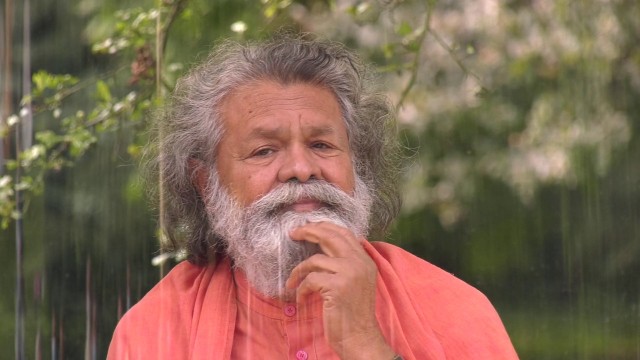
A spiritual discourse on tradition, knowledge, and the eternal path.
"Sometimes it is said that something was only in the old times and no longer matters now. But consider this: in the past, when a couple married... That was a marriage. And now? Bye-bye."
"Our lineage is from Satyuga, from Śiva’s time, and that is called Ālak Purījī... There was no duality. There was no name of religion. It was Sanātana. 'San' means all, and all are one."
A spiritual teacher delivers a wide-ranging satsang, contrasting modern life with ancient traditions. He speaks of the timeless Sanātana Dharma, the composition of the Vedas by Vyāsa with Gaṇeśa as scribe, and the importance of respecting parents and teachers. The talk delves into the ancient science of Jyotiṣ (Vedic astrology), illustrating its precision with personal anecdotes, and concludes by framing yoga as more than physical practice.
Filming location: Strilky, Czech Republic
You will be according to what you eat
9:00 - 9:36 (36 min)
A spiritual discourse on nourishment, habits, and holistic well-being.
"If you want to enjoy the taste, then take less into the mouth and chew it well, so the tongue and the whole mouth experience the taste."
"That is why many yogīs, many, many, they said: eat less, drink only as needed, and meditate more."
The speaker addresses an audience after a spiritual retreat, using the example of eating halušky (dumplings) to discuss the principles of mindful eating, digestion, and respect for food preparers. He expands the topic to contrast ordinary food with 'ān' (divine seed or essence), discusses forming harmonious habits, and cautions against the misuse of substances like alcohol. The talk concludes with well-wishes for the journey home and an invitation for future gatherings.
Filming location: Strilky, Czech Republic
Our duty to have a devotion
9:40 - 10:56 (76 min)
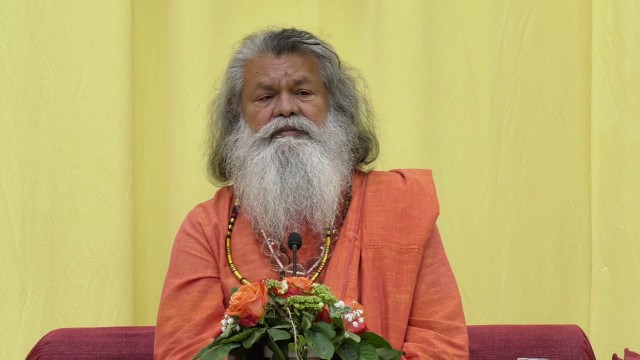
A spiritual discourse on lineage, devotion, and the nature of the soul.
"Our generation to generation to generation is of Alak Purījī. It is a tradition, and the tradition is not merely a tradition; it is, and it has to be, to receive the blessing of adoration."
"The reality is clear: spirituality needs to be in our heart. It does not matter what happens; I will not give up."
Swami Maheshwarananda (Swamiji) addresses a gathering, centering on the rediscovered lineage from Alak Purījī through Devpurījī and Mahāprabhujī to the present. He emphasizes unwavering devotion to the guru, illustrates the master-disciple relationship with anecdotes, and discusses the responsibilities and detachment required of a sannyāsī. The talk expands into teachings on the layers of existence (kośas), karma, and the soul's journey, using everyday metaphors for spiritual concepts.
Filming location: Slovenia
Morning Yoga practice, Umag, Croatia (9/9)
11:00 - 12:14 (74 min)
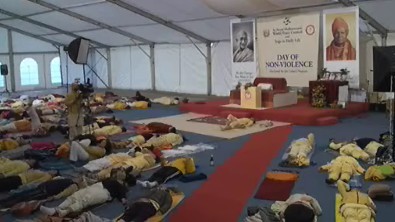
Morning Yoga practice from the international Yoga retreat Umag, Croatia
Karma and destiny
12:20 - 13:13 (53 min)
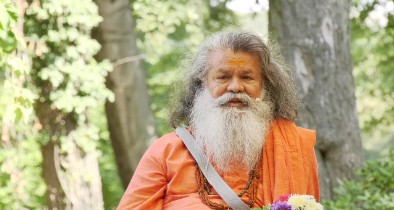
A satsang featuring a personal testimony followed by a discourse on divine justice and karma.
"My life has been connected with spirituality since I was 21. At that point, my life changed a lot. I caused an accident while driving to work and ran over a person."
"It is the justice of God. When the soul goes, there are two ways: Svarga or Naraka, heaven or hell. Hell is presided over by Yama, the god of death."
A seeker named Janez shares his spiritual journey, beginning with a traumatic accident that led him to spirituality. Swāmījī then responds by giving him the spiritual name Dharmadrasa and launches into an extensive teaching on the afterlife. He describes the roles of Yamarāja (the lord of death) and Dharmarāja (the lord of righteousness) in judging souls based on their karma, emphasizing the consequences of actions like meat-eating and the importance of kindness. He illustrates these principles with stories, including one from the Mahāśivapurāṇa about Śiva protecting a devotee from Yama.
Filming location: Strilky, Czech Republic
Perfections
13:20 - 14:18 (58 min)
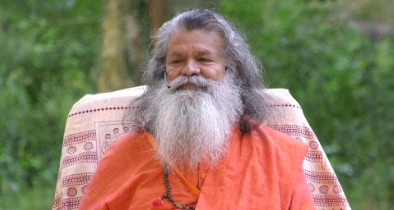
An evening satsang on the gurukul tradition, spiritual abilities, and the importance of live spiritual practice.
"Humans are born as embodiments of God, but God found that he made a mistake. Therefore, he took away or hid within them those miracles, abilities, and knowledge."
"Through that sādhana, the opening of the third eye of Śiva, they could see far distances, hear far distances, and communicate over far distances."
The lecturer addresses attendees at a seminar, framing the gathering as a modern 'gurukul of the heart'. He discusses the guru-disciple relationships of divine figures like Rama and Krishna, laments the loss of ancient spiritual sciences and siddhis (powers) in the modern age, and explains why such abilities are concealed from humanity to prevent misuse. He shares a story of Mahaprabhuji's clairvoyant healing, illustrates the need to purify mental impurities, and emphasizes the irreplaceable value of being physically present in a sanctified environment over watching webcasts. The talk concludes with thanks to volunteers and an invitation to a pilgrimage.
Filming location: Vép, Hungary
Without work, nothing can happen
14:25 - 15:23 (58 min)
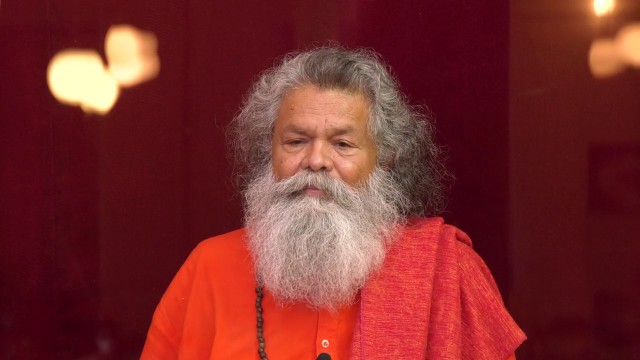
A spiritual discourse weaving ancient creation myths with teachings on dharma and modern life.
"Jīva jīva bhakṣate: all creatures eat other creatures. So that began to move."
"Dharma is spirituality and good, not killing anyone, taking care of everyone. Adharma is the opposite."
A spiritual teacher narrates a syncretic creation story, blending tales of Varāha lifting the earth, Brahmā's emergence from a lotus, and the evolutionary rise of life. He explains the primordial cycle of life consuming life (jīva jīva bhakṣate) and the subsequent establishment of dharma. The discourse shifts to contemporary lessons, advocating for non-violence, mindful consumption, self-reliance, and environmental responsibility, while cautioning against addiction.
Filming location: Strilky, Czech Republic
Guru brings us to the liberation
15:30 - 16:22 (52 min)
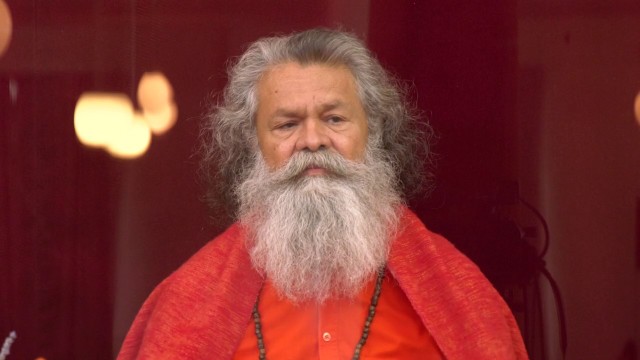
A spiritual discourse on the power and sanctity of the early morning.
"Holy Gurujī, Mahāprabhujī, and all great yogīs, sādhus, and many other good people have said there are two things... The other is to get up before sunrise. To see the early morning before the sun is one of the best spiritual thoughts."
"People who do yoga and other practices have also said that in the morning, before sunrise, we see water on the grass even during a very dry, hot time... So this is Amṛta. Amṛta is that pure, clean water."
A spiritual teacher addresses a gathering, emphasizing the profound spiritual and health benefits of waking before sunrise. He explains the vitality of morning dew, advocates for walking barefoot on wet grass, and advises going to sleep early. He shares a long, meandering parable about a farmer, a sādhu, and the farmer's subsequent rebirths as a cow, dog, and cobra due to worldly attachments, ultimately illustrating a guru's power to grant liberation. The talk concludes with a personal anecdote about elephants in Africa and final blessings for the departing attendees.
Filming location: Strilky, Czech Republic
I am not the doer
15:30 - 15:52 (22 min)
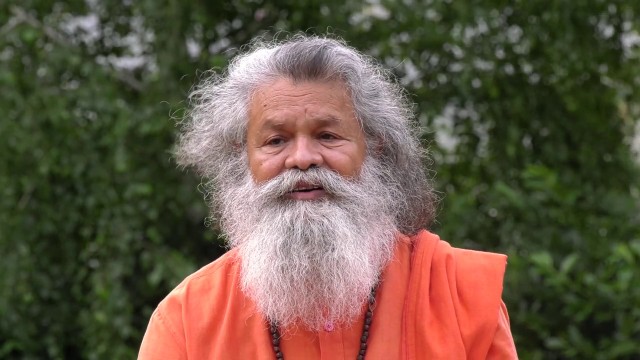
Evening satsang with Vishwaguruji from Strilky Ashram, Czech Republic. Bhajan singing. Chanting mantras. We are not the doer. During all of our life a Supreme leads us and does everything. We are swiming in the ocean of life. Our spiritual life should be happy. The story of a bird on the boat in the ocean.
Believe
16:07 - 17:26 (79 min)
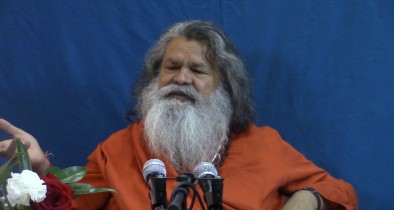
Evening satsang with Vishwaguruji from Vancouver, Canada. Healing power of the mantras. Sooner or later we do believe. God is different for us, but there is only one God. Concentration on the different parts of the body.
Great saints are always awakened
17:35 - 18:23 (48 min)
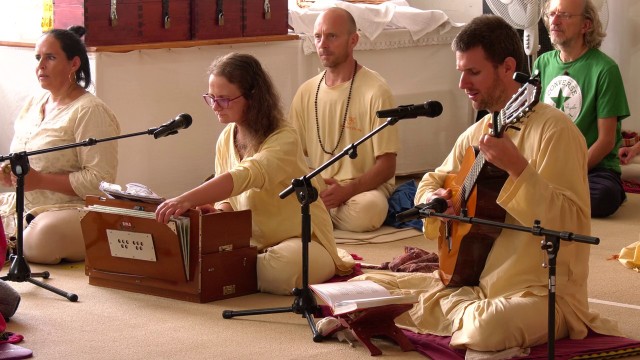
Evening satsang with Vishwaguruji from Strilky Ashram, Czech Republic. We pray to Mahaprabhuji and ask for his blessing. Great saints are for all. Great yogis are always awakened. They practise the yogic way of sleeping that is yoga nidra. Mahaprabhuji sent a message to his disciples in the Yoga nidra bhajan. Jiva is always awakened. we are bounded to the samsara which is senseless. Atma goes to paramatma like a drop to the ocean. We are attached to many things. When we die we should release everything. Only yogis nknow what is the real yoga nidra.
Do Good
18:30 - 19:19 (49 min)
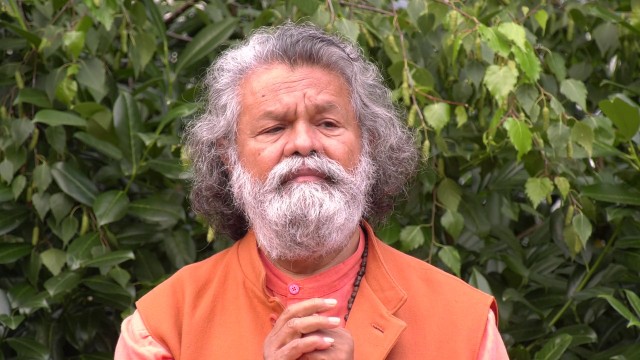
A spiritual discourse on the nature of the true guru, liberation, and spiritual practice.
"Sometimes it is good if we are running and running and running, and we don’t care about it... Then God said, 'I must give him some knowledge.'"
"Guru Brahmā, Guru Viṣṇu, Guru Devo Maheśvara. So where should we meditate so that we get all these three?"
The lecturer delivers a satsang, beginning with reflections on global challenges and India's cultural response during the pandemic. He critiques inauthentic yoga teachers and discusses the paradoxical path to mokṣa (liberation), explaining it as a state beyond positive and negative dualities. Using parables and teachings, he emphasizes the supreme nature of the true Guru and the importance of sincere, long-term practice over superficial achievements.
Filming location: Strilky, Czech Republic
Dharma and adharma
19:25 - 20:00 (35 min)
Evening satsang with Viswhaguruji from Jadan Ashram, Rajasthan, India. Our prayers have strength only if we follow ahimsa. Also don't say painful words to anyone. Don't use water unnecessarily because it is our life. Air is also life. Tulsi is not only a saint plant but it is God himself. Don't think negative of others. Bhajan singing.
Proudness
20:05 - 20:57 (52 min)
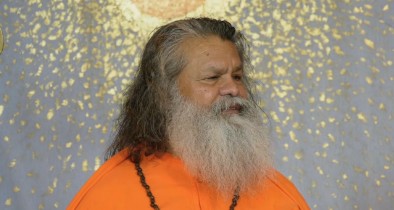
A spiritual discourse narrating two stories from the Ramayana about divine ego and its cure.
"Sometimes the buddhi, the intellect, can turn for a while in another direction." "Don’t think that through your help, Rāma was victorious... It was a test for you."
The speaker, Swami Avatarpuri, recounts the tale of Garuda losing devotion after rescuing Lord Rama from a snake arrow, and his healing by listening to the satsang of the crow Kakabhushundi. He then tells how Lord Rama cured Hanuman's pride by sending him on a mission to a sage, revealing countless identical rings to demonstrate the cyclical nature of divine incarnations. The talk concludes by relating these themes to the modern discovery of sacred Himalayan caves.
Filming location: Strilky, Czech Republic
The fire element
21:05 - 21:56 (51 min)
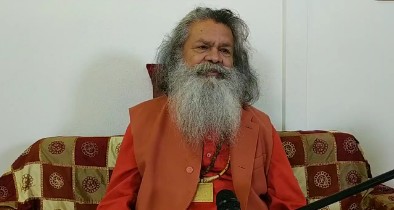
A spiritual discourse on the five elements, focusing on the fire principle and its impact on health and consciousness.
"Fire is very holy. There are different kinds of fire. The first is the light of God, the divine light."
"Without fire, we cannot survive at all. This is the element we have to maintain. Our health depends on this principle, the fire element."
A spiritual teacher explains the dual nature of the fire element, contrasting the divine light of wisdom and peace with the destructive fires of anger, ignorance, and burnout. He connects this principle to mental health, societal behavior, and traditional Vedic ceremonies for homes and life stages. The talk concludes with a Q&A session addressing charity, balancing work and family, and dealing with falsehoods.
Filming location: UK
Around the world - Yoga Class of Level 3, Zagreb, CRO
22:00 - 22:59 (59 min)
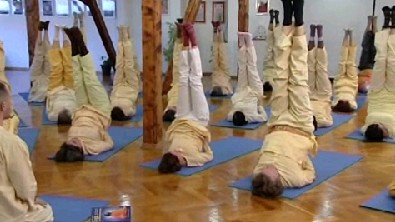
Yoga in Daily Life Class of Level 3 at Sri Devpuriji Ashram, Zagreb, Croatia, January 2011
Come to the path of the Masters
23:05 - 0:09 (64 min)
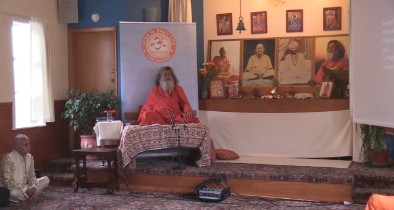
A spiritual discourse on Kuṇḍalinī yoga, consciousness, and the necessity of an authentic master.
"Pūrṇālīnī Yoga is a pure spiritual science. It leads an aspirant to enlightenment, to the reality of realization... to awaken one's inner knowledge."
"The Sanskrit word Guru means the remover of darkness. It is that one who removes the darkness of our ignorance and kindles in us the light of wisdom."
A spiritual teacher addresses a gathering, explaining the awakening of inner potential through the purification of cosmic energy in the chakras. He emphasizes the critical role of a genuine guru in a legitimate lineage, warning against modern, commercialized yoga practices. The talk covers states of consciousness (waking, dreaming, deep sleep), the importance of purifying the nervous system, and uses analogies from medicine and travel to illustrate the need for proper guidance on the spiritual path.
Filming location: New Zealand
How did creation begin?
23:30 - 0:16 (46 min)
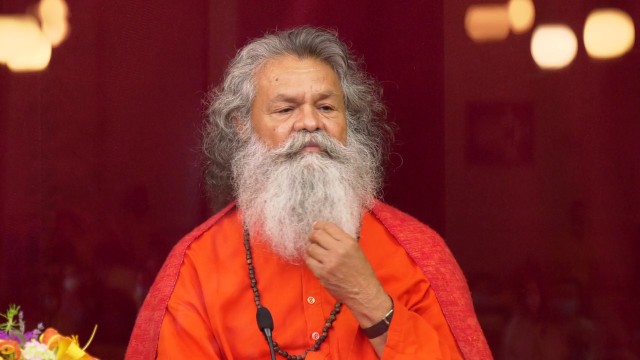
A spiritual discourse on the purpose of pilgrimage and the nature of yoga.
"You have come from a long distance, but you are not tired. Why are you not tired? Because you were coming here to Mahāprabhujī's ashram."
"Holy Gurujī said, 'One in all and all in one.' This means we came from different ways... but we have all come here and become one now."
A speaker welcomes visitors to the ashram, emphasizing the spiritual energy of the place and the unity of the gathering. The discourse then expands into a wide-ranging exploration of yoga, defining it not merely as physical practice but as the fundamental unity underlying all existence, from the cosmic emergence of Śiva from Parabrahma Paramātmā to the ethical principle of non-violence (ahiṃsā) exemplified by the Buddha. Stories of the Buddha and a devoted princess named Sundarī are shared to illustrate the path of purification and knowledge.
Filming location: Strilky, Czech Republic
American
Australian