
European
Awakening of muladhar
0:15 - 0:57 (42 min)
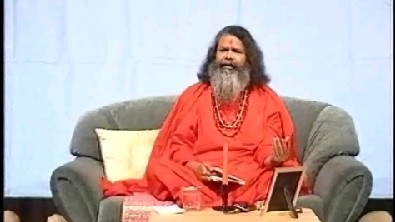
A lecture on the Mūlādhāra chakra, karma, and associated yoga practices.
"Prārabdha, or karma prārabdha, first your destiny is created, and then your body."
"The awakening of the Kuṇḍalinī means wisdom. You become very wise, you become self-confident."
The speaker delivers an in-depth explanation of the root (Mūlādhāra) energy center, linking it to one's karma, destiny, and foundational consciousness. He describes its symbolism—the red color, four-petaled lotus, elephant, and coiled serpent representing past karmas—and clarifies the nature of a true Kuṇḍalinī awakening. The session includes practical guidance, with demonstrators showing postures like Bhujaṅgāsana and Śalabhāsana to activate and regulate this chakra.
Filming location: Croatia
Be careful with the mind
1:05 - 2:28 (83 min)
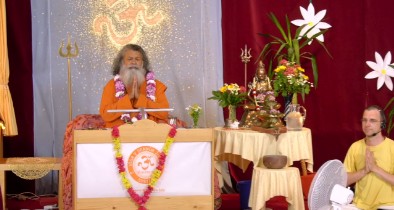
A spiritual discourse warning against complacency and negative influences on the path.
"Therefore, as much as you are developing spiritually, you are in danger. As much as you spiritually develop, you are in danger."
"Mahāprabhujī said that in the satsaṅg, if some kuṣaṅga comes, then it's like a bite of a poisonous snake."
The lecturer addresses devotees at an ashram, cautioning that spiritual progress brings vulnerability. He uses parables, like a mighty tree felled by a small axe, and references to Hindu scriptures to illustrate how ego, negative company, and mental afflictions can destroy a seeker. He emphasizes the necessity of vigilance, satsang, and humility, sharing personal stories and answering a devotee's account of pilgrimage.
Filming location: Strilky, Czech Republic
Transferring the ancient knowledge
2:35 - 3:36 (61 min)
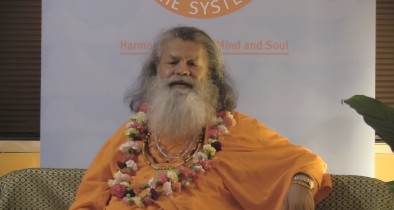
A satsang on the ancient sciences of Āyurveda and Yoga.
"Āyurveda has a scripture book written, the first scriptures in the world, before the Mahābhārata's time, before Kṛṣṇa's incarnation."
"The cause of all mental disease, everyone's mental problem, mental disease is only one... and that is called cintā. Worry."
The lecturer addresses the ashram, exploring the origins and principles of Āyurveda and Yoga as complementary spiritual sciences. He discusses the decline of human memory, the power of sacred herbs like Tulsī, and identifies cintā (worry) as the root cause of mental and physical illness. The talk offers cintan (deep study/meditation) and svādhyāya (self-study) as the remedies, concluding with an emphasis on present-moment discipline.
Filming location: Auckland, New Zealand
The power of the mantras
3:40 - 4:52 (72 min)
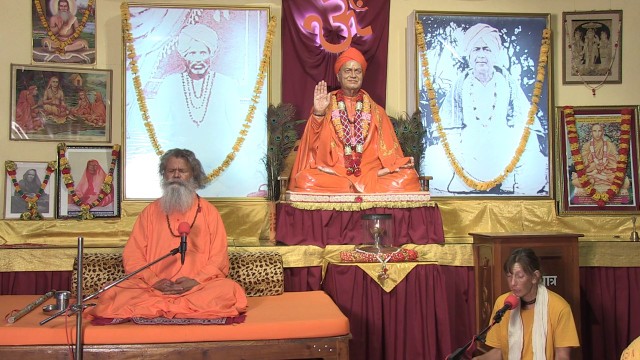
Evening satsang with Vishwaguruji from Jadan Ashram, Rajasthan, India. Singing bhajans and chanting Sanskrit mantras from holy scriptures like Guru Padika Srotram by Shri Adi Guru Shankaracharyaji and Guru Gita. The words, feelings, and vibrations of the great Saint's are still with us.
Transferring the ancient knowledge
5:00 - 6:01 (61 min)
A satsang on the ancient sciences of Āyurveda and Yoga.
"Āyurveda has a scripture book written, the first scriptures in the world, before the Mahābhārata's time, before Kṛṣṇa's incarnation."
"The cause of all mental disease, everyone's mental problem, mental disease is only one... and that is called cintā. Worry."
The lecturer addresses the ashram, exploring the origins and principles of Āyurveda and Yoga as complementary spiritual sciences. He discusses the decline of human memory, the power of sacred herbs like Tulsī, and identifies cintā (worry) as the root cause of mental and physical illness. The talk offers cintan (deep study/meditation) and svādhyāya (self-study) as the remedies, concluding with an emphasis on present-moment discipline.
Filming location: Auckland, New Zealand
Preserving health
6:05 - 7:04 (59 min)
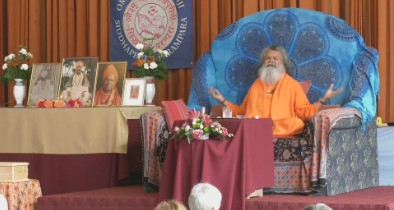
A morning satsang on health, diet, and spiritual well-being, featuring questions and answers.
"Nowadays, there are many vegans, and there are two reasons. First is the torturing of the animals... second is that we don't take away from the creatures."
"Purify your body: Śaṅkaprakṣālana, Kapālabhāti, Bastrika, Anuloma Viloma, Agni Sāra Kriyā. This is purification through the whole body."
Swami Ji addresses questions from attendees, focusing on the root causes of disease. He argues that modern illness stems from improper diet, advocating for local, seasonal, vegan nourishment and criticizing processed foods and industrial agriculture. He expands the discussion to include bodily purification through yoga techniques (kriyās) and the importance of managing inner states like anger and jealousy, concluding with spiritual reflections on the soul and the inner kingdom.
Filming location: Vép, Hungary
Purify your body and eat proper food
7:10 - 8:07 (57 min)
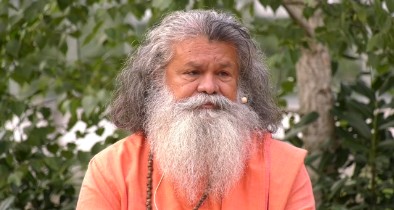
A satsang on the regenerative power of collective spiritual practice and the concept of Kāya Kalpa.
"This Kriyā Anuṣṭhāna has a regenerating function for our energy and our spirituality. It is like Kāya Kalpa."
"Kāya Kalpa means that you are like a newborn. Your hair will be its original color from birth... all the systems are very healthy and very good."
The lecturer explains the benefits of group spiritual practice (anuṣṭhāna), describing it as a mutual exchange of energy that prevents the loneliness and difficulty of solitary practice. He expands the theme into a discourse on Kāya Kalpa, or bodily regeneration, linking it to diet, natural living, and purification through practices like prānāyāma. He offers specific, Āyurveda-inspired advice on ghee, sugar, and oral hygiene, while cautioning against meat and processed foods, using anecdotes about cows and disciples to illustrate his points.
Filming location: Strilky, Czech Republic
Guru and disciple
8:15 - 8:47 (32 min)
Evening satsang with Vishwaguruji from Jadan Ashram, Rajasthan, India. Guru kripa is a blessing that is more powerful than anything. When somebody dies who was near us he or she will live further in our heart. Satagurudev is in every bhaktas heart. Only one satagurudev can be for a person. Gulabji speaks about the Guru and the disciples and the connection between them.
Protect Mother Earth
8:55 - 9:48 (53 min)
Evening satsang with Vishwaguruji from Jadan Ashram, Rajasthan, India. In the present situation, we lost and destroyed Mother Earth. Spiritual people should protect the Earth. Mother Earth feeds all creatures. Now we want to kill Mother Earth. All creatures are the children of Mother Earth and we should help and feed them. Nowadays we are deep in the Kali Yuga. Try to be happy and peaceful in this situation also. We shouldn't let meal on our plate. If we can not eat more give it to the animals. There were times when it was nothing to eat. Bhajan singing.
We need real dedication
9:55 - 10:53 (58 min)
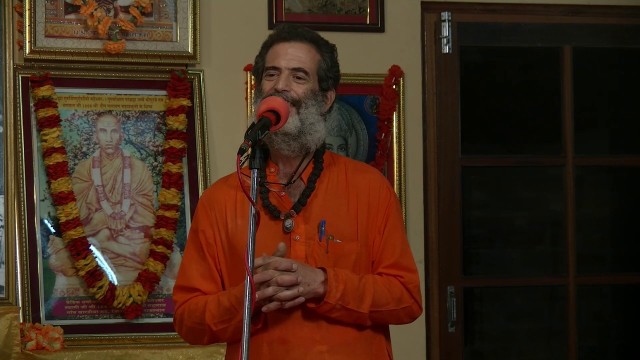
Evening Satsang with Vishwaguruji from Jadan Ashram, Rajasthan, India. There are two kinds of people living separately or in the family. Orange dress means renunciation. The story about two brothers one of them was studied and the other lived a spiritual life alone in a forest. There are two kinds of bhava. One is where there is some wish and the other has no wish. Birds know that there is their child in the eggs. Swami Haripuri speaks about his daily life and his spiritual experiences in different Ashrams.
Practice from Auckland with MM Vivekpuri
11:00 - 12:00 (60 min)
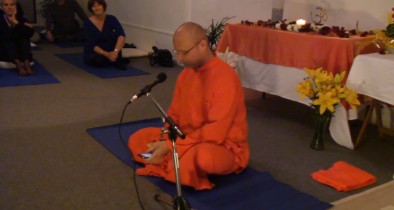
Auckland, New Zealand
Be careful with the mind
12:05 - 13:28 (83 min)
A spiritual discourse warning against complacency and negative influences on the path.
"Therefore, as much as you are developing spiritually, you are in danger. As much as you spiritually develop, you are in danger."
"Mahāprabhujī said that in the satsaṅg, if some kuṣaṅga comes, then it's like a bite of a poisonous snake."
The lecturer addresses devotees at an ashram, cautioning that spiritual progress brings vulnerability. He uses parables, like a mighty tree felled by a small axe, and references to Hindu scriptures to illustrate how ego, negative company, and mental afflictions can destroy a seeker. He emphasizes the necessity of vigilance, satsang, and humility, sharing personal stories and answering a devotee's account of pilgrimage.
Filming location: Strilky, Czech Republic
Who will be the successor?
13:35 - 14:39 (64 min)
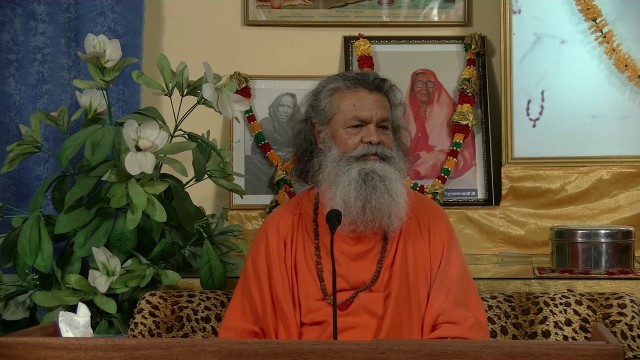
An evening satsang on divine will, the guru's grace, and the challenges of the modern age.
"God said, 'Okay, so next, the last month of where the farmer has to do everything.' So they went to their gardens on a farm, and then they said, 'Rain, rain, come.' So very much rain was coming."
"Guru, Guru is that like Alak Purījī, Devpurījī, Mahāprabhujī and Madhavānandajī Guru. We are just waiting to see how we will be."
Swami Maheshwaranand Puri Ji addresses the gathering, using a parable of farmers who fail when they try to control the rain to illustrate the folly of questioning God's divine order. He speaks of the guru's supreme power, recounting a miraculous healing by Devpurījī, and contrasts this with human limitation in the face of modern ailments and distractions like technology, which he identifies with the Kali Yuga. He reflects on the qualities of his sannyasi disciples and cautions the congregation not to spoil potential spiritual successors through misplaced admiration.
Filming location: Jadan, Rajasthan, India
Do not eat animals
14:45 - 15:36 (51 min)
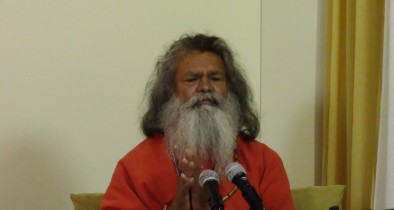
Evening program with Vishwaguruji in Vancouver, Canada. It is very rare for the soul to obtain a human body. We are destroying our planet; for our own comfort, we harm other creatures. Humans should not kill anyone and should not eat anyone. Ahimsa - non violence - is for the humans. Love and feed animals, do not eat them.
Body is important
15:40 - 16:23 (43 min)
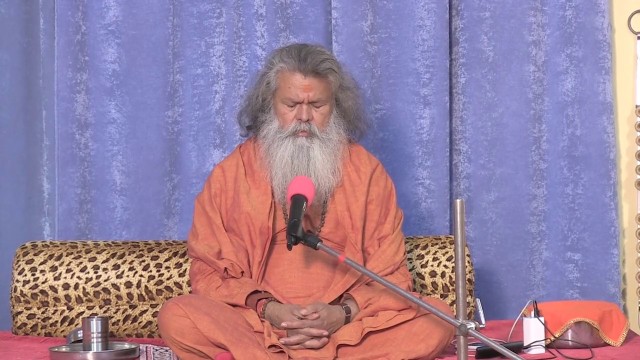
A satsang on yoga, self-inquiry, and daily spiritual practice.
"Who are you? I am knocking on your door. I want to know, who are you?"
"Go within thyself and meditate and meditate... Can we meditate every day for at least five minutes?"
He uses the analogy of peeling an onion to question identity and shares a story about a disciple misguidedly helping a snail to illustrate the limits of action. The talk emphasizes morning rituals, reverence for parents and guru, and warns against the distractions of wine, women, and wealth.
Filming location: Jadan, Rajasthan, India
How cosmic energy is circulating in our body
16:30 - 17:11 (41 min)
A teaching session on the Vishuddhi (throat) chakra and the body's energy network.
"Our life, what we call life, is in the navel." "The Viśuddhi Chakra is a filter, purifying all the negative energy from our body."
The instructor explains the complex energy system, focusing on the purifying role of the Vishuddhi chakra. The talk connects the solar plexus (Manipura) as the source of life energy, describes the network of 72,000 nerves and the three main nadis (Ida, Pingala, Sushumna), and introduces the Vajranadi channel starting from the toes. The practice involves chanting AUM to purify the throat center and sitting in Vajrasana posture to balance energy and aid digestion, with the aim of clearing physical, mental, and emotional blockages.
Filming location: Vancouver, Canada
Bhajan evening from Jadan Ashram
17:15 - 17:52 (37 min)
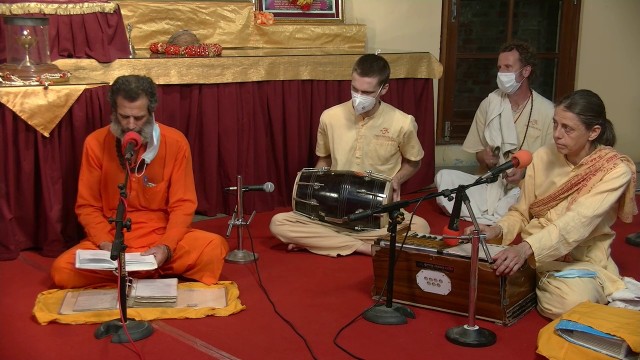
Evening satsang with Vishwaguruji from Jadan Ashram, Rajasthan, India. Bhajan singing.
The thread of the Mala
18:00 - 18:51 (51 min)
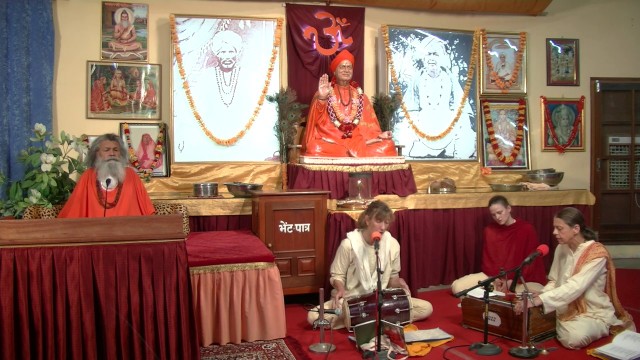
Evening satsang with Vishwaguruji from Jadan Ashram, Rajasthan, India. The thread in our mala is Gurudev. That is our sankalpa our wish to follow. In the satya yuga there was only one God. Your desires will be fulfilled until you break the thread. We should hold our promise. If somebody comes to our house and w give him salt and bread till that time we have a positive connection with each other. The story about Vishwaguruji when he lost his Mala in an airplane. If you fast it should be fasting. Bhajan singing.
Be conscious in the present
18:55 - 19:39 (44 min)
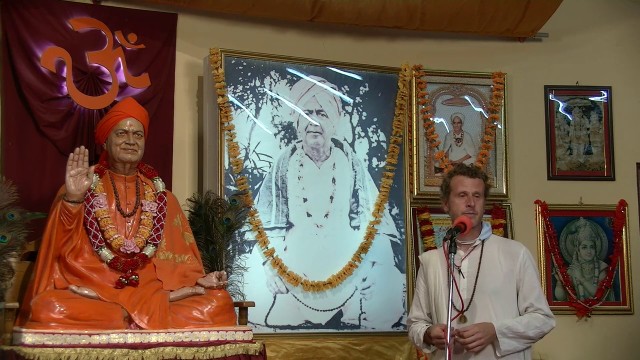
A satsang discourse on spiritual practice, community, and lessons from life in a small ashram.
"In satsaṅg, in prayer, you should open your ears and fill your chest with oxygen. This is how you always cleanse yourself."
"Throughout the fights or the debates, slowly, slowly, we are polished. And through the grace of Viśva Gurujī, we can work on these qualities to become more aware, to become a better person."
Swami Vishwaguruji opens the session with reflections on prayer, purification, and the essence of an ashram as a place of work (sāram). He shares anecdotes, including a story about a worker and a wheelbarrow, to illustrate the need for attentive effort. The disciple Chandra Puri then speaks, sharing his experience of living for many years with Mataji (Sadhvi Yogamaya/Mayok Shaktipuri) in the small Seva Ashram in Kāṭhū. He describes their initial clashes and how this close environment forced self-confrontation, detailing Mataji's teachings on self-observation, presence, and seeing one's own qualities reflected in conflicts.
Filming location: Jadan, Rajasthan, India
Full Moon Satsang from Strilky
19:45 - 20:28 (43 min)
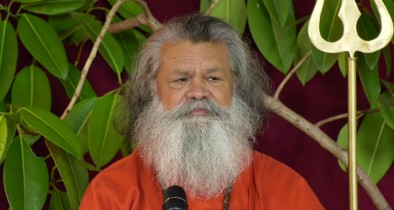
A spiritual discourse on the significance of the full moon, fasting, and observance.
"It is said that it is the moon through which sweetness comes into the vegetation—the fruits, the roots, and the blossoms."
"When you make a saṅkalpa, meaning a promise, you should go through with it for nine days. Or you can say to the Divine Mother, 'I will worship and pray, but I cannot fast.' Then that is okay."
Swami Ji addresses a gathering, explaining the moon's purifying energy and the power of making vows (saṅkalpa) during auspicious times like the full moon and Navarātrī. He discusses fasting for health and spiritual purposes, shares anecdotes about faith and practice, and relates observances to universal principles of discipline and belief across religions, including Christianity. The talk covers themes of divine feminine energy (Śakti), ancestral offerings, and the personal reality created by faith.
Filming location: Strilky, Czech Republic
How can we reach the Supreme?
20:35 - 21:14 (39 min)
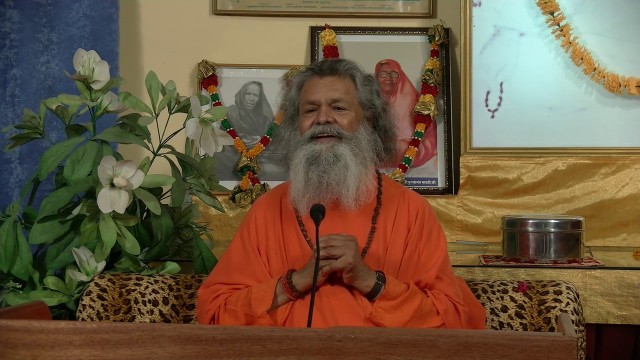
Evening satsang with Vishwaguruji from Jadan Ashram, Rajasthan, India. Only bhaktas can come to the Satsang. The story about a rishi who read the Vedas for a very long time. Only reading books can not lead to the Supreme. We need a mantra and the words of the Guru also. Bhajan singing.
Follow the path
21:00 - 22:17 (77 min)
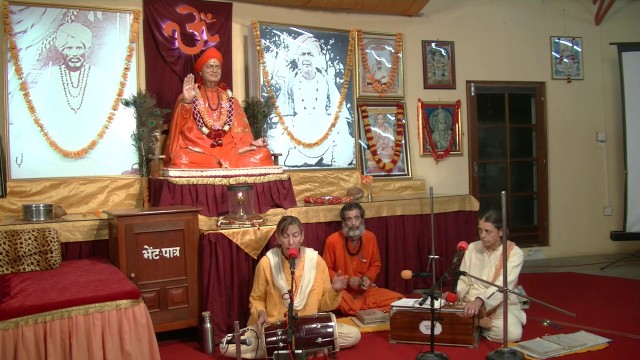
Evening satsang with Vishwaguruji from Jadan Ashram, Rajasthan, India. Bhajan singing. Bhajans have more power and knowledge than kirtans. The story about Rama Sita Hanuman and his bhakti towards Rama. If we have Gurudev he will be always our spiritual father. We should always know where is the place of our Guru and where is our place. Do not lose your mother father and your Guru.
Life is Soul
21:20 - 21:51 (31 min)
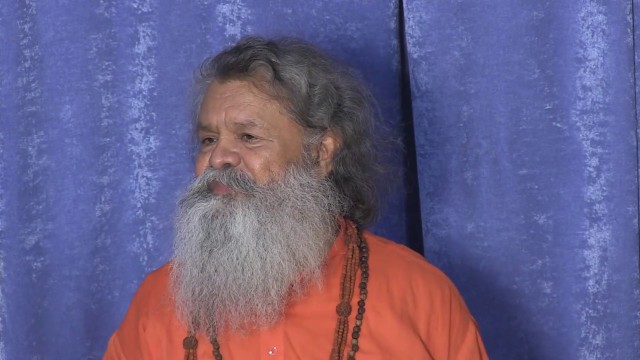
Evening satsang with Vishwaguruji from Jadan Ashram, Rajasthan, India. Bhaktas get peace and happiness when they have Guru Vakya, the words of the Guru. Our root is Sri Alakhpuriji. Where life is there is Soul. That Soul is equal in all of us.
Education for Flexible Identities
22:00 - 22:15 (15 min)
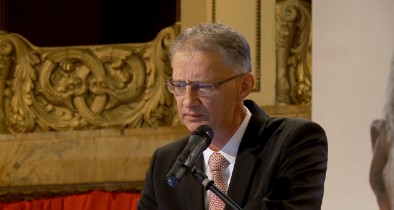
A conference presentation on education, identity, and spiritual philosophy.
"If you are not able to recognize the guru in yourself, how can you recognize your guru in another person?"
"We have to introduce a new... concept: that the other person is not an obstacle but a necessity for me to live my freedom."
The speaker addresses the conference, exploring the themes of self-education and flexible identity. He argues that one must integrate the roles of teacher and learner, awaken self-education within, and move beyond systems that create fixed identities. He advocates for a concept of freedom where others are necessary for one's own liberty, and concludes by referencing Masaru Emoto's water crystal experiments to illustrate the impact of thought and words.
Filming location: Prague, Czech Republic
How cosmic energy is circulating in our body
22:20 - 23:01 (41 min)
A teaching session on the Vishuddhi (throat) chakra and the body's energy network.
"Our life, what we call life, is in the navel." "The Viśuddhi Chakra is a filter, purifying all the negative energy from our body."
The instructor explains the complex energy system, focusing on the purifying role of the Vishuddhi chakra. The talk connects the solar plexus (Manipura) as the source of life energy, describes the network of 72,000 nerves and the three main nadis (Ida, Pingala, Sushumna), and introduces the Vajranadi channel starting from the toes. The practice involves chanting AUM to purify the throat center and sitting in Vajrasana posture to balance energy and aid digestion, with the aim of clearing physical, mental, and emotional blockages.
Filming location: Vancouver, Canada
Who will be the successor?
23:05 - 0:09 (64 min)
An evening satsang on divine will, the guru's grace, and the challenges of the modern age.
"God said, 'Okay, so next, the last month of where the farmer has to do everything.' So they went to their gardens on a farm, and then they said, 'Rain, rain, come.' So very much rain was coming."
"Guru, Guru is that like Alak Purījī, Devpurījī, Mahāprabhujī and Madhavānandajī Guru. We are just waiting to see how we will be."
Swami Maheshwaranand Puri Ji addresses the gathering, using a parable of farmers who fail when they try to control the rain to illustrate the folly of questioning God's divine order. He speaks of the guru's supreme power, recounting a miraculous healing by Devpurījī, and contrasts this with human limitation in the face of modern ailments and distractions like technology, which he identifies with the Kali Yuga. He reflects on the qualities of his sannyasi disciples and cautions the congregation not to spoil potential spiritual successors through misplaced admiration.
Filming location: Jadan, Rajasthan, India
American
Australian