
European
Gurupurnima satsang from Strilky Ashram
0:00 - 2:00 (120 min)
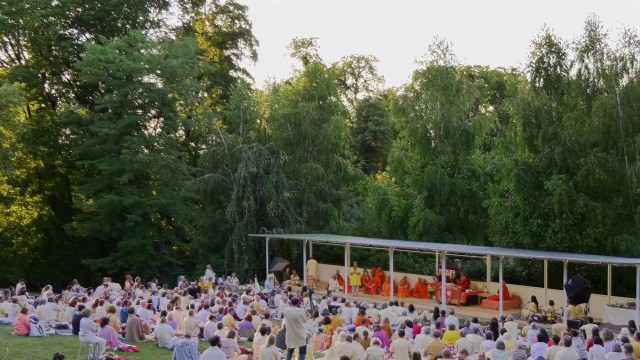
A Guru Purnima satsang featuring long-time disciples sharing their first encounters with their spiritual teacher.
"I first met Viśwagurujī in 1975... I remember it was very strong. It was so strong that during the short period I was there, I knew it was not good to stare at them, but I couldn't stop myself."
"I came to yoga like a blind person to very precious jewelry... it is not that we were looking for a guru, but that the guru would find us by himself."
During a Guru Purnima celebration, multiple disciples recount their initial meetings with Swamiji (Viśwagurujī) and their beginnings in the Yoga in Daily Life system. They describe profound first impressions, receiving mantras, and how the practice provided life's meaning, answered existential questions, and offered spiritual guidance. The recurring theme is the guru finding the disciple, not the reverse.
Filming location: Strilky, Czech Republic
How could we live a happy life
0:20 - 1:11 (51 min)
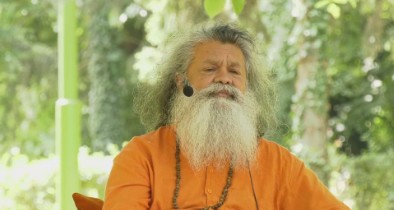
Morning satsang from Yoga Summer Retreat from Vep, Hungary. Logo and uniform are important. Our colour is a golden, colour of Ganesha and Krishna too. Yoga practising and meditation will change the new generation in the world. The wold needs to love no war. Mantras destroy many illnesses. All religion is a sector. Gayatri mantra is very good to chains when the sun is rising. In Asia girls praying with her mother for a good husband. Beauty is in the heart and in the soul. Many nerves and many bones disappear during our life. The prana is energy, it is God. If zótgere is prana in the body there is life also. We should not destroy the prana of the animals. Not easy to go away from the human body. The graveyard is a very holy place.
Feel your heart
1:15 - 1:31 (16 min)
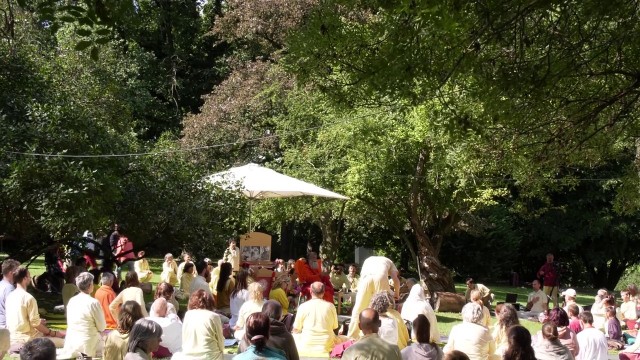
A guided meditation on heart-centered awareness and breath.
"Place your right hand gently on your heart. You will feel warmth. The breath originates from here; it is warm."
"The main thing is only to think in your heart. This is not easy. We think about other people, about where we are going, or what we can do."
A spiritual teacher guides participants through a meditation, instructing them to place a hand on the heart to feel its warmth as the source of the breath. The focus shifts between the heart and the navel, with an emphasis on inward attention, a straight posture, and a gentle breath. The teacher interjects with lighthearted, practical remarks to maintain a relaxed atmosphere while explaining the significance of these points from a yogic perspective regarding prāṇa.
Filming location: Strilky, Czech Republic
A guide to practicing mantra
1:35 - 2:20 (45 min)
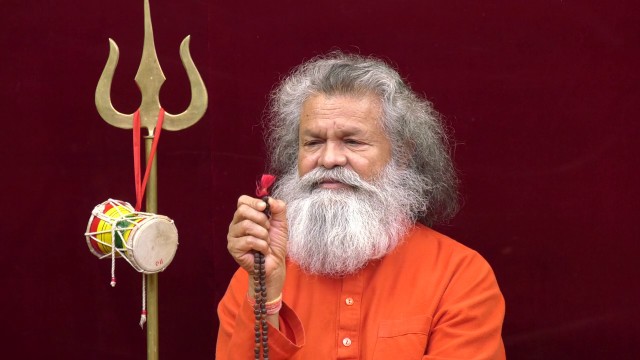
A spiritual discourse on the practice of using a prayer mala and the significance of the tulsi plant.
"Many people use the mala only for mantra and then go deep into meditation, but that is not the complete path. If you use your mala until you are tired, fall asleep, and drop it, then wake and take it again—the mala itself is the path."
"The Sumeru bead should have no blockage, allowing constant movement. You can do the mala five, ten, two, or a hundred times for meditation and mantra, and can practice constantly. This is called sumarana, meaning constant practice, like our breath going in and out."
The lecturer addresses practitioners, explaining the mala as a spiritual tool and passport. He details the correct technique for holding and moving the beads, the symbolism of the 108 count and the Sumeru bead, and the practice of purifying the five koshas through mantra repetition. He also expounds on the sacred nature of the tulsi plant, its varieties, and its uses in Ayurveda and devotion.
Filming location: Strilky, Czech Republic
The Interconnection of Yoga and Āyurveda: A Discourse on Mind, Body, and Soul
2:25 - 3:29 (64 min)
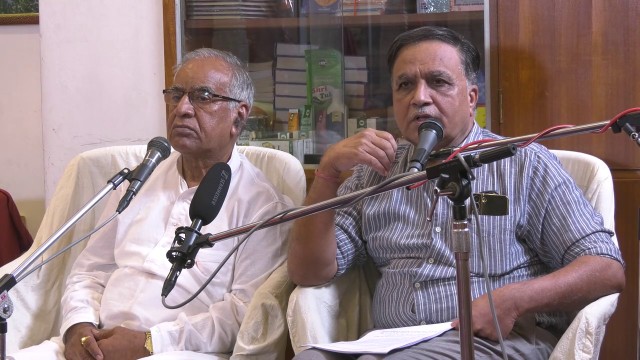
A lecture on the interconnection of Yoga and Āyurveda from an ancient Indian philosophical perspective.
"Yoga is an instrument to control your cittavṛtti—the fluctuations of the mind, the thoughts that continuously arise."
"From Maharṣi Caraka’s viewpoint... Ātmā sthe manasi sthire: when the mind is stable and controlled in the Ātmā. This is Yoga."
A retired Vice-Chancellor of Āyurvedic universities delivers a lecture on International Yoga Day, exploring how Āyurveda and Yoga are complementary sciences for controlling the mind and body. He explains Maharṣi Caraka's philosophical framework, the role of the soul and mind in karma, and the eightfold yogic path leading to samādhi and potential supernormal powers (aiśvarya). The session includes translation and concludes with remarks on the guru's global work.
Filming location: Jaipur, Rajasthan, India
We come and go
3:35 - 4:21 (46 min)
A spiritual talk and community address in a holy place after a long absence.
"After a long time, we are again here—nearly about three years or a little more. We were all very much thinking about when we would come here for our practice, yoga, etc."
"The memory, the memory remains... But they are gone. Their body is gone. But they remain. What? Their name. Their name. And this name remains forever."
Swami Maheshvaranandji addresses a gathering, reflecting on the long-awaited return to a sacred location and honoring the legacy of devotees like Krishnananda. He discusses the eternal nature of the Guru's name, the human journey from animal-like origins to spiritual awareness, and offers guidance on diet, dress, and the importance of practice for health and spiritual growth. The talk includes personal observations and calls for communal participation.
Filming location: Vép, Hungary
Satsang helps everyone
4:25 - 4:51 (26 min)
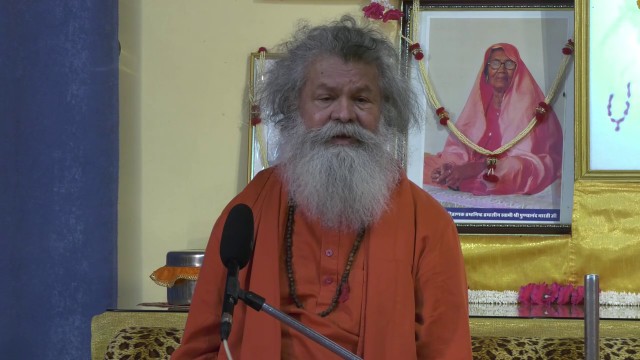
Evening satsang with Vishwaguruji from Jadan Ashram, Rajasthan, India.
Keep the flame still
4:55 - 5:33 (38 min)
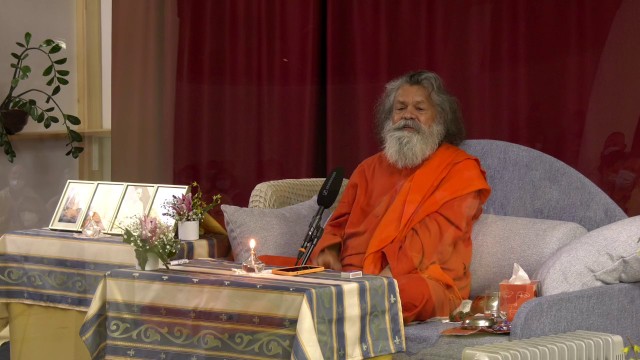
A spiritual discourse on maintaining the sacred flame of life within daily householder and community practice.
"You are already a yogī. You possess that science, yet you seek yogic attainment."
"This flame is what we call our ātmā, our spirit, which then departs. So when this is happening, we must learn from it."
The lecturer addresses a gathering, weaving together themes from the Yoga in Daily Life system. He emphasizes the dignity of the householder path, advocating for marriage and family life as spiritually vital. Using the extended metaphor of an oil lamp, he explains the body, life force, and spirit, urging the daily practice of lighting a lamp and maintaining temple pūjā in āśramas to nurture collective spirituality and personal health. He shares personal anecdotes and practical instructions, concluding with blessings and travel plans.
Filming location: Slovenia
Respect the life of other creatures
5:40 - 6:28 (48 min)
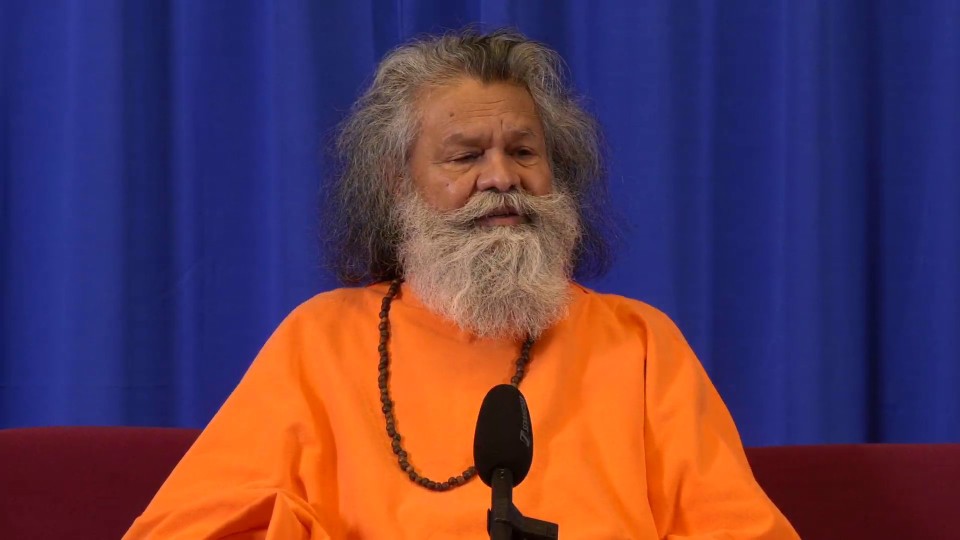
A satsang discourse on compassion, non-violence, and spiritual practice.
"All who are sitting with us are already in satsaṅg. 'Sat' is truth, peace, harmony, goodness—everything."
"Jīva jīva bhakṣate. Every animal eats animals, but we humans should not."
The lecturer addresses the gathering, explaining the essence of satsang as communion in truth. He uses metaphors of a ship and an airplane to illustrate the unity of all life, emphasizing that the soul (ātmā) is in every creature. The core teaching is a call for ahimsa (non-violence), urging humans to not kill other beings for food, contrasting human potential with animal nature. He discusses the challenges of Kali Yuga, advises against alcohol misuse, and clarifies protocols for offering garlands to guru photographs.
Filming location: Salzburg, Austria
We should live in real love
6:35 - 7:23 (48 min)
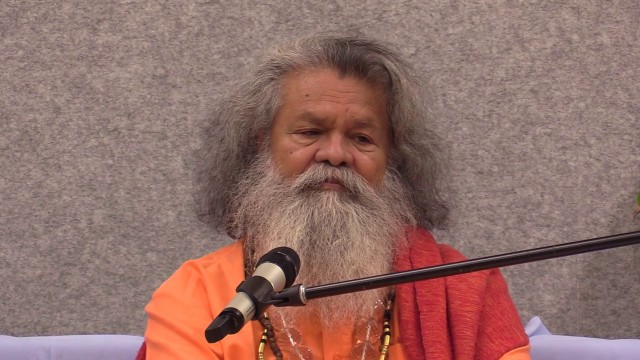
Morning satsang with Vishwaguruji from Trentwood Community Hub, Melbourne, Australia. Marriage means merge. It is a very beautiful ceremony. The story of a boy and a girl who married but they had a problem with the hard part of the bread. Married couples should live whole life happy together but kali yuga changed many things. Love is that where we are all happy healthy and helping each other. Explanation and singing of bhajan Sataguru satasangi and Sobavo satasangari.
We have to be in unity
7:30 - 8:26 (56 min)
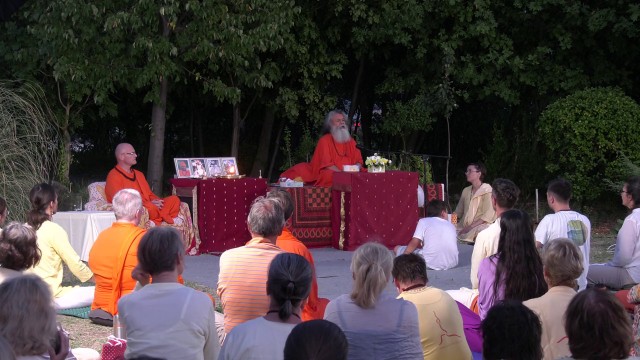
Evening satsang with Vishwaguruji from Rijeka Ashram, Croatia. We are different, but we are all going to the same destination. More and more people are following a vegan lifestyle, and you can see it on the planes. I have many students around the world who are practicing and meditating. Our goal is to achieve oneness, but we rarely do. Otherwise, duality remains. We have to achieve it within ourselves. We must all be good and peaceful, in unity.
Evening Satsang from Strilky
8:30 - 9:34 (64 min)
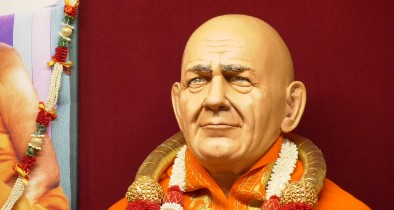
Evening satsang with Vishwaguruji from Strilky Ashram, Czech Republic.
The Miraculous Heart
9:40 - 10:01 (21 min)
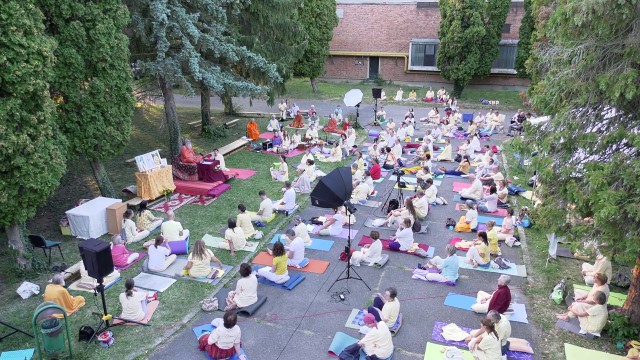
Evening satsang with Vishwaugurji from Vep, Hungary
We should become white
10:05 - 10:25 (20 min)
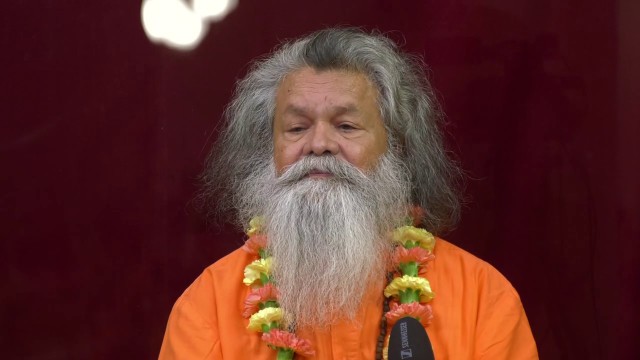
A spiritual address reflecting on a return from India and community events.
"I have returned from India, and many of our disciples from India were there. For many years, we have known our Gurudev, Madhavananjī."
"Today I found someone here in this Czech country. Now I have received a message that someone here in the Czech Republic has died."
The speaker, likely a spiritual teacher, shares reflections on their journey to India, the greatness of the land and its saints like Devpurījī Mahāprabhujī, and the strength of their spiritual lineage. The talk takes a somber turn with the announcement of a death in the Czech community, prompting a request for donations and prayers for the departed soul. The speaker then offers guidance on maintaining spiritual practice, purity (symbolized by the color white), and adherence to Sanātana Dharma, encouraging the community to remain united and focused inward.
Filming location: Strilky, Czech Republic
We must become one
10:30 - 10:53 (23 min)
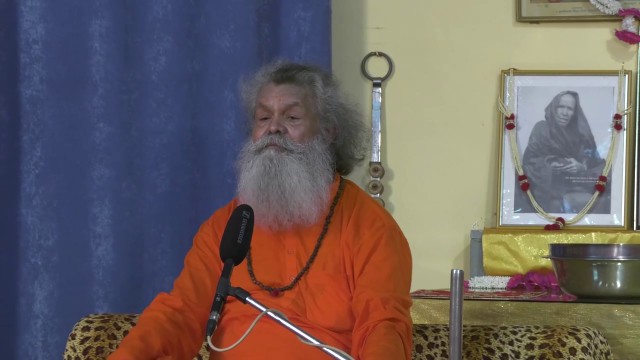
A spiritual discourse exploring the nature of consciousness during sleep and dreams.
"Night and day, what do we want? Only at night, in sleeping, this and that."
"And what is that? 'I was sleeping.' And when I was sleeping, and when there is sleep, and sleep is there, then I am nothing."
The speaker contemplates the states of deep sleep and dreaming, questioning the location and nature of the "I." He narrates a fragmented parable about an ascetic in a forest and recalls instructions from Bābājī about using a garland to fall asleep. The talk meanders through themes of self-identity, perception, and the desire for ultimate peace and unity, concluding with a focus on inner practice and bhajan.
Filming location: Jadan, Rajasthan, India
Practicing of the system 'Yoga in Daily Life', Level 3 - Part 1
11:00 - 12:00 (60 min)
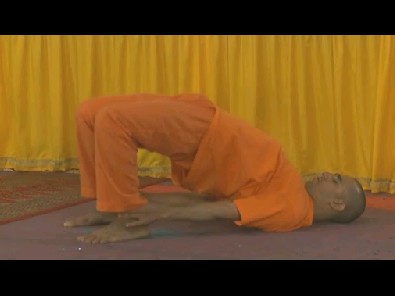
Practicing of the system "Yoga in Daily Life", Level 3 - Part 1, in Om Vishwa Deep Gurukul Swami Maheshwaranand Ashram, Jadan, Rajasthan, India on 27th of October 2009.
Do we reach?
12:05 - 12:23 (18 min)
A spiritual discourse reflecting on human progress, simplicity, and the search for fulfillment.
"We were living very well. We were very happy because many people, on the farmer's side, had no telephone."
"Oh human, you will never be complete. You will never say, 'I am okay, finished.'"
The speaker, Swāmījī, recounts observations from life in Vienna, India, and America to contrast past communal simplicity with modern technological complexity. He questions whether material advancement leads to true achievement or contentment, suggesting it is a transient game. The talk concludes with an urging to look inward for lasting peace.
Filming location: Vép, Hungary
Sing Bhajans on the Satsang
12:30 - 12:50 (20 min)
Evening satsang with Vishwaguruji from Jadan Ashram, Rajasthan, India. Lectures are also good, but the best is for us if we are singing bhajans on the Satsang.
Hatha Yoga Kriyas (2/3)
13:00 - 13:27 (27 min)
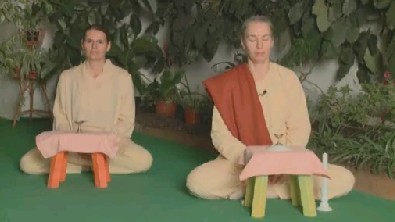
Hatha Yoga Kriyas, with Swamiji and Uma Puri, from Strilky Ashram, (CZ) on 14th November 2009.
The sleep makes you healthy
13:35 - 13:53 (18 min)
A spiritual discourse on the nature of sleep, consciousness, and the self.
"we are sleeping, but that is not us."
"Sleep will make us happy again, healthy, everything. So therefore, please sleep."
A spiritual teacher addresses an international gathering at an ashram, exploring the profound state of sleep. He describes how the true self withdraws from the body during deep sleep, discusses the travel of consciousness in dreams, and contrasts ordinary sleep with the yogic practice of yoga nidrā. The talk emphasizes achieving peace and correct understanding to sleep properly, without reliance on medicine.
Filming location: Jadan, Rajasthan, India
The sleep makes you healthy
14:00 - 14:18 (18 min)
A spiritual discourse on the nature of sleep, consciousness, and the self.
"we are sleeping, but that is not us."
"Sleep will make us happy again, healthy, everything. So therefore, please sleep."
A spiritual teacher addresses an international gathering at an ashram, exploring the profound state of sleep. He describes how the true self withdraws from the body during deep sleep, discusses the travel of consciousness in dreams, and contrasts ordinary sleep with the yogic practice of yoga nidrā. The talk emphasizes achieving peace and correct understanding to sleep properly, without reliance on medicine.
Filming location: Jadan, Rajasthan, India
We should become white
14:25 - 14:45 (20 min)
A spiritual address reflecting on a return from India and community events.
"I have returned from India, and many of our disciples from India were there. For many years, we have known our Gurudev, Madhavananjī."
"Today I found someone here in this Czech country. Now I have received a message that someone here in the Czech Republic has died."
The speaker, likely a spiritual teacher, shares reflections on their journey to India, the greatness of the land and its saints like Devpurījī Mahāprabhujī, and the strength of their spiritual lineage. The talk takes a somber turn with the announcement of a death in the Czech community, prompting a request for donations and prayers for the departed soul. The speaker then offers guidance on maintaining spiritual practice, purity (symbolized by the color white), and adherence to Sanātana Dharma, encouraging the community to remain united and focused inward.
Filming location: Strilky, Czech Republic
A guide to practicing mantra
14:50 - 15:35 (45 min)
A spiritual discourse on the practice of using a prayer mala and the significance of the tulsi plant.
"Many people use the mala only for mantra and then go deep into meditation, but that is not the complete path. If you use your mala until you are tired, fall asleep, and drop it, then wake and take it again—the mala itself is the path."
"The Sumeru bead should have no blockage, allowing constant movement. You can do the mala five, ten, two, or a hundred times for meditation and mantra, and can practice constantly. This is called sumarana, meaning constant practice, like our breath going in and out."
The lecturer addresses practitioners, explaining the mala as a spiritual tool and passport. He details the correct technique for holding and moving the beads, the symbolism of the 108 count and the Sumeru bead, and the practice of purifying the five koshas through mantra repetition. He also expounds on the sacred nature of the tulsi plant, its varieties, and its uses in Ayurveda and devotion.
Filming location: Strilky, Czech Republic
We must become one
15:40 - 16:03 (23 min)
A spiritual discourse exploring the nature of consciousness during sleep and dreams.
"Night and day, what do we want? Only at night, in sleeping, this and that."
"And what is that? 'I was sleeping.' And when I was sleeping, and when there is sleep, and sleep is there, then I am nothing."
The speaker contemplates the states of deep sleep and dreaming, questioning the location and nature of the "I." He narrates a fragmented parable about an ascetic in a forest and recalls instructions from Bābājī about using a garland to fall asleep. The talk meanders through themes of self-identity, perception, and the desire for ultimate peace and unity, concluding with a focus on inner practice and bhajan.
Filming location: Jadan, Rajasthan, India
Remembrance of old disciples to their beginning
16:00 - 17:41 (101 min)
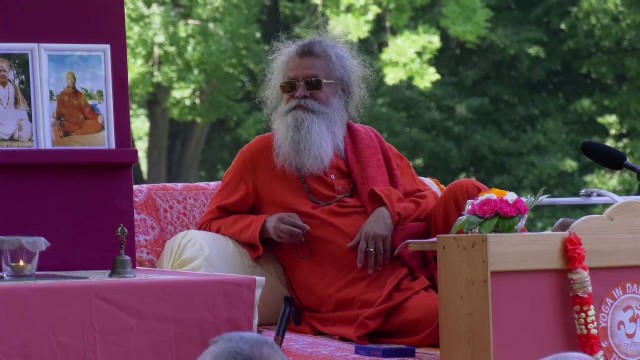
A satsang gathering where disciples share personal stories of meeting their guru and the transformative impact of his teachings.
"I looked to this window, and I saw a clear face, clear. I don't know who this is. For me, at that time, it seemed like Jesus."
"Swāmījī was saying... that the world is actually going down... I was listening for about five minutes, and I was bored. And then, at one point, something happened. They call it resonance."
Multiple disciples from Slovakia, the Czech Republic, Slovenia, and Hungary address Swāmījī (Viśvagurujī), recounting their first encounters with him and the Yoga in Daily Life system, often during the political changes of the late 1980s and early 1990s. They describe experiences of deep spiritual connection, receiving mantra initiation, and profound life changes, including shifts to vegetarianism and dedicated service. The common themes are gratitude, divine guidance, and the perceived miracles stemming from the guru-disciple relationship.
Filming location: Strilky, Czech Republic
Respect the life of other creatures
16:10 - 16:58 (48 min)
A satsang discourse on compassion, non-violence, and spiritual practice.
"All who are sitting with us are already in satsaṅg. 'Sat' is truth, peace, harmony, goodness—everything."
"Jīva jīva bhakṣate. Every animal eats animals, but we humans should not."
The lecturer addresses the gathering, explaining the essence of satsang as communion in truth. He uses metaphors of a ship and an airplane to illustrate the unity of all life, emphasizing that the soul (ātmā) is in every creature. The core teaching is a call for ahimsa (non-violence), urging humans to not kill other beings for food, contrasting human potential with animal nature. He discusses the challenges of Kali Yuga, advises against alcohol misuse, and clarifies protocols for offering garlands to guru photographs.
Filming location: Salzburg, Austria
Do we reach?
17:05 - 17:23 (18 min)
A spiritual discourse reflecting on human progress, simplicity, and the search for fulfillment.
"We were living very well. We were very happy because many people, on the farmer's side, had no telephone."
"Oh human, you will never be complete. You will never say, 'I am okay, finished.'"
The speaker, Swāmījī, recounts observations from life in Vienna, India, and America to contrast past communal simplicity with modern technological complexity. He questions whether material advancement leads to true achievement or contentment, suggesting it is a transient game. The talk concludes with an urging to look inward for lasting peace.
Filming location: Vép, Hungary
We should live in real love
17:30 - 18:18 (48 min)
Morning satsang with Vishwaguruji from Trentwood Community Hub, Melbourne, Australia. Marriage means merge. It is a very beautiful ceremony. The story of a boy and a girl who married but they had a problem with the hard part of the bread. Married couples should live whole life happy together but kali yuga changed many things. Love is that where we are all happy healthy and helping each other. Explanation and singing of bhajan Sataguru satasangi and Sobavo satasangari.
Satsang helps everyone
18:25 - 18:51 (26 min)
Evening satsang with Vishwaguruji from Jadan Ashram, Rajasthan, India.
Evening Satsang from Strilky
18:55 - 19:59 (64 min)
Evening satsang with Vishwaguruji from Strilky Ashram, Czech Republic.
How could we live a happy life
20:05 - 20:56 (51 min)
Morning satsang from Yoga Summer Retreat from Vep, Hungary. Logo and uniform are important. Our colour is a golden, colour of Ganesha and Krishna too. Yoga practising and meditation will change the new generation in the world. The wold needs to love no war. Mantras destroy many illnesses. All religion is a sector. Gayatri mantra is very good to chains when the sun is rising. In Asia girls praying with her mother for a good husband. Beauty is in the heart and in the soul. Many nerves and many bones disappear during our life. The prana is energy, it is God. If zótgere is prana in the body there is life also. We should not destroy the prana of the animals. Not easy to go away from the human body. The graveyard is a very holy place.
Atma is spotless
21:00 - 21:46 (46 min)
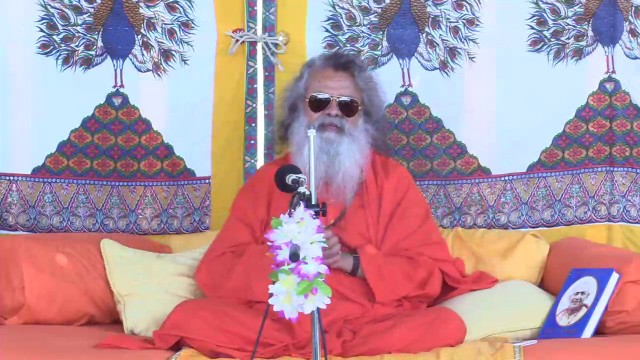
A spiritual discourse on divine presence, the nature of the soul, and the guru's grace, illustrated through parables and teachings.
"When the difficult time comes, then you should know that you are now with God."
"Śrī Guru Ātmā, that is the highest... our Ātmā is connected to Holy Gurujī."
A teacher shares parables, including one where God carries a devotee through hardship and another where a renunciate yogi refuses Lord Shiva's offer. He explains the spotless, all-pervading nature of the soul (Ātmā) and its connection to the Guru, weaving in teachings on devotion, renunciation, and the elements of the body.
Filming location: Australia
The Interconnection of Yoga and Āyurveda: A Discourse on Mind, Body, and Soul
21:50 - 22:54 (64 min)
A lecture on the interconnection of Yoga and Āyurveda from an ancient Indian philosophical perspective.
"Yoga is an instrument to control your cittavṛtti—the fluctuations of the mind, the thoughts that continuously arise."
"From Maharṣi Caraka’s viewpoint... Ātmā sthe manasi sthire: when the mind is stable and controlled in the Ātmā. This is Yoga."
A retired Vice-Chancellor of Āyurvedic universities delivers a lecture on International Yoga Day, exploring how Āyurveda and Yoga are complementary sciences for controlling the mind and body. He explains Maharṣi Caraka's philosophical framework, the role of the soul and mind in karma, and the eightfold yogic path leading to samādhi and potential supernormal powers (aiśvarya). The session includes translation and concludes with remarks on the guru's global work.
Filming location: Jaipur, Rajasthan, India
Feel your heart
23:00 - 23:16 (16 min)
A guided meditation on heart-centered awareness and breath.
"Place your right hand gently on your heart. You will feel warmth. The breath originates from here; it is warm."
"The main thing is only to think in your heart. This is not easy. We think about other people, about where we are going, or what we can do."
A spiritual teacher guides participants through a meditation, instructing them to place a hand on the heart to feel its warmth as the source of the breath. The focus shifts between the heart and the navel, with an emphasis on inward attention, a straight posture, and a gentle breath. The teacher interjects with lighthearted, practical remarks to maintain a relaxed atmosphere while explaining the significance of these points from a yogic perspective regarding prāṇa.
Filming location: Strilky, Czech Republic
The essence is always the same
23:00 - 23:38 (38 min)
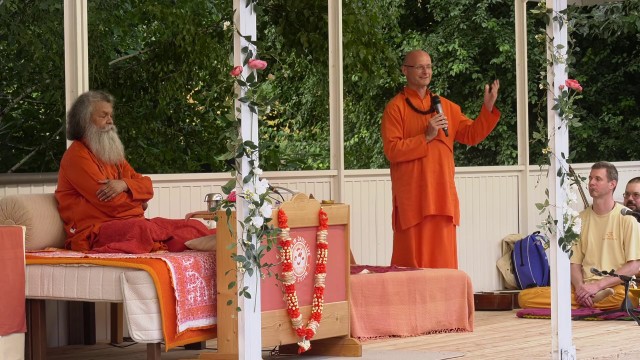
A satsang talk reflecting on spiritual transformation and the grace of the Guru.
"In yoga, it is very important to understand the concepts of Kāla and Deśa. This means that each era has its own appropriate way of behavior, and each place is different."
"What we learn from Viśva Gurujī is not only āsanas... but that we need to be flexible in our hearts and minds."
A speaker addresses the gathering after a Guru Purnima celebration, exploring how the essence of yoga remains constant while adapting across time and place. He shares stories illustrating the Guru's foresight, like predicting currency changes in Croatia, and emphasizes the transformative power of dedicated practice and being physically present in the ashram's energy. The talk uses metaphors like a spoon in honey to describe receptivity to grace and lighthouses for the role of ashrams.
Filming location: Strilky, Czech Republic
Mahaprabhuji felt that Devpuriji passed away
23:20 - 0:34 (74 min)
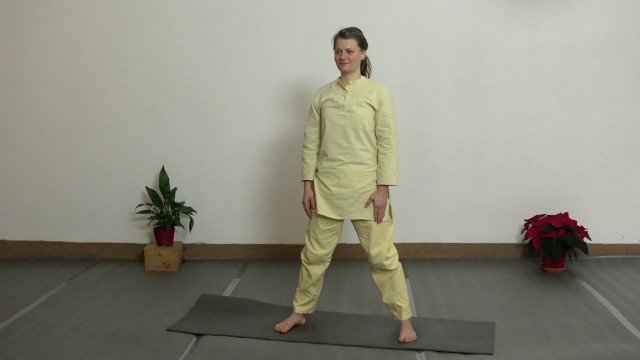
Anniversary of Sri Deep Narayan Bhagwan Mahaprabhuji's Mahasamadhi Evening satsang with Vishwaguruji from Strilky Ashram, Czech Republic. There are two calendars one according to the Sun and the other according to the Moon. Jyotish uses the Moon calendar. Today is the day of Mahaprabuji's mahasamadhi according to Sun calendar. It would be good to be married according to Jyotish. Mahaprabuji knew the exact time of Devpuriji's departure. The story about Devpuuriji wounded Mahaprabuji. Heaven and hell is not forever. Practising Bari Khatu Pranam and Sarva hitta asanas led by Swami Umapuri.
American
Australian