
European
Live pure life and be happy
0:00 - 1:04 (64 min)
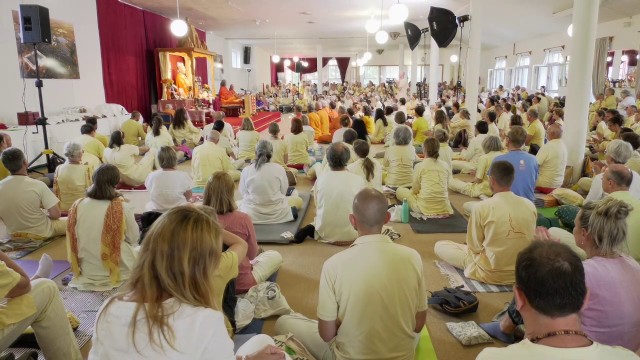
Evening satsang from Strilky Ashram, Czech Republic. Introduction to a very beautiful program with Vishwaguruji and many swamis. Many people came from different places for example Swami Mataji. In India unfortunately, many people begin to eat meat and drink alcohol. Yoga people are very pure in every country. Some people begin to eat meat but it is very bad. Sometimes young couples are not happy with each other. We should decide to marry or not. People in India many people are married according to astrology. To be happy with your partner is also yoga. Bhajan singing. Swani Madhuram speaks about his life in New Zealand and his longing to meet Vishwaguruji.
In the bliss of bhajans
0:15 - 1:26 (71 min)
Bhajans from different ashrams in India
Evening Satsang from Strilky
1:30 - 2:34 (64 min)
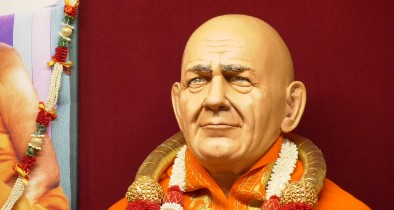
Evening satsang with Vishwaguruji from Strilky Ashram, Czech Republic.
Satsang helps everyone
2:40 - 3:06 (26 min)
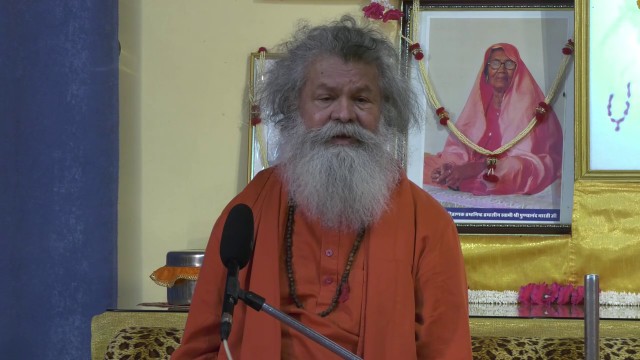
Evening satsang with Vishwaguruji from Jadan Ashram, Rajasthan, India.
How could we live a happy life
3:10 - 4:01 (51 min)
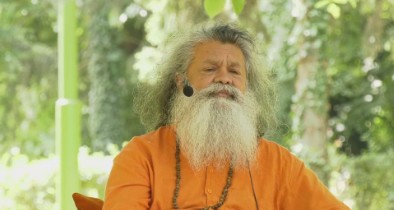
Morning satsang from Yoga Summer Retreat from Vep, Hungary. Logo and uniform are important. Our colour is a golden, colour of Ganesha and Krishna too. Yoga practising and meditation will change the new generation in the world. The wold needs to love no war. Mantras destroy many illnesses. All religion is a sector. Gayatri mantra is very good to chains when the sun is rising. In Asia girls praying with her mother for a good husband. Beauty is in the heart and in the soul. Many nerves and many bones disappear during our life. The prana is energy, it is God. If zótgere is prana in the body there is life also. We should not destroy the prana of the animals. Not easy to go away from the human body. The graveyard is a very holy place.
Respect the life of other creatures
4:05 - 4:53 (48 min)
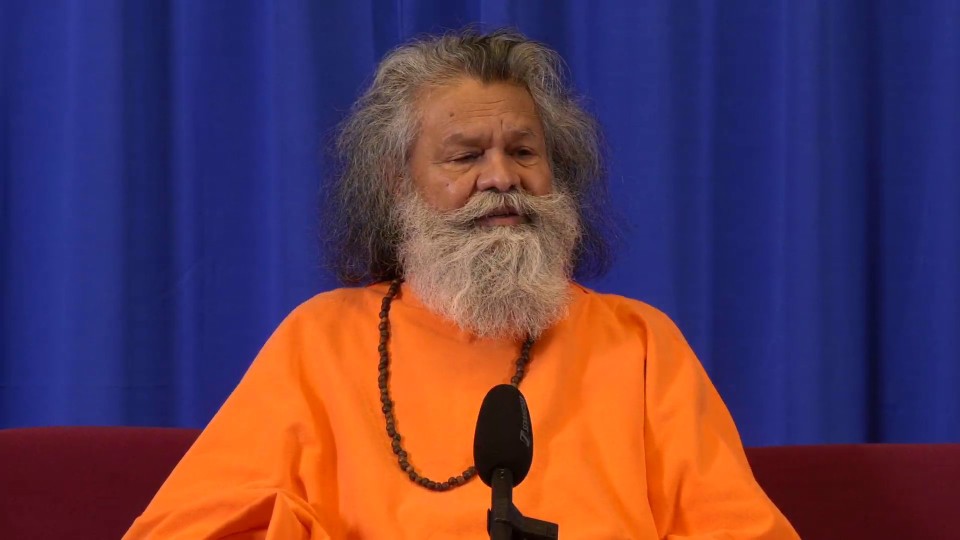
A satsang discourse on compassion, non-violence, and spiritual practice.
"All who are sitting with us are already in satsaṅg. 'Sat' is truth, peace, harmony, goodness—everything."
"Jīva jīva bhakṣate. Every animal eats animals, but we humans should not."
The lecturer addresses the gathering, explaining the essence of satsang as communion in truth. He uses metaphors of a ship and an airplane to illustrate the unity of all life, emphasizing that the soul (ātmā) is in every creature. The core teaching is a call for ahimsa (non-violence), urging humans to not kill other beings for food, contrasting human potential with animal nature. He discusses the challenges of Kali Yuga, advises against alcohol misuse, and clarifies protocols for offering garlands to guru photographs.
Filming location: Salzburg, Austria
Mahaprabhuji felt that Devpuriji passed away
5:00 - 6:14 (74 min)
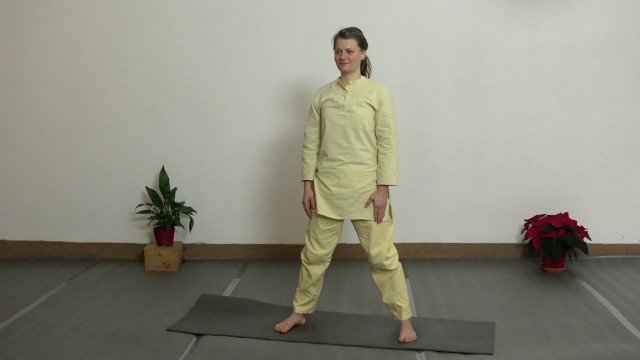
Anniversary of Sri Deep Narayan Bhagwan Mahaprabhuji's Mahasamadhi Evening satsang with Vishwaguruji from Strilky Ashram, Czech Republic. There are two calendars one according to the Sun and the other according to the Moon. Jyotish uses the Moon calendar. Today is the day of Mahaprabuji's mahasamadhi according to Sun calendar. It would be good to be married according to Jyotish. Mahaprabuji knew the exact time of Devpuriji's departure. The story about Devpuuriji wounded Mahaprabuji. Heaven and hell is not forever. Practising Bari Khatu Pranam and Sarva hitta asanas led by Swami Umapuri.
The Miraculous Heart
6:20 - 6:41 (21 min)
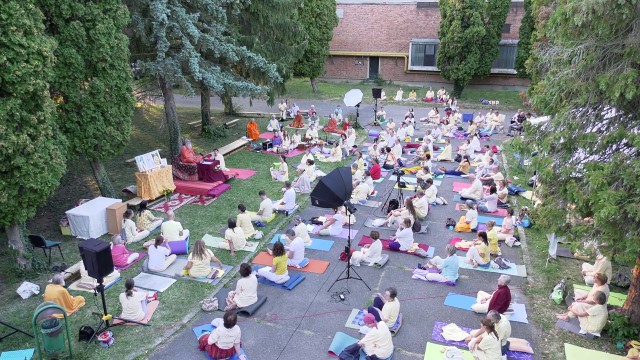
Evening satsang with Vishwaugurji from Vep, Hungary
How could we live a happy life
6:45 - 7:36 (51 min)
Morning satsang from Yoga Summer Retreat from Vep, Hungary. Logo and uniform are important. Our colour is a golden, colour of Ganesha and Krishna too. Yoga practising and meditation will change the new generation in the world. The wold needs to love no war. Mantras destroy many illnesses. All religion is a sector. Gayatri mantra is very good to chains when the sun is rising. In Asia girls praying with her mother for a good husband. Beauty is in the heart and in the soul. Many nerves and many bones disappear during our life. The prana is energy, it is God. If zótgere is prana in the body there is life also. We should not destroy the prana of the animals. Not easy to go away from the human body. The graveyard is a very holy place.
We have to be in unity
7:40 - 8:36 (56 min)
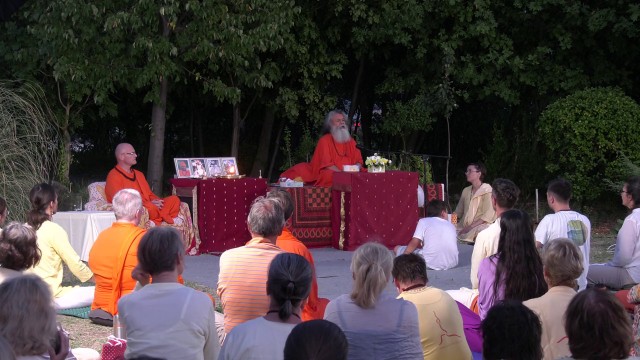
Evening satsang with Vishwaguruji from Rijeka Ashram, Croatia. We are different, but we are all going to the same destination. More and more people are following a vegan lifestyle, and you can see it on the planes. I have many students around the world who are practicing and meditating. Our goal is to achieve oneness, but we rarely do. Otherwise, duality remains. We have to achieve it within ourselves. We must all be good and peaceful, in unity.
The Interconnection of Yoga and Āyurveda: A Discourse on Mind, Body, and Soul
8:40 - 9:44 (64 min)
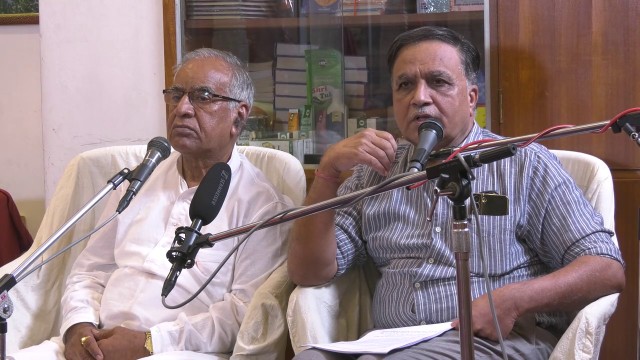
A lecture on the interconnection of Yoga and Āyurveda from an ancient Indian philosophical perspective.
"Yoga is an instrument to control your cittavṛtti—the fluctuations of the mind, the thoughts that continuously arise."
"From Maharṣi Caraka’s viewpoint... Ātmā sthe manasi sthire: when the mind is stable and controlled in the Ātmā. This is Yoga."
A retired Vice-Chancellor of Āyurvedic universities delivers a lecture on International Yoga Day, exploring how Āyurveda and Yoga are complementary sciences for controlling the mind and body. He explains Maharṣi Caraka's philosophical framework, the role of the soul and mind in karma, and the eightfold yogic path leading to samādhi and potential supernormal powers (aiśvarya). The session includes translation and concludes with remarks on the guru's global work.
Filming location: Jaipur, Rajasthan, India
Evening Satsang from Strilky
9:50 - 10:54 (64 min)
Evening satsang with Vishwaguruji from Strilky Ashram, Czech Republic.
Practicing of the system 'Yoga in Daily Life', Level 2 - Part 2
11:00 - 12:11 (71 min)
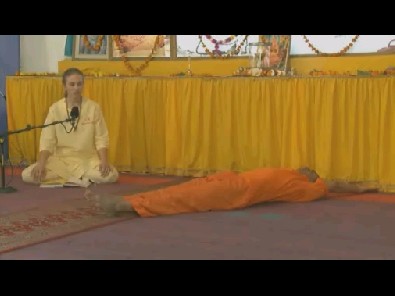
A guided yoga practice session for Level Two of the "Yoga in Daily Life" system.
"This light has been transferred through the centuries from one master to another without any interruption."
"Āsana means, except for other meanings, also comfortable. So āsana should be a comfortable position."
An instructor leads a comprehensive yoga class at Parananda Ashram, systematically guiding practitioners through the second level of the "Yoga in Daily Life" system. The session begins with relaxation and breath awareness (full yoga breath), followed by a series of āsanas including Meru Pṛṣṭhāsana, Catuṣpada Āsana, Cakrāsana, Dvikoṇāsana, Bhūta Āsana, Setu Āsana, Hastapādāṅguṣṭhāsana, Sumeru Āsana, and Meruvakrāsana. Each posture is explained with detailed alignment cues and its physical and energetic benefits. The practice concludes with deep relaxation, a prāṇāyāma (alternate nostril breathing) exercise, and a closing meditation with Oṁ and Śānti chants.
Filming location: Jadan, Rajasthan, India
Respect the life of other creatures
12:15 - 13:03 (48 min)
A satsang discourse on compassion, non-violence, and spiritual practice.
"All who are sitting with us are already in satsaṅg. 'Sat' is truth, peace, harmony, goodness—everything."
"Jīva jīva bhakṣate. Every animal eats animals, but we humans should not."
The lecturer addresses the gathering, explaining the essence of satsang as communion in truth. He uses metaphors of a ship and an airplane to illustrate the unity of all life, emphasizing that the soul (ātmā) is in every creature. The core teaching is a call for ahimsa (non-violence), urging humans to not kill other beings for food, contrasting human potential with animal nature. He discusses the challenges of Kali Yuga, advises against alcohol misuse, and clarifies protocols for offering garlands to guru photographs.
Filming location: Salzburg, Austria
We come and go
13:05 - 13:51 (46 min)
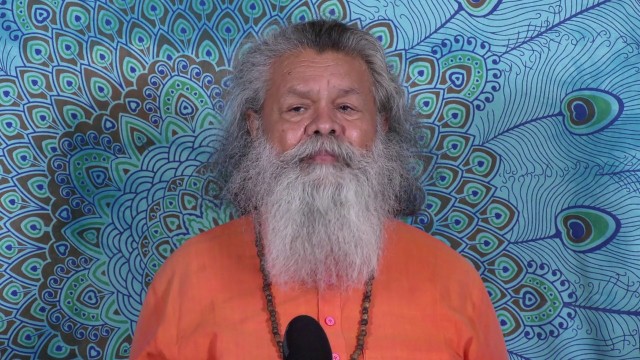
A spiritual talk and community address in a holy place after a long absence.
"After a long time, we are again here—nearly about three years or a little more. We were all very much thinking about when we would come here for our practice, yoga, etc."
"The memory, the memory remains... But they are gone. Their body is gone. But they remain. What? Their name. Their name. And this name remains forever."
Swami Maheshvaranandji addresses a gathering, reflecting on the long-awaited return to a sacred location and honoring the legacy of devotees like Krishnananda. He discusses the eternal nature of the Guru's name, the human journey from animal-like origins to spiritual awareness, and offers guidance on diet, dress, and the importance of practice for health and spiritual growth. The talk includes personal observations and calls for communal participation.
Filming location: Vép, Hungary
Part 1: The Role of Yoga and Meditation in Improving Quality of Life for Cancer Patients
13:55 - 15:02 (67 min)
A medical lecture on the role of yoga and meditation as supportive care for cancer patients.
"We must note which specific yogic and meditative techniques were used, as these vary widely."
"Please do not give false hope that cancer will be cured... If a practitioner claims that prāṇāyāma, dhyāna, and some Ayurvedic herbs... can cure cancer, they are committing a grave sin against society."
A doctor from AIIMS Delhi presents a detailed analysis of scientific studies on yogic interventions for cancer patients, emphasizing they are complementary to standard treatments like chemotherapy. He strongly warns against practitioners falsely claiming yoga can cure cancer, shares data on benefits for quality of life and stress, and proposes a large-scale research trial combining yoga, meditation, and herbal products for cancer prevention and care.
Filming location: Delhi, India
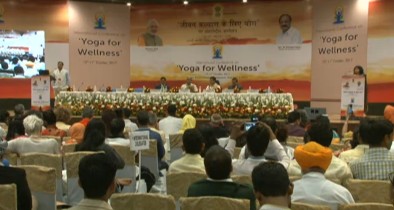
Part 1: Welcoming Address and Valedictory Session on Yoga for Wellness
15:05 - 16:13 (68 min)
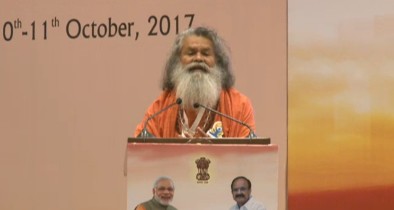
A valedictory session for a conference on "Yoga for Wellness," featuring addresses by government ministers and spiritual leaders.
"Yoga for wellness is this year’s subject. It is not just about the practice of yoga, but also about using it in the lives of every human being for achieving better health and wellness."
"Our method of treatment does not have any side effects. That is why we develop research about it, develop websites, develop programming, develop its videos."
The session opens with a welcome address emphasizing yoga's global role and the need to integrate traditional and modern medicine. Union Minister Nitin Gadkari delivers a valedictory address, sharing his personal health transformation through yoga and proposing structured training and research to professionalize the field. Following remarks from other ministers, Professor H.R. Nagendra gives a speech contrasting the multidimensional approach of yoga with modern medicine's limitations for non-communicable diseases. Swami Maheshvarananda and actress Anu Agarwal also share perspectives, with Agarwal recounting her recovery from a major accident through yoga.
Filming location: Delhi, India
We can bring Yoga back to India
16:00 - 16:25 (25 min)
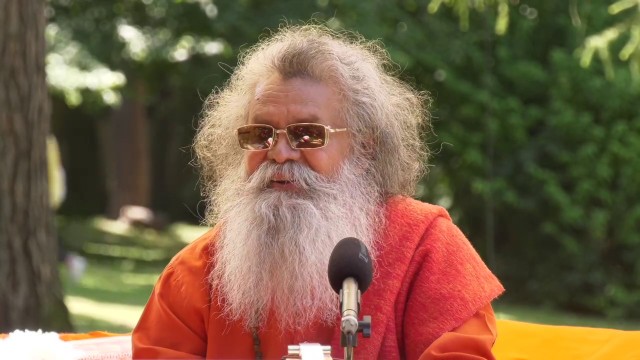
A spiritual teacher addresses a gathering of long-time disciples, reflecting on community and the principles of Yoga in Daily Life.
"Only that one who doesn't eat meat, eggs, and alcohol—then you are really a great yogī."
"I told today, for all of you, that everywhere where you are, practice yoga in daily life."
The teacher speaks to a multi-generational community, emphasizing vegetarianism as a core tenet of yoga and the importance of consistent spiritual practice. He discusses the idea of bringing pure yoga back to India from Europe and shares teachings on mindful marriage and procreation. A disciple then shares a personal testimony about her family's decades-long devotion, harmonious marriages, and spiritual continuity across generations, which the teacher celebrates.
Filming location: Strilky, Czech Republic
Vegetarian cooking lesson 16, Indian Gunda and Sangri Sabji
16:14 - 16:33 (19 min)
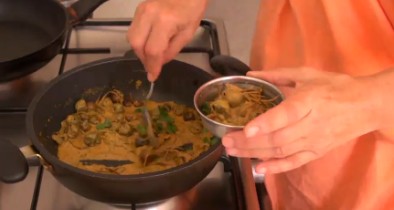
A cooking demonstration for preparing traditional Indian vegetables.
"Both the guṇḍā and the saṅgrī grow in the desert of Rajasthan, at our Jadon Ashram in the Pali district."
"For me, and for all of us, it is very important always to know where our food comes from, what we are eating, its origin, and through whose hands it has passed."
A monk prepares a dish of guṇḍā and saṅgrī, vegetables harvested from ashram lands in Rajasthan. He explains the sourcing and preparation of the dried ingredients, then cooks them with spices, onion, and yogurt, while also demonstrating how to make chapati. The process is interwoven with spiritual reflections on food origins and chants.
Filming location: Vép, Hungary
A guide to practicing mantra
16:34 - 17:19 (45 min)
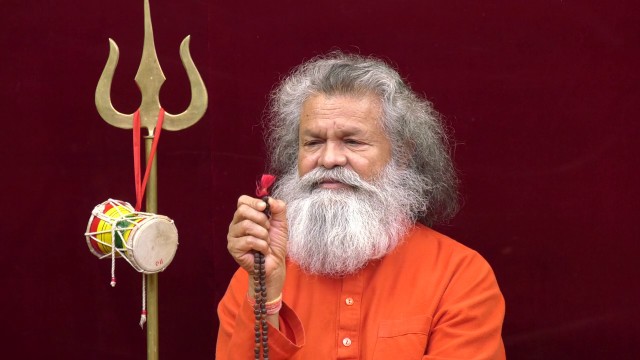
A spiritual discourse on the practice of using a prayer mala and the significance of the tulsi plant.
"Many people use the mala only for mantra and then go deep into meditation, but that is not the complete path. If you use your mala until you are tired, fall asleep, and drop it, then wake and take it again—the mala itself is the path."
"The Sumeru bead should have no blockage, allowing constant movement. You can do the mala five, ten, two, or a hundred times for meditation and mantra, and can practice constantly. This is called sumarana, meaning constant practice, like our breath going in and out."
The lecturer addresses practitioners, explaining the mala as a spiritual tool and passport. He details the correct technique for holding and moving the beads, the symbolism of the 108 count and the Sumeru bead, and the practice of purifying the five koshas through mantra repetition. He also expounds on the sacred nature of the tulsi plant, its varieties, and its uses in Ayurveda and devotion.
Filming location: Strilky, Czech Republic
Tvameva Mata Ca Pita Tvameva
17:00 - 18:16 (76 min)
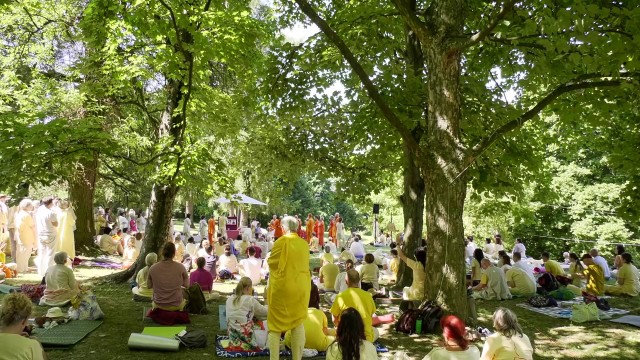
Morning satsang with Viswhaguruji from Strilky Ashram, Czech Republic. Bhajan singing from Strilky. Including He Nata Aba To, Itna to Karana Guruji
Keep the flame still
17:20 - 17:58 (38 min)
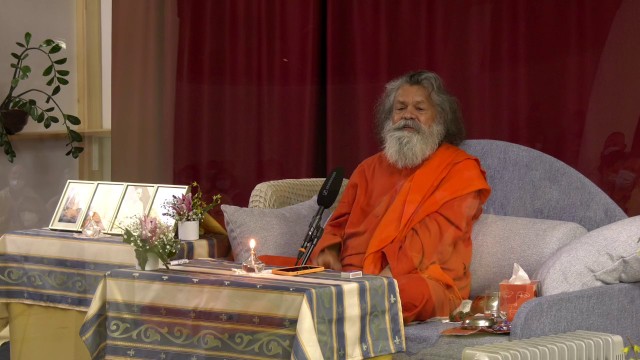
A spiritual discourse on maintaining the sacred flame of life within daily householder and community practice.
"You are already a yogī. You possess that science, yet you seek yogic attainment."
"This flame is what we call our ātmā, our spirit, which then departs. So when this is happening, we must learn from it."
The lecturer addresses a gathering, weaving together themes from the Yoga in Daily Life system. He emphasizes the dignity of the householder path, advocating for marriage and family life as spiritually vital. Using the extended metaphor of an oil lamp, he explains the body, life force, and spirit, urging the daily practice of lighting a lamp and maintaining temple pūjā in āśramas to nurture collective spirituality and personal health. He shares personal anecdotes and practical instructions, concluding with blessings and travel plans.
Filming location: Slovenia
We must become one
18:00 - 18:23 (23 min)
A spiritual discourse exploring the nature of consciousness during sleep and dreams.
"Night and day, what do we want? Only at night, in sleeping, this and that."
"And what is that? 'I was sleeping.' And when I was sleeping, and when there is sleep, and sleep is there, then I am nothing."
The speaker contemplates the states of deep sleep and dreaming, questioning the location and nature of the "I." He narrates a fragmented parable about an ascetic in a forest and recalls instructions from Bābājī about using a garland to fall asleep. The talk meanders through themes of self-identity, perception, and the desire for ultimate peace and unity, concluding with a focus on inner practice and bhajan.
Filming location: Jadan, Rajasthan, India
We should live in real love
18:30 - 19:18 (48 min)
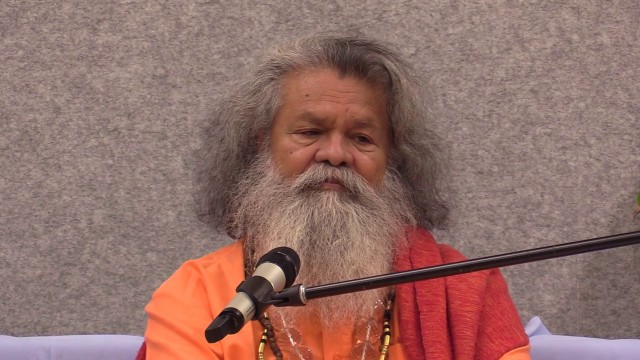
Morning satsang with Vishwaguruji from Trentwood Community Hub, Melbourne, Australia. Marriage means merge. It is a very beautiful ceremony. The story of a boy and a girl who married but they had a problem with the hard part of the bread. Married couples should live whole life happy together but kali yuga changed many things. Love is that where we are all happy healthy and helping each other. Explanation and singing of bhajan Sataguru satasangi and Sobavo satasangari.
Gurudev bring us to your shelter
19:25 - 19:57 (32 min)
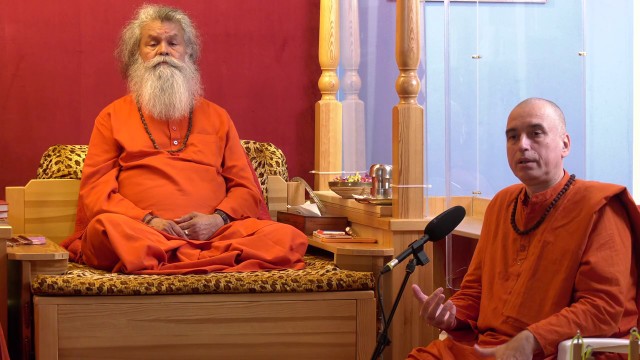
A detailed explanation and translation of a devotional mantra dedicated to the lineage's Grandmaster.
"Oṁ is the beginning, middle, and end of the universe. Traditionally, Oṁ is used to start a mantra."
"Thus, the full meaning: 'Oṁ, greetings to the respected God, the light Nārāyaṇa. We are all servants of God; we take shelter in you.'"
A translator and disciple provides a line-by-line analysis of the mantra "Oṁ Namaḥ Śrī Prabhu Dīpa Nārāyaṇa." He explains the meaning and grammatical structure of each component, from the sacred syllable "Oṁ" to the request for shelter, and connects the mantra's praise to the teachings and protective grace of the spiritual masters in his tradition.
Filming location: Vienna, Austria
Satsang helps everyone
20:05 - 20:31 (26 min)
Evening satsang with Vishwaguruji from Jadan Ashram, Rajasthan, India.
We should become white
20:35 - 20:55 (20 min)
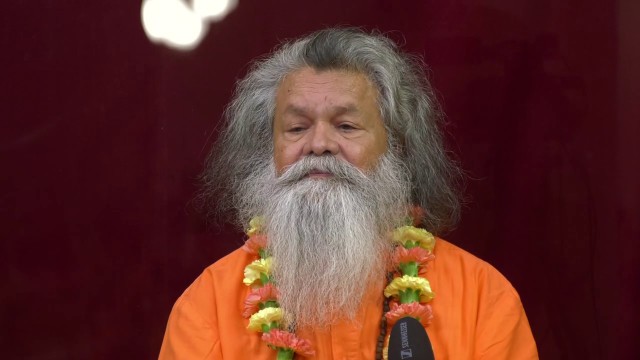
A spiritual address reflecting on a return from India and community events.
"I have returned from India, and many of our disciples from India were there. For many years, we have known our Gurudev, Madhavananjī."
"Today I found someone here in this Czech country. Now I have received a message that someone here in the Czech Republic has died."
The speaker, likely a spiritual teacher, shares reflections on their journey to India, the greatness of the land and its saints like Devpurījī Mahāprabhujī, and the strength of their spiritual lineage. The talk takes a somber turn with the announcement of a death in the Czech community, prompting a request for donations and prayers for the departed soul. The speaker then offers guidance on maintaining spiritual practice, purity (symbolized by the color white), and adherence to Sanātana Dharma, encouraging the community to remain united and focused inward.
Filming location: Strilky, Czech Republic
Do we reach?
21:00 - 21:18 (18 min)
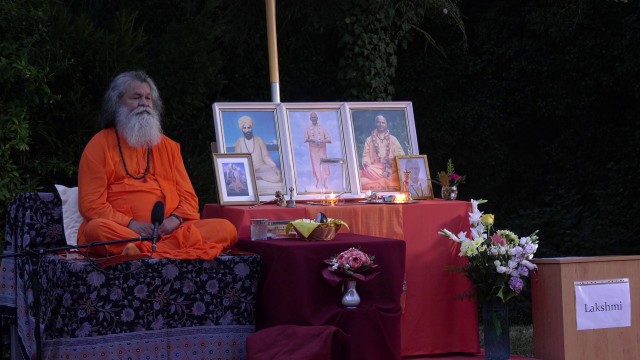
A spiritual discourse reflecting on human progress, simplicity, and the search for fulfillment.
"We were living very well. We were very happy because many people, on the farmer's side, had no telephone."
"Oh human, you will never be complete. You will never say, 'I am okay, finished.'"
The speaker, Swāmījī, recounts observations from life in Vienna, India, and America to contrast past communal simplicity with modern technological complexity. He questions whether material advancement leads to true achievement or contentment, suggesting it is a transient game. The talk concludes with an urging to look inward for lasting peace.
Filming location: Vép, Hungary
Yoga is for all creatures
21:25 - 21:54 (29 min)
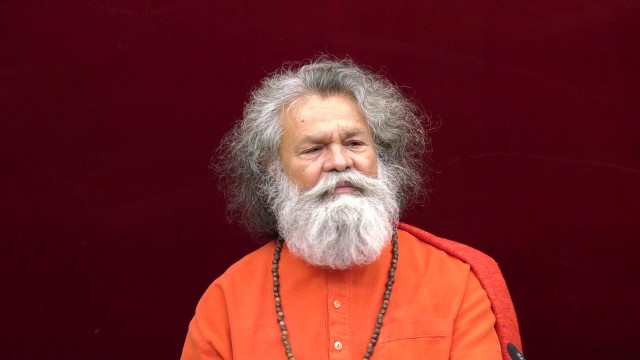
A spiritual discourse on the universal journey of the self through yoga.
"From the little child, or the embryo in the mother’s body, from that time begins our journey further toward the Supreme Cosmic One."
"Therefore, Holī Gurujī said, 'One in all and all in one.' In this way, this jīvātmā, this ātmā, this soul, it is going bedside. Therefore, practice, practice, practice yoga."
The speaker delivers a monologue on the life journey as a spiritual ascent and return, using the metaphor of climbing a Himalayan peak. He explains that yoga is the essential path for all creatures, not just humans, illustrating how postures originate from animals and how divine providence feeds all life. The talk emphasizes dissolving into oneness, concludes with blessings for health and prosperity, and an invitation to continue the practice.
Filming location: Strilky, Czech Republic
Around the world - Yoga against backpain SLO
22:00 - 22:36 (36 min)

A lecture on spinal anatomy, common causes of back pain, and a concise daily yoga routine.
"The most common among all these incorrect postures is this one... we sit every day like this for eight hours at the computer at work."
"One āsana, and ten minutes. Ten minutes. Now you all have to admit that you have ten minutes."
A medical professional delivers a detailed educational talk, explaining spinal structure, the biomechanics of injury from poor posture and lifting, and the development of acute versus chronic pain. He then introduces a preventative ten-minute yoga sequence, demonstrated by an assistant named Lena, which includes stretching, twisting, and strengthening exercises like the cat pose, emphasizing mindful movement to alleviate and prevent spinal issues.
Filming location: Slovenia
Feel your heart
22:40 - 22:56 (16 min)
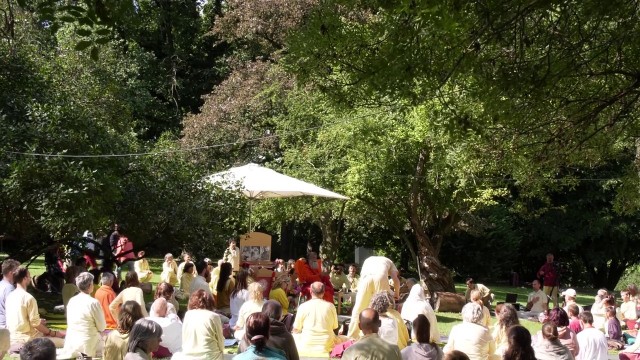
A guided meditation on heart-centered awareness and breath.
"Place your right hand gently on your heart. You will feel warmth. The breath originates from here; it is warm."
"The main thing is only to think in your heart. This is not easy. We think about other people, about where we are going, or what we can do."
A spiritual teacher guides participants through a meditation, instructing them to place a hand on the heart to feel its warmth as the source of the breath. The focus shifts between the heart and the navel, with an emphasis on inward attention, a straight posture, and a gentle breath. The teacher interjects with lighthearted, practical remarks to maintain a relaxed atmosphere while explaining the significance of these points from a yogic perspective regarding prāṇa.
Filming location: Strilky, Czech Republic
Mahaprabhuji felt that Devpuriji passed away
23:00 - 0:14 (74 min)
Anniversary of Sri Deep Narayan Bhagwan Mahaprabhuji's Mahasamadhi Evening satsang with Vishwaguruji from Strilky Ashram, Czech Republic. There are two calendars one according to the Sun and the other according to the Moon. Jyotish uses the Moon calendar. Today is the day of Mahaprabuji's mahasamadhi according to Sun calendar. It would be good to be married according to Jyotish. Mahaprabuji knew the exact time of Devpuriji's departure. The story about Devpuuriji wounded Mahaprabuji. Heaven and hell is not forever. Practising Bari Khatu Pranam and Sarva hitta asanas led by Swami Umapuri.
American
Australian