
European
Juga Juga Jivo - Gurupurnima 2016
0:25 - 0:31 (6 min)
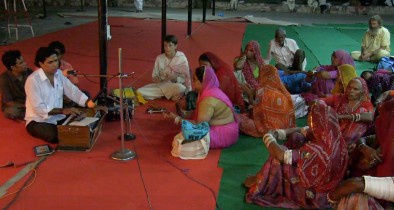
Worshipping Gurudev
0:35 - 1:17 (42 min)
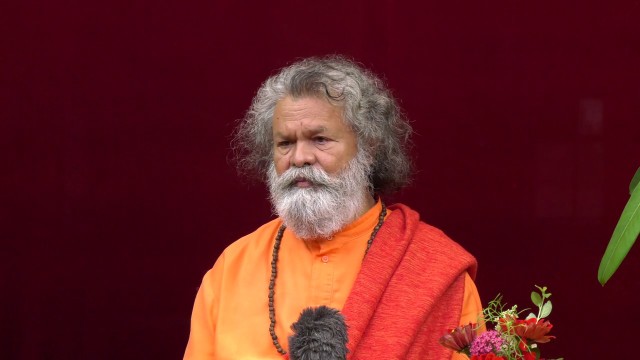
Evening satsang with Vishwaguruji from Strilky Ashram, Czech Republic. Sandhya means connected. When night and day meet we are connected to Gurudev or other Gods. We pray for Shakti, power. The first God is the Mother. Knowledge has no end. Mother Saraswati is the wife of Brahma and the Daughter also. Brahma's Daughter is knowledge. Explanation of the mantra "Guru Brahma, Guru Vishnu, Guru Devo Maheshwara...". We worship the holy feet of Gurudev.
What means Navratri
1:25 - 2:25 (60 min)

Evening satsang with Vishwaguruji from Jadan Ashram, Rajasthan, India. Navratri means the 9 nights of the Divine Mother. There should be great respect in the family towards the mother. Explanation of how to live a happy life, how to take care of the family. Shakti and Ancestors should be respected. Introduction of the Devi that should be worshipped on the third day of Navratri.
Webcast from Jadan
2:00 - 4:07 (127 min)
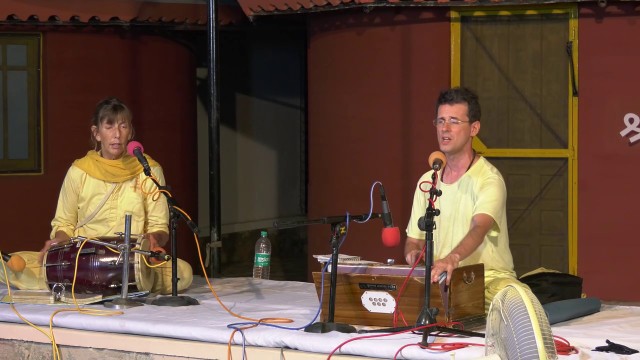
Gurupurnima program from Jadan, Rajasthan, India.
Interview with Vishwaguruji
2:30 - 2:54 (24 min)
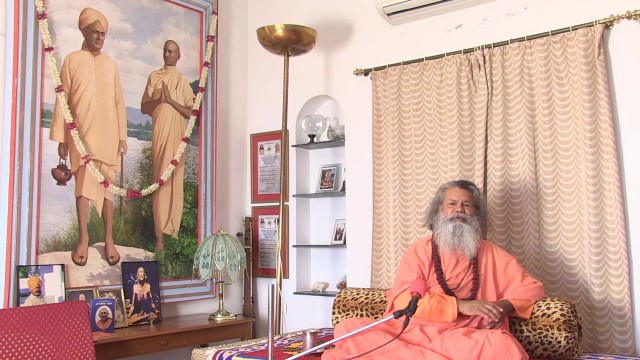
A live interview with His Holiness Vishwaguru Mahāmaṇḍaleśwar Paramahaṁsa Maheśvarānand Gurujī, founder of the "Yoga in Daily Life" system.
"It doesn’t matter if one is in a little village or a big city. It depends on the parents. When parents are full of love, harmony, and good education, and are very spiritual, they will always tell you what God is."
"Yoga is not only the physical body; it is more than that... Yoga is within human consciousness, in the human heart, in human humbleness, in a humble way of looking at everything."
The host, a disciple, introduces the guru's lineage before asking about his spiritual journey from childhood. Gurujī describes his upbringing, perpetual childlike purity, and his view of yoga. He discusses the ongoing construction of the O-Māśram monument, his first travels to Europe, and the essential guru-disciple relationship, emphasizing oneness and equal love for all.
Interview with Vishwaguruji
3:00 - 3:24 (24 min)
A live interview with His Holiness Vishwaguru Mahāmaṇḍaleśwar Paramahaṁsa Maheśvarānand Gurujī, founder of the "Yoga in Daily Life" system.
"It doesn’t matter if one is in a little village or a big city. It depends on the parents. When parents are full of love, harmony, and good education, and are very spiritual, they will always tell you what God is."
"Yoga is not only the physical body; it is more than that... Yoga is within human consciousness, in the human heart, in human humbleness, in a humble way of looking at everything."
The host, a disciple, introduces the guru's lineage before asking about his spiritual journey from childhood. Gurujī describes his upbringing, perpetual childlike purity, and his view of yoga. He discusses the ongoing construction of the O-Māśram monument, his first travels to Europe, and the essential guru-disciple relationship, emphasizing oneness and equal love for all.
Bhajan singing from Jadan Ashram
3:30 - 4:05 (35 min)
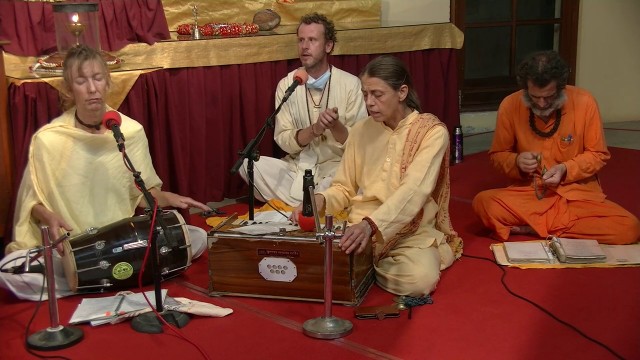
Evening Satsang with Vishwaguruji from Jadan Ashram, Rajasthan, India. Singing bhajans.
Bhajan Singing from Jadan
4:10 - 5:20 (70 min)
Evening satsang with Vishwaguruji from Jadan Ashram, Rajasthan, India.
Webcast from Jadan
5:00 - 6:49 (109 min)
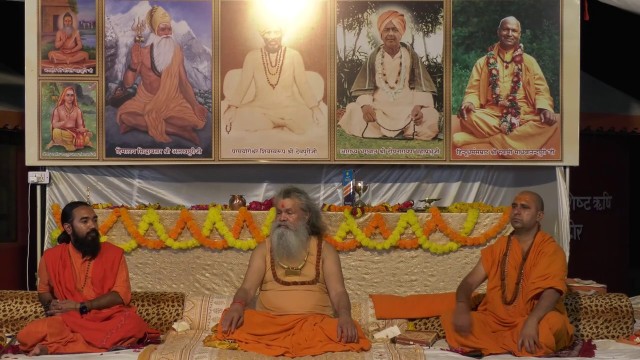
Gurupurnima program from Jadan, Rajasthan, India.
Bhajans with Swami Gajanandji
5:25 - 6:04 (39 min)
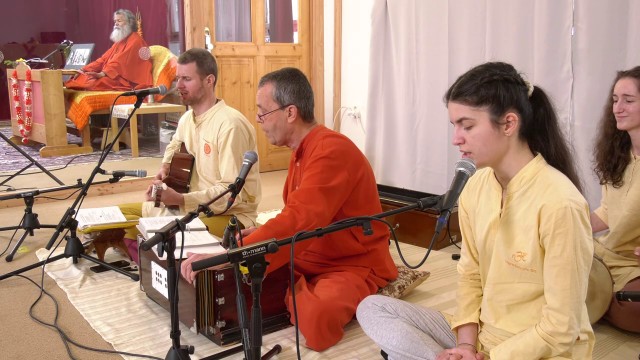
Morning satsang with Vishwaguruji from Strilky Ashram, Czech Republic.
Bhajans from Poprad
6:10 - 6:54 (44 min)
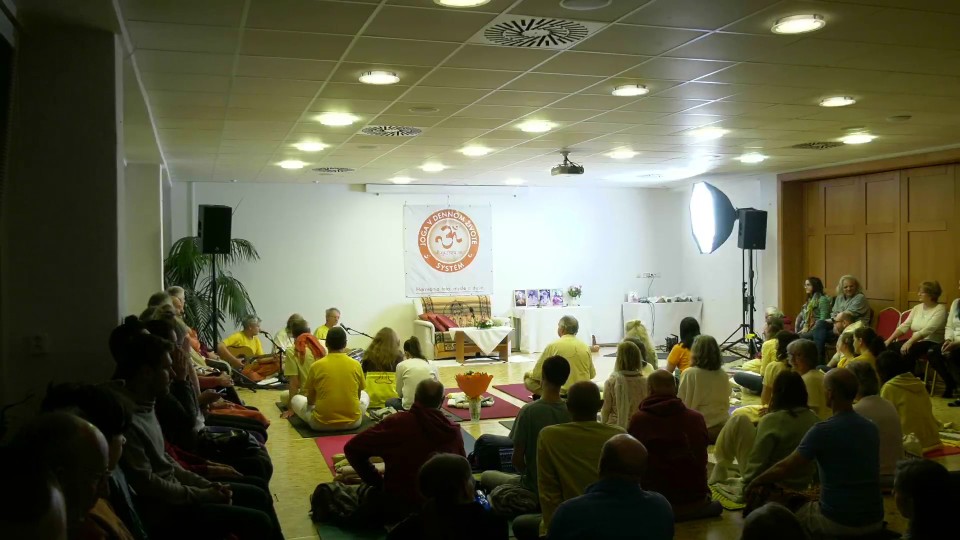
Bhajans from Tatra Hotel, Poprad, Slovakia.
Learning Sanyasa Suktam mantra
7:00 - 7:06 (6 min)
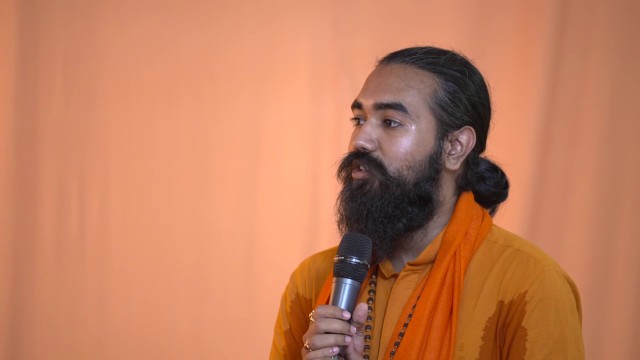
A celebration of International Yoga Day and the Yoga in Daily Life system.
"Very rare Mahāpuruṣas incarnate in this universe to help and guide humankind."
"We are all blessed to be part of this era and this beautiful system, Yoga in Daily Life."
A speaker addresses the community on International Yoga Day, honoring Vishwagurujī and his global dissemination of the Yoga in Daily Life system. The talk emphasizes the uniqueness of this era and the speaker expresses gratitude for Gurudev's guidance and blessings. The session concludes with a group recitation practice of a Sanskrit mantra.
Filming location: Strilky, Czech Republic
Body liberation and moksha
7:10 - 8:12 (62 min)
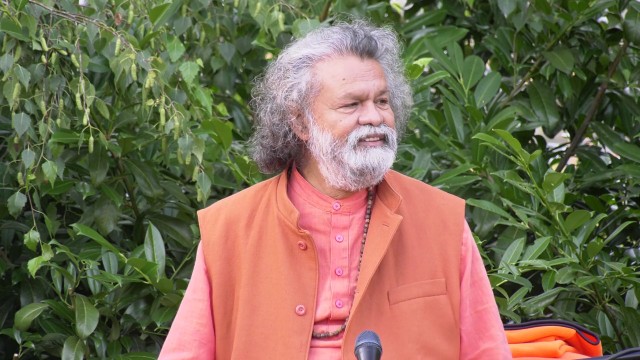
A satsang discourse on transcending body-mind duality through the five sheaths.
"Body and mind have no sense in it. And if you are saying body and mind, then both are wrong."
"We have to go: annamaya kośa, prāṇamaya kośa, manomaya kośa, vijñānamaya kośa, and ānandamaya kośa. Then we are only outside; it is in the body, but it is sending somewhere in different ways."
He argues that true yogic science requires progressing through the five koshas (sheaths) toward Anandamaya kosha and liberation, moving beyond the confusing duality of body and mind.
Filming location: Strilky, Czech Republic
All disciples are equal for the Guru
8:20 - 9:22 (62 min)
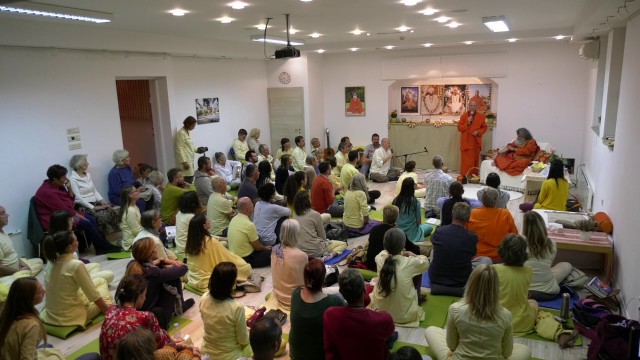
A spiritual gathering and discourse in Split, Croatia.
"Always, we should say, 'Yes, please come.'" and "Everything that we do to others, in fact, we are doing to ourselves."
The lecturer addresses a diverse group, expressing joy at the gathering and respect for all spiritual paths, notably the Hare Krishna movement. He shares parables, including one about a greedy dog losing its bread, to illustrate themes of non-greed, ethical conduct, and the karmic law that our actions return to us. A disciple then elaborates on the profound responsibility of handling donations and spiritual resources, sharing traditional stories about karma, accountability, and seeing the divine in all.
Filming location: Split, Croatia
Satsang from Wellington
9:30 - 10:54 (84 min)
Evening satsang with Vishwaguruji from Wellington Ashram, New Zealand.
Webcast from Jadan
10:00 - 10:30 (30 min)
Webcast from Jadan, Rajasthan, India.
The eternal journey of the Soul
11:00 - 11:56 (56 min)
Evening Satsang with Vishwaguruji from Martin, Slovakia. We should ask ourselves: Who am I? From where did I come? Where I am going? In order to have liberation, we need the blessing of the Guru. Only to have a title is nothing. Growing of the ego is a danger for the spiritual aspirant. Know thyself as the Atma. Every life is like a dream, it is your reality. There are three levels of consciousness.
Practice from Wellington with MM Vivekpuri
12:00 - 12:59 (59 min)

Wellington, New Zealand
We need Gurudev
13:05 - 13:59 (54 min)
A satsang discourse on the necessity of the guru and the goal of Advaita philosophy.
"The moment you begin to think you have already heard and know everything, in that moment your free fall begins."
"Understand from this that the guru is not the physical body. It is most important to understand that the guru is that Guru-Tattva, the element of the guru."
A speaker leads a satsang, emphasizing the eternal student's attitude and the critical role of the embodied spiritual master (Guru-Tattva) as the essential guide. Using stories and analogies—such as the matchbox with a diamond, the friend with a boat, and the river merging into the ocean—the talk explains the guru's function and explores the ultimate goal of yoga: to transcend the cycle of rebirth and realize the Advaita (non-dual) union of the individual self with the cosmic Self.
Filming location: Strilky, Czech Republic
Be happy and feel oneness
14:05 - 14:47 (42 min)
A New Year's reflection on human concepts, oneness, and inner peace.
"Where is the new year? The same sun, moon, and clouds remain, but humans try to make something again, to feel 'I am new.'"
"And when that oneness is realized, then there is nowhere to say 'this' or 'that.'... Everything is in our mental constructs."
The lecturer leads a satsang, questioning the human-made nature of the New Year and other divisions. He reflects on the eternal earth, the illusion of separation, and the conflicts between religions and individuals, urging everyone to realize fundamental oneness, be happy, and avoid making others angry. He uses metaphors like the ocean's surface versus its depths and concludes with travel plans for pilgrimage.
Filming location: Jadan, Rajasthan, India
Program from Vep -11
14:55 - 15:41 (46 min)
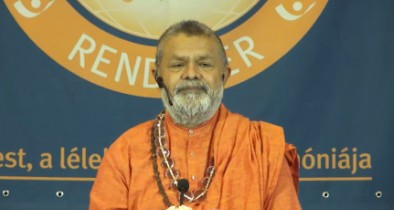
Evening satsang with Swamiji from Yoga Summer Seminar in Vep, Hungary.
The soul must go through all experience
15:45 - 17:40 (115 min)
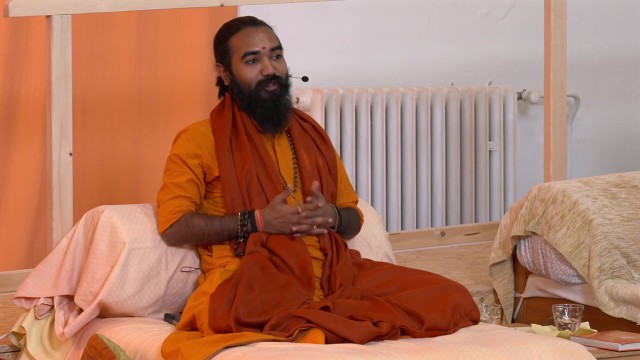
A morning satsang on spiritual practice, experience, and inner strength.
"In yoga, you have a guru who has knowledge, and not just knowledge, but experience and really knowing what is self-realization."
"Our duty is to preserve yoga, to keep that purity... we will practice something that has sense and the experience of thousands and thousands of years."
Swami Vivekpuri leads the discourse, emphasizing the need for joy in practice and contrasting belief with experiential knowledge gained through trust in the guru and scriptures. He explains the pitfalls of modern egoism and outlines a practical path to inner stability, starting with physical strength from asana, leading to mental focus and unwavering confidence. The talk includes stories, jokes, and ends with explanations of traditional mantras and rituals.
Filming location: Strilky, Czech Republic
The opening ceremony of the Om Ashram
17:45 - 18:28 (43 min)
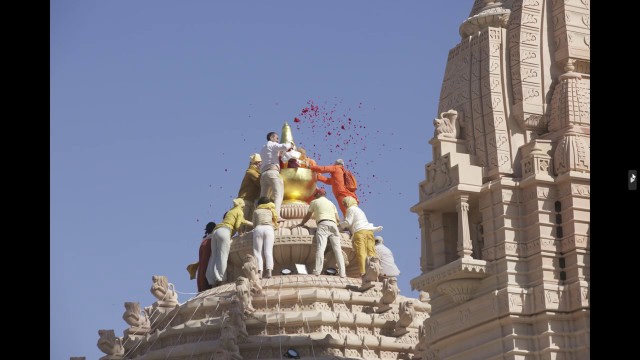
Evening satsang with Vishwaguruji from Strilky Ashram, Czech Republic. Picture presentation about the opening ceremony of the Om Ashram.
Monday is the day of Bhagwan Shiva
18:35 - 19:25 (50 min)
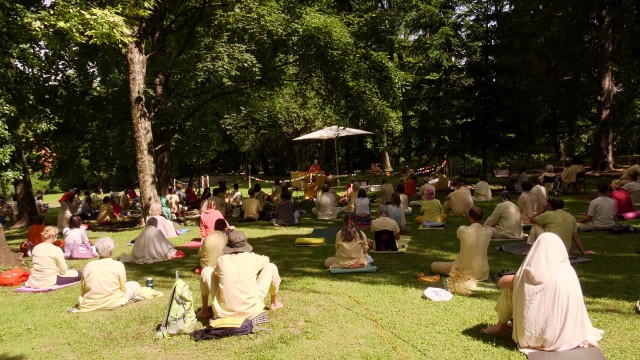
A spiritual discourse on the significance of Monday and the discipline of fasting.
"We worship Śiva on Monday. We call it Somavāra. When Monday coincides with the new moon after Pūrṇimā, it is considered a very auspicious constellation for the coming new year, heralding better times."
"Your economy will be better, yes? You will not buy fruits, bread, drinks, or anything. So three times a week, our economy will be good. See how much money you save nicely in one year."
A teacher addresses a gathering, explaining the astrological and spiritual importance of Monday (Somavāra) as a day dedicated to Lord Śiva and an auspicious time for fasting. He critiques the modern loss of religious discipline, comparing Hindu and Christian practices with the strict fasting observed in Islam. The talk blends spiritual reasoning with practical health and economic benefits, urging attendees, especially Kriyā Yoga practitioners, to adopt the discipline of fasting on Mondays.
Filming location: Strilky, Czech Republic
The value of Satsang
19:30 - 20:15 (45 min)
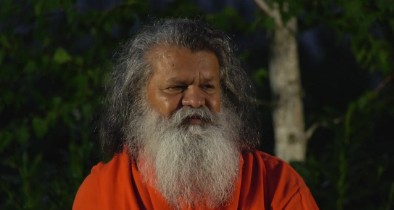
A spiritual discourse exploring the mantra "Hari Om" and sharing Puranic stories.
"Hari is the name of Bhagavān Viṣṇu. And Om, Om is Hari."
"72,000 years of sādhanā and one minute of satsaṅg... For one minute of satsaṅg, the whole earth raised up, and when it was 72,000 sādhanās, that was not moving."
The lecturer explains the divine essence of the "Hari Om" mantra, linking it to Vishnu and the primal sound of creation. He narrates the Puranic story of the earth's origin and the serpent Sheshanaga who supports it. The central teaching is conveyed through a parable where the sage Vishvamitra learns that one minute of true satsang (spiritual gathering) outweighs 72,000 years of solitary penance, highlighting the supreme power of devotion and community. The talk concludes with ethical exhortations for spiritual practice.
Filming location: Strilky, Czech Republic
All pilgrim places are at the lotus feet of Gurudev
20:20 - 21:07 (47 min)
Evening satsang with Vishwaguruji from Strilky Ashram, Czech Republic. The greetings of Mahamandaleshwar Vishwaguruji and Swami Avatarpuriji in the Ashram. Utilize every minute of being here at the seminar. The opening words of Swami Avatarpuriji. Don't waste time, be in the satsang. All pilgrim places are at the lotus feet of Gurudev. If we have His darshan we have nothing to worry about.
Guru is leading us to the enlightenment
21:15 - 22:43 (88 min)
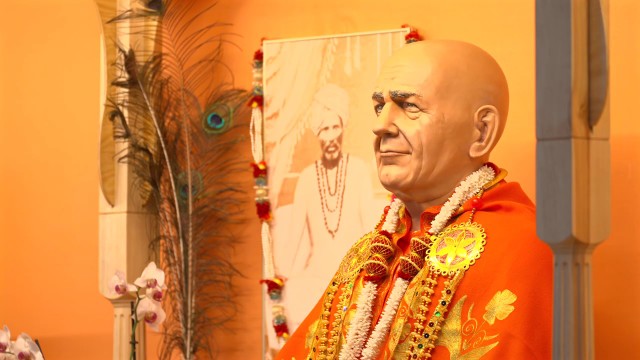
Evening satsang with Vishwaguruji from Strilky Ashram, Czech Republic. Lecture by Swami Avatarpuriji. We got samskaras already before we were born. The story of how the Son of Veda Vyas found his Guru, King Janaka, and finally reached the enlightenment. The story of how King Janaka found his Guru, Sage Ashtavakra. We also long for the enlightenment. The qualities of a people who have a true devotion to the Guru.
Tuma Sab Ke Dina Dayala
22:00 - 22:23 (23 min)
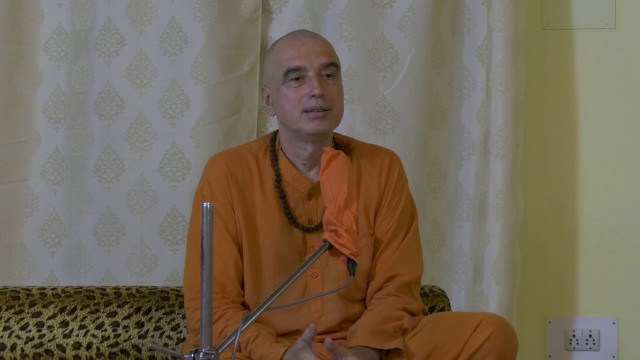
A spiritual discourse explaining a devotional bhajan and recounting a temple inauguration.
"O Śiva, O Devpurījī, did you forget about me in your bliss?" and "Śaraṇa Bali Hari means I am completely devoted to you."
The lecturer explains the meaning of a bhajan composed by Mahāprabhujī for his guru, Devpurījī, interpreting its lines as a devotee's heartfelt plea and a lesson in absolute surrender. He connects this to a recent journey to inaugurate the first statues of Devpurījī and Kṛṣṇānandajī Mahārāj at a disciple's ashram, describing the ceremony and reflecting on the spiritual lineage.
Filming location: Jadan, Rajasthan, India
Sri SatGuru Chalisa
22:45 - 22:58 (13 min)
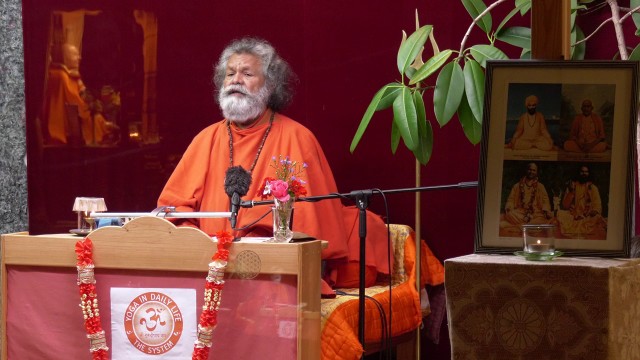
A commentary and translation of the Ātāśrī Satguru Chalīsā, a devotional hymn.
"You are the creator for everyone. You are present outside and inside. You are the Supreme Divine incarnate."
"Those who will read the Satguru Chalīsā... shall concentrate, meditate, and chant His name. Janam maraṇa bhava dukha mithi... You will be free from the fear of birth and death."
A speaker provides a line-by-line English translation and explanation of the Satguru Chalīsā's introductory poem and first verses. He describes the Guru as the omnipresent creator and protector, and explains the benefits of reciting the hymn, which include liberation from the cycle of birth and death, the destruction of sins, and the attainment of spiritual perfection and wishes.
Filming location: Strilky, Czech Republic
Around the world - YIDL at he Sziget Festival Budapest 2011
23:00 - 23:05 (5 min)
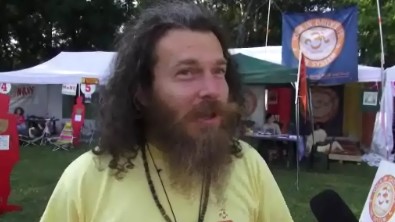
A promotional video about a yoga program at a major European music festival.
"For eleven years now, yoga has been our daily practice and system for showing young festival-goers how wonderful it is to relax deeply through yoga, without any side effects."
"We feel that the door of āśrama must not only be opened by the system of rites... but we must also go out to various community spaces and events."
A representative describes the 11-year-old Yogasātar tent at the Sziget Festival, which offers short, tailored yoga sessions to introduce festival-goers to practice, relaxation, and meditation. He explains the program's adaptability, its emphasis on authentic tradition over commercialized "power yoga," and its role as a spiritual outreach that has led some visitors to become disciples. He notes the surprising ability of practitioners to achieve deep relaxation and sensory withdrawal despite the loud festival environment.
Filming location: Budapest, Hungary
Around the world - YIDL at the Budapest Carfree Day
23:10 - 23:13 (3 min)

A presentation about a yoga organization's participation in Budapest's Car-Free Day.
"We have a yoga center at 121 Baross Street, 8th floor. In the district, this is our guru āśrama, our first center in Hungary."
"It’s a very interesting experience that you can practice yoga even in such a place, and nothing really disturbs you. On the contrary, the curious onlookers inspire us greatly in our practice."
A representative of the Yoga in Daily Life system describes their annual participation in the event on car-free Andrássy Avenue. She explains the organization's origins under Paramahaṁsavāmī Maheśvarānanda and highlights their long-standing Budapest center. The talk emphasizes the unique experience of practicing yoga in the transformed urban space and invites the public to join.
Filming location: Budapest, Hungary
Around the world - YIDL at the Budapest Vegetarian Festival 2011
23:20 - 23:25 (5 min)

A presentation on the Yoga in Everyday Life system at a Vegetarian Festival.
"Among these, the foremost is to maintain a vegetarian lifestyle."
"Our first aim is to gain good health. The major part of our illnesses... originates from our stomach."
A representative describes their organization's long-standing participation in the festival, highlighting yoga demonstrations and classes accessible to all. This year's focus was explaining the Falahārī diet, a concept from Swami Maheśvarānanda. The talk connects vegetarianism with physical yoga, prāṇāyāma, and relaxation, framing the practice as a holistic path to health and self-discovery.
Filming location: Budapest, Hungary
What is destiny?
23:30 - 0:06 (36 min)
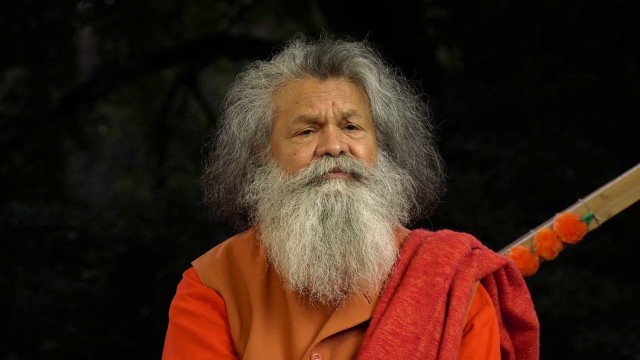
A spiritual discourse exploring the concept of kiśmat (fate/luck) and the value of satsaṅg (spiritual gathering).
"Kiśmat is more like a Muslim word, but it is very nice, very good... Kismet is so vast you cannot think."
"In satsaṅg, they had one guru... Satsaṅg is like this. And ku-saṅg is many things: drinking, going, cleaning, mind."
The speaker delivers an informal talk, weaving together observations on prayer across religions, anecdotes about marriage and village life, and a parable about two boys—one who attends a cinema and one who attends satsaṅg—to illustrate the subtle and protective nature of divine fortune (kiśmat). He emphasizes that true good fortune is aligned with spiritual company and devotion, not merely material gain.
Filming location: Strilky, Czech Republic
American
Australian