
European
What is destiny?
0:15 - 0:51 (36 min)
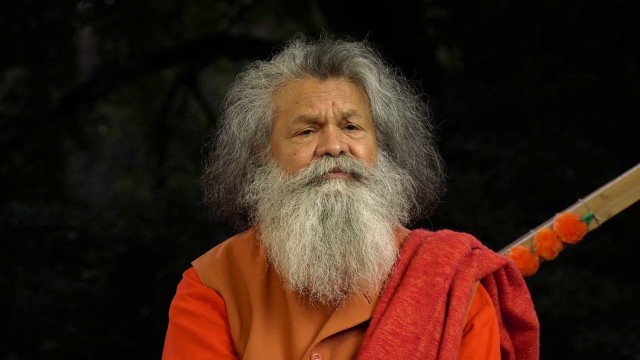
A spiritual discourse exploring the concept of kiśmat (fate/luck) and the value of satsaṅg (spiritual gathering).
"Kiśmat is more like a Muslim word, but it is very nice, very good... Kismet is so vast you cannot think."
"In satsaṅg, they had one guru... Satsaṅg is like this. And ku-saṅg is many things: drinking, going, cleaning, mind."
The speaker delivers an informal talk, weaving together observations on prayer across religions, anecdotes about marriage and village life, and a parable about two boys—one who attends a cinema and one who attends satsaṅg—to illustrate the subtle and protective nature of divine fortune (kiśmat). He emphasizes that true good fortune is aligned with spiritual company and devotion, not merely material gain.
Filming location: Strilky, Czech Republic
Our heart is very great
0:55 - 1:28 (33 min)
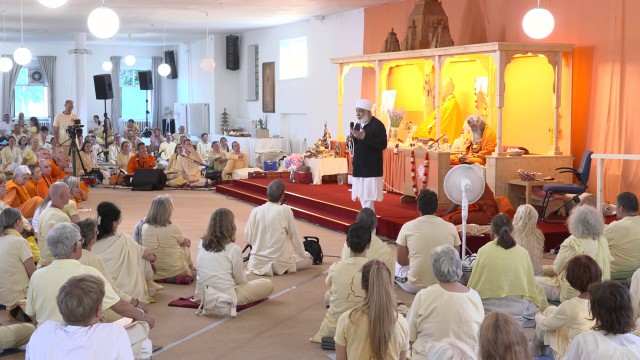
A satsang discourse on the universal sound of Om and the spiritual practice of surrender.
"In India, a name changes with region. In North India, you have Rāma. In Middle India, it becomes Rāma. In South India, it becomes Rāmaṇ."
"The easiest option is to let go, put it down, and allow the mind to become peaceful. The happiest thing is simply to let it be, to release it calmly and let it flow."
A speaker first explains the universality of Om, linking it to the words 'Amen' and 'Amin', and discusses his work promoting Indian traditional sciences in European parliaments. Swami Maheshvaranand then shares a teaching story about a restless monkey to illustrate how surrendering thoughts leads to peace, emphasizing meditation and devotion to the Guru.
Filming location: Strilky, Czech Republic
Be happy and feel oneness
1:35 - 2:17 (42 min)
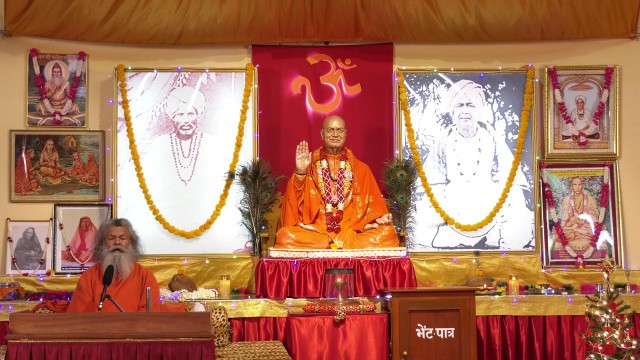
A New Year's reflection on human concepts, oneness, and inner peace.
"Where is the new year? The same sun, moon, and clouds remain, but humans try to make something again, to feel 'I am new.'"
"And when that oneness is realized, then there is nowhere to say 'this' or 'that.'... Everything is in our mental constructs."
The lecturer leads a satsang, questioning the human-made nature of the New Year and other divisions. He reflects on the eternal earth, the illusion of separation, and the conflicts between religions and individuals, urging everyone to realize fundamental oneness, be happy, and avoid making others angry. He uses metaphors like the ocean's surface versus its depths and concludes with travel plans for pilgrimage.
Filming location: Jadan, Rajasthan, India
The value of Satsang
2:25 - 3:10 (45 min)
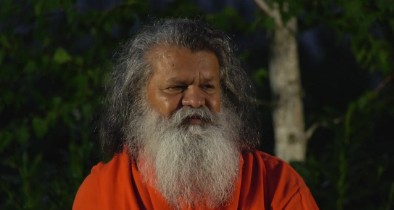
A spiritual discourse exploring the mantra "Hari Om" and sharing Puranic stories.
"Hari is the name of Bhagavān Viṣṇu. And Om, Om is Hari."
"72,000 years of sādhanā and one minute of satsaṅg... For one minute of satsaṅg, the whole earth raised up, and when it was 72,000 sādhanās, that was not moving."
The lecturer explains the divine essence of the "Hari Om" mantra, linking it to Vishnu and the primal sound of creation. He narrates the Puranic story of the earth's origin and the serpent Sheshanaga who supports it. The central teaching is conveyed through a parable where the sage Vishvamitra learns that one minute of true satsang (spiritual gathering) outweighs 72,000 years of solitary penance, highlighting the supreme power of devotion and community. The talk concludes with ethical exhortations for spiritual practice.
Filming location: Strilky, Czech Republic
Gurupurnima Blessing
3:15 - 3:22 (7 min)
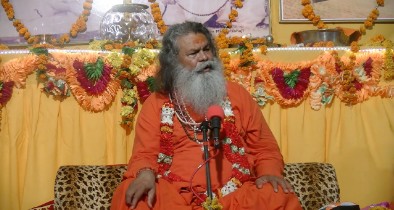
A spiritual discourse on the meaning of Guru Pūrṇimā, extending into social commentary on home cooking.
"'Gu' is darkness, and 'Ru' is the light. It is that light which dispels darkness."
"In this modern world, we cannot survive; we cannot do anything without a Guru. But 'Guru' does not mean only a sādhu or a ṛṣi. It is everything that gives you knowledge: how to drive a car... how to cook."
The speaker explains the traditional meaning of Guru Pūrṇimā as the journey from darkness to light. He then expands the definition of 'Guru' to include any source of practical knowledge, using the example of cooking to argue that modern life has lost essential skills. He criticizes the trend of eating restaurant food, praises the divinity of a mother's home-cooked food, and urges all families to cook at home for health and economy.
Filming location: Jadan, Rajasthan, India
Bhajan evening in the Jadan Ashram
3:30 - 4:09 (39 min)
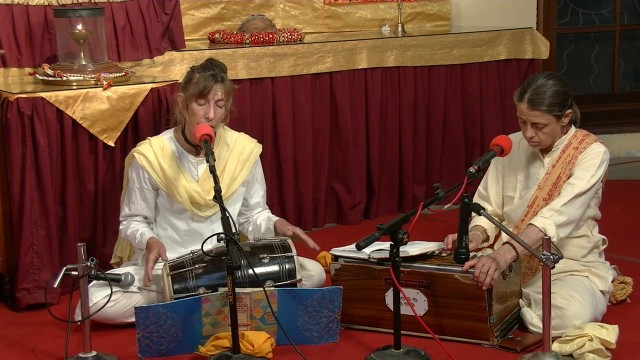
Evening satsang from Jadan Ashram, Rajasthan, India. Bhajan singing.
Bhajan singing in the Jadan Ashram
4:15 - 5:33 (78 min)
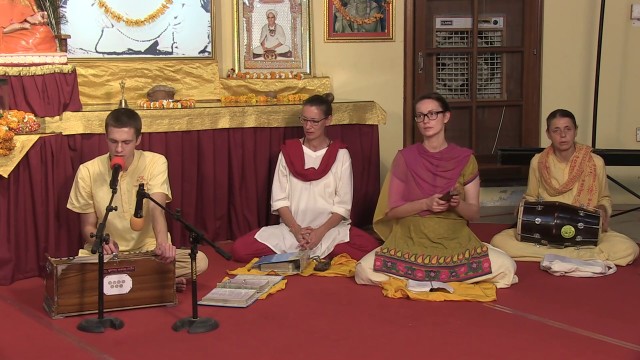
Evening satsang with Vishwaguruji from Jadan Ashram, Rajasthan, India. Bhajan singing evening.
Bhajan evening in Jadan Ashram
5:40 - 6:02 (22 min)
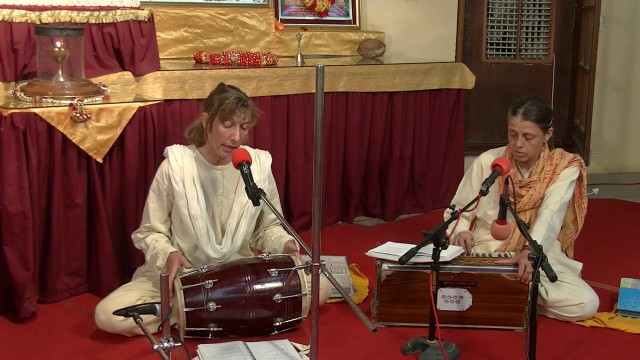
Evening satsang with Vishwaguruji from Jadan Ashram, Rajasthan, India. Bhajan singing.
Bhajan evening from Jadan Ashram
6:10 - 6:47 (37 min)
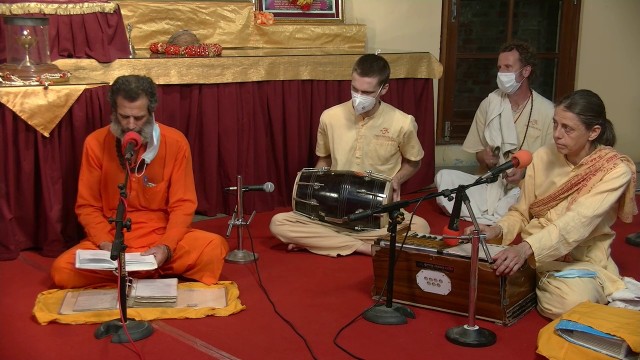
Evening satsang with Vishwaguruji from Jadan Ashram, Rajasthan, India. Bhajan singing.
The Soul and the Guru
6:55 - 7:38 (43 min)
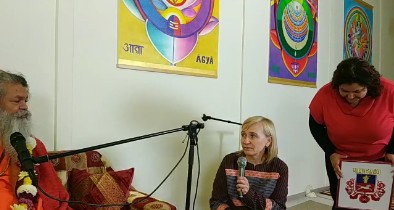
Evening satsang with Vishwaguruji from Cherkasy Ashram, Ukraine. We have many duties in the world. It's important to give the children culture and a good education. They should not go into bad society, they should become wise. One day the soul will leave behind the physical body. The karma and destiny will go with us. We are searching for the Master today. You can learn from different masters but can have only one Guru. Do not expect miracles.
Guru is Brahma
7:45 - 8:50 (65 min)
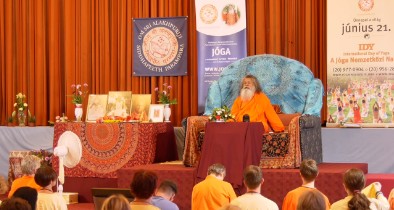
A spiritual discourse on the value of singular focus and devotion to the guru.
"If we have, and all of us have, a lot of pictures, we are something like these ten-year-old little guys who try to collect all Pokémons. Our mantra is 'Collect all.'"
"Therefore, it is said: 'Dhyāna mūlaṁ guru mūrtiḥ, pūjā mūlaṁ guru padam, mantra mūlaṁ guru vākyaṁ, mokṣa mūlaṁ guru kṛpā.'"
The speaker, Swami Vivek Puri, shares reflections from a satsang, emphasizing the spiritual power of focusing on one mantra and one form of the guru. He argues that collecting too many spiritual images dilutes their value and hinders clear visualization at critical moments like death. The talk expands into the profound reverence for the guru's feet (caraṇāmṛta), illustrated with stories from the tradition and the recent awarding of the Yoga Ratna to Vishva Guruji in London.
Filming location: Vép, Hungary
What Is The Guru
8:55 - 9:55 (60 min)
A morning satsang discourse on Guru's Day (Guruvāra), exploring sacred geography, spiritual practice, and the nature of the eternal Guru.
"This earth is our Karma Bhūmi, where we do our karmas."
"Gurudev is... 'Brahmanandam paramsukhadam kevalam jnanamurti'—the bliss of Brahman, the highest happiness, the very embodiment of wisdom."
The lecturer addresses the global gathering, beginning with the significance of Thursday, the day of Jupiter (Bṛhaspati), the Guru of the Devas. He explains the concepts of Janmabhūmi (birthplace), Karmabhūmi (place of work), Dharmabhūmi (land of spiritual duty), and Mokṣabhūmi, emphasizing Earth's unique role for spiritual development. He critiques modern materialism and the misappropriation of spiritual knowledge, urging honest work and protection of spiritual heritage. Through a story of a farmer's evolving perception of his Guru, he illustrates how sincere practice transforms one's vision, leading to the realization of the Guru as the formless, all-pervading Brahman—unmoving, spotless, and beyond duality.
Filming location: Vép, Hungary
Divine knowledge
10:00 - 11:50 (110 min)
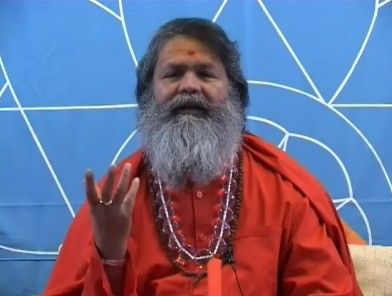
Johannesburg, South Africa in September 2004. Followed by "YIDL Lineage", "Unity in diversity". "Kundalini and Chakras". Finally follows a Lecture about Yoga Nidra followed by Awakening of the Healing powers.
Practice from Auckland with MM Vivekpuri
12:00 - 13:00 (60 min)
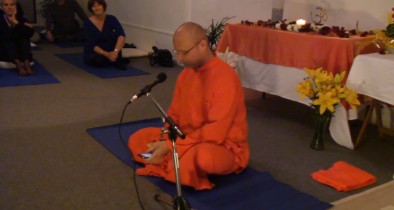
Auckland, New Zealand
What Guru Purnima means?
13:05 - 13:55 (50 min)
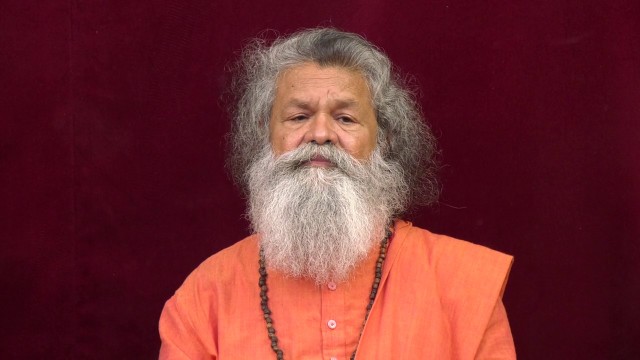
A discourse on the essence of Guru Pūrṇimā and the guru-disciple tradition.
"Gurur Brahmā, Gurur Viṣṇu, Gurur Devo Maheśvara, Gurur Sākṣāt Parabrahmā."
"A true Satguru will not say, 'I am the Satguru.' The day a Satguru says that, it means he does not truly know."
The lecturer addresses a global audience on the full moon day of Guru Pūrṇimā. He explores the profound meaning of the guru, explaining how the principle of the teacher exists in many forms before describing the supreme Satguru. He shares personal instructions from his own guru, Holī Gurujī, about the duty to serve all, and discusses the life of a sannyāsī, the guru paramparā (lineage), and the symbolism of the full moon.
Filming location: Strilky, Czech Republic
The Practice and Power of Trāṭaka
14:00 - 14:52 (52 min)
An evening satsang on the theory and practice of Trāṭaka, or yogic gazing.
"Trāṭaka means gazing on one point. The best object is the flame from a lamp of good ghee from a cow—not from buffaloes, goats, or sheep."
"While practicing Trāṭaka, if you practice every day, morning and evening, without interruption for twelve years, you will attain a siddhi... a very pure, very kind, and merciful look in your eyes."
Swami Prakashananda Saraswati provides detailed instructions for the cleansing technique of Trāṭaka. He explains suitable objects for gazing, such as a pure ghee flame or a black dot, and warns against using a mirror. He describes the profound benefits, including purification of mind, improved speech, and the awakening of divine energy and intuition, while stressing the necessity of guidance from a properly trained teacher and the use of a Guru Mantra. The talk includes a cautionary story about two monks to illustrate the importance of inner purity and forgiveness.
Filming location: Australia
The day I met Holy Guruji
15:00 - 15:55 (55 min)
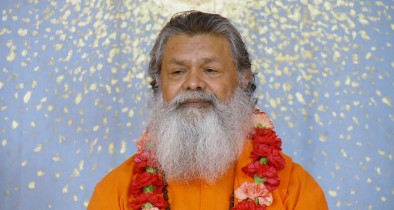
A spiritual discourse reflecting on divine descent, the guru-disciple relationship, and personal history.
"Every soul, when descending from the astral world to this mortal world, must be chosen by some higher hierarchies... You are not elected. You are selected, so such a divine great master comes to this world."
"The master is the master, and we are the raw rock. We have to go through all these situations. He will make you position, give you position on the altar, in the temple."
Swami Maheshwarananda (Swamiji) speaks intimately about the nature of a Satguru's incarnation, selected by divine will rather than personal karma. He shares the story of his own spiritual calling, describing his first encounter with his Guru, Swami Madhavananda, as a child and his determined journey to enter the ashram. He weaves in teachings on karma yoga, liberation, and the transformative, often arduous process of the disciple under the master's guidance, using the metaphor of a sculptor shaping a raw stone into a sacred statue.
Filming location: Strilky, Czech Republic
Great Saints set an example
16:00 - 17:00 (60 min)
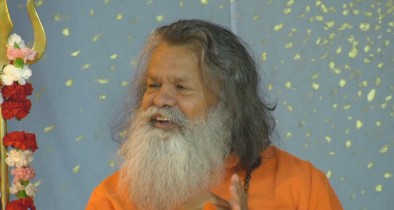
A spiritual discourse on dharma, sādhanā, and the essence of scripture.
"Dharma means rightness—the dharma of humans, animals, nature, seasons, husband, wife, children, friends, and neighbors. It is not about worshipping separate gods."
"The essence of all these scriptures is contained in just two words: 'Śuk diyā śuk hot hai, aur duk diyā duk hoī.' If you give pleasure to others, you will receive pleasure. If you give trouble to others, you will receive trouble."
Swami Satyāśāntānanda delivers a teaching, contrasting superficial yoga techniques with the higher path of sādhanā. He defines true dharma as universal righteousness beyond religious division, emphasizing satsaṅg and the study of saints' lives. Using parables and references to historical figures—from Jesus and Guru Gobind Singh's sons to a self-sacrificing ṛṣi—he illustrates the power of commitment to dharma and the inner study of the self (svādhyāya).
Filming location: Strilky, Czech Republic
Glory Of Gurudev
17:05 - 17:52 (47 min)
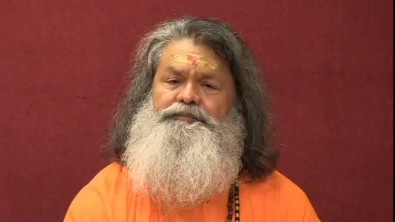
Satsang from Vienna. On occasion of Gurupurnima celebration, Guru Stuti and Swast vachan mantras are chanted. All the mantras of Swasti vachan pray for the well being of the world and exhort that peace should prevail upon the earth and the Universe. Guru Stuti is a hymn, addressed to Divinity, to the divine teacher. Gurupurnima is that tradition since Vedic times, for honoring, praising and welcoming the spiritual teacher, highlighting on that day the devotion and thankfulness to the Guru.
We are here to learn more
18:00 - 18:20 (20 min)
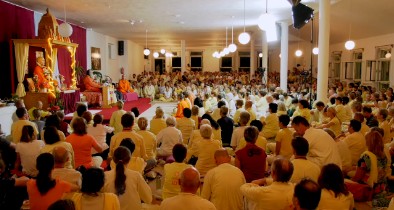
An introductory welcome and opening talk for a spiritual gathering featuring guest speaker Dr. Gulabji Kothari.
"Gulābjī will be with us for a few days and will perhaps give one talk a day, where you may also ask questions."
"Yoga is the science for humans, not merely āsanas and prāṇāyāma, but something beyond."
Swami Maheshwarananda welcomes attendees and honored guest Dr. Gulabji Kothari, a Vedic scholar, to the program. He introduces other visiting swamis and teachers, emphasizing the global reach of Yoga in Daily Life. The core theme is the human intellect's need for spiritual teaching and the deeper science of yoga for realizing the soul. Dr. Kothari gives brief remarks, expressing happiness to be in the Czech Republic and previewing the next day's topic on the body, karma, and the selfless transformation of the individual.
Filming location: Strilky, Czech Republic
Guru Mahima
18:25 - 19:00 (35 min)
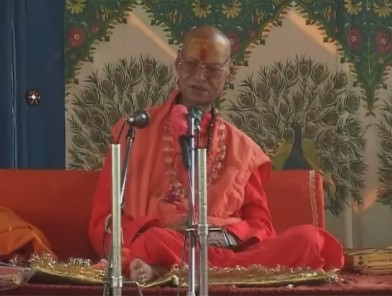
Satsang on the occasion of Gurupurnima in Jadan, India given by His Holiness Sri Swami Madhavananda Puriji.
Follow the Guruvakyas and practice
19:05 - 20:03 (58 min)
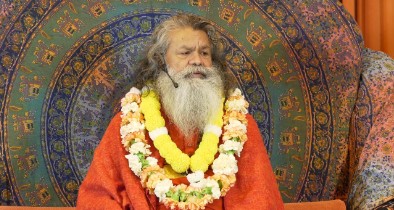
A spiritual discourse on the importance of consistent practice and good company.
"You were listening to what they were singing. It was beautiful. We are all on that path." and "If you are not practicing, you will not have success."
Swami Ji addresses a gathering after an evening of bhajans. He emphasizes that spiritual development comes from regular practice (sādhanā) and the company one keeps, using the proverb Jaisā kare saṅg, vaisā lāge raṅg. He shares personal anecdotes of his early morning practices with his Guru and warns against neglecting discipline, comparing it to medical treatments that only suppress illness if not fully addressed. The talk covers themes of karma, the human lifespan, and the necessity of following the Guru's guidance.
Filming location: Vép, Hungary
We should respect Time
20:10 - 20:41 (31 min)
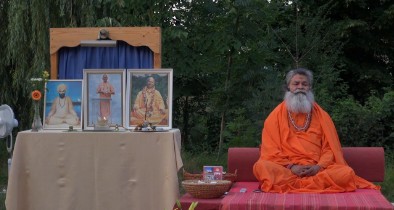
Evening satsang with Vishwaguruji from Vep, Hungary. The river Alakhnand flows in the Himalaya and connects us with the Supreme. We should respect the Time which was given us to realize our aim. Time doesn’t wait for us. Satsang and improvement in the practice will help. Concentrate on your development instead of saying bad words.
Guru Tattva
20:45 - 21:45 (60 min)
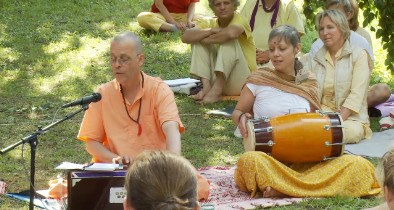
A satsang discourse on the nature of the soul and the Guru principle.
"Śrī Guru Ātmā. Śrī means happiness... That Ātmā is Paramātmā."
"Therefore, Ahiṃsā is such a beautiful word... Therefore, sin exists where there is violence."
Swami Avatarpuri gives a morning talk exploring the oneness of the ātmā (soul) and the essence of Guru Tattva. He explains the Vedic understanding of titles, contrasts the qualities of a Mahātmā with a Pāpātmā, and describes the karmic consequences of violence and ignorance. The discourse weaves philosophy with illustrative stories and concludes with the recitation of a sacred prayer.
Filming location: Strilky, Czech Republic
Guru Purnima 2015
21:50 - 21:53 (3 min)
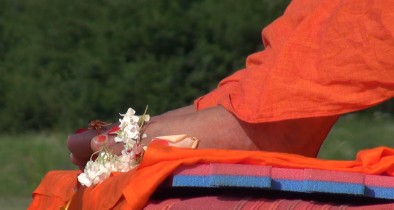
Summary of morning program on the occasion of Gurupurnima 2015 in Vep, Hungary.
Guru is here for the whole world
22:00 - 22:52 (52 min)
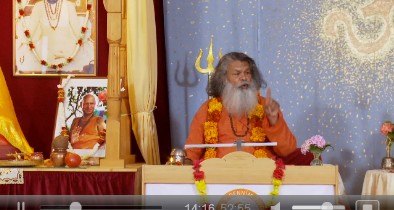
Satsang with Vishwaguruji, Summer Retreat in Strilky Ashram, Czech Republic. Social festivals are observed to maintain and protect society. Every human needs respect, understanding and kindness, regardless the culture. Guru is not only part of the Indian culture. According to the guru principle there is the leader for every creature. It is not the body of the Guru, but the Light of Knowledge.
Do not change your Gurudev
23:00 - 23:32 (32 min)
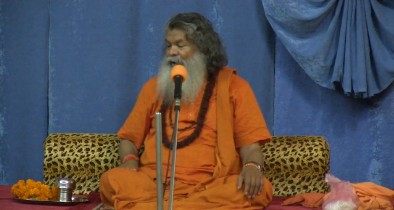
An evening satsang on the necessity of the Guru's grace for liberation.
"Ultimately, the door is opened by the Satguru Dev. It does not matter what you do... But finally, what arrives is solely the Guru's grace: Guru Kṛpāhi Kevalam."
"Therefore, it is said, 'Mokṣa Mūlam Guru Kṛpā.'... if you want to attain mokṣa... then surrender to only the one."
A spiritual teacher delivers a discourse emphasizing that all spiritual practices are secondary to the Guru's grace for achieving liberation. Using stories of Krishna, Paramahaṁsa Rāmakṛṣṇa, and the saint Mīrā Bāī, he illustrates the need for complete surrender to one's master, like a child to a parent, as the sole path to true knowledge and mokṣa.
Filming location: Jadan, Rajasthan, India
Love is life
23:40 - 0:20 (40 min)
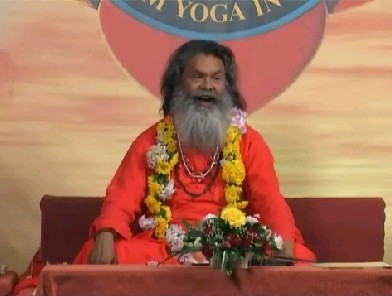
Satsang from Vep, Hungary
American
Australian