
European
American
The truth is tapas
0:05 - 1:11 (66 min)
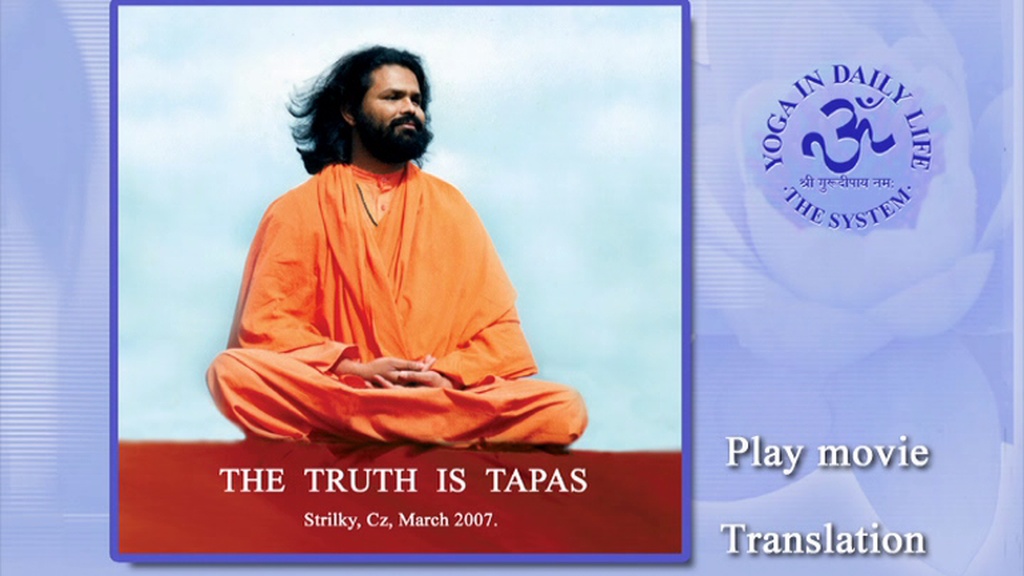
A spiritual discourse reflecting on the Kumbh Mela and warning against false spiritual powers.
"If you bathe during that constellation, the nectar still has an effect on you—meaning it cleans your karmas and blesses you with immortality."
"There is no austerity more than truth. To follow the truth is the biggest austerity, tapasyā—and no greater sin than to lie."
Swami Avatarpuri begins by describing his profound experience at the Kumbh Mela in Prayagraj, taking a sacred bath for all devotees. He then shifts to a cautionary theme, recounting stories of Holy Guruji exposing fraudulent fortune tellers and so-called healers. He warns devotees against those who claim siddhis (powers) like seeing auras or predicting futures, arguing these are obstacles to true spiritual progress. He advises focusing on genuine devotion and practice, sharing a personal story where Mahaprabhuji counseled him to be like a steadfast banyan tree, free from expectation.
Filming locations: Strelky Ashram, Czech Republic.
DVD 326
Part 1: The Awakening of Consciousness: Kuṇḍalinī and Cakras
1:15 - 3:09 (114 min)
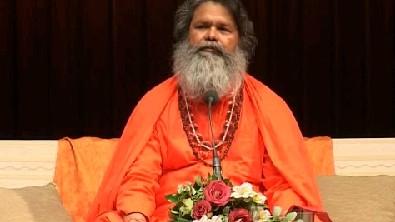
A lecture on Kundalini, chakras, and the science of yoga.
"Yoga is not a religion, it is not a philosophy, it is not a dogma, but it is the eternal principle in this universe, like the cosmic consciousness itself."
"The awakening of the Kuṇḍalinī is a divine process; you don't feel it as a physical sensation. You feel happy, as if in the lap of the mother."
Swami Maheshwarananda delivers an extensive discourse on the awakening of consciousness through Kundalini and the chakra system. He explains yogic anatomy, including the 72,000 nāḍīs (energy channels) and the major chakras, describing their roles in physical, mental, and spiritual development. The talk covers the interplay of mind, intellect, and subconscious impressions, the importance of dharma, and the ultimate goal of uniting individual consciousness with the Cosmic Consciousness.
Filming location: Zagreb, Croatia
Nothing belongs to you
3:10 - 3:28 (18 min)
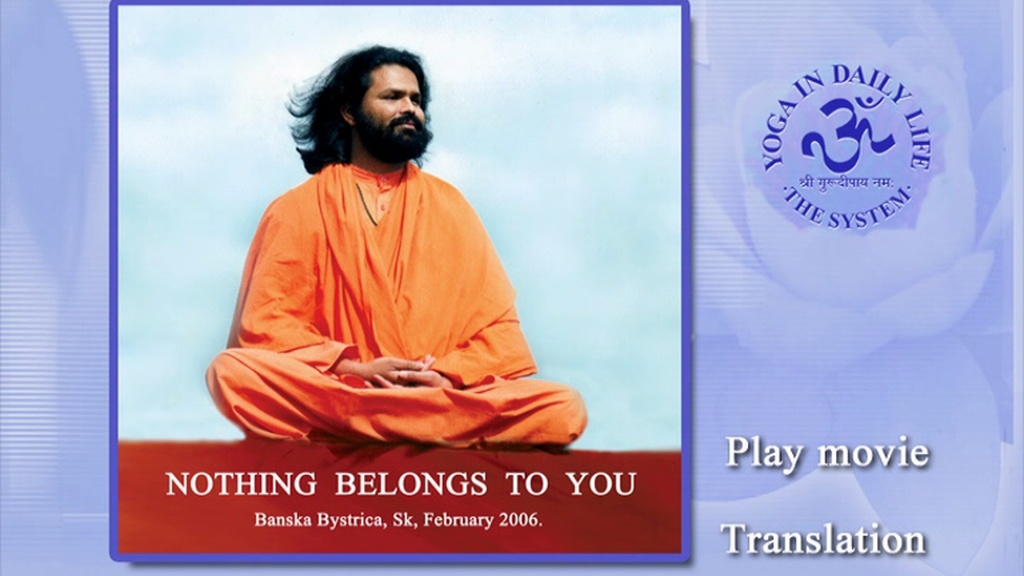
A spiritual discourse addressing grief and attachment through the lens of yoga philosophy.
"Nothing exists forever, and nothing belongs to you."
"Therefore, it is the greatest stupidity to be sad if someone left you... Say, 'God, thank you that this burden is gone.'"
In response to a question about depression from a friend's departure, the teacher expounds on the core principle of impermanence and non-possession. He illustrates the concept with references to past interactions under communism and a lengthy parable about a farmer dreaming of an entire life, using it to question the basis for grief in a transient reality. The central teaching is to find stability in the singular reality of the Self or God, as all worldly relationships are temporary.
Filming location: Banska Bystrica, Sk.
DVD 242
The 2nd Sri Swami Maheshwarananda Festival (2/5)
3:30 - 4:38 (68 min)
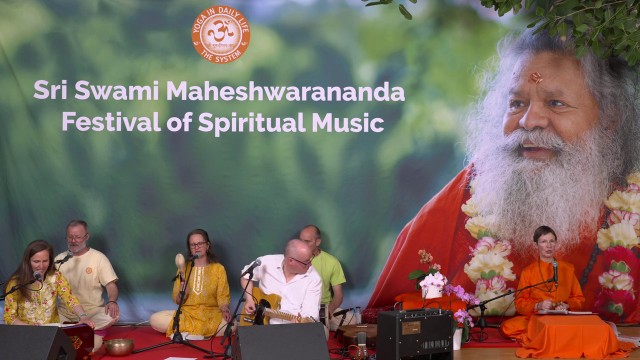
The 2nd Sri Swami Maheshwarananda Festival from Villach, Austria.
The 2nd Sri Swami Maheshwarananda Festival(5/5)
4:45 - 5:21 (36 min)
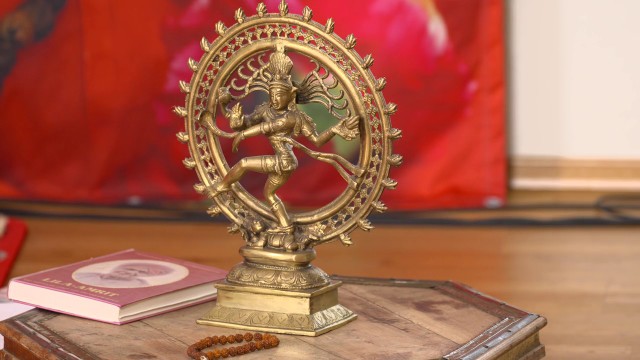
Welcome to the 2nd Sri Swami Maheshwarananda Festival of Spiritual Music from YIDL Ashram in Villach, Austria.
The 2nd Sri Swami Maheshwarananda Festival (3/5)
5:25 - 7:13 (108 min)
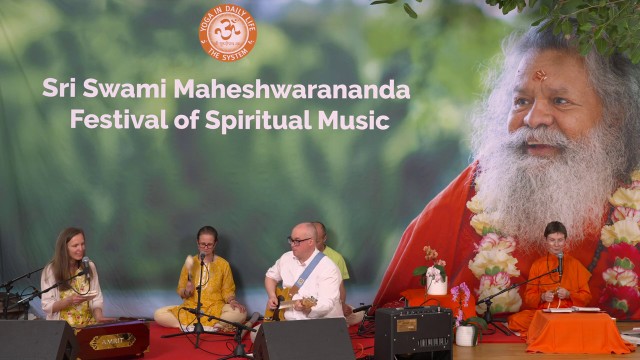
The 2nd Sri Swami Maheshwarananda Festival from Villach, Austria.
Australian
The Sole Necessity of Guru's Grace
0:35 - 1:22 (47 min)
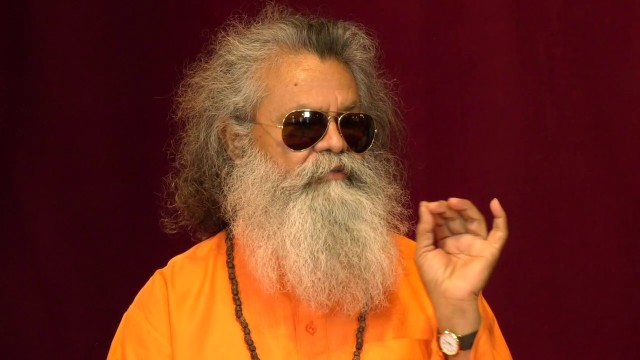
A spiritual discourse on the absolute necessity of the Guru's grace, illustrated with parables and observations on life.
"Without the grace of the Guru, nothing can be. We may think we can do without it and believe we are okay, but that is not how it is."
"Guru kṛpā hi kevalam. Guru’s grace... When Gurudeva’s blessing is there, then everything is possible."
The speaker, likely a swami, delivers a satsang emphasizing that all spiritual progress and worldly harmony depend solely on the Guru's grace. He expands the concept of Guru to include parents and the supportive community of village life, using anecdotes about street dogs and a detailed parable about a devoted disciple, his wife, and a test of sacrifice to illustrate the depth of true devotion and the singular source of blessing.
Filming location: Strilky, Czech Republic
How can I love myself?
1:30 - 2:03 (33 min)
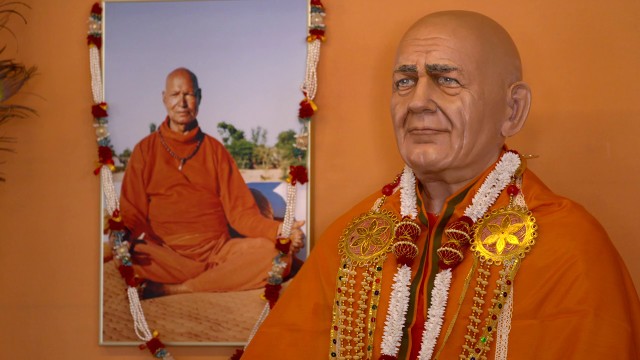
A satsang exploring the concept of self-love through the framework of the four aspects of divine grace (kripa).
"Swāmījī did not really use this word, but I know it comes from Holī Gurujī; he is always using that."
"Love each and every living being, if not more, then at least as much as yourself."
Guru Lilā, addressing the community, explains the four aspects of kripa: Deva Kripa (grace of the gods), Śāstra Kripa (grace of the scriptures), Guru Kripa (the Guru's grace), and Kuṭkī Kripa (self-grace). He focuses on Kuṭkī Kripa as self-love, arguing it is a prerequisite for loving others. He outlines a practical path to self-love through self-acceptance, self-understanding, and self-giving, linking it to core teachings. He shares an anecdote about a woman healing from ALS through self-love and concludes with a traditional story about Guru Nānak illustrating the complex workings of karma.
Filming location: Strilky, Czech Republic
Unity, love, forgiveness, and devotion
2:10 - 2:53 (43 min)

An evening satsang on unity, awareness, and forgiveness.
"Whenever Bhaktas come, unite, and sit together, that is Dīvālī, that is Christmas."
"More than anything, there is forgiveness. When we forgive people for what they have done, it's not for them, it's for us."
A swami addresses a full hall, emphasizing the power of collective devotion to transform the age. He discusses the importance of awareness in daily life, using personal anecdotes about zoning out while driving and reducing phone use. He stresses that selfless service (seva) requires devotion (bhava) and explains unity through the metaphor of beads on a thread of Guru Bhakti. He shares a story from the Ramayana about a dog seeking justice to illustrate forgiveness and the dangers of ego, concluding with teachings on living in the present and protecting dharma.
Filming location: Strilky, Czech Republic
The Soul's Journey
3:00 - 3:53 (53 min)
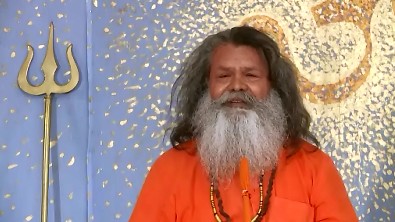
A spiritual discourse on the journey of the soul through birth, death, and karma.
"Our soul—not the Ātmā, but the soul... the soul is individual, not universal."
"Only two will follow us: our good or bad karmas. And that becomes destiny. And against destiny we have no power."
A spiritual teacher explains the nature of the individual soul (Jīvātmā) as a wave of the universal resonance. He describes its journey through time, bound by karma, its entry into a physical body, and the rare opportunity of human birth. He emphasizes the inescapable law of karma governed by body, mind, speech, and wealth, and concludes that liberation comes through spiritual practice and the Guru's grace, which dissolves the soul back into the Supreme.
Filming location: Strilky, Czech Republic
Protect the animals
4:00 - 4:31 (31 min)
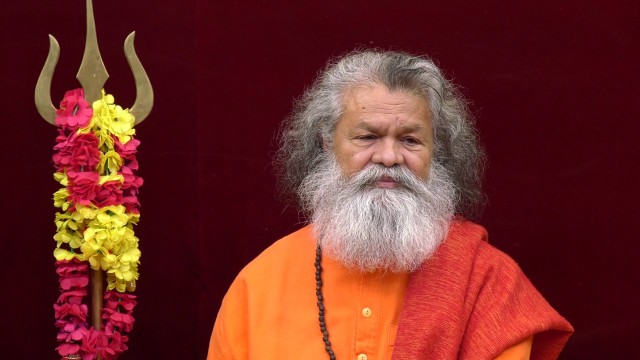
A prayer and spiritual address following an earthquake in Croatia.
"Let us be in prayer for all of us."
"He will balance all. He will bring that kind of energy so that all the negatives or distracting things will slowly, slowly be brought into a good position by Śiva himself."
The speaker opens with traditional invocations and a prayer for those affected by a recent earthquake. He discusses the event in the context of Kali Yuga, suggesting a divine balancing is underway. The core teaching is a call to protect all life—categorized as Jalchara, Thalchara, and Nabhachara (water, land, and sky beings)—by sharing food and not harming animals. He links this compassion to spiritual progress and recommends yoga practices, including Sarvahitāsan and prāṇāyāma, for personal and collective well-being.
Filming location: Strilky, Czech Republic
Be in the living presence of gurdev
4:35 - 4:59 (24 min)
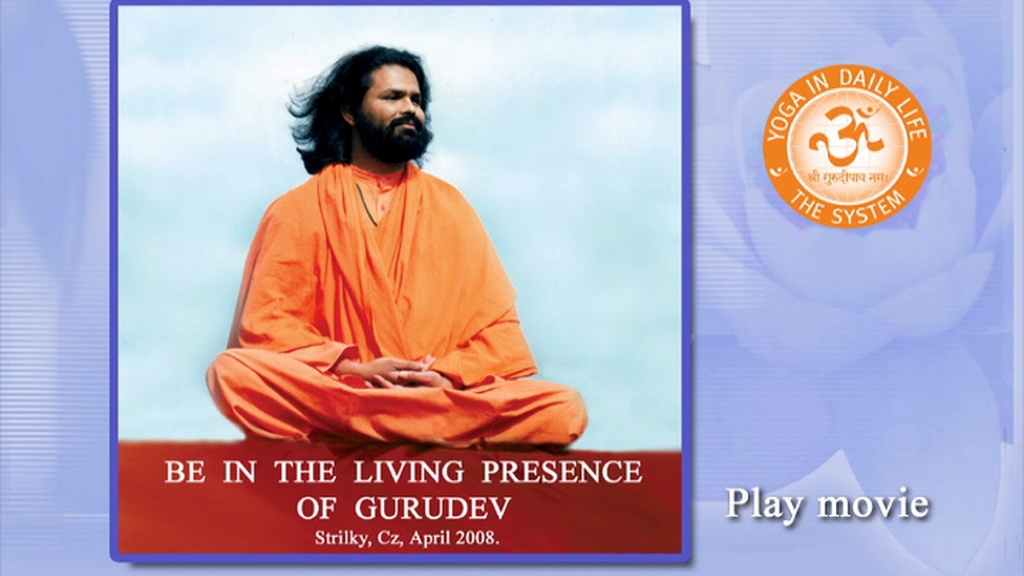
A morning satsang webcast on the essential pillars of spiritual progress.
"Two things are very important. The first is called motivation... The second is the practice—to be with, to be there."
"Yoga, as I always say, is not for the general. Yoga is individual. Especially when the question of chakra awakening... arises, there is an individual guidance."
Swami Ji addresses a global audience, emphasizing that theoretical motivation gained from lectures and webcasts must be coupled with continuous, practical practice in the physical presence of a Master. He explains the limitations of remote learning, details techniques taught during the seminar, and announces a guided meditation for chakra purification. The talk uses analogies of a distant temple, the Ganga river, and a seed to illustrate the journey from intellectual understanding to embodied realization.
Filming location: Strilky, Cz.
DVD 410
Around the world - Pranayama practice from Mexico City
5:00 - 5:31 (31 min)
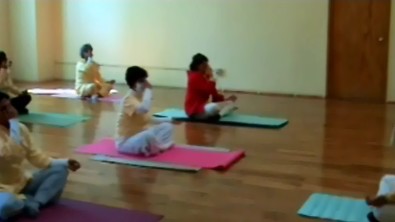
Pranayama practice.
Master should have equal vision
5:35 - 6:00 (25 min)
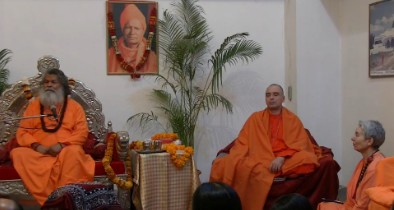
A discourse on a guru's non-discriminatory teaching methods, using a parable from the Mahabharata.
"If yoga is in your blood, then yoga is in your blood. It means it is a home tradition, a home culture."
"Masters have equal vision and no differences. If there are differences, then they are not masters."
In response to a question about teaching Indians versus Europeans differently, the speaker explains that while foundational knowledge is the same, the method must suit the student's cultural background, like learning to cook at home versus from scratch. He then narrates the story of Eklavya, who, though rejected by the teacher Dronacharya, honored him as his guru from afar and offered his thumb as guru dakshina, illustrating that true teaching and devotion transcend physical presence and formal instruction. The master's love, like sunlight, shines on all disciples equally without favoritism.
Filming location: Jaipur, Rajasthan, India
The truth is tapas
6:05 - 7:11 (66 min)
A spiritual discourse reflecting on the Kumbh Mela and warning against false spiritual powers.
"If you bathe during that constellation, the nectar still has an effect on you—meaning it cleans your karmas and blesses you with immortality."
"There is no austerity more than truth. To follow the truth is the biggest austerity, tapasyā—and no greater sin than to lie."
Swami Avatarpuri begins by describing his profound experience at the Kumbh Mela in Prayagraj, taking a sacred bath for all devotees. He then shifts to a cautionary theme, recounting stories of Holy Guruji exposing fraudulent fortune tellers and so-called healers. He warns devotees against those who claim siddhis (powers) like seeing auras or predicting futures, arguing these are obstacles to true spiritual progress. He advises focusing on genuine devotion and practice, sharing a personal story where Mahaprabhuji counseled him to be like a steadfast banyan tree, free from expectation.
Filming locations: Strelky Ashram, Czech Republic.
DVD 326
Part 1: The Awakening of Consciousness: Kuṇḍalinī and Cakras
7:15 - 9:09 (114 min)
A lecture on Kundalini, chakras, and the science of yoga.
"Yoga is not a religion, it is not a philosophy, it is not a dogma, but it is the eternal principle in this universe, like the cosmic consciousness itself."
"The awakening of the Kuṇḍalinī is a divine process; you don't feel it as a physical sensation. You feel happy, as if in the lap of the mother."
Swami Maheshwarananda delivers an extensive discourse on the awakening of consciousness through Kundalini and the chakra system. He explains yogic anatomy, including the 72,000 nāḍīs (energy channels) and the major chakras, describing their roles in physical, mental, and spiritual development. The talk covers the interplay of mind, intellect, and subconscious impressions, the importance of dharma, and the ultimate goal of uniting individual consciousness with the Cosmic Consciousness.
Filming location: Zagreb, Croatia
Nothing belongs to you
9:10 - 9:28 (18 min)
A spiritual discourse addressing grief and attachment through the lens of yoga philosophy.
"Nothing exists forever, and nothing belongs to you."
"Therefore, it is the greatest stupidity to be sad if someone left you... Say, 'God, thank you that this burden is gone.'"
In response to a question about depression from a friend's departure, the teacher expounds on the core principle of impermanence and non-possession. He illustrates the concept with references to past interactions under communism and a lengthy parable about a farmer dreaming of an entire life, using it to question the basis for grief in a transient reality. The central teaching is to find stability in the singular reality of the Self or God, as all worldly relationships are temporary.
Filming location: Banska Bystrica, Sk.
DVD 242
The 2nd Sri Swami Maheshwarananda Festival (2/5)
9:30 - 10:38 (68 min)
The 2nd Sri Swami Maheshwarananda Festival from Villach, Austria.
The 2nd Sri Swami Maheshwarananda Festival(5/5)
10:45 - 11:21 (36 min)
Welcome to the 2nd Sri Swami Maheshwarananda Festival of Spiritual Music from YIDL Ashram in Villach, Austria.
The 2nd Sri Swami Maheshwarananda Festival (3/5)
11:25 - 13:13 (108 min)
The 2nd Sri Swami Maheshwarananda Festival from Villach, Austria.