
European
Feelings between Guru and Disciple
0:55 - 1:53 (58 min)
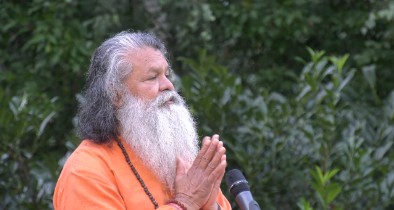
A satsang reflecting on the glory of past saints and the nature of true devotion.
"Gurujī said, 'Do not write anything confidential on a letter.'"
"If they ate all the butter... my cow is with me. The cow is still right here. Feed her with good feed, and milk... you can get as butter more and more fresh."
The speaker, likely a disciple, shares stories illustrating the miraculous nature and profound devotion of saints like Devpurījī and his own Gurujī, Mādhvānandjī. He recounts personal anecdotes, including Gurujī's long walks to visit devotees and a governor's reverence for him, to emphasize that the essence of bhakti is an internal, living practice. He cautions against overly relying on recordings or texts, using the analogy of a cow that continually gives milk to explain that sincere devotion itself is the perennial source of spiritual wealth.
Filming location: Strilky, Czech Republic
Around the world - Yoga exercises specifically for women
2:00 - 2:36 (36 min)
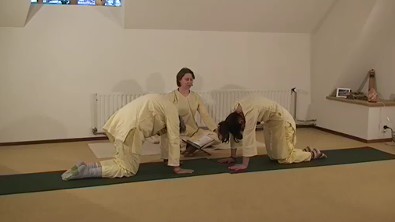
A guided yoga session focused on asanas for menstrual well-being and pelvic health.
"From my own experience, I can confirm it is truly helpful."
"Feel the effect of this exercise; it is also very good to do in the morning for a stiff back."
An instructor leads a gentle sequence designed for menstrual concerns, beginning with relaxation and yogic breathing in Anandāsana. The practice includes apānāsana (for the lower back and pelvic area), marjari (cat pose), hip-opening preparatory poses, and mālāsana (a squatting pose), with a personal anecdote shared about its benefits. The session continues with setu āsana (bridge pose) and a side-lying balance pose, concluding with a short relaxation and a final Om.
We need purification
2:40 - 3:34 (54 min)
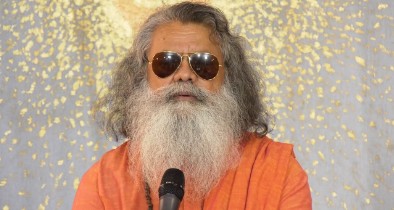
Evening satsang with Vishwaguruji from Strilky Ashram, Czech Republic. Vishwaguruji explains the bhajan Chaddarya Jhini Re Jhini of the saint Sri Kabirdas. We should purify ourselves. For that, we need to go through Tapasya - austerities. If we give milk to the snake it will turn into poison. If someone eats meat and you are intimate with this person, it is like you were eating. Keep yourself pure, reach the state of suddha, purity.
Message of the Deepak
3:40 - 4:10 (30 min)
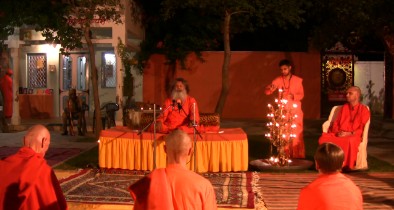
A spiritual discourse on the significance of Diwali (Dīpāvalī).
"This light is the truth, and we light these lights in everyone's heart. If we forget the sins of people, forgive them, and accept them, it means we light the candle again in their heart."
"Therefore, Dīvalī is not only for one day; Dīvalī is every day. When you open your eyes, you get the light, you see the light."
The speaker delivers a satsang on the festival of Diwali, explaining its origin in Lord Rama's return to Ayodhya and its deeper spiritual meaning as the inner light of Brahman. The talk explores the symbolism of the oil lamp—comparing the body to the pot, prana to the oil, the self to the wick, and the flame to the atman—and emphasizes themes of forgiveness, love (prem), non-violence (ahiṃsā), and daily spiritual practice. The discourse includes philosophical reflections, mantra chanting, and a critique of ritual animal sacrifice.
Filming location: Jadan, Rajasthan, India
Only wisdom can digest ego
4:15 - 5:13 (58 min)
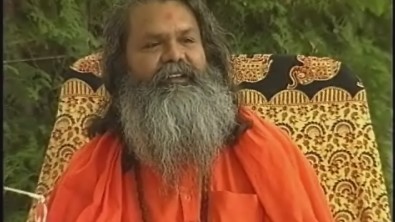
Lecture from Vep, Hungary
Foundations of Yoga in Daily Life
5:20 - 6:13 (53 min)
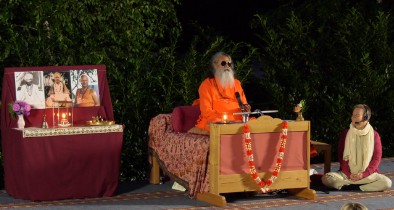
An evening satsang on integrating yoga into daily existence.
"Yoga in Daily Life is not only these two or three exercises; there is the flow of the nectar of the Gaṅgā."
"Don't depend on anyone. Depend on thyself. And thyself means that which gives us our life."
Swamiji welcomes attendees to the third seminar at the ashram, reflecting on the history of Střekov Castle. He shares personal stories of dietary experiments and spiritual tests to illustrate the practical application of yoga, emphasizing self-reliance, non-violence (ahiṃsā), and the unity of all spiritual paths. The talk blends personal anecdotes, philosophical points from Patañjali, and encouragement for consistent daily practice.
Filming locations: Střekov Castle, Ústí nad Labem, Czech Republic.
What the natural environment gives us
6:20 - 7:08 (48 min)
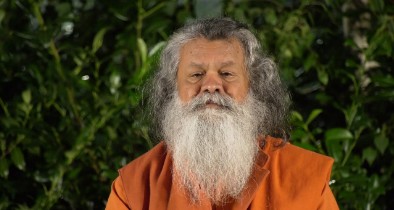
A spiritual discourse on connecting with nature and the purpose of retreat.
"You are walking. You are looking at our trees." "Walk for about ten minutes or half an hour without your shoes... So that you can get a touch of the Mother Earth."
A teacher addresses a group at an ashram, describing the pristine, pesticide-free environment rich with ancient apple trees and hundreds of plants. He emphasizes the health benefits of walking barefoot to connect with the earth's energy, discusses the principles of ahiṃsā (non-violence) towards all life, and contrasts a true, healthy retreat with modern living. The talk meanders through topics including prāṇāyāma, the nature of the mind, historical lifespans, and the sanctity of one's homeland, concluding with blessings from the lineage.
Filming location: Strilky, Czech Republic
Pranayama and the five elements
7:15 - 8:02 (47 min)
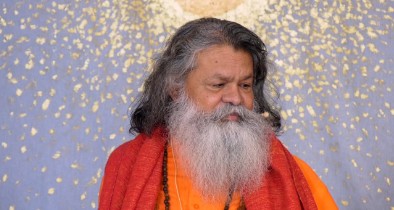
A morning satsang on prāṇāyāma, health, and the yogic science of life.
"Prāṇa is life. Everything is life."
"Where there is water, there is God. What is God? It is called life."
A spiritual teacher addresses the gathering after a morning walk, focusing on the vital role of breath (prāṇa) and water. He offers practical instructions for prāṇāyāma and dietary reduction, using analogies like a soaked bean seed. He explains the yogic view of the nervous system, warns against blocking moisture with lipstick, and shares an Ayurvedic remedy using ghee on the navel. The talk connects breath, the five elements, and modern environmental issues, concluding with a simple self-diagnostic technique involving the navel pulse.
Filming location: Strilky, Czech Republic
Foundations of Yoga in Daily Life
8:10 - 9:03 (53 min)
An evening satsang on integrating yoga into daily existence.
"Yoga in Daily Life is not only these two or three exercises; there is the flow of the nectar of the Gaṅgā."
"Don't depend on anyone. Depend on thyself. And thyself means that which gives us our life."
Swamiji welcomes attendees to the third seminar at the ashram, reflecting on the history of Střekov Castle. He shares personal stories of dietary experiments and spiritual tests to illustrate the practical application of yoga, emphasizing self-reliance, non-violence (ahiṃsā), and the unity of all spiritual paths. The talk blends personal anecdotes, philosophical points from Patañjali, and encouragement for consistent daily practice.
Filming locations: Střekov Castle, Ústí nad Labem, Czech Republic.
How to Practice Anusthan
9:10 - 9:56 (46 min)
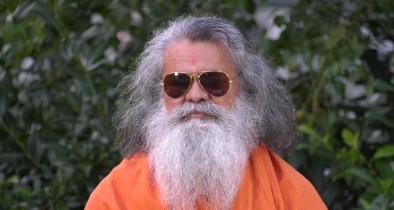
A discourse on the spiritual discipline of anuṣṭhāna during a retreat.
"You are only here for five days... So what can you think? That you will get mokṣa? That you will get vibrations?"
"A proper anuṣṭhāna—I tried once, twice, three times, four times, but I was not successful. That sādhanā lasts all week."
Swami Mahaprabhuji addresses retreat participants, using the analogy of a patient disobeying doctor's orders to illustrate the need for strict discipline in practice. He outlines an ideal daily schedule of nine hours of sādhanā, including detailed explanations of nāḍī śodhana (channel purification) through prāṇāyāma, and emphasizes dietary and behavioral simplicity. The talk blends stern guidance with humorous anecdotes about foraging for mushrooms and enjoying coffee, concluding with a promotion of the health benefits of Bārikhātu Praṇām.
Filming location: Strilky, Czech Republic
Do not kill
10:00 - 11:10 (70 min)
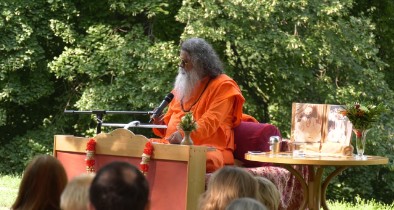
A satsang on Kriya Yoga, the nature of the self, and the unity of all life.
"Anything you do is a kriyā. While eating, when you are swallowing, it is a kriyā. When you speak, it is a kriyā."
"Gurujī said, 'one in all and all in one.' That depends on you. Your practice, you cannot think that it will be like this."
The lecturer continues the program's satsang, introducing the concept of Kriya Anushthana. He explains that all action is Kriya and explores the five senses (Jñānendriyas) as instruments of knowledge. Through anecdotes and a practical exercise where attendees locate their sense of 'I', he discusses the layers of the body, the soul (Ātmā, Jīvātmā), and the interconnectedness of all beings, using analogies of water cycles and a beehive to illustrate oneness. He advises on spiritual practice, warns against ego, and concludes with blessings.
Filming location: Strilky, Czech Republic
The importance of healthy food
11:15 - 12:18 (63 min)
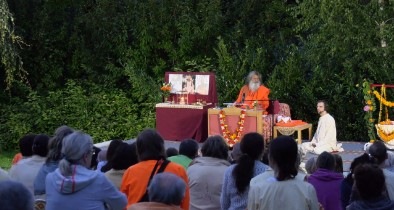
Evening satsang with Vishwaguruji from Strilky Ashram, Czech Republic. Whenever giving a lecture Vishwaguriji prays for guidance, protection and blessing of the Masters. If you do this before your sadhana, it will be very successful. There are many illnesses originating from how and what we are eating. To preserve the health of the body we should use proper nutrition, pure drinking water. The heart and soul is the same in everyone, it does not depend on the color of the skin.
Remembering Holy Guruji
12:25 - 13:34 (69 min)
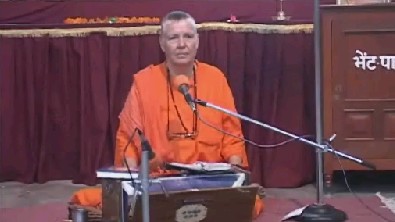
Every master is expressing one of the different aspects of the divine holy trinity as creator, sustainer or liberator. With a master we should always be ready to change. It is his duty to move us to transformation. Sadhana means spiritual practice. Again and again practicing without any expectation, we will reach our aim. Following our sadhana we will learn many things on the way. Holy Guruji was an example and embodiment of discipline and devotion. Bhajans, the spiritual songs were a fundamental part of his life. The divine nectar of spiritual songs open the heart as well as the door of wellbeing and reflecting deep peace. Sadhvi Shanti shares with us some of her personal memories and experiences with Holy Guruji on the occasion of his birthday.
Birds are feeling where their nest is
13:40 - 14:52 (72 min)
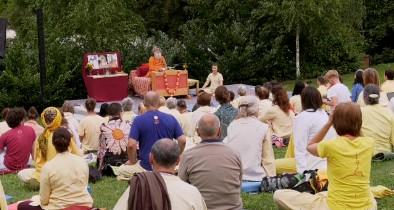
An evening satsang on Haṭha Yoga techniques, spiritual training, and the connection to one's roots.
"One might use one or two other techniques, but generally it is the same. You know, we have many people who do Śaṅkhaprakṣālana."
"Sooner or later, we will come to that place to sit. That is from a bhajan by Sūradāsa... if someone runs away, they will come back."
Swami Maheshwarananda (Guruji) explains the cleansing technique of Śaṅkhaprakṣālana, detailing its procedure, benefits, and necessary precautions under a qualified teacher. He then expands into a wide-ranging discourse, using parables of swans, storks, and donkeys to illustrate themes of spiritual training, the master-disciple relationship, and the deep, innate connection to one's homeland and community. He emphasizes the comprehensive nature of Yoga in Daily Life and the importance of proper certification.
Filming location: Strilky, Czech Republic
Morning Yoga practice, Umag, Croatia (1/9)
15:00 - 16:37 (97 min)
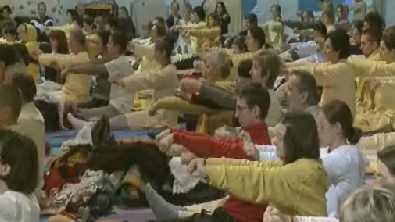
Morning Yoga practice from the international Yoga retreat Umag, Croatia on the 25th of September 2010
Learning from Guruji
16:45 - 18:24 (99 min)
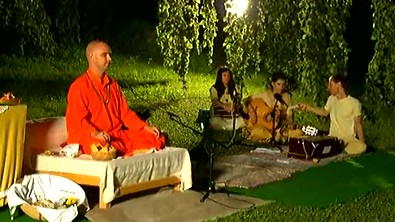
Evening Satsang with Mahamandaleshwar Swami Jasrajpuriji at Strilky Ashram, Czech Republic
We Cannot Deny Guru Principle
18:30 - 19:08 (38 min)
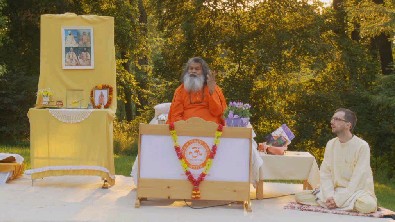
A discourse explaining the spiritual significance of Guru Pūrṇimā.
"There are two kinds of explanation about Guru Pūrṇimā. The first is that when, for the first time, the Earth emerged from the water, and the first light of the sun and moon was experienced by this earth... that was Guru Pūrṇimā."
"Secondly, Guru Pūrṇimā is generally known and explained as the birthday or incarnation of Bhagavān Vedavyāsa."
The speaker, Swami Mādhavānand, elucidates the dual origins of the festival, from a cosmic event to the birth of the sage Vedavyāsa who compiled the Vedas. He emphasizes the indispensable guru principle (guru paramparā), linking it to all teachers and the transmission of wisdom (Śruti and Smṛti). Through anecdotes and teachings, he discusses the qualities of a true guru, the nature of spiritual knowledge, and concludes with the story of Vedavyāsa enlisting Lord Gaṇeśa to write the scriptures.
Filming location: Strilky, Czech Republic
Wonders of the human being
19:15 - 20:41 (86 min)
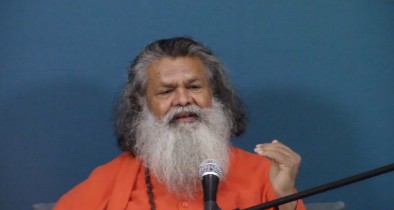
A morning satsang in a Canadian rainforest on the inner body, breath, and spiritual search.
"Where are you searching for me, oh my friend? My heart is in the forest, but I am dwelling in your breath."
"If you really search for me, I will meet you within a second."
Swami Satyanarayana Dasa gives a discourse, using the surrounding forest as a metaphor for the inner landscape of chakras and nadis. He explains the vital importance of breath (prana) and shares stories—including a parable of Ramakrishna and a devotee—to illustrate the intensity of devotion required to know God. The talk covers the five sheaths (Panchakosha), the caution around awakening kundalini, and practical guidance on pranayama and asanas for purifying the physical and energetic bodies.
Filming location: Vancouver, Canada
Foundations of Yoga in Daily Life
20:45 - 21:38 (53 min)
An evening satsang on integrating yoga into daily existence.
"Yoga in Daily Life is not only these two or three exercises; there is the flow of the nectar of the Gaṅgā."
"Don't depend on anyone. Depend on thyself. And thyself means that which gives us our life."
Swamiji welcomes attendees to the third seminar at the ashram, reflecting on the history of Střekov Castle. He shares personal stories of dietary experiments and spiritual tests to illustrate the practical application of yoga, emphasizing self-reliance, non-violence (ahiṃsā), and the unity of all spiritual paths. The talk blends personal anecdotes, philosophical points from Patañjali, and encouragement for consistent daily practice.
Filming locations: Střekov Castle, Ústí nad Labem, Czech Republic.
Guruji in India in the 1990's
21:45 - 22:33 (48 min)

Sri Madhavananda in India in the 1990's (meditating, singing bhajans and talking about spirituality).
Guruji is Divine Light
22:40 - 23:16 (36 min)
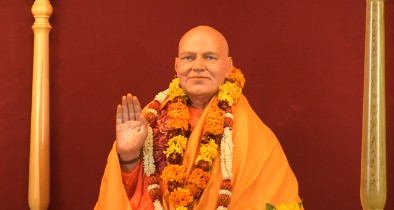
A personal discourse on Guru Bhakti, shared on the incarnation day of the speaker's master.
"The meaning is the same, but the person is the same while the inner being is different. So, it is holy Gurujī's divine incarnation."
"Guru Bhakti is the highest, greatest, divinest, and most successful... All knowledge comes through Guru Kṛpā."
Swami Maheshwarananda (Swamiji) addresses a gathering, reflecting on his first divine encounter with his Guru as a child and the profound training that followed. He describes the transformative power of the Guru's love and protection, illustrating the principles of Guru Bhakti with personal stories, including his Guru's strict discipline, the transfer of spiritual wisdom, and visionary experiences. He concludes with an account of his Guru's passing and the enduring presence of his blessings.
Filming location: Vienna, Austria
The Path of Kindness and the Flow of Giving
23:20 - 23:57 (37 min)
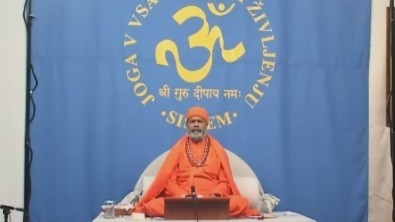
A spiritual discourse and Q&A session on cultivating kindness, understanding karma, and overcoming personal blocks through selfless giving.
"Practice ahiṃsā. See yourself in others. If someone does something bad to you, how will you feel? The same is true if you have negative feelings or thoughts toward others; they will feel it too."
"The best way is to give. Give some seeds to the birds. Give water to the flowers... Give, give, give. Yes, we are coming here for giving."
A Swamiji leads the session, beginning with teachings on kindness and the principle of ahiṃsā, illustrated by the story of the saint Dadhīci Ṛṣi. He then answers questions on the accumulation of karma and how to overcome creative and energetic blocks, emphasizing the transformative power of generosity. He shares the story of Max Muller to illustrate faith and concludes by detailing the many forms of helpful giving that purify karma and open spiritual pathways.
Filming location: Kranj, Slovenia
American
Australian