
European
Kundalini, chakras, and consciousness
0:55 - 1:56 (61 min)
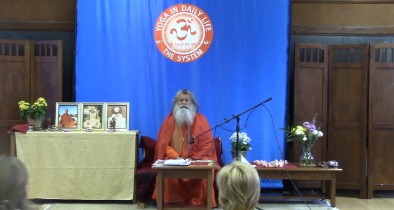
A spiritual discourse on the soul, consciousness, and the chakras, using the metaphor of water.
"Consider the ocean. The ocean is, let us say, forever water... this whole ocean is one soul, and it is inhaling and exhaling."
"Our soul is connected in three qualities... jīva, the soul... ātmā... and paramātmā. 'Param' means the highest of the highest."
The lecturer continues his teachings on kuṇḍalinī and consciousness, explaining the nature of the soul (jīva) through an extended metaphor of water evaporating from the ocean and returning via rain and rivers. He discusses the oneness of all life, the importance of the skin, the resonance of the sacred Oṃ sound, and the structure of the nervous system and chakras, relating these to spiritual awakening and divine consciousness.
Filming location: USA
Opening Address: Yoga for World Peace and Non-Violence
2:00 - 2:07 (7 min)
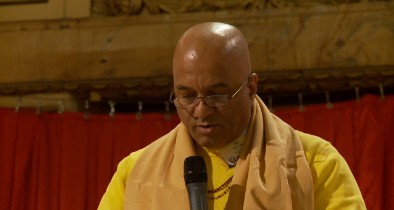
An opening address for the "Yoga for World Peace and Non-Violence" International Conference in Prague.
"Yoga is not a religion. It represents the original balancing principle that promotes nonviolence and peacefulness."
"To achieve peace in the world, we must start by achieving inner peace ourselves."
A representative of the Czech Hindu Religious Society, Vishwaguru Deep Hindu Mandir, welcomes attendees and explains his organization's role in co-organizing the conference. He honors the spiritual lineage of Swami Madhavanandaji and Swami Maheshvaranandaji, detailing global humanitarian projects and drawing a direct connection between yogic principles like non-violence (ahimsa) and the universal pursuit of peace. The speech emphasizes inner peace as the foundation for world peace.
Filming location: Prague, Czech Republic
The Path of Yoga for Universal Peace
2:15 - 2:38 (23 min)
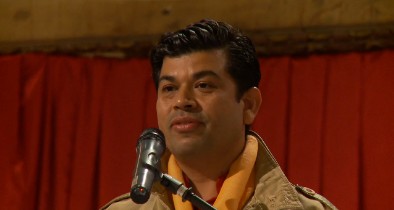
A keynote address advocating for yoga as a universal path to global peace.
"If you want a result in one year, plant crops; in ten years, plant fruit trees; if you want a result forever, practice yoga."
"Yoga is less than 30% physical; it is more than that—it is emotional, mental, and spiritual. For humankind, it is the interconnection from the individual to people, from people to nature, and from nature to the planet."
A speaker from Nepal addresses a World Peace Council conference, framing yoga as a non-religious, practical solution to violence and unrest. He argues for its integration into global education and diplomacy, urging governments to invest in yoga over military spending. The talk blends philosophical teachings from multiple faiths with calls for personal and political action, concluding with a collective peace chant and meditation.
Filming location: Prague, Czech Republic
What Incarnation means
2:45 - 3:39 (54 min)
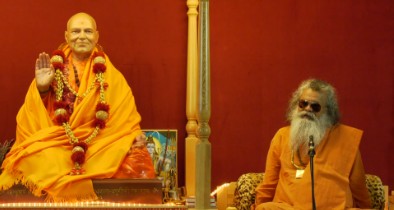
A spiritual discourse on the nature of the soul, creation, and Śiva.
"There is one who is not born from a mother and not from a father. Only that one can be called an incarnation, and that one is called Svayambhū."
"We all are one. It doesn't matter, the human or reptilian or the birds or any. There is a soul, jīva. Life, they are all one."
The lecturer speaks at the Yogandī Life center in Vienna on the anniversary of Gurudev Swami Madhavānandajī. He contemplates the concept of incarnation, explaining Śiva as the unmanifest Svayambhū who willed multiplicity into being through the five elements. Using the metaphor of the ocean and water cycle, he describes the singular soul within all life forms, discusses karma, and emphasizes the power of speech through a parable about the tongue and teeth.
Filming location: Vienna, Austria
How to Practice Anusthan
3:40 - 4:26 (46 min)
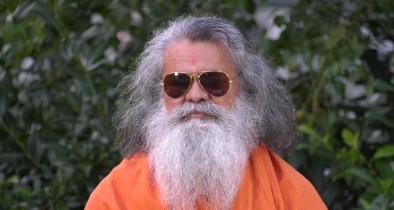
A discourse on the spiritual discipline of anuṣṭhāna during a retreat.
"You are only here for five days... So what can you think? That you will get mokṣa? That you will get vibrations?"
"A proper anuṣṭhāna—I tried once, twice, three times, four times, but I was not successful. That sādhanā lasts all week."
Swami Mahaprabhuji addresses retreat participants, using the analogy of a patient disobeying doctor's orders to illustrate the need for strict discipline in practice. He outlines an ideal daily schedule of nine hours of sādhanā, including detailed explanations of nāḍī śodhana (channel purification) through prāṇāyāma, and emphasizes dietary and behavioral simplicity. The talk blends stern guidance with humorous anecdotes about foraging for mushrooms and enjoying coffee, concluding with a promotion of the health benefits of Bārikhātu Praṇām.
Filming location: Strilky, Czech Republic
The importance of healthy food
4:30 - 5:33 (63 min)
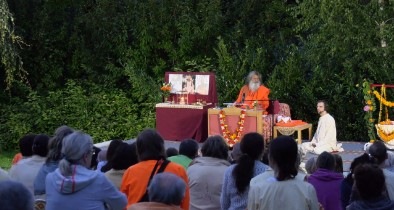
Evening satsang with Vishwaguruji from Strilky Ashram, Czech Republic. Whenever giving a lecture Vishwaguriji prays for guidance, protection and blessing of the Masters. If you do this before your sadhana, it will be very successful. There are many illnesses originating from how and what we are eating. To preserve the health of the body we should use proper nutrition, pure drinking water. The heart and soul is the same in everyone, it does not depend on the color of the skin.
Feelings between Guru and Disciple
5:40 - 6:38 (58 min)
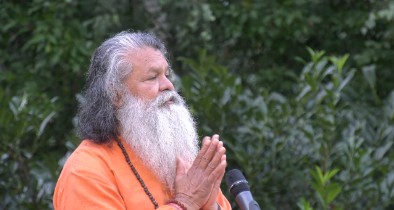
A satsang reflecting on the glory of past saints and the nature of true devotion.
"Gurujī said, 'Do not write anything confidential on a letter.'"
"If they ate all the butter... my cow is with me. The cow is still right here. Feed her with good feed, and milk... you can get as butter more and more fresh."
The speaker, likely a disciple, shares stories illustrating the miraculous nature and profound devotion of saints like Devpurījī and his own Gurujī, Mādhvānandjī. He recounts personal anecdotes, including Gurujī's long walks to visit devotees and a governor's reverence for him, to emphasize that the essence of bhakti is an internal, living practice. He cautions against overly relying on recordings or texts, using the analogy of a cow that continually gives milk to explain that sincere devotion itself is the perennial source of spiritual wealth.
Filming location: Strilky, Czech Republic
The Oneness of Ātmā
6:45 - 7:37 (52 min)
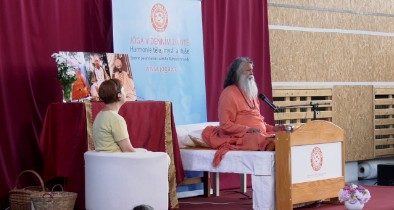
A spiritual discourse on the oneness of the soul and the nature of life.
"Our Gurudev, Holy Gurujī Madhavānandajī, said: 'One in all and all in one.'"
"Water is water; it does not matter which quality. Now, there are some machines, and they are purifying the water."
The lecturer leads a satsang exploring the non-difference between Paramātmā, ātmā, and jīvātmā, using the metaphor of seeds from a single cherry tree. He discusses the proliferation of life in water, on land, and in the air (Jalchar, Thalchar, Nabchar), the inherent violence in nature, and the unique human capacity for mercy and the dharma of non-violence (Ahiṃsā). The talk covers the purification of consciousness, the pitfalls of negative qualities in the chakras, and concludes with an intention to sing a bhajan and meditate.
Filming location: Prague, Czech Republic
Strength of the Hatha Yogi
7:40 - 8:33 (53 min)
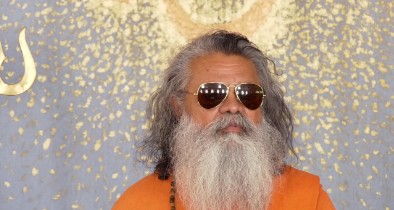
A morning satsang on the meaning and practice of Haṭha Yoga.
"Haṭha yoga has many meanings. So one is called 'haṭha,' meaning 'I will do, I will achieve, I will come through.'"
"In Haṭha Yoga, yogī... you have no fear, you have no anger, you have no anything, and you are divine in this world."
The lecturer leads a discourse exploring the multifaceted definitions of Haṭha Yoga. He begins by describing four types of "haṭha" or willpower: childish (Bāla), feminine (Triyā), royal (Rāja), and yogic (Yoga), illustrating the last with a story of a yogi unmoved by Lord Shiva. He then explains Haṭha Yoga as the union of the solar ("Ha") and lunar ("Tha") energies within the Ājñā Cakra, and outlines the six purification techniques (Shatkarmas) like Netī. The talk weaves together philosophy, subtle anatomy, and practical guidance.
Filming location: Strilky, Czech Republic
Advice for good health
8:35 - 9:43 (68 min)
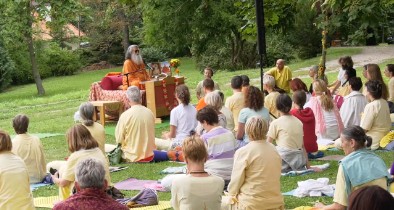
A satsang on Haṭha Yoga practices and natural wisdom, blending personal anecdotes with traditional teachings.
"Gurujī said, 'I am now in Mumbai, and I am going tomorrow morning by train. What is the constellation? If it is not good, then should we stop the train?'"
"Better to die, but with the salt. Yes, so Āyurveda, and Āyurveda is saying senda salt."
The lecturer leads the session, sharing stories about his Gurujī and the practical applications of Haṭha Yoga. He explains the importance of salt for health, details cleansing techniques like netī and kuñjal kriyā, and emphasizes learning from nature, illustrated by a folk tale about the origin of ocean salt. The talk connects yogic purification with Āyurvedic principles found in plants and natural elements.
Filming location: Strilky, Czech Republic
The Pearl of Everlasting Bliss
9:45 - 10:06 (21 min)
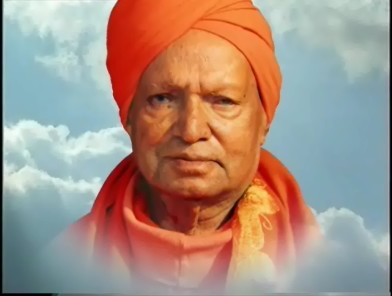
A biographical tribute to the life and legacy of Hindu saint Paramahaṁsa Śrī Svāmī Madhavānandajī.
"My eyes filled with tears, and I fell to my knees. I knew I had found the everlasting light of my life. I was home at last."
"All humans belong to one religion, and that is humanity... ahiṃsā paramo dharma: non-violence is the highest religion."
The narrative chronicles the spiritual journey of Swami Madhavānandaji, from his childhood in Rajasthan and transformative meeting with his guru, Bhagavān Śrīdīp Nārāyaṇa Mahāprabhujī, to his life of devotion, teaching, and global service. It details his initiation, his work establishing ashrams, and his teachings on non-dualism and universal love, culminating in his Mahāsamādhi in 2003 and the continuation of his lineage through his disciple, Swami Māheśvarānandajī.
Filming location: Rajasthan, India; Kathu Ashram, India; Bola Guda Ashram, India; Nepal
Birds are feeling where their nest is
10:10 - 11:22 (72 min)
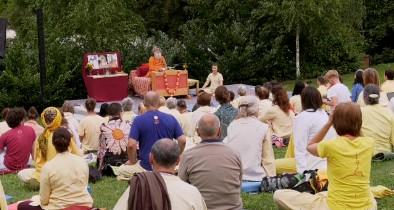
An evening satsang on Haṭha Yoga techniques, spiritual training, and the connection to one's roots.
"One might use one or two other techniques, but generally it is the same. You know, we have many people who do Śaṅkhaprakṣālana."
"Sooner or later, we will come to that place to sit. That is from a bhajan by Sūradāsa... if someone runs away, they will come back."
Swami Maheshwarananda (Guruji) explains the cleansing technique of Śaṅkhaprakṣālana, detailing its procedure, benefits, and necessary precautions under a qualified teacher. He then expands into a wide-ranging discourse, using parables of swans, storks, and donkeys to illustrate themes of spiritual training, the master-disciple relationship, and the deep, innate connection to one's homeland and community. He emphasizes the comprehensive nature of Yoga in Daily Life and the importance of proper certification.
Filming location: Strilky, Czech Republic
Chakras in the human
11:30 - 12:40 (70 min)
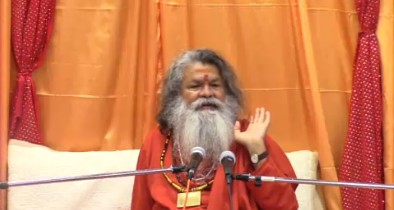
A lecture on the cosmic origin and holistic practice of yoga.
"Yoga is one of the first principles in creation." "That’s called yoga: our physical body, our mental body, and our subtle body. These are three, according to yogic science. Balance, complete."
Swami Paramananda addresses a temple gathering, invited to speak on yoga. He presents a cosmological view of yoga's origin from Anant Brahmāṇḍ (infinite universes), sound (Nāda), and the self-manifested Śiva. He explains the traditional concept of 8.4 million life forms and argues for a vegetarian diet to attain higher consciousness. The talk covers the need for a guru, the 72,000 nerve systems, the five kośas (sheaths), and a detailed, practical guide to the chakras—from the earth chakras in the feet to the higher centers. He concludes with practical techniques like chanting AUM and a stress-relief exercise, ending with a peace mantra.
Filming location: USA
Fire is God
12:45 - 13:41 (56 min)
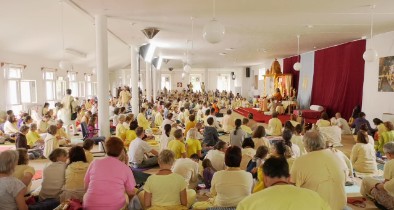
Morning satsang with Vishwaguruji from Strilky Ashram, Czech Republic. Agnisar kriya is good for the fire center, for solar plexus. There are many different kinds of fire, not only fire of digestsion. Explanation about importance of fire, how to make a fire place with respect to the Divine Shakti.
Practise and live disciplined
13:45 - 14:56 (71 min)
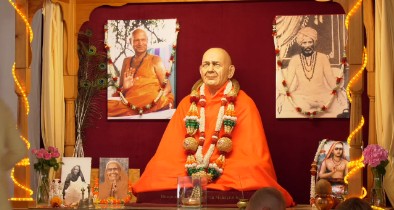
A satsang on the discipline of yoga practice within daily life.
"If you have no discipline, even if you are working yoga, practicing 35 years, but if the discipline is not there, then what happens? You go on the wrong way."
"Yogaḥ cittavṛtti nirodhaḥ. So this you should purify; everything, then you can go further and further."
Swami Madhvanandaji addresses a gathering, emphasizing that authentic yoga requires strict personal discipline (anuśāsana) and the purification of mental fluctuations (citta vṛtti), not just physical postures. He critiques the pursuit of miracles and the tendency to abandon worldly responsibilities, advocating instead for a balanced life of practice within family and society. The talk includes admonishments about maintaining focus during the retreat, avoiding waste, and practical instructions for upcoming Kriya and mantra sessions.
Filming location: Strilky, Czech Republic
Practicing of the system 'Yoga in Daily Life', Level 1 - Part 5
15:00 - 16:06 (66 min)
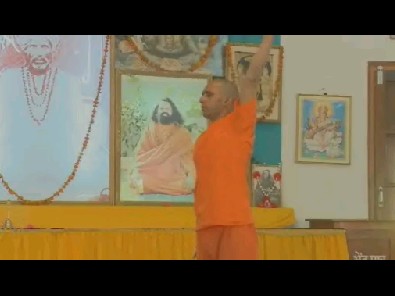
A guided yoga session from the "Yoga in Daily Life" system at a desert retreat.
"This centre is intended to be a yoga retreat and a spiritual centre. Its purpose is to serve humanity, to protect the environment through an ecological way of life, to offer spiritual seekers a path to find the light of spirituality through yoga."
"The book consists of eight levels. All levels include physical exercises, breath exercises, mental exercises, concentration techniques, relaxation and meditation techniques."
An instructor leads a comprehensive practice from Level One, beginning with a welcome to the ashram and its lineage. The session includes Oṁ chanting, deep relaxation (Śavāsana), instruction in the full yoga breath, and a series of āsanas performed lying, sitting, and standing. The practice concludes with Prāṇāyāma (Nāḍī Śodhana) and final Oṁ chanting, aiming to balance the body and mind.
Filming location: Jadan, Rajasthan, India
Kundalini, chakras, and consciousness
16:10 - 17:11 (61 min)
A spiritual discourse on the soul, consciousness, and the chakras, using the metaphor of water.
"Consider the ocean. The ocean is, let us say, forever water... this whole ocean is one soul, and it is inhaling and exhaling."
"Our soul is connected in three qualities... jīva, the soul... ātmā... and paramātmā. 'Param' means the highest of the highest."
The lecturer continues his teachings on kuṇḍalinī and consciousness, explaining the nature of the soul (jīva) through an extended metaphor of water evaporating from the ocean and returning via rain and rivers. He discusses the oneness of all life, the importance of the skin, the resonance of the sacred Oṃ sound, and the structure of the nervous system and chakras, relating these to spiritual awakening and divine consciousness.
Filming location: USA
Webcast from Strilky
17:15 - 18:22 (67 min)
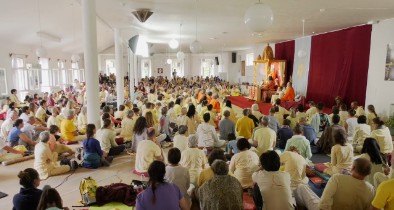
Morning satsang
Consciousness and Space
18:30 - 19:02 (32 min)
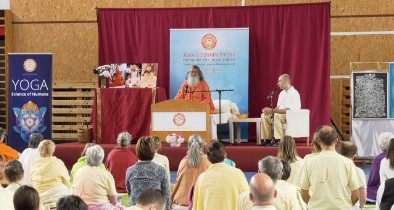
A spiritual discourse on the non-dual nature of consciousness, using the metaphor of water.
"In reality, space does not expand. Because it has no limitation, nothing that can expand and contract. Similarly, that consciousness."
"Eko'ham, dvitīyo nāsti. I am one. Rest is the duality."
The speaker explores the oneness of Ātmā and Paramātmā, arguing that true consciousness and space are limitless and indivisible. Using analogies of a mālā's thread and the water cycle—from ocean to vapor to rain and back—they illustrate how individual souls (jīvā) appear separate but are fundamentally one. The talk references bhajans by Mahāprabhujī's disciples and concludes with reflections on destiny, karma, and the spiritual path of Kriyā.
Filming location: Prague, Czech Republic
The Awakening of Inner Powers: Yoga in Daily Life
19:10 - 20:27 (77 min)
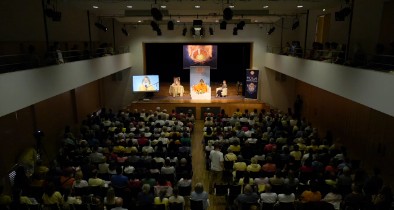
A public lecture on yoga philosophy and practical techniques for daily life.
"Yoga is the science of humans. The science of the yoga Veda is about ourselves, about our inner being."
"My Master Gurudev said, 'One in all and all in one.'"
Swami Paramadvaiti addresses an audience in Brno, exploring the concept of awakening inner power through the yogic model of the five bodies or kośas. He discusses the importance of nourishment, energy, mind, wisdom, and bliss, relating them to health, stress, and the unity of all life. The talk includes a practical demonstration of a technique to release tension by chanting OM with hands covering the ears.
Filming location: Brno, Czech Republic
Evening Satsang from Strilky
20:35 - 21:39 (64 min)
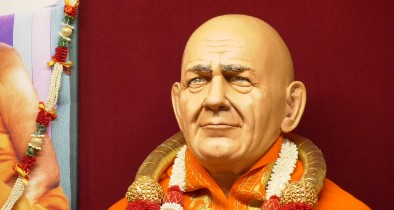
Evening satsang with Vishwaguruji from Strilky Ashram, Czech Republic.
Satsang from Strilky
21:45 - 22:50 (65 min)
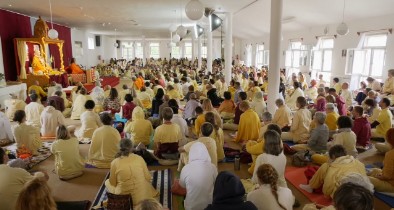
Morning satsang with Vishwaguruji from Strilky Ashram, Czech Republic.
How is the real kundalini in you functioning?
22:55 - 0:44 (109 min)
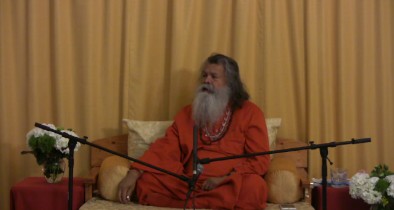
Morning satsang with Vishwaguruji from Alexandria, USA. First, you should know that you want to practice yoga and what yoga is. Yoga needs discipline. You should prepare yourself for yoga practicing. We shouldn't do anything against nature. Chakras give different sounds/mantras in different parts of the body. If you want to see God, see God in your family and friends. Brain strokes and heart attacks happen through the nerve system. Pranayam purifies this system. Don't use artificial things on your body. The subtle body is going with us after death. OM is in the consciousness of all Creation. The sun resonates with the sound of AUM. Our skin gives us all information about the whole universe. God is everywhere.
American
Australian