
European
The Glory of Alak Purījī
0:35 - 1:52 (77 min)
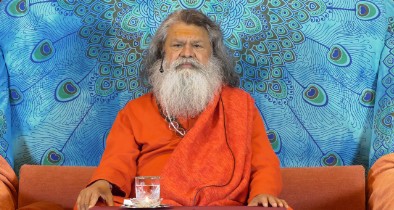
A spiritual discourse on the names and nature of exalted saints, focusing on Alak Purījī.
"Alak means indescribable; we cannot write that glory."
"Alak nirañjan. Niranjan is that it has no rañja, no black spot on the body, neither on the cloth, nor on the body, and nor on your soul."
The lecturer explains the meaning of 'Alak' (indescribable) and 'Purī' (complete or a city), connecting them to the Nath tradition and saints like Śrī Devapurījī. He describes the state of a true Siddha or Avadhūta, who is without desire and served by spiritual powers (siddhis). The talk emphasizes selfless giving, illustrated by stories including Shiva begging for alms and the sage Dadhīci. A disciple, Dr. Shanti, shares her personal vision of Alak Purījī's form appearing in the Himalayas.
Filming location: Vép, Hungary
Around the world - Satsang Mexico
2:00 - 2:38 (38 min)
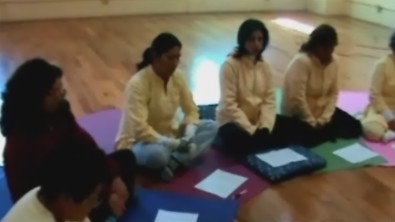
Evening satsang with meditation.
Attachment towards God
2:45 - 3:29 (44 min)
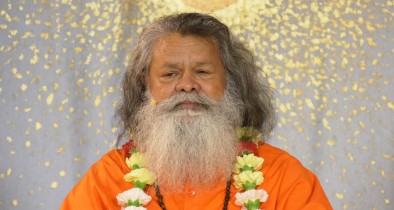
A spiritual discourse on the nature of sacred attachment and family.
"Attachment is something which is great. The one attachment I am talking about is the oneness that lasts till eternity. It is like the attachment of a river to the ocean."
"This is real yoga. Yoga means union, oneness. Separation means no yoga. Husband and wife can become great, like a god."
The lecturer addresses the community, redefining attachment not as a worldly flaw but as a divine, eternal bond, using the metaphor of a river flowing to the ocean. He emphasizes the spiritual importance of lasting family unity, criticizes separation for the sake of children, and expands the discussion to include attachment to God, ancestors, and the universal presence of the divine across cultures. He illustrates this with stories from his travels to Cuba and Fiji.
Filming location: Strilky, Czech Republic
Sri Alakhpuriji and the Himalayas
3:35 - 4:03 (28 min)
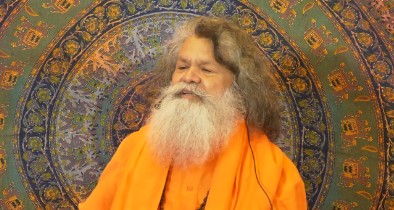
A spiritual discourse on the sacredness of the Earth and the Himalayas.
"Our Earth is a living planet, a Living Earth. If God incarnates, if God comes on this earth, God performs His miraculous things here."
"That place is indescribable... Between these beautiful, mighty mountains is a beautiful valley where Ālakpurījī is always residing."
Swami Maheshvarananda delivers a talk, venerating the Earth as a living, holy creation and detailing the profound spirituality of the Himalayas. He describes the region as the abode of divine incarnations like Śiva and great Siddhas such as Ālakpurījī, sharing anecdotes from pilgrimages and emphasizing the need for inner purity to experience this divine reality. The discourse concludes with a blessing for the journey.
Filming location: Vép, Hungary
Bhakti Of Hanuman
4:05 - 4:13 (8 min)
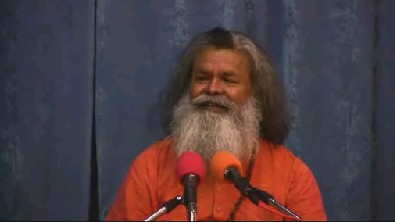
A spiritual discourse weaving narrative from the Ramayana with teachings on devotion and divine love.
"Inside them was telepathy, meaning they could communicate from one place to another while sitting apart, just like wireless communication."
"There is no force that can bind me, but there is one thread—that of love—in which I become entwined; it does not break away from me."
The speaker recounts Hanuman's quest for the Sanjivani herb to save Lakshmana, detailing the demons' deceptive tactics and Hanuman's strength. The narrative expands to include Bharat's devotion and an analogy of Krishna being bound by the gopīs' thread of love, emphasizing that pure, self-forgetting devotion is the ultimate power and the only binding force for God. The talk concludes with Rama's anguish over time running out for Lakshmana.
Filming location: Jadan, Rajasthan, India
In the bliss of bhajans
4:15 - 5:26 (71 min)
Bhajans from different ashrams in India
Message of the three monkeys
4:30 - 5:36 (66 min)
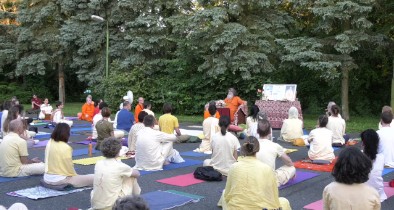
A spiritual discourse on the universal ātmā and the misuse of the label "fanatic."
"Every ātmā, each and every entity—where there is life, there is ātmā too." "Do not speak badly. If someone tells you something bad, you can either stop them, plug your ears, or don’t give any commentary."
A spiritual teacher leads a satsang, beginning with the principle that the soul (ātmā) exists in all living beings, advocating for respect for all life. The talk then focuses on refuting the negative label of "fanatic," arguing it is often misapplied to genuine devotion, humility, and non-violence. He uses parables, including one about Gandhi, and shares personal anecdotes to illustrate that true spirituality involves seeing good, speaking good, and serving others (seva), while criticizing hypocrisy.
Filming location: Vép, Hungary
Sound and resonance
5:30 - 6:26 (56 min)
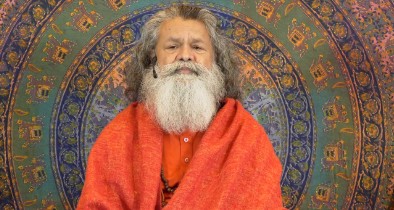
Morning Satsang with Vishwaguruji from Vep, Hungary. Regardless whether you understand bhajans or not, the resonance awakens spirituality in you. The resonance of the songs is reflected in our ten indriyas (organs of perception and action). Swami Sivananda said in his bhajan: those are my friends who understand my words. Shabda means sound, words. In the Gurukul, the warrior students learnt all mantras for archery. By the power of these mantras the arrow goes straight to where the sound of the tiger came from. Vishwaguruji explains the karmic sin of King Dasharatha, father of God Rama.
Atma is in every creature
6:30 - 7:32 (62 min)
A satsang discourse on spiritual lineage, the nature of the self, and practical wisdom.
"Śrī Guru Ātmā Parāptamā Ho Mātma Puruṣottama, Sakal Jag ke Antaryāmī, Cara Car kī Ātmā Prabhu... in this one line, everything is covered."
"To which doctor will you go? To the doctor in the picture, or to a real, alive doctor?"
Swami Vishwaguruji addresses the gathering, weaving teachings on the essence of the Guru and the universal Ātmā (soul) from the paramparā (lineage) with humorous, practical advice on topics from kingship and knowledge to hair and modern fashion. A disciple then reflects on the profound value of having a living Guru to transmit these teachings.
Filming location: Strilky, Czech Republic
How to educate the children?
7:40 - 8:43 (63 min)
A spiritual discourse on education, habits, health, and yoga.
"Habit is the second nature of man."
"The guru converts his disciple into the guru. That's it. That's the difference."
Swami Maheshwarananda reflects on a lecture about educating children, using personal anecdotes to discuss the role of discipline, society, and fear in shaping youth. He expands into broader themes of health, criticizing modern habits and diseases while advocating for yoga and natural living as paths to long, happy life. The talk weaves together teachings on karma, the guru-disciple relationship, and practical wisdom.
Filming location: Vép, Hungary
Tratak
8:50 - 9:29 (39 min)
Evening satsang with Vishwaguruji on the topic of Hatha Yoga from Summer Yoga Camp, Vep, Hungary. Practising nauli and agnisar kriya is best in the morning. Neti, Dhauti, Bhasti, Nauli, Kapalabhati and Tratak are the six hatha yoga kriyas. Vishwaguruji explains in detail how to practice tratak.
Pranayama and Kundalini
9:35 - 10:47 (72 min)
Evenining satsang with Vishwaguruji from Garrison, NY, USA. There are three nadis or nerves that are very important. Different levels of nadi sodhan pranayama should be practiced for about three months after each other. The Soul is in the prison of the elements, closed in the body. After becoming free it follows the destiny.
Purify your body from poison
10:55 - 12:09 (74 min)
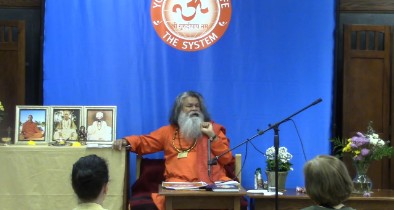
An evening discourse on the Kuṇḍalinī, chakras, and the nature of happiness.
"Happiness is within ourselves. Peace is within ourselves. And unhappiness is from outside."
"It is said that in life, when we walk... beside you is walking your death. You can see it is like the shadow, the shadow of your body."
The speaker explores the sources of happiness and suffering, using the parable of a couple's 50-year misunderstanding over a piece of bread to illustrate how unspoken grievances create internal poison. He connects this to the Viśuddhi (throat) chakra, explaining its role in purification and relating it to the myth of Śiva drinking the ocean's poison. The talk emphasizes communication, forgiveness, and daily practices like prāṇāyāma to cleanse negativity and prevent physical and emotional ailments.
Filming location: Garrison, NY, USA
The Glory of Alak Purījī
12:15 - 13:32 (77 min)
A spiritual discourse on the names and nature of exalted saints, focusing on Alak Purījī.
"Alak means indescribable; we cannot write that glory."
"Alak nirañjan. Niranjan is that it has no rañja, no black spot on the body, neither on the cloth, nor on the body, and nor on your soul."
The lecturer explains the meaning of 'Alak' (indescribable) and 'Purī' (complete or a city), connecting them to the Nath tradition and saints like Śrī Devapurījī. He describes the state of a true Siddha or Avadhūta, who is without desire and served by spiritual powers (siddhis). The talk emphasizes selfless giving, illustrated by stories including Shiva begging for alms and the sage Dadhīci. A disciple, Dr. Shanti, shares her personal vision of Alak Purījī's form appearing in the Himalayas.
Filming location: Vép, Hungary
The Master key
13:40 - 14:56 (76 min)
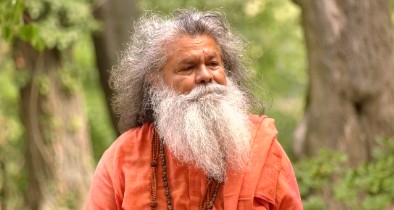
A satsang reflecting on learning, concentration, and the student-teacher relationship.
"Tons of theory cannot be compared with a gram of practice."
"To know how, we have everything, but we have an accident here of our spine... you have to get that inner key from the master."
The lecturer addresses attendees after a week of practice and philosophical talks. He questions how much they retained from the lectures, leading to a discussion on the limits of intellectual understanding versus experiential learning. Using stories, analogies like "honey on the elbow," and the parable of a master key in a stone gate, he emphasizes that true knowledge comes from a guru's direct transmission and dedicated practice, not merely scholarly theory.
Filming location: Strilky, Czech Republic
Human being is miraculous - Yoga Practice
15:00 - 16:32 (92 min)
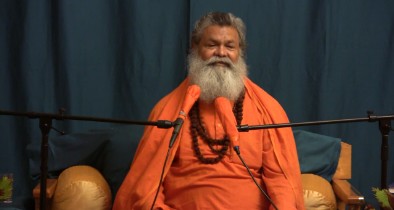
Morning program with Vishwaguruji from Alexandria, Virginia, USA. Folded hands awaken our awareness about real human qualities. Vishwaguruji starts leading practice with remembering: what makes us human?
Sri Alakhpuriji and the Himalayas
16:40 - 17:08 (28 min)
A spiritual discourse on the sacredness of the Earth and the Himalayas.
"Our Earth is a living planet, a Living Earth. If God incarnates, if God comes on this earth, God performs His miraculous things here."
"That place is indescribable... Between these beautiful, mighty mountains is a beautiful valley where Ālakpurījī is always residing."
Swami Maheshvarananda delivers a talk, venerating the Earth as a living, holy creation and detailing the profound spirituality of the Himalayas. He describes the region as the abode of divine incarnations like Śiva and great Siddhas such as Ālakpurījī, sharing anecdotes from pilgrimages and emphasizing the need for inner purity to experience this divine reality. The discourse concludes with a blessing for the journey.
Filming location: Vép, Hungary
Sound and resonance
17:15 - 18:11 (56 min)
Morning Satsang with Vishwaguruji from Vep, Hungary. Regardless whether you understand bhajans or not, the resonance awakens spirituality in you. The resonance of the songs is reflected in our ten indriyas (organs of perception and action). Swami Sivananda said in his bhajan: those are my friends who understand my words. Shabda means sound, words. In the Gurukul, the warrior students learnt all mantras for archery. By the power of these mantras the arrow goes straight to where the sound of the tiger came from. Vishwaguruji explains the karmic sin of King Dasharatha, father of God Rama.
Atma is in every creature
18:15 - 19:17 (62 min)
A satsang discourse on spiritual lineage, the nature of the self, and practical wisdom.
"Śrī Guru Ātmā Parāptamā Ho Mātma Puruṣottama, Sakal Jag ke Antaryāmī, Cara Car kī Ātmā Prabhu... in this one line, everything is covered."
"To which doctor will you go? To the doctor in the picture, or to a real, alive doctor?"
Swami Vishwaguruji addresses the gathering, weaving teachings on the essence of the Guru and the universal Ātmā (soul) from the paramparā (lineage) with humorous, practical advice on topics from kingship and knowledge to hair and modern fashion. A disciple then reflects on the profound value of having a living Guru to transmit these teachings.
Filming location: Strilky, Czech Republic
Live webcast from Vep
19:30 - 21:00 (90 min)
Morning satsang from Yoga Summer Retreat from Vep, Hungary.
The qualities of Vishuddhi Chakra
21:05 - 22:25 (80 min)
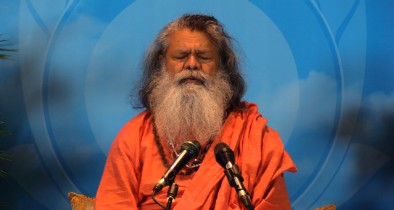
Live webcast with Vishwaguruji from Brisbane Ashram, Australia. Awakening of the Kundalini does not take place on the physical level. It means the awakening of consciousness. We are going to become one with all, like different forms of water are in oneness in the ocean. Vishwaguruji explains the ancient text about churning of the ocean by Devas and Ashuras. Sometimes we catch something nice, but there could be negative energy hidden in it, like greed. Vishuddhi Chakra and thyroid problems are often connected with negative thinking.
The completness of our being
22:30 - 23:41 (71 min)
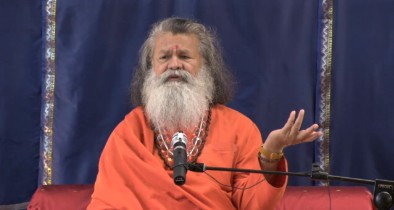
A spiritual discourse on the soul's journey, karma, and human practice.
"Understand this body, and then it is said—very easy to say, but it is said—overcome, control between two: the hunger and thirst."
"So we come as a human in this world, and then we are searching for the door to mokṣa, liberation. But when the chance comes, we take the hand away and scratch somewhere, meaning desires."
Swami Paramporul delivers a teaching on the eternal journey of the soul (jīvātmā), explaining its nature through metaphor and scripture. He discusses the body as a vehicle or bungalow where the divine resides, the importance of controlling the senses and emotions like jealousy, and the role of yoga, prāṇāyāma, and diet in purification. The talk covers the law of karma, rebirth across different life forms illustrated by a story of a tax collector reborn as a camel, and concludes with reflections on funeral rites and the imperative to use human life for spiritual progress.
Filming location: London, UK
Relation of the Master and disciple
23:45 - 0:54 (69 min)
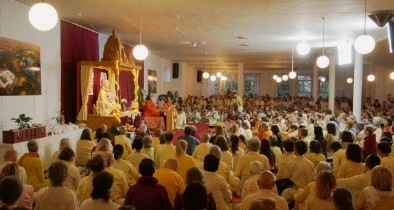
A discourse on the essence of worship and the guru principle.
"Ārādhya means that God or that Master whom we are worshipping."
"Guru Brahma, Guru Viṣṇu, Guru Devo Maheśvara, Guru Sākṣāt Parabrahma, therefore Guru is that Parabrahma."
The lecturer explains the meaning of "Ārādhya" as the personal deity or master one worships, emphasizing the underlying unity of all genuine spiritual paths. He elaborates on the Guru Tattva (guru principle) through the mantra "Guru Brahma, Guru Vishnu, Guru Devo Maheshvara," describing the guru as the source of knowledge (Brahma), protection (Vishnu), and liberation (Shiva). The talk includes parables, such as the story of a monkey destroying a bird's nest out of ego, to illustrate the importance of receiving knowledge with humility and the necessity of a living guru-disciple relationship within a true paramparā (lineage).
Filming location: Strilky, Czech Republic
American
Australian