
European
The completness of our being
0:45 - 1:56 (71 min)
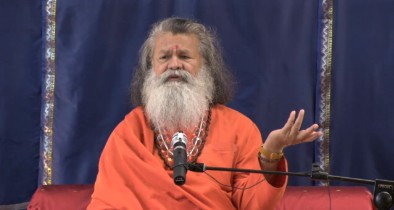
A spiritual discourse on the soul's journey, karma, and human practice.
"Understand this body, and then it is said—very easy to say, but it is said—overcome, control between two: the hunger and thirst."
"So we come as a human in this world, and then we are searching for the door to mokṣa, liberation. But when the chance comes, we take the hand away and scratch somewhere, meaning desires."
Swami Paramporul delivers a teaching on the eternal journey of the soul (jīvātmā), explaining its nature through metaphor and scripture. He discusses the body as a vehicle or bungalow where the divine resides, the importance of controlling the senses and emotions like jealousy, and the role of yoga, prāṇāyāma, and diet in purification. The talk covers the law of karma, rebirth across different life forms illustrated by a story of a tax collector reborn as a camel, and concludes with reflections on funeral rites and the imperative to use human life for spiritual progress.
Filming location: London, UK
Around the world - Pranayama practice from Mexico City
2:00 - 2:31 (31 min)
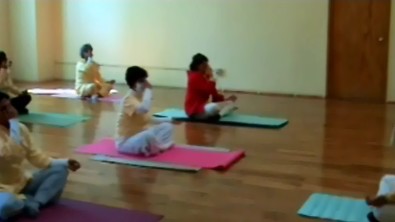
Pranayama practice.
Sound and resonance
2:35 - 3:31 (56 min)
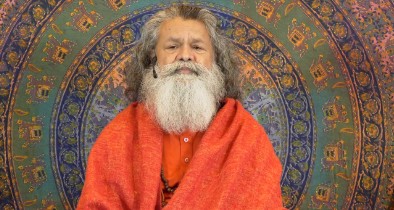
Morning Satsang with Vishwaguruji from Vep, Hungary. Regardless whether you understand bhajans or not, the resonance awakens spirituality in you. The resonance of the songs is reflected in our ten indriyas (organs of perception and action). Swami Sivananda said in his bhajan: those are my friends who understand my words. Shabda means sound, words. In the Gurukul, the warrior students learnt all mantras for archery. By the power of these mantras the arrow goes straight to where the sound of the tiger came from. Vishwaguruji explains the karmic sin of King Dasharatha, father of God Rama.
Sri Alakhpuriji and the Himalayas
3:35 - 4:03 (28 min)
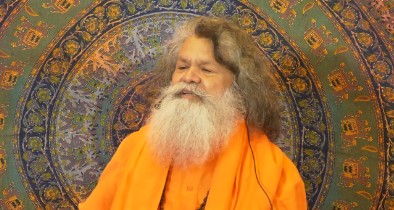
A spiritual discourse on the sacredness of the Earth and the Himalayas.
"Our Earth is a living planet, a Living Earth. If God incarnates, if God comes on this earth, God performs His miraculous things here."
"That place is indescribable... Between these beautiful, mighty mountains is a beautiful valley where Ālakpurījī is always residing."
Swami Maheshvarananda delivers a talk, venerating the Earth as a living, holy creation and detailing the profound spirituality of the Himalayas. He describes the region as the abode of divine incarnations like Śiva and great Siddhas such as Ālakpurījī, sharing anecdotes from pilgrimages and emphasizing the need for inner purity to experience this divine reality. The discourse concludes with a blessing for the journey.
Filming location: Vép, Hungary
Desert tour with Swamiji in Australia 2011
4:05 - 4:13 (8 min)
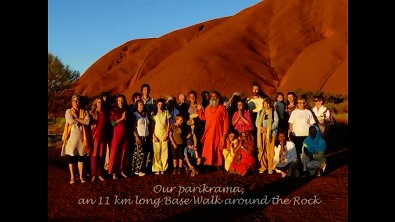
A devotional hymn and discourse on the supreme importance of the Guru's grace.
"What is the use of a beautiful form, a virtuous wife, glorious fame, or wealth as immense as Mount Meru, if the mind is not attached to the lotus feet of the Guru?"
"What is the use of fame that has spread in all directions, of being a lord who bestows boons... if your mind is not attached to the lotus feet of the Guru?"
The video features a sung Sanskrit hymn that rhetorically questions the value of all worldly and spiritual attainments—including family, wealth, scholarship, fame, and power—without devotion to the Guru. This is followed by devotional invocations praising the Guru as the savior and ultimate refuge. Accompanying remarks analyze the text's repetitive structure and logical focus on Guru devotion as the singular essential prerequisite.
In the home of the soul
4:15 - 5:18 (63 min)
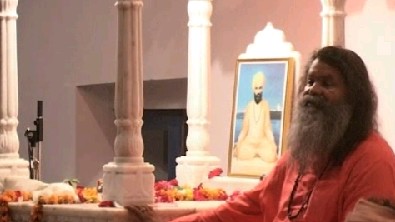
Summer 2003. in India with presentation of Yoga In Daily Life projects and Swamijis lecture
Respect the family traditions
4:30 - 6:04 (94 min)
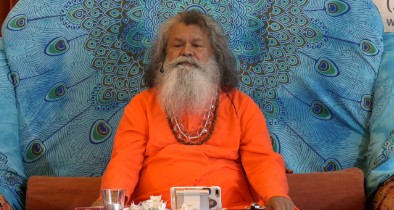
An evening satsang on the oneness of life, contrasting human existence with the natural world.
"Perhaps it is a prayer. They are giving out happiness."
"God gave them some knowledge, just nature, and they are following it."
The speaker observes the innate joy and wisdom in birds and ants, using them to reflect on human discontent and complexity. He explores themes of the singular life force (jīva) within all creatures, the spiritual concepts of ātmā and paramātmā, and the karmic responsibilities within family and marriage. The talk weaves between nature observations, spiritual philosophy, and social commentary, concluding with a bhajan.
Filming location: Vép, Hungary
Atma is in every creature
5:25 - 6:27 (62 min)
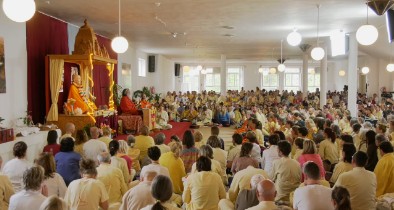
A satsang discourse on spiritual lineage, the nature of the self, and practical wisdom.
"Śrī Guru Ātmā Parāptamā Ho Mātma Puruṣottama, Sakal Jag ke Antaryāmī, Cara Car kī Ātmā Prabhu... in this one line, everything is covered."
"To which doctor will you go? To the doctor in the picture, or to a real, alive doctor?"
Swami Vishwaguruji addresses the gathering, weaving teachings on the essence of the Guru and the universal Ātmā (soul) from the paramparā (lineage) with humorous, practical advice on topics from kingship and knowledge to hair and modern fashion. A disciple then reflects on the profound value of having a living Guru to transmit these teachings.
Filming location: Strilky, Czech Republic
Purify your body from poison
6:35 - 7:49 (74 min)
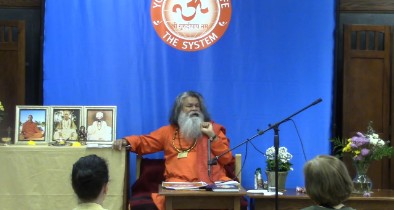
An evening discourse on the Kuṇḍalinī, chakras, and the nature of happiness.
"Happiness is within ourselves. Peace is within ourselves. And unhappiness is from outside."
"It is said that in life, when we walk... beside you is walking your death. You can see it is like the shadow, the shadow of your body."
The speaker explores the sources of happiness and suffering, using the parable of a couple's 50-year misunderstanding over a piece of bread to illustrate how unspoken grievances create internal poison. He connects this to the Viśuddhi (throat) chakra, explaining its role in purification and relating it to the myth of Śiva drinking the ocean's poison. The talk emphasizes communication, forgiveness, and daily practices like prāṇāyāma to cleanse negativity and prevent physical and emotional ailments.
Filming location: Garrison, NY, USA
Science of development into the Supreme
7:55 - 8:51 (56 min)
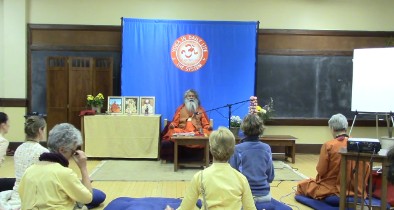
Evenining satsang with Vishwaguruji from Garrison, NY, USA. Firstly, we should understand our whole being. For that we need Masters, practice and realize ourselves: Who am I? The best meditation is to come within thyself. There are five bodies or layers accompanying the Soul. Knowledge has no end.
How to educate the children?
8:55 - 9:58 (63 min)
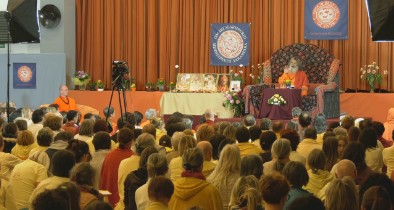
A spiritual discourse on education, habits, health, and yoga.
"Habit is the second nature of man."
"The guru converts his disciple into the guru. That's it. That's the difference."
Swami Maheshwarananda reflects on a lecture about educating children, using personal anecdotes to discuss the role of discipline, society, and fear in shaping youth. He expands into broader themes of health, criticizing modern habits and diseases while advocating for yoga and natural living as paths to long, happy life. The talk weaves together teachings on karma, the guru-disciple relationship, and practical wisdom.
Filming location: Vép, Hungary
Pranayama and Kundalini
10:05 - 11:17 (72 min)
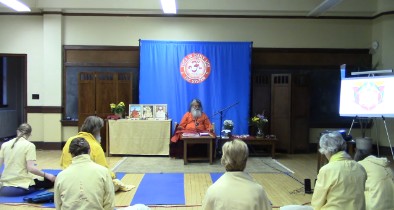
Evenining satsang with Vishwaguruji from Garrison, NY, USA. There are three nadis or nerves that are very important. Different levels of nadi sodhan pranayama should be practiced for about three months after each other. The Soul is in the prison of the elements, closed in the body. After becoming free it follows the destiny.
Return back to happiness
11:25 - 12:17 (52 min)
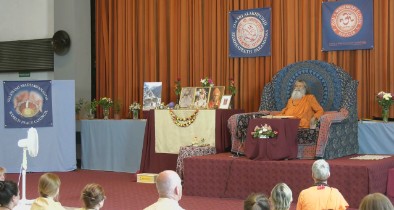
A discourse on the two pillars of spiritual practice: physical sādhana and mantra sādhana.
"Therefore, if we can tell to ourself... Try to reduce many, many, many desires, or many things that you want to have."
"So finally, for anyone who wants to do the sādhana, spiritual development, then mantra. And that mantra is the pillar of the devotion."
Swami Ji addresses a gathering, weaving teachings on yoga, contentment (śāntoṣa), and desire with personal anecdotes and humor. He explains that while physical practice must adapt to one's age, the constant spiritual pillar is mantra repetition, which purifies consciousness and should never be abandoned. He cautions against materialism and fanaticism, urging a simple, disciplined practice for health and inner peace.
Filming location: Vép, Hungary
Attachment towards God
12:25 - 13:09 (44 min)
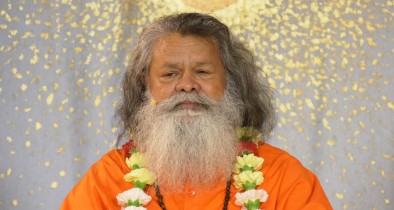
A spiritual discourse on the nature of sacred attachment and family.
"Attachment is something which is great. The one attachment I am talking about is the oneness that lasts till eternity. It is like the attachment of a river to the ocean."
"This is real yoga. Yoga means union, oneness. Separation means no yoga. Husband and wife can become great, like a god."
The lecturer addresses the community, redefining attachment not as a worldly flaw but as a divine, eternal bond, using the metaphor of a river flowing to the ocean. He emphasizes the spiritual importance of lasting family unity, criticizes separation for the sake of children, and expands the discussion to include attachment to God, ancestors, and the universal presence of the divine across cultures. He illustrates this with stories from his travels to Cuba and Fiji.
Filming location: Strilky, Czech Republic
Relation of the Master and disciple
13:15 - 14:24 (69 min)
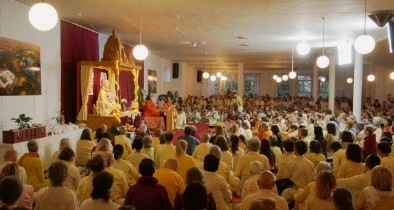
A discourse on the essence of worship and the guru principle.
"Ārādhya means that God or that Master whom we are worshipping."
"Guru Brahma, Guru Viṣṇu, Guru Devo Maheśvara, Guru Sākṣāt Parabrahma, therefore Guru is that Parabrahma."
The lecturer explains the meaning of "Ārādhya" as the personal deity or master one worships, emphasizing the underlying unity of all genuine spiritual paths. He elaborates on the Guru Tattva (guru principle) through the mantra "Guru Brahma, Guru Vishnu, Guru Devo Maheshvara," describing the guru as the source of knowledge (Brahma), protection (Vishnu), and liberation (Shiva). The talk includes parables, such as the story of a monkey destroying a bird's nest out of ego, to illustrate the importance of receiving knowledge with humility and the necessity of a living guru-disciple relationship within a true paramparā (lineage).
Filming location: Strilky, Czech Republic
Spirituality doesn't change
14:25 - 14:58 (33 min)
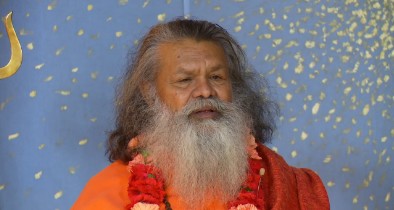
A Christmas satsang on the light and protection offered by holy saints and divine incarnations.
"Whenever a divine, holy soul descends on this earth, it comes with immense light and blessing, which is a healing power on the earth."
"Whenever we have some problems, we are fearful, scared, don't know what to do, then we should remember God."
The lecturer addresses devotees in a decorated hall during the Christmas season. He speaks on the enduring, healing presence of saints and divine incarnations like Jesus and Alakpuriji, explaining their role across the yugas and the necessity of the Guru Tattva. Using analogies of light and rivers merging into the ocean, he emphasizes prayer, cultural traditions, and the careful preservation of faith through sādhanā to overcome life's darkness and karmic obstacles.
Filming location: Strilky, Czech Republic
Practicing Yoga Asanas
15:00 - 15:41 (41 min)
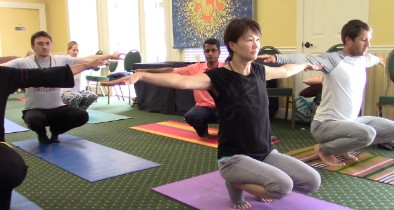
A yoga instruction session focusing on the practice and benefits of Vajrāsana and Vīrāsana.
"This Vajrāsana is designed especially to strengthen or to activate that Vajra Nāḍī."
"This will repair our digestion. This will repair our headache problems, also many, many things. This looks very simple, but it is very powerful."
An instructor guides students through the physical postures of Vajrāsana (thunderbolt pose) and Vīrāsana (hero pose), explaining their effects on the Vajra Nāḍī energy channel, digestion, and sciatic nerve. The session includes detailed alignment instructions, benefits for concentration and alertness, and transitions into other balancing postures and a forward bend before concluding.
Filming location: USA
Tratak
15:45 - 16:24 (39 min)
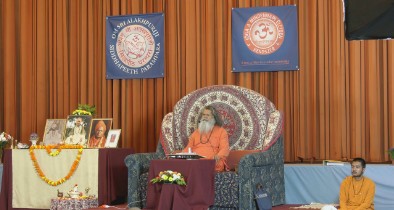
Evening satsang with Vishwaguruji on the topic of Hatha Yoga from Summer Yoga Camp, Vep, Hungary. Practising nauli and agnisar kriya is best in the morning. Neti, Dhauti, Bhasti, Nauli, Kapalabhati and Tratak are the six hatha yoga kriyas. Vishwaguruji explains in detail how to practice tratak.
Yoga and the creation
16:30 - 17:58 (88 min)
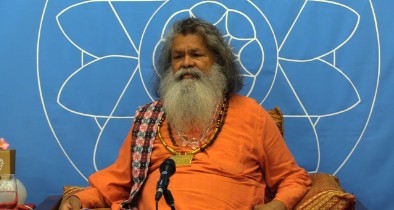
A spiritual discourse on yoga, consciousness, and the human energy system.
"Yoga is a science of the human body, the mind, and the consciousness."
"Yoga means union, uniting, harmonizing this together... It connects us to God."
Following an opening Vedic chant, a spiritual teacher addresses an audience, providing a sweeping overview of yoga philosophy. He explains creation stemming from primordial sound (nāda), describes the human as a microcosm of the five elements and five sheaths (kośas), and details the subtle body, including the 72,000 nerves, the three primary nāḍīs (Iḍā, Piṅgalā, Suṣumnā), and the chakra system. The talk aims to clarify the true meaning of Kuṇḍalinī awakening as an expansion of consciousness, not a physical sensation, and critiques modern yoga trends.
Filming location: Sydney, Australia
Relation of the Master and disciple
18:05 - 19:14 (69 min)
A discourse on the essence of worship and the guru principle.
"Ārādhya means that God or that Master whom we are worshipping."
"Guru Brahma, Guru Viṣṇu, Guru Devo Maheśvara, Guru Sākṣāt Parabrahma, therefore Guru is that Parabrahma."
The lecturer explains the meaning of "Ārādhya" as the personal deity or master one worships, emphasizing the underlying unity of all genuine spiritual paths. He elaborates on the Guru Tattva (guru principle) through the mantra "Guru Brahma, Guru Vishnu, Guru Devo Maheshvara," describing the guru as the source of knowledge (Brahma), protection (Vishnu), and liberation (Shiva). The talk includes parables, such as the story of a monkey destroying a bird's nest out of ego, to illustrate the importance of receiving knowledge with humility and the necessity of a living guru-disciple relationship within a true paramparā (lineage).
Filming location: Strilky, Czech Republic
The completness of our being
19:20 - 20:31 (71 min)
A spiritual discourse on the soul's journey, karma, and human practice.
"Understand this body, and then it is said—very easy to say, but it is said—overcome, control between two: the hunger and thirst."
"So we come as a human in this world, and then we are searching for the door to mokṣa, liberation. But when the chance comes, we take the hand away and scratch somewhere, meaning desires."
Swami Paramporul delivers a teaching on the eternal journey of the soul (jīvātmā), explaining its nature through metaphor and scripture. He discusses the body as a vehicle or bungalow where the divine resides, the importance of controlling the senses and emotions like jealousy, and the role of yoga, prāṇāyāma, and diet in purification. The talk covers the law of karma, rebirth across different life forms illustrated by a story of a tax collector reborn as a camel, and concludes with reflections on funeral rites and the imperative to use human life for spiritual progress.
Filming location: London, UK
Yoga Nidra
19:30 - 20:21 (51 min)
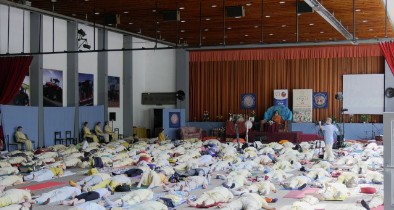
Morning satsang from Yoga Summer Retreat from Vep, Hungary.
The Master key
20:35 - 21:51 (76 min)
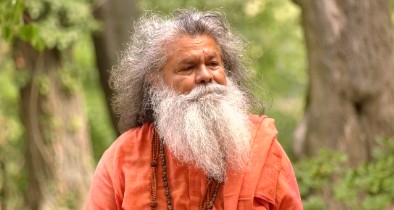
A satsang reflecting on learning, concentration, and the student-teacher relationship.
"Tons of theory cannot be compared with a gram of practice."
"To know how, we have everything, but we have an accident here of our spine... you have to get that inner key from the master."
The lecturer addresses attendees after a week of practice and philosophical talks. He questions how much they retained from the lectures, leading to a discussion on the limits of intellectual understanding versus experiential learning. Using stories, analogies like "honey on the elbow," and the parable of a master key in a stone gate, he emphasizes that true knowledge comes from a guru's direct transmission and dedicated practice, not merely scholarly theory.
Filming location: Strilky, Czech Republic
Purify your body from poison
21:55 - 23:09 (74 min)
An evening discourse on the Kuṇḍalinī, chakras, and the nature of happiness.
"Happiness is within ourselves. Peace is within ourselves. And unhappiness is from outside."
"It is said that in life, when we walk... beside you is walking your death. You can see it is like the shadow, the shadow of your body."
The speaker explores the sources of happiness and suffering, using the parable of a couple's 50-year misunderstanding over a piece of bread to illustrate how unspoken grievances create internal poison. He connects this to the Viśuddhi (throat) chakra, explaining its role in purification and relating it to the myth of Śiva drinking the ocean's poison. The talk emphasizes communication, forgiveness, and daily practices like prāṇāyāma to cleanse negativity and prevent physical and emotional ailments.
Filming location: Garrison, NY, USA
Pranayama and Kundalini
23:15 - 0:27 (72 min)
Evenining satsang with Vishwaguruji from Garrison, NY, USA. There are three nadis or nerves that are very important. Different levels of nadi sodhan pranayama should be practiced for about three months after each other. The Soul is in the prison of the elements, closed in the body. After becoming free it follows the destiny.
American
Australian