
European
Return back to happiness
0:57 - 1:49 (52 min)
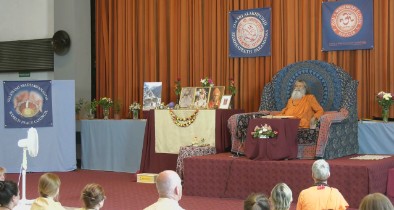
A discourse on the two pillars of spiritual practice: physical sādhana and mantra sādhana.
"Therefore, if we can tell to ourself... Try to reduce many, many, many desires, or many things that you want to have."
"So finally, for anyone who wants to do the sādhana, spiritual development, then mantra. And that mantra is the pillar of the devotion."
Swami Ji addresses a gathering, weaving teachings on yoga, contentment (śāntoṣa), and desire with personal anecdotes and humor. He explains that while physical practice must adapt to one's age, the constant spiritual pillar is mantra repetition, which purifies consciousness and should never be abandoned. He cautions against materialism and fanaticism, urging a simple, disciplined practice for health and inner peace.
Filming location: Vép, Hungary
Around the world - Yoga camp for Kids Strilky
2:00 - 2:04 (4 min)
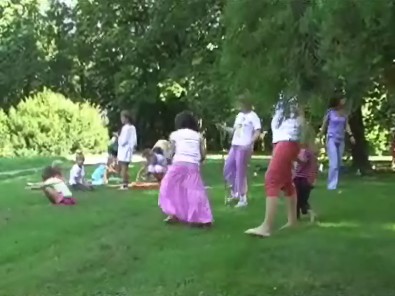
A guided visualization or ritual instruction involving symbolic objects and actions.
"If it shines forth in the darkness, it means you have saved it and that it has been fulfilled. Come and take from it."
"The cup is painted there, shining brightly. Behind that little pond, there is a tree stump. The cup is supposed to stand upon that stump, correct?"
An unseen guide leads participants through a symbolic sequence, identifying a location from a picture featuring a park with a whirlpool and pond. The focus is a brightly painted cup meant to be placed upon a tree stump. The instructions involve using colored pencils, initially to tie the cup but then not completely, before shifting to making the pencils into boats within groups.
Filming location: Strilky, Czech Republic
Prana and Soul
2:10 - 2:46 (36 min)
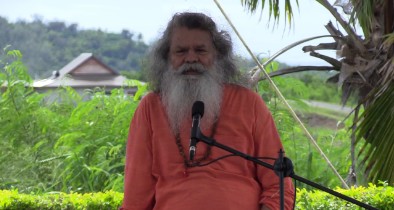
A spiritual discourse on prāṇa, health, and yogic living.
"Prāṇa is life, and life is prāṇa. We can compare our prāṇa to our soul."
"The first happiness or first wealth is good health. This is said in Āyurveda."
Swami Ji explains the vital functions of the five primary prāṇas, particularly Prāṇa and Apāna, linking them to Kuṇḍalinī awakening and the soul. He emphasizes that pure prāṇa ensures health and longevity, leading to practical advice on Āyurvedic cooking with fresh ingredients and spices, and warnings against processed food and alcohol. The talk connects physical well-being to spiritual consciousness, concluding with a promise to teach Prāṇāyāma techniques.
Filming location: Fiji Islands
The time for the Unity
2:50 - 3:09 (19 min)
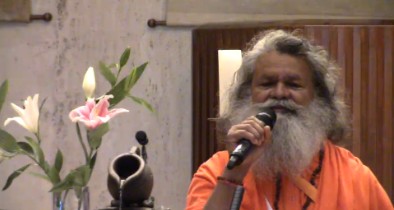
Yoga, Peace, Unity and Healing, a yoga meditation event from Tilman Chapel of the Church Center for the UN. New York City, USA. The meditation segments are guided by Gayatri Naraine from Brahma Kumaris, Paramhans Swami Maheshwarananda from YIDL and Sri Swami Madhawananda Word Peace Council, Jude Currivan Ph.D, cosmologist and author. The music for the event will be performed by TWNY Music Guild. The endless space is the symbol of the mother. There are harmony, balance and unity between the consciousness and space and that is yoga. Creation started from this point by multiplying with the sound and light.
Release your bad qualities
3:15 - 4:07 (52 min)
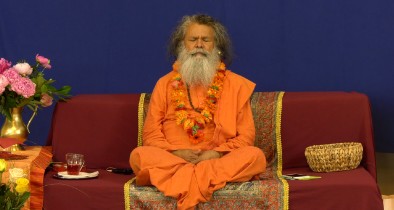
Morning satsang with Vishwaguruji from weekend Yoga seminar in Salzburg, Austria. Traditions are important and more or less similar in the whole world. The Austrian culture is very rich and beautiful. Many books of ancient Indian culture was destroyed by Moguls. We can digest everything except the truth. Tell honestly yourself your negative qualities. Remain natural as it is. Culture and education we should get from our parents. Short meditation how to turn negative to positive.
A Call for Peace and Self-Realization
4:15 - 5:22 (67 min)
A public lecture on world peace, self-inquiry, and the science of yoga.
"With weapons, with guns, you cannot bring peace. But with flowers, and with love, you can bring peace to the world."
"Nothing belongs to us, says the wise man. The yogīs said, 'Nothing belongs to us. Everything is temporary. Even your body does not belong to you.'"
Swamiji addresses an evening gathering, calling for an end to violence and ignorance through self-realization. He explains the preciousness of human life, the futility of worldly conflict, and the path of yoga as a means to achieve inner and outer peace. The talk covers the nature of the mind, the five bodies, and includes a brief practical demonstration to feel energy in the palms.
Filming location: Croatia
Relation of the Master and disciple
5:30 - 6:39 (69 min)
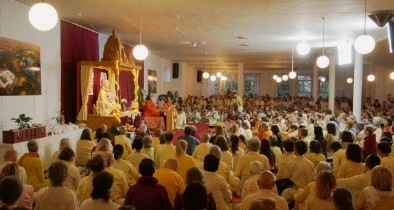
A discourse on the essence of worship and the guru principle.
"Ārādhya means that God or that Master whom we are worshipping."
"Guru Brahma, Guru Viṣṇu, Guru Devo Maheśvara, Guru Sākṣāt Parabrahma, therefore Guru is that Parabrahma."
The lecturer explains the meaning of "Ārādhya" as the personal deity or master one worships, emphasizing the underlying unity of all genuine spiritual paths. He elaborates on the Guru Tattva (guru principle) through the mantra "Guru Brahma, Guru Vishnu, Guru Devo Maheshvara," describing the guru as the source of knowledge (Brahma), protection (Vishnu), and liberation (Shiva). The talk includes parables, such as the story of a monkey destroying a bird's nest out of ego, to illustrate the importance of receiving knowledge with humility and the necessity of a living guru-disciple relationship within a true paramparā (lineage).
Filming location: Strilky, Czech Republic
Prana and Soul
6:45 - 7:21 (36 min)
A spiritual discourse on prāṇa, health, and yogic living.
"Prāṇa is life, and life is prāṇa. We can compare our prāṇa to our soul."
"The first happiness or first wealth is good health. This is said in Āyurveda."
Swami Ji explains the vital functions of the five primary prāṇas, particularly Prāṇa and Apāna, linking them to Kuṇḍalinī awakening and the soul. He emphasizes that pure prāṇa ensures health and longevity, leading to practical advice on Āyurvedic cooking with fresh ingredients and spices, and warnings against processed food and alcohol. The talk connects physical well-being to spiritual consciousness, concluding with a promise to teach Prāṇāyāma techniques.
Filming location: Fiji Islands
Yoga and the creation
7:25 - 8:53 (88 min)
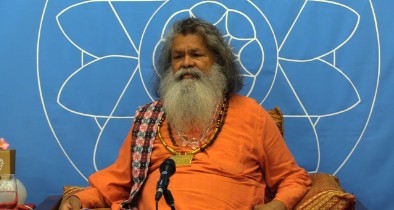
A spiritual discourse on yoga, consciousness, and the human energy system.
"Yoga is a science of the human body, the mind, and the consciousness."
"Yoga means union, uniting, harmonizing this together... It connects us to God."
Following an opening Vedic chant, a spiritual teacher addresses an audience, providing a sweeping overview of yoga philosophy. He explains creation stemming from primordial sound (nāda), describes the human as a microcosm of the five elements and five sheaths (kośas), and details the subtle body, including the 72,000 nerves, the three primary nāḍīs (Iḍā, Piṅgalā, Suṣumnā), and the chakra system. The talk aims to clarify the true meaning of Kuṇḍalinī awakening as an expansion of consciousness, not a physical sensation, and critiques modern yoga trends.
Filming location: Sydney, Australia
Relation of the Master and disciple
9:00 - 10:09 (69 min)
A discourse on the essence of worship and the guru principle.
"Ārādhya means that God or that Master whom we are worshipping."
"Guru Brahma, Guru Viṣṇu, Guru Devo Maheśvara, Guru Sākṣāt Parabrahma, therefore Guru is that Parabrahma."
The lecturer explains the meaning of "Ārādhya" as the personal deity or master one worships, emphasizing the underlying unity of all genuine spiritual paths. He elaborates on the Guru Tattva (guru principle) through the mantra "Guru Brahma, Guru Vishnu, Guru Devo Maheshvara," describing the guru as the source of knowledge (Brahma), protection (Vishnu), and liberation (Shiva). The talk includes parables, such as the story of a monkey destroying a bird's nest out of ego, to illustrate the importance of receiving knowledge with humility and the necessity of a living guru-disciple relationship within a true paramparā (lineage).
Filming location: Strilky, Czech Republic
Prana and Soul
10:15 - 10:51 (36 min)
A spiritual discourse on prāṇa, health, and yogic living.
"Prāṇa is life, and life is prāṇa. We can compare our prāṇa to our soul."
"The first happiness or first wealth is good health. This is said in Āyurveda."
Swami Ji explains the vital functions of the five primary prāṇas, particularly Prāṇa and Apāna, linking them to Kuṇḍalinī awakening and the soul. He emphasizes that pure prāṇa ensures health and longevity, leading to practical advice on Āyurvedic cooking with fresh ingredients and spices, and warnings against processed food and alcohol. The talk connects physical well-being to spiritual consciousness, concluding with a promise to teach Prāṇāyāma techniques.
Filming location: Fiji Islands
Seva will bring us to Brahmaloka
10:55 - 12:02 (67 min)
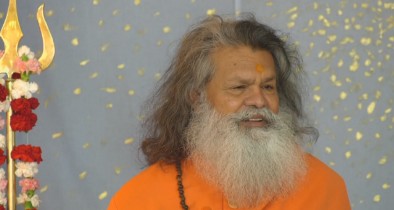
Satsang with Vishwaguru Maheshwarananda, Strilky Ashram, Czech Republic. God gives everything to everyone. We should have a happy life and happy united families. We should not kill any creatures in the name of God. Keep discipline and all beings will be happy. When we are doing real service (seva), it means that we shouldn’t expect anything. Unselfish seva will bring us to Brahmaloka.
The origin of Yoga
12:10 - 13:17 (67 min)
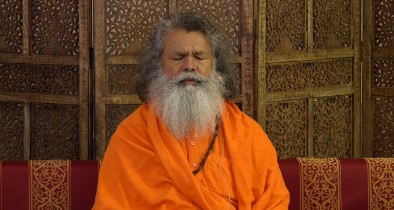
Public lecture by Vishwaguruji from Hotel Continental forum, Arad, Romania. At the beginning of the Universe there was only empty space and consciousness. Yoga is the balancing and harmonising principle. Space is like the mother. Human should not harm anyone. Give help, understanding, peace, harmony, protect and love all creatures, then you will bee again one with the Cosmic Self.
Yoga and the creation
13:25 - 14:53 (88 min)
A spiritual discourse on yoga, consciousness, and the human energy system.
"Yoga is a science of the human body, the mind, and the consciousness."
"Yoga means union, uniting, harmonizing this together... It connects us to God."
Following an opening Vedic chant, a spiritual teacher addresses an audience, providing a sweeping overview of yoga philosophy. He explains creation stemming from primordial sound (nāda), describes the human as a microcosm of the five elements and five sheaths (kośas), and details the subtle body, including the 72,000 nerves, the three primary nāḍīs (Iḍā, Piṅgalā, Suṣumnā), and the chakra system. The talk aims to clarify the true meaning of Kuṇḍalinī awakening as an expansion of consciousness, not a physical sensation, and critiques modern yoga trends.
Filming location: Sydney, Australia
Morning Yoga practice, Umag, Croatia (7/9)
15:00 - 16:54 (114 min)
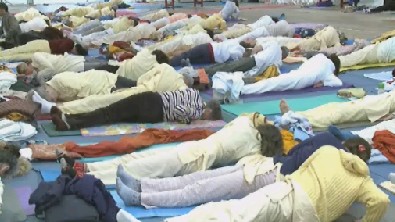
Morning Yoga practice from the international Yoga retreat Umag, Croatia on 1st of October
Release your bad qualities
17:00 - 17:52 (52 min)
Morning satsang with Vishwaguruji from weekend Yoga seminar in Salzburg, Austria. Traditions are important and more or less similar in the whole world. The Austrian culture is very rich and beautiful. Many books of ancient Indian culture was destroyed by Moguls. We can digest everything except the truth. Tell honestly yourself your negative qualities. Remain natural as it is. Culture and education we should get from our parents. Short meditation how to turn negative to positive.
Part 1: The Role of Yoga and Meditation in Improving Quality of Life for Cancer Patients
17:53 - 19:00 (67 min)
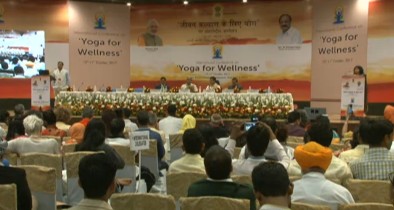
A medical lecture on the role of yoga and meditation as supportive care for cancer patients.
"We must note which specific yogic and meditative techniques were used, as these vary widely."
"Please do not give false hope that cancer will be cured... If a practitioner claims that prāṇāyāma, dhyāna, and some Ayurvedic herbs... can cure cancer, they are committing a grave sin against society."
A doctor from AIIMS Delhi presents a detailed analysis of scientific studies on yogic interventions for cancer patients, emphasizing they are complementary to standard treatments like chemotherapy. He strongly warns against practitioners falsely claiming yoga can cure cancer, shares data on benefits for quality of life and stress, and proposes a large-scale research trial combining yoga, meditation, and herbal products for cancer prevention and care.
Filming location: Delhi, India
Part 1: Welcoming Address and Valedictory Session on Yoga for Wellness
19:01 - 20:09 (68 min)
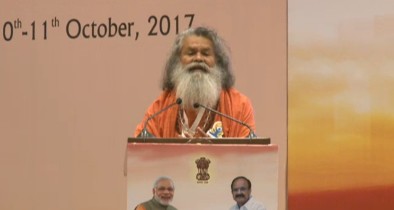
A valedictory session for a conference on "Yoga for Wellness," featuring addresses by government ministers and spiritual leaders.
"Yoga for wellness is this year’s subject. It is not just about the practice of yoga, but also about using it in the lives of every human being for achieving better health and wellness."
"Our method of treatment does not have any side effects. That is why we develop research about it, develop websites, develop programming, develop its videos."
The session opens with a welcome address emphasizing yoga's global role and the need to integrate traditional and modern medicine. Union Minister Nitin Gadkari delivers a valedictory address, sharing his personal health transformation through yoga and proposing structured training and research to professionalize the field. Following remarks from other ministers, Professor H.R. Nagendra gives a speech contrasting the multidimensional approach of yoga with modern medicine's limitations for non-communicable diseases. Swami Maheshvarananda and actress Anu Agarwal also share perspectives, with Agarwal recounting her recovery from a major accident through yoga.
Filming location: Delhi, India
Vegetarian cooking lesson 11, Kadhi soup, Okra and chapatis
20:10 - 20:24 (14 min)

A cooking demonstration on preparing Marwa-style gāṭṭā kadhi, chapati, and regional vegetables.
"When I was thinking about how to explain or show the gāṭṭā... it came to my mind that it is like the attachment of this world. When we touch the besan dough, it sticks very quickly. Then we use the oil of wisdom, which gets rid of the attachment."
"The Marwa kitchen has very, very delicious food—spicy, tasty, healthy, and very natural. The people living there eat only regional food. They know the leaves and fruits growing in their area."
The speaker guides viewers through making kadhi with chickpea flour dumplings (gāṭṭā), using the sticky dough as a metaphor for worldly attachment. The process includes preparing the dough with yogurt and spices, boiling and testing the gāṭṭā, and making chapati. The talk highlights regional Marwa cuisine, mentioning local ingredients like guṇḍā and the health benefits of bitter gourd, which is promised for a future lesson.
Filming location: Vép, Hungary
Give further what you have
20:25 - 21:31 (66 min)
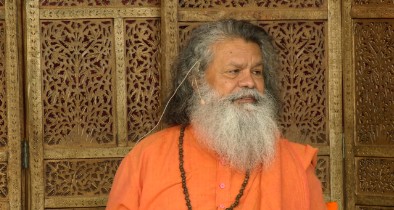
Morning satsang with Vishwaguruji from Nadlac, Romania. Yoga needs discipline. We are enjoying the fruits of Yoga in Daily Life, it is also our duty to give it further and keep it pure. It is important to create a healthy environment, and cook and eat only vegetarian food.
Be healthy, be happy, be good
21:32 - 22:36 (64 min)
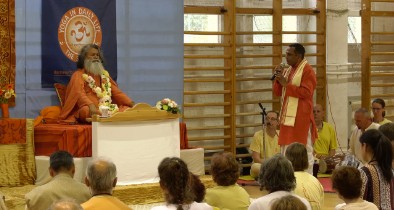
Evening Satsang with Vishwaguruji from Szeged, Hungary. Either you use your time or you will lose it. We should clean the antahkaranas. Attachment is the cause of our problems. There are two things: hope and the desires. There are four ways we create karma. Don't leave your parents in the dying room where there is no hope. The first wealth is good health. Clean your body inside with proper food, practising asanas and pranayama. Do not go to restaurants too often. Vishwaguruji invites everyone to Sri Alakhpuriji's cave in the Himalayas.
Atma is in every creature
22:40 - 23:42 (62 min)
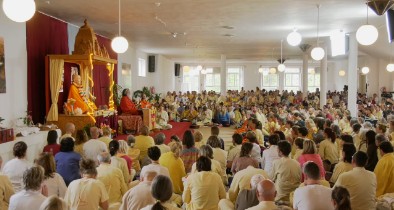
A satsang discourse on spiritual lineage, the nature of the self, and practical wisdom.
"Śrī Guru Ātmā Parāptamā Ho Mātma Puruṣottama, Sakal Jag ke Antaryāmī, Cara Car kī Ātmā Prabhu... in this one line, everything is covered."
"To which doctor will you go? To the doctor in the picture, or to a real, alive doctor?"
Swami Vishwaguruji addresses the gathering, weaving teachings on the essence of the Guru and the universal Ātmā (soul) from the paramparā (lineage) with humorous, practical advice on topics from kingship and knowledge to hair and modern fashion. A disciple then reflects on the profound value of having a living Guru to transmit these teachings.
Filming location: Strilky, Czech Republic
Return back to happiness
23:50 - 0:42 (52 min)
A discourse on the two pillars of spiritual practice: physical sādhana and mantra sādhana.
"Therefore, if we can tell to ourself... Try to reduce many, many, many desires, or many things that you want to have."
"So finally, for anyone who wants to do the sādhana, spiritual development, then mantra. And that mantra is the pillar of the devotion."
Swami Ji addresses a gathering, weaving teachings on yoga, contentment (śāntoṣa), and desire with personal anecdotes and humor. He explains that while physical practice must adapt to one's age, the constant spiritual pillar is mantra repetition, which purifies consciousness and should never be abandoned. He cautions against materialism and fanaticism, urging a simple, disciplined practice for health and inner peace.
Filming location: Vép, Hungary
American
Australian