
European
We are one in the Satsang
0:25 - 0:57 (32 min)
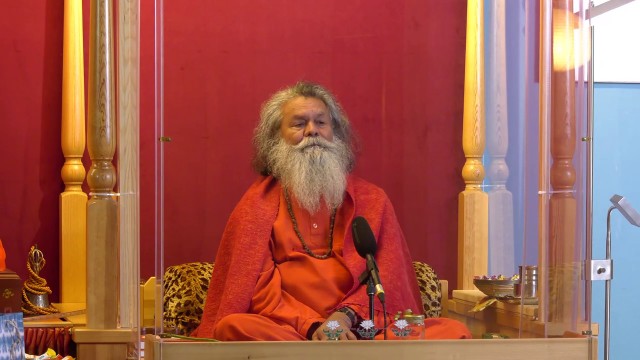
A spiritual discourse on the essence of true spiritual fellowship (satsaṅg).
"We all wish to share with one another. If I know I am very happy and I am here for satsaṅg with my friends, my sisters, with you, then it means we are our own Guru."
"Satsaṅg means together... We should think only one, only one, and how? We are so many, and that is only one, yes, because that is yours for all."
Swami Avatarpuri (Swāmījī) addresses a gathering, explaining the profound meaning of satsaṅg by breaking it into sat (truth, purity) and saṅg (togetherness). He contrasts deep, familial connection with transient lecture attendance, urging attendees to embody selfless, motherly care and genuine oneness, free from judgment. The talk blends philosophical definition with personal anecdotes from his travels and concludes with a line from a bhajan.
Filming location: Vienna, Austria
Bhajan singing from Jadan Ashram
1:00 - 1:26 (26 min)
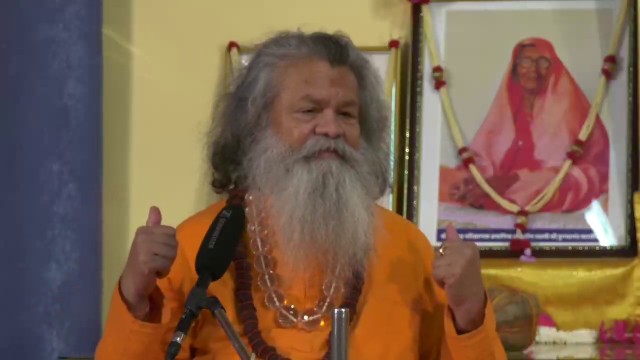
Evening satsang with Vishwaguruji from Jadan Ashram, Rajasthan, India. Bhajan singing. First is mother and then father. After that there are children. We worship our parents.
The living God
1:05 - 2:03 (58 min)
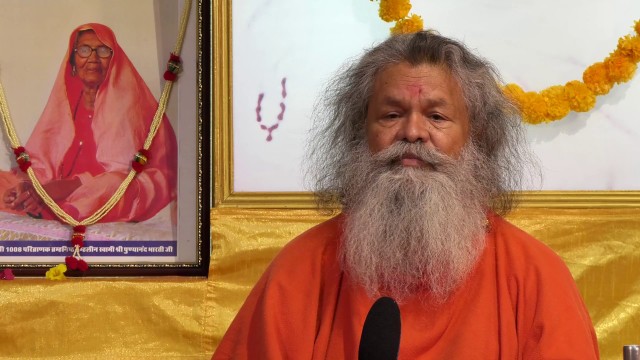
Evening satsang from Jadan Ashram, Rajasthan, India. Science is developing, which is good. Yoga is the science of the human being.The story of the professor who met a yogi while walking in the park. Where can we find God? Have you seen God? According to the teachings of Sanatana Dharma and Yoga, God lives here among us. Everyone has seen God. Each and every one of us is the living God, just like the ocean water is present in the raindrop. The same life is in all living beings. That is why we should not kill animals.
The sounds of the bhajans are the light of God
2:10 - 3:04 (54 min)
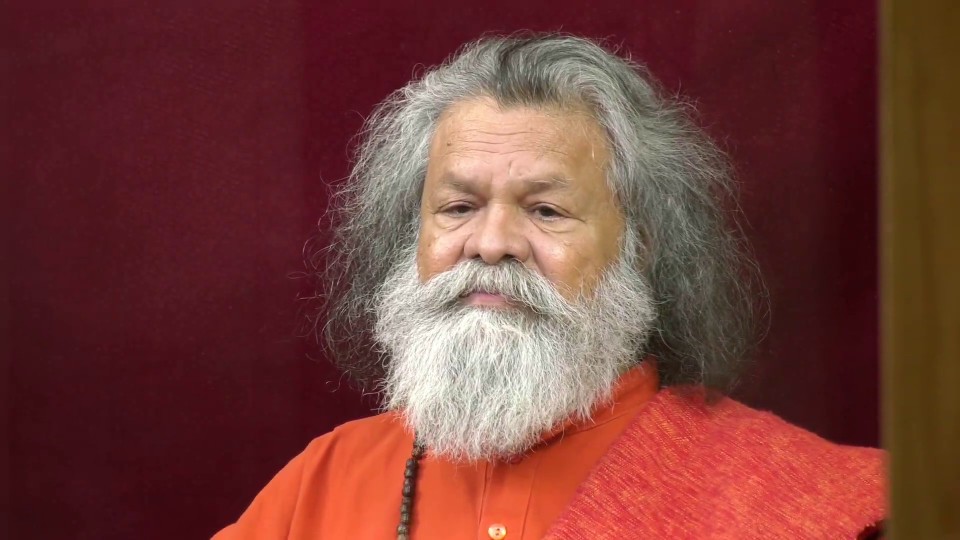
Evening satsang with Vishwaguruji from Strilky Ashram, Czech Republic. Bhajan singing. It is the time when we should be alert in ourselves. Humans are developed very much in science and in spirituality too. God gave us everything in our body and our soul. We should worship everybody and everything. We should be humble to everybody. No war np fighting. The sounds of the bhajans are the light of God. Bhajan singing.
Gurudev is for all of us
3:10 - 3:31 (21 min)
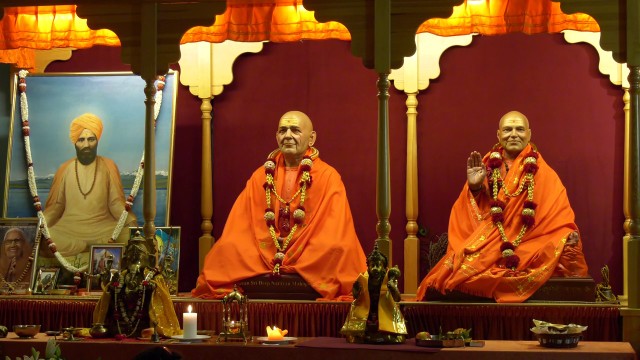
A spiritual discourse on unity, humility, and conduct within a community.
"Humans and our heart—we should be, and that is the best one, and that should have to be so."
"I'm not that God, but I'm only a servant, and a servant is for all."
A spiritual teacher addresses a gathering, emphasizing the oneness of the heart beyond physical or cultural differences. He discusses the need for humility, encouraging long-time attendees to make space for newcomers, and shares parables about compassion and containing anger. A listener interjects to agree and seek clarification on a practical ritual, to which the teacher responds by reiterating the core message of openness and inclusion.
Filming location: Vienna, Austria
We should become white
3:35 - 3:55 (20 min)
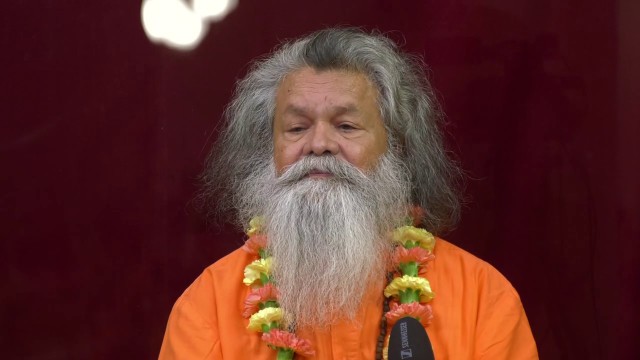
A spiritual address reflecting on a return from India and community events.
"I have returned from India, and many of our disciples from India were there. For many years, we have known our Gurudev, Madhavananjī."
"Today I found someone here in this Czech country. Now I have received a message that someone here in the Czech Republic has died."
The speaker, likely a spiritual teacher, shares reflections on their journey to India, the greatness of the land and its saints like Devpurījī Mahāprabhujī, and the strength of their spiritual lineage. The talk takes a somber turn with the announcement of a death in the Czech community, prompting a request for donations and prayers for the departed soul. The speaker then offers guidance on maintaining spiritual practice, purity (symbolized by the color white), and adherence to Sanātana Dharma, encouraging the community to remain united and focused inward.
Filming location: Strilky, Czech Republic
The Path of Yoga for Universal Peace
4:00 - 4:23 (23 min)
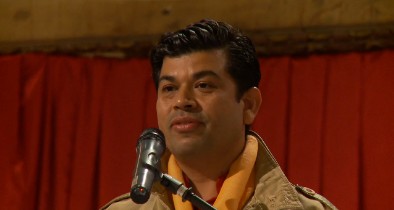
A keynote address advocating for yoga as a universal path to global peace.
"If you want a result in one year, plant crops; in ten years, plant fruit trees; if you want a result forever, practice yoga."
"Yoga is less than 30% physical; it is more than that—it is emotional, mental, and spiritual. For humankind, it is the interconnection from the individual to people, from people to nature, and from nature to the planet."
A speaker from Nepal addresses a World Peace Council conference, framing yoga as a non-religious, practical solution to violence and unrest. He argues for its integration into global education and diplomacy, urging governments to invest in yoga over military spending. The talk blends philosophical teachings from multiple faiths with calls for personal and political action, concluding with a collective peace chant and meditation.
Filming location: Prague, Czech Republic
Do we reach?
4:30 - 4:48 (18 min)
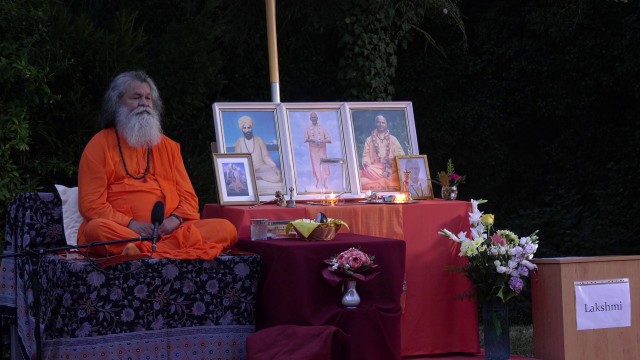
A spiritual discourse reflecting on human progress, simplicity, and the search for fulfillment.
"We were living very well. We were very happy because many people, on the farmer's side, had no telephone."
"Oh human, you will never be complete. You will never say, 'I am okay, finished.'"
The speaker, Swāmījī, recounts observations from life in Vienna, India, and America to contrast past communal simplicity with modern technological complexity. He questions whether material advancement leads to true achievement or contentment, suggesting it is a transient game. The talk concludes with an urging to look inward for lasting peace.
Filming location: Vép, Hungary
The drop returns to the ocean
4:55 - 5:09 (14 min)
A spiritual talk on the practice of Brahmari pranayama and the nature of human life.
"Brahmari is very great. It is for the soul. And the whole brain—the whole brain—and it comes out the other side."
"Practice is where we are practicing, really, really... These Brahmari practices and these few things must be very, very, very good, everything."
A teacher addresses a gathering, offering guidance on the correct, pressure-free method for the humming bee breath (Brahmari), warning against overly long sessions. He shares personal reflections on inconsistent practice due to travel, then expands into broader themes of impermanence, using metaphors of birth, death, and a drop returning to the ocean to illustrate the soul's journey and the pursuit of purity.
Filming location: Vienna, Austria
The drop returns to the ocean
5:15 - 5:29 (14 min)
A spiritual talk on the practice of Brahmari pranayama and the nature of human life.
"Brahmari is very great. It is for the soul. And the whole brain—the whole brain—and it comes out the other side."
"Practice is where we are practicing, really, really... These Brahmari practices and these few things must be very, very, very good, everything."
A teacher addresses a gathering, offering guidance on the correct, pressure-free method for the humming bee breath (Brahmari), warning against overly long sessions. He shares personal reflections on inconsistent practice due to travel, then expands into broader themes of impermanence, using metaphors of birth, death, and a drop returning to the ocean to illustrate the soul's journey and the pursuit of purity.
Filming location: Vienna, Austria
Humans are very good and not good at the same time
5:35 - 6:09 (34 min)
A spiritual discourse on the essence of satsaṅg and universal consciousness.
"Sat and saṅg, these two come together; that's enough. Always try to see yourself."
"Life is one. They don't understand, but we know, humans, we know. That's good, yes, very good. But that life, whether it is a human or an ant, is okay."
A spiritual teacher delivers an extemporaneous talk, exploring the meaning of true company (satsaṅg) and the singular life force in all beings. He uses parables, including one about a skeptic and God on a Himalayan rock face, and reflections on human nature versus animals to illustrate the unity of existence and the importance of non-violence. The discourse includes devotional singing.
Filming location: Vienna, Austria
Part 1: The Awakening of Consciousness: Kuṇḍalinī and Cakras
6:15 - 8:09 (114 min)
A lecture on Kundalini, chakras, and the science of yoga.
"Yoga is not a religion, it is not a philosophy, it is not a dogma, but it is the eternal principle in this universe, like the cosmic consciousness itself."
"The awakening of the Kuṇḍalinī is a divine process; you don't feel it as a physical sensation. You feel happy, as if in the lap of the mother."
Swami Maheshwarananda delivers an extensive discourse on the awakening of consciousness through Kundalini and the chakra system. He explains yogic anatomy, including the 72,000 nāḍīs (energy channels) and the major chakras, describing their roles in physical, mental, and spiritual development. The talk covers the interplay of mind, intellect, and subconscious impressions, the importance of dharma, and the ultimate goal of uniting individual consciousness with the Cosmic Consciousness.
Filming location: Zagreb, Croatia
We should not be selfish
8:15 - 9:41 (86 min)
A satsang gathering featuring a discourse and personal testimony on spiritual practice.
"Yoga is the work on yourself. Remember this. That is the essence of the essence of the essence."
"We are all sitting in one big ferry. The Gurudev is the captain... Those who sit in it will come out of the ocean to the shore."
Brahmānanda Swāmījī opens the session by introducing Dr. Śānti, a long-time disciple, to share her experiences. Dr. Śānti speaks about the nature of satsang, analyzes the word "yoga," and stresses the importance of self-work, focus, and surrendering the ego. She shares personal stories, including a parable about a camel and a fox illustrating spiritual friendship, and discusses the challenges of Kali Yuga.
Filming location: Zagreb, Croatia
Awakening energies in our body
9:45 - 10:55 (70 min)
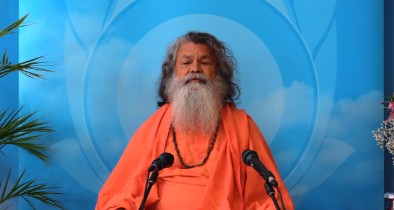
Morning satsang with Vishwaguruji from Brisbane Ashram, Australia. Only 10 percent of the energies in our body are active. Exercise with the hands for awakening energies in the body. Meditation and breath technics to purify the energy.
We should not be selfish
11:00 - 12:26 (86 min)
A satsang gathering featuring a discourse and personal testimony on spiritual practice.
"Yoga is the work on yourself. Remember this. That is the essence of the essence of the essence."
"We are all sitting in one big ferry. The Gurudev is the captain... Those who sit in it will come out of the ocean to the shore."
Brahmānanda Swāmījī opens the session by introducing Dr. Śānti, a long-time disciple, to share her experiences. Dr. Śānti speaks about the nature of satsang, analyzes the word "yoga," and stresses the importance of self-work, focus, and surrendering the ego. She shares personal stories, including a parable about a camel and a fox illustrating spiritual friendship, and discusses the challenges of Kali Yuga.
Filming location: Zagreb, Croatia
Gurudev is the servant of everyone
12:30 - 13:18 (48 min)
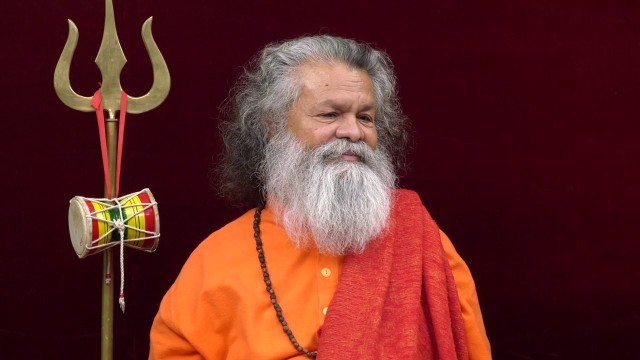
An evening satsang on humility, divine grace, and the guru-disciple relationship.
"Be very humble towards all, and you should bow down to them. Do not say, 'I am great,' and go."
"Guru is the Sākṣāt, the real life living with us, Parabrahma... Mokṣa mūlaṁ gurur kṛpā—liberation will be when we are at the feet of the Gurudev."
Paramhans Swami Maheshwarananda addresses a global audience, weaving personal anecdotes, analogies from nature, and teachings from his lineage. He emphasizes humility, stating that God provides for all creatures, and explores the guru's role as the embodiment of the divine and the source of liberation, concluding with traditional Sanskrit prayers.
Filming location: Strilky, Czech Republic
Feel the inner peace
13:25 - 14:31 (66 min)
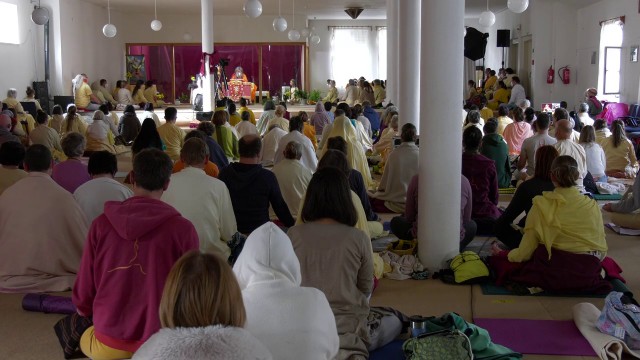
Morning satsang with Vishwaguruji from Strilky Ashram, Czech Republic. Relaxation in a sitting position and meditation. Relaxation in lying position. Practicing Bari Khatu Pranam.
Awakening energies in our body
14:35 - 15:45 (70 min)
Morning satsang with Vishwaguruji from Brisbane Ashram, Australia. Only 10 percent of the energies in our body are active. Exercise with the hands for awakening energies in the body. Meditation and breath technics to purify the energy.
Control your energy and mind
15:50 - 16:53 (63 min)
A spiritual discourse on the human journey and the five sheaths (kośas), following a tree-planting ceremony.
"The tree gives shade and fruit to everybody. Rain falls equally for everybody. The river flows for everybody, and the sun shines for everybody."
"Yoga is the science of humans... we have to go through Annamaya Kośa, Prāṇamayakośa, Manomayakośa, etc."
Swami Maheshwarananda (Viśva Gurujī) addresses an audience in Samobor, beginning with reflections on the symbolic planting of eleven trees. He expounds on the soul's journey through various life forms, the balancing principles of the sun and moon within yogic physiology, and the path of spiritual evolution through the five sheaths—from the physical body (Annamaya Kośa) to the bliss sheath (Ānandamaya Kośa). He emphasizes mastering the restless mind (Manomaya Kośa) as key to overcoming suffering and progressing toward higher consciousness.
Filming location: Croatia
Practicing of the system 'Yoga in Daily Life', Level 3 - Part 2
17:00 - 18:07 (67 min)
Practicing of the system "Yoga in Daily Life", Level 3 - Part 2, in Om Vishwa Deep Gurukul Swami Maheshwaranand Ashram, Jadan, Rajasthan, India on 27th of October 2009.
We need real dedication
18:15 - 19:13 (58 min)
Evening Satsang with Vishwaguruji from Jadan Ashram, Rajasthan, India. There are two kinds of people living separately or in the family. Orange dress means renunciation. The story about two brothers one of them was studied and the other lived a spiritual life alone in a forest. There are two kinds of bhava. One is where there is some wish and the other has no wish. Birds know that there is their child in the eggs. Swami Haripuri speaks about his daily life and his spiritual experiences in different Ashrams.
Humans are very good and not good at the same time
19:20 - 19:54 (34 min)
A spiritual discourse on the essence of satsaṅg and universal consciousness.
"Sat and saṅg, these two come together; that's enough. Always try to see yourself."
"Life is one. They don't understand, but we know, humans, we know. That's good, yes, very good. But that life, whether it is a human or an ant, is okay."
A spiritual teacher delivers an extemporaneous talk, exploring the meaning of true company (satsaṅg) and the singular life force in all beings. He uses parables, including one about a skeptic and God on a Himalayan rock face, and reflections on human nature versus animals to illustrate the unity of existence and the importance of non-violence. The discourse includes devotional singing.
Filming location: Vienna, Austria
Around the world - Yoga exercises specifically for women
20:00 - 20:36 (36 min)
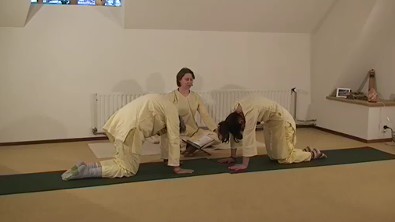
A guided yoga session focused on asanas for menstrual well-being and pelvic health.
"From my own experience, I can confirm it is truly helpful."
"Feel the effect of this exercise; it is also very good to do in the morning for a stiff back."
An instructor leads a gentle sequence designed for menstrual concerns, beginning with relaxation and yogic breathing in Anandāsana. The practice includes apānāsana (for the lower back and pelvic area), marjari (cat pose), hip-opening preparatory poses, and mālāsana (a squatting pose), with a personal anecdote shared about its benefits. The session continues with setu āsana (bridge pose) and a side-lying balance pose, concluding with a short relaxation and a final Om.
Around the world - Practice in Ukraine
20:40 - 21:30 (50 min)
A guided yoga practice session from the Yoga in Daily Life system.
"Physical relaxation leads to spiritual relaxation. Relaxation is an important element for the proper practice of yogic exercises."
"Ānanda Āsana translates as 'the posture of bliss.' Observe how bliss flows throughout your entire body."
An instructor leads a comprehensive sequence of postures (āsanas), breathwork (prāṇāyāma), and relaxation. The practice begins and ends with Ānanda Āsana for deep relaxation, and includes abdominal breathing, spinal twists, stretches, and joint mobility exercises while lying, sitting, and standing. The session concludes with a final relaxation and a moment of gratitude.
Filming location: UK
We are here to learn
21:35 - 21:59 (24 min)
A spiritual discourse on the root of global peace and personal sorrow.
"Since we cannot find the true reason for our misfortunes and dissatisfaction, our ego asserts it is always right."
"The answer for a happy and peaceful world lies only in spirituality, in self-development, in working with oneself, in understanding that we are divine beings originating from the Divine."
Swami Jogeshanand begins with a dedication and explores the theme of peace, connecting personal longing and sorrow to global conflict. He argues that war and extremism stem from humanity's forgotten divine nature and identification with the ego, and calls for religious and political leaders to achieve enlightenment through genuine spiritual practice. He invites listeners to all sincere paths while specifically welcoming them to Yoga in Daily Life centers.
Filming location: Jadan, Rajasthan, India
Vegetarian cooking lesson 5
22:00 - 22:41 (41 min)

A Falahārī cooking class at a Yoga in Daily Life summer seminar.
"Falahārī nutrition does not involve much cooking; everything is already perfect as it grows."
"Becoming a vegetarian is one of the greatest gifts for me through Yoga in Daily Life, inspired by Swāmījī."
Erna Buchinger (Annapurna) from Austria leads a class on preparing a raw and living foods menu. She demonstrates making a vegetable soup, a cabbage and herb sabjī, an olive herb pesto, a salad, and an unbaked apple cake with vanilla sauce. Throughout, she explains the principles and personal benefits of the Falahārī diet, emphasizing the vitality of raw fruits and vegetables, the importance of listening to one's body, and her inspiration from vegetarianism.
Filming location: Vép, Hungary
Just be humble and give
22:45 - 23:31 (46 min)
A satsang on global unity, human conduct, and healing the planet.
"Morning, when I wake up, I see my eyes open, and what I said, 'I am what?' Human. Human."
"We have destroyed the earth. All is for Mother Earth. Whatever we are bringing, all that is happening, why not we give some good?"
He laments humanity's destructive impact on Mother Earth, criticizing violence, pollution, and a disconnect from natural ways. He calls for a return to humility, oneness, and prayer, urging listeners to mentally offer peace and compassion to all beings through mantra and a heartfelt connection to the planet.
Filming location: Vienna, Austria
Kundalini and bhramari pranayama
23:35 - 0:29 (54 min)
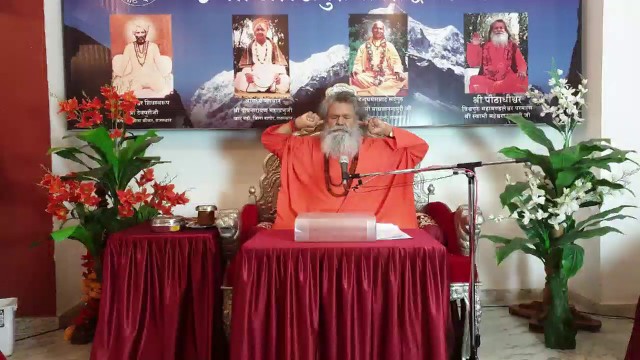
Eveng satsang with Vishwaguruji from Jaipur, Rajasthan, India. Chakras have 52 lotus petals and the Sanskrit alphabet have the same number of letters. Everybody speaks in his mother language at first. Vishwaguruji reads the Sataguru Chalisa- It is read and explained the Sri Kaka Battisi written by Holiguruji. In the Muladhara chakra, there are the 7 datus the 7 important elements of the human body. When kundalini awakens there is not any movements. Brahmari brings us harmony and peace. Demonstrating and practising some brahmari pranayama technics.
American
Australian