
European
Spirituality leads you to God
0:20 - 1:01 (41 min)
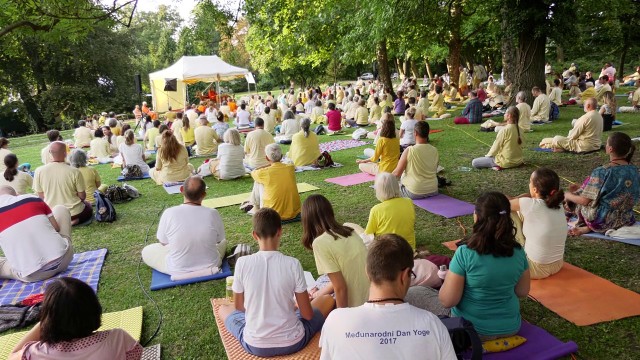
A spiritual discourse on faith, knowledge, and the lineage of teachings.
"Next to God is the doctor. Next to God. Next to God is the doctor."
"If you believe in God. God is also making tests. It is not that always God will say, 'OK.' God will say, 'No, no, no.'"
A swami addresses a gathering, tracing a spiritual lineage from Shiva and the Satya Yuga to the present. He discusses the preservation of knowledge in the Vedas, the relationship between modern science and spirituality, and the necessity of faith. He illustrates this with a parable about a mountain climber bargaining with God, concluding that belief is essential.
Filming location: Strilky, Czech Republic
A Sadhu is a worker
1:05 - 1:50 (45 min)
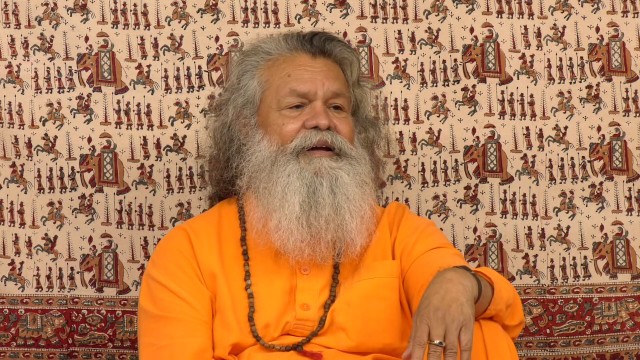
A satsang discourse on health, spiritual practice, and community.
"All our Yoga in Daily Life people, they were really very healthy."
"I never said from which country you are coming, or what you are. No, you are a human."
The lecturer addresses attendees, reflecting on health during the pandemic and attributing wellness to the Yoga in Daily Life system. He discusses plans for upcoming practice sessions, emphasizes selfless service (seva), and explains the guru-disciple relationship using the analogy of a mother and child, advocating for a living tradition while honoring one's primary guru.
Filming location: Strilky, Czech Republic
God is in the heart
1:55 - 2:42 (47 min)
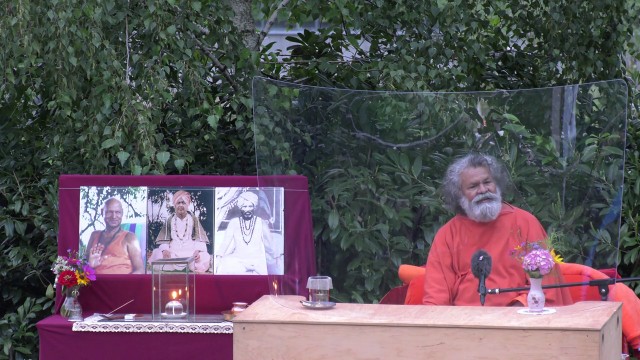
A spiritual discourse on devotion, divine immanence, and the essence of satsang.
"God is in your heart. Our God is so vast, and He is separated into many, many living beings—not only in humans, but in each and every creature."
"Where there is devotion, in that devotion we can say there is love. Love is that whole, whole universe. And that love, what we feel, is also that which brings peace and harmony."
A teacher leads an evening satsang, beginning with prayers and reflections on the peaceful gathering. He explores the nature of God, emphasizing the divine presence within all beings and the heart. He shares a lengthy parable about a seeker whose intense devotion leads to a divine vision, using it to illustrate themes of surrender, love, and the non-dual unity of the soul and God. The talk concludes with blessings and a reminder of life's impermanence.
Filming location: Strilky, Czech Republic
Webcast from Jadan
2:00 - 2:59 (59 min)
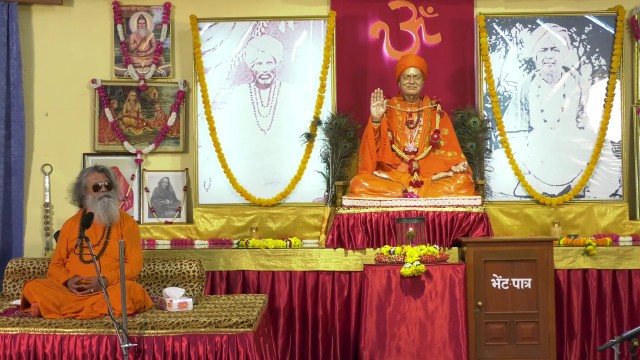
Evening satsang with Vishwaguruji from Jadan ashram, India.
Introduction of the Strilky Ashram
2:45 - 2:54 (9 min)
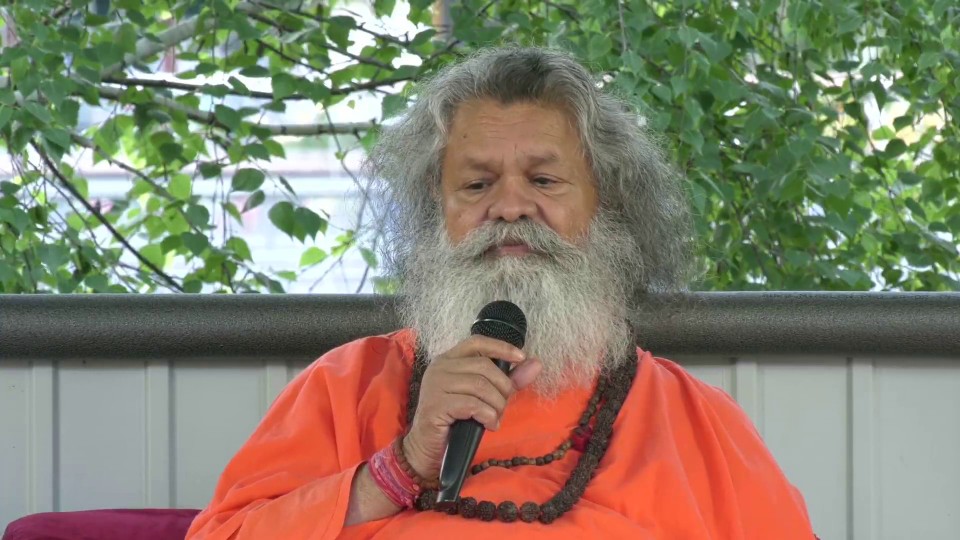
A spiritual leader inaugurates and blesses a new sacred grove for satsang.
"Our yoga people have been in many, many countries: from India, from here in Europe. And from Europe, many of our bhaktas went to other countries."
"I tell you that anytime, if you desire something, if you need something, if something happens, you should come to this place and pray with our mantra. Everything will return to peace and harmony."
The speaker, likely Swami Madhavanandji, addresses a gathering at a newly prepared forest satsang site. He emphasizes the sanctity of the place, its rules of entry, and its power for prayer. He reflects on the ashram's history, its global community of devotees, and the transformative impact of their yoga practice, which leads many to give up meat and alcohol. The talk transitions into a search for the ancient saint Alak Puriji, briefly touching upon associated mythology involving Shiva.
Filming location: Strilky, Czech Republic
Around the world - YIDL at he Sziget Festival Budapest 2011
3:00 - 3:05 (5 min)
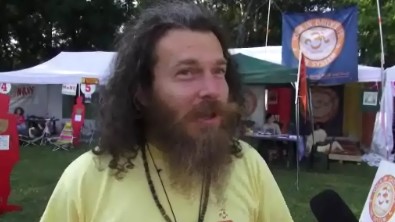
A promotional video about a yoga program at a major European music festival.
"For eleven years now, yoga has been our daily practice and system for showing young festival-goers how wonderful it is to relax deeply through yoga, without any side effects."
"We feel that the door of āśrama must not only be opened by the system of rites... but we must also go out to various community spaces and events."
A representative describes the 11-year-old Yogasātar tent at the Sziget Festival, which offers short, tailored yoga sessions to introduce festival-goers to practice, relaxation, and meditation. He explains the program's adaptability, its emphasis on authentic tradition over commercialized "power yoga," and its role as a spiritual outreach that has led some visitors to become disciples. He notes the surprising ability of practitioners to achieve deep relaxation and sensory withdrawal despite the loud festival environment.
Filming location: Budapest, Hungary
Around the world - YIDL at the Budapest Carfree Day
3:10 - 3:13 (3 min)

A presentation about a yoga organization's participation in Budapest's Car-Free Day.
"We have a yoga center at 121 Baross Street, 8th floor. In the district, this is our guru āśrama, our first center in Hungary."
"It’s a very interesting experience that you can practice yoga even in such a place, and nothing really disturbs you. On the contrary, the curious onlookers inspire us greatly in our practice."
A representative of the Yoga in Daily Life system describes their annual participation in the event on car-free Andrássy Avenue. She explains the organization's origins under Paramahaṁsavāmī Maheśvarānanda and highlights their long-standing Budapest center. The talk emphasizes the unique experience of practicing yoga in the transformed urban space and invites the public to join.
Filming location: Budapest, Hungary
Around the world - YIDL at the Budapest Vegetarian Festival 2011
3:20 - 3:25 (5 min)

A presentation on the Yoga in Everyday Life system at a Vegetarian Festival.
"Among these, the foremost is to maintain a vegetarian lifestyle."
"Our first aim is to gain good health. The major part of our illnesses... originates from our stomach."
A representative describes their organization's long-standing participation in the festival, highlighting yoga demonstrations and classes accessible to all. This year's focus was explaining the Falahārī diet, a concept from Swami Maheśvarānanda. The talk connects vegetarianism with physical yoga, prāṇāyāma, and relaxation, framing the practice as a holistic path to health and self-discovery.
Filming location: Budapest, Hungary
AUM and Chakras
3:30 - 4:35 (65 min)
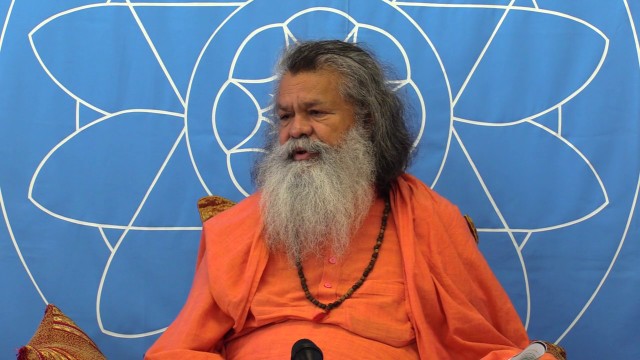
A yoga and prāṇāyāma workshop focusing on the subtle body, breath, and sound.
"These three nāḍīs—the left, right, and center—are coming till the end of these chakras... balancing our whole body, our awareness, our concentration."
"OM is that resonance... this is a very important mantra. It is not a mantra as a resonance, but we have to say it."
An instructor leads a detailed session on yogic anatomy, explaining the nāḍīs (energy channels), the lunar and solar influences on the body, and the therapeutic effects of sound. He provides instructions for several prāṇāyāma techniques, including Nāḍī Śodhana and the chanting of OM, emphasizing their role in purification, balance, and healing for the nervous system and organs.
Filming location: Sydney, Australia
Morning Satsang from Strilky
4:40 - 5:13 (33 min)
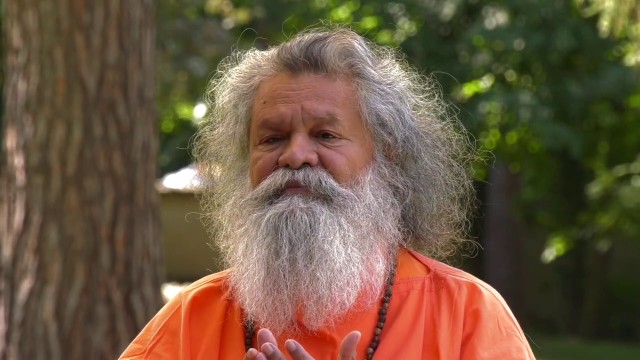
Morning satsang with Vishwaguruji from Strilky Ashram, Czech Republic.
Yoga in Daily Life is everywhere in the world
5:20 - 7:18 (118 min)
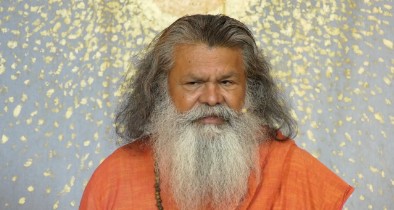
A satsang gathering featuring testimonies on the global spread of the Yoga in Daily Life system.
"Through Yoga in Daily Life, we are bringing everybody together. I think I need all of your help, perhaps to expand hospitality to Asia."
"Before meeting Yoga in Daily Life, I had a very strong desire in my heart... I thought about if there was a yoga system with a master where we could find the truth of life."
Swami Avatarpuri (Gurudev) hosts a session where disciples share their experiences. Dayāmātā (Matajī) speaks about introducing the system to China, facing a market dominated by gymnastic yoga. Her student, Chandra, shares her emotional journey from China to Europe and the transformative love found in the community. Other teachers from New Zealand, the USA, and Brazil also offer brief reflections. Gurudev concludes with teachings on connecting with the earth, practical yoga techniques like Agniṣār Kriyā, and a warning against the dangers of drugs and disconnection from nature.
Filming location: Strilky, Czech Republic
Maya and Naham Karata
7:25 - 8:05 (40 min)
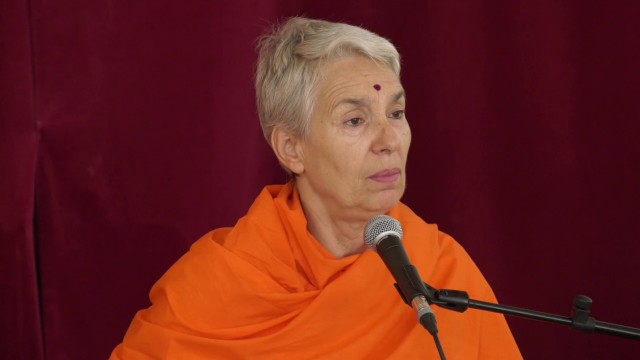
Morning satsang with Vishwaguruji from Strilky Ashram, Czech Republic. Swami Umapuri explains the meaning of the bhajan Ghana din bhataki re. We should leave desires. They are fires which burn us and can kill us also. Anusthan can help to overcome them. The story of Visnu and a yogi who didn't understand Visnu's maya. Maya is very dangerous for us. We should work and do karma yoga to escape from it. Explanation and singing bhajan Maya maha thagini ham jani. Swami Mataji speaks about her experiences with naham karata. We should do our duty serving which is our karma. She explained how to practise bhajan singing with Chinees people.
A Sadhu is a worker
8:10 - 8:55 (45 min)
A satsang discourse on health, spiritual practice, and community.
"All our Yoga in Daily Life people, they were really very healthy."
"I never said from which country you are coming, or what you are. No, you are a human."
The lecturer addresses attendees, reflecting on health during the pandemic and attributing wellness to the Yoga in Daily Life system. He discusses plans for upcoming practice sessions, emphasizes selfless service (seva), and explains the guru-disciple relationship using the analogy of a mother and child, advocating for a living tradition while honoring one's primary guru.
Filming location: Strilky, Czech Republic
First is the Guru
9:00 - 9:52 (52 min)
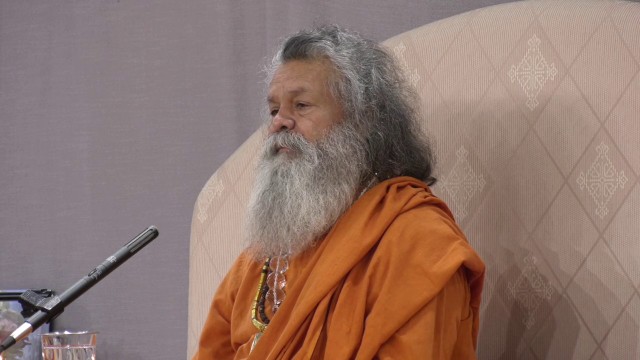
Evening satsang with Vishwaguruji from Zagreb, Croatia. In ancient times, rishis in their ashrams had many cows and their disciples had a job in the ashram. A Guru can notice if a disciple is a real follower or not. The story of Abhimanyu a very young disciple and his Guru and God. It is more than a simple story. In a satsang we all get energy. First is the Guru and then God. The story of Paramhansa Yoganand and his Guru when Yoganand went from India to America.
First is the Guru
10:00 - 10:52 (52 min)
Evening satsang with Vishwaguruji from Zagreb, Croatia. In ancient times, rishis in their ashrams had many cows and their disciples had a job in the ashram. A Guru can notice if a disciple is a real follower or not. The story of Abhimanyu a very young disciple and his Guru and God. It is more than a simple story. In a satsang we all get energy. First is the Guru and then God. The story of Paramhansa Yoganand and his Guru when Yoganand went from India to America.
Do not be afraid
11:00 - 11:50 (50 min)
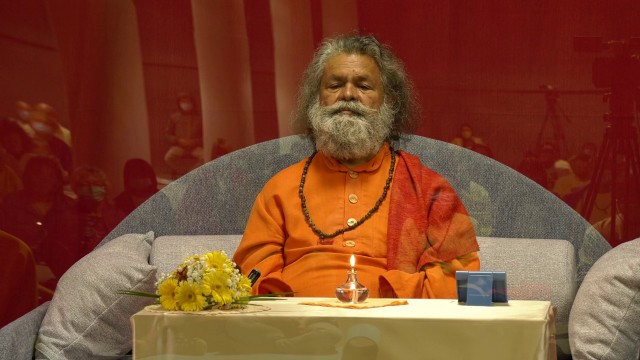
A spiritual discourse offering guidance for navigating the Kali Yuga.
"We know that we make many mistakes. We know we don’t do mistakes. We don’t know what is good and what is bad, but you know, Bhagavān, God, you know."
"If someone gives a slap on your face, then show him the next face... So if someone will say, 'Okay, please, you can beat me here.' It is immediately in our heart. It will come back."
A spiritual teacher leads a satsang, addressing challenges of the modern age. He emphasizes the need for self-protection and purification, advising on specific prāṇāyāma practices to avoid. Through parables about a thief and the floating properties of wood, he teaches non-judgment, humility, and transforming negativity into compassion. He also gives practical advice on preparing herbal tea for health.
Filming location: Slovenia
AUM and Chakras
11:55 - 13:00 (65 min)
A yoga and prāṇāyāma workshop focusing on the subtle body, breath, and sound.
"These three nāḍīs—the left, right, and center—are coming till the end of these chakras... balancing our whole body, our awareness, our concentration."
"OM is that resonance... this is a very important mantra. It is not a mantra as a resonance, but we have to say it."
An instructor leads a detailed session on yogic anatomy, explaining the nāḍīs (energy channels), the lunar and solar influences on the body, and the therapeutic effects of sound. He provides instructions for several prāṇāyāma techniques, including Nāḍī Śodhana and the chanting of OM, emphasizing their role in purification, balance, and healing for the nervous system and organs.
Filming location: Sydney, Australia
God is in the heart
13:05 - 13:52 (47 min)
A spiritual discourse on devotion, divine immanence, and the essence of satsang.
"God is in your heart. Our God is so vast, and He is separated into many, many living beings—not only in humans, but in each and every creature."
"Where there is devotion, in that devotion we can say there is love. Love is that whole, whole universe. And that love, what we feel, is also that which brings peace and harmony."
A teacher leads an evening satsang, beginning with prayers and reflections on the peaceful gathering. He explores the nature of God, emphasizing the divine presence within all beings and the heart. He shares a lengthy parable about a seeker whose intense devotion leads to a divine vision, using it to illustrate themes of surrender, love, and the non-dual unity of the soul and God. The talk concludes with blessings and a reminder of life's impermanence.
Filming location: Strilky, Czech Republic
Don't change the Master
14:00 - 15:07 (67 min)
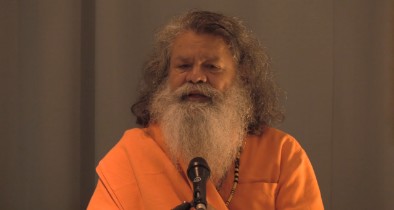
A spiritual discourse on the chakra system, kuṇḍalinī, and the yogic path to self-realization.
"Everything is in our body and is developing... yet, we have not yet discovered the process of the body in its safest place, which is within the body of the mother."
"Yoga is the science of humans. For the human brain, for human thoughts, there is a lot, a lot written in the Patañjali Yoga Sūtras, and by different other yogīs."
The lecturer delivers a satsang, explaining the universe's reflection within the human body through the chakras and nāḍīs. He discusses the journey of the soul, the importance of a single spiritual master, and the practical science of yoga for purifying the mind and body. The talk covers the iḍā, piṅgalā, and suṣumṇā channels, the significance of the haṁsa (swan), and the need for consistent, systematic practice over seeking quick experiences.
Filming location: Melbourne, Australia
Spirituality leads you to God
15:15 - 15:56 (41 min)
A spiritual discourse on faith, knowledge, and the lineage of teachings.
"Next to God is the doctor. Next to God. Next to God is the doctor."
"If you believe in God. God is also making tests. It is not that always God will say, 'OK.' God will say, 'No, no, no.'"
A swami addresses a gathering, tracing a spiritual lineage from Shiva and the Satya Yuga to the present. He discusses the preservation of knowledge in the Vedas, the relationship between modern science and spirituality, and the necessity of faith. He illustrates this with a parable about a mountain climber bargaining with God, concluding that belief is essential.
Filming location: Strilky, Czech Republic
Human being is miraculous - Yoga Practice
16:00 - 17:32 (92 min)
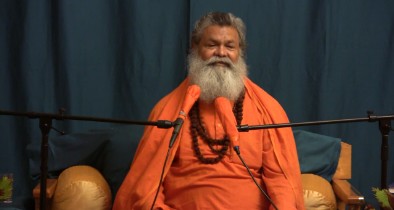
Morning program with Vishwaguruji from Alexandria, Virginia, USA. Folded hands awaken our awareness about real human qualities. Vishwaguruji starts leading practice with remembering: what makes us human?
Lord Shiva Is The Most Merciful
17:35 - 17:59 (24 min)
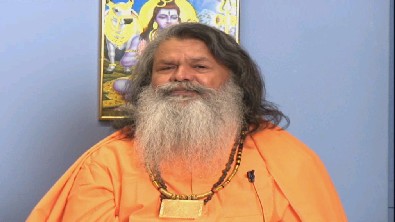
A spiritual discourse on the concepts of Saṅkalpa, Kalpa, and the significance of Śivarātri.
"Controlling thoughts is the hardest work. We think and we say, 'Let's be positive. Do not do to others what you do not want done to you.' Lightly spoken, but difficult to follow."
"Śiva is the most merciful father... I will take over all your sins and problems, and pray for you to be free."
A spiritual teacher addresses an ashram gathering, explaining the power and ethical necessity of a firm spiritual resolve (Saṅkalpa). He explores the cosmic concept of Kalpa (aeons), shares the story of a hunter and the merciful blessings of Lord Śiva that established Śivarātri, and discusses the purifying nature of Mother Gaṅgā. The talk concludes with the recitation of the Mahā Mrityunjaya Mantra and blessings for the global audience.
Filming location: Vienna, Austria
The Practice and Power of Trāṭaka
18:00 - 18:52 (52 min)
An evening satsang on the theory and practice of Trāṭaka, or yogic gazing.
"Trāṭaka means gazing on one point. The best object is the flame from a lamp of good ghee from a cow—not from buffaloes, goats, or sheep."
"While practicing Trāṭaka, if you practice every day, morning and evening, without interruption for twelve years, you will attain a siddhi... a very pure, very kind, and merciful look in your eyes."
Swami Prakashananda Saraswati provides detailed instructions for the cleansing technique of Trāṭaka. He explains suitable objects for gazing, such as a pure ghee flame or a black dot, and warns against using a mirror. He describes the profound benefits, including purification of mind, improved speech, and the awakening of divine energy and intuition, while stressing the necessity of guidance from a properly trained teacher and the use of a Guru Mantra. The talk includes a cautionary story about two monks to illustrate the importance of inner purity and forgiveness.
Filming location: Australia
Yoga in Daily Life is everywhere in the world
19:00 - 20:58 (118 min)
A satsang gathering featuring testimonies on the global spread of the Yoga in Daily Life system.
"Through Yoga in Daily Life, we are bringing everybody together. I think I need all of your help, perhaps to expand hospitality to Asia."
"Before meeting Yoga in Daily Life, I had a very strong desire in my heart... I thought about if there was a yoga system with a master where we could find the truth of life."
Swami Avatarpuri (Gurudev) hosts a session where disciples share their experiences. Dayāmātā (Matajī) speaks about introducing the system to China, facing a market dominated by gymnastic yoga. Her student, Chandra, shares her emotional journey from China to Europe and the transformative love found in the community. Other teachers from New Zealand, the USA, and Brazil also offer brief reflections. Gurudev concludes with teachings on connecting with the earth, practical yoga techniques like Agniṣār Kriyā, and a warning against the dangers of drugs and disconnection from nature.
Filming location: Strilky, Czech Republic
How to overcome the obstacles of practicing
21:05 - 22:23 (78 min)
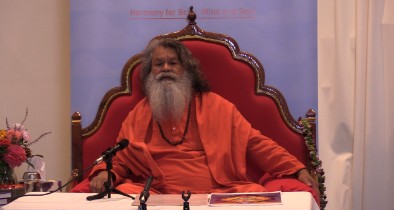
A spiritual discourse on the chakra system, focusing on the Maṇipūra chakra and the journey of self-mastery.
"My first master was my father, who imparted immense knowledge in a simple way. Through his instruction, I found my path."
"Strive for oneness, purity, without blemish. Do not stain your body."
Swami Maheśvarānand leads a satsang, weaving teachings on the manipura (navel) chakra with personal stories from his childhood and path to sannyas. He explains the symbolic animals and deities within each chakra, the role of the guṇas (qualities), and the necessity of a guru's guidance. The talk emphasizes practical discipline, advocating for specific prāṇāyāma techniques like Kapālabhāti and Bhastrikā to awaken inner energy, and concludes with a blessing.
Filming location: Wellington, New Zealand
Without Gurudev, there is no right path
22:30 - 23:12 (42 min)
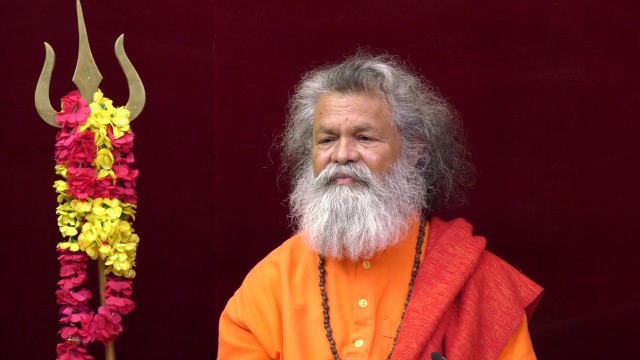
A spiritual discourse and yoga session on the necessity of a guide for the spiritual path.
"Without Gurudeva, no work is accomplished. Gurujī is the one who leads us to the correct path."
"We can do thousands of techniques here and there... But they will not give you anything. We become more and more entangled in the thorny bushes and cannot emerge."
The lecturer addresses practitioners, emphasizing that while a single divine path exists universally, individuals become lost without a true guide or Guru. He explains that external rituals, techniques, and pilgrimages alone are insufficient, using the metaphor of needing a captain to cross the ocean. The discourse transitions into a practical yoga session led by Swami Umapuri, focusing on relaxation, breathwork, and stretches for the lower back.
Filming location: Bari Khatu, Rajasthan, India
Maya and Naham Karata
23:20 - 0:00 (40 min)
Morning satsang with Vishwaguruji from Strilky Ashram, Czech Republic. Swami Umapuri explains the meaning of the bhajan Ghana din bhataki re. We should leave desires. They are fires which burn us and can kill us also. Anusthan can help to overcome them. The story of Visnu and a yogi who didn't understand Visnu's maya. Maya is very dangerous for us. We should work and do karma yoga to escape from it. Explanation and singing bhajan Maya maha thagini ham jani. Swami Mataji speaks about her experiences with naham karata. We should do our duty serving which is our karma. She explained how to practise bhajan singing with Chinees people.
American
Australian