
European
Hatha Yoga and Kapalabathi
0:45 - 1:23 (38 min)
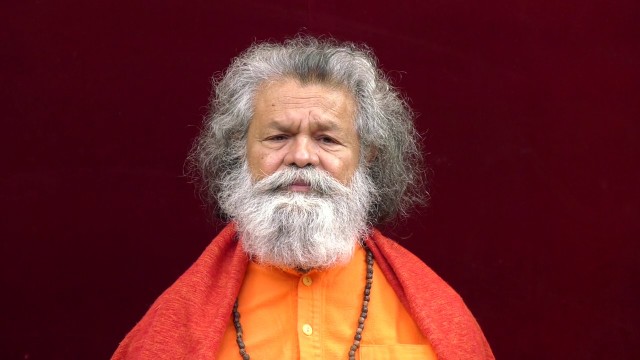
An online satsang on the definition and practice of Haṭha Yoga.
"Haṭha Yoga is Anuśāsanam. The first practice is to begin immediately. 'Ata' means just now—not tomorrow, not in an hour, but immediately."
"Kapālabhāti is a very powerful prāṇāyāma technique, which is why it is called Haṭha Yoga—it requires some power."
Swami Maheshwarananda addresses a global audience, clarifying that true Haṭha Yoga consists of cleansing techniques like netī and kapālabhāti, not merely āsanas. He explains the meaning of 'haṭha' as disciplined effort, details the kapālabhāti breathing technique, and gives a crucial safety warning to avoid forceful prāṇāyāma like kapālabhāti during the coronavirus pandemic. He concludes with blessings for world peace.
Filming location: Strilky, Czech Republic
AUM and Chakras
1:30 - 2:35 (65 min)
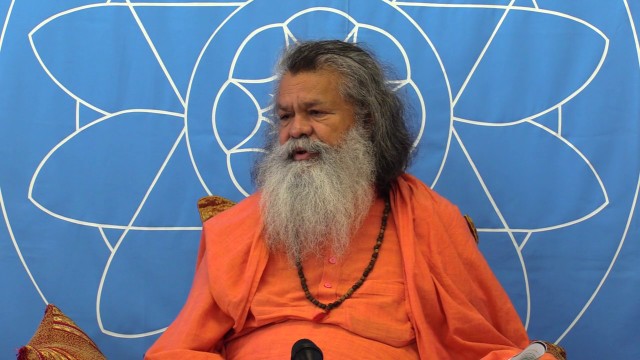
A yoga and prāṇāyāma workshop focusing on the subtle body, breath, and sound.
"These three nāḍīs—the left, right, and center—are coming till the end of these chakras... balancing our whole body, our awareness, our concentration."
"OM is that resonance... this is a very important mantra. It is not a mantra as a resonance, but we have to say it."
An instructor leads a detailed session on yogic anatomy, explaining the nāḍīs (energy channels), the lunar and solar influences on the body, and the therapeutic effects of sound. He provides instructions for several prāṇāyāma techniques, including Nāḍī Śodhana and the chanting of OM, emphasizing their role in purification, balance, and healing for the nervous system and organs.
Filming location: Sydney, Australia
Try to open the lock
2:40 - 2:59 (19 min)
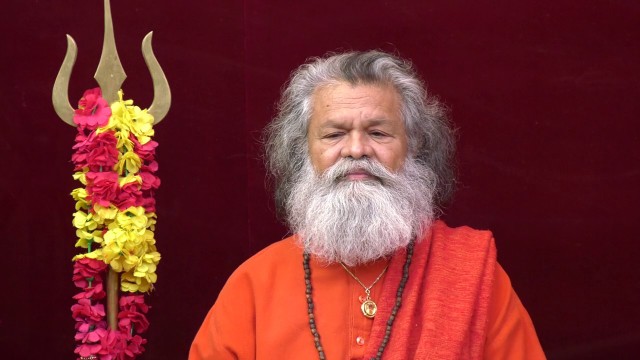
A universal invocation and spiritual discourse on divine names and unity.
"Today, we shall all begin again to be one together and bring divine energy, peace, and harmony to the whole world for everyone, without making differences of any religions or countries."
"So, let us go to the name of that God of our gods... Rām, Rām... Kṛṣṇa, Kṛṣṇa... Śiva, Śiva... Jesus, Jesus... That is the best name."
The speaker addresses yogis and practitioners worldwide, calling for universal harmony. He narrates a parable where humans, having received everything from God, declare independence, leading to negativity and trouble. Using metaphors of a locked treasure and a mala's Sumeru bead, he explains that the key to overcoming this is found in sincerely repeating the short, potent names of God, which transcend all religions. The talk concludes with a chant of "Guru Dīpā."
Filming location: Strilky, Czech Republic
A Welcome Address on Peace and Yoga
3:00 - 3:07 (7 min)
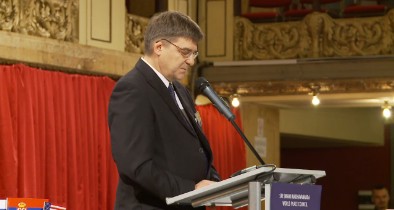
A welcome address at a yoga and peace conference in Prague.
"Peace is a condition for which mankind has been longing to reach for thousands of years. But outer life circumstances are merely a reflection of the inner world of human beings."
"Through the system of Yoga in Daily Life given to us by Viśwa Gurujī, many thousands of people all over the world develop peace inside through practicing spiritual techniques."
A speaker from the International Śrī Svāmī Māta Vānanda Fellowship welcomes attendees, opening with a traditional peace mantra. The address frames world peace as an inner achievement, advocating for the "Yoga in Daily Life" system as a path to nonviolence. It honors the spiritual lineage of Viśwa Gurujī and Mahāprabhujī, and references the founding of a World Peace Council.
Filming location: Prague, Czech Republic
Around the world - World peace in your hands
3:15 - 3:18 (3 min)

A promotional video about the Yoga in Daily Life organization and its founder, Paramahaṁsa Svāmī Maheśvarānanda.
"All elements are balanced in a perfect way, and that balancing principle, that is what I call yoga."
"Be the change you want to see."
The video profiles the global humanitarian and spiritual work of Svāmījī, founder of Yoga in Daily Life. It details the organization's reach, its United Nations affiliation, and its practical projects in education, healthcare, environmental protection, and interfaith dialogue aimed at fostering inner and world peace.
Morning Satsang from Strilky
3:25 - 3:58 (33 min)
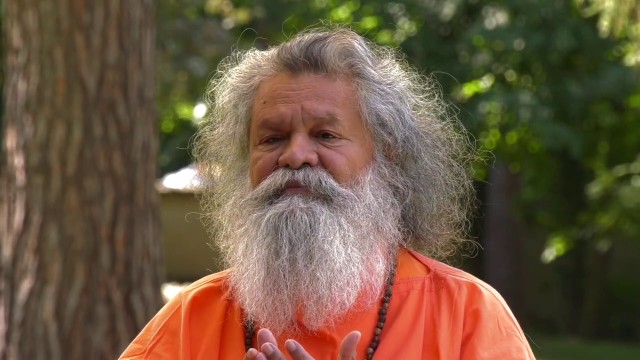
Morning satsang with Vishwaguruji from Strilky Ashram, Czech Republic.
AUM and Chakras
4:05 - 5:10 (65 min)
A yoga and prāṇāyāma workshop focusing on the subtle body, breath, and sound.
"These three nāḍīs—the left, right, and center—are coming till the end of these chakras... balancing our whole body, our awareness, our concentration."
"OM is that resonance... this is a very important mantra. It is not a mantra as a resonance, but we have to say it."
An instructor leads a detailed session on yogic anatomy, explaining the nāḍīs (energy channels), the lunar and solar influences on the body, and the therapeutic effects of sound. He provides instructions for several prāṇāyāma techniques, including Nāḍī Śodhana and the chanting of OM, emphasizing their role in purification, balance, and healing for the nervous system and organs.
Filming location: Sydney, Australia
The Light of Life and the Path to Liberation
5:15 - 6:08 (53 min)
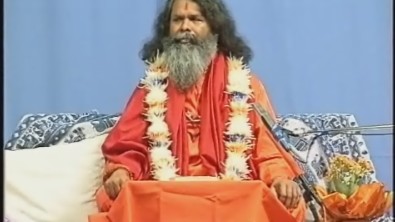
An evening satsang on the purpose of human life and the path to spiritual liberation.
"Everything in this world is possible easily, but it is rare to come to satsaṅg or spiritual activities."
"Spirituality is purity, clarity, pure consciousness, pure mind, pure thoughts, pure behaviors. Purity is very important."
The lecturer addresses an audience, welcoming them as fortunate souls in the Kali Yuga. He explores the unique value of human birth, urging self-inquiry and the cultivation of divine qualities like love and tolerance over mere intellectual knowledge. He discusses overcoming unhealthy dependencies, the nature of true love, and the ultimate goal of realizing the divine consciousness within, touching on concepts of karma, chakras, and non-duality.
Filming location: Umag, Croatia
Maya and Naham Karata
6:15 - 6:55 (40 min)
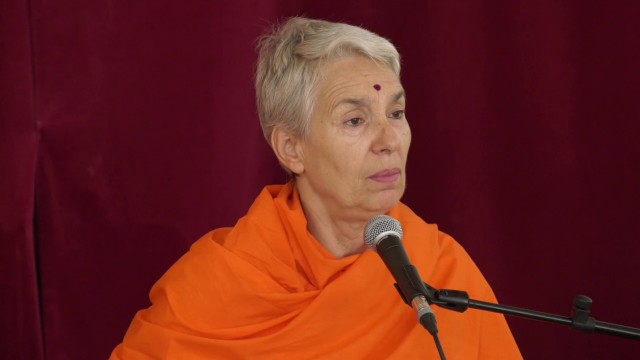
Morning satsang with Vishwaguruji from Strilky Ashram, Czech Republic. Swami Umapuri explains the meaning of the bhajan Ghana din bhataki re. We should leave desires. They are fires which burn us and can kill us also. Anusthan can help to overcome them. The story of Visnu and a yogi who didn't understand Visnu's maya. Maya is very dangerous for us. We should work and do karma yoga to escape from it. Explanation and singing bhajan Maya maha thagini ham jani. Swami Mataji speaks about her experiences with naham karata. We should do our duty serving which is our karma. She explained how to practise bhajan singing with Chinees people.
The real meaning of Yoga
7:00 - 7:41 (41 min)
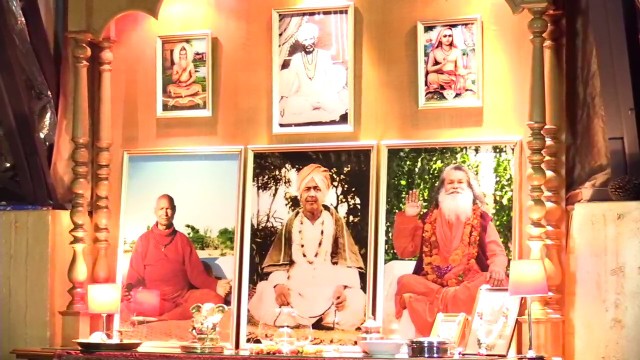
A discourse on the spiritual lineage of the Guru and the nature of creation.
"In one such bhajan, there is a key word... 'Matkāro moho'—do not be attached."
"Dhyāna mūlaṁ guru mūrtiḥ, pūjā mūlaṁ guru pādam, mantra mūlaṁ guru vākyam, mokṣa mūlaṁ guru kṛpā. (The root of meditation is the guru's form; the root of worship is the guru's feet; the root of mantra is the guru's word; the root of liberation is the guru's grace.)"
A speaker explains the essential role of the guru, beginning with the example of saints like Kabīr and moving through the concept of a teacher for any skill. He distinguishes a spiritual guru, stating one cannot survive without one. The talk delves into cosmology, describing the primordial state, the resonance of creation ("Eko'ham"), and the emergence of the trinity of Brahmā, Viṣṇu, and Śiva from the five elements. He defines 'yoga' as the fundamental event or union behind creation and all life experiences. The importance of the guru's grace for liberation is emphasized, culminating in the verse "Guru Brahmā, Guru Viṣṇu..."
Filming location: Brisbane, Australia
How to overcome the obstacles of practicing
7:50 - 9:08 (78 min)
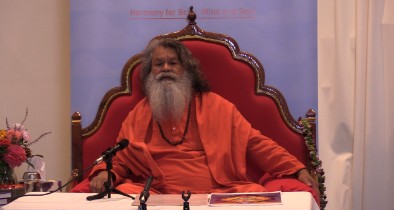
A spiritual discourse on the chakra system, focusing on the Maṇipūra chakra and the journey of self-mastery.
"My first master was my father, who imparted immense knowledge in a simple way. Through his instruction, I found my path."
"Strive for oneness, purity, without blemish. Do not stain your body."
Swami Maheśvarānand leads a satsang, weaving teachings on the manipura (navel) chakra with personal stories from his childhood and path to sannyas. He explains the symbolic animals and deities within each chakra, the role of the guṇas (qualities), and the necessity of a guru's guidance. The talk emphasizes practical discipline, advocating for specific prāṇāyāma techniques like Kapālabhāti and Bhastrikā to awaken inner energy, and concludes with a blessing.
Filming location: Wellington, New Zealand
The real meaning of Yoga
9:15 - 9:56 (41 min)
A discourse on the spiritual lineage of the Guru and the nature of creation.
"In one such bhajan, there is a key word... 'Matkāro moho'—do not be attached."
"Dhyāna mūlaṁ guru mūrtiḥ, pūjā mūlaṁ guru pādam, mantra mūlaṁ guru vākyam, mokṣa mūlaṁ guru kṛpā. (The root of meditation is the guru's form; the root of worship is the guru's feet; the root of mantra is the guru's word; the root of liberation is the guru's grace.)"
A speaker explains the essential role of the guru, beginning with the example of saints like Kabīr and moving through the concept of a teacher for any skill. He distinguishes a spiritual guru, stating one cannot survive without one. The talk delves into cosmology, describing the primordial state, the resonance of creation ("Eko'ham"), and the emergence of the trinity of Brahmā, Viṣṇu, and Śiva from the five elements. He defines 'yoga' as the fundamental event or union behind creation and all life experiences. The importance of the guru's grace for liberation is emphasized, culminating in the verse "Guru Brahmā, Guru Viṣṇu..."
Filming location: Brisbane, Australia
How to overcome the obstacles of practicing
10:00 - 11:18 (78 min)
A spiritual discourse on the chakra system, focusing on the Maṇipūra chakra and the journey of self-mastery.
"My first master was my father, who imparted immense knowledge in a simple way. Through his instruction, I found my path."
"Strive for oneness, purity, without blemish. Do not stain your body."
Swami Maheśvarānand leads a satsang, weaving teachings on the manipura (navel) chakra with personal stories from his childhood and path to sannyas. He explains the symbolic animals and deities within each chakra, the role of the guṇas (qualities), and the necessity of a guru's guidance. The talk emphasizes practical discipline, advocating for specific prāṇāyāma techniques like Kapālabhāti and Bhastrikā to awaken inner energy, and concludes with a blessing.
Filming location: Wellington, New Zealand
Do not be afraid
11:25 - 12:15 (50 min)
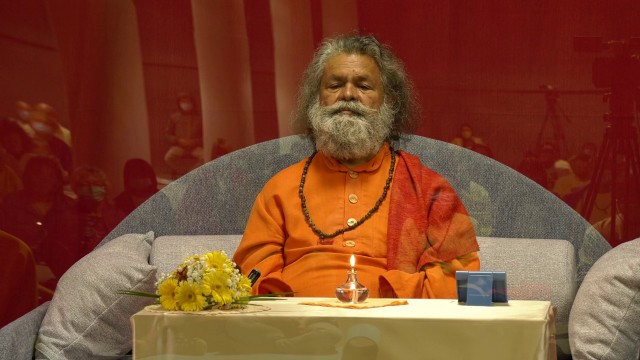
A spiritual discourse offering guidance for navigating the Kali Yuga.
"We know that we make many mistakes. We know we don’t do mistakes. We don’t know what is good and what is bad, but you know, Bhagavān, God, you know."
"If someone gives a slap on your face, then show him the next face... So if someone will say, 'Okay, please, you can beat me here.' It is immediately in our heart. It will come back."
A spiritual teacher leads a satsang, addressing challenges of the modern age. He emphasizes the need for self-protection and purification, advising on specific prāṇāyāma practices to avoid. Through parables about a thief and the floating properties of wood, he teaches non-judgment, humility, and transforming negativity into compassion. He also gives practical advice on preparing herbal tea for health.
Filming location: Slovenia
Maya and Naham Karata
12:20 - 13:00 (40 min)
Morning satsang with Vishwaguruji from Strilky Ashram, Czech Republic. Swami Umapuri explains the meaning of the bhajan Ghana din bhataki re. We should leave desires. They are fires which burn us and can kill us also. Anusthan can help to overcome them. The story of Visnu and a yogi who didn't understand Visnu's maya. Maya is very dangerous for us. We should work and do karma yoga to escape from it. Explanation and singing bhajan Maya maha thagini ham jani. Swami Mataji speaks about her experiences with naham karata. We should do our duty serving which is our karma. She explained how to practise bhajan singing with Chinees people.
Karma and bhakti bring us to Brahmaloka
13:05 - 13:51 (46 min)
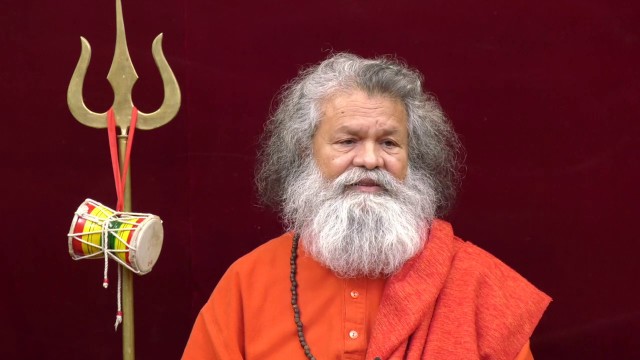
An evening satsang on the intertwined paths of Bhakti and Karma Yoga.
"Bhakti Yoga is a sure one which will bring us to the Brahmalokas."
"Karma Yoga is Bhakti Yoga, and Bhakti Yoga is there... you can only do [bhakti] if you have done the karma yoga."
A spiritual teacher addresses practitioners, using the story of the saint Tukārām to illustrate pure devotion. He explains the essential unity of selfless service (Karma Yoga) and devotion (Bhakti Yoga), stating they purify the heart and destroy ego. He shares a personal pilgrimage account to the temple of Kālabhairava in Ujjain, emphasizing that sincere practice within a guru lineage leads to liberation.
Filming location: Strilky, Czech Republic
Yoga in Daily Life is everywhere in the world
13:55 - 15:53 (118 min)
A satsang gathering featuring testimonies on the global spread of the Yoga in Daily Life system.
"Through Yoga in Daily Life, we are bringing everybody together. I think I need all of your help, perhaps to expand hospitality to Asia."
"Before meeting Yoga in Daily Life, I had a very strong desire in my heart... I thought about if there was a yoga system with a master where we could find the truth of life."
Swami Avatarpuri (Gurudev) hosts a session where disciples share their experiences. Dayāmātā (Matajī) speaks about introducing the system to China, facing a market dominated by gymnastic yoga. Her student, Chandra, shares her emotional journey from China to Europe and the transformative love found in the community. Other teachers from New Zealand, the USA, and Brazil also offer brief reflections. Gurudev concludes with teachings on connecting with the earth, practical yoga techniques like Agniṣār Kriyā, and a warning against the dangers of drugs and disconnection from nature.
Filming location: Strilky, Czech Republic
Practicing Yoga Asanas
16:00 - 16:41 (41 min)
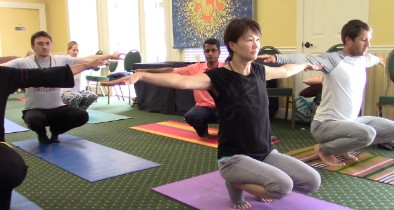
A yoga instruction session focusing on the practice and benefits of Vajrāsana and Vīrāsana.
"This Vajrāsana is designed especially to strengthen or to activate that Vajra Nāḍī."
"This will repair our digestion. This will repair our headache problems, also many, many things. This looks very simple, but it is very powerful."
An instructor guides students through the physical postures of Vajrāsana (thunderbolt pose) and Vīrāsana (hero pose), explaining their effects on the Vajra Nāḍī energy channel, digestion, and sciatic nerve. The session includes detailed alignment instructions, benefits for concentration and alertness, and transitions into other balancing postures and a forward bend before concluding.
Filming location: USA
Don't change the Master
16:45 - 17:52 (67 min)
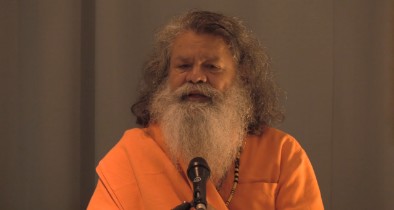
A spiritual discourse on the chakra system, kuṇḍalinī, and the yogic path to self-realization.
"Everything is in our body and is developing... yet, we have not yet discovered the process of the body in its safest place, which is within the body of the mother."
"Yoga is the science of humans. For the human brain, for human thoughts, there is a lot, a lot written in the Patañjali Yoga Sūtras, and by different other yogīs."
The lecturer delivers a satsang, explaining the universe's reflection within the human body through the chakras and nāḍīs. He discusses the journey of the soul, the importance of a single spiritual master, and the practical science of yoga for purifying the mind and body. The talk covers the iḍā, piṅgalā, and suṣumṇā channels, the significance of the haṁsa (swan), and the need for consistent, systematic practice over seeking quick experiences.
Filming location: Melbourne, Australia
First is the Guru
18:00 - 18:52 (52 min)
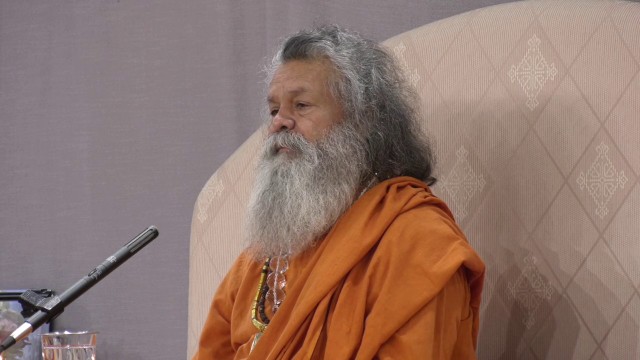
Evening satsang with Vishwaguruji from Zagreb, Croatia. In ancient times, rishis in their ashrams had many cows and their disciples had a job in the ashram. A Guru can notice if a disciple is a real follower or not. The story of Abhimanyu a very young disciple and his Guru and God. It is more than a simple story. In a satsang we all get energy. First is the Guru and then God. The story of Paramhansa Yoganand and his Guru when Yoganand went from India to America.
Around the world - Yoga Class of Level 3, Zagreb, CRO
19:00 - 19:59 (59 min)
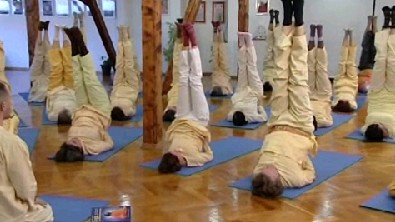
Yoga in Daily Life Class of Level 3 at Sri Devpuriji Ashram, Zagreb, Croatia, January 2011
Yoga in Daily Life: The Fifth Level
20:05 - 20:43 (38 min)
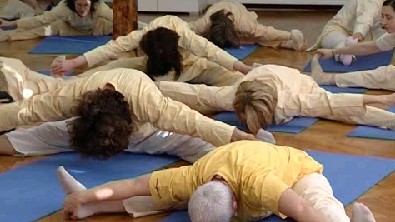
A fifth-level "Yoga in Daily Life" class focused on asana practice and breath awareness.
"Everything we practice in yoga has its purpose, and if we ask ourselves why, we must receive an answer. That is why we say that yoga is the science of the body, mind, spirit, and soul."
"Āsanas do not act only on the body. They are also a correction of our behavior; they act on our consciousness; they affect our entire being."
An instructor guides students through a detailed session, beginning with relaxation in Ānandāsana and emphasizing the purpose behind each alignment detail for reducing stress. The class progresses through a series of asanas including Pavanamuktāsana, Marjari Āsana, Paścimottānāsana, Upaviṣṭha Koṇāsana, Jānu Śīrṣāsana, and Mṛgāsana, with continuous focus on diaphragmatic breathing, mindful movement without strain, and the physical and subtle effects of each posture.
Filming location: Zagreb, Croatia
A Call for Oneness and Earthly Stewardship
20:45 - 20:57 (12 min)
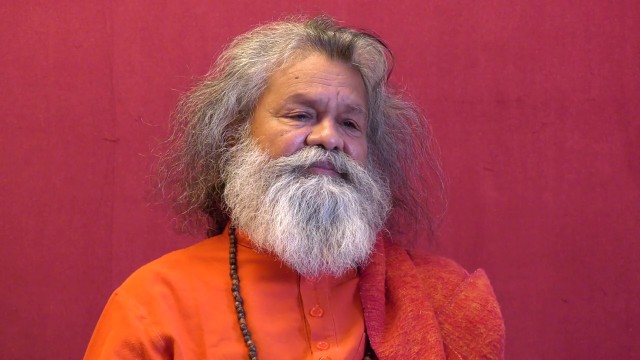
A spiritual address on universal oneness and environmental stewardship.
"When we said Aum, that Aum became for all in one—one in all and all in one."
"We need now to talk about the earth... The earth is like a mother who is crying. We are doing too much with chemicals."
A speaker addresses an assembly, expressing gratitude to dignitaries like the Indian Ambassador to Croatia and fellow swamis. The core message is a call for recognizing fundamental human unity beyond gender and for urgent, collective care for Mother Earth, who is suffering from chemical pollution. The talk connects spiritual concepts of oneness with practical appeals to protect the planet's earth, water, and air, and to cherish children for future peace.
Filming location: Croatia
Vegetarian cooking lesson 15
21:00 - 21:11 (11 min)

Vegetarian cooking lesson
Without Gurudev, there is no right path
21:15 - 21:57 (42 min)
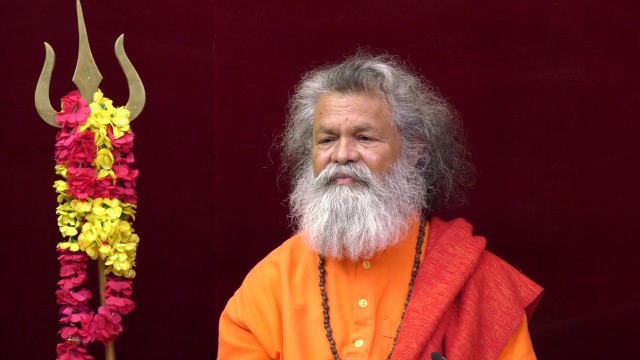
A spiritual discourse and yoga session on the necessity of a guide for the spiritual path.
"Without Gurudeva, no work is accomplished. Gurujī is the one who leads us to the correct path."
"We can do thousands of techniques here and there... But they will not give you anything. We become more and more entangled in the thorny bushes and cannot emerge."
The lecturer addresses practitioners, emphasizing that while a single divine path exists universally, individuals become lost without a true guide or Guru. He explains that external rituals, techniques, and pilgrimages alone are insufficient, using the metaphor of needing a captain to cross the ocean. The discourse transitions into a practical yoga session led by Swami Umapuri, focusing on relaxation, breathwork, and stretches for the lower back.
Filming location: Bari Khatu, Rajasthan, India
The real meaning of Yoga
22:05 - 22:46 (41 min)
A discourse on the spiritual lineage of the Guru and the nature of creation.
"In one such bhajan, there is a key word... 'Matkāro moho'—do not be attached."
"Dhyāna mūlaṁ guru mūrtiḥ, pūjā mūlaṁ guru pādam, mantra mūlaṁ guru vākyam, mokṣa mūlaṁ guru kṛpā. (The root of meditation is the guru's form; the root of worship is the guru's feet; the root of mantra is the guru's word; the root of liberation is the guru's grace.)"
A speaker explains the essential role of the guru, beginning with the example of saints like Kabīr and moving through the concept of a teacher for any skill. He distinguishes a spiritual guru, stating one cannot survive without one. The talk delves into cosmology, describing the primordial state, the resonance of creation ("Eko'ham"), and the emergence of the trinity of Brahmā, Viṣṇu, and Śiva from the five elements. He defines 'yoga' as the fundamental event or union behind creation and all life experiences. The importance of the guru's grace for liberation is emphasized, culminating in the verse "Guru Brahmā, Guru Viṣṇu..."
Filming location: Brisbane, Australia
We are life itself
22:50 - 23:29 (39 min)
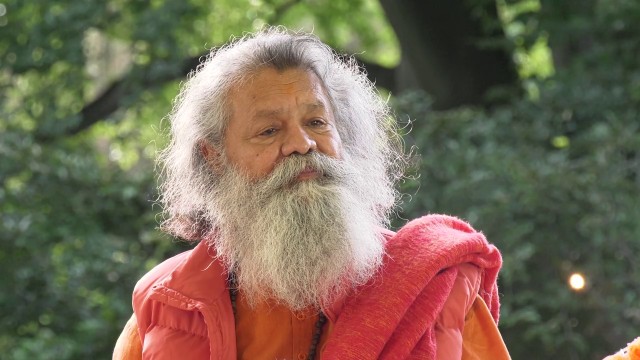
A spiritual discourse on the living nature of the Earth and the path to oneness.
"Therefore, our earth is living earth. So we are not something like other kinds of this, what they call, but life; Earth is the life."
"And I am in you, and you are in me. I am in the water, and the water is in me."
Swami Ji addresses a gathering, contemplating the sacred atmosphere of the place and the pervasive presence of life within the Earth, the elements, and even the human body. He teaches that recognizing this interconnected life leads to the understanding that the individual self is nothing but the universal Ātmā. Using metaphors like a balloon for desire, he discusses spiritual ascent, the cycle of rebirth, and the ultimate goal of melting all distinctions into oneness through dedicated sādhanā and yoga practice.
Filming location: Strilky, Czech Republic
Hatha Yoga and Kapalabathi
23:35 - 0:13 (38 min)
An online satsang on the definition and practice of Haṭha Yoga.
"Haṭha Yoga is Anuśāsanam. The first practice is to begin immediately. 'Ata' means just now—not tomorrow, not in an hour, but immediately."
"Kapālabhāti is a very powerful prāṇāyāma technique, which is why it is called Haṭha Yoga—it requires some power."
Swami Maheshwarananda addresses a global audience, clarifying that true Haṭha Yoga consists of cleansing techniques like netī and kapālabhāti, not merely āsanas. He explains the meaning of 'haṭha' as disciplined effort, details the kapālabhāti breathing technique, and gives a crucial safety warning to avoid forceful prāṇāyāma like kapālabhāti during the coronavirus pandemic. He concludes with blessings for world peace.
Filming location: Strilky, Czech Republic
American
Australian