
European
The Imperative of Daily Practice
0:20 - 0:59 (39 min)
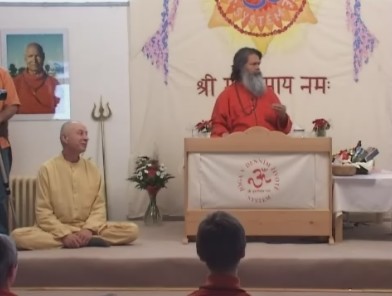
A direct address to yoga students on the necessity of disciplined daily practice for physical and mental purification.
"Practicing means at home—here you only learn. Practicing for just one week is ineffective; it must be a continuous, daily process."
"We must become sāttvic. Where the body is sāttvic, there is no vikāra. Vikāra exists in the mind as well."
Swami Avatarpuri (Swāmījī) leads a satsang, critiquing the lack of consistent practice among attendees. He stresses that health through daily āsana, prāṇāyāma, and seasonal cleansing techniques like Śaṅkha Prakṣālana is the essential foundation for spirituality. He expands on the concepts of vikāra (impurity/illness) and the guṇas, urging a transformation in diet (āhār), recreation (vihār), behavior (ācār), and thought (vicār). The talk includes practical instructions, responses to questions about cleansing practices, and a call for teachers to become examples of yogic health.
Filming location: Strilky, Czech Republic
The real marriage
1:05 - 1:58 (53 min)
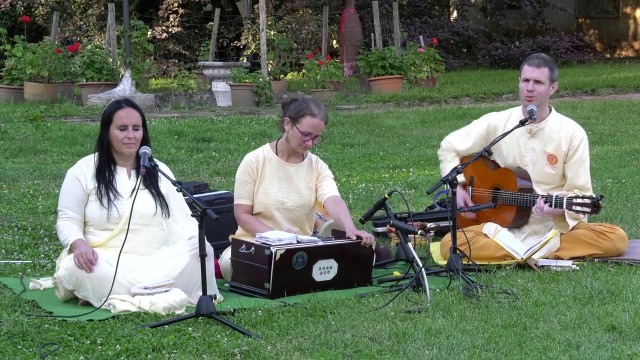
Evening satsang with Vishwaguruji from Strilky Ashram, Czech Republic. We don't know a lot about Sri Alakhpuriji. We know Sri Devpuruji's deeds well. Deva means God. The name reflects the whole life. Spirituality, purity of heart is more important than gold. What does it mean to be human? What did it mean to get married in the old days? Marriage was forever, the husband worked long hours and the wife could stay at home with the child. Young people did not marry before the age of 25. The story of the Indian couple who stayed together for 50 years. Today parents often leave their children.
The completness of our being
2:05 - 3:16 (71 min)
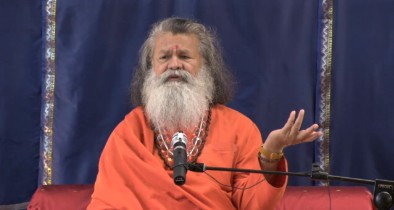
A spiritual discourse on the soul's journey, karma, and human practice.
"Understand this body, and then it is said—very easy to say, but it is said—overcome, control between two: the hunger and thirst."
"So we come as a human in this world, and then we are searching for the door to mokṣa, liberation. But when the chance comes, we take the hand away and scratch somewhere, meaning desires."
Swami Paramporul delivers a teaching on the eternal journey of the soul (jīvātmā), explaining its nature through metaphor and scripture. He discusses the body as a vehicle or bungalow where the divine resides, the importance of controlling the senses and emotions like jealousy, and the role of yoga, prāṇāyāma, and diet in purification. The talk covers the law of karma, rebirth across different life forms illustrated by a story of a tax collector reborn as a camel, and concludes with reflections on funeral rites and the imperative to use human life for spiritual progress.
Filming location: London, UK
The bansuri flute
3:20 - 3:50 (30 min)
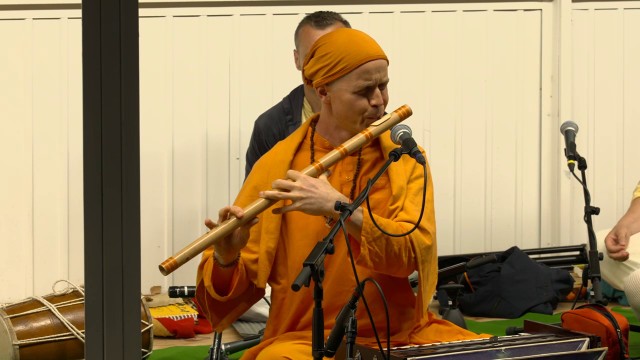
Evening satsang from Yoga Summer Retreat from Strilky, Czech Republic. Swami Madhuram introduces the bansuri flute, and how to play ragas on it. The story about the border between devotion and fanatism. Swami Madhhuram plays on bansuri.
Around the world - Bhajans from Kailash(2/3)
4:00 - 4:34 (34 min)
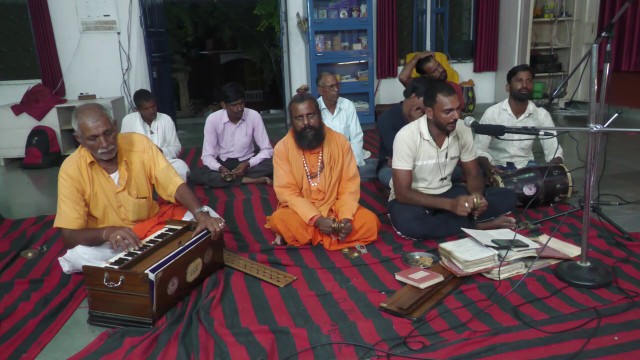
Evening satsang from Kaliash Ashram, Rajasthan, India. Bhajans on the occasion of Sri Devpuriji Mahasamadhi.
The Divine Lineage of Alakpurījī: Saints, Siddhas, and the Eternal Guru
4:40 - 5:10 (30 min)
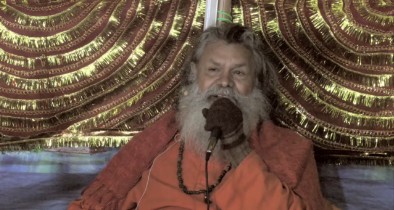
A discourse on the divine lineage of the Alakpurījī Siddha tradition.
"From time to time I incarnate in every yuga to protect the dharma, to liberate all the pure souls, and again to remove or destroy the āsurī śaktis."
"Guru Brahma, Guru Viṣṇu, Guru Devo Maheśvara, Guru Sākṣāt Para Brahma, Tasmai Śrī Guruve Namaha—the Guru Tattva, Śiva Tattva, Viṣṇu Tattva, and Brahma Tattva."
A spiritual teacher narrates from a high Himalayan valley, explaining the eternal Guru principle and the Nityāvatāra of great saints. He recounts the lineage from the ancient Alakpurījī to Devapurījī, then to Bhagavān Śrī Dīp Nārāyaṇa Mahāprabhujī, and finally to their Satguru, Swāmī Madhavānandapurījī, whose birth anniversary is being celebrated. The talk includes a parable about missing divine blessings and emphasizes surrender and patience on the spiritual path.
Filming location: India
Devik shakti
5:15 - 5:45 (30 min)
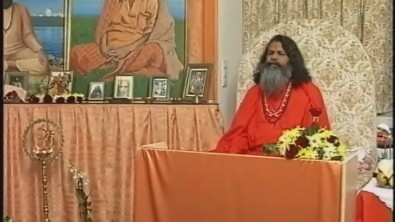
A spiritual discourse on the two fundamental forces of the universe, Devīśakti and Āsurīśakti.
"Both forces, Devīśakti and Āsurīśakti, exist. Devīśakti is positive power, and Āsurīśakti is negative power. But the origin of both is one: God Himself."
"Thus, Devīśakti and Āsurīśakti develop. The part of the power, the energy gathered in negative qualities, day by day, will become Āsurīśakti, and the positive forces will become Devīśakti."
The speaker explains the cosmic duality of divine and negative powers, both emanating from a single divine source. He describes how an individual's path—toward development or destruction—is influenced by their company (saṅga). The talk covers the three types of suffering (Tri-Tāpa), the importance of the Guru's grace for protection, and the significance of the Navarātri festival dedicated to the Divine Mother, or cosmic Śakti.
Filming location: Vienna, Austria
The Unselfish Work
5:48 - 6:14 (26 min)
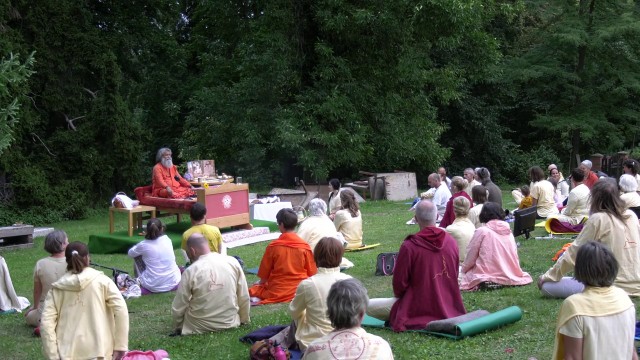
A satsang discourse on karma yoga, selfless service, and the four aims of life.
"Sometimes, when we engage in seva, work, and karma yoga, we think, 'I am doing this. If I were not here, who would do it?'"
"Swāmījī says, 'The greatest sin is to waste time. Use it or lose it.'"
The speaker shares a parable from Swāmījī about a dog who mistakenly believes it is pulling a cart, illustrating the illusion of self-importance in service. The talk emphasizes performing niṣkāma karma (selfless action) as a privilege and explores the four Puruṣārthas (dharma, artha, kāma, mokṣa) as life goals attainable only through dedicated effort and Guru's grace, referencing teachings and bhajans from saints like Ācāla Rāmajī.
Filming location: Strilky, Czech Republic
The River of Selfless Service
6:15 - 6:47 (32 min)
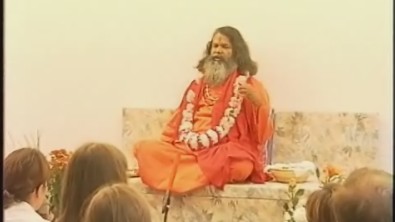
A satsang discourse on karma yoga, selfless service, and spiritual practice.
"Work is the beauty of life, but this work should be positive, selfless service."
"All that he did is for himself, for his soul, for his liberation."
The lecturer addresses ashram residents, praising their recent karma yoga efforts. He explores the nature of selfless service, using the example of Hanuman from the Ramayana to illustrate that all spiritual work ultimately benefits the doer's own soul. He outlines the threefold path of svādhyāya (self-study), manan (contemplation), and abhyāsa (practice), urging attendees to overcome personal likes and dislikes to foster inner harmony and continue flowing like a river in service.
Filming location: Zagreb, Croatia
The One in All and All in One
6:55 - 7:23 (28 min)
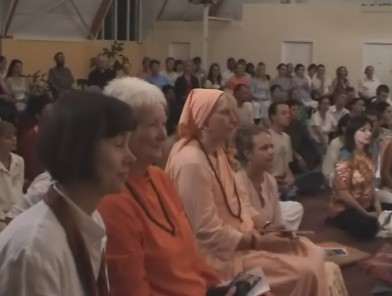
A spiritual discourse on universal consciousness, creation, and human purpose.
"Our great master used to say, 'One in all and all in one.'"
"Yoga is not physical postures... Yoga is the balancing principle... Where there is a balance, there is harmony."
The lecturer delivers a talk exploring the origins of the universe, consciousness, and the principle of yoga. He explains the Vedic concept of creation from sound (Aum) and the elemental evolution from space to earth. The discourse covers the oneness of all life, the unique potential of human intellect, and the importance of education in human values, tolerance, and understanding. He concludes by relating the cycle of rebirth to the modern concept of recycling.
Filming location: Brisbane, Australia
Mind and chakras
7:30 - 7:55 (25 min)
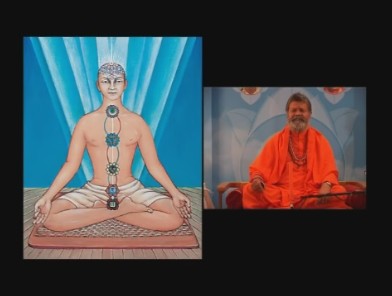
A lecture on the nature of the mind, subconscious impressions, and yogic philosophy.
"Our senses are mostly connected to and work with the consciousness, the awakened state."
"The mind is that principle which functions between the conscious and subconscious, pendling up and down."
The teacher provides a detailed explanation of how sensory impressions become stored desires in the subconscious, using the analogy of an unfulfilled ice cream craving manifesting in a dream. He describes the mind as a pendulum between conscious and subconscious levels, warning against blocking mental energy and instead advocating for directing it through self-discipline. The talk expands into the relationship between emotion, intellect, consciousness, and the nadis (Ida, Pingala, Sushumna), linking psychological concepts to the chakra system and the dormant energy of kundalini.
Filming location: Brisbane, Australia
Mind and chakras
8:00 - 8:25 (25 min)
A lecture on the nature of the mind, subconscious impressions, and yogic philosophy.
"Our senses are mostly connected to and work with the consciousness, the awakened state."
"The mind is that principle which functions between the conscious and subconscious, pendling up and down."
The teacher provides a detailed explanation of how sensory impressions become stored desires in the subconscious, using the analogy of an unfulfilled ice cream craving manifesting in a dream. He describes the mind as a pendulum between conscious and subconscious levels, warning against blocking mental energy and instead advocating for directing it through self-discipline. The talk expands into the relationship between emotion, intellect, consciousness, and the nadis (Ida, Pingala, Sushumna), linking psychological concepts to the chakra system and the dormant energy of kundalini.
Filming location: Brisbane, Australia
Bhajan singing in the presence of the Master
8:30 - 9:17 (47 min)
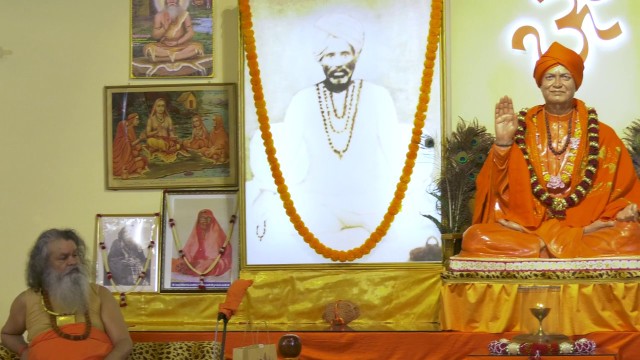
Evening satsang from Jadan Ashram, Rajasthan, India. Bhajan singing from Jadan. Including He nath ab to, Suno sakhi Sataguru aya, Guru carano me arasatha tiratha he
Guru bhakta jagata me na rahe
9:25 - 10:08 (43 min)
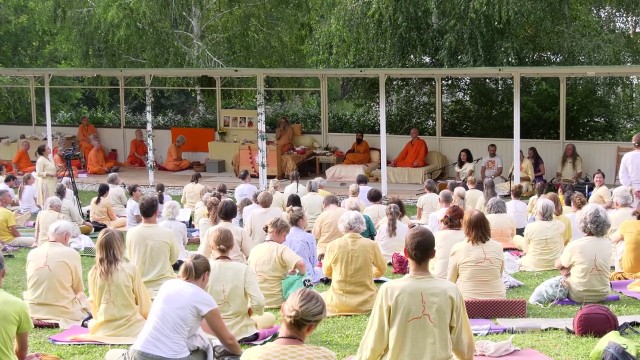
Evening satsang with Vishwaguruji from Strilky Ashram, Czech Republic. Bhajan singing on satsang, including bahajan Guru bhakta jagata me na rahe, Prema ka pyala Hari
Pyare darashana diyo aj
10:15 - 10:18 (3 min)
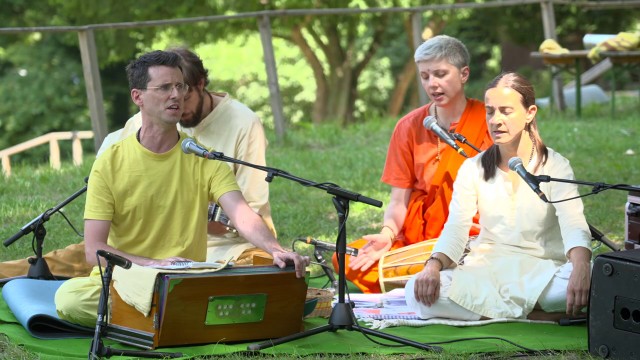
A spiritual song expressing longing for divine vision, followed by analytical remarks on the text's structure.
"Ākula vyākula fero re na dhinna" and "Darśan na dī chokhā. Darśan sannakā nindā, Nairin divasannā."
The content consists of poetic lyrics lamenting the agony of separation and the unfulfilled desire for divine sight (Darśan). This is followed by a separate section of critical remarks that analyze the song's text, pointing out its abrupt language shift, unclear referents, and narrative discontinuity.
Filming location: Strilky, Czech Republic
Bhajans from Vep
10:25 - 10:49 (24 min)
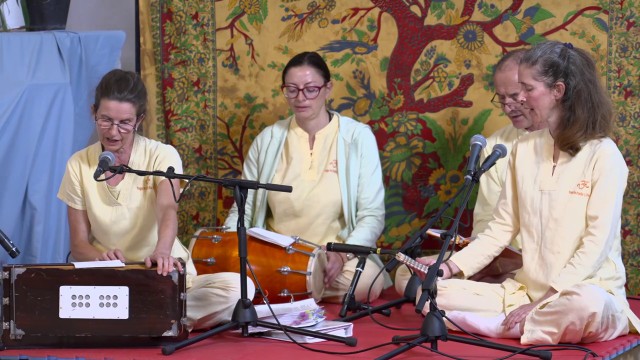
Yoga Summer Retreat from Vep, Hungary. Bhajan singing including Guruvara me cal usa una des.
The Guru's name is a priceless diamond
10:55 - 11:11 (16 min)
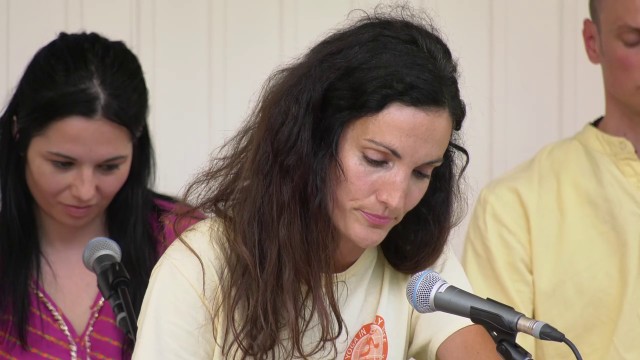
Evening satsang with Vishwaguruji from Strilky Ashram, Czech Republic. Bhajan singing from Strilky. Including bhajan "Ho Guru Sukha Dama Swami"
Tvameva Mata Ca Pita Tvameva
11:15 - 12:31 (76 min)
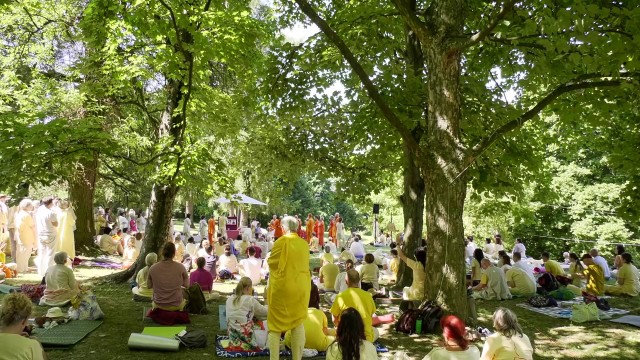
Morning satsang with Viswhaguruji from Strilky Ashram, Czech Republic. Bhajan singing from Strilky. Including He Nata Aba To, Itna to Karana Guruji
The Self and The Soul, Melbourne
12:35 - 14:05 (90 min)
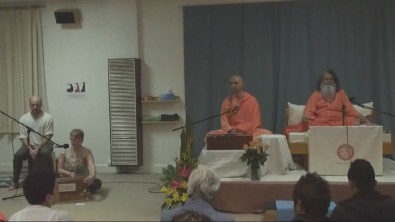
Sri Ram - Kirtan sung by Ally. Swami Jasraj Puri brings an example: When on the spiritual path arise doubts - hold on, it will calm down. Swami Sannyasanand speaks about Pranayama, Ida and Pingala breathing. Swamiji speaks about Lord Shiva,Yog Shakti, the sound OM and Siddhis - the supernatural powers. Atman is universal, the Self, it is immortal. It is like the space, no one can destroy,fire cannot burn nor dead can effect it. Jivatma is individual,is born,reborn comming and going. It is a bundle of our karmas and there are 4 ways to do karma. Swamiji tells a episode from the Ramayana, about Garuda, the carrier of Lord Vishnu as he lost his bhakti to Lord Rama and he was suffering a lot because of his doubts. We have 9 doors where the soul will go out of the body.We can lead ourselves to the Brahman or we can lead ourselves down, it depends on our individual karma and our practice. Translation of the bhajan: Shivoham Shivoham.
Mental food
14:10 - 16:08 (118 min)
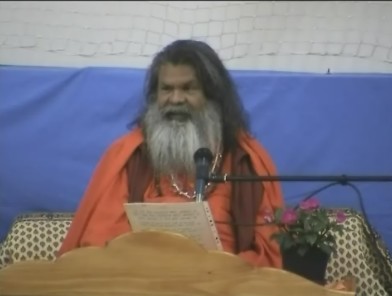
Swamiji in Sliac, April 2007
The Imperative of Daily Practice
16:15 - 16:54 (39 min)
A direct address to yoga students on the necessity of disciplined daily practice for physical and mental purification.
"Practicing means at home—here you only learn. Practicing for just one week is ineffective; it must be a continuous, daily process."
"We must become sāttvic. Where the body is sāttvic, there is no vikāra. Vikāra exists in the mind as well."
Swami Avatarpuri (Swāmījī) leads a satsang, critiquing the lack of consistent practice among attendees. He stresses that health through daily āsana, prāṇāyāma, and seasonal cleansing techniques like Śaṅkha Prakṣālana is the essential foundation for spirituality. He expands on the concepts of vikāra (impurity/illness) and the guṇas, urging a transformation in diet (āhār), recreation (vihār), behavior (ācār), and thought (vicār). The talk includes practical instructions, responses to questions about cleansing practices, and a call for teachers to become examples of yogic health.
Filming location: Strilky, Czech Republic
Practising Asanas 3
17:00 - 17:53 (53 min)
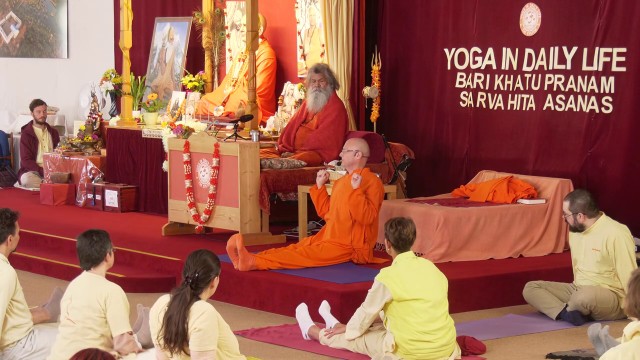
Morning practice from Strilky Ashram, Czech Republic. Asanas mainly from the first level of Yoga in Daily Life demonstrated and explained by Mahamandaleshwar Swami Vivekpuriji.
Gurudev sees our past and future
18:00 - 19:16 (76 min)
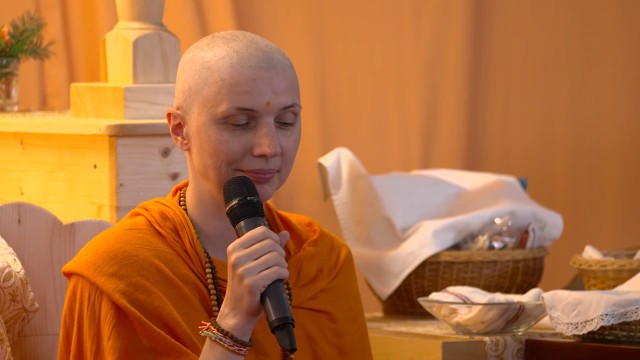
A satsang discourse on the guru's grace, destiny, and the power of surrender.
"Even the guru can change destiny, because there is no higher law than the guru’s law."
"Since the day I told Swāmījī, 'I surrender, do what you want,' I am in peace."
A speaker, likely a senior disciple, addresses the gathering following morning prayers. He discusses the validity of Vedic sciences like astrology (Jyotish) but emphasizes the supreme power of the guru's grace to alter destiny, illustrating this with a traditional parable about a guru changing the fate of two royal children. He shares personal anecdotes of learning to obey the guru's guidance, concluding that true peace comes from complete surrender to the guru's will, allowing him to manage one's life and mitigate karma.
Filming location: Strilky, Czech Republic
Gurudeva hi Kevalam
19:20 - 20:15 (55 min)
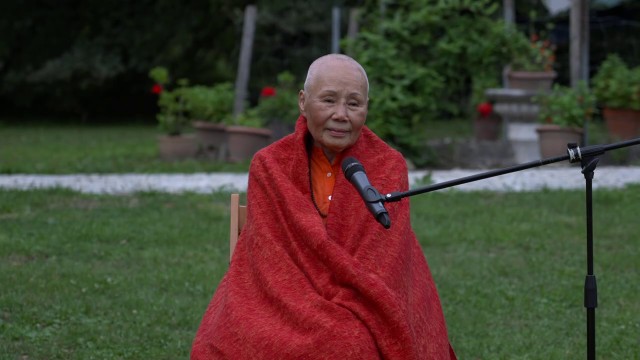
Evening satsang from Yoga Summer Retreat from Strilky, Czech Republic. As we know, things are changing in our lives. What comes shall go. A story of a man, who was a happy person, and used to make others happy. This man time to time went to his Guruji for darshan and advice. Gurudev knows what is going on in our minds. Karma yoga is a help for us. We are all blessed to have Gurudev's guidance. Bansuri flute music. Lecture by Swami Daya Mata, about good and bad things that are transient.
The essence is always the same
20:20 - 20:58 (38 min)
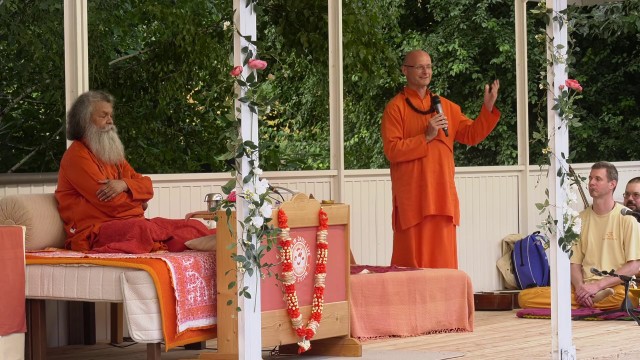
A satsang talk reflecting on spiritual transformation and the grace of the Guru.
"In yoga, it is very important to understand the concepts of Kāla and Deśa. This means that each era has its own appropriate way of behavior, and each place is different."
"What we learn from Viśva Gurujī is not only āsanas... but that we need to be flexible in our hearts and minds."
A speaker addresses the gathering after a Guru Purnima celebration, exploring how the essence of yoga remains constant while adapting across time and place. He shares stories illustrating the Guru's foresight, like predicting currency changes in Croatia, and emphasizes the transformative power of dedicated practice and being physically present in the ashram's energy. The talk uses metaphors like a spoon in honey to describe receptivity to grace and lighthouses for the role of ashrams.
Filming location: Strilky, Czech Republic
The completness of our being
21:05 - 22:16 (71 min)
A spiritual discourse on the soul's journey, karma, and human practice.
"Understand this body, and then it is said—very easy to say, but it is said—overcome, control between two: the hunger and thirst."
"So we come as a human in this world, and then we are searching for the door to mokṣa, liberation. But when the chance comes, we take the hand away and scratch somewhere, meaning desires."
Swami Paramporul delivers a teaching on the eternal journey of the soul (jīvātmā), explaining its nature through metaphor and scripture. He discusses the body as a vehicle or bungalow where the divine resides, the importance of controlling the senses and emotions like jealousy, and the role of yoga, prāṇāyāma, and diet in purification. The talk covers the law of karma, rebirth across different life forms illustrated by a story of a tax collector reborn as a camel, and concludes with reflections on funeral rites and the imperative to use human life for spiritual progress.
Filming location: London, UK
Be happy be good
22:20 - 23:05 (45 min)
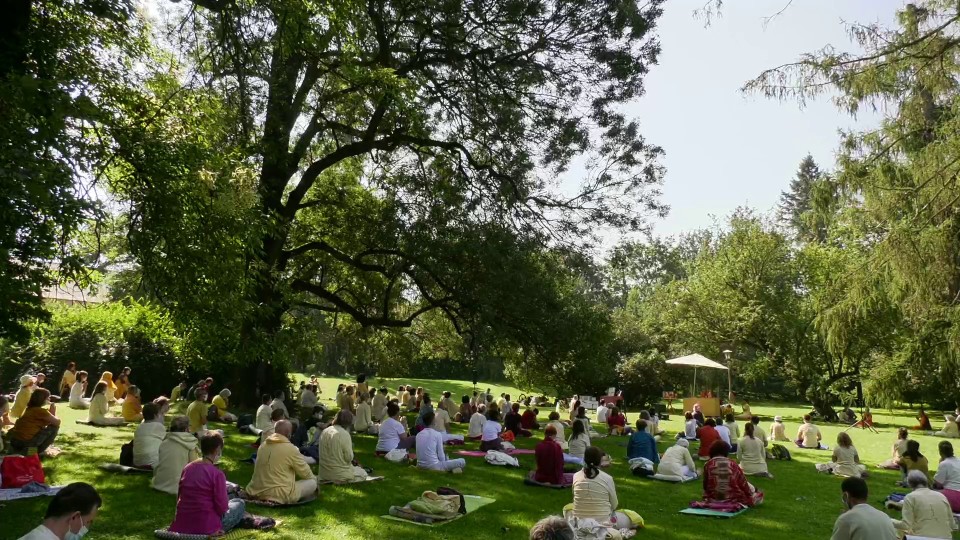
A closing address and prayer session at a spiritual seminar.
"For one week, we were very comfortable, very relaxed, and we had immense spiritual development and spiritual talks."
"What you have learned now, after a long time, it will come inside... You cannot say, 'Finally, I am perfect.'"
A teacher addresses participants at the conclusion of a week-long seminar, expressing gratitude and offering guidance for integrating the teachings. He discusses the gradual process of learning, warns against fear and superstition, emphasizes love for family, and clarifies that yoga extends beyond physical practice. The session includes chanting, a prayer, and final instructions for departure.
Filming location: Strilky, Czech Republic
Time and destiny, Melbourne
23:10 - 0:20 (70 min)
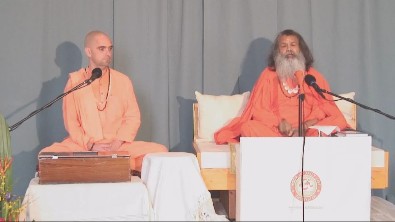
Every saint or holy incarnation has to go through certain experiences in life. Even God has to go through particular situaions. Does God have a destiny? The life of Jesus - he had to go through many hard situations in his life. Was this his destiny or was him given a task to go trough? Swamiji tells episodes from the life of the Sufi master Mansur Al-Hallaj and Hanumanji from the Ramayana. If we have faith - God and we are one - then nothing will happen. When we hold on God's name we will cross the ocean and reach the shore of happiness and peace. Kirtan is the repetition of God's name. The positive vibration will resonance in our whole body and will give positive effects. This will influence our destiny. Guruvakyas, Satsangs, Kirtans and Bhajans are good guidelines in our life. Recorded in Melbourne, Australia.
American
Australian